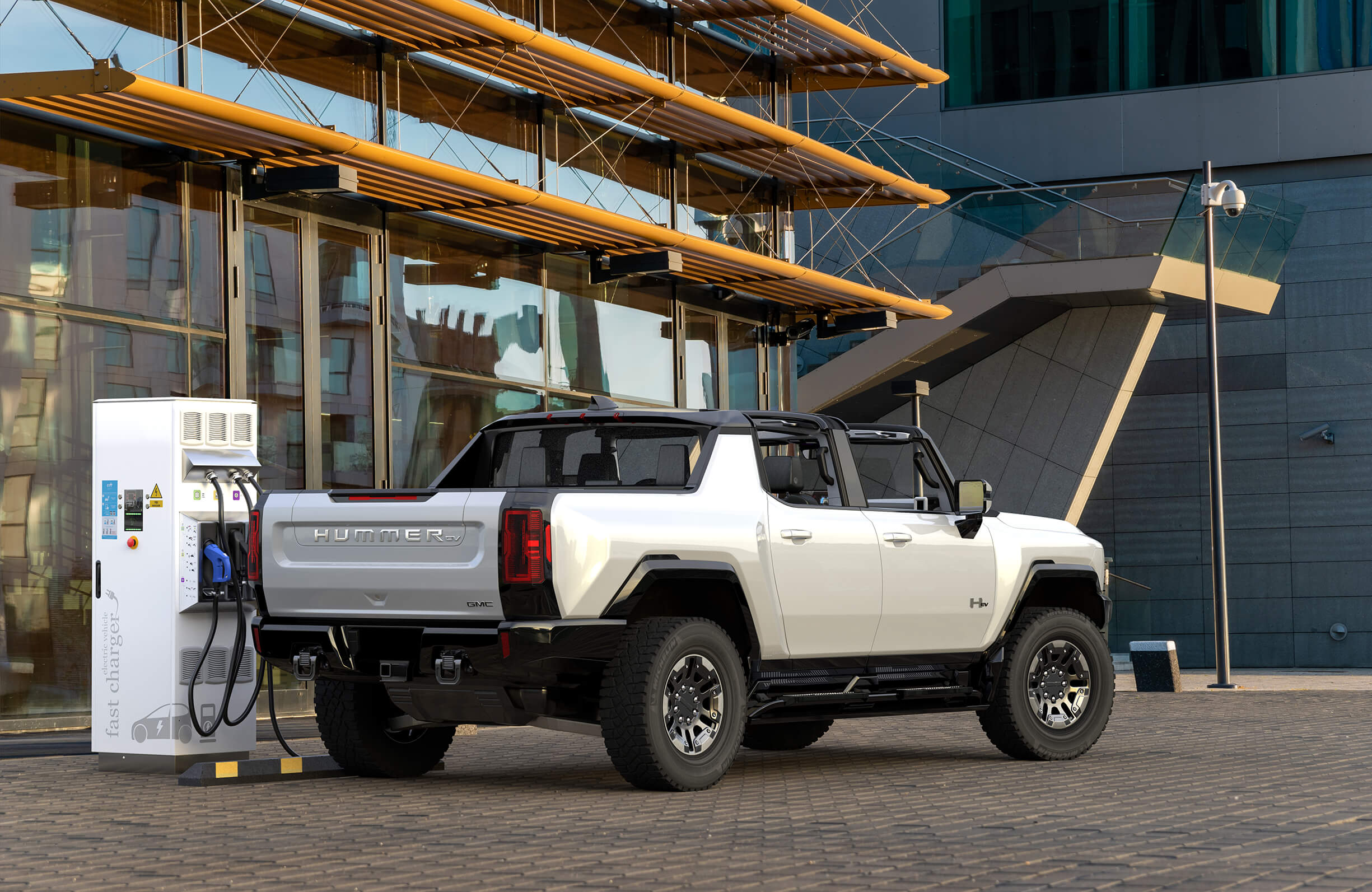
9,000-Pound Electric Hummer Shows We Can’t Ignore Efficiency of EVs | ACEEE
ACEEE | American Council for an Energy-Efficient Economy
256 points · by cwwc · 4y ago · 408 comments
A gallon of gasoline emits about 11.8 kg of CO2 if you include refining. https://innovationorigins.com/en/producing-gasoline-and-dies...
One kilowatt-hour of electricity currently emits about 372grams of CO2, a number that has dropped from 500 grams in 2012.
A new Chevy Malibu gets 32.5mpg combined. Hummer EV gets 47mpge combined, or about 1.394 miles per kWh.
363gCO2 per mile for the Malibu, 267gCO2/mile for the Hummer.
I don’t think using hyper-specific region specific metrics makes a lot of sense considering the grid is all connected. (At least, the East Coast and Midwest, Texas doing its own thing, and then the west Coast.) in any case, the grid is getting lower emissions over time and could go MUCH lower than current (maybe half or less) over the full life of any new vehicle.
Also, a Hummer EV is displacing other large vehicles. And if everybody drove subcompacts or other hyper efficient gasoline cars then we’d have less of a problem anyway. But not everyone is doing that. And a lot of people don’t want to. From a political economy standpoint then this is still a huge net win. Every new car and truck needs to at least have a plug in it within the next 5 to 10 years, and then we can start penalizing larger and heavier vehicles more directly.
EDIT: what we should do is expand the EV tax credit. GM no longer qualifies as they used theirs up, like Tesla. Mostly just foreign EV makers qualify, which cannot be the real intention of lawmakers when they made the law.
We can use the EV credit as a tool for improving efficiency. Instead of subsidizing per kWh of battery, we subsidize per mile of range. The first 50 miles of range (ie to be a plug in hybrid, but need at least 6.6kW charging speed) are incentivized at $100/mile of range. The next 200 miles of range $25/mile (under the condition of 100kW fast charging capability).
That way car companies are incentivized (even more) to maximize miles per kWh. Small, hyper-efficient EVs will be disproportionately credited. For a given kWh of battery, you’ll make more EV credit money as a carmaker putting it in a small, very efficient car than a big Hummer. But unless we renew the EV credit (and make it per kWh), there isn’t this (additional) incentive.
this is the key point, if you are going to compare compare apples to apples. I mean you can always keep making EVs bigger and thus more inefficient till you have total cost & environmental toll parity with some smaller car.
Though its unlikely that somebody who was going to buy a regular hummer was going to opt for a malibu & nevermind the price. a good starting point may be comparing cars with Total cost of ownership parity & that too when both cars are past initial production ramp.
my cynical brain says the truth is much simpler, fossil industry they wants a stream of these type of articles so they can keep the illusion of 'just as bad' alive for buyers on the fence. that is until then next fossil friendly administration shows.
Yes that seems to be the takeaway from Transport Evolved on another recent “study” that compared EVs to ICE cars on tire particulate emissions.
(And for what it's worth, I don't think Tesla should get a free pass here. Tesla Model S's generally weigh about 4,000 to 5,000 pounds, which is awfully heavy for a Sedan. They just don't look heavy, so people don't think about it.)
I'm in favor of EVs generally, but I think the would would get along just fine if there wasn't an electric Hummer.
Most of this is a red herring.
But you'd get a huge electric battery for boon-docking it, running AC, etc and you get a large surface for solar panels. You might even be able to have enough solar to be able drive for a day to a new local, and then park for a few days to recharge and then drive again. ;)
I bet they'd sell pretty well and still be better environmentally than the RV's that get 5mpg.
Most existing class As are between 12000 and 30000 lbs. We are taking a 40' RV, so go to the top end of that. The F150 lightning and the Rivian both with around 8500 lbs and do about 50 kwh/100 miles on 135 kwh batteries, so a theoretical RV would likely need (very roughly) 3-4x truck equivalents of weight to maintain similar range characteristics (taking a little jump here, but most of that truck weight is battery and you still need to put an RV on top). The likely power requirements are 150-200 kwh/100 miles and 400-500 kwh of battery.
The means that, at the 6.8- 13.6 KW of solar panels are adding maybe a few miles an hour to range. Not impossible to boondock it and charge over the time, but going from 10% to 85 is going to take you a good chunk of the week under pretty optimal conditions.
(Which tbh I think will happen more as we near 100% green energy - you'll still end up with special cases where the energy density and portability benefits of storing energy as bonds in hydrocarbons still makes sense and justifies paying a higher cost for such synthetic fuel!)
But with how everything is going with solar, batteries, and nuclear, I suspect that the invisible hand of the free market is going to make the default "I want to make 1-7 people go about 70mph for 0-4 hours" vehicle be an EV, rather than doing complicated and expensive chemistry to make renewable hydrocarbons.
Are there diminishing returns if you are a company working on a million mile battery since virtually no vehicles will make it that far?
I am speaking as someone who has had three cars totaled before 100,000 miles (none of which were my fault!)
If you want to factor in manufacturing emissions, you would have to do so for both. Unlike the manufacturing process for the battery, fuel refining is not a one time thing, but part of the emissions associated with operating the vehicle.
But if https://climate.mit.edu/ask-mit/how-much-co2-emitted-manufac... is a good benchmark, we can probably assume the battery's manufacturing process releases between 3120kg and 15,680kg of co2, though that does describe a tesla model 3 battery and I don't know how similar it would be. For the sake of expedient math, I'll average them and say it emits 9,000kg of co2.
If we assume a lifespan of 200k miles, no part replacements, and no change in co2 costs/mile for EVs, then the total emissions would be:
~68,200kg for the EV (341g/mile) + the battery = 77,200kg total
~177,800kg for the non-EV (889g/mile), not including the manufacturing emissions associated with the ICE
Ultimately it's not an insignificant amount of co2, but in context it is actually pretty unimportant. It turns 341g/mile into 386g/mile. Of course, it's incorrect to assume an EV will have static "emissions" since they all come from the production of electricity, and given current trends it would be fair to assume those numbers will trend downwards. Gasoline, however, can probably be expected to have fairly static emissions over the life of the vehicle, likely actually getting worse as parts wear.
I am under the impression that battery trains do not last anything like that long - am I misinformed?
Doesn't change the maths much, but curious
The one thing about a Hummer EV with a huge battery is it can be used for work requiring towing large payloads. With large tow jobs, the thing that matters most for range is the kWhs of the battery of the vehicle, so it’s somewhat justified to have such a big and heavy vehicle.
The Malibu is a cheap sedan.
Base prive of the Hummer EV is 5x the Malibu ($23k vs $108k)
Is it? Not all hummer drivers are Arnold Swartz. what if the main buyers are just folks who want the largest electric cars? It's possible this mainly cannibalizes Tesla Model X sales more than gas Hummers.
I haven't seen studies for who buys what but until there is we're all just making wild assumptions about consumer demand.
For the record, I'm not saying this is awful or hurts more than it helps. My main point is brands offer more EV options shouldn't defacto be applauded.
Even renewable capacity creates CO2 when it's made. So does the grid. So does maintaining these things. And so does drilling for oil, & shipping it around the world, processing it, and shipping it again.
> That way car companies are incentivized (even more) to maximize miles per kWh.
As long as battery charging times are so slow, IMO car companies already have a ton of incentive to make their EVs efficient, as range is a big differentiator and batteries are such a large cost component. I suspect there isn't a lot more efficiency that would be gotten out of a change to incentive structure.
> Also, a Hummer EV is displacing other large vehicles. And if everybody drove subcompacts or other hyper efficient gasoline cars then we’d have less of a problem anyway. But not everyone is doing that. And a lot of people don’t want to.
This is a big source of waste and inefficiency though. People just needing to commute by themselves from A to B and buying pickup trucks or large sedans with poor efficiency, then whining whenever energy costs shoot up.
As a taxpayer, I would much rather if my taxes subsidized programs that encouraged people to be more frugal with their vehicle type choices.
Weight is an okay stand-in for that metric, but isn't perfect (there are ways to distribute load on the road using the wheels that reduce wear, and there are design features like a low hood or even external airbags that could be used to reduce fatalities to pedestrians and other vehicles).
But we shouldn't go there until we've all but eliminated fossil fuels from our roads.
A gallon of propane emits about 0kg of additional CO2, if you consider that it's just going to get flared off as waste gas anyway, and we need to refine lots of oil to make the plastics to make electric cars.
Why are you still wasting time running things on petrol when propane is better in just about every way?
I have no idea where this leaves us.
Not if it's coal. 1 kWh from a coal power plant generates 820-940 grams of CO2 (down from 1130g [5])
The EV Hummer actually gets ~631g CO2/mile - nearly twice that of the Malibu - if your electricity comes from a coal plant.
60% of the USA's power comes from coal, oil and gas. [6]
In many parts of the country, going to EV does not substantially reduce CO2 emissions nor save money. We have a very long way to go until we can say that EV is always better for the environment than ICE.
CO2 emissions from energy generation are now higher than they've ever been in history. More coal is being burned lately due to higher natural gas prices. And as emerging markets have more need for electricity, they are ramping up more non-renewable power production facilities, because gas, oil and coal are cheaper/easier/more available. [1] [2]
(aside: the EIA considers electricity generation "from biomass [..] to be carbon neutral" [3], which is bonkers. Biomass co-firing generates 740g CO2, non-cofiring 240g [4])
[1] https://ourworldindata.org/emissions-by-fuel [2] https://newatlas.com/environment/energy-related-co2-emission... [3] https://www.eia.gov/tools/faqs/faq.php?id=74&t=11 [4] https://www.world-nuclear.org/information-library/energy-and... [5] https://www.iea.org/data-and-statistics/charts/average-co2-i... [6] https://app.electricitymap.org/map
This is a meaningless point as you can make this argument about literally anything. Please point to the person you think is making a purchasing decision where it’s heads = Chevy Malibu, tails = Hummer EV.
An H1 Hummer gets 10 mpg rated, but at the performance levels listed for the EV it would be substantially lower. So an equivalent performance gas H1 Hummer would have four, five or more times the emissions of a Chevy Malibu.
Your position is irrational. I’m really looking forward to urban gas stations being deleted and replace with nice things that don’t contribute to childhood cancers.
Efficient natural gas plants can actually do pretty well, about the same as the 372g/kWh grid average. Almost no oil (or petro coke, etc) is burned for electricity. I think less than a tenth of the amount of electricity from solar (solar is currently somewhere around 5% to about 4.2%, depending on how you count "now", i.e. annualized amount based on the last month of data in April with seasonal effects taken out... or the more conservative 12 months rolling average).
This is a key point so many people miss.
Perfect World: We reduce our emissions.
Good World: We transition our infrastructure to things that can be decarbonized in the future. That Hummer EV could theoretically run on completely renewable energy (once other changes are made) the Malibu will never.
Edit: fixed units
We can agree on that. But also, a 7000 lb Hummer would as well.
Stupid.
This page [1] says biodiesel emits 2,661 grams of carbon dioxide per gallon. Let’s say a 1988 F250 gets 15 mpg => 2,661 g/gal * 1/15 gal/mile = 177.4 gram CO2/mile.
Pretty cool it’s less than both the Chevy Malibu and Hummer but wonder how it compares to other petrol cars - it is just proportional to fuel economy but im not gonna run the numbers. In my head a pure gasser car would need to get above about 40mpg of petroleum fuel to emit less grams of CO2 than a 15mpg vehicle running pure biodiesel.
TLDR biodiesel is what’s up if you can’t afford an ev (and still has its place if you can). Pure petroleum diesel still barely emits more co2 than gasoline anyway [2]
Disclaimer: only comparing carbon dioxide and not other greenhouse gas emissions
Edit: i'm seeing some numbers around that the average human exhalation per day is emits 1 kg of CO2, for reference. [3]
[1]: https://impactful.ninja/the-carbon-footprint-of-biodiesel/
[2]: https://theicct.org/sites/default/files/Gas%20_v%20_Diesel_%...
[3]: https://www.sciencefocus.com/planet-earth/how-much-does-huma...
The problem is the fossil fuel that is concentrated carbon from millions of years of plants and now just adds to the CO2 in the atmosphere without a corresponding mechanism to take it out again.
If we create gasoline by capturing CO2 from the atmosphere there isn't a CO2 problem with using it for fuel. Processes exist, but all have some (major) inefficiency issues.
Edit/Note: I’m in the US and typically seek out data for the North American region. Maybe palm oil biodiesel is a bigger thing in other parts of the world (Africa, Europe, Asia?) - not sure. Would be intrigued if there is data supporting it either way. The US dataset below has “no data” explicitly stated for palm oils.
[1]: https://www.eia.gov/biofuels/biodiesel/production/table3.pdf
Of course it is because the capitalist state prioritizes shareholders over stakeholders.
Of course you are!
And we're allowed to think what we will of you, should you choose to do that.
It's not an "inconvenient truth", it's outdated information, basically a lie at this point. No one's bothering building new coal plants any more. People ARE building new nuclear plants (Vogtle, etc, not counting the small modular reactors). Nuclear produces about 18-19% of US electricity, nearly as much as coal. Solar is about 4-5% of US electricity (including solar behind-the-meter), hydro is 6-7%. Wind is 10%, geothermal about 0.4%. Wood and biomass waste (including landfill gas, etc) is about 1.3% total. Total renewables and nuclear produce over 40% of US electricity, twice that of coal.
Source: https://www.eia.gov/electricity/monthly/epm_table_grapher.ph... and https://www.eia.gov/electricity/monthly/epm_table_grapher.ph...
Yes power generation in many parts of the world still produces lots of CO2. We all know that. You're not more clever than the rest of us for pointing it out.
But to decarbonize we have to address both cars and power generation. It's okay for us to talk about electric vehicles in isolation. These problems can be dealt with independently.
Every time there's talk about EVs some smartass is saying "it's pointless cause we're burning coal to power them". Such an attitude of "nothing is worth it unless we fix everything at once" once promotes apathy and inaction, and is just plain annoying.
No we don't, that will increase inflation is basically a tax on poor people to pay for rich people to buy new vehicle
The EV Tax credit needs to do away completely, EV can either compete with ICE in the market or they cant, government should not be picking winners or losers.
>>Also, a Hummer EV is displacing other large vehicles.
Not until batter tech improves, I am interested in an EV truck, none of them have the towing range that makes them practical for a weekend trip to the dock with your boat, or a camping trip. One of the Youtube channels I watch just did a head to head with a ICE truck against the Ford Lightening, they did not get 80 miles with the truck before they ran out of charge pulling a normal sized trailer, that is with the Truck claiming a 150 or so mile range at the start of the trip. TERRIBLE towing miles.
Current batteries may be good for a car like the Model 3 and Model S, or the Mach E, but it is TERRIBLE for large SUV's or Trucks that are made for towing
One of the governments jobs is to make sure externalities are accounted for, and ICEs should not get a free ride by not dealing with their pollution.
There are many things that do not make sense on the open market, unless we can collectively agree to tip the scales in the direction it should go for a better society, till the "market" can manage it on it's own.
We clearly differ as to what the role of government is, because I do not believe that is one of the governments job at all.
Government is simply the organization of the natural right of lawful defense to protect persons, liberties, and properties; to maintain the right of each. Nothing more, nothing less
Given the federal tax credit is US Law, I would also like you to point to where in the US Constitution is the power granted to the federal government to "make sure externalities are accounted" I missed that provision in my copy of the Constitution
>>There are many things that do not make sense on the open market
I am sure we are going to disagree widely here as well, as I am very much an Adam Smith invisible hand adherent
Should be a tax on ICE vehicles rather than EV credits. The former is not inflationary and charges directly for the externality.
But what we need is a full carbon tax of about $250/tonne of CO2 (eventually), as that's approximately the fully accounted social cost and is also about the long-term cost to suck the CO2 out of the air and store it. Then there wouldn't be any need to subsidize anything except for the usual industrial policy/tech dev reasons as the externalities would be priced in.
So even if the Truck is only used for towing 2 times a year, you will never get most truck owners to buy one with a 80mile towing range
So 1/3 the emissions of a normal hummer… I don’t think the normal hummer owner is going to ever switch to a sedan so that seems like a major improvement
We as humans only really internalize the things we see.
Where exactly do you stop?
[Yes this is my subverted version of "I, pencil"]
I think the current state of affairs is actually worse than that -- big trucks are popular not just because some people like big trucks, but also because there are regulations that prevent small trucks from being a viable market segment in the U.S.: that class of vehicle has much more stringent fuel economy standards (perversely forcing people into larger vehicles with looser regulations), and light trucks imported from other countries are subject to a 25% tariff.
https://en.wikipedia.org/wiki/Chicken_tax
The only light truck I know of that you can get currently is the long version of the Jeep Wrangler. I'm not sure if they actually meet the fuel economy standards, or if they can somehow claim to not technically be a light truck. Maybe there are some others, but as far as I can tell almost all trucks sold in the U.S. are huge and have comically tall grills.
If I wasn't already in the middle of an EV conversion project, I'd be tempted to get something like an old Datsun 620 and load it up with batteries. I wish there was a product on the market like that.
https://www.thedrive.com/news/44642/imported-1000-hp-henness...
You’ll see people in areas like that driving a beat up truck barely large enough to fit 2 people or a tiny scooter that’s hauling a half ton of cargo.
Nobody is getting their hummer dirty or risking a scratch. And anybody going to a job site is going to prefer an actual truck over an oversized vehicle for bored suburban couples.
That's one of the reasons what governments were made for.
Tell me in that climate how the government does it’s job? People keep electing government officials who are expressly against what you’re suggesting.
If you're powering it with coal, this is horrible. If hydro/solar/nuclear power, well it's still a big load on the grid, but carbon wise it's a small fraction of the footprint.
Of course you need to factor in where the power is actually coming from on your grid. And definitely factor in the time of day (are you charging overnight and actually using a higher carbon source, etc).
When you do the math on this Hummer on the cleanest sources, it's still far cleaner than even a small ICE engine. Even though I still hate it :)
https://www.youtube.com/watch?v=XmBGSKRGs6A
Because of this alone, there are many EVs that are still worse for the environment than many gas-powered vehicles
38%[0] of an EVs emissions are in the manufacturing alone. Ultimately, the best thing you can do for the environment is still to STOP BUYING NEW CARS
[0] https://energy.mit.edu/wp-content/uploads/2019/11/Insights-i... (page 90)
If your annual driving distance is low (<5,000 miles) and your grid is relatively dirty (e.g. the midwest [SRMW] grid), a range of EVs have more CO2 emissions/mile than conventional internal combustion vehicles.
(This is a project from the MIT Tranick lab / http://trancik.mit.edu/)
Right now. I'm sure you know but the beauty of this is that those cars' emissions can be reduced without changing anything about the car simply by changing the fuel used to generate electricity which can (and has to) happen in the future.
Such as Germany currently decommissioning nuclear plants...
Source: https://www.cleanenergywire.org/factsheets/germanys-energy-c...
https://blog.ucsusa.org/dave-reichmuth/plug-in-or-gas-up-why...
https://www.epa.gov/egrid/data-explorer
Carboncounter seem to be using the eGRID subregions, but I'm not sure how much green power actually flows from southern Wisconsin all the way to western Virginia. Maybe there's a power expert here that can comment on whether state or eGRID subregion numbers are more appropriate.
That the graph origin is not 0,0 by default and includes tax credits doesn't inspire much confidence in their impartiality.
This is a very complex problem to measure.
or there's a map
https://blog.ucsusa.org/dave-reichmuth/plug-in-or-gas-up-why...
I’m also disappointed that the second link didn’t include the emissions in the manufacture of the vehicle itself, which will be higher for EVs than gasoline cars, but from what I’ve read[0] the lifetime emissions of an EV are far far lower (breakeven point is about 10-15kmi).
[0]: https://www.reuters.com/business/autos-transportation/lifeti...
In the long run, manufacturers making all of their halo cars ostentatious EVs is a good thing. Offroad car bros are not one wholesome lecture away from switching to a bicycle. Let's let car makers make electric cars cool and then focus on actually providing better sources of electricity.
There is no substitute for energy efficiency. Having the right form of energy generation or storage is wonderful but efficiency is a fundamental virtue for hardware that is currently undervalued.
We're closer to losing women's and gay rights than to setting new environmental laws and standards.
It’s incredibly frustrating to see society dump our limited metal reserves into useless things. Every EV on the road that could be replaced by public transit and every big EV that could be replaced by a small one is N kWh of grid storage batteries that don’t get built.
The thing is Americans just do not buy sedans.
We can hem & haw and browbeat consumers, but if they want to buy big trucks.. better EV flavored ones than V8 coal rolling polluters.
The more form factors are available in EV flavor, and the more price points they can hit.. the better.
Yes, or perhaps regulate these tanks that are a disaster for human life in all the years past 2150 (i.e., a time people born in the next twenty years will live to experience)...
I mean, I can't just bring a gigantic 500 kilo suitcase on an airplane. There's costs associated to the airplane and other passengers, and thus doing this is priced such that nobody does this for fun or mere convenience, but rather only very rarely out of necessity. In fact, only on the rare occasion when the costs are worth paying because the value is equal or higher than the price.
There's rules & conditions to using certain services and infrastructure like an airplane. Roads aren't any different, we just happen to accept rules & conditions that are ridiculously imbalanced, aren't pricing in the costs, and are disastrous on a whole range of categories: from climate change, to environmental pollution, to human health and safety, congestion and geopolitical issues around oil dependence.
I am mostly trying to drive home a point I think a lot of perfectionists miss..
A lot of people drive gas vehicles. A lot of people drive big trucks. The more form factors that EVs come in, the more gas vehicle drivers can be converted to EVs, which is a net win. I am not sure we are going to magically regulate and legislate away everything al at once in one Great Leap Forward of banning ICE, mandating smaller vehicles, changing land use and road design all in one go.
I am simply putting forward the opinion that every EV Hummer sold to a former gas Hummer buyer, is a net good. Every F150 Lightning/EV Silverado/Rivian sold to a former F150/Silverado V8 buyer is good. Every Tesla Model 3 sold to a former Camry/Accord buyer is good. Every VW ID4 sold to a former CRV/RAV4 buyer is good. Every Chevy Bolt sold to a former Honda Fit/Chevy Sonic buyer is good. Etc etc etc.
Look at the list of top vehicles sold in America. Most of them don't have EV versions available or affordable today. The more we can convert the merrier.
I don't think you are going to convert a lot of Chevy Suburban buyers into a Polestar 2, or BMW X5 buyer into a Tesla Model Y, or a Toyota Highlander into a Chevy Bolt. You could get some of them into a BMW iX or Mercedes EQS SUV or Rivian R1S, etc.
Some vehicle bloat is also crash safety regulatory driven as you see how much crumple zone growth cars have experienced if you compare say a BMW 3 series from 1990/2000/2010/2020.
Attributes like weight or type about a vehicle have relatively vanishing impact on risk in reality. https://www.iihs.org/ratings/insurance-losses-by-make-and-mo...
This is the sort of things governments can be good at if they choose. Otherwise gas/energy prices will eventually do it for us. And it won’t be pretty.
That isn't what it means to "price externalities correctly". Pricing them correctly means that the price covers the cost of the externality. That doesn't stop people who are willing and able to pay the price from doing so.
> This is the sort of things governments can be good at if they choose. Otherwise gas/energy prices will eventually do it for us. And it won’t be pretty.
This is exactly the sort of thing you want a market to sort out. Rising energy prices would naturally create the market pressure needed to find alternatives. It's the kind of problem firms would see coming a long way off and prepare for.
https://www.thedrive.com/news/small-cars-are-getting-huge-ar...
I keep hearing communism is a nice idea but fails in practice.
Well, unchecked capitalism is a nice idea until the world collapses.
Yes the incredibly empty "Empty Quarter" of the state is large, and empty. As in nobody lives there. The best-selling vehicle in Modoc County may or may not be a truck, but the fact is of no interest.
Really, INME, just “in the cities” (with maybe also the coastal mountain areas between the coastal cities). The inland rural south is no different than the inland rural north in this respect, AFAICT.
But the population is largely in the cities.
I'd be cautious about blaming it all on fuel prices. I'd argue that the increased wealth of California residents relative to the rest of the country also plays a part in why a vehicle that is too expensive for most people made it so high on that list in California.
I would argue it's more because auto manufacturers wish to streamline their production lines. Body-on-frame is very flexible and allows them to re-use most components across different products.
The marketing departments then produce Television ads questioning your masculinity if you don't drive a vehicle based on a commercial truck frame. Suddenly "it's what the customer demands".
I'm not sure what the prices and fees are in California, but for comparison, in Mississippi it costs me about $45/year for registration and today I paid $4.17 for fuel. If I recall correctly, vehicles newer than 20 years old can cost significantly more to register here, but I don't have anything that new.
In the early 2000's my own situation changed, I was needing to haul relatively heavy/bulky items. I acquired a Honda Pilot because of its rated 1300 lb payload, better than a small pickup. After a while that need ended, but I kept the Pilot and still drive it. However since then it's used <3000 mi/year, a good thing with price of fuel being what it is now.
The Pilot was/is built on the same platform as the Honda minivan, albeit with slightly modified drive train. Pilot and minivan have essentially identical mileage ratings. So with these models switching from minivan to "SUV" makes no difference in fuel usage.
Can't disagree that old-style "station wagons" were more fuel-efficient than minivans and similar size vehicles. However, station-wagons seem to have disappeared from the scene at least to my observation. Out of fashion I suppose. And from the fuel usage point of view that's unfortunate.
EVs are the future but expense factors will keep ICE in the picture for some years to come. Do you suppose the current increased fuel prices will inspire a resurgence of smaller vehicles for routine transportation? In the interim that would be a good thing.
I occasionally have to haul heavy or bulky items too, but when I do, I walk a mile to the nearest U-haul, pay about $30, and have a pickup for the day. For the rest of the time, my primary vehicle is a Honda Fit that gets 40mpg, can fit into the Compact spaces in all the local parking lots, and easily pulls a U-turn even on narrow roads. I wouldn't want a pickup as my daily ride - it wouldn't fit in my (relatively small) garage, it burns gas like you wouldn't believe, and parking options are much more limited. Dropping $30 for the couple times per year that I need one is way more cost-effective than spending the upfront cost for them + additional gas & maintenance.
Station wagons I think also partially fell out of fashion because you can't do a 3 row wagon safely anymore as there's no way the rear facing vomit seats are going to survive modern safety tests.
Also don't forget how ginormous modern kids seats are in cars, and how many more years kids are legally supposed to sit in safety seats compared to when we grew up. Few sedans are comfortably able to take 2 of these kid seats and still leave you with room for much cargo or a 3rd adult (grandma or grandpa) at the same time.
The market for 7 seaters (of which 4-5 may be occupied at any one time) is fairly large.
The government put fuel efficiency regulations on sedans in the 1970s. This effectively killed station wagons. The rules around light trucks were different though, and that's why the minivan was created.
The SUV is an outgrowth of the same thing.
Simply put, you need to meet the voters were they are.
Companies know this and meet consumers where they are.
Why do people buy SUVs? Because the generation that grew up embarrassed by their parents minivans never wanted to buy a minivan! So now companies sell the former minivan cohort SUVs instead, which are basically the same thing.
Occasionally the Germans ship us a sexy sports wagon, but they can't call it that here and have to call them hatches or "cross turismo" etc.. haha.
If you live in norther climates there are some advantages to SUVs/crossovers in terms of ground clearance. Winter, even with AWD and winter tires can be a problem in my sedan when I bottom out at every poorly plowed intersection.
Sedans are also a PITA as soon as you want to haul both people AND stuff at once. Or anything with a dimension wider than 3 feet.
SUVs do offer benefits in terms of semi-regular things normies do like moving your kids in/out of college 4x/year with the semester system, taking your family on road trips instead of flying (which is way more polluting!), hauling large dogs, Costco runs, etc.
People with various sorts of outdoors enthusiasm also may use them to haul, roof rack or tow more outdoorsy gear.
Not everything other people prefer is because they are bad people who are evil and need to be stopped.
I'd be curious how exactly you'd legislate away SUVs now that the genie is out of the bottle. What's an SUV, whats a cross over, whats a commercial vehicle, etc. If you go by weight, plenty of sedans violate worse than small SUVs.. In fact if you go by weight class you may ban EVs and allow ICE!
I see more sedans on the road than any other type of vehicle. Crossovers I see almost as much, though.
https://www.statista.com/statistics/199981/us-car-and-truck-...
Keep this in mind. If you live in VT you’re at 0. If you live in TX or FL maybe don’t bother. https://www.eia.gov/environment/emissions/state/excel/electr...
If you have 2 buckets connected at the bottom by a small hose, and you take from the left bucket at a high enough rate, the buckets will be at an unequal level and at some point either you stop taking and the water eventually seeks its own level again or your take rate becomes that of the connecting hose. (this extension of your bucket analogy, like all water/electricity analogies, breaks in a lot of ways but it gets the idea across at least).
And given how often Nuclear does provide greater base load than smaller coal plants; if your most local plant is nuclear, your emissions are less.
That's why we can speak regionally.
Its disappointing to see this myth repeated over and over again, you should examine the political motivations of the sources that are telling you how dirty panels are. There are externalities to their manufacture but any who tries to convince you they are worse than fossil fuels is being deceptive.
https://cleantechnica.com/2018/02/03/solar-power-can-pay-eas...
For one, there is just the mass: yes, it makes it safer for the SUV driver, but at the expense of the smaller cars/bikes/pedestrians.
But there is another factor. When I learned to drive 40 years ago, I took it for granted that most of the time I could look through the car in front of me, and often the car in front of that, to anticipate changes in traffic conditions. Now I mostly see the rear of the large vehicle in front of me and no further.
A better analogy is sitting at a concert and complaining that the people are standing in front of you.
SUVs are allowed and expected to be on the road. Standing in a movie theater is not.
But even that's not entirely true that people inside the SUV are safe because you can also look up the history of "rollover deaths". In an accident an SUV is a big immovable object, right until it isn't anymore and then it's a very heavy thing with a weird center of gravity. If an SUV tips over somehow in a collision, or worse rolls over itself more than once, that often has spelled death for the SUV's occupants. There's been more safety measures and center of gravity balancing and rollover cages added to SUVs since the height of rollover deaths in the 1990s, but the brinksmanship of "the safest option is to be inside the SUV" moving "everyone" to SUVs for their own skin, increases the likelihood of SUV versus SUV accidents and the return of rollover death statistics.
SUVs are unnecessarily large and heavy, dangerous to pedestrians and cyclists, blocking the view for other drivers, causing more wear to the street surface and take up precious space when parking in cities. And for what? Hummers might be an exception, but most SUVs aren't even suitable for off-road use. Not that most owners even need that.
So yeah, it is absolutely insane for people to drive a car that causes so much harm to other road users and society as a whole for no good reason other than "me want BIG BIG CAR" and so it should be taxed to offset these effects.
How do you know what my capacity needs are?
> causing more wear to the street surface
Presumably, they also pay more in fuel taxes and vehicle sales tax, which is the main source of road funding?
Do you suggest taxing all vehicles by weight for this purpose?
The damage to roads scales O(n^3) by vehicle mass.
The death rates have already been spoken for.
The space taken by SUVs on roads and parking is subsidized by people who drive smaller cars, cyclists, and pedestrians.
Road-goers should not be subsidizing SUV owners.
In general people are not careful readers, and in my opinion, headlines like this tend to feed cynicism and inaction.
What I see here is enormous opportunity in decarbonizing the processes that lead to high lifecycle emissions for this and other vehicles.
If I buy an array of solar panels and use it to charge my car, it doesn't matter at all how efficient my car is, grams of CO2 emitted is basically 0.
We should really focus on regulating and improving the efficiency of grids across the US, investing in renewables and nuclear. This is the biggest benefit of electric vehicles anyway, the fact that it pushes the burden of efficiency from every consumer who owns a car to the much smaller set of infrastructure providers.
There are metrics which relate the amount of CO2 emitted to manufacture a panel vs the total amount of electricity it goes on to generate, and they are not 0. They're significantly lower than coal fire power plants, but not zero... and can vary greatly depending on where in the world you actually install that panel.
> improving the efficiency of grids across the US
What is currently inefficient about them?
> the much smaller set of infrastructure providers
Who all hold government granted monopolies on their infrastructure. I'm not absurdly hopeful this will automatically turn into a win for the consumer.
Yes, fair enough. Making pretty much _anything_ contributes to CO2 in some way and this argument easily devolves into one where we're saying we should just limit all human activity, and I'd say that that way of thinking is regressive. If you can generate your own electricity this pushes the burden of emissions to the manufacturer of the panels, which is a good thing because panels are tech that improves over time.
> What is currently inefficient about them?
Yeah I misspoke, what I meant to say is we should focus on reducing the emissions that they create while generating electricity. i.e. improving efficiency if you consider CO2/Watt generated to be your units. This is done by switching to renewables + nuclear.
>Who all hold government granted monopolies on their infrastructure. I'm not absurdly hopeful this will automatically turn into a win for the consumer.
This I disagree with, I think a smaller number of government-granted monopolies are much easier to control/regulate than every single US consumer.
Also, all else being equal, an large electric vehicle at least has the potential to use low-CO2 energy, and the grid provides a better place to optimize CO2 output and renewable usage.
We'll have a far easier time generating clean electricity from stationary grid-tied power plants than getting the fleet to stop spewing co2 sans electrification. Worst case we build a bunch of modern nuclear plants, just get the damn combustion engines physically decoupled from all the automobiles already.
I'm not sure how Americans can undo the colossal car arms race... taxes based on weight? I believe there are actually tax breaks aimed at businesses with vehicles over a certain weight, which seems backwards.
We current subsidize, to a LARGE extent, goods shipped via semi truck. A large portion of the damage done to infrastructure is from shipping.
The solution? Trains. Whatever we can do to get more goods shipped by rail or ships the better. Those are the most CO^2 and infrastructure efficient ways to move goods. Even better if some day in the future we get those trains powered by electricity.
Shout-out to India, they have grade-separated electrified freight corridors, 5 lanes wide in some places, running double stacked container trains at 100kmh, no noise no pollution, it's a sight to behold
We went from decently planned cities, good public transit, and a thriving rail industry in the 1940s to... what we have today. All because we prioritized cars and home ownership :(.
It's depressing watching old TV/cartoons from that era. Midsize to largish cities had electric trolleys and elevated trains for commuters. While there were cars, they weren't necessities for pretty much anyone. It's why today the older larger cities seem to suck for cars, because that's not how people got around when they were built.
That means this Hummer (at ~9000 lbs) is doing about 40 times more damage than a Chevy Malibu (at ~3600 lbs).
That said, passenger vehicles are almost a rounding error in terms of wear compared to trucks hauling freight.
Yup. The Urban Institute recently proposed doing just that.[1]
[1]: https://www.urban.org/urban-wire/us-could-taxing-heavy-cars-...
I would be surprised if there are ever more than 50,000 Hummer SUV and Trucks made in a single year. For comparison, a decent year for the Malibu would be 300,000.
My perception of the Hummer EV is that it is meant to be a halo vehicle that gets people excited and in showrooms. You don't have to love it, but someone will.
Also, as other commentors have pointed out - these will largely be purchased by people who have other large SUVs. And you can't roll coal in an EV! I don't really like how ridiculously big these things have gotten either (solely my own opinion). I'd rather have a truck the size of the old Chevy S-10 or old Ford Ranger or current Ford Maverick.
Also, note that grid electricity's carbon intensity is extremely time dependent. Here is 2021 data for California:
https://ww2.arb.ca.gov/sites/default/files/classic/fuels/lcf...
Engineering Explained covered this in part, in his video asking whether or not it is better for the environment to keep your current (presumably ICE) car, or buy a new EV.
Comparing with the H1 does nothing since that was a military vehicle that wasn't really meant to be for consumers. That is also a 20+ year old vehicle at this point.
Even if all vehicles were electric, overall emissions wouldn't budge much. [https://ourworldindata.org/emissions-by-sector] >80% of global emissions are from fossil fuels, mainly oil, coal, and gas. [https://ourworldindata.org/energy-mix] Electric vehicles require more materials to produce and require significant grid infrastructure, which is mainly powered by fossil fuels.
A carbon tax is one of the only realistic policies that could help lower carbon. There has been minimal progress in developed countries, and even less in developing ones. Sweden has the highest carbon tax at nearly 150/ton, and 1/3rd the emissions per person relative to the United States. [https://www.statista.com/statistics/483590/prices-of-impleme....] Switzerland is similar. [https://www.worldometers.info/co2-emissions/co2-emissions-pe...]
I visited Sweden in high school on a student exchange, many years ago, and almost no one had a car. Everyone walked and it was a tiny town. Meals were very simple - bread, cheese and little to no meat. The family I stayed with and the town in general was quite poor and lived a simple life (with lots of drugs & alcohol). Of course things could of changed dramatically since then.
I'm curious how does the carbon tax not just inflate prices across the board?
Higher prices are one of the best ways to reduce consumption. Imagine of clothes were suddenly taxed at 100% - people would presumably purchase less clothing.
They fill a very big niche for people who need an efficient car but don't have plugin capabilities or need more range but can't afford a full EV, or maybe a full EV doesn't work for them.
(Sensible) electric car owners charge their vehicles over night, not at "average time" due to EV-specific utility rates available in 28 states.
Overnight CO2 emissions have significantly higher concentration of renewable and nuclear power than peak demand power.
These 3 are clear base load because they don't turn off.
Any ICE vehicles goal would be to put the lowest gearing (over drive) you can, without eating all of it's "passing power", nor dropping the RPMs too low. The lower the gear, the lower the engine needs to spin to keep that speed. The catch being, you need lots of torque to spin that gear, which electric motors have plenty of.
It just seems like you can easily sacrifice your horsepower for some more efficient highway speeds.
Where I live, the city supplies the power network but I can choose between dozens of electricity providers. AIUI there are several for any taste or opinion. Running one of those cars without CO₂ emissions would be as simple as picking a suitable provider and charging the battery for >15 minutes at a time (the statistical model that governs power allocation is based on 15-minute time units).
Is the article author dense or is this kind of competitive electricity provision unknown in the US?
Yes, we need laws about the efficiency of these cars. However, just switching to electric is a huge benefit even if there is no net decrease in emissions over combustion engine cars.
What’s important is that the technology is developed, improved, then improved again until it finally becomes a viable technology.
It's also hard to ignore that electric motors provide almost near instantaneous torque on demand...talk about a major wooooooo factor that's hard to say no to.
Theows away their credibility and I'm sure the blog post was vetted before going up.
Someone who has $100k for a truck isn't going to go for a Malibu...they would have gotten an Escalade or another behemoth.
The Hummer EV was created to dispel the myth that EVs can only for tree huggers. Different people have different lifestyles and if they are going for a more eco friendly vehicle than their gas equivalent that should be celebrated.
If a tesla requires ~ 9 years to offset its fabrication, this beast needs 18.
My figures are from Switzerland [1], so assume the Swiss grid (mostly hydroelectric and nuclear, so about as good as it gets).
Using the same car, to ease the comparison: Peugeot 208 (ICE) vs Peugeot e-208 (BEV). Manufacturing takes 9.0 tCO2eq for the ICE version, 15.9 tCO2eq for the BEV version. Over the lifespan of the car (200,000 km): 42.0 tCO2eq for the ICE version against 22.7 tCO2eq for the BEV version. So as expected the BEV version wins: it breaks even at about 50,000 km.
But note that it's "only" cutting emissions in half. And that's on the Swiss grid. Of course it's better than nothing, but unless manufacturing costs (in terms of GHG emissions) are massively reduced, it's a dead end.
This is for a rather tiny BEV without much range, looking at Tesla Model 3 Long Range: 21.4 tCO2eq for manufacturing, 29.0 tCO2eq over 200,000km. Nearly 70% of the emissions of a Peugeot 208 ICE over the lifespan of the vehicle. And again that's with a nearly optimal grid in terms of emissions. I'm not even sure a coal powered Model 3 would break even with a Peugeot 208 (ICE).
To give some perspective, to stabilize the climate we basically each have a 2.0 tCO2eq / year quota, of which currently about 1.0 tCO2eq is eaten by public services (infrastructure, hospitals, police, firefighters, etc.), rough estimation for France, YMMV depending on where you live. How to reconcile this with a car that emits 21.4 tCO2eq just for manufacturing, I don't know.
[1] https://www.tcs.ch/fr/tests-conseils/conseils/achat-vente-ve...
What is interesting is also the Lucid hanging up there despite all the extra weight. Suggests either aero or drivetrain advantage at play.
... but keep their hands off the issue of fossil fuels powering much of the grid!
You probably have to drive this hummer 800k+ miles to offset the carbon to manufacture and operate.