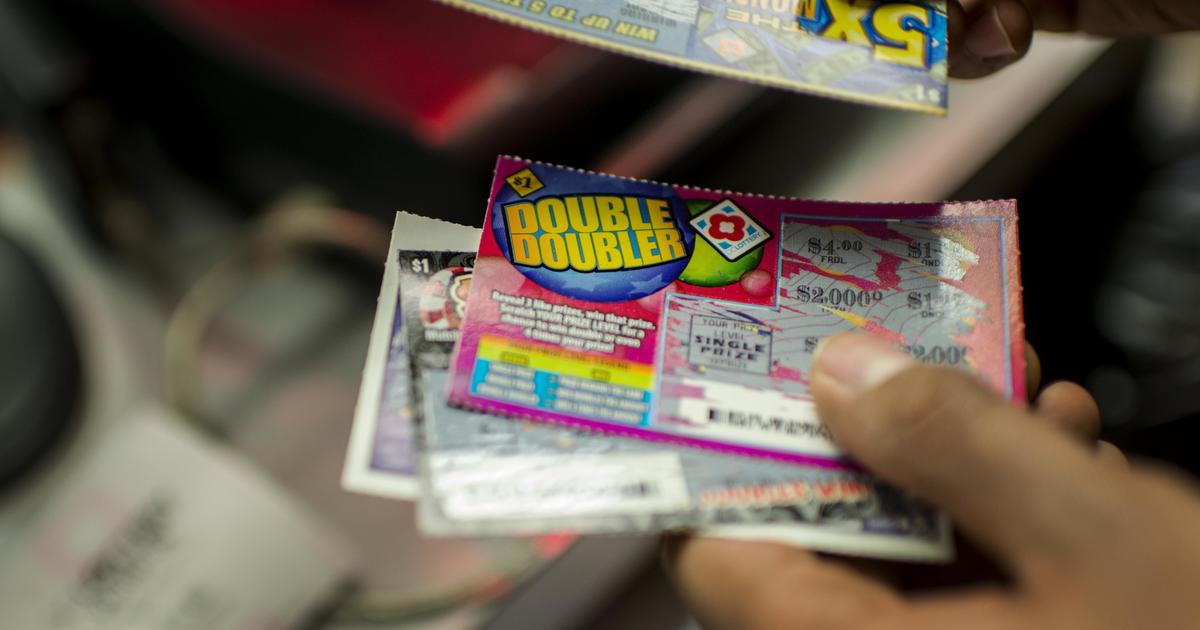
State lotteries transfer wealth out of needy communities, investigation finds
Lottery retailers in nearly every state are clustered in poor neighborhoods, driving a wealth transfer to multinational corporations.
CBS News
206 points · by lxm · 4y ago · 189 comments
State lotteries should be small, should not be advertised and should not be sources of revenue for the state.
I'm "kind of" fine with the state running it. But they should not be advertising on TV.
It really should be, "Playing the lottery is a pretty terrible idea and we're going to, on average, take your money. If you still want to play, fine, but cheeseburgers really are better than lottery tickets. Wealthy people got wealthy by putting their money into index funds and savings accounts."
No they didn't. Not with the implied "as an alternative to lottery tickets".
You could probably find a handful of very well paid and very lottery addicted people constantly blowing up that income. For 99.99[more 9s]% of people, the cost of lottery tickets is not the difference between getting wealthy and not getting wealthy. Even if they buy a bunch every payday.
I think they should spend the lottery money to hire someone who's job is to decrease the numbers.
But we also had legal national Lotto[0], and _illegal_ Lotto betting with about the same margins.
And when sport betting got legalized, the odds given where about the same as the illegal one, until the latter de facto disappeared.
So, I'm not sure the mob would not get away with Lottery margins.
[0] the traditional Italian lotto is a betting game: you bet that 1-5 numbers will come out of an extraction, but it's up to you to choose how risky a bet and how much you bet, e.g. getting one number pays 11:1, 3 numbers gives you a 4500:1 etc
For some people winning the lottery (even smaller prices) is literally the only "realistic" way of getting a moderate amount of "wealth"
When there is an economic crisis, more people are stuck in bad situation and are more susceptible to moderate gambling. News and lotto operators are selling are happy to keep selling this dream
The horse is totally out of the barn on gambling. We’ve decided that it’s all good. I was at an MLB game this weekend and they go through the betting lines for different games in the scoreboard before the game. It’s fully mainstream.
[0] https://www.tampabay.com/life-culture/history/2021/09/28/bol...
And why not ban the lottery entirely if you're not going to use it as a revenue source? Keep it around just to entertain poor people? 99.999% of them will still lose money anyway if it's morality you're worried about. Does it really matter to the winners whether they take home $100mm or $70mm (and the gov the remaining $30mm)?
It doesn't matter for the losers, they're out their money either way.
Um, it's not voluntary. Buying the product is voluntary. But the state taking a cut once you do buy the product is not voluntary. Don't mix those two aspects.
It's voluntary to buy a pound of chicken feet. It's not voluntary to pay VAT on that purchase.
It's voluntary to go to work and earn a salary. It's not voluntary to pay income tax on that salary once you earn it.
> And why not ban the lottery entirely if you're not going to use it as a revenue source? Keep it around just to entertain poor people?
One reason is to keep a legal way to do this, since otherwise illegal ones have higher demand and pop up. It's more expensive (and arguably worse for society) if you make gambling entirely illegal and instead need to go hunt down illegal lotteries with more police resources.
> 99.999% of them will still lose money anyway if it's morality you're worried about. Does it really matter to the winners whether they take home $100mm or $70mm (and the gov the remaining $30mm)?
You clearly don't play the lottery (and I don't mean that negatively). Most wins are small. $400 here, $2000 there. That's how you keep people hooked. And in those orders of magnitude, it makes quite a difference in practice.
The comment you're responding to tells you why it shouldn't be banned: because then it will be held by criminals (by definition) instead. And those criminals tend to have ties to less nice forms of crime too. So it's sort of a damage containment strategy, but it could (in the eyes of GP) be executed better.
It's exactly the same situation as taxing smoking and drinking. So - yes.
The first step here should start with the belief that the lotteries should just be outlawed, and then actually demonstrate why that won't work.
The really interesting counter-example - or really, the most incompetent series of lotteries ever ran by a state - was the excise farming schemes the British colonial administrators ran in SE Asia, in particular Penang and Singapore and further afield in Malaya, between the 1840s and officially 1903. Excise farming is basically the lotterying of monopolies on the vice trade for fixed periods of time, which existed since the 1500s and periodically gets brought out (prominently under Cromwell, and a bit during the restoration), except because the decline of the East India Company and the lack of civil servants and administrators who had a working knowledge of Chinese, which had become the biggest financial players and essentially realized that the authorities were unable to make sense of the place-of-ancestral-origin system that had little to do with what the British were familiar with (like blood quantum) and inadvertently enabled the same native-place association or Landsmannschaft (we need an English word for this, btw) to simply dominate certain vice trades by the simplest subterfuge - by leveraging the comparatively fluid role personal names represented. Yes, it took more or less an actual case of "all Asians look alike" for a state lottery to fail. Carl Trocki's works are the authoritative research on this subject and time period for those interested in what probably represents one of the most mind-boggling peacetime self-owns by two successive governments that in mainstream academic discourse (outside Subaltern, Asian, and Diaspora/Migration studies, which are arguably niche and very much interdisciplinary), represents the archetype for hegemonic power relationships in practice. I suppose one can also chalk it up as a lottery win there, a rare one, but someone does usually actually win the lottery eventually.
It's viciously cyclical and those sin-taxed items all promote bad habits, harm physical, mental, and spiritual health, and perpetuate check-to-check living and discourage savings. It makes sense to me because many folks in these communities rely on public transit and/or walk to where they need to go, so they buy from what's available.
This is the dark side of liberty where we see that people do not always choose the best options from those available to them when impulse buys are offered , or sometimes, there is far less to choose from for certain populations to begin with.
I recognize I'm oversimplifying and probably have committed more than a few gross stereotypical statements, but I am distressed to see the conditions in a lot of these neighbors, not for me, but because of what I imagine it must be like for a lot of folks who don't have the same opportunities to rise up simply due to the circumstances of their birth.
There is absolutely no good in the lottery and it should be abolished. Any alleged good for education or other programs is more than countered by the harm it does to the lower income populations. Education should be paid for from taxes, and just raise taxes if necessary. My guess is that the money that comes from lotteries don't usually end-up benefiting that much.
Most evil in the world is done by people who know what is best for everyone else, and forces it on them.
2. Every person who wants to code their morality into law.
How about all those people who thought it ok to exterminate anyone who wouldn't convert to their religion?
It just goes on and on.
Vending machine owners stock what sells. People vote with their dollars and their attention. We are free to choose what we eat, and free to throw out the TV. Most enjoy watching the 'breaking news' propaganda rather than putting in some effort to cook a simple meal at home. Your body, your choice.
I don't understand this. What's special about this population? Should you not be able to make impulse purchases based off of your income level?
For example, I love having a good glass of wine or two a couple times a week at dinner. But the alcohol industry would essentially collapse without alcoholics - a study in the UK found that 77% of alcohol was sold to problem drinkers - 30% to "harmful" drinkers (women who drink more that 36 and men more than 51 drinks a week) and 48% to "hazardous" drinkers (women 15-35 drinks a week and men 15-50 drinks a week). Similarly, I like blowing 5 bucks on the lottery whenever there is a huge jackpot (I can afford it and am basically just paying to fantasize about what I'd do with a couple hundred million), but apparently folks like me make up a relatively small proportion of lottery sales.
So, I'm basically just wondering there is anything that can, or should, be done here. I'm assuming these distributions are what you'd always see in something that shows a power law distribution - the huge percentage of total sales is always from those with addictions because they indulge so much in the first place (related very interesting article: https://astralcodexten.substack.com/p/drug-users-use-a-lot-o...).
Consider where lotteries come from - everyone in the room puts their name in the hat and then one winner is drawn (or maybe also a 2nd prize and 3rd prize). But it's simple - 1 person, 1 chance.
You just can't buy more in that system. So the 'problem gambler' that blows most of their paycheck on lottery tickets just isn't even possible.
Maybe the limit doesn't need to be strictly 1, but even just having a limit, low enough to not be too much of a hardship even to a poverty-level person, would still be a simple solution.
People sure wouldn't like it though.
They'd immediately start working on ways to get around that limit. Same as they would if you limited them to only buying 1 6-pack of beer per week.
----
0: https://www.forbes.com/sites/nicksibilla/2019/08/29/nearly-6...
I don’t know what the solution is, I know it gives people hope and excitement. Even if they think it’s impossible to work themselves out of debt they hope they’ll “win big” one day keeps them going to an extent. It’s really just another version of the “Marshmallow Question” just with adults instead of kids. You could write it all down for them and spell it out, but to them the math wouldn’t work out.
No loss lottery run by local bank or credit union would be a good start.
https://freakonomics.com/podcast/is-america-ready-for-a-no-l...
As long as you aren't doing it to win but instead to enjoy yourself gambling, and you do it with disposable income, this is fine. Don't beat yourself up for enjoying something mathematically suboptimal.
> Even if they think it’s impossible to work themselves out of debt they hope they’ll “win big” one day keeps them going to an extent. It’s really just another version of the “Marshmallow Question”
On the contrary. With the Marshmallow Question, you know you'll be rewarded. In this situation you do not think you will be rewarded. If the Marshmallow Question was "do you want this Marshmallow, or do you want it thrown away", that would be a better example. At least, in the mind of the players
> but to them the math wouldn’t work out.
It's entirely possible the math doesn't work out. A negative EV is significant if we are playing a game where the purpose is to increase my bank balance, but it's entirely possible that for various reasons that doesn't apply IRL.
What exactly is there to enjoy about a scratch ticket beyond the hope of winning?
There's "buying it for the adrenaline rush of possibly winning, and scratching it hoping to win" and "buying it because you're due/you feel lucky/you really need the money".
As long as you are buying the thrill of the chase and the occasional great feeling of winning, you're fine. It's an experience and comes out of that mental budget. If you're buying it because you really want or believe that $500 from the scratcher is coming to buy your baby new shoes, it's an issue.
I hope that makes some sense. Basically, do you understand your EV is negative/realistic odds of winning are negligible but are buying it anyway?
Would the lottery be nearly as exciting for people if they had a genuine understanding for the statistics involved? I don't mean that they've seen the math, but that you can feel in your gut just how impossible it is to "win" the lottery
> the lottery takes in over US$1 billion yearly. By law, half of the money goes to prizes, one-third to education, and the remainder to operating and marketing the lottery
It pours massive amounts of money into Georgia's education system. It's not perfect but it has put hundreds of thousands of students through school. If we must transfer wealth out of needy communities I can thing of worse places to put it than into education.
In other words, we got took.
Would lotteries be ok if the expected value of the players prize equaled the price of the ticket? Being bad at math and lotteries being a regressive tax seem orthogonal.
I'd expect that many tax payers would prefer their money to go to other places than for gamblers to have better odds.
Such an institution would be difficult to administer with zero operating costs, though.
I don't think anyone is compelled to gamble by the Georgia Department of Revenue. This is essentially Georgia saying, "We know we can't stop you from engaging in this vice, so we're at least going to make it beneficial to society in some way." Colorado and a number of other states are doing the same thing with cannabis revenue.
I personally hate gambling, I understand how people get addicted to it, but like illegal drugs it's just a thing that the government can't possibly control. The next least bad thing to do is harness it for good in some fashion.
I also don't think poor people are wrong to think a chance of getting a life-changing amount of money is a worthwhile luxury spend compared to the other available options. They may be wrong about the probability, but instead of fixing that with education, we could fix it by making the probability closer to people's intuition.
Given the well-known issues with means testing, randomly assigning the payouts instead might be a significant improvement.
Got a lottery ticket with a 10% chance of being worth $100? I'll give you and each of your friends $8.50 for them, guaranteed, today.
Lotteries penalize people who are bad at math. It really is that simple.
https://highline.huffingtonpost.com/articles/en/lotto-winner...
But it’s also possible that math whizzes like Jerry Selbee are finding and exploiting flaws that lottery officials haven’t noticed yet. In 2011, Harper’s wrote about “The Luckiest Woman on Earth,” Joan Ginther, who has won multimillion-dollar jackpots in the Texas lottery four times. Her professional background as a PhD statistician raised suspicions that Ginther had discovered an anomaly in Texas’ system. In a similar vein, a Stanford- and MIT-trained statistician named Mohan Srivastava proved in 2003 that he could predict patterns in certain kinds of scratch-off tickets in Canada, guessing the correct numbers around 90 percent of the time. Srivastava alerted authorities as soon as he found the flaw. If he could have exploited it, he later explained to a reporter at Wired, he would have, but he had calculated that it wasn’t worth his time. It would take too many hours to buy the tickets in bulk, count the winners, redeem them for prizes, file the tax forms. He already had a full-time job.
This is patronizing and wrong. Math skills are also lacking in many white communities. Maybe it is more about cultural acceptance than math skills.
Arbitrage is a real issue, but it's not magic and there's a lot of friction in the real world. For ex, you don't get spam callers trying to buy your chance of a large settlement payout.
Some might consider UBI an implementation of John Rawls' Difference principle [0], that distributive inequalities should work to the advantage of the worst-off. Lotteries would support utilitarians' counterargument that one may very well prefer to roll the dice on his or her welfare, rather than accept a guaranteed, minimally satisfactory baseline.
[0] https://en.wikipedia.org/wiki/Justice_as_Fairness#Second_pri...
Both of these are the siphoning of money from large volumes of people to a few people, who are the “success stories” used to dupe the next set of people.
If the evil of the lottery is that the expected value is lower than the ticket cost that's just a simple stats problem to fix.
My uninformed guess underlying this is that making the payouts smaller and more frequent would solve this. First off, people would grow up in better communities. Second, I think if the payout wasn't advertised as "retire for life and be a rich person" people would face less social pressure to shower friends and family in gifts.
I think given no constraints giving everyone $1,000/month is best, but I think there's a fair argument giving 1/1000 people $1000/month (and alternating) is better than giving everyone $100/month.
What is meant here by "flattening" jackpots? And how does it help?
One can't make them too flat because consumers like large jackpots which is why they've grown over time and become harder to win. Presumably there's a level below which consumers would switch to other types of gambling regardless of legality.
Instead of 1 in 300,000,000 chance of astronomical money make it 1 in 50,000 of getting a new car or similar.
I'm not sure why it helps. I guess there are more (but smaller) winners, which the poster thought was better.
It’s like buying into a raffle, except you can get your money out.
I actually think this is a good idea as long as the gov keeps the ban on black market lotteries
and wars.
Hmmm, what demographic frequently buys lottery tickets? How much overlap with demographic of enlisted Army recruits?
I suppose lottery and Army is better than prison.
booze, tobacco, weed, gambling and gas
Imagine what the total revenue from just those 5 things is? It's got to be like printing cash and yet in most states and cities across the US have crumbling infrastructure, failing schools, underfunded pensions and budget deficits. This is in addition to all their other more regular tax regimes. Where does the money go?
Granted, Illinois is perhaps the most fiscally screwed state, so might not be best example...
That all appears way off.
"This year, the governor plans to increase the state’s education general fund by $498.1 million — a 5.4% increase — for an overall budget of $9.7 billion."[1]
Additionally the Illinois state gas tax which is the second highest in the US is 40 cents a gallon.[2][3]
[1] https://chicago.chalkbeat.org/2022/2/2/22914634/pritzker-pro...
[2] https://www.axios.com/local/chicago/2022/03/22/illinois-gas-...
[3] https://www.illinoispolicy.org/illinois-2nd-highest-gas-taxe...
Granted an unknown amount of these losses are "business costs" for money launderers [4], but the damage to the community is still there from the associated crime.
[1] https://theconversation.com/three-charts-on-australias-addic...
[2] https://www.australianethical.com.au/blog/australia-needs-to...
[3] https://chetre.org/2020/10/barriers-enablers-policy-gambling...
[4] https://www.abc.net.au/news/2022-04-10/nsw-crime-commission-...
I have no idea how many people who gamble regularly have a problem with it; but I'd support banning gambling entirely.
https://iview.abc.net.au/show/you-can-t-ask-that/series/2/vi... (Does iView work outside Australia?)
Too many people, especially here, espouse the "but gambling is entertainment" line. I don't buy it. I've spent thousands on video games, and sitting in front of a slot machine built by "Konami", a literal video game publisher, and it was abysmal from an entertainment aspect. Nobody would pay to play these games if there wasn't some internal pretending that "I can beat the system"
If this was possible, that would be great. But you cannot eliminate a service where there is sufficient demand. You can only drive them underground, which frequently cause worse externalities for society than the original things being banned (drugs, prohibition-era alcohol ban, prostitution).
I make good money. They're only $2.
The 5 minutes I spend walking to the office after buying one spent thinking about what I would do with ___ is worth it.
Yes, I know the math and am under no delusion about winning. I'm more likely to die trying to avoid the shitty drivers on this walk.
It's day dream entertainment!
My mother also spends $2 on them. Sometimes a couple times a day. She also compulsively gambles and has endangered my life before trying to satiate the urge.
I also grew up absolutely dirt poor, she was homeless half the time, but two unwavering constants in her life have been cigarettes and gambling, and they are far from unrelated when speaking of industry motivations. These industries have ruined my relationship with my mother, severely impacted my own quality of life as a knock-on effect, and I'm far from the only one.
Keep buying the tickets. But you can't justify the state of the industry today because you're not the one caught in its net.
And I'm for sure not disadvantaged myself.
I didn't know where to comment a reply this seemed most relevant.
I guess what I'm trying to get at is a lot of the threads here, to me, read as elitist & missing the full picture.
E.g. for instance missing the value of entertainment.
even on an unkind view of looking at players only as addicts, like lots of drugs (legal and not), that dopamine hit is fun...
to be clear I'm not trying to put that negative frame into all the people's intention here, just trying to explain how I read a chunk of the comments
It's not only some uneducated non-optimal financial ROI calculation made by disadvantaged people, or compulsive gamblers, who are being taken advantage of by state sponsored casinos imho
It is also "funny" how after generating so much money from those poor Black neighborhoods, how little the percentage of that money ever goes back to them. The states involved could very much legislate that a percentage of profits (and at what percentages) have to be shown benefiting the poor neighborhoods they are exploiting. But, we all know such problems will not be fixed (despite being exposed by the media), unless forced to and they will be fighting against it at every step.
Do we make all this illegal, put alcohol, tobacco, prostitution, pro sports and weed into that bucket too. All unnecessary and transfer wealth.
On the other hand, yeah, I'm not sure the argument by the state that hey, it's vice, we'll regulate it and hand the profits over to schools (etc.) is an honest one. Often they dip into the fund for unrelated things.
But all those things take time and effort to access; the lottery is literally available at every gas station in the nation, and most grocery stores, etc.
2. People buy lottery tickets just like they buy movie tickets - it is a form of _entertainment_. They heard many times that they should not expect to win - just like they heard many times that what they see on the silver screen is not real. Nevertheless they keep dreaming.
No one is stupid enough to really think they'll win. It's a fun shared moment, like watching football.
It is next to impossible to discontinue without any impact to your state budget.
In short, it’s that giant sucking vortex of economic and a form of state-sanctioned, self-imposed addiction.
May as well be a state one that tries to educate kids out of such communities.
If you play the lottery and are poor, I want the government managing as much of your spending as possible.
Then all you do is convince everyone else playing to choose those numbers, too.
No one wins, the jackpot rolls over, and game eventually[1] everybody wins at the same time.
Together we can do it!
1: Warning: timeline to win may exceed humanity's existence.