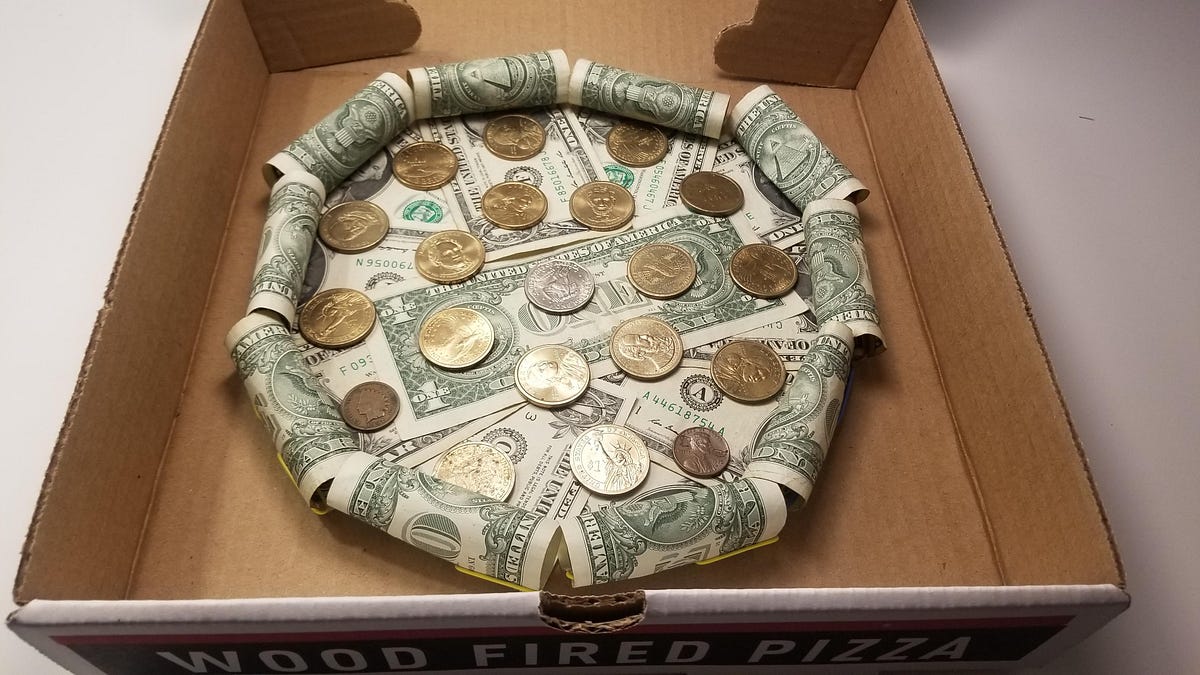
Doordash and Pizza Arbitrage
There is such a thing as a free lunch
readmargins.com
191 points · by jer0me · 4y ago · 230 comments
I ordered $41 of food and was stuck with a $22 bill (including a $5 tip I added). Delivery was "free" for this order.
This taught me a valuable lesson: if DD sends you a coupon for less than $20, it is worth zero. If it's between $20 and $35, it is worth about 10 bucks (especially when you consider how they inflate prices for dishes).
About a week later I was doing my household budget and looked at the charge on my account, and it excluded the discount. Once you added in delivery, service charge and the tip, I ended up paying 30%+ more for the food (and didn't have my coupon).
I think this was a genuine dark pattern that they use, although I have no interest in putting it to the test. After a failed payment, they auto remove any applied coupons to your transaction....
This was my first and guess-what, last order.
The pricing model is very odd - you'd think that Uber would take all of their profit from the delivery fee - because, yaknow, that's the service that they're providing. But no, they also take a cut from the whole order afaik - which forces stores to inflate their prices to avoid eating into their normal profit margins.
Plenty of restaurants have added a tipping screen to their POS for takeout orders. Some add it (as a service charge) automatically.
I have no idea how DD continues to lose money with this business model.
Many years ago when I was living in Rochester, NY as a student there was a service called “Rochester Delivers” which was essentially DoorDash without internet. They printed a big book compiling all the restaurant menus and you ordered over the phone. The price adder was always too much for a poor student like me, but I figured they probably were raking it in from the slightly richer folks.
Fast forward many years, and I mention to one of my good friends this pre-DoorDash service. Turns out he was actually the one running it. I knew he’d lived in Rochester around the same time I had, but hadn’t known him back then and had no idea. He said the entire thing was a disaster, impossible to make money, and it basically drained all his savings trying to keep it afloat.
Labor in the US is too expensive for sufficient number of people in the US to afford it that would allow a business like DoorDash to earn a profit.
Food delivery is a viable business but only if the objective is truly "food delivery" and not "growth & engagement at all costs".
If labor were so expensive, wouldn’t the customers (who presumably get their money through working) be able to afford this service? Do DoorDash workers get paid more on average than the people that they deliver to?
How does that work? Naively, I'd expect that the more expensive labour is, the more disposable income labourers should have available to spend paying other labourers to deliver food, so it all balances out. It's at least not obvious that food delivery would be less viable in the US than, say, China or India, where labour is cheaper but customers also have less buying power.
Now you have big VC companies bleeding money while stealing the tips and dumping more costs on the consumer, which further hurts the restaurant. It’s a gross business.
DD's value prop is that they deliver. If you don't want that, then yes it's probably not for you.
-
Off the top of my head, yesterday I passed a billboard for McDonalds advertising two large sandwiches for $6.
Lets open Uber Eats and try ordering two Big Macs... $13.68
So they don't carry the deals. Not looking good already.
Went to checkout...
$1.49 delivery fee for a place 6 minutes away. Fair enough.
$3.27 service fee. The explanation text is implying the cost of servicing my order (orchestration essentially) is more than double the cost of delivery.
$2.00 CA Driver Benefits fee. Delivery drivers were always employees of independent stores, but Uber took such offense to being forced to provide healthcare that they itemize the cost.
Grand total comes out to $20 before tax. For a $6 meal in store.
-
And in case you were thinking "Well Uber isn't DoorDash" this whole time... DoorDash comes out to $22 before tax.
Has a "traditional" delivery place ever charged you a 60% delivery fee?
It's so absurd I even tried increasing the order size... the ratio of price of fees to price of food actually went up!
And all this is before tips!
InstaCart’s pricing seems way more reasonable.
Ex-Grubhub exec calls delivery apps “payday lenders for restaurants and drivers” - https://news.ycombinator.com/item?id=23278157 - May 2020 (8 comments)
Doordash and Pizza Arbitrage - https://news.ycombinator.com/item?id=23216852 - May 2020 (514 comments)
McDonalds has a 2 for $2 deal on sausage mcmuffins & hashbrowns - been around forever. Let's say you and the wife want a McMuffin & a hashbrown each - you're in for $4 dollars and a bit of change for tax.
Here is the same meal via DoorDash:
McMuffins: $2.87ea Hash browns: $1.91ea
Subtotal: $9.56 (just below the 10 dollar minimum to wave the fee if you have DD+)
Delivery fee: $1.99 Service fee: $3.00 Tax: $0.91 Dasher Tip: $5 (good luck getting your order on time if you tip less than this)
Grand Total: $20.46 for $4 of food.
You can "optimize" by ordering an additional hash brown to get over the $10 hump so you can wave the delivery fee and reduce the service fee - which will instead cost you a total of $17.91 for $5 worth of food. Either way it's a shit deal. Not included here are the costs associated with 1 in every 4-5 orders being incorrect, or delivered to the wrong house and the hassle that adds to your life.
Obviously I went with low cost items to illustrate a point but often any food prices you see on DD are a good 50% markup vs going in person regardless of the restaurant before you even get into fees and tips.
It’s a fake industry held up by VC money.
personally I would to like to see their share prices go to zero
I looked at my most recent receipt for something more realistic: A $12 (in store) pizza was listed on doordash at $14.25 and I paid $17.30 in app with the Chase CSP discount. I guess not everyone has the card, but IMO it’s financially irresponsible not to.
Note that this restaurant is a 20 minute drive each way. Even if I worked minimum wage ($15/hr in CA) it would have cost me a lot more ($10 time + $5 gas!) to pick it up myself.
Can we stop doing this? Our free time has zero monetary value. Every minute of our lives is not billable, and it's disingenuous to frame it that way.
Sure, avoiding 40 minutes of driving time might be worth $10 to you (it is to me, too), but... just say that, maybe?
And I agree with you in general that the grandparent's example was maybe not the common case. Sure, sometimes people get late-night munchies and make a small delivery order to Taco Bell, but I would hope that most orders are at least for a single, full, lunch- or dinner-sized meal, and will often be for multiple people. Delivery is still certainly more expensive than going into the store, but not having to deal with driving somewhere to pick it up also has value to many.
I have no car, but between grocery delivery and an e-bike, why would I want to continue paying an exorbitant tax to get shitty, cold food two hours after I order it?
Basically - you having a car or not has zero (zilch, nada, nothing) to do with the insane markup these companies charge.
And if the difference in you having a car or not really was doordash... jeez man. Go re-evaluate your life.
- Give hilariously bad estimates for delivery time. Dan Luu tracked this. https://twitter.com/danluu/status/1469755162004582400?s=20&t...
- Cause huge pileups for restaurant workers, who in pre-delivery app times were shielded by the presence of "a line", which puts a natural limit on order throughput (people drop out of line or don't enter when it's too long)
- Generally aren't good at giving prompt notifications, which sucks for both the driver and the order maker
I'm starting to believe two sided marketplaces tend to be worse for everyone except for the intermediary
They lie and try to blame restaurants for slowness too. I've found that most of them have a specific timer for the all the stages before "driver waiting at the restaurant". If they can't allocate a driver or he doesn't arrive there by that time, the status will switch to "driver waiting at the restaurant" even if that's not yet the case, putting the blame on the restaurant.
I had suspicions about most of them doing it but what I can say for sure is that I caught Uber Eats doing this by calling the restaurant directly and confirming that there was absolutely nobody there and the food has been ready for 40 minutes.
I got a “free” door dash related thing and I tried it (no markup, made the poor guy deliver an avocado from the convenience store, did tip) and it was marked as “picked up” after it had been dropped off.
If you ever wanted a feature-length explanation of queueing theory and how ignoring it makes everything worse, well... here you go: https://www.youtube.com/watch?v=9yjZpBq1XBE . The context is Disney parks and Fastpass, but the lessons are applicable to basically any business. Everything is a queue.
Huh, I wonder how universal this is. I agree with this take for Lyft and Uber (for rides), but for Uber Eats, at least, it's been incredibly rare for it to take longer than the estimate, and in the majority of cases the food arrives 5-10 minutes faster than the estimate suggests.
I've seen a lot of drama from DD drivers at restaurants, one thing that sticks in my mine was during a midnight run to White Castle. The place was packed and the workers kept asking about this huge bag of food for DD. The bag was easily 2 foot tall and completely packed full of food. The entire time I'm waiting on my food, people keep asking "any word on this door dash?"
Then some lady comes in screaming, "f- y'all, I've been waiting 20 f- minutes for a f- order and y'all slow mfers won't do shit!" The manager tells her the order is here and has been ready for 15 minutes. She goes up to the counter, takes the food, then throws the drink at the manager, screaming "f- you", throws the bag of food back at them yelling, "f- door dash" and "f- this $4 tip!"
So, not only did the person not get their food (and probably didn't find out for a long time afterwards), the restaurant had to cover the costs of all of it, and the delivery driver was out like her time and gas.
If they did, they need to sign a less abusive deal with DD.
What I’m guessing happens is that if you tip high, less scrupulous but tech savvy drivers will snag the delivery. These folks have multiple accounts and work for multiple services at once, so your order is way down on their list. It frequently comes with location spoofing, where the driver is supposedly waiting at the restaurant for nearly an hour, and once they’re actually on their way, they’ll teleport miles away (having unlocked their location).
When I tip less, I don’t see this behavior. It’s probably folks not gaming the system that will take whatever delivery pops up.
Tips are supposed to be for good service! I know they've been perverted into more than that by a combination of unscrupulous business owners and the US's broken tax code, but... c'mon. These services shouldn't even ask for a tip until the delivery is complete, let alone show the amount to the driver before they accept the job.
(I'm fine with them asking for the tip as a part of the initial checkout, though, since I imagine many people won't remember to revisit the app post-delivery within the tipping window, even if they did want to leave a tip, and that alone would unfairly take money out of drivers' pockets. But the tip should be adjustable for some amount of time after the delivery completes, and the driver shouldn't see it until that time expires. Amazon's grocery delivery has this right.)
If drivers can see the tip before accepting the job, then it's not a tip: it's a competitive bid that the customer makes for delivery drivers... though if your theory is correct, it's already gamed into uselessness.
But even better would get to know the local dasher and contract directly. Heh.
Uber Eats drivers aren't shown any of the tip beforehand, in fact they will never know whether or not yoy tipped until one hour after delivery has been completed.
Doordash on the other hand will hide any tips over $4 and have also gone back to stealing them.
I used to drive for both and had to stop when UE no one was tipping meaning jobs paid only $2.50-3.50 for the whole job, meaning with Cali gas prices even before the pandemic you were losing money on 90% of jobs.
Went to DD only for a while after that until I caught them lying and underpaying on mileage and keeping tips again.
So, to reiterate, UE doesn't show drivers your tip until one hour after drop off. DD hides all tips over $4 until after drop off,but will keep tips over $4 probably 80% of the time.
I had to start texting customers at drop off to let them know what the job had paid and what the tip was and to please let me know if there were any discrepancies.
It got to the point where more often than not DD was keeping part or all of the tip over $4. Ie customer tipped 10, I received 5. Wal-Mart is known to keep 100% of tips through DD, as well as Mountain Mike's Pizza and a few others.
The subreddits will show customers things from the driver's point of view.
When you add DoorDash or any other third party delivery service into the equation, you add two more parties to this - the service itself, and the driver, who is usually an independent contractor.
What this has led to in my experience is that when something goes wrong, instead of me working it out with the restaurant, I am left frustrated, hungry, and hung out to dry by three parties - the restaurant, the platform, and the contractor.
If you read enough of the DoorDash subreddit[1], you realize that a tip is not a gratuity for good service, it's a bid for an independent contractor to take up your delivery. However, you have no ability to choose which Dasher takes it, and they are under no obligation to represent you as your agent or look out for your interests. So if they show up and the food is cold, not their problem, they get the tip because they accepted the bid.
When DoorDash had a major outage some time back, I had placed an order for about $70, generous tip (because I realize it's really a bid) and fees included. My order was prepared and ready for pick up just as the whole platform went down. It was impossible to cancel my order, because DoorDash was down, so I made alternate arrangements for dinner and figure I'll reach out for a refund when things are back up.
About three hours later, I get a notification that my order is out for delivery. The optimist in me hoped that the restaurant saw that some food sat out in the "danger zone" for several hours and remade it, or that the Dasher realized that the containers weren't the slightest bit warm, or something like that, but nope. I got dropped off a lot of food that was beyond safe to eat, not even worth saving to have as leftovers for a later meal, and now I have to dispose of all of it.
When I finally got through to support later that night, I asked for a refund, and they said they could only give me a credit for the meal, not the tip. I said I want the whole order refunded to my original payment, they said well, here's a credit and it will convert over to that later. One week and several phone calls later, they stopped telling me it was "too late to get a refund" and I got my refund and uninstalled the app. I don't need that negative energy in my life.
My experience with delivery services (mostly, but not exclusively, Postmates) is that they are usually very good at giving refunds (your experience clearly sucked, though!), which is nice (but I’m guessing not for the drivers, who may or may not be at fault), but that restaurants with their own delivery services have been more willing to send out the missing food on an expedited basis, which is often a better resolution (if I didn’t want the food more than the money, I wouldn’t have ordered in the first place.)
I’ve also noticed that wrong or missing food items are more common with third-party delivery services.
This has changed over time, though. For the first year or so of Postmates' existence, refunds were easy and near-automatic. It was trivial to get in touch with a support person, and their response to pretty much any complaint was either a refund or a (usually generous) credit. But after Postmates grew beyond a certain point, they got more stingy with refunds, and credit they offered -- if any! -- would be much lower.
I remember the same thing happening with Uber when it was new. Rating a driver under 4 stars would win you an unsolicited email from support, asking what went wrong, with a credit or refund for the ride. That pretty much never happens anymore.
Agree with you on restaurants, though. Restaurants that do their own first-party delivery are almost always better at customer experience and fixing things when something goes wrong. And it makes sense, too: DoorDash and the driver don't care if you end up with a negative impression of a restaurant because the food arrived cold. The consequences for DD are much less than the consequences for the restaurant. And even if you do call the restaurant, there's usually not much they can do, because they're not able to get DD to redo the delivery for free, and have no leverage over DD to give refunds.
Of course this is different with my work travel portal run by Concur. I get to keep the points/miles and "non refundable" tickets are refundable when the airlines are trying to stay in the good graces of a company that books...a lot.. of money in travel.
All airlines and hotel groups I’ve used let you get points no matter where you book. Just need to use the website to claim the spend.
1. When I am on business trips and getting reimbursed, I don't care. It's "other people's money"
2. The food delivery services have made it possible for us to have one car off an on since 2020 and not have to pay for two cars. In fact, we just sold our newer car back to the dealer and are sharing one car now saving us $900+ a month in car insurance, car payments, gas, maintenance, etc.
We don't plan to have a car for the next three years as we embark on our "digital nomad" existence.
If I can get away without ever having a car again, I will. It just doesn't make sense for me as someone who works remotely and has grown kids and really only needs to get out on the weekend to deal with paying for a car just to sit in the garage most of the time.
There's a huge gap between 'no car' and $900/mo in car expenses. Buy a used car, not too old, and do basic maintenance (oil/filter, brakes, etc) yourself where you can. It's trivial to own and operate a car for well under $200-$300/mo - millions of people do it.
Basic maintenance doesn't get you much of the way to $900/month anyway. An oil change is like $50-$100 depending on things, and most OEM service schedules have those once a year (unless you put on a lot of miles... but if you put on a lot of miles, it's unlikely that you can realistically forgo a car). Brakes cost more, but depending on how you drive, shouldn't be too frequent; and you really should be competent at brakes before maintaining them or you're likely to cause safety issues. An incompetent oil change my ruin your engine and as a result your pocketbook, but an incompetent brake servicing can result in no ability to stop which has much bigger life safety implications.
The average price people paid for a car is $27K
https://www.statista.com/statistics/274928/used-vehicle-aver...
The average price of a new car is $47k.
https://www.kbb.com/car-news/average-new-car-price-tops-4700...
The average cost of maintaining a car is between $7K - $10K
https://www.thebalance.com/average-car-maintenance-cost-4775...
Even the IRS says the average cost of a car is now $0.63 a mile.
Restaurants use this extra fee to compensate for the bad reviews.
If the policy changes for the driver then a customer is screwed over with a canceled order, guess who gets the blame? The delivery service!
For carry out orders, there is an additional $5 surcharge added. This is in place to cover issues arising from stolen orders and poor 3rd party delivery experiences. Display your ID matching the name on the order to receive a refund of the fee.
From https://thecollegeinvestor.com/20374/doordash-review/
> DoorDash is a food order delivery service. Customers place an order at one of dozens of restaurants, and then they agree to a delivery fee and tip. The app then pushes orders to “Dashers” who are logged into the app.
> Once you accept an order, you drive to the restaurant, place the order, bring the order back to your car and deliver it to the customer.
I am not an unethical person, but the thought of arbitrage did cross my mind...
Restaurants have no obligations to random people on the internet who decide to re-sell their food without permission.
It's funny, because there was no deception involved: the ad text I used was something like "Sign up for [service] and get $[discount] off", which was true, as the affiliate link offered a discount for the person signing up (in addition to the credit I would get as the affiliate). The company in the end just didn't like that I spent $75 of someone else's money to acquire customers for them.
Collin
May 19, 2020
Liked by Can Duruk
I was the former Head of Innovation at Grubhub, so I have seen the truth behind many of these claims first hand. Sadly, I invented a lot of the food delivery technologies that are now being used for evil. There were so many great points made here, and I’m glad people are finally paying attention to this. I will try to only add to a few.
COVID-19 is exposing the fact that delivery platforms are not actually in the business of delivery. They are in the business of finance. In many ways, they are like payday lenders for restaurants and drivers. They give you the sensation of cash-flow, but at the expense of your long term future and financial stability. Once you “take out this loan” you will never pay it back and it will ultimately kill your business.
In the case of restaurants, these platforms slowly siphon off your customers and then charge you to have access to them. They are simultaneously selling these same customers to your competitor across the street, but, don’t worry, they are also selling their customers to you.
For drivers, they are banking on a workforce that is willing to mortgage their assets, like cars and time, well below market value, in exchange for money now. They know that most delivery drivers are simply not doing the math on the actual cost of providing delivery (time, gas, car maintenance, payroll taxes...etc). If they did, drivers would realize that they are actually the ones subsidizing the cost of delivery.
Delivery platforms are “hyper-growth” businesses that are trying to grow into a no-growth industry. Food consumption really only grows at the rate of population growth, so if you want to grow faster than that, you have to take market share from someone else. Ideally, you take it from someone weaker, who has less information. In this industry, the delivery platforms have found unsuspecting victims in restaurants and drivers.
The competition for customers has not gone away. It has simply moved online. Many restaurants have been too slow, or unwilling to adapt. Delivery platforms and other restaurants are taking advantage of this to gobble up market share. Restaurants need to realize that they are now running e-commerce businesses and they need to act accordingly. Being proficient on Google, Yelp, Facebook and the dozens of other platforms is no longer optional, it is essential.
My team is trying to do everything we can to help restaurants transition, but restaurants have to be willing to change. You can learn more about what we are doing to fight back at zero.eatgeek.com. Stay hungry.
There seem to be one or two key inflections that make this feasible. Examples: (a) autonomous vehicles nuking delivery costs; and/or (b) ghost kitchens to eliminate restaurant overhead.
In light of that... these companies are really just predicting where the ball will be when (a) and/or (b) are commoditized: Capturing market share & distribution now with marginal economics while waiting for one or two key inflections.
Question - at what point does "abuse of promotional pricing" get classified as fraud?
Why?
Not certain, but maybe that's why.
One thing that bothered me a little was the "fuck Doordash" mentality as an excuse for something which may not legally be stealing, but is ethically equivalent to it. I think "fuck X, they deserve it" is an excuse a lot of people use, but obviously it's still wrong even if you don't like your victim, or if you can get away with it.
If anything DoorDash is the unethical actor because it can cost the restaurant future business. Imagine you're a customer and you're faced with choosing to buy directly from the restaurant (for $24 a pizza) or order through DoorDash (for $16 a pizza). You're going to choose DoorDash. You are now a DoorDash customer, not a direct customer of the restaurant. Now imagine the restaurant has it's own in-house delivery service. DoorDash is undercutting the restaurant's prices to put the restaurant's drivers out of work by heavily incentivizing customers to purchase through DoorDash, all without even consulting the restaurant!
Then factor in that people might mistake bad service from DoorDash as bad service by the restaurant, resulting in negative Yelp reviews and lost business and things kind of start to border on fraud a little bit.
For the restaurant to realize that they can game DoorDash back to try and recoup some of the damage that DoorDash is causing them is not unethical in my opinion. It's the restaurant's business that DoorDash is messing with and the restaurant has every right to recoup every penny of damage caused... and DoorDash has contractually agreed to it by agreeing to pay what the restaurant is asking literally everyone to pay.
I'm on the fence on this, I completely agree with your analysis but I would note that they originally thought DoorDash just scraped their website incorrectly for the prices. Even with the update at the end it's not exactly clear to me what happened to cause the lower price (I would assume 'no fees' just means the price would be the same as at the restaurant, not lower). That said, whether it's unethical to abuse a mistake made by such a company is up to you, I'm certainly not losing any sleep over it :D
I believe I read elsewhere that DoorDash would (in addition to not charging fees) underprice items during their "restaurant acquisition period" as an additional way to inflate sales numbers, so when they go to the restaurant to negotiate a deal, they can say "in the past month we delivered 500 of your pizzas to customers! With your $24 price, that's $12,000!" ... while they conveniently hide that DD themselves only charged $16 per pie, and it doesn't take an economist to understand that more people will buy a product if you reduce its price by a third. Or, more relevantly, fewer people will buy a product if you "increase" its price by 50%.
It's worse than that. The pizza company appears on the web for delivery with a $16 pizza. They come in to the pizza place and get charged $24 and that's a customer negative experience. The pizza company adds delivery to their service and chases off Door Dash, and now it looks like they've raised prices by $8 (and meanwhile other pizza places in the area that are getting undercut with $16 pizzas from door dash means that the pizza company isn't getting business to be able to support the delivery drivers).
Some places actually charge less when you are ordering takeaway (because their costs are less because they don't have the costs of service or rent), and some charge more (like +1 USD per box).
If the restaurant has a prime location, it makes sense that if you don't use their seats / toilets / dining room / service that you don't have to pay for it.
Thinking further, why do takeaway people have to pay for the shiny location ?
Every time I eat a pizza, I sponsor the nice terrace dinner of someone else in front of the Eiffel Tower.
But I don't want the Eiffel Tower view, the pizza could be baked in a factory (dark kitchen) I'd be fine with it.
In general, how did we get to this point that it is more expensive to order takeaway food from a restaurant than if you cooked the food by yourself ?
Scale is supposed to bring the price down, not up. The more quantities of a food is produced, the less expensive it is per item.
Popular restaurants run like factories, the 11th or the 271th baked salmon is going to be the same.
By logic it should be considerably cheaper to produce 10'000 pizza (this is 30 per day) using professional ingredients and optimised processes than baking your own pizza at home.
We got to this point of 5 USD for a beer + 20 USD for a very generic pizza in a dark kitchen.
What's wrong with that ? Everything.
Part of the solution could be delivery companies offering their own drinks selection and restaurants opening more takeaway-only businesses (hence, more efficient).
Delivery economics makes sense when the restaurant is doing it because the delivery drivers are also employees helping to make the order. They are getting paid for each hour they work and the stores have a set delivery area and a base.
I believe delivery is a viable business model, but that isn't what these companies are offering. These companies are trying to monopolize access to restaurants with some "growth & engagement" sprinkled on top.
A simple delivery service where you pay X amount of money to get something from point A to point B would be viable with a network of hyperlocal, real-time-geolocated couriers and modern routing software. It will however not give you a monopoly and the returns VCs hope for (however, in the end the current system doesn't either as VCs spend more money trying to undercut each other's attempts at monpolizing the vertical).
It may be possibly ethically questionable to intentionally post a menu that Doordash's automated system will misinterpret (which would clearly be possible in this case, since they figured out that Doordash was charging the plain slice price for the custom one, so they could just drop the plain slice price to $1). I mean, again they didn't ask Doordash to start this relationship and they don't have any contract, so... I guess their obligation would be to honor the $1 plain slice for anyone who wants it. Maybe make it a $1 no-cheese, no-sauce slice.
Another option would be to spread word about the community that Doordash offers a $8 discount on your pizza. Like, if you tell the person "hey, order on Doordash to this address, they'll give you a $8 discount and we just have to have a dude come hand the pizza off from me to you" right before they get to the register... seems pretty ethically clean to me, you are just informing people of an offer you heard about, you have no contract or relationship with Doordash, right?
There's an aphorism "You can't cheat an honest man". Probably not strictly true, but it applies in this case.
Anyone who takes advantage of this is doing the world a favor by punishing bad actors.
Just speculation, but Doordash is obviously loosing some money due to poorly implemented "tests" like these, and who knows what other experiments-at-a-loss they are running.
Maybe if they toned down their "web scraping auto delivery option" program, and who knows what else, they could show a profit (and maybe they know this). But why bother if you can get away with it, and something truly innovative and profitable may come out of it.
I think, though, that when a company's whole business is dishonest and based on screwing all their stakeholders (restaurant, driver, customer) and loses money despite all that, then one may look at it differently. Your parish priest or rabbi might not, but I might.
Maybe we should just cut out the middle man and stop creating businesses. Have a CEO pitch an idea, the VC can hand them a check, they can buy a yacht, and the VC can keep the rest of the money that would have been wasted on jobs that created no value, avoiding the "externalities" of destroying small pizza shops. Or better yet, give that non-yacht money straight to the government to pay for health care, housing, job training, infrastructure, the homeless, veterans, education, social security, regulatory enforcement, thus creating an environment where American citizens can create more real businesses, more people are eligible for good jobs, and the overall quality of life skyrockets.
While I'm dreaming I'd also like a unicorn and a garden robot that zaps snails.
Just looking at the US, the poverty line is $13,590/yr for a single person, and $4,720 for each additional person. You cannot afford to live anywhere on that income. The global poverty line is $1.90/day, not even $700/yr. That is still poverty no matter how much we pretend it's not, as you cannot just define poverty away, ignore the actual material conditions that these income levels experience, and call it success. That's simply lying on paper and has predictably produced this very persistent and dubious claim.
https://ourworldindata.org/grapher/world-gdp-over-the-last-t...
Fact is, vast majority of people were lucky to not starve on regular basis for most of human existence. this is no longer the case for at least half of human population which is a significant noteworthy improvement.
Loved it.
I too wish we lived in a society where illegal and unethical behavior was called out and shunned regardless of who's doing it, but let's drop the double-standards since we're not living in such a society and things don't look like they're even heading in that direction.
I think it's hilarious, and DD got what they deserved in this case, but it seemed legally risky to write about something like that.