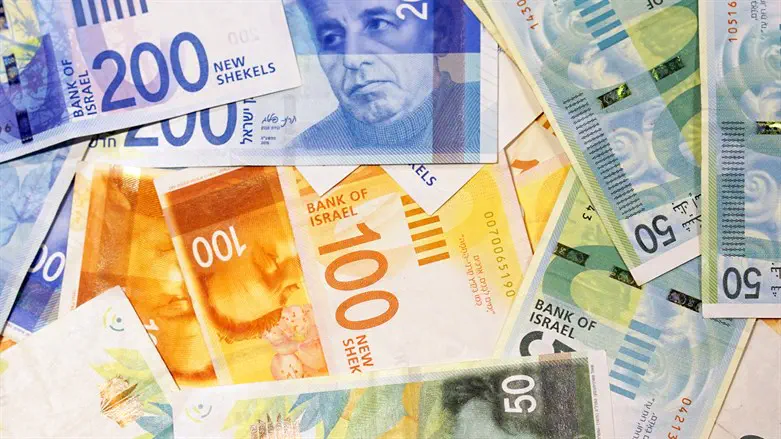
From August 1: Cash transactions above NIS 6,000 illegal
Offenders face significant fines & those splitting payments can be jailed. Law also applies to checks.
Israel National News
195 points · by walterbell · 4y ago · 341 comments
You see rich people have to use banks. Because over certain sums, using cash just becomes way too dangerous. So they use banks which means the banks report to the government and the government gets their taxes. But rich people also often influence the government (or even outright run it). And they hate paying taxes. So they want to shift some of the taxation burden on to the middle class and the poor. But poor people often use cash and sometimes skim on taxes. I am sure this happens with some of the more adventurous middle class too. For smaller sums cash is perfectly manageable.
Thus, the government becomes very concerned and does everything it can to "help" the poor move to more modern electronic payments.
There is a worrying return to authoritarianism everywhere. People forget that none of their rights would have been won if there wasn’t any wiggle room in the system, for people to do illegal things before they get accepted as legal, like smoking pot, being gay, being pro-democracy, etc.
You are literally removing people's functional access to food, water, and shelter.
going after financing was surprisingly efficient, but not giving them the convenient out of "sure continue protesting without the trucks" was dumb.
But hey, that rhetoric came directly from the the only government in the western hemisphere to have suspended constitutional rights (and because of a protest) since probably World War 2... So it's not exactly surprising.
(There was also this obsession to call them terrorists, again textbook dehumanizing/discrediting tactics. And for the record, I'm not a pro truckers and voted for trudeau twice. Yet the way the government dealt with the situation was literally disgusting.)
Yes, the wealthy can afford to find ways to cheat on everything. But all segments of society are dodging taxes.
As a middle-class salaried employee, your income is taxed down to the last decimal place. But if you work in the trades, or anything else where many transactions are handled in cash, then tax evasion is _rampant_. And you know who is usually party to that? The tradespeople AND the relatively wealthier folks giving them envelopes of cash in exchange for a "discount" because the transaction isn't reported.
Will those stop? Probably not. But at least in larger sums it should make people afraid of dodging their tax burden.
I don't understand how making middle/poor class pay more taxes spares the rich from taxes.
Only consumption and wealth should be taxed. Wealthy people tend to consume more anyways. For some goods & services (energy consumption for example) a progressive tax rate might be appropriate, with tax exception for people who consume the least (as poor tend to do).
Luxury goods and services (private planes and yachts, luxury car brands, etcetera should also have a higher than normal tax rate, since for wealthy people the barrier to buy would still be low and poor or middleclass people can’t afford such goods and services anyway.
A system without income tax could also result in very simple tax reporting for most people, an additional benefit.
Someones got to consume less. Everyone thinks it should be the other guy. Wealthy have power so they are always shifting the burden to the middle class and the poor.
It is as simple as that. "Less pressure" on the Government is a joke. The more it has, the more it wants.
If you give your power away, they take it, and want more. Power 101.
The money will be spent on things like public Media and public education to make propaganda for the Government. And on making the people in power mega rich, just like in China, Russia, Cuba, Venezuela or Argentina.
Or perhaps, more cynically, for lower taxes overall.
The rich then get tax cuts for themselves that aren't applicable to regular people (like most all of us). Example of something we should address - bezos and musk get loans on their vast stock holdings. The loans aren't taxable. If their holdings slowly get higher in value, they never have to sell their stock to get that value (or they have so much they never get a margin call). They can pass on those stocks to their heirs which can reset the price. I wish we all had a billion in stock and we could get a few tens of millions in loans to live off of, never triggering a capital gains tax.
Another example is wealth taxes, which would be something along the line of Steve Ballmer has to pay 1/2 % of his wealth over 100 million or something every year. But what if he doesn't have ready available cash for that, people say, it's hard to value things. Somehow we could do it. And we never think about it, but everyone who owns a house has to pay a wealth tax every year! We normal people pay wealth taxes, the really rich should probably have to do it too. All the same arguments about changing values and not have ready money from an expensive asset applies to every home own in america who pays property tax.
I acknowledge that there are valid privacy grounds to oppose the move to cashless/less-cash. I just don't accept the argument that it should be easier for middle-class plumbers to not declare their income.
Now, it basically affects everyone - the current threshold is in the between minimum wage and average wage, closer to minimum, with exceptions for effectively 5-year-or-older-common-cars and a couple more things. In a couple of years, the threshold would likely be lower than minimum wage (either by rule change, or by inflation that would bring minimum wage above current threshold), and at that point, the threshold would be "money you can give your kids to buy to stuff for themselves at the store, and not much more".
Slow boil, works great on populations.
I wonder if the exception is easily abused. "Here's a 1980's beater and a suitcase which does not contain cocaine, that'll be 30 thousand dollars please!".
The Indian government is not trying to ban cash. Demonetization replaced old currency notes with new ones and the total cash in circulation increased after demonetization played out.
In India, only the salaried class fully pays their taxes. Businesses which deal in cash don't and anything that makes tax evasion difficult is a Good Thing⟨™⟩.
However, once you move out of the big cities and into the small towns, cash still rules.
The reason doesn't really matter. What matters is that it's happening.
One motivation for CBDCs (Central Bank Digital Currencies) was succinctly stated by BIS (Bank of International Settlements, the central bank for all central banks, including US and UK) Director Carstens at an IMF meeting in 2020, https://www.youtube.com/watch?v=mVmKN4DSu3g&t=1451s
> With cash, we don't know who is using the 100 dollar bill today ... a key difference with CBDC is that the central bank will have absolute control on the rules and regulations that determine the expression of that central bank liability .. also we will have the technology to enforce that ... if an advanced economy issues a CBDC, and someone in a 3rd country wants to use it, it will require the consent of the central bank of the residence of that person, therefore the degree of control will be far bigger.
Previous CBDC threads on HN: https://news.ycombinator.com/item?id=30634245 (2022), https://news.ycombinator.com/item?id=27805709 (2021).
Meanwhile, the US UCC (Uniform Commercial Code) was modified in July 2022 to recognize CERs (controllable electronic records), a flexible definition which could apply to both decentralized cryptocurrencies and centralized CBDCs. It's now up to individual U.S. states to ratify these changes in state legislation, https://www.clearygottlieb.com//news-and-insights/publicatio...
> Control under Article 12 is designed to be a technology-neutral functional equivalent of “possession.” It generally encompasses circumstances when a party has the “private key” or other mechanism to avail itself of substantially all of the benefits of the record, prevent others from availing themselves of such benefits, and transfer the record and associated benefits.
It wouldn't surprise me if other central banks/governments were to take this approach in a future crackdown on cash, step by step getting rid of the largest denomination.
It would get pretty hard to use cash for large payments if there weren't any large banknotes available.
(Full disclosure: the largest cash payment I've ever made was in fact made in those very €500 notes, pre-2019...)
[0] https://www.ecb.europa.eu/euro/banknotes/html/index.en.html [1] https://en.wikipedia.org/wiki/500_euro_note
Unfortunately, I live in Germany where cash is still king. When possible, I use Google Pay. It's just easier. But there are still a lot of cash only places here. All the fun places basically. To get cash, I have to find an ATM affiliated with my bank (Deutsche Bank, one of inept and hopelessly customer hostile local banks) and there are only a few of those in Berlin and none close to where I live. The fees if I go to the wrong bank are pretty substantial. And then they inevitably give me 50 and 100 euro notes. Especially the latter are really a pain in the ass because shops and restaurants hate having to deal with those because it means they lose all their remaining change, which they need for other customers.
Digital currencies get a lot of bad press (and rightly so) but a lot of banks and national banks are starting to adopt blockchains as a way to keep their ledgers. Ledgers are the core thing a bank does and blockchains are basically very good ledgers. So, there's nothing strange about that from a technical point of view. IMHO, we are heading to a cashless future where all transactions go via blockchains. Cash is obsolete basically.
No, that's actually very fortunate for you, and likely a result of the collective memory among the (previously) eastern German population about the meaning and abuse by government of tracking every little thing you do.
Government abuse of all-knowing and all-controlling abilities is a question of "when, what and who", not a question of "if".
Cash is like a standing army. You don't want to ever have to use one, but if you don't even have one you can use, you'll lose the next war that breaks, which historically has been a question of "when", not "if". So every country - including Switzerland who hasn't been part of a war in centuries - maintains a capable army.
You wouldn't dismantle your army just for convenience. Don't stop using cash.
A 2% interchange fee made sense in 1982, when it was expensive to move bits and clear transactions. In 2022, it's pure, gluttonous parasitism.
Also, i cannot imagine how using CB-issued digital currencies would work especially while being abroad. As already said, the respective government has you by the balls.
Critize someone / something? Voila, account and funds access revoked.
Additional, i get the convenience factor of digital payment methods -paying mostly by credit card myself- but consider this: if your phone breaks, you are oh so bummed.
No maps, no calls, no SMS tokens, no authentication apps (if not having an laptop as a backup,), no ID vault apps (same), no Google / Apple pay, and more...
Had to endure this for 3 months last year.
Physical cards work almost always 100%, can be freely used by people you trust, dont need expensive roaming data, you dont have to rely on a device being a) with you and b) being charged.
Also, good luck swapping the SIM to an older, backup phone if all you got is an eSIM...
"Blockchain" means very different things for different people. Blockchains such as Bit--in blockchain are very bad ledgers. The only thing they are good for is if you want to get rid of trusted intermediaries such as banks.
———
[0]: https://m.youtube.com/watch?time_continue=10&v=9FM4Fu2ujDE
All the ATMs I've used (across Europe) recently have at least offered me a choice of bills (notes) when I make a withdrawal.
I took €300 out of a cash machine in Italy yesterday, didn't specify the bills, and got it all in €20s... left me thinking the machine must have had lots of them and wanted to shift some :)
Per note.
See this (in Dutch): https://radar.avrotros.nl/nieuws/item/rabobank-5-euro-betale...
Note that the current law already forbids cash transactions higher than 11,000 NIS and that an exception is carved out for automobile purchases. This law is tightening screws that already exist, not implementing new screws.
Israelis accept this because Ben Franklin's quote about liberty and security falls on deaf ears here. To Israelis, security is a pre-requisite for liberty, not the other way around, and there is wide public support for measures that would be completely DOA in the US, like government identity registries (that now include facial scans and fingerprint databases, with fingerprinting admittedly optional but fingerprinting extends the validity period of issued identification) and extremely strict gun control.
Financial security is pretty much the same, for example, most of the Israeli drug trade links back to terrorist organizations and as such a "war on cash" is seen by many as fighting against terrorists as well.
Although the rest of your point stands, this part is a common misconception. The exact context of the quote was about a taxation dispute between the Pennsylvania General Assembly and the Penn family, and didn't actually have much to do with modern day liberty or security[0].
[0] https://www.npr.org/2015/03/02/390245038/ben-franklins-famou...
This effectively mandates electronic banking for all full time salaried workers by 2025.
> ... secret documents leaked from FinCEN, the Financial Crimes Enforcement Network, a unit of the U.S. Treasury. The documents “show that five global banks — JPMorgan, HSBC, Standard Chartered Bank, Deutsche Bank and Bank of New York Mellon — kept profiting from powerful and dangerous players even after U.S. authorities fined these financial institutions for earlier failures to stem flows of dirty money.”
Trailer for Netflix series, The Laundromat, https://youtube.com/watch?v=wuBRcfe4bSo
That would be all of them? Even if you ignore illegally I’m not aware of a sovereign state that was settled by people who were there first settlers and has continuity of government.
So if the Israeli government's goal is to track citizen's spending, they will love crypto.
Someone needs to build a better cryptocurrency, but it everyone is preoccupied with building ponzi schemes and pump and dump scams instead.
A blocksize that scales which also leads to reduced fees, transactions and address balances are private.
(Disclaimer: I own some XMR, but not much.)
However, it seems doubtful that Monero is 'better' than cash either.
The idea is less about chasing after cash money, and more that if e.g. you suggest me to deal in cash I must consider that I will be on the hook forever in case this leaks -- doesn't matter if this is due to your negligence, your disgruntled employee or partner whistleblowing, advances in spying tech, another customer reporting you, etc.
It's the same with Monero, possibly worse. With cash, taking all precautions once is enough (ensure there are no cameras around, leave my phone at home, wear gloves, etc.), while the only way to have all the evidence gone from blockchain is only by having Monero itself gone, right?
[1] https://en.wikipedia.org/wiki/Bitcoin_scalability_problem
You have even less privacy with BTC than you do with fiat.
At the same time, if governments fail to efficiently tax their populations they end up having to go to war to plunder the resources they need to maintain their countries instead.
Probably another solution tho.
This is a pretty bold assertion. Do you have an example of this happening? If a country has all the resources it needs then it's not going to have to plunder resources. If it doesn't have to the resources it needs it either has to trade for them, borrow, or plunder as a worst case scenario. It has absolutely nothing to do with taxes.
Also, with your logic, how do you afford an army to plunder resources if the reason for plundering is because they didn't "efficiently tax"? To go to war to plunder some resources, you need the resources. You can tax all you want but if you don't have the real resources you can't build an army.
Taxes can put resources you already have to work but it can't create them out of thin air.
From memory, most recent example is I think Japan in WWII, and maybe Germany in both wars tho I can't recall clearly right now.
The thesis is: expansionist tendencies arise because states fail to efficiently tax their populations so they seek wealth through plunder.
Good question about where the money comes from first, I can't remember what the book said now but I'm sure there's possible solutions. Maybe: seize from the rich people in your own country first (likely by demonizing them ~ I think China did this to elites during the cultural revolution from memory from [another book]); the leaders are savvy enough to go to war before all the funds are gone; bootstrap by using emotive demonization of enemy and fear (I guess the Nazis did this to Jews before and during WWII) so you can be scrappy at first until you plunder some wealth and use it to upgrade and purchase more soliders.
[that book]: https://www.goodreads.com/book/show/9491855-why-the-west-rul...
[that other book]: https://www.bookdepository.com/Mao-The-Unknown-Story-Jon-Hal...?
That sounds pretty much wrong, even if there are probably countries that did end up doing that.
> From memory, most recent example is I think Japan in WWII, and maybe Germany in both wars tho I can't recall clearly right now.
Yeah, no. The reasons for WWI are extremely complex, but Germany and Austria-Hungary not having enough tax revenue aren't in there.
Slightly before WWII, Nazi Germany's economy was basically a Ponzi scheme with massive investments (in rearmament) that needed to financed somehow, and plundering neighbors and Jews was a good way of achieving that. Maybe a more optimised tax structure could have alleviated that, maybe. However putting that as the main, or anywhere near the top reasons, is foolish.
Japan before WWII had a resources problem, and expansionist tendencies to correct that problem. However they were cut off from the global markets due to the invasion of China, and thus could no longer import the resources they needed and hadn't yet conquered, thus war. Again, nothing to do with taxes - Japan had money, it needed raw materials.
So those books sound pretty bad. I'll see if i can find a free copy to skim because I'm interested in just how bad they are.
Black market activity is already illegal. As usual, this kind of government overreach will only punish law abiding citizens for being law abiding citizens.
It also complicate illegal activities in general.
The idea isn't that your typical criminal will say: "I'm okay with dealing drugs, but the law about 6K NIS is where I draw the line".
The idea is that once they get the money in cash, they have a problem actually using that. So they have to go into addition hurdles.
Basically, it makes illegal activities more expensive.
This is not about paying taxes its a global move to make sure the banking systems are well funded, and runs on the bank are pointless during periods of high inflation.
Cash is problematic, how is the banking system meant to increase money supply if everyone holds physical cash.
That figure of NIS 5 billion, or US $1.45 billion[1], must be error because it suggests they are fining people $95K when caught doing a $5K cash transaction[2]. It seems very extreme, enough to bankrupt many people and businesses; it can't be right.
[1] The exchange rate for the NIS (New Israeli Shekel) to US dollars is about NIS 3.44 = US $1.00.
[2] Extrapolating backwards, if 2,189 law-breakers did NIS 35 million in illicit transactions so far this year, then in the last 3.5 years since the law came into effect, 15,323 law-breakers did NIS 245 million in illicit transactions, for an average transaction size of NIS 15,989 or US $4,647. So each law-breaker received an average fine of NIS 326,306 (NIS 5 billion divided by 15,323), or US $94,856, which is 20 times greater that the illicit transaction itself.
In Canada cash transactions over $10k are possible but require a large amount of extra paperwork for anti-money-laundering reasons, but there's no such restriction on cheques since the government can see all those clearing through the banking system already.
To evade taxes, one merely needs to trade in such IOUs without actually cashing them out.
So because the law about bounced checks is so strict, checks are essentially as good as cash? That's an amazing unintended effect.
It never occurred to me that this mechanism could be used for money laundering!
I think the reason I'm seeing this all over the place in conspiracy circles this week is some grift podcast brought it up - in a week or two we'll be on to something else.
Apart from the tax implications, it is an effective way to launder money. Apparently organized crime really likes this and buys real estate en masse.
My tax agency already asks questions if my living costs seem too low...
As far as I recall, when you buy a house, the notary is supposed to check where the money is coming from, but this can be more of a handwavey thing.
This is a slightly older article, I am on the go and didn’t find anything more in depth in English: https://m.dw.com/en/german-real-estate-market-a-hotbed-of-mo...
In a lot of cases tax agencies also lack the means or authority to verify the cleanliness of money obtained abroad.
The account number is written on every check. This is simply not the case.
The way you do online payments in the US if not by credit card is by providing the recipient with your account number - they conveniently point to the parts of the cheque to copy - and then they withdraw money from that account.
Better yet when I was first trying to set up my online banking so that I could send money to my partner E*trade had me enter their account#, and then confirm the amount that they sent to it. Once I confirmed it they let me pull money out of her account at will. Because they were enforcing the can/cannot withdraw money for my partners account with another bank.
A lot of the reason for things like Venmo, etc existing in the US is because you can’t simply send money to a bank account. Everything assumes that having an account# means having something to withdraw money from.
Throughout the millenia I can assure you the idea of an unjust law has very little to do with the bitcoin mentality of "I like cash and I don't like high taxes, therefore I will evade state authority".
Worse, anti-censorship only extends within Bitcoin itself. The moment Bitcoin has to touch traditional financial networks it becomes more easily censorable.
For example, if there is a financial crisis, the government can limit how much you can withdraw from your account. Those with cash might be able to buy currency or precious metals, but those who trust the bank will be screwed.
But to be honest cash is not much better. For example, the government can introduce a cash reform, and also set limits for exchanging old currency to new one.
(Just for reference, NIS 6k is roughly equal to €1.7k)
[0] (Italian) https://bancadiasti.it/senza-categoria/utilizzo-dei-contanti...
Sure, you could do this by the bank, wait for a few days, then constantly wonder if it arrived, and/or if the car seller is scamming you, while the (honest) car seller wonders the same thing, facing a third potential buyer who brings cash. Or you can just, you know, become a criminal and decide to ignore that particular law.
There is no change when it comes to buying cars. The limit before this change was NIS 50000 for payments between private individuals. That limit is dropping to NIS 15000, but there is an exception keeping it at NIS 50000 for car purchases.
EDIT: And in this case, there seems to be an exception specifically for cars.
The point is not that cops will now chase after conspicuous stacks of colorful paper, but that law-abiding citizens and businesses will refuse dealing with you and/or report you to police if you suggest to commit an offence.
OR just use your bank account / card to send money, which is kinda like crypto but easier and legal.
Noone forces you to use cash, isn't it?
> apart from the theoretical liberty taken
why theoretical? It's a liberty taken.
> most non-criminals dont use cash and prefer digital payments
Do you have evidence supporting this? I am not a criminal, but I have no intentions to share how my money are spent with actual criminals, who constitute government bodies.
Cash is at least kind of anonymous
Cash is way less traceable than most cryptocurrencies.
What are you going to do if governments decide against issuing any more cash? Bills will eventually break, or the currency itself will lose too much value due to inflation that the bills won't enough.
With crypto you don't rely on your government issuing cash.
Cash is just a paper IOU for some other thing. With 100 dollar bill, that thing is 100 USD. You could also issue paper for gold backed IOU, or gold itself, or bitcoin.
https://en.wikipedia.org/wiki/Wildcat_banking
Counterfeiting paper is a problem, so you need force against this, and this is why the government is generally involved. But what kind of paper counterfeiting is enforced against, is just a legality. Currently the wost thing to counterfeit is 100 dollar bills. Law could be changed to make it equally bad to counterfeit gold bills, or bitcoin bills.
Saying bitcoin is less private than cash is a category error.
probably would have been better as reply to you.
Again:
It's almost like we need some kind of cryptography currency
I realize it's completely in line with Israel's laws, but imagine if there was a change in US law with a loophole that kept Christian churches tax exempt but closed that loophole for Jewish synagogues. The outrage would be immense. Yet in this story the line is a non-issue, seemingly thrown in to show an added "bonus" of making things worse for PA Arabs.
You mean you don’t want the government monitoring you at all times?
I mean, the end goal is also to decide what you spend it on…
> Digital dollars, on the other hand, would be traceable and programmable. The Federal Reserve (or some other designated entity) would have the ability to create more digital dollars whenever it sees fit, and, depending on how the legislation is written setting up the currency, the dollars could be formulated to have various rules and restrictions built into their design.
https://thehill.com/opinion/finance/599768-biden-is-planning...
(This is the US, but UK, EU, and I’m assuming elsewhere all have the same legislation at the moment. China already has this to a degree with the social credit system)
Imagine, I go to get groceries:
checkout machine: “sorry, you used all your carbon credits this month”
You: “but I need food!”
Checkout machine: “if you need food, remember cricket powder is carbon net neutral”
You: “guess I’ll eat that this week.. grumble”
Yeah, that’s literally and explicitly what is being discussed. Maybe this scenario is exaggerated, but carbon tax credit and restricting purchases inbound.
It's funny, in context, because Israel is the largest per-capita consumer of single-use plastics in the world, driven by a religious public that uses single-use plastic to help comply with religious dietary law. Attempts have been made to implement taxation of single-use plastic, but have failed because of entrenched religious party members in the government. And crickets don't comply with Jewish dietary law.
The truth is more mundane. When finding plumbers, movers, painters, etc. it is quite common to be quoted a price "without VAT", which is code for "pay in cash, don't request a receipt, and we won't charge you the additional 17%, thus also permitting them to underreport income.
It's also annoyingly used to quote one price and then "oh but you also need to add VAT", sidestepping the law that requires prices always be specified with VAT. (A store is not allowed to advertise a VAT-less price and then charge VAT afterwards, the price you see is the price you pay, they must deduct VAT)
>plumbers, movers, painters, etc
unless you are quite big, you are not required to get registered with the tax department and as such, you dont collect taxes on your sales from customers.
As a reference point, the minimum wage in Israel is 60,000 NIS, so adding expenses and buying parts/consumables/fittings etc on behalf of your customers onto that, most contractors would reach that threshold quickly.
I can see why the contractors are keen to stay below the threshold, and why the government is keen to restrict cash usage (they are gaining 17% sales tax as well as income tax.)
If you mean specifically the religious law, then locusts/grasshoppers are the only kind of insect permitted to eat (see Leviticus 11:20-23). Ancient prophets consumed them too.
Say what now? As someone who knows this religious dietary law quite well, I have never heard of this ever.
In addition you have to pay for each bag in the supermarket in Israel, those disposable bags are not free, so I really doubt they are wasting them that way. https://www.gov.il/en/departments/news/decrease_of_74_percen...
Note the goal of zero consumer travel by 2050.
Are private jets and yachts subject to Net Zero carbon restrictions?
I'm not seeing where it says that? It explicitly says, for 2050, "Road use at 60% of 2020 levels" and "Electric trains the preferred mode of travel for people and freight over all significant distances". If you mean "flying and shipping are at zero" then yes but that's only because they don't envisage having net-zero planes and ships by 2050. If electric planes and ships arrive before then, they'll be usable under this plan (as it says under "Beyond 2050").
Yes. Current electric plane prototypes have limited range (e.g. 150 miles) and weight capacity.
This is not anyone's policy nor realistic.
(edit: putting further comments here as I am rate limited and unable to reply -
The paper itself says on page 4 that it is going over and above the climate commitments in law in the UK, and is about absolute zero emissions. It even says the paper is an appeal for public discussion and then goes on to set out what it means by Absolute Zero and how that differs from the current law.
This is not a policy document.
Heathrow's decision to cut flights is due to ongoing covid-related staffing problems, not environmental concerns.)
> UK FIRES is a research programme sponsored by the UK Government, aiming to support a 20% cut in the UK’s true emissions by 2050 by placing Resource Efficiency at the heart of the UK’s Future Industrial Strategy.
UK Heathrow recently tried to impose a 50% cut in daily passenger air traffic, from 200,000 to 100,000, https://www.emirates.com/media-centre/emirates-statement-on-...
It does say that all airports would close by 2050. However, that doesn't address military flights or flights used for other than transportation purposes (ex. aerial imagery, etc.) So it would seem that small airstrips would likely remain open for those purposes.
They don't seem to suggest a solution for intercontinental travel at all. Presumably, everyone would have to land in the European mainland and take a train over. But it would seem strange to rely totally on the EU for that.
But that's only because they can't see getting net-zero planes etc. in sufficient time that everyone can switch over before 2050.
"Although there are lots of new ideas about electric planes, they won’t be operating at commercial scales within 30 years, so zero emissions means that for some period, we’ll all stop using aeroplanes."
https://www.argusmedia.com/en/news/2231434-eu-draft-exempts-...
This isn't an answer, but the European Commission have proposed an aviation fuel tax that exempts cargo aircraft and private jets.
> In July 2021, the European Commission published a set of proposals to decarbonise the maritime sector. However, the proposed carbon pricing scheme (ETS) and the low GHG fuel standard (FuelEU Maritime) will only apply to ships above 5,000 GT and exclude a number of ship types such as offshore vessels, fishing vessels and yachts.
[1]: https://en.wikipedia.org/wiki/Great_Reset#Conspiracy_theorie...
That's a conspiracy alright, in the sense of coordinated action to specific goals, but hardly a "conspiracy theory".
But of course, if you tag it a "conspiracy theory" knee-jerk idiots will consider it to be the same category as alien abductions, the illuminati, and Elvis being alive...
The former is a "conspiracy" in the sense that there's a bunch of policy being written and applied by various important people, the legitimacy of which you're welcome to contest. But it's not remotely consistent in content with the conspiracy theory, which is a redressing of the iconic "The Other (Jews, Muslims, Last Night's Meatloaf) is going to take away Everything You Value" conspiracy template.
I can understand why people are skeptical. Youtube dislike extension shows 10% likes to 90% dislikes ratio on 1.8M views. Youtube's clarification banner doesn't help the impression. Why is Youtube putting warning banners like they did for Covid, but for Great Reset?
The worst thing about all of this is whichever poor soul had to put this video together.
Is there a “sounds like a conspiracy theory” fallacy someone can point me to?
"You will eat bugs" is bog-standard reactionary lingo at this point. You can't credibly expect people to not notice it.
Governments in the US already exercise this power, making certain drugs illegal, restricting purchases of certain products, regulating quality and other requirements for food, vehicles, construction, etc.
> Digital dollars, on the other hand, would be traceable and programmable. The Federal Reserve (or some other designated entity) would have the ability to create more digital dollars whenever it sees fit, and, depending on how the legislation is written setting up the currency, the dollars could be formulated to have various rules and restrictions built into their design.
The federal government already exercises both of these powers. The federal reserve changes the money supply. And WIC/“food stamps” (originally specially printed currency, now a cash card) can only be spent on certain purchases.
Yes. And now they will have it at 100x the reach, 100x the efficiency, and with automatic monitoring, install rule-change enforcement, and so on.
I never understood the tendency to say "It's already a thing" when the new development is so quantitatively and qualitatively different from what existed, as to be a whole new thing...
It's like "We're at war, the towns are bombed, and people are getting killed? Big deal, people were already getting killed in murder cases and gang shootings".
Imagine if it were free and legal to dump garbage in your local park. That is how air pollution is currently treated in the US.
In jurisdictions with sensible climate policy, you pay to dump waste into the atmosphere and those dollars are used to reduce GHG emissions elsewhere.
https://mashable.com/feature/carbon-footprint-pr-campaign-sh...
BP spent a lot of advertising budget so that we worry about our individual CO2 footprint instead of focussing on appropriate and social policy change which would enable us and make it easy to live climate-positively.
The elite would bid up the price of the credits so they can fully enjoy their yachts and private jets.
It would still be crickets for proles.
Gov: "There will be no app to restrict your movements if you aren't vaccinated."
Six months later: there's an app.
Gov: "The vaccine is fully tested and is completely safe"
Six months later: vaccine turns out to not have been completely tested, and the corporations behind it can't be sued.
Consider me heavily, heavily sceptical about CBDC's and the government's/central bank's desires to build a social credit system. I've seen too many quotes by August Karsten not to be.
> checkout machine: “sorry, you used all your carbon credits this month”
> You: “but I need food!”
> Checkout machine: “if you need food, remember cricket powder is carbon net neutral”
> You: “guess I’ll eat that this week.. grumble”
> Yeah, that’s literally and explicitly what is being discussed. Maybe this scenario is exaggerated, but carbon tax credit and restricting purchases inbound.
This is trad "RETVRN" conspiracy BS verbatim. Nobody is going to force you to eat bugs or live in the pod. Let's try and do better, folks.
Okay, get a drivers license, OK submit to speed limits, OK submit to random searches for a failed bulb, OK submit to automated license plate scanners, OK submit to marketing companies tracking your car in the parking lot.
Most technologies do not exist in a vacuum, when one becomes entrenched in society, it is impossible to operate as a human without one. Even the Amish have telephones now.
There is a meme in leftist spheres of pro-capitalist people posting photos of slums saying "this is the world under communism", except it's literally a photo of a part of the world under capitalism. Anyway, thought you should know you did the meme.
Hmmm.
> I mean, the end goal is also to decide what you spend it on…
Or that might just be ludicrous hyperbole, and the article you linked could be 95% speculation, as it appears to be. The environmental concerns could be more to do with the investigations on BTC and ETH and the wastefulness of PoW.
But no, I'm sure you're right, the US government that is helpless in the face of citizens slaughtering each other with firearms is going to regulate how much beef you can cram down your gullet.
To be absolutely clear here, “PA Arabs” refers to those governed by the Palestinian Authority… as agreed to by Israel, so excluding the Gaza Strip… and “rectified” refers to subjecting anyone under that agreed authority to Israeli law rather than any agreement with any party. “Rectified” here means effectively acknowledging that PA governance is effectively squat. Which it has been for some time, but the other consequence is that there’s no denying Israel is a colonial occupier of Palestinian territories.
> no denying Israel is a colonial occupier of Palestinian territories.
You are seriously messed up. How can a native to the land also be a colonizer?
“Rectified” is the exact wording I quoted, they plan to apply the law to Palestinians under the PA authority.
> How can a native to the land also be a colonizer?
By doing the actions colonizers do to other people native to the land. Imposing their national law on those explicitly not subject to it is pretty clear cut, without even considering the other Palestinians they exempt from clear cut designation under their law.
Only in your twisted imagination. First that's not what the article says, and second they can't even do that if they wanted to.
Greater than 95% of Palestinians live in areas A and B where Israel has no presence. So how do you imagine they would even do it?
Are C which is under Israel control is less than 5% of the population.
> 1948, when the Jewish State of Israel was proclaimed in part of the ancient land of Israel. This was made possible by the Zionist movement and its promotion of mass Jewish immigration.
(https://en.wikipedia.org/wiki/History_of_the_Jews_and_Judais...)
> Colonization, constitutes large-scale population movements wherein migrants maintain strong links with their, or their ancestors', former country – by such links, gaining substantial privileges over other inhabitants of the territory.
(https://en.wikipedia.org/wiki/Colonization)
The history of Isreal is poorly summarized by these three quotes - but your "a native to the land" is a worse summary. A wrongful expulsion, or thousands of years away, doesn't give you a right to displace and oppress on your return.