samczsun (@samczsun) on X
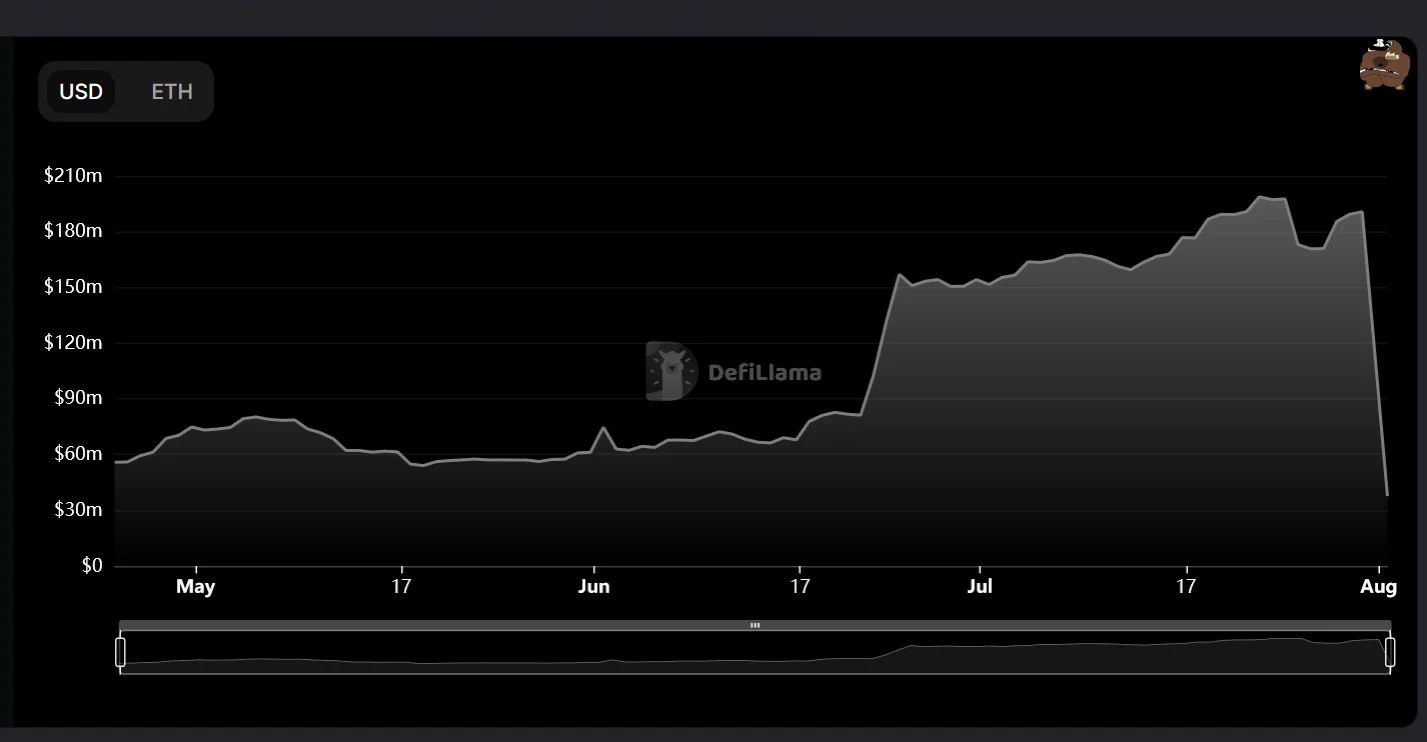
1/ Nomad just got drained for over $150M in one of the most chaotic hacks that Web3 has ever seen. How exactly did this happen, and what was the root cause? Allow me to take you behind the scenes 👇
X (formerly Twitter)
301 points · by onion2k · 4y ago · 334 comments
> QSP-19 Proving With An Empty Leaf
> Recommendation: Validate that the input of the function is not empty
> The Nomad team responded that "We consider it to be effectively impossible to find the preimage of the empty leaf".
> We believe the Nomad team has misunderstood the issue. It is not related to finding the pre-image of the empty bytes. Instead, it is about being able to prove that empty bytes are included in the tree (empty bytes are the default nodes of a sparse Merkle tree). Therefore, anyone can call the function with an empty leaf and update the status to be proven.
>It turns out that during a routine upgrade, the Nomad team initialized the trusted root to be 0x00. To be clear, using zero values as initialization values is a common practice. Unfortunately, in this case it had a tiny side effect of auto-proving every message
EDIT:
Reading and noodling I'm 99% sure these are separate issues. The vulnerability talks about passing in an empty leaf to the prove function. But that's not what the exploit is.
The exploit is using an unproven message. So they are passing in an actual leaf to prove. The problem is that unproven messages have 0x00 as root and some jabroni set 0x00 as the trusted root. So every message was treated as proven by default when it should be the opposite.
Not a hard and fast rule, and not something that will catch tons of problems, but now and again it does help me catch an uninitialized value.
then whoever takes over maintenance from you and wants to make improvements says "hey, we can add this new v2 feature through the 0x0 which is available for future enhancements"
Fun part is as far as I understand this is just a convention and there is nothing intrinsic to 0x0 that makes it different from any other destination address. If someone was to find the private key for which 0x0 is the public half they would have access to a vast amount of stuff that has been transferred there over time. Finding this key is computationally unfeasible however.
yes, a routine upgrade. that's what it was..... (→_→)
The real issue was half-caught in a review on a pull request however. https://github.com/nomad-xyz/monorepo/pull/289/files
If this legacy enum value had been handled later in the code, there would not have been a vulnerability.
(This isn't to say that the developers were bad. The person who wrote the code was extremely knowledgeable. It's just really hard to be perfect every time. )
They are bad because they are not competent to write the decent code required by their profession and job environment.
In normal software writing trade, such engineers are called low performers and routinely managed out of any organization.
Sure, the mistake is not unusual from the perspective of general software engineering. But let's not forget what software they are working on.
I am totally fine with a bartender dropping a glass... I'll put a surgeon on trial if he cannot make his hands steady during a heart surgery...
I remember AWS S3 went down in 2017 or so and the key point I took away from their article about it was that they didn't blame the junior dev that caused it, because it shouldn't have been able to happen in the first place.
Ah here we are: https://aws.amazon.com/message/41926/ "We are making several changes as a result of this operational event..." basically boiling down to "the employee in question is not at fault because our tools should not have let him do that".
This "you must be perfect" mentality is detrimental to building a security culture, IMO — no one is perfect, and the most excellent dev will slip up. Seeing the people involved in that commit, I believe that's what happened here.
Hoping we learn more in the post-mortem, and they revise their practices to catch this mistake in the future.
>Messages popping up in public Discord servers of random people grabbing $3K-$20K from the Nomad bridge - all one had to do was copy the first hacker's transaction and change the address, then hit send through Etherscan. In true crypto fashion - the first decentralized robbery.
I'm not a lawyer but I would be very surprised if courts in most countries would buy this argument.
Spelling or grammatical mistakes usually don't invalidate contracts in the real world and robbing a poorly secured vault is still illegal.
The thief was obviously trying to get other people's money without their consent.
I’d love for this type of thing to be tested in court. I’d invest in popcorn futures ahead of that trial.
https://www.bbc.com/worklife/article/20180723-the-commas-tha...
It's so poetic.
The Law allows people to agree to stupid things, no?
The old mantra of possession is 9/10ths of the law is and always has been false. If i have something i own it. That is the one fundamental truth. Now someone can come and try and take it back from me by force (Person, Court System, Rebels, Corporations) if they can exert more violence on 'me' than i can exert on 'Them'.
The problem with crypto is the 'keys' are what crypto is. No nationstate can come and take that away from me. They can kill/imprison/fine me, but then neither of us will have it. You would have to hack/fork the chain for that to happen (Which has happened) or find some social way around it (If i have it on a centralized exchange, if i have a hackable hard drive, found my keys on AWS, etc etc.) Additionally, with things like Monero, and tornado swap good luck trying to find them.
If you offer a sheep for 100 lb of apples, and someone accepts and gives you the 100 lb of apples, you owe them a sheep, even if you later think that deal was a bad use of that sheep.
If you say "currency is to move and out of my bank/warehouse according to these rules, conducted by this robot", and someone finds a profitable way to transact with that robot according to those rules, you have arguably signed away those profits to that someone, and they are then entitled to keep what the rule-implementing robot gave them.
This doesn't mean "code is law" actually works as a defense in court -- there are are all kinds of reason why that promise might be unenforceable -- but you can't casually asset that this is a robbery without examining the specifics of how the transfer happened.
'Code is law' is just a reddit meme at this point, that has no basis in reality. 'Smart contracts' are just regular contracts, but with more opportunities for theft.
thanks for the loud laugh
This is the funniest thing I've read all day
If we have a situation where:
* Its hard to tell, after the fact, 'a mistake' was a bad actor.
* The programmers are, by and large, anonymous.
* The benefit of making 'a mistake' could be hundreds of millions of dollars that are not easily traced.
This situation seems rife for abuse and bad actors. Not saying it happened in this case. . . but how would you know?
> In Solidity, the order of evaluation of sub-expressions is unspecified. This means that in f(g(), h()), g() might get evaluated before h() or h() might get evaluated before g(). Practically, this order is predictable, but Solidity code shouldn’t depend on that behavior between compiler versions. In most circumstances g() is evaluated before h() (left-to-right order), which is also the behavior that most languages specify in their standards. However, in the case of emitting an event with indexed arguments, the arguments are evaluated right-to-left.
I feel that order-of-evaluation dependence is a special case of the general conflict between expression-oriented (functional-style) programming, and impure operations requiring sequential reasoning. Another case of this conflict is temporary values (expressions) with side-effectful destructors (sequential reasoning), for example https://fasterthanli.me/articles/a-rust-match-made-in-hell#w....
At this point, is it good practice to avoid using side-effectful procedure calls as parameters to other expressions (especially those with multiple inputs), but instead first assign to a temporary value to make order of operations explicit?
Thank you man!
If they keep it in blockchains only, it's hard to connect to a real identity. But if they cross the line (which is everybody's goal eventually) to the real world, they can get caught as easy or even easier than in traditional financial system.
I don't how anyone would commit anything more than pocket change to a scheme where an insider could deliberately introduce a weakness and then exploit that weakness to walk off with all the funds committed.
That said, I personally doubt this happens much if at all, because if you want to scam on web3 you can just do a good old-fashioned pump&dump and nobody seems to be receiving any legal/criminal consequences as of yet.
Challenge: explain to a normie that their life savings is gone forever because of a zero initialization vector.
Somebody who directly invested in MBS is by definition not a normie.
My retort was half-baked because two wrongs don't make a right. But it is ironic to see that many normies here don't see how MBS caused massive wealth loss across all investors worldwide without them directly speculating in that asset class. While, so far, this hack hasn't caused a crash in crypto assets.
Of course there is no justice in either case, but at least normal people can see who is most appropriate to behead in the case of the traditional financial catastrophes, in the purely theoretical revolution.
If you got burned by mortgage backed derivatives and lost your life savings, it's ultimately because you were (knowingly or not) speculating on the value of real estate assets and making an assumption about future values of said assets.
In the case of Nomad, it's that you put yourself at risk by using their service you could've lost everything you put in.
They claimed high-risk mortgages would turn AAA by the magic of financial and statistical shenanigans. That's not far from "zero initialized vector" shenanigans.
Investing in AAA securities is not speculation, by financial standards, by the way.
[...]
>it's ultimately because you were (knowingly or not) speculating on the value of crypto assets
Not seeing how these are different
You mistook a currency for an investment opportunity, and gambled your life savings on one thing. Currencies have always and will always fluctuate against each other. Diversify your investments.
The issue is treating a currency as an investment is just...foolhardy from the get got. Just don't do that. It's silly. People saw the value of it go up - or start to have any in the first place really - and saw a "get rich quick scheme" where there wasn't one. It was the brith of a digital currency, nothing more.
Usually just depositing money in a bank doesn't get it stolen so the assumption isn't unreasonable.
Even if it's only 0.25*life saving that's still devastating for most people.
If you want an apple to apples comparison you should be comparing the security of a savings account to that of a cold wallet. Those are much more alike in their function.
I don't think we classify people who engage in cross network token swapping as "normies". That's like classifying algorithmic day traders as an "average joe investor".
This is especially the case for protocols like Nomad that don’t yet have a native token. They’ll get liquidity commitments through over-the-counter SAFT agreements that give the VCs a percent of the future tokens.
The reason developers make their contracts "upgradable" is simple greed- they want to be able to launch more quickly than other projects without needing to ensure their code will stand the test of time. This may be OK for a social networking app MVP, but it's not OK for a smart contract which a user ideally should be able to audit and understand (or at least rely on the audit of someone else). "Upgradable" smart contracts can always be changed after the fact, as happened here, which means that any audit is meaningless.
Top tier projects still do use simple un-upgradable smart contracts. Uniswap first wrote v1, then improved it and launched v2, then v3. The Uniswap v1 and v2 contracts are still running and usable, and will be for as long as Ethereum is around. Their security properties will always be the same as they were the day they launched.
"Upgradable" contracts mean that you are trusting your money to some anonymous fat fingered (or at worst, criminal) dev, and it could disappear at any minute. They defeat the entire purpose of even using a blockchain.
It’s not really about greed. Deploying a program and having it unchangeable forever comes with risks, and more often when dealing with very complex applications, those aren’t worth it
Yes, writing perfect code is very hard. But smart contracts are an example of code that must be extremely thoroughly tested, formally verified and so on.
But that doesn't go well with being first to market, move fast break things, etc.
* Initialization was done 42 days ago: https://etherscan.io/tx/0x53fd92771d2084a9bf39a6477015ef53b7... -- "Click to see More" and notice "Input Data" parameter [2] which sets _committedRoot to 0x00.
* Click through the To contract to get to the code (click on Contract tab): https://etherscan.io/address/0xb92336759618f55bd0f8313bd8436...
Just adding direct links to what samczsun and 0xfoobar are talking about in https://twitter.com/samczsun/status/1554260106107179010 and https://twitter.com/0xfoobar/status/1554269071214088193/phot...
Depending on how you measure, that value is (in the US and Europe) typically in the order of 1..5 Mio USD.
So it's not outrageous to assume that losing 150m comes with a body count, even if the funds wouldn't have bee used to directly save or improve lives otherwise.
and so therefore nobody is trying to kill or impair the developers/team
if you were referring to people committing suicide or being suicided by the people they borrowed money from, thats not everyone’s problem and people in those circumstances should re-evaluate to avoid that risk or accept that risk
1. Owning ETH with a non-custodial wallet.
2. Owning ETH on a CEX.
3. Depositing ETH into a smart contract to receive a wrapped asset. This includes rollups and L2s.
The majority of major crypto hacks[1] are in the 3rd group, and almost all of these hacks are related to protocol updates and governance. Either: the developers update their code, and accidentally push a bug, or one address or a group of addresses are allow-listed some privileged actions in the contract and that can become a weak point.
Proxying and governance isn't the only way to design contracts. Two examples counter to this that are more robust are WETH ($6B) [2] and ETH2 Deposit ($20B) [3] which cannot be attacked in this way. If users wanted a new feature from the WETH contract, they would have to manually migrate over to the new address. Eventually we might see this kind of design be applied to bridges and rollups.
[1] https://rekt.news/leaderboard/
[2] https://etherscan.io/address/0xc02aaa39b223fe8d0a0e5c4f27ead...
[3] https://etherscan.io/address/0x00000000219ab540356cbb839cbe0...
At my day job, I automate everything because humans can't reliably perform basic tasks.
I'm not a believer in web3 or crypto but believe computers to be more impartial and would rather see them eventually take over certain aspects of legal work.
Which of the two do you think will more likely come back to haunt you? The one where any authorities investigating will need to dig up the backgrounds and connections of hundreds of blockchain addresses exploiting the transaction, or the one where only a single address exploits the transaction? Won't their attention be primarily on those idiots who try to withdraw the money in the US, say, vs that one transaction out of hundreds where someone in Barbados had their proceeds deposited into a bank and withdrawn as cash before closing the bank account (that they opened with a false identity, maybe?).
When there's a single account performing the exploit, all of the investigative resources will be applied immediately to that account, making it far more likely that the account in question will be tracked up to the point of withdrawal, and potentially flagged in time to prevent such a withdrawal. With hundreds of others distracting any authorities, it becomes hundreds of times harder track down the original perp.
Think of those heist movies where someone throws a handful of cash up in the air to help avoid pursuit. Same idea.
I have zero evidence for my "deliberate sabotage" theory. OTOH it seems entirely plausible and in line with the general scamminess of many cryptocurrency systems. OrangeMonkey's comment expounds better on the social and legal aspects that make deliberate fraud such an attractive possibility: https://news.ycombinator.com/item?id=32318939
There was another bug where someone tried to grab the coins without broadcasting the bug into the pool (by using a well designed double transaction), but they made a slight mistake, and other traders immediately took the coins instead by algorithmically detecting the bug (as soon as the example transaction was published on the blockchain) then algorithmically generating transactions.
We can't expect widespread public adoption of a system like that; even lay people are too familiar with how unreliable software is.
Both are functional, which means easier to read, and Pact is non-Turing complete and strictly typed, making it even easier, so much so that formal verification tools can assess what a contract is capable of automatically - a much smaller search space than EVM bytecode.
When code is not permanent and backing millions of dollars or more of value, the trade offs may favor more powerful or flexible languages, but the ability to read and understand code and what it can do it so wildly important for smart contracts that I don’t see a world where Pact isn’t moving the right direction contrary to the EVM.
I don't get your comment: Ethereum itself has worked without any issue since it came out, in 2015 (?) or so. Many smart contracts, not built by the core Ethereum devs, have been exploited, but from Ethereum's point of view everything worked flawlessly.
Why would the Ethereum devs, which have create a blockchain working perfectly fine since seven years (including many upgrades), suddenly screw up the merge to PoS badly?
I mean: I don't doubt we'll see many more hacks (and I don't know why so many people are so keen on putting so much money in smart contracts) but the people in charge of Ethereum itself seems to be quite competent and have a track records of several years without any exploit to prove it.
Switching to an entirely new consensus model, that has never been done before, is complicated and a big reason why it has taken as long as it has.
Furthermore, there is a giant target (huge sum of money) on ETH's back now. If you had an exploit for PoS, why would you reveal it early?
As the person below also states... they could just fork and fix things, but this time, it will be a lot harder to do so without entirely destroying the value of ETH.
This is a massively risky venture that takes more than just hope and prayers. As we've seen in many many hacks over the last few years, even the most competent developers can miss something crucial.
https://en.wikipedia.org/wiki/The_DAO_(organization) https://en.wikipedia.org/wiki/Ethereum#Launch_and_the_DAO_ev... https://en.wikipedia.org/wiki/Ethereum_Classic
Before 2018, Ethereum has a similar downtime to Solana
Ethereum is continuously developed to remove bugs.
For example: Until 2017, it was possible to sent a specifically signed transaction (without the correct private key) that resulted in the msg.sender having null sender address. This was fixed in EIP-86
The reason you cannot just roll back a smart contract exploit like Nomad's is that it is very hard to build consensus across the entire protocol unless it is something that affects many users. The only time this happened was with the DAO which held something like 15% of all Ethers at the time, and so it affected the entire network. Compare this to Nomad which held something like 0.1% of Eth's total circulating supply.
Except with PoS, it is different. People keep applying the PoW mentality of a fork to PoS and it just doesn't work that way. Jeff wrote a good blog post [1] on this a while back that took me a long time to come to terms with. It boils down to this paragraph:
Proof-of-stake is inherently self-referential. It is possible to have two perfectly consistent, equally valid chains - perhaps with different stakers. Since “stake” is defined within a blockchain, it cannot be used to pick between two blockchains. Under the right kind of stress, the real, unwritten meta-consensus protocol that determines "which blockchain do we pay attention to?" will be revealed. Exactly what that is will depend on the nature of the fork.
[1] https://github.com/stickfigure/blog/wiki/Proof-Of-Stake-Wear...
The article suggests that two chains can simultaneously exist but that would invalidate the protocol, which will always choose one using LMD GHOST. You can read more about it here[2].
Often times the market doesn’t like upgradeable contracts for this reason, ironically the misunderstood idea of smart contracts not being upgradeable is paraded as a bug
but its all situational
[1] https://news.ycombinator.com/item?id=32319344
[2] https://github.com/nomad-xyz/monorepo/commit/46d14571f3eada6...
https://news.ycombinator.com/newsguidelines.html
Edit: it should be obvious, but this moderation point has zero to do with how any of us feel about web3 or whatever.
Those are both low-value, ad hominem attacks that don't substantively engage with content, and they are both comments that erode the quality of discussion in our community.
"The future is already here, just unevenly distributed" and boring
Is it really supposed to be open-source? A common cyberpunk trope is that mega corporate conglomerates own verything. Cyberdecks are modified and reverse-engineered, yes. But generally come from a mega corp.
We have all that, although most of it from smaller Chines manufacturers. More than that we do have truly open source hardware, you can download schematics for almost anything, modify and design your own chips and circuits based on open designs, dream up your own hardware, and if know the right people in Shenzhen you can email it all to them and they'll build it for you.
The reason so few people take advantage of any of this is that it didn't turn out to be that useful.
Maybe they are... Perhaps this is the new way the CIA is financing their off the books activities.
So long as people aren't running around with too much bad money.
If anything these heists prove interest in web3 remains high.
It is probably both. The model of allowing governance updates from a contract owner on a bridge or rollup is not sustainable and will have to change to mitigate these kinds of risks. Whether that means crypto networks as a whole will inevitably be replaced by a central banking system is harder to agree with.
The difference is that banks can reverse stuff.
I understand that some of the deposits are from retail 'investors' who are poorly organized more interested in token appreciation or yield than the safety of their funds. But even getting to $150m would take forever if it came from individuals.
Surely there are large investors that provided the bulk of the capital. Shouldn't they intervene in some way? Or do these whales have so much to waste that they throw money into each of these projects knowing that they'll never see a cent back from 50% of them?
From this explainer:
> It’s [Nomad is] built to address security first The Nomad team has been building secure bridges as a team for 4+ years and has studied the pitfalls of multi-sig and validator-based bridges.
https://medium.com/imperator-guide/nomad-a-cross-chain-inter...
Assuming this is true, and assuming the team is not incompetent or composed of the typical grifters, perhaps it's time to draw the inevitable conclusion. No amount of experience is sufficient to safeguard an Ethereum protocol of any interesting complexity.
It's a reasonable question to ask, WTF is Nomad for? After all, isn't Ethereum supposed to be the World Computer, Turing complete and ready for any task? Nope. Never was.
I think a good chunk of the answer can be found on the home page:
> Nomad reduces gas fees by a factor of 10x relative to traditional header relay systems, while remaining decentralized.
That world computer is choked to the gills with accumulated waste. The proliferation of chains is the response. Each one is less secure than its forebear. Gobbledygook like Nomad is the "connective tissue" to get the various organs of this science project talking to each other.
Dive deeply enough down and you find the root of it all: everybody wants to make the next Bitcoin, Ethereum, Cardano, Polkadot, and so on. With each turn of the crank a new crop of Barnums springs up to take the money of an unending supply of digital rubes.
Any chance for the exploiters to be prosecuted, or is it essentially all anonymous?
* The one where the investor lives?
* The alleged thief?
* The creators of the contract?
* Some 4th option?
People should look into those!
The EVM, that it compiles to is a lot of fun though, if you like small understandable virtual machines. I like it a lot.