Gen Z and The Rise of Influencer Culture (Research Study)
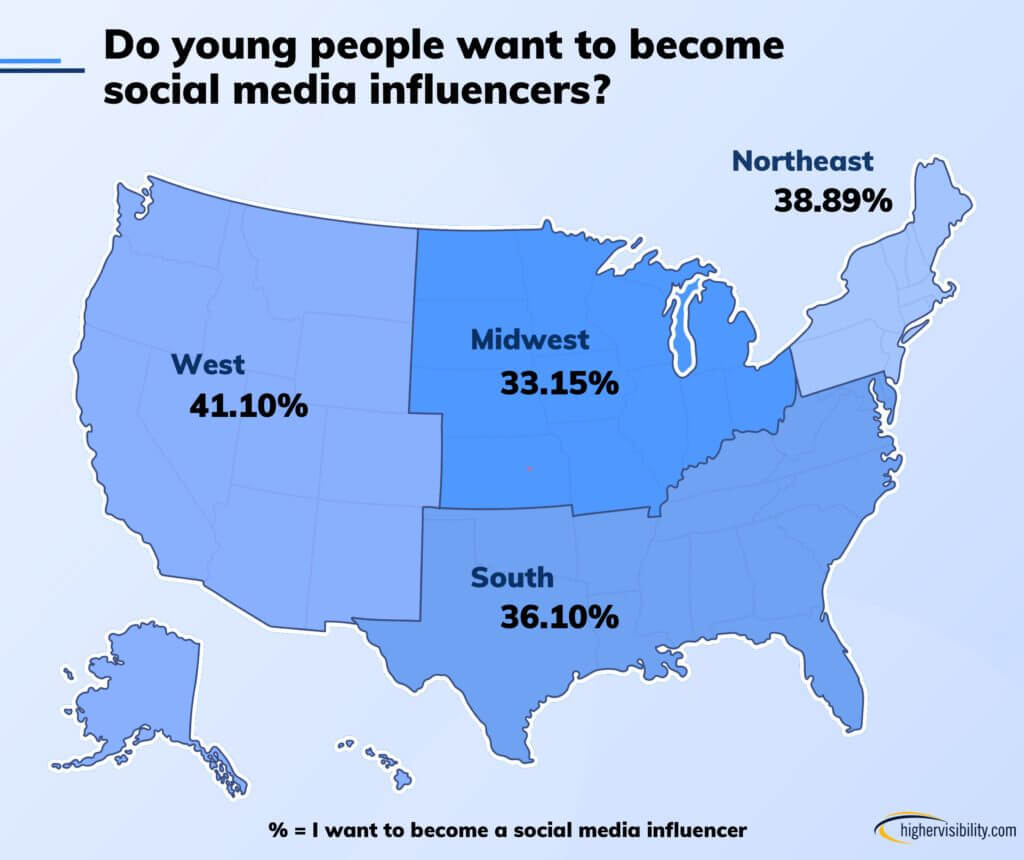
We have surveyed Gen Z in the US to find out their views on social media influencing as a profession.
HigherVisibility
28 points · by zdragnar · 4y ago · 76 comments
Influencers today are like movie/tv stars in the past. They produce content to entertain.
Young people want to become influencers. So they want to become famous? Young people wanting to become famous is nothing new either
But I don't think most people would agree that cars aren't a significant change from railroads or horse-drawn carriages. Likewise, one can become an influencer from their bedroom, quite unlike having to travel to Hollywood (or the country equivalent) to become a movie star.
Can you be certain people worship actors because the actor cultivated a skill? Or rock stars? Maybe influencers are just laying bare the shallow intoxication of fame without a "skill" to mask what a lot of nonsense it is.
After all, you can worship Odsy Osbourne and have a para social relationship with him. But if you really respect music, you can go down to your local bar and actually meet people who play nearly just as well but without the glitz and glow.
While we're at it, carrier pigeons and telegrams are essentially the same as text messaging (communication), and using the same logic leads us to conclude a bow and arrow is not so different from assault rifles (lethal weapons).
Come to think of it, it's pretty strange you can easily acquire a flare but not a grenade or nuclear bomb, they share the same essence after all (explosives)!
Point being that "sharing the same essence" doesn't preclude a "significant change" between the entities. It's a reductionist fallacy.
We live in a very different world from the one of, say, 50 years ago. In today's world, there is a belief that all it takes to become successful is your mindset (i.e. ideas like "The Secret"), that coupled with everyone having the technology to actually reach people, I think gives the impression that anybody can win the lottery of fame.
The ones that choose to do this are volunteering for tribute, go make their face known amongst potential sponsors, and go out into the hopeless world streaming it live hoping for the sponsors to send them gifts and be subscribed financially to the outcome
Its not really as vapid and narcissistic as it otherwise seems
It can be enough to make or break rent even with low success
It is.
Influencers are mostly famous for being famous.
You are looking at the past through rose colored glasses. I don't think Anna Nicole Smith is any more particularly talented that an influencer today (infact influencers today deal with more competition than celebrities 30 years ago).
Edit: not only that, she wasn't particularly famous. I suggest anyone disagreeing provide some names of people who were arbitrarily famous, specifically wherein 20% of that generation would have aspired to become. It simply didn't exist. I suggest most people who disagree weren't even alive a the time.
In the perennial game of 'prejudices about generations' I think this one is a material issue.
Some less obvious talents like connecting with a large number of people over one-way videos propelled PewDiePie's and Markiplier's channels to great heights. It appears easy to do what they do, but given such intense competition and few such successes, it's likely they provide something pretty rare that people want. (Some channels admittedly have early mover advantages).
It is possible that algorithms and crowdsourced data in Youtube and Tik Tok are more meritocratic than the more traditional ways of selecting talents.
He's not famous for being famous, the dude worked at NASA for almost a decade and is a legit accomplished engineer.
What I'm mostly referring to are the "influencers" who follow this formula:
1) Be hot 2) Don't be not hot 3) Get on TV 4) Goto 3
Now you're famous. What are your skills? Looking good on TV and stirring up drama on and off screen.
we are in a postmodern world now, everything is meta. We deal with the celeb and scrap the work
Step 4: ...
Step 5: profit
There's a positive argument to be made that YouTube only cares about eyeballs and wallets, and the characteristics of who's getting YouTube those eyeballs and wallets is of no interest to them.
Or Harvey Weinstein.
1) 30 years ago, large swaths of people didn't want to be 'famous for being famous'. Yes, people may have wanted to be athletes or actors, but that's different.
2) Even those things were hugely aspirational. People didn't think that they could really just quite their jobs and play for the NFL. Surely meany dreamed of that, but few know NFL players in real life. Everyone knows someone with a social media account a few followers.
I generally don't think generations are that that different, but I find this data to be repulsive, it's almost sickening. It gives me a very dim view of that generation.
In particular is the complete lack of sense of civic duty or even self betterment that goes along with that. The word 'duty' has completely fallen away from the lexicon, but even here the aspiration towards exceptionalism (even when it can be selfish) is a bit absent.
It's the most egoic, selfish, lacking in virtue aspiration, it's probably the lowest form of existence above doing something actually harmful.
People who are social influences due to something else i.e. sports/entertainment, that's fine, but when an entire generation wants to be 'famous for being famous' it's just toxic.
They absolutely did.
> It gives me a very dim view of that generation.
It was by happenstance that our generations grew up without the same influencer content being pipelined into our brains not by virtue.
> People who are social influences due to something else i.e. sports/entertainment, that's fine,
Why? Why someone's ability which is apropos of nothing worth turning into a following? Sure I can respect an impressive display of a skill but fame in general seems toxic to me. People see one thing a person can do and they wish to know them, emulate them, hear their opinions. I don't see that as that much better than following someone because you like their marketing.
"They absolutely did"
Nope. Which list of people 30 years ago were 'famous for being famous' and which cohort of society aspired to be them? Name names.
It was not 'a thing' aside from a few random, quixotic people. Nobody wanted to 'be them' or thought they could be that.
2)
Yes, we live in different circumstances, that's fair.
But my grandparents were born in homes without electricity or plumbing. They did not turn to prostitution or aspire to the 'least' they could be.
3)
"Why someone's ability which is apropos of nothing "
Because being a great athlete or artists (or scientist etc.) is not 'a propos of nothing'.
Yes, it's a bit glib for people to fanboy athlete's the way we do, and Michael Jordan is a jerk, but he's also a spectacular athlete.
"Ask not what your country can do for you — ask what you can do for your country." - JFK
Duty to your family, your community, you nation, to humanity, to the Greater Good or God if you prefer.
It's probably a latent communitarian impulse most people have, historically developed in some kind of civic manner by cultural institutions. Civilization, even in the most civic, secular sense, depends upon our willing participation to get along in a positivist manner, i.e. doing more than just the minimum of respecting each other's boundaries, but 'actively' working towards a Greater Good.
Unfortunately, the concept collides with both libertarian ideas of 'freedom', and populist ego appeal which is the ultimate means of selling out to garner attention. Every leader, everyone trying to sell an idea or product, has an incentive to 'sellout' and just appeal to our little egos by telling us that 'it's all someone else's fault', or telling us lies like 'we can invent the reality around us'. It's popular in grievance politics, and both in some strains of social justice populism. 'Your bad situation is someone elses fault', or, 'You are what you say you are' as the Gen Alpha mantra.
The libertarian 'freedom' ideologies generally have to exist, because in civilization we have a tendency to end up in tyranny, so the impulse towards that expression can be positive. But, it comes at the cost of an ideological ego appeal: 'you' should be 'free to do whatever whenever' is a seductive concept inconsistent with the reality there's quite a bit of work to be done towards just making civilization function, it's an impractical appeal to the ego in that sense that has us 'outsource' all of the work to an 'other' when of course that's impossible and irrational.
You can generate a following and make a little money to supplement your day job. Not a bad idea and it shows an entrepreneurial spirit.
Influencing on the other hand is primarily about being an intermediary for platform/advertiser relationships. If one were to stretch things a bit, I guess you could say they're performers deriving their income from private companies.
But even then there's probably still a little bit of a difference between a theater actor performing a role in MacBeth and a teen getting a commission off sneakers they advertise on Tiktok.
I know a few coaches for certain sports for whom Instagram and Tiktok are now far superior ways to acquiring new clients than word of mouth or similar - all their competition has adopted influencer marketing tactics (with themselves marketing themselves), so its evolve or die.
This isn't on the influencers. This is on a whole lot of people in the US who have continuously trampled on those less fortunate than them to the point where there is nothing left at the bottom but despair.
They provide entertainment to people, what makes you consider them parasites?
And you don’t?
Life is weird and if “immoral work” is a way out for them, then good for them! It’s not an easy work, much harder on your psyche than the usual engineering work that we do.
It only happened if it's posted om social media, is kind of stupid but unfortunate reality.
I hate it to death but it is 98% of the internet for most people.
But then I'm not the target audience, so it's not their loss.
Edit: it doesn’t even invert the scale! It’s just using a monochrome color range without any regard for scale.
Building your product on someone else's platform is always a risk.