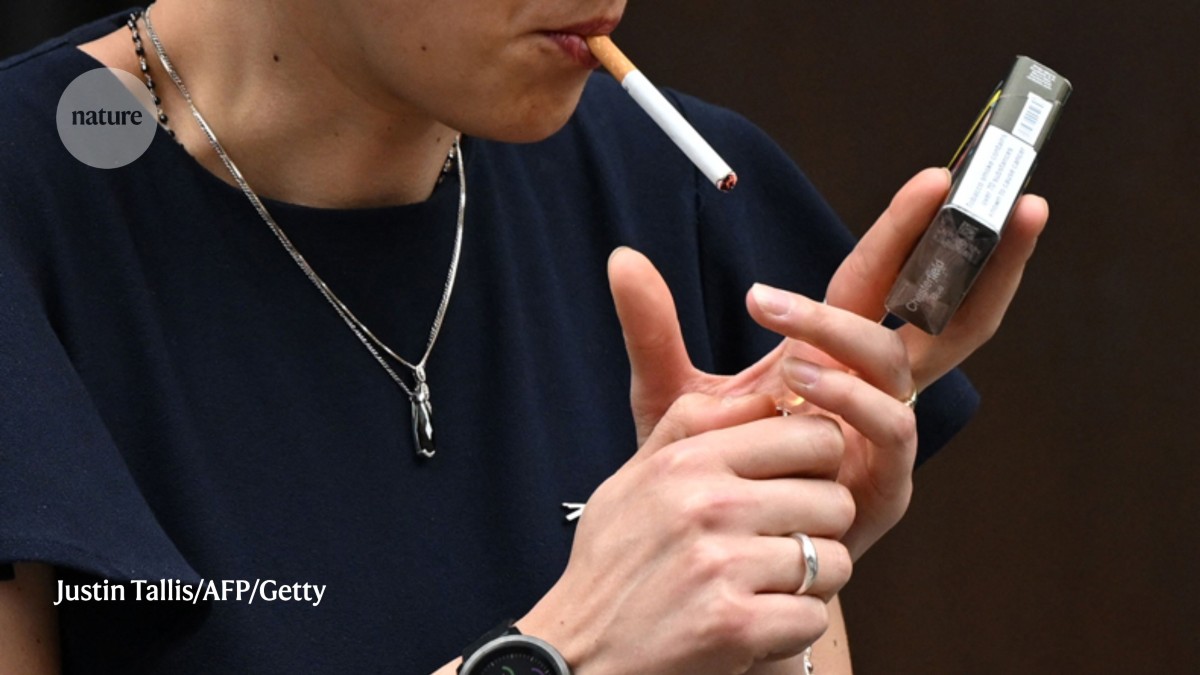
Almost half of cancer deaths are preventable
Data show that smoking, drinking alcohol and obesity are the biggest contributors to cancer worldwide.
nature.com
239 points · by Bender · 4y ago · 298 comments
Smoking, yes, we seem to have broad support for that one (way beyond what the facts support, even, but that's probably for the best). But the other two? I don't think so. There's a lot of confusion out there about alcohol use. Most people still think small amounts are basically fine (maybe even good!), even though more recent studies [0] suggest that isn't true.
And we're trending the wrong way on obesity, too. [1]
[0] https://www.thelancet.com/journals/lancet/article/PIIS0140-6...
[1] https://www.scientificamerican.com/article/can-you-be-health...
So what you are left with is trying to tease causation out of relatively loose correlation, which is and always will be so problematic as to be near useless. The results will always just support the researchers' pre-conceived notions.
Smoking is only so obvious because the rates of lung cancer there are an order of magnitude more. 80-90% of lung cancer is in smokers, while only 12% of Americans smoke. No other health issue is so clear, people who are moderate drinkers only have very slightly elevated risks of almost everything, so it could be confounded.
Legalize safer alternatives now!
It’s likely that the risk of,(e.g.) one drink per month is also very low. What’s not here is the inflection point where alcohol consumption goes from a (subjective) minimal risk to an elevated risk.
> But there was a problem with many of these studies: They compared drinkers to non-drinkers, instead of comparing only lighter drinkers to heavier drinkers. And people who don’t drink are pretty fundamentally different from drinkers in ways that are hard to control for in a study. Their lives probably look dissimilar.
> Most importantly, they may be sicker at baseline (perhaps they quit drinking because of alcoholism, or because of a health issue like cancer). And something in these differences — not their avoidance of alcohol — may have caused them to look like they were in poorer health than the moderate drinkers. (This became known as the “sick quitter” problem in the world of alcohol research.)
> Lately, researchers have been trying to overcome that problem by comparing lighter drinkers with heavier drinkers. And the benefits of modest amounts of alcohol wash away.
And that even moderate amounts of alcohol are harmful:
> Their findings were stark: Drinking more than 100 grams of alcohol — about seven standard glasses of wine or beer — per week was associated with an increased in risk of death for all causes, they concluded. In the US, the government suggests men can drink double that amount — up to two drinks per day — but advise women who are not pregnant to drink up to one drink per day.
> A person’s risk of death shot up as they drank more. The researchers used a mathematical model to estimate that people who consumed between seven and 14 drinks per week had a lower life expectancy at age 40 of about six months; people who drank between 14 and 24 drinks per week had one to two years shaved off their lives; and people who imbibed more than 24 drinks a week had a lower life expectancy of four to five years.
My sort of baseline here is that nobody would think twice about this if they weren't motivated to justify continued consumption. It's fairly obvious that it's bad for you.
Source: https://www.vox.com/2018/4/24/17242720/alcohol-health-risks-...
IIRC the argument about obesity is simply more cells = more chances for something to go wrong that turns into cancer.
It might be true, but real world impact of that higher probability of some cancer seem to be negligeable.
It's absolutely creepy how there's a constituency of people who are upset by any scientific possibility that fat people could be relatively healthy, or be made relatively healthy, without losing weight. The desire for fat people to conform or be punished, damn the science, is fetishistic. That's the only motivation I can think of for being upset by the exploration of the precise effects that being fat has on health.
I'm nowhere near fat right now, but if there were an injection that saved fat people from insulin resistance and inflammation, the farthest thing from my mind would be to get upset about it. If you believe that gluttony is a mortal sin, no need to be upset if the only ways fat people are punished on earth are cardiovascularly, through their knees, and through the aggression of bullies; your deity can punish them after death for not eating as moderately as you would have preferred.
There should be a reasonable medium where fat people aren't outright shamed for being towards one end of the bell curve but red flags for unhealth aren't ignored for the sake of other's feelings. America and now many parts of the west are facing various health crises to such an extent that I don't think obesity should be brushed off as perhipheral to other problems. Being fat has many comorbidities, and just focusing on losing fat is usually the best way to address those issues.
> I'm nowhere near fat right now, but if there were an injection that saved fat people from insulin resistance and inflammation, the farthest thing from my mind would be to get upset about it.
I agree, and there kinda sorta are medications currently available that would tremendously help. Off the top of my head, I don't know what it's called, but I know some people who've been on next-generation medications for obesity that target the ghrelin-leptin balance, basically correcting one's sense of hunger and satiety. Having seen the results myself, it works insanely well.
On the other hand, solving obesity with a pill still has some moral issues. If everyone could just consume anything they want in massive amounts and not get fat, I don't think that's really good for a person's psychology in a similar sense that giving someone a bunch of money often doesn't end well. It's not a scientific argument, but a philosophical one; I know. Such drugs may also give someone the idea that they can just eat whatever they want because they don't gain weight, but just because you don't get fat doesn't mean there aren't other consequences to eating lots of sugar, carbs, odixated oils, etc.
The question should be why we are so fat now. But that would mean believing that experts can be compromised and that a century of nutrition policy has been a failure, which many people aren't ready for. Just my opinion.
> "In 2019, half of all male deaths from cancer, and more than one-third in women, were due to preventable risk factors including tobacco and alcohol use, unhealthy diets, unsafe sex and workplace exposure to harmful products, such as asbestos. From 2010 to 2019, global cancer deaths caused by these risk factors increased by about 20%, with excess weight accounting for the largest percentage of increase — particularly in lower-income nations."
HPV also plays into a variety of other cancers (throat/mouth, anal, penile, vaginal). Though cervical cancer has by far the strongest link.
Throat/mouth/neck cancers are actually strongly correlated with smoking, alcohol consumption, and HPV (https://www.cancer.gov/types/head-and-neck)
https://en.wikipedia.org/wiki/Human_papillomavirus_infection...
https://www.ncbi.nlm.nih.gov/pmc/articles/PMC5120915/#:~:tex....
Epstein Barr spreads primarily through saliva, and also causes 1-2% of cancer, the last time I checked. So that could spread from unsafe sex, but it could also come from picking up slobbery toddler's toys.
There's a whole world of virus and infectious disease that is only becoming visible because of the huge advances in nucleic acid sequencing and other massive biotech advances. We may find lots of surprises in the coming decades from this new technology.
Condoms are at best ~70% effective at preventing HPV transmission so the “unsafe” part doesn’t really strike me as apt. Generally everyone who is sexually active has at least one strain of HPV.
HPV vaccination seems like the optimal strategy. It’s so weird to me that initially it wasn’t even offered to boys.
It's important to switch from cigarettes to e-cigarettes exclusively and abruptly though. I have friends who tried to switch slowly and just ended up smoking both.
Once I used e-cigarettes I quit entirely within months. And it felt easy.
One thing I've seen work for people is making a significant investment into a smoking counter measure. Extreme example, hire a personal trainer for $75/hr and go to the sessions 3x per week.
Now you are investing $225/week into your health, and you're going to want to get maximum ROI from that investment, right? Well, smoking is diminishing that ROI. Secondly, you have someone encouraging you to do the best possible work you can do with your body every time you go to a session. You'll naturally want to avoid disappointing that person. You'll also want to see continued progress in the results they are measuring. Smoking will impede that progress, and again, minimize your ROI.
This worked for someone very close to me after everything else failed. Incidentally, that person stopped going to the trainer after a while, but only after quitting "stuck". Good luck in your journey and never quit quitting.
Just stop. In five years' time, you'll wonder why you didn't stop sooner.
Not a smoker but my initial reaction to you is probably pretty close to that of a smoker, and not particularly favourable. How can you possibly think that a deeply physiological addiction is going to respond to either logical arguments or simplistic slogans? Once you fix smoking, can you please stop the opioid crisis?
It's easier to step down with it, and if you fail to step down, you're still getting fewer carcinogens.
Not so much. The whole body positive movement has swung the pendulum too far to where obese people are “healthy” now.
If someone quits chain-smoking they'll feel healthier, lose their cough, improve their aerobic capacity etc. If they go back to smoking they'll go back to feeling how they were. It's the same with obesity - doing short stints of dieting is like quitting smoking for a couple of months and then starting up again.
Add chronic sun (UVA) exposure, #1 leading cause of skin cancer yet still not addressed by popular media.
The reason it's not in there is because almost no one dies of basal cell, the most common skin cancer. Malignant melanoma is another matter, but that is much more rare, and also quite treatable.
I've had several myself and know lots of other people who have, too. They're handled via outpatient surgery and there is no followup.
edit: Does anyone know if psychologists or sociologists have a formula for quantifying happiness? Something like mechanical advantage. It seems intuitive that certain behaviors can act like a fulcrum by increasing happiness now at the expense of sadness later, either born by you or those close to you. I'm sure we've all had smokers joke that you can keep the last 20 years of life, maybe they're on to something.
Instead of coping with alcohol, I read math textbooks and do problems.
This has improved my life dramatically. I feel good. I feel proud. And despite optimizing for happiness as opposed to wealth, this coping strategy has made me loads of money.
I should mention my cancer occurred in my childhood, so it's not as though my drinking was a cause.
Considering that about 40 million adult Americans are on anti-depressants (smoking and drinking aside), it seems like more of an issue then just failing physical health of the elderly.
Still, smokers not wanting the last 20 do themselves a disservice by disabling themselves and their hopes of redemption. They often do not die sudden deaths that bring them respite, instead many spend years struggling for breath hooked to oxygen tanks. I think these initially rebellious smokers see themselves as going out in a blaze of glory, but COPD is anything but.
Hate to be that guy, but two of the 3 above are easily handled by simply not starting at all. People who don't start do not get the urge to go to these when under stress.
Addressing stress is a lot more difficult than simply not starting. In the US, the rate of tobacco use continues to drop, and it is an outcome of a fairly significant campaign. Put all those resources into reducing stress and you simply won't move the needle.
Meanwhile, population studies like the one this article is based on[10] are horseshit because they are subject to unknown degrees of sampling bias, rely on enormous assumptions (such as linear relationships which may not hold at all being applied over many orders of magnitude), and cannot in any case establish causality.
[1] https://www.pocus.org/ [2] https://www.butterflynetwork.com/ [3] https://www.exo.inc/ [4] https://vavehealth.com/
[5] https://ezra.com/ [6] https://www.halodx.com/ [7] https://www.prenuvo.com/ [8] https://www.simonone.com/ [9] https://www.lifeimagingfla.com/
* Compare the experience of getting an x-ray from a dentist to getting one from a doctor. Or getting an ultrasound from an OB to getting one from any other doctor.
Full-body scans have been marketed for years by companies looking to drum up business for their machines, but they mostly lead to false positives. Notice how your fifth link clearly says it has helped people find “warning signs of potential cancer” instead of that it helps people find cancer? These machines are basically false positive generators in most cases. If someone had effectively infinite time and money to dedicate to routine cancer screenings from these machines, they are more likely to end up harmed by unnecessary procedures stemming from false positive results than they are to catch and remove a specific cancer occurring randomly in their bodies.
Contrary to your claims, we do actually screen for certain cancers in cases where a clear net positive benefit can be demonstrated. Mammograms for breast cancer are one common example.
Doctors definitely aren’t just burying their heads in sand. These are common research topics and the tradeoffs of false positives are constantly being investigated. Full-body screenings aren’t necessarily a net benefit.
[1] https://www.aeaweb.org/articles?id=10.1257/jep.35.2.119
[2] https://www.ncbi.nlm.nih.gov/pmc/articles/PMC3209800/
[3] https://www.ncbi.nlm.nih.gov/pmc/articles/PMC4189562/
[4] https://bmccancer.biomedcentral.com/articles/10.1186/s12885-...
Not really; mammograms for breast cancer are commonly seen as an example of overscreening.
There simply isn't good evidence that "all solid tumors caught early are curable." Some cancers, like localized breast cancers and certain renal cancers, are highly curable when caught early. Some other non-solid cancers like certain pediatric leukemias are also extremely responsive to therapy and highly curable. Conversely, some solid tumors, even when caught early, have dismal prognosis due to micrometastasis and the underlying biology of the tumor. I would recommend "The Hallmarks of Cancer" for a high level overview of the current understanding of what drives cancer: https://doi.org/10.1016/j.cell.2011.02.013
Especially at older age, many things killing slowly are just too slow and other items will surpass them in achieving that kill, ie prostate cancer in basically all men (according to a close friend who is swiss urology surgeon its only question of time we all males get it, but most of the time you dont know about it and it progresses super slowly).
There are many things like this. That doesnt mean there isnt a room for improvement. I have some bad experiences too, but my wife is a doctor and medicine is HARD, every case properly unique. IT and stuff google et al do is trivial and deterministic by comparison.
We all would like this idea that medicine can cure it all, but we are far, far from it. But some folks apparently just love reading "10 things THEY don't want you to know about XYZ" articles and actually believe them.
Do you actively read medical journals? Developments in biochemistry? Even amongst the best read physicians and researchers, I would bet my life that we're doing a lot of things suboptimally or have improper understanding of many diseases.
I'm not trying to belittle your understanding or your credentials, which I understand to be far better than untrained laymen.
The current state of medical care leaves a lot to be desired. We have a long way to go to detect and cure every disease state.
If more money is spent on developing better tooling, assays, imaging, etc. we will undoubtedly improve patient outcomes.
I’m far more inclined to trust a trained physician than a random HN commenter whose first four citations are just random ultrasound device manufacturer websites. The parent comment makes bold claims and tries to overwhelm the reader with non sequitur citations, but it’s clear they don’t actually understand the subject matter.
Hell, we could improve patient outcomes enormously by paying for everyone to receive basic dental care, today.
Subjecting a population to unnecessary routine full body scans, especially with radiation, will cause harm statistically. There are also countless examples of people undergoing unnecessary operation and suffering complications, like losing a perfectly fine healthy heart and requiring transplant.
It's a dream scenario, but maybe some day it will be like that. Or it will be like that and be dystopia. :)
Ultrasound is not radiation (as in photons). To the best of our understanding (from a physics/engg perspective) ultrasound imaging capped by appropriate energy/etc limits is expected to be perfectly safe. Likewise with MRI. If we want more pointed study to be sure of this, that's fair, but let's be clear & specific about it and commit to figuring it out one way or another so we don't repeat the same discussion a couple of decades down the line. (We have to think of moving the state of the art forward, instead of festering in unresolved disagreements)
Further, if you're concerned about under-studied possible side-effects of radiation from occasional diagnostic testing, what do you plan to do about being blanketed by mm waves once 5G gets deployed more ubiquitously?
> There are also countless examples of people undergoing unnecessary operation and suffering complications
This sounds far more serious (and fixable) compared to the physics/biology interaction of diagnostic testing. Why do we continue to bury our heads in the sand collectively, instead of trying to fix this with better decision-making tools?
MRI isn't radiation, but is sometimes used with contrast dye. People can be allergic to the dye. For one person this is a small risk. Across a population we'd be causing harm. We'd balance the risks of harm against the benefits, and so far no-one can find a benefit to routine whole body MRI scans. And if the benefit was there the MRI machine companies probably would have found it by now because it'd massively increase the numbers of machines they could sell.
It seems like you’re promoting a self fulfilling prophecy. Doctors aren’t good at reading scans, so scans will cause false positives.
But doctors are capable of learning and improving their skills. They will surely rapidly learn to screen a lot of false positives, thereby saving lives.
"More frequent scans per patient" != "More scans seen per clinician". You would just end up having to hire more clinicians.
(Yes, your family doctor might end up seeing more scans in this scheme, but it is implausible that they would be better at evaluating them than a trained radiologist, which is who this would almost surely be deferred to anyway.)
Mammography is a really good candidate for random screening and it's still debated because of false positives and the impacts of misdiagnosis.
Hopefully in the long term future we will have extremely cheap & frequent MRI and blood testing so you can assemble a high resolution digital history of your body. Doctors are generally not very innovative people though and they will probably resist it to the end.
Apply this to more invasive exploratory surgeries, and you see people dying from internal surgery complications for benign cysts and lumps.
And as the GP post cites, the scans themselves can cause health problems down the road. Performing them on massive scale will increase the occurrences of those side effects.
Further, they are costly, and often times insurance does not reimburse or cover it. They can cost anywhere from $500-1000.
Unless you find a way to make this viable for the general population and lower the radiation exposure, this will never become viable for use.
Yes, you are. This has a name - over-testing, over-diagnosis, and over-treatment. It's a significant cause of harm in healthcare.
https://www.bmj.com/content/358/bmj.j4070
https://qualitysafety.bmj.com/content/31/1/54
https://www.choosingwisely.org/patient-resources/whole-body-...
I'm a physician that uses ultrasound every shift, and I'm pretty darn good at it. I've even used one of the specific devices you linked to.
Virtually every physician I know is foaming at the mouth to learn more ultrasound and to apply it to new indications and with new approaches. Inappropriate use of ultrasound for harebrained indications (for which we have far superior alternatives) is on of my pet peeves.
I am not a cancer doc, but I am drawing a blank as to what solid tumors you could possibly be referring to for which ultrasound is the preferred screening or diagnostic technique, or what kind of conspiracy you're vaguely implying that prevents its use. IME, virtually everyone is (over?) eager to use ultrasound for every condition under the sun, and I am sincerely perplexed as to what experiences have led you to form your opinion on this matter.
Ultrasound has limited penetration for deeper tissues so you aren't going to see lung cancer with it (especially behind ribs), and overweight patients don't image as well, again because of limitations in imaging depth. Regardless of uptake it's not going to solve all our diagnostic challenges.
It also takes skill to know what you are seeing and to know how to find what you're looking for. Anyone could learn, but it's a time investment and physicians have limited time as is.
Still, it is becoming more popular and soon it won't be uncommon for your primary care doc to pull out the probe and see if your gallbladder is inflammed or if that abscess is going to be amenable to in office drainage.
Fantastic. I take it from those links this would be detectable with a full body MRI? I already wanted an excuse to start getting those regularly.
> Compare the experience of getting an x-ray from a dentist to getting one from a doctor. Or getting an ultrasound from an OB to getting one from any other doctor.
Can you expand on this? It sounds like you're implying something (I might agree with), but am not sure.
There is a lot of research on the topic but it doesn’t agree with the OP’s thesis. Full body scans can be purchased if you have the funds, but you are far more likely to get false positives than to actually catch a cancer this way. The ensuing medical costs and possibly even unnecessary surgeries are statistically likely to cause you more detriment than any benefit you might receive. This is counterintuitive to many, but the truth is that it’s not actually easy to spot nascent pre-symptomatic cancers from full body scans without incurring a massive number of false positives along the way. Something like 1 in 8 people will end up getting flagged for “warning signs of potential cancer” during these scans that turns out to be nothing upon further investigation. Few people continue to get the tests for this reason.
Psychotherapy can help with hypochondria.
It's also the case that a pregnancy is a hugely obvious invisible but major health situation, and teeth are expected to rot frequently.
In cancer prevention, lifestyle matters.
My fortunate paternal grandfather just had a heart-related incident and died quickly at a much younger ager than his wife.
I follow a good lifestyle to the degree that I do only because I want a good quality of life in my middle years and a bit beyond that. I am not interested in subsisting on carrots, cauliflower and exercise bands so that I can become a fit 75 year old with dementia.
Hopefully I’ll be lucky and die in early old age or I’ll get cancer. Dementia can fuck off.
Dementia shouldn't be preferable, you'll make life of your relatives painful
I'm so thankful even just for the last couple of years she got to spend with us. She was my neighbor, so we got to spend a lot of time together, and we had always been close.
There was in fact a bit of pain seeing her at the end, but I don't remember her that way, and I wouldn't change any of it.
It's definitely preferable to RISK dementia. It's not like it's a guarantee at some certain age.
A lot of the joy in my life would have been diminished if she hadn't lived so long.
Bankruptcy only has temporary repercussions, and is objectively preferable to death, which is permanent.
Medical debt is the leading cause of bankruptcy in the United States. Things like cancer can easily result in 7 digit bills, even WITH insurance.
What about going into debt to get healthy and just flipping her debtors the bird? Or bankruptcy? Or waiting for hyperinflation to render her debts moot? Or moving to another country where those debts are effectively meaningless?
Stress, and being in the mode of taking care of someone with advanced illness, might have her feeling down, and approaching and thinking about this differently than she would normally.
What's annoying me is the survivor bias. How do you know that people wouldn't have died earlier if they didn't do what supposedly caused the death over decades? Let alone that you cannot actually pinpoint what caused the cancer (but guess of course).
I think you shouldn't smoke and you probably should avoid alcohol or only consume in considerate amounts and don't eat like it's your last meal over and over, but you can't just say don't drink, smoke and overeat (or even don't eat this, but that) and pretend that it is better.
It's not simply a matter of 'avoiding cancer' but more 'avoiding a slow, painful death due to cancer'. It's not even a matter of "you have to die of something!" Most forms of cancer are not a nice way to die. If you can avoid getting it so that you die of something else, especially something really nasty like lung cancer, you definitely want to give that a go.
I'm old enough to have seen friends and relatives die of cancer and I really don't want to go that way. Seeing the affect on those people, and even more on their families who had to watch them fade away, was $^&%ing horrible.
Okay then, nothing you can do I guess. You're hereby absolved from behaving responsibly towards your own body. Is that better?
>> I think you shouldn't smoke and you probably should avoid alcohol or only consume in considerate amounts and don't eat like it's your last meal over and over, but you can't just say don't drink, smoke and overeat (or even don't eat this, but that) and pretend that it is better.
I addressed it already, but let me add this: Just be sensible and do what is best for you (in terms of health). There is no single way for everyone to do it right.
We know that processed red meat definitely causes cancer. We also know that it doesn't cause very much cancer. Our message isn't "stop eating processed red meat", it's "if you have a family history of colon cancer; if you know you have a genetic predisposition to colon cancer; if colon cancer is something you're worried about, then you may wish to reduce the amount of processed red meat that you eat".
The truth of the matter is that all we can do is try to stack the deck in our favor. A major part of life is deciding which trade-offs matter to you.
Which is, what I said. And the trade-off can even be smoking or drinking alcohol, even if this does not seem right (to you or me). Paracelsus applies.
I know no amount of alcohol is "safe", and a lot of alc is very bad, but in between, what does it look like? Is it a cliff after more than 2 drinks a week? 10? Does it matter if it's beer or whiskey?
> Those drinking 14 to 25 drinks per week could expect a shorter life expectancy by one to two years
> Those drinking more than 25 drinks per week could expect a shorter life expectancy by four to five years
https://www.health.harvard.edu/blog/sorting-out-the-health-e...
I don't drink or smoke but would love to avoid cancers. Wife was working at a great one but it basically shutdown cause clinical trials are so expensive.
That's what we as Computer Scientists can do... if we could have a sufficiently good virtual representation of the human body (at least enough parts of it)the cost and time of human trials would be reduced so much... it would be revolutionary.
I’m aware that all of those things are bad. If they get me in the end, I’m fine with that.
I’m not going to change my lifestyle just because it’s going to increase my life expectancy by a couple of years.
When a death is prevented, that can be at any stage, from avoiding the lifestyle choice like smoking and drinking, to the doctors spotting the cancer early and intervening in time.
So if we are talking about cancer deaths preventable through lifestyle changes, that is just mixing in too many variable. Some incidences of cancer attributed to lifestyle may have been prevented from becoming deaths due to medical intervention, which clouds the numbers.
There are, as any doctor will tell you, large numbers of people who will see their doc for any questionable data and demand treatment. Preferably a pill they can take once a day. They are not willing to be reassured and will happily go to a different doctor who gives them what they want.
> Among healthy individuals, there is a continuum of risk for alcohol-related harms whereby the risk is: > • Negligible to low for individuals who consume two standard drinks or less per week; > • Moderate for those who consume between three and six standard drinks per week; and > • Increasingly high for those who consume more than six standard drinks per week.
standard drink is the equivalent of a bottle of beer (12 oz., 341 ml, 5% alcohol) read more on the old report [2]
I know I will watch my beer intake more closely now.
[1] https://ccsa.ca/update-canadas-low-risk-alcohol-drinking-gui... [2] https://www.canada.ca/en/health-canada/services/substance-us...
How does unsafe sex cause cancer? What is unsafe sex in this context?
You can just stick with adult Gen Z people now
Finally a good excuse to not hook up with older people
Does this mean that the predominantly muslim states have far less cancer cases?
We definitely have some that don't drink, or only a couple times per year. They come in and play pool, etc.
But I would guess 95% of our customers drink close to 5 drinks per DAY, averaged. (It's a local regulars bar, so we see the same faces every day).
You all know it...we all grew up learning the same tech..your just scared shitless by the implications of it!!..
Covid should have woken you all up...instead your playing with the devil for a last round---god speed!
Some cancers are more likely to occur based on gender and more predictable gene expressions, but these aren’t mutually exclusive. You can be more likely to get cancer without doing anything special while still vulnerable to an increased risk of cancer through exposure to carcinogens (like alcohol, smoke, processed meats, etc).
> Data show that smoking, drinking alcohol and obesity are the biggest contributors to cancer worldwide.
> Nearly 50% of cancer deaths worldwide are caused by preventable risk factors, such as smoking and drinking alcohol, according to the largest study of the link between cancer burden and risk factors
Interested to see what your response is to the article once you finish reading it :-)
The human body can take enormous amounts of environmental abuse, but there’s clearly room for improvement.
Many lives will experience cancer, but not the majority. So it seems to be more complex that immune inadequacy (unless 60% of immune systems are working really well, which would be noteworthy). It seems like a reasonable hypothesis that environment is playing a larger role than individual genetic variations. So encouraging people (or even scaring them) to not smoke, not drink, eat better and exercise more seems like a reasonable approach - it won't cure cancer, but it could reduce rates?
1: https://www.cancer.gov/about-cancer/understanding/statistics
I know a few anecdotal cases where entire families of smokers died from lung cancer, while their partners, also smokers, had no problem, but I don't put much weight on that. Also I heard that smoking can cause other cancers like colon cancer in specific genetic conditions, but I don't know more details.
That approach works for me, anyway.
  Fitter, happier, more productive
  Comfortable (Not drinking too much)
  Regular exercise at the gym (Three days a week)
  Getting on better with your associate employee contemporaries
  At ease
  Eating well (No more microwave dinners and saturated fats)
  A patient, better driver
  A safer car (Baby smiling in back seat)
  Sleeping well (No bad dreams)
  No paranoia
  Careful to all animals (Never washing spiders down the plughole)
  Keep in contact with old friends (Enjoy a drink now and then)
Will frequently check credit at (Moral) bank (hole in wall)Whats that?
With that in mind, there's no such thing as a minimum required daily intake of carbohydrates.
[1] https://en.wikipedia.org/wiki/Non-alcoholic_fatty_liver_dise...
The truth is less exciting: avoid too much sugar or fat. Some is fine. Your "fine" and your "too much" may be different from someone elses.
Our deep genetic firmware hasn't been programmed to deal with this kind of extremely unnatural corner case, and we're collectively breaking because of it.
Eating one/two meals a day is something that nobody talks about as much as this other food conscious movements like gluten, carbs, now keto. All of this seems driven at pushing demand towards certain sector.
A flavor tolerance develops, similar to drug tolerance.
Yeah, although I doubt it was as delicious before modern farming. Or even if it was, we didn't have most of it.
But an animal roasted over a fire is equally as delicious; just ask an Alone contestant. One woman ate the gut contents of a rabbit and said it was one of the best things she'd ever eaten.
Hunger is the best condiment, as the saying goes.
It is just one of the ways that human material conditions has quickly changed way faster than the human animal has managed to evolve for it, and so it is unsuited for such environments. I think we might eventually have a technological solution (everyone on appetite suppressants)
What stops people from just eating more of those healthier foods is that they make you feel full more quickly and longer with the same amount of calories.
Don't get me wrong, I'm all for having higher food standards and healthier foods, I just don't think it'll help with obesity as much as you'd think.
Really we just need to evolve so that these high energy density foods aren’t such a problem.
Why not up regulate our energy usage and boost our bodies self-healing mechanisms, etc?
of course big pharma does not like "free" medicine
Nature Magazine has soiled itself irrevocably with its political stances. Now when you read anything like this, you have to ask, "was this written because of some new scientific information, or was it just in furtherance of their agenda?"