48 points · by hsnewman · 4y ago · 54 comments
You start from the report to Congress [1]. On page 8:
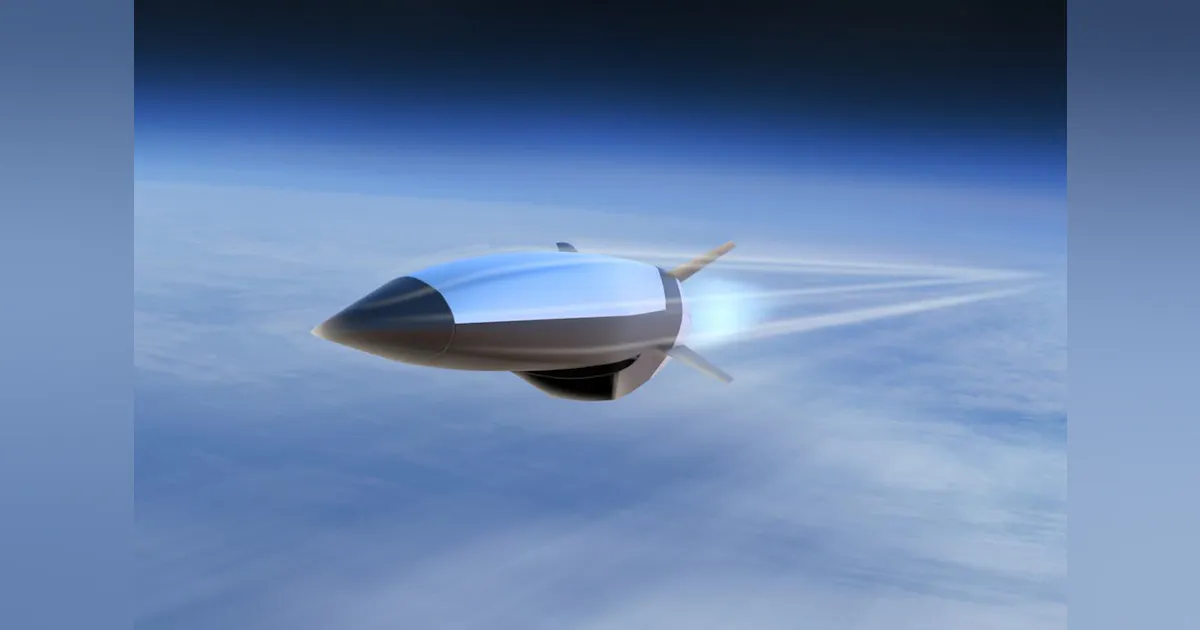
In FY2022, the Air Force launched the Hypersonic Attack Cruise Missile (HACM) program to develop a hypersonic cruise missile that integrates Air Force and DARPA technologies. Some reports indicate that HACM is intended to be launched from both bombers and fighter aircraft, with a senior Air Force official noting that a B-52 could potentially carry 20 HACMs or more.
B-52 can carry 32 tons of munitions. So 20 of these missiles "or more" may mean that each missile is about 1500 kg. That's in line with the current AGM-86 long range air launched cruise missile [2], [3]. Of course, AGM-86 is subsonic, while HACM will be supersonic. AGM-86 has a range, depending on configuration, between 950 km and 2500 km (maybe even more, this is the non-classified range). I guess HACM will have a similar range. Being hypersonic means it's easier to carry out a saturation attack (you send more missiles than the enemy can defend against simultaneously).That means, the US Air Force will be able to carry deterrence patrols with their B-52s in order to prevent China from sending a naval landing force to Taiwan. Without this weapon, the main deterrence was supposed to be provided by the US Navy and their carrier strike groups. With this weapon, the US Air Force may be able to provide a cost effective alternative.
[1] https://news.usni.org/2022/07/22/report-to-congress-on-hyper...
[2] https://en.wikipedia.org/wiki/AGM-86_ALCM
[3] https://www.af.mil/About-Us/Fact-Sheets/Display/Article/1046...
Not necessarily. US bombers, especially old ones such as the B-52 were designed for bomb loads stored inside and dropped when the doors open. Carrying missiles was added later on, and since those have to be outside, usually on the wings, the main limitations is space, not weight. If it cannot fit more than 20 missiles due to only 10 launchers with 2 missiles each (for instance) being able to physically fit on the aircraft's fuselage/wings, it doesn't matter how many more it could carry inside.
Also, has tech advanced so much to have a similarly weighing scramjet hypersonic missile have a similar range to a supposedly more optimal subsonic one?
According to wikipedia [1], the Russian Kinzhal has a mass of about 2000 kg and a range of 3000 km if launched from a strategic bomber. Of course, wikipedia just repeats the Russian claims, we can't know for sure if these numbers are accurate, but if they are off, they are not off by a factor of 10.
Can the US make something similar? It's quite possible, the US military budget is more than 10 times higher.
Separately, hypersonic missiles are thought to travel at an altitude of 100km, where the air density is about one million times lower than at ground level [2]. Even if the air friction is ten 1000 times higher than for a subsonic missile (if drag is proportional to v^3 and v goes up by a factor of 10), in the end the total drag could be lower. I personally expect hypersonic missiles like this one come with increased range rather than decreased range compared to their subsonic cousins.
https://www.ft.com/content/c7139a23-1271-43ae-975b-9b6323301...
They don't have scramjets, which is the headline.
The U.S. believed that hypersonic tech was “not of strategic importance”.
https://en.m.wikipedia.org/wiki/Scramjet#Progress_in_the_201...
AFAIK, every existing hypersonic weapon out there (from any nation) uses rocket propulsion.
The issue with scramjets is they operate under extreme conditions which are both unforgiving (small errors are catastrophic) and difficult to model (experimental data is limited and expensive to gain). The only path to development is to produce lots of full scale, fully functional prototypes with the understanding most will be destroyed in seconds and there will be little if anything recoverable afterwards to study to determine what went wrong.
I can’t find a Google reference right now on my mobile, but there’s a relatively well known example of a mission having some sort of loop related overflow in the guidance software that wasn’t fixed because by the time it could possibly happen, the rocket has burned out and the missile has done its job, it’s either exploded or is falling out of the sky and the software bug was irrelevant.
- deal is for just a hair short of US$1bn
- jobs are in Tucson
- proposed delivery starts 2027
- proposed launch platform is f-15
- tech is undescribed, this is a from-scratch development, not an existing propulsion platform
Might also help create jobs for the people at the border aswell. Hitting multiple bird's with a single stone.
> hypersonic weapon designed to hold high-value targets at risk
We don't destroy targets anymore. We hold our targets at risk.
Hypersonic anti-ship weapons allow China to hold US carriers off the coast of Taiwan "at risk", but it doesn't mean they have to destroy them to be effective.
I know you're trying to dunk on this press release, but it's actually a specific phrase that has real meaning in the defense world.
In this case, holding targets at risk implies a strategy of deterrence, a desire for peace and the de-escalatition of conflicts, as opposed to initiating the first strike with the intention of destruction.
I would argue that replacing the phrase:
> ...weapon designed to hold high-value targets at risk in contested environments from standoff distances
with:
> ...weapon designed to destroy high-value targets in contested environments from standoff distances
leaves the meaning of the quote and overall press release completely unchanged.
This is one of the reasons why highly advanced anti ballistic missile systems are seen as very dangerous because they upset the parity of two nuclear ICBM armed states being in approximate equal capability with each other.
The cold war never really ended.
ICBM missile solo, not something you really want to blow up, but it would be cool if you could eliminate it within minutes should it start to pose a risk.
The questions that you seem to be posing sarcastically were really, truly discussed seriously from 1959 through 1989.
Maybe not out of any kind of tactical necessity. But quite possibly just to show off the new missile, depending on the commander in chief.