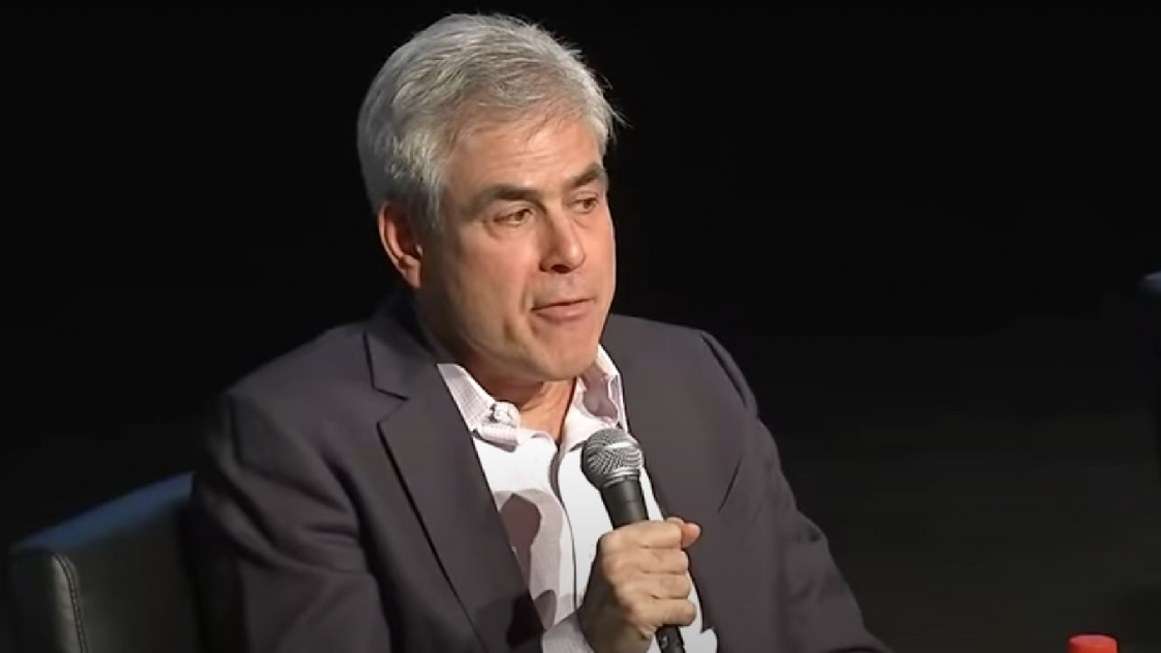
Mandated diversity statement drives Jonathan Haidt to quit academic society
NYU professor Jonathan Haidt is resigning an academic association after attempts to force diversity statements into his work.
Reason Magazine
600 points · by mpweiher · 4y ago · 827 comments
But further, I’d never seen the statement from antiracist before…wow. The idea that the only cure for discrimination is discrimination is akin to saying the only cure for violence is violence. It’s abject insanity that such a notion is being advanced in society.
The cure for discrimination is forgiveness. The cure for violence is forgiveness. The cure for hatred is forgiveness.
The only way anything stops is for people to have the humility and wisdom to say “this will stop with me.”
Kendi is just advocating for a system of racial preferences administered by "good white people." That's been a hobby horse of a segment of the political left since the Nixon administration. Decades later, it still remains unpopular even among the minorities it is supposed to help: https://www.pewsocialtrends.org/2019/05/08/americans-see-adv.... But center left think tanks and advocacy organizations won't let it go. Even the most liberal state in the country defeating it resoundingly won't dissuade them: https://www.americanprogress.org/article/california-not-bell.... So keep expecting it to pop up in different guises until they manage to get their way.
As to why Kendi supports it, who knows. Lots of people attach a low price to their dignity.
Systems like this have historically been managed by the dominant "white people", which have unknowingly or not been advancing "white people" almost exclusively whether due to good or bad intentions, thus forming a vicious cycle. See for instance companies that employed machine learning models to drive admissions which ended up admitting candidates which already match the candidates which were already admitted in the past (white candidates from specific white-dominated academic institutions) and rejecting everyone else in the process regardless of ability.
This has been the way it's gone since Kendi wrote How to be an Anti-Racist. It is racism by any other name whether somehow "justified" or not. The books in the catalog of anti-racism include great hits like "White Fragility" further exemplifying the movements innate hatred of a certain skin color. The more you go down the rabbit hole the more you realize it's been a movement to transfer all problems other non-white races have onto white people and use that to promote what is objectively racist and bigoted language and methodology. These "authors" (I use that term loosely here, they are racist demagogues) are a key driver of so-called "diversity hiring" and an overall more difficult workplace because now anything can be conceived in their framework as some sort of anti-PoC swipe. This concept of "increasing representation" has in many places replaced the meritocracy. If anything, this type of movement has an overall negative effect (as exemplified by the pejorative "diversity hire" to refer to a person who is undeserving of their position).
It's not uncommon to get silenced for having the above view of anti-racism though a cursory view of the movement will lead you to the same thing. The reason you are just seeing this now is we've reached the point the average American realized "anti-racism" is cleverly designed newspeak and it's supporters are becoming more fringe by the day. In fact, commonly, criticism of the movement is associated with "marginalizing" the experiences of "people of color" which creates a situation where the movement can do what it wants because the opposite of anti-racism, is, of course racism (in English). If you're criticizing them as the wrong skin color you "benefit from power structures designed to empower white people". There's no winning with them, and that's why the movement has taken so much ground. No one wants to be accused of racism so you end having to do all sorts of backflips through flaming rings just to show how not-racist you are.
I don't have a solution to whatever perceived slights other people feel. I do know that targeting a group of people for punishment based on their skin color is wrong regardless of who it is or what they are.
When I started to read it, I thought it would be about making a statement about how we should be diverse. Not that he would have to present only science that is about diversity.
The second I read there would be a litmus test for studies I was right onboard with him quitting.
Stepping aside from the main debate, how can you possibly justify this? If I'm going to be forgiven every time I discriminate, assault, and slander people, why would I ever want to change my behavior? After all, I get rewarded for it: When I do those things I gain advantages over other people that benefit me, not to mention the psychological rush of dominating others. You forgive me for those things? Over and over, unconditionally? That sounds to me like I'm your god and I can do with you as a I please.
Discrimination, violence, and hatred are antisocial behaviors. They need to be reduced in a way that is just and fair and effective. Forgiveness is none of those.
The key thing for me is we give people the opportunity to change. This doesn't necessarily mean that there shouldn't be consequences. Only that the consequences are proportionate and finite.
In my opinion, hostility towards people who have made mistakes is a major problem that holds the left back. Identity politics has been very successful in driving a wedge between groups that would otherwise have very similar economic and class interests. I don't believe that was a mistake.
If that's too much, you could at least forgive the people who had nothing to do with the discrimination, assault and slander - which is something that Kendi doesn't seem to be able to do.
Too handwavy, the cure for discrimination is at the very minimum adequate public funding for primary and secondary education _everywhere_ (with adequate student to teacher ratios _everywhere_).
Although the discussion is at NYU this problem is not limited to the US. The issue with this and other societal problems is that state governance is operated in 4 year cycles (much like corporations now are restrained by the next quarter). Public education is something you invest in now to see a benefit of 25 years down the road. Until we collectively solve the incentives around long term policy all other aspects of addressing discrimination fall short.
So how does increasing the funding of poor white students advance Kendi's "anti-racist" program, precisely?
Clearly there's no logical link between the two concepts of discrimination and government school funding, at best a historical one and where I live, government schools get way more funding per pupil ($10k more) than private school tuition. But that doesn't make the government schools good, as a rule.
You know that when you're describing a policy with vague words like "adequate" you are actually giving yourself an escape hatch in case the policy fails?
"The policy was great, it's just that funding wasn't adequate".
Which makes your policy unfalsifiable and almost religious in nature.
He gives the example of the vision laid out by MLK in the 1960s ("judged by the content of their character, not the color of their skin"), and contrasts it with that of modern social justice types, and also compares Christianity when it was persecuted in the Roman Empire, to when it became the official religion of the Roman Empire.
As if we hadn't been doing that for past 60 years, with extremely underwhelming (in fact, arguably negative) outcomes.
> South Africa’s ruling party on Tuesday defended the singing of an apartheid-era song with the words “Kill the Boer” in a row that has raised fears of increasing racial polarisation.
> The African National Congress dismissed a ruling by a regional high court last week that uttering or publishing the words would amount to hate speech and violate the constitution put in place after the end of white minority rule.
> “These songs cannot be regarded as hate speech or unconstitutional,” ANC Secretary General Gwede Mantashe told a news conference. “Any judgment that describes them as such is impractical and unimplementable.”
https://www.reuters.com/article/ozatp-safrica-racism-2010033...
Which should eventually lead to forgiveness, right?
The framework presented does not include forgiveness at all, the crimes are treated as unforgivable and atonement is eternal. Which clearly indicates that their goal is not to end discrimination.
Perhaps we should consider what crimes are treated by America as unforgivable as a way to establish common ground and then look at outliers from in groups and out groups for trends? There’s a lot of discussion here that is naive to how social work professionals routinely and successfully resolve these matters. I anticipate rich and colorful debate over the forgivability of rape, child abuse, and murder depending on the offenders demographics, assets, and associations.
Forgiveness is a process that victims undertake for themselves when they are out from the clutches of their abusers. Forgiveness is not a trophy for active offenders to carry as a spoil of their conquest, instead it a badge of shame they honor by being a better human than they were when they willingly harmed our caused others to be harmed tangibly or otherwise. Victims must be extraordinarily supported through their healing journey in any community truly invested in solving generational problems, which is not a process that can be scheduled or timed. Some people may never achieve this and accepting that is non negotiable if our goal is to heal. The offenders must work on themselves to, at minimum, become incapable of ever perpetrating these offenses again and be able to articulate the explicit details of their offenses while taking responsibility for their actions and making personal restitution to their direct and indirect victims. Only when both victim and perp have successfully achieved these ends can they be safely reunited. Those who are incapable or refuse to rehabilitate have no place in civil society, their status or demographics are irrelevant. This applies to gang banging murderers as it does to the architects and agents of slavery, the war on drugs/terrorism, or child abusers whether or not they hold status in their communities, etc.
Demanding forgiveness for ongoing abuses is laughable and shameful. No one is entitled to being forgiven for their wrongs, especially not if they keep doing the same horrible shit over and over and over again.
Part of a functioning, healthy system is recompense/justice, and yes foregiveness.
If you tear a system down, even if you manage to shift some power balance, you stand to create a situation as bad or worse than the one you began with.
Unless a core value of the system you seek to create is forgiveness, you only stand to substitute one systemic opression for another.
Put in terms perhaps you might understand, african americans, hispanics are not forgiven their crimes, where often those with wealth and influence or socially favorable bias are (often) foregiven.
Adding more henious lanaguage, attitude to the mix does not help, when it can be redirected at those still in a position of relative powerlessness.
Some specific crimes should be punished harder (rapists especially in college and positions of power should immediately be punished and severely), at the same time where we are willing to dole out forgiveness, that should be equally given.
You cannot have one without the other.
http://www.mnchurches.org/blog/2021/02/18/holocaust-survivor...
https://en.wikipedia.org/wiki/Reparations_Agreement_between_...
Absolutely not. The idea that any of this is fixable with 'forgiveness' is far more insane. You can't undo hundreds of years of systematic disenfranchisement and subjugation with forgiveness - you have to discriminate in the opposite direction.
To quote LBJ, "You do not take a person who, for years, has been hobbled by chains and liberate him, bring him up to the starting line of a race and then say, ‘You are free to compete with all the others,’ and still justly believe that you have been completely fair." That's what Kendi is saying, and he's completely right.
It's not fair. Neither is discriminating in the other direction because these people are not at fault for what their ancestors did, not to mention that affirmative action policies divide people along racial lines rather than the factor more relevant to today, class lines.
Ask yourself whether a black student with wealthy parents should benefit from preferential admissions to colleges over a white student from a poor background.
If a white people said this everyone would say he is a nazi.
My problem with this quote is it intentionally ignores the plight of anyone who has nothing and isn't African American. Kendi's approach is an inherently selfish one and that's what makes it so polarising.
The answer to the societal issue of wealth disparity is not to give the poor of one racial group an advantage over the poor of another. It's to actually address the source of the problem in a manner agnostic to race. Doing anything else only serves to stoke division and racism.
Certainly I wouldn't argue for a second that we should implement policies that ignore or exclude poor white people.
Unless we see others as friends — that everyone is flawed human being, including yourself, that share this same world, and one day have to left this world altogether sooner or later, then I don't see how this problem will genuinely get fixed.
What they did instead is amped up individualistic ego and make the divide even more...divide.
You’re at least a year behind.
> The only way anything stops is for people to have the humility and wisdom to say “this will stop with me.”
This is how I used to think. It’s reminiscent of the thinking of the Dalai Lama, Gandhi, John Lennon, and countless others who have had noble idealism which sadly isn’t congruous with reality. Here is a quote which demonstrates the logical endpoint of this idea:
> Hitler killed five million [sic] Jews. It is the greatest crime of our time. But the Jews should have offered themselves to the butcher’s knife. They should have thrown themselves into the sea from cliffs.....It would have aroused the world and the people of Germany.... As it is they succumbed anyway in their millions.[1]
That is the logical conclusion of this idea, take your own life in hopes you’ll posthumously be considered worthy of having been spared, and worthy of having anyone intervene to spare you. Because unilaterally, arbitrarily deciding to forgive a transgressor who’s still motivated by their transgression grants permission and submission to their goal.
There is historical precedent for a similar notion being more realistic and effective: Truth and Reconciliation in South Africa. But what makes it more realistic and more effective is that there was significant, forceful pressure which motivated the transgressors to seek mutual reconciliation. To some extent, they were also willing participants.
Personal anecdote time: like probably many here, I was bullied as a kid. It was a shockingly regular occurrence for me to be violently attacked, sometimes even by people I don’t think I’d ever interacted with before they were beating me. I had a timid and peaceful demeanor even when some of my family strongly encouraged me to defend myself. Eventually this led to a group of ~20 kids kicking me on the ground while I covered my head and neck and hoped to make it out alive. I was 13-14 years old, I had endured beatings on a lesser scale too many times to count. Of course I knew I couldn’t defend myself from 20 kids, so I took another beating. But the next time I got jumped, by one kid, I punched him straight in the face. I didn’t even know I had it in me to do, but instinct took over. Then I got up, saw the kid who attacked me was embarrassed but physically okay, and I walked away. That was the last time anyone ever laid hands on me outside a sporting context with established consent. Now I can forgive those kids, because they’ve stopped beating me.
1: Quoting Gandhi, source: https://www.jewishvirtuallibrary.org/gandhi-on-the-holocaust
In the real world, your bullies are no longer the same people, and punching them 60 years later won't address your past or future problems.
When white people have kids, they have to give their children the birds and the bees talk when they reach an appropriate age.
When black people have kids, they have to give them the same talk, and also the one where you need to be really careful about acting a specific way around cops lest they unalive you because police officers view blacks as more aggressive than whites because of prejudice.
As long as my kids have to live in a world where they need to be given that second talk? I don't care about how put-upon you are by people actively reacting against racism.
You mean like when people decide to highlight issues with diversity and representation in academia by requiring it to be addressed?
What I don’t understand is why that is assumed true. If we want to encourage many different cultures to live together wouldn’t it naturally make sense that different cultures would have different outcomes in job preferences? How do you separate potential racism from cultural differences?
My fear is if there are strong cultural differences that lead to disparate racial outcomes so organizations will always be able to point out that systemic issues exist even when they may be eradicated. I don’t know how we measure this.
By conducting studies where you study the effect of the race variable. This has been done many times over in multiple countries and the results have shown that colored people and racial minorities are discriminated against. But despite the vast amount of empirical data, people still refuse to believe that racial discrimination is a factor in the job market.
https://www.bloomberg.com/news/articles/2021-07-29/job-appli... https://www.jstor.org/stable/40276548 https://www.degruyter.com/document/doi/10.1515/lehr-2015-000...
Well, your examples seem pretty cherry-picked and not necessarily generally empirical (ie. lots of embedded subjectivity).
Now your first link is more interesting and is usually the one that everyone pulls out as "absolute proof" that discrimination is live and well in modern hiring against Black people.
I wonder, though, how much of this is in the bias of the experimenters when they selected "Black sounding names" and how much is just unfamiliarity with an "unusual" (and by this I mean rare) name and how much is the knee-jerk reaction to a name (basically real prejudice).
For example the actual most common names for Black children in the US are – Jacob, Emma, Michael, Ava, William, Emily, etc. And I suspect they are not choosing those names on purpose.
On the other hand, my ex's sister named their son "Air Jordan" (for his first name) and their daughter Cinnamon for her first name. And I personally have great uncles with the real first names of "Snapbean" and "Squawk" (I am not joking).
None of these people are Black, but how do you imagine their resumes are accepted at large (or small) companies?
So I am wondering how much is prejudice against the person and how much is prejudice against the name?
A black person, a white person, and an asian person with the exact same credentials mean extremely different things in terms of absolute rather than relative competence level, as a consequence of affirmative action policies. The filters they had to pass through are different, and therefore an Asian person who went to Harvard almost certainly is in the top 1% of the absolute test score distribution, whereas the same is not necessarily true for the others.
Since job performance is correlated with absolute capability, and not group-relative capability, discrimination on the basis of race is rational in a society that employs affirmative action policies at prior points in the credentialism pipeline. Correcting and controlling for this would only be possible by designing resumes that don't reference achievements that have group-relative thresholds.
> A black person, a white person, and an asian person with the exact same credentials mean extremely different things in terms of absolute rather than relative competence level
Say these sentences out loud.
Based on your other comment, you would claim "Affirmative Action" is why you think this. But it is important to realize that by making this assumption at all you are expressing biased judgements on these three humans entirely based upon their race.
Study results may only suggest something, which can often have the appearance of showing it.
How do you fight intentional racism, with a healthy dose of residual lasting generational effects from past racism, with passivity?
It's like creating a game with rules, but having no penalty for breaking them for the first half of the game, and then saying it's just the fault of the loser if someone cheats to beat them.
Or saying "I can't tell for sure if it's below freezing, my thermometer has an error bar of +/- ten degrees" and ignoring a bunch of freezing water around you.
If the movement to fight this spectre of "institutional" racism would focus less on applying their rules to everyone, and more on applying their rules to actual perpetrators, it would garner more support from the people it needs. To use your analogy if you're sitting in your neighbors pool and he says it's not freezing, but there's freezing water, perhaps don't blame all of his neighbors.
Others pointed out some studies which showed potential biases in hiring and that seems like a great potential proxy to understand the current level of racism in hiring.
A foundational belief here is that correlation is causation!
The assumption alone is wrong yet any other assumption inevitably leads to stigmatisation and segregation.
Whatever study anyone comes up with it will inevitably turn into a discussion if either racism or discrimination.
Obviously there are a lot of mechanisms that might change that equal expectation, but it still seems reasonable to me that for most jobs the default expectations should be around equal.
Is there a diverse country that doesn't have a strong history of racism?
Is US worse than India, with it's caste system?
Is US worse than China, with it's Uyghur genocide?
Is US worse than Russia with it's Slavs-only rental ads?
Mind you, those are not the examples of past discriminations.
Is it possible that the reason you know more about discrimination in the US is not because US had more of it, but because you are better educated about US?
For example, in 1963 Yale disinvited George Wallace, who was popular in the deep south, as a speaker. As a result, observers were deprived of a chance to hear opposing speakers' arguments. To some, Yale appeared censorious. As Jonathan Rauch describes [2], that's not good for your case. Censorship is all these characters need to gain new followers. Wallace ran for president in 1968 and nearly forced a plurality which would have given him significantly more influence [3].
Early episodes of the podcast So to Speak [4] by FIRE can inform the direction that can get us talking again. Basically, open and civil discourse is the way. The podcast demonstrates, through interviews with free speech advocates, a bunch of examples showing why that is a good target to shoot for, and how to achieve it.
[1] https://archive.org/details/freespeechformeb0000hent
[2] https://www.youtube.com/watch?v=E0T9XSG73kY&t=4889s
[3] https://en.wikipedia.org/wiki/George_Wallace_1968_presidenti...
[4] https://www.thefire.org/category/newsdesk/so-to-speak/page/1...
No, they also need a platform to make people aware of their existence, their views, and to recast their censorship to be in their favour. The whole point of no-platforming individuals is to make a statement that their views are seen as reprehensible and to stop them from being able to air those views to an audience.
Not all ideological disputes are about rational argumentation, many are based in a fundamental misalignment of values. Those value-based disputes cannot be resolved by open and civil discourse alone, and we know that racists have a tendency to abuse such spaces through techniques such as emotional rhetoric and Gish galloping.
The only way that this works is to exert total control of the content of all communications.
Otherwise, as in the real world until now, people find each other and network. You're talking about destroying freedom of association and expression in order to root out reprehensible people with the wrong values who could speak to people who want to listen to them.
I'm not advocating for some global censorship entity.
Not true! Just being banned from significant swaths of social media has frequently forced many prominent Nazis/alt-righters out of business. Before Kiwifarms recently had all of their major issues, they were already finding it difficult to keep the site running as a result of continued pressure on every host they switched to.
We all have a strong moral obligation to root out "reprehensible people with the wrong values." If you think otherwise then you don't understand what the word "reprehensible" means.
In the spirit of fairness, should one actually no-platform everyone using emotional rhetoric?
Your favourite media outlet will almost certainly have a lot less to say if we do. Depending on your PoV, this may or may not be a bad thing.
Of course it's never good to allow bad arguments into the "marketplace of ideas", because then they'll take over the market, but unfortunately that ship has sailed, or likely never arrived.
Because in a liberal democracy - or anywhere for that matter - not all ideas are of equal value. The same goes for Putin's Russia as it does for, say, Finland. You have to decide what you stand for, a culture has to decide what it wants to value.
Some ideas and actions are quite obviously, objectively anti-life, pro-misery.
Two people saying the same thing or doing the same thing are not inherently achieving the same outcome, pursuing the same end goal, arriving at their ideas from the same place, and so on. All of that matters in a big way.
A liberal, human rights respecting democracy with a constitution is objectively better if human well-being is your standard, than a theocracy. We have many centuries of experimentation and result at this point, no guessing is required.
Which is to say, deplatforming two very different people that are saying entirely different things and attempting to accomplish very different end goals, is not the same thing just because they're both the act of deplatforming.
Shooting and killing an innocent person at random on the street is not the same as shooting and killing a robber that has broken into your home and is intent on harming your family, despite the fact that they both involve you shooting and killing someone. The same exact moral principle is involved in the deplatforming premise.
Uh...reprehensible by whom?
You do realize that what's "reprehensible" is extremely subjective, right? And the same tactics and standards that you are using to silence opinions you don't like can therefore just as easily be used against you and yours by people who find your opinions reprehensible.
That's the whole point of promoting the free and open exchange of ideas, it protects everyone's ability to speak freely. And then individuals can make up their own minds about what is "reprehensible" and choose whether THEY want to listen to it or not. In other words, people don't need you to be an arbiter of what is reprehensible for other adults.
They were doing this long before the Internet if that is what you mean! If you mean a platform as in showing up at a prestigious place, well being denied entrance is just as good, you just have your group stand outside and ask "What are they so afraid of? If our ideas are so bad/crazy/etc. can't they just easily shoot them down with social discourse?" and you get all the awareness and revision of the ideas that you want!
Sunlight is the best disinfectant. Rational or not, it's better for bad ideas (ignoring the even more pernicious question of who decides which ideas are "bad") to be examined than have them fester in dark corners.
If they were invited to speak then they already have an audience. Censoring them is working against the cause of fighting their ideas.
Protest or debate them if you consider their views reprehensible.
On one hand, you are acknowledging that some values are not based on rationality, and on the other hand you think they should be imposed upon those who don't share them by censorship?
Exactly. No platforming is a naked display of power without any pretence at principle. If you can keep the power forever, great. You win. If not, well, turnabout is fair play and if you have no attachment to free speech or the marketplace of ideas yourself and you couldn’t maintain power with the benefit of censorship you’re probably in for a bad time.
Who gets to decide what is acceptable and what isn't?
Our/society's rights and wrongs has greatly changed over time and that is only possible because of both good and bad ideas being heard.
No one person should be deciding what's acceptable for the whole of soceity. Every individual should hear different ideas, good, bad and terrible, and decide for themselves what/who they agree with.
To your point, IIRC, the impact of deplatforming has been studied. Like when that troll Milo got bounced. It greatly diminished their reach and impact.
Sadly, some trolls (Alex Jones) have enough juice to spin off their own bespoke hate machines.
In 1963, was there anyone in America left unaware of George Wallace's project to preserve white supremacy?
Why is a private institution obligated to signal boost a national leader who openly defies the law?
I'm not sure them inviting popular racists to speak against human rights is really a good look for them in that situation, nor an instant solution to centuries of systemic racism in America at that time, even if they made some really good points in the debate.
I blindly accepted your claim that Wallace was not permitted to speak at Yale. That's not true. I regret not being more skeptical. I am fail. Please accept my most humble apology.
TLDR: Yale Political Union invites Wallace. President Kingman Brewster Jr blocks. Much drama. Including local black leaders and civil rights activists, who defended Wallace's appearance per principles of free speech and academic stuff. Brewster removes block. Two student groups reinvite Wallace. Wallace declines, though he did speak at other Ivy League schools.
Described more fully p104-106 in Hentoff's book "Free speech for me--but not for thee", which you cited.
Here's 4 more articles, to round out the reality-based version of that incident:
https://yalecollege.yale.edu/get-know-yale-college/office-de...
"Free Speech, Personified" NYT [2017] https://archive.ph/LvAHn About the 1963 incident, how Pauli Murray appealed to Brewster to let the white supremacist speak, and how Yale recommitted towards and continues to uphold free speech.
Blurb from 1963 about the incident. https://www.thecrimson.com/article/1963/9/27/yale-provost-br...
Report of the Committee on Freedom of Expression at Yale [1974?] https://yalecollege.yale.edu/get-know-yale-college/office-de...
--
FWIW, I now don't understand your other cites. [2] Is just common sense. [3] Unrelated. [4] Might be broken.
Though I do agree with Jack Newfield that mocking racists and neoreactionaries should be avoided. We now know that right wing partisans are personally insulted when their leader is criticized or mocked. (Probably something about having their identity wrapped up in the demagogue. Who knows.) So mockery just drives those partisans further away.
For what? I don't think we conversed yet in this thread.
> I blindly accepted your claim that Wallace was not permitted to speak at Yale. That's not true.
I can see that the context changed the meaning for you. Good thing I cited the source. For me, my original comment still rings true as a summary. Wallace was disinvited and ultimately did not speak at Yale.
There are a few errors in your TLDR. Kingman was provost at the time, not president, and it was reported that two groups of law students reinvited him, not two student groups.
> Donald Kagan reported that “two groups of law students issued another invitation to Wallace, reaffirming ‘the right of students to hear speakers of their own choosing without restraint or interference from those who would like to limit the right of free expression to those whose views coincide with theirs.’
It's not clear that Provost Brewster would've allowed Wallace to speak had he accepted the new invitation from these students. Also, the book describes how Brewster, later as president, accused an established student group of "playing games" with free speech. So it's not like he had a change of heart on the subject:
> "The occasion does not warrant departure from Yale’s principles of free speech. However, the use of free speech as a game, the lack of sensitivity to others, the lack of consideration for the community, and the lack of responsible concern for the university as an institution seem to me reprehensible..."
Regardless, it does not substantially change what happened. Wallace was disinvited and ultimately did not attend. Human relations aren't so easily Ctrl-Z'ed. It doesn't surprise me that some tried to reinvite him after the backlash. As you said, many in the community stood against Brewster's decision.
These days, it is common for students to shout down undesired speakers, so it's interesting to look back at when this practice may have began. For awhile, the University of Chicago was a place where such debates were encouraged. A group of Harvard students jokingly ranked it as the least fun school, less fun than West Point, for that reason [1].
> FIRE is just another dark money funded group working on the reactionary project to roll back civil rights, assert corporate rule. and end democracy.
Wow. Just going to slip that in at the end there huh? That's quite a take down. What do you think is dark about it? They're a non-profit which makes them subject to much more scrutiny than private organizations.
As for "asserting corporate rule" and "ending democracy", I think that's a ridiculous claim. They exist to defend the free speech rights that the ACLU now declines to do, as I mentioned elsewhere [2]. If anything, they're responsible upholding democracy by encouraging people to choose words over violence.
> [4] Might be broken.
Works for me. It's the last page of their podcast listing as of now.
Oops. I initially wrote "Provost" and then changed it. I gotta learn to trust my gut more.
I stand by the rest of my reply.
> These days, it is common for students to shout down undesired speakers...
And speakers show up to be shouted down. I think all the clapping and pwnage is lame.
But what do I know?
Remember when Bernie got shouted down in Seattle? As a Bernie fan, I was confused. Why would those kids mess with the candidate closest to their own views?
I actually know one of the persons who climbed onto the stage. Afterwards, I asked the Gen Z and Y people I know, and that person on stage, about the incident.
A kid name Xander, who I respected very much, said something very interesting. Paraphrasing: "All politicians should be challenged." So he agreed with the action, despite being a Bernie fan.
I can't speak to what's happening in higher ed. And I really don't, truly don't care. All that drama is just performance art.
But clearly something has changed. Direct action and confrontation are the norms again. For better or worse.
Have y'all considered that this is what the "talking" looks like?
I see a whole bunch of noise about "CENSORSHIP IS RAMPANT!" and I'm kind of like, no silly -- this noise IS the signal.
The objection would be if the statement is used as a tool to discriminate against good research. So this resignation should probably be treated as a vote of no confidence in the people and goals of the specific institution. I can see why the sort of people who would demand this statement would be a problem as ironically the DIE crowd seems to sometimes attract a weird sort of modern racist. Something that is always a risk when developing a race-obsessed ideology.
[0] https://spsp.org/events/demonstrating-our-commitment-anti-ra... - the "We requested the submitters to please explain whether and how this submission advances the equity, inclusion, and anti-racism goals of SPSP" link leads to the same page for me.
They would pass the reviewing process where they would receive the lowest score on the "3-point rating scale".
It would also mean by negation that the submission did not employ "diverse research participants", "diverse research methods (e.g., methodology that promotes equity)", or "diverse members of the research team", which basically would be viewed as a self-indictment in our political climate. Nobody with an interest to succeed would willingly arrive at this conclusion, they would view it as necessary to avoid it (like by making up reasons as to why the submission advances anti-racism).
In other words, the requirement to include the statement is a way of enforcing the stated goals and policing the researchers' conformity.
Is there much of a difference between this and halal/kosher certification?
It's the same as any religious group trying to impose their morality and beliefs on everyone else. To be a good person use the correct words and correct ideas as defined by us, the good people. If you disagree you are a bad person. Sinful, evil.
How can you disagree with the Holy Words, Diversity, Inclusion and Equity? You're either with us or against us. Sign here on the dotted line to confirm membership.
I'd say this about any sort of psychological theories that get intertwined into the justifications of power structures. The government should not be speculating about or creating rules about people's inner states. A government trying to change the minds of the population undermines democracy. An administration, fine, but not the government itself, with regulations paid for with tax money.
People should change governments. Governments shouldn't change people.
Ironically, DEI damages what are ostensibly its objectives.
I wanted to explore this a bit. Let's hypothesize that the academic is in some ISIL dominated region and the caliphate says that all research must further the goals of caliphate expansion and the spread of the religion. If an academic were to write an equivalent statement - is it their core belief, or are they simply saying the Emperor's clothes are beautiful?
Given the ideal role of academia in society, isn't the latter possibility quite harmful?
I assume at least some of this research is funded with public grants. That might be from where pressure can be exerted.
Also gelatin is another one.
This DEI standard currently sounds totally subjective with no guidance on what will pass muster, which is ideal substrate for the worst forms of corruption, nepotism, and abuses of power. You know, the very things academia is thought to fundamentally oppose.
This is by grasping at straws trying to find a relationship between their decades-long research thrust and a shiny new requirement popular among the administrative class that is now in charge.
That's my biggest problem with it. It's not a bad idea by itself, but what makes it such a bad idea is that it seemingly gets shoved on top of everything. The idea that everything has to advance DEI is crazy, because some things just aren't related.
This is a classic boy who cried wolf problem. I'm sure there is racism in the US and we can certainly do a better job in advancing DEI in _some_ places. But when you go around yelling that everything has a DEI problem, you focus on the bullshit and miss the real issues.
There you have it. And will remain popular as long as it's a ticket to career advancement. Or, in plainer terms, to power.
From the mid-20th century, a satire in allegorical form:
https://mathematicalcrap.com/2022/08/14/the-great-loyalty-oa...
Edit: the link was in the sixth paragraph, but it's much less damning than the article frames it.
“In order to present research at the conference, all social psychologists are now required to submit a statement explaining 'whether and how this submission advances the equity, inclusion, and anti-racism goals of SPSP.’”
"Evaluate the extent to which the submission advances SPSP's goal of promoting equity, inclusion and anti-racism. To do so, please consider the equity statement as well as the submission as a whole. Submissions advancing equity, inclusion, and anti-racist goals may include (but are not limited to):
* Diverse research participants (e.g., understudied or underserved populations)
* Diverse research methods (e.g., methodology that promotes equity or engages underserved communities or scholars).
* Diverse members of the research team (e.g., those from underrepresented sociodemographic backgrounds, from an array of career stages, from outside the United States, or with professional affiliations that are not typical at SPSP such as predominately undergraduate serving institutions, minority-serving institutions, or outside academia)
* Presentation content (e.g., prejudice and discrimination, critical theories, cross-cultural research). "
Note none of these things are required but will be considered.
The text from the paper submission document has a large blank labelled:
"Please explain whether and how this submission advances the equity, inclusion, and anti-racism goals of SPSP. This may include, but is not limited to: The research participants in the sample; the methods used in the research; the members of the research team(s) involved in the work (e.g., background, diversity, career stage, affiliation type); the content of the presentation (e.g., critical theories, prejudice, equity, cross-cultural research). "
https://spsp.org/events/demonstrating-our-commitment-anti-ra...
Without both sides of the story it's impossible to deem the truth.
This is a money quote, and I think it's spot on. I don't think I'm projecting to say many people are personally committed to DEI but hate hate hate DEI initiatives (doubly so when they become cringey).
I've witnessed this too. It is concerning
Episode Summary
> Environmental, social and governance investing, also know as ESG, has exploded in recent years. It promises to help us solve problems like climate change and inequality all while allowing investors to still turn a profit.
>
> But BlackRock’s former global chief investment office for sustainable investing, Tariq Fancy, says it isn't what's being advertised. Recently, he penned a blog post claiming that not only are ESGs not making societal problems better, they may actively be making them worse.
But if you say that, some of them will tell you that they would do that if they earn the same as men, but that is already in law...if you ask them for proof they never have any...
> Appropriate measures aimed at achieving true equality are not regarded as discriminatory.
https://www.fedlex.admin.ch/eli/cc/1996/1498_1498_1498/de#ar...
This is also the case in the United States.
Prop 209, passed in 1996, "amended the state constitution to prohibit government institutions from considering race, sex, or ethnicity, specifically in the areas of public employment, public contracting, and public education."
If Prop 16 had passed, it would have allowed government agencies to deliberately and explicitly discriminate against people based on immutable characteristics.
The wording from Prop 16's advocates seems to embrace Kendi's punitive stance on using active discrimination to reach some kind of equity goal:
"Despite living in the most diverse state in the nation, white men are still overrepresented in positions of wealth and power in California. Although women, and especially women of color, are on the front lines of the COVID-19 response, they are not rewarded for their sacrifices. Women should have the same chance of success as men.
Today, nearly all public contracts, and the jobs that go with them, go to large companies run by older white men. White women make 80¢ on the dollar. The wage disparity is even worse for women of color and single moms. As a result, an elite few are able to hoard wealth instead of investing it back into communities. Prop. 16 opens up contracting opportunities for women and people of color. "
In 2020 I tried to find data and studies backing the laundry list of assertions but came up empty-handed. The wording seemed very slanted... "older white men"... "single moms"... Certainly there are disparities in society, but we must always consider, objectively, what are the root causes.
Where does it end? Does anybody want an NBA where the makeup of the teams is based on the racial percentages in society, or do people want the best players playing? Do you want the best surgeon or pilot? Absolutely I bet 99% of people on HN want everyone to have equal opportunity; in my experience, in the vast majority of American tech companies (I don't work in healthcare of finanace, etc. so I can't speak to them), if you had 2 equally qualified candidates, and one was a white man and one was a woman or a racial minority or perhaps even not-straight, the white man will usually be the one not getting the job.
https://en.wikipedia.org/wiki/2020_California_Proposition_16
Politics is becoming more and more extremist too, with the extreme left lashing out and calling anyone who even questions the status quo an extreme rightist bigot, and the extreme right doing the equivalent. And the two are fueled by both one another, as well as increasing tensions due to national issues.
This is my main gripe with wokeness. Yes I dislike the illiberalism of quotas and the collectivist nature of its moral system (collective guilt and inherited guilt). But my main concern is the right wing backlash and the consequences of that on democracy and freedom.
But I wonder if they could do that sort of thing based of their existing limitations for academic freedom. If an institution funded by Volkswagen wants the professors to work on car related stuff to advance technological goals, couldn't they also require them to work towards social or political goals?
tbh i always found it contradictory we don't use those federal $ to require compliance with all constitutional rights, e.g. 1 and 2a.
Were they trying to advance equity, inclusion, and anti-racism?
But thanks for bringing your bullshit, unapplicable anglo concepts to the entire world. We really appreciate it every time.
That being said, I have witnessed this non sense during my professional career, we had meeting discussing the need to hire woman or black people.
As an engineer I can't possibly agree to that. I want to work with engineers, problem solvers. I don't think Melatonin or the presence or absence of a vagina to be a useful metric.
That's also the reason I left the Western world for the foreseeable future. It's clearly impossible to focus long enough on a problem without being disturbed by the new shiny ideology of the moment.
I think the fallacy here is that there’s a single best applicant for any given position. There are often multiple qualified candidates, why shouldn’t race or gender be a factor if you’re just going to choose arbitrarily anyway.
I am a capitalist, I am not sure which factors are the best factors when it comes to correlating with performance.
Is it hard skills? Communication? Do I need a generalist? A specialist? Is it better to hire people with ego or not?
One thing I am pretty confident is that vagina or Melatonin are pretty weak factor. And I would not trust any HR or managers optimizing for it.
I am a lot more happy since I live in a country where that does not value these things.
What are the consequences of saying "This research does not have any DEI implications."?
This sounds bad! Not all research has anything to do with equity, inclusion, or anti-racism.
>all social psychologists are now required to submit a statement explaining 'whether and how this submission advances the equity, inclusion, and anti-racism goals of SPSP.'"
Oh, so it wasn't a "litmus test" or hard requirement.
Emphasis on "whether". His research didn't have to do anything with DEI. He could have very easily just said "This research has nothing to do with equity, inclusion, and anti-racism." and been done with it, but instead chose to make a mountain out of a molehill and rage-quit his position in this association to make himself a martyr for the anti-DEI movement.
>As of now, everybody presenting research at the society's upcoming conference will have to pledge that their work advances political goals.
This is a lie that is disproven by quotes provided in the article. Once again, you are not required to "pledge" anything. You just have to state whether your research has anything to do with EIAR, and if it does, what it has to do with EIAR.
It just shows the power of ideology to crush dissent, when obviously poisonous and destructive statements like these are accepted.
If more people thought like that, then Jews would still be shovelling Germans into ovens.
They make grand non-disprovable claims and don't operate on any empirical basis.
It's that simple. Kick out the religion before we damage our society.
Who's to stop the bullies?
Sadly, I've come to a place where I have no idea what these words mean. And at this point, I'm afraid to ask.
Can someone ELI5 what is this conflict between truth and social justice Haidt refers to?
E.g. if your research gets the "wrong" results regarding police shootings then anyone who defends your research will have to resign: https://infoproc.blogspot.com/2020/06/resignation.html?m=1
And anything regarding differences in crime numbers or IQ? Forget it.
In other words a researcher studying a topic unrelated to diversity will need to lie by claiming that there is a link.
As threat actors account for a non-trivial fraction of global economic activity [6], we expect our research to play an active role in the co-creation of a more inclusive and diverse lifeworld for the people of earth."
The question that triggered his reaction is (quoting from the article) 'whether and how this submission advances the equity, inclusion, and anti-racism goals of SPSP.' Indeed in principle they could just answer that it doesn't. What is left out here is why they are asking this. If the purpose of the question is unclear then researchers may feel incentivised to lie to 'fit' the requirements.
My personal view is that this is much ado about nothing. More likely than not most people will ignore the answers. There will, however, be reviewers who use that to reject papers.
It’s Galileo all over again.
So everything must be politicised. "How does your new caching algorithm promote social justice?". (If the same criteria were applied in CS).
And this will be here before you know it unless more people start calling bullshit.
This is a funny anachronism and the very opposite of science.
Kendi is a key promoter of "anti-racism", which is described in the above quote.
Many institutions are signing on to this agenda, which requires people to view everything through this ideological (social justice) lens and to participate in discriminatory activity as described above. This lens ensures that instead of seeking truth, you will just find more social injustice. A demon under every rock, if you will.
Of course they want the blood feuds to continue forever.
We can all hopefully agree that:
A) Redlining existed
B) Redlining was explicitly racist
C) Redlining has impacts that are still felt today
Let's use an antiracist lens to talk about it and compare to a modern, liberal "just don't be racist" lens.
The standard liberal response is, "well, redlining is over, and we know now not to do that. So, problem solved, right?"
The antiracist lens might be, "there are still people suffering from the impact of Redlining. The people who benefited from it should be helping those who suffered from it." In this case, wealthy white folks explicitly benefited from Redlining. Maaaaaybe we should tap on the shoulders of wealthy white folks and say, "hey, there was a major injustice done very recently, we want to fix it, and since you benefitted from it, we're asking you to pay a slightly larger share in fixing it."
We're getting now to one of the bigger problems with the philosophy you're describing: What's "you" here? Is "you" people in the same genetic category as the people who benefited from redlining. Those who happen to look like these people, but share actual no genetic ancestry (say, because they were immigrants) or perhaps do not share the privilege (say, because they were born poor or had other disadvantages) might take exception. Push them too hard, you become the oppressor.
There's then a Kafkaesque attitude that manifests that says, "I don't care what your protestations are on this topic, nor will I hear your case, you belong to X [ where X is social group, economic class, identity group, race, or whatever ] and you should accept sacrifices for the great good. Full stop. If you deny it you're the enemy."
That's one reason why many people view highly "corrective" actions in the realm of social relations or economic re-organizations with a strong amount of terror. We certainly have strong examples of terror manifesting in the 20th century in completely separate parts of the world and at massive scale - always for the greater good.
My heritage is Polish. How much do the Germans owe me?
Well, there's the problem. You can't declare something fixed, and you have to have standards to check against. Those people just aren't trying and you can't write every "standard liberal" off because you personally know lazy ones.
But yes, the race-blind answer would be to help people still experiencing those first-order (lack of ownership) and second-order (lack of generational equity) problems by tackling obstacles to low-end ownership and invest in wealth and estate planning classes, assisting with secondary education, etc.
A multitude of strategies and a goal of trying those and other things until the original victims are helped, while trying not the name those victims explicitly. In doing so, helping anyone similarly disadvantaged.
> antiracist lens might be, [...] wealthy white folks [...] you benefitted from it, we're asking you to pay a slightly larger share in fixing it.
The anti-racist lens mentions race a lot. I'm not just saying that to be snarky but because I believe that's harmful. Like the news reporting thoughtlessly about suicides.
But I don't see in that view is any concern for finding the unfair beneficiaries - merely all white people. This is where it goes from looking racist to being racist.
Most damningly, anti-racists don't have any consistent or desirable ideas on what the problems are or how the funds would go to help. It's all about race, categorizing and separating and stigmatizing by race, and confiscating by race, but barely if ever about defining and planning to fix the problems for people of any race, let alone all.
> people in my economic class [from another post]
I feel that this class-based analysis is much more useful and less counter-productive.
It's been a while since I've watched the lecture, but what I remember is that Haidt sees the academy seeking truth as (potentially?) incompatible with the academy seeking social justice. As such, he anticipates a day when universities will have to choose individually which path they will follow.
I suspect that's the context in which Haidt is making this decision.
It completely taints your research and any results you might come to.
The scientific method's purpose is to get closer to the truth.
Some research does happen at universities, but academia in its current state is far from the ideal vessel for that. (Especially when it comes to softer sciences.)
Yes, and unavoidably so. That is why it is society's task to structure the universities in such a fashion that those goals align with society's goals.
Attacking "Political Correctness" in a vague and non-specific way lets you sound noble.
As soon as you specify what that means in practice you just sound like a nasty bully (at best), so best leave that implied.
But a quick glance as the history of social science that these things are a direct response to, would reveal people "proving" that various groups are inferior in ways that mirror contemporary prejudices and reinforce right-wing politics that consistently builds hierarchical models to justify current social inequalities.
Instead it seems to be at best discounting that there is a conflct to explain or at worse is participating in the conflict by defending one side of it.
I think a stronger case could in theory be made that the conflict is non existent but it's a harder position to advocate.
A good warning to all of us to try to keep ourselves in check.
Let’s be clear: most minorities oppose explicit racial preferences, including Black people: https://www.pewresearch.org/social-trends/2019/05/08/america...
In a recent example, the California ballot measure that would have legalized racial preferences in the state failed overwhelmingly, including in every majority Hispanic county in the state.
But explicit racial preferences are at the core of anti racism as Kendi formulates it:
> The only remedy to racist discrimination is antiracist discrimination. The only remedy to past discrimination is present discrimination. The only remedy to present discrimination is future discrimination.
Why does this hold so much appeal? Because the audience of Kendi’s book isn’t minorities, it’s white people. And white people who dominate university faculties and professional organizations love this because it empowers them.
For one thing, it empowers them to use race as a club against other white people.
For another, it gives them tremendous power to shape minority culture. They have the power to select the brown people who will “represent” their whole group. Want a Muslim American professor, but don’t like what Islam has to say about women or homosexuality? Easily handled. The white faculty in charge can just pick a Muslim who agrees with white people about those things instead of other Muslims. And for good measure they can be made to sign a diversity statement. No wonder it’s the dream for Elizabeth Warren types.
IMO it's all because of virtue signaling. I would say the majority of people that push this stuff don't really care about DEI, they only care because it makes then seem righteous and virtuous, and it's a feedback loop. They do the thing, they post about it on social media, and they then get praise for the thing they are doing.
When you start looking it from the lens of "these people just want to be popular and get likes", it all starts making sense.
> In one point I fully agree with the gentlemen to whose general views I am opposed. I feel with them that it is impossible for us, with our limited means, to attempt to educate the body of the people. We must at present do our best to form a class who may be interpreters between us and the millions whom we govern, --a class of persons Indian in blood and colour, but English in tastes, in opinions, in morals and in intellect. To that class we may leave it to refine the vernacular dialects of the country, to enrich those dialects with terms of science borrowed from the Western nomenclature, and to render them by degrees fit vehicles for conveying knowledge to the great mass of the population.
EDIT: I also support antiracist sentiments and policies. I’ve watched them make what I believe are significant positive impacts when I’ve employed them personally.
Join me in making equal far-right representation on all campuses a reality.
(Only the 'join me' in the above is sarcasm)
But if I'm understanding the 2nd sentence, this is so true in that these extremists feel that unless we are forced to listen to & give them a platform that they are somehow being censored.
No one is taping someone's mouth shut.
In fact those voices are louder now than they have been in my entire life.
But I'm not going to listen to it.
and yeah young people are generally more open minded and yes they are peer pressuring (subject of this complains about peer pressure). Maybe that says something..
One can change ones behavior and beliefs and maybe they'll be more accepted into the group they want to to be in.
Or not!
it's their choice that they are free to make.
No, actually if you just don't explicitly engage in hiring practices on the basis of ideology.
https://unherd.com/thepost/political-discrimination-is-fuell...
>Several studies find that between 18 and 55% of academics would discriminate against a Right-wing applicant for a job or grant. I found that 40-45% of North American academics would not hire a Trump supporter and 1 in 3 in Britain would not hire a Leave supporter.
I of course don't expect the fact to lead to any form of reflection. After all, it's obvious you can't even grasp the fact that ideological diversity is beneficial and matters while ethnic diversity doesn't matter and is often harmful.
If this is the way NYU operates, it is no longer a university.
I wrote a long bit about this in "One on one meetings are underrated:"
When hiring, I rely heavily on recommendations from people I know, or at least know of. To use some Silicon Valley jargon, I rely on "social proof." If a good engineer with whom I’ve worked recommends some other engineer or project manager or product manager, that counts for a lot with me.
I recently tweeted this idea on Twitter and James Youngman responded, “It seems to me that this kind of approach is what perpetuates the domination of the industry by an in-group (who know each other, directly or indirectly) at the expense of outsiders, to the detriment of both diversity and fairness.”
That’s a valid concern. We all have a professional and ethical obligation to be sure that we hire a diverse workforce; that is, the workforce must be open to anyone who has real talent. In my experience, there is no contradiction between that obligation and a requirement that a candidate be recommended by someone we trust. Assuming you have friends and colleagues who understand their professional and ethical obligations the same way you do, they should be able to give recommendations on people they know or put you in touch with friends of theirs who can offer such recommendations. Within your extended social penumbra of friends, friends of friends, and friends of friends of friends, you should be able to find someone who can vouch for most of the candidates that you need to hire. You just need to put in the effort, chasing down those recommendations through extended chains of acquaintances.
This approach very much works when you are hiring novices who are straight out of school. It helps to stay in touch with friends and colleagues who are teaching or mentoring at schools or the software developer bootcamps. Back in 2018, when I needed some junior-level frontend software developers, I hired several women from the Grace Hopper program for women that is run by Fullstack Academy. In that case I spoke with some experienced friends of mine who had either taught at the school or volunteered as mentors. As such, they could point me to those who were the best of the graduating class and I ended up with an unusually excellent team of novices.
[I then tell a story from 2009, when I go to a job interview, and they give me a technical test: to find the problems in their code. And yet, they didn't know what they were doing, and their code was horrible. Here is the conclusion of that story:]
...Needless to say, I didn’t get the job, nor did I want the job. He was looking to hire software developers who would be willing to follow his idiosyncratic and unprofessional style. I wasn’t interested.
I tell this story when I’m being critical of certain kinds of coding tests, and hiring managers respond, “Well, that is an extreme and ridiculous example.” It is indeed extreme and ridiculous, therefore, it’s easy to see the problem. Yet, even when tests are less idiosyncratic than that one, they will still reflect the values, skills, and aesthetics of the person doing the hiring. How could they not? Anyone who hires someone for their team will want someone who is at least somewhat consonant with the style and goals of the team. Wanting that consonance is reasonable, up to a point. Certainly, when I hire, I’m looking for someone who either shares my aesthetics or is willing to learn my aesthetics. That is, I explicitly recognize that there are subjective factors that shape hiring decisions.
Whenever I say this, I get pushback from people who say some variation of, “This is why tech remains exclusive, with a dominant in-group that never changes, because the people with the power to hire only hire those who are just like them.”
I, however, would say the opposite is true. The only way to make the profession of software development (or the profession of marketing or operations or sales or law or any other profession) more diverse is to explicitly recognize that all hiring contains a subjective element, and that one of the goals of hiring must be the creation of a diverse workforce, open to anyone with real talent. Only after you’ve explicitly recognized that there are subjective factors that shape hiring can you explicitly move to build a diverse workforce. By contrast, the pretense of objective tests has too often served as a smokescreen behind which lurk forces that conserve the status quo.
If the moral urgency of this issue leaves you unmoved, consider the practical element: everything you need to know about a candidate you can learn from recommendations and by talking to the candidate. If you ask them direct questions, and you ask follow up questions until you are sure you know everything that you need to know, then you will discover what you need without wasting time on tests. This is faster for you, and it is faster for the candidate, and therefore this is both more fair and more efficient for everyone.
This is not to say that I never use tests. I use tests all the time. Not because they are objective, but for the opposite reason: they often reveal some of the subjective factors that are essential for making good hiring decisions. If I am interviewing a junior level software developer, and I give them a challenge that only a senior level software developer could handle, I’m not actually looking to see if this developer can do the work. I know they can’t. I am looking to see if they panic, or if they remain calm and ask me all of the questions that they should be asking me.
For others who view this DEI addition as positive, it gives them an explicit place to call out areas of focus. For people who are looking for DEI-impacting work it's a much simpler filter than abstracts or full papers.
https://www.breitbart.com/tech/2022/01/20/jordan-peterson-re...
I would source a publication more well-received by the Hacker News moderators, but I couldn’t find any stories published by those sources. This reporting bias seems to be more and more common unfortunately.
Wow and I thought psychology was a pseudo-science before!
https://en.wikipedia.org/wiki/Sayre%27s_law
Sayre's law states, in a formulation quoted by Charles Philip Issawi: "In any dispute the intensity of feeling is inversely proportional to the value of the issues at stake." By way of corollary, it adds: "That is why academic politics are so bitter."In this instance a statement simply saying their research doesn't perpetuate discrimination !== mandating your research must do ___ whatever ___
if the research does somehow discriminate, simply not accepting it into this particular society or some conference doesn't wipe it off the face of the earth or send someone to woke jail.
no one is forcing you to accept concepts of diversity & inclusion worldviews.
or that recognizing and trying to correct real factual imbalances somehow means that the 'other' group must be treated worse or be discriminated against.
multiple recent WSJ editorials are super similar to this article.
----
"‘Implicit Bias’ Training Cost Me My Nursing Job" [1]
the author argued that that training would have required her to 'discriminate.'
instead of the reality of a discussion highlighting the real, legitimate, and actually factual disparities of treatment and higher death rates of POC.
correcting imbalance !== actively treating white patients worse.
no one is mandating that we lower treatment quality to level the playing field. instead of trying to correct and raise everyone up!
btw a very common refrain: they knew this without actually taking the training?
----
"The College Board’s Racial Pandering" [2]
Glossing over the weird argument that funding pre-k is somehow bad because test scores have remained stagnant.. hand waving away huge benefits, including for the economy, printed by the wall street journal!
Author makes another false equivalency and presents un truths.
The addition of a new AP course on afam studies does not somehow take away from remedial math & science classes.
No one is forcing students to take this class.
author claims some ambiguous liberal education propaganda machine is aiming to "turn students who haven't even learned to read and write into social-justice warriors"
what student who can't read are taking an AP level course?
Author even spends paragraphs writing about what he assumes will be taught even though he says himself he doesn't even have a syllabus.
he complains that the afam course will ignore jewish & asian discrimination!?!
what? 1: we don't know this. 2: even so, that's not the subject of the course!
his language like "pander to black kids" sends shivers down my spine.
----
I love WSJ reporting.
But the anti-factual junk they are printing in their opeds makes it hard to read.
At least they are still labeling it oped, unlike fox news.
i've written to apple news so many times. they will put non-factual, non-reporting opinion on the news feed and not label it, presenting it as real news.
[1] https://www.wsj.com/articles/fired-from-my-nursing-job-for-r...
[2] https://www.wsj.com/articles/the-college-boards-racial-pande...
After the 2016 presidential, I binge read everything that might provide a clue to what just happened. Haidt was highly recommended. (Corporate media has a radical centricism fetish.) So I read all his words.
Not impressed.
This review of Haidt's Coddling of the American Mind [2018], by another professor, perfectly captures my own reaction to all the cancel culture boomers:
https://www.goodreads.com/review/show/2520208235
This is a very narrow and small-minded book parading as a big thoughtful one. It says it is about the American Mind, but the data and the theory only support "the coddling" of a very narrow subset of the American mind: upper middle class college kids born after 1995 that got to college in 2013. As far as that group is concerned, this is really good advice. I totally agree with his three untruths--your feelings are not necessarily true, the world is not good and evil, and adversity does not make you weak. I also agree that children need lots of free play and that social media is bad for kids and they are over-protected. There is nothing to disagree with here (even though I sometimes chafe at "when we were kids..." arguments)
HOWEVER, using this group's specific problems, the authors make vast over-generalizations. The few anecdotes highlighted are meant to be examples of a deeper problem, but to me, they are the sum total of the problem. Left leaning students are behaving very badly toward conservative speakers. At most, there are 10 or so highly publicized events that seem to play on a loop among conservatives and intellectual dark web types. And there are no defenses to these behaviors, but it hardly represents our nation. And they provide no data whatsoever that it does. It's too soon to even tell that the next generation will be like this one.
And for people who seem to care a lot about both sides arguments, they seem to leave out a lot of counter-examples. Here are a few:
1. They talk about the metoo movement once in the beginning. Is that not a product of this "call out" generation? None of us "old" women had the "balls" to speak truth to power like these young women do. Good for them.
2. And the Parkland teens and all the ways in which this generation is more compassionate and engaged than we were. My generation (I'm 40) thought it was cool not to care about anything. My middle school kid stays up after school making protest signs and watching political debates. Is that not progress?
3. The authors also focuses on one particular subset of an entire generation (left-leaning, and mostly women and LGBT or Trans students asking for safe spaces). They leave out that Gamergate and the trolls and the alt right are also made up of this generation. Why not talk about them at all? Seriously. They are literally the same age and except for one aside in the entire book that "the right does it too" there are no examples at all of the right doing the thing they are decrying. It seemed like a half-assed "both sides" argument without support.
4. Do you know how many books I've read written by old people decrying the hippie generation of the 60s (Alan Bloome's Closing of the American Mind is an example)? Bloome was talking about Haidt and Luianoff. Boy do they grow up fast.
5. It makes me sad that more people will read this book than will read books highlighting actual big problems like inequality. The authors give a nod to the fact that inequality should definitely be remedied, but they would rather you do it the right way and not call it "social justice."
Again, I agree with all the parenting advice and the cognitive behavior advice, but this is not a self-help book. It's meant as a polemic and it strikes at the wrong target.
Hiding in plain sight, as they say xD
But maybe you're just acting the clown to highlight the very issue this comment thread is discussing: inability to discern shades of grey due to polarization.
And I like this phrase: "inability to discern shades of grey due to polarization". It is well-said. Many intersting intellectual discussions are about exploring shades of grey in a difficult topic.
Deliver or be proved the bullshit artist you are.
There are plenty of academic legal societies very interested in “states’ rights”, “returning to the constitution”, “memorializing the Confederacy”, etc. I don’t see a important distinction between an explicit statement and dog-whistle so thinly veiled that everyone knows what it stands for.
That’s an interesting statement.
I’ve personally attended a memorial ceremony hosted by the United Daughters of the Confederacy where a Black woman spoke for an hour about the conditions under which Blacks, both enslaved and free, existed in the Confederacy. She was a UDC member, which means that she was a thoroughly documented descendant of a Confederate soldier. In her case, that was a man who was offered his freedom in exchange for military service.
You say “everyone knows it stands for”, but my experience says that a more truthful statement would be “most people believe they know what it stands for”.
What is the implied real-world loss by this man choosing to no longer (according to wikipedia) do research to help the Democratic party win over conservatives and libertarians?
I genuinely cannot imagine a scenario where I’m actually concerned that somebody who is described as a “thinker” voluntarily chooses to stop… “thinking”?
There’s a large scale pushback against this new religion and it’s happening fast.
> "The telos of a knife is to cut, the telos of medicine is to heal, and the telos of a university is truth."
Since when is "truth" a verb?
An example from the Barnes hoax <https://www.nytimes.com/2019/01/06/us/jazmine-barnes-arrest....>, which occurred just before the Smollett hoax:
>But to civil rights activists, including Shaun King, who received the tip that led to the arrest, the race of the suspect did not upend the meaning of the case — for Jazmine's family or for the country.
>"We live in a time where somebody could do something like this based purely on hate or race," he said on Sunday. "And that it turned out to not be the case I don't think changes the devastating conclusion that people had thought something like that was possible."