291 points · by metadat · 4y ago · 96 comments
Examples of press on topic:
https://valleywag.gawker.com/how-a-hacker-intercepted-fbi-an...
https://www.theverge.com/2014/2/28/5458610/fake-google-maps-...
Shady tactics aside, this was interesting but could also have been measured by simply tracking his own website.
Perhaps his competitors were established, trusted brands, whereas his is one that hijacks back-buttons to trick his own customers.
A fool with a tool is still a fool.
Presumably, this is in pursuit of making web pages behave more like apps, but it is truly frustrating. If I wanted app behavior, I'd install an app (even something like Chrome's apps). While I'm in a web browser on a web page, I expect to interact with the web browser primarily and the web page through the browser intermediary.
The Line of Death discussion is highly relevant: https://news.ycombinator.com/item?id=13400291
Disclaimer: I work for Figma.
I work for a company that uses Figma and I haven’t seen anyone use the desktop app. I didn’t even know there was one.
Im not parent, but given a choice between native app & web app, I'd take the browser. That it's possible at all to have parity is amazing
I'm not sure the benefits of allowing the Figmas of this world to offer a good app experience outweigh the costs of putting the same tools in the hands of every shitty news site.
As another commenter mentions, I'm more likely to disable Javascript by default rather than continue to allow it's abuse. I suspect I'm in the minority though.
Double-redirect attacks not withstanding...
There’s nothing that infuriates me more than trying to read an article and suddenly being forced to either spam the back button or close the tab entirely.
Agreed on how infuriating this is though!
If you double-right-click (huh) you can see the "normal" menu. If you use Firefox you can shift-right-click also.
Ever letting Javascript initiate requests on its own was a mistake, to pick one major blunder.
It is an utterly fascinating takedown of the back button hijack. Totally unethical but also very eye-opening for me.
Is this kind of back button hijack and history rewriting still possible in modern browsers? Edit: this link leads me to believe this may still be possible: https://developer.mozilla.org/en-US/docs/Web/API/History - would love a confirmation.
here is where i am coming from:
1. the end user is on a google search engine results page (SERP) and sees the blog post author's website as one of the search results
2. the end user clicks the link to the blog post author's website
3. the end user is now on the blog post author's website
4. the end user hits the back button
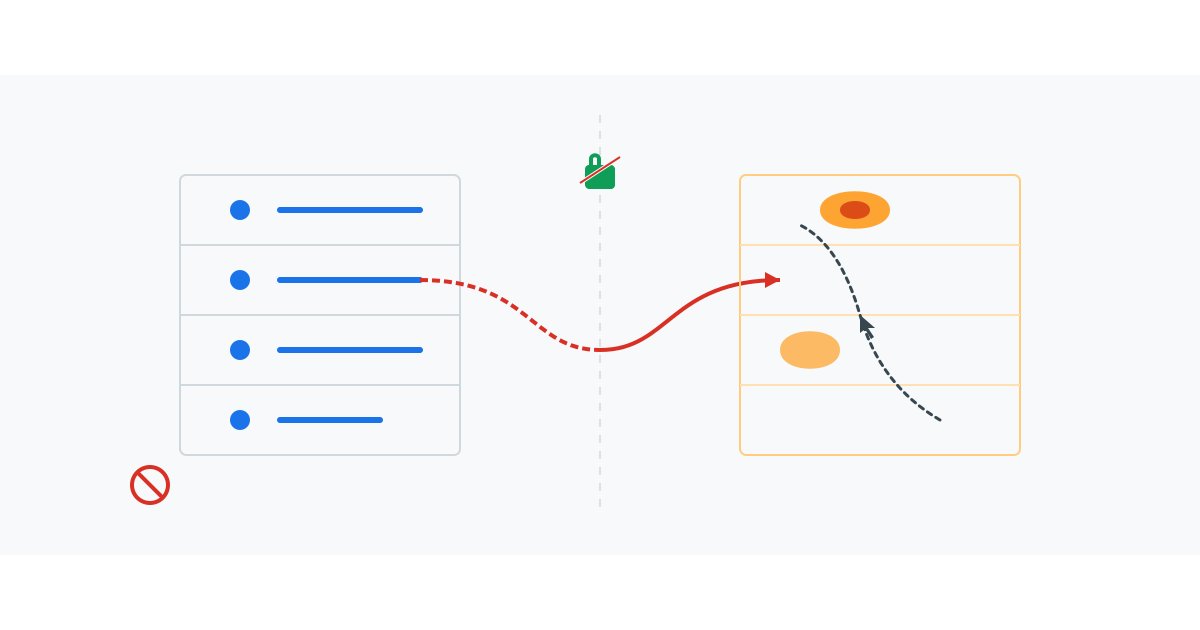
- i believe the end user has a reasonable expectation that they will be back on the google search engine results page... but *they are not*. they are on a mockup that looks like the google SERP but is in fact controlled by the blog post author.
5. the end user clicks on a "link" to a competitor's website - but the "link" is actually yet another mockup created and hosted by the blog post author.i believe this is highly unethical! they are fooling an unsuspecting end-user into thinking they are visiting a brand new site, but they most definitely are not doing so. ultimately, i think that google and other browser authors should remove the possibility for this sort of trickery. i do admire the blog post author for posting the social engineering/programming trickery while still viewing it as unethical.
edit: at the bottom of the blog post the author links this previous HN comment which i find interesting: https://news.ycombinator.com/item?id=17826106 - and this one is as well https://news.ycombinator.com/item?id=17823886#17826206
If this were early days of the web, I'd agree, but web browsers allow so many other shady tactics, this feels more like the web working as intended.
(Yes, phishing attacks are bad, but the browser back button spec is specifically designed to allow these sorts of shenanigans, with basically zero legitimate use cases -- the only use case I can think of is telling the browser certain actions should not push themselves onto the back button stack).
I agree on the "legitimate" part, but I suspect one of the main reasons is that Google and Apple both really want people to be creating SPAs that pretend to be real apps, and that's hard to do without being able to hijack the back button for navigation.
I also assumed most people did this.
Yes, this is one of the best parts of having a desktop + mouse compared to a laptop + trackpad (or nub).
Yes, and firefox configured to open windows, not tabs (!) Call me a luddite if you like but ctl-w and alt-tab are always to hand and better than any amount of new-fangled tabby nonsense IMNSHO...
Never thought of it as relevant to security before though.
It would group your tabs together. No chance of accidentally pressing the wrong shortcut in the wrong window (even if it only happens rarely).
Just like there’s a lot of people who would never send money to a prince from Africa. A lot of people will…
OTOH, sometimes a harmless PoC isn't enough to induce action, and a proper attack PoC does. I think this may be such a case.
It's all a moot point, because you can reproduce this particular attach using nothing but 2001-era DHTML. Start with a page that has a hidden iframe, a link that targets it, and a timer that polls the contents of the iframe. When the page first loads, use JS to click the link to add a new item to the back stack. If clicking the link with JavaScript doesn't add a back stack item, make the link visible, but also attach an onclick event handler to it so that the link can simultaneously do what you want and also do what the victim wants.
After you've poisoned the back stack, you can detect that the user clicked "back" when the iframe gets reset back to its initial page. Once this is done, use `document.body.innerHTML = whatever` to set up your fake SERP.
The "attack" I'm thinking of is hijacking the back button, but done using iframes instead of history.pushState. It doesn't involve any third-party origins, so x-frame-options doesn't matter, because a domain owner that wants to launch this attack has control of all the HTTP headers.
I always find it funny how these hackers grasp for some othered group that they can justify mistreating. If you're gonna be a hacker stop pretending that you're a moral being and accept what you are
This is a really tricky one to solve because the protection that is intended to guard against it ("The user is aware the current domain they are accessing doesn't match the site they expect it to match") isn't working. I think that aspect is the larger problem... IRL, people know if they're standing in a Target vs. a used car dealership, but they rarely know if they're at target.com instead of target.used-car-dealership.com.
It's possible the browser's framing should be changed to make it harder to be confused about that (color-and-texture-hash the TLD and apply it to the URL bar as a background, so there's a major visual difference if I'm on the wrong site?).
Why should I care about that? If you have to break the browser for your app to work, maybe you should be doing a desktop/mobile app instead.
And a significant portion of business users will be in desktop browsers with restricted permissions, so they can't install an app
Because they are major use-cases for the web browser framework. I mean, that's a bit like asking why you should care about Web Audio API, or the accessibility layer... The fact you're not using it doesn't mean it isn't vital for those who do.
Add manual penalties for the ones that slip through the automated testing.
Once it becomes known that doing this means saying bye-bye to your traffic, sites will stop doing it.
[1] https://www.nngroup.com/articles/ux-writing-study-guide/
P.S. Yet it is not like "serious businesses" do not partake in fraud: Enron, cough cough some/most banks(creating of unauthorized accounts, mortgage fraud, investor fraud, etc).