126 points · by GordonS · 4y ago · 37 comments
1: https://debezium.io/documentation/reference/stable/transform...
I take your point though, that WAL is less limiting in this regard.
[0] https://hackage.haskell.org/package/postgresql-replicant
Cool to know this is an option though, but I much prefer not relying on database internals like wal logs, this hurts scaling more IMO.
The only thing you need to worry about with the table method is out of order increment IDs, which is always possible in a transactional database. But there are many solutions for this.
Perhaps this is what you mean with "out of order increment"... but what are the "many" solutions to this?
I struggle for a long time to find a good way of doing this in Microsoft SQL and still not perfectly happy about the solution we found.
https://github.com/vippsas/mssql-changefeed/blob/main/MOTIVA...
I wish DBs had this more built in, it seems a critical feature of a DB these days and the commit log already have very similar sequence numbers internally...
A bit hacky, but on AWS RDS we didn’t want to deal with wal intricacies.
https://mattjames.dev/auto-increment-ids-are-not-strictly-mo...
The application can catch up when restarted, if it retains the last WAL position. When it restarts, can asks Postgres to start replaying from that point.
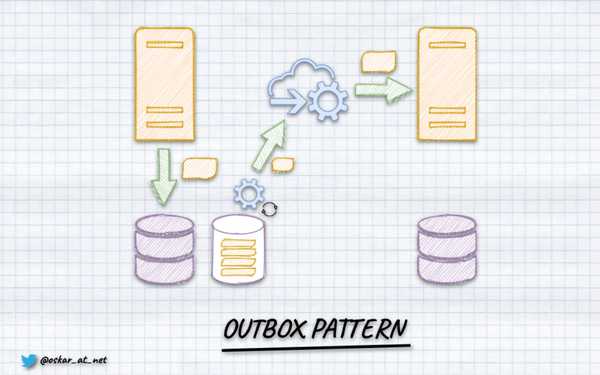
I agree with the goal -- one should definitely never publish an event externally before it is committed to DB! But I think using a "post-commit sequence number" is even more powerful than the outbox pattern.
Sadly few DBs seems to supoort this well with low latency. CosmosDB has great support for a post commit low latency change feed
A hack for mssql is here:
https://github.com/vippsas/mssql-changefeed/blob/main/MOTIVA...
More about this way of publishing events:
Here is a comment and link to some code which seems to work: https://github.com/sfackler/rust-postgres/issues/116#issueco...