Bloated College Administration Is Making Education...
Our campuses are stuffed with non-academic office workers. If elected to Harvard’s Board of Overseers, I‘ll propose firing most of them.
Quillette
378 points · by tomohawk · 4y ago · 356 comments
"The campus provides workspace for about 2,700 employees (including three of the university’s eight vice presidents) working in critical areas such as the School of Medicine administration, libraries and archives, business affairs, human resources, development and Land, Buildings & Real Estate. Stanford will be the city’s third-largest employer in Redwood City."
Amenities:
* Cardinal Café -- Located on the first floor of Cardinal Hall, serving globally- and regionally-inspired cuisine for breakfast and lunch.
* Recreation & Wellness Center -- The 28,000 square foot facility includes a six-lane rooftop pool, indoor basketball court, state-of-the-art fitness equipment, locker rooms, showers and an outdoor fitness courtyard.
* Stanford Transportation
* Digital Media Production Studio
* Wellness and Lactation Rooms
* Dry Cleaning
* Pine Cone Children's Center
* Stanford Catering & Conferences
* Stanford Federal Credit Union
To understand administrative bloat in the US it's much more instructive to look somewhere like University of Idaho where the business of charging students for services rendered is the main game in town. It's there you can see how administrative services have drastically ballooned costs for just the education.
You forgot about the massive hedge fund – and the professional sports teams.
That means for income <= 75K, Harvard tuition is free! That is impressive. Their system looks fair in comparison to other US universities. This system looks similar to progressive taxation (higher income pays more taxes).
For readers not familiar with US university system: This will not include "room & board" (housing & food).
"Student income" was 15% of Stanford's $7.4B budget (excluding capital improvement and hospitals) in 2021-22.
So... only $1.11 billion or so.
Price sets expectations. If you tie your service to lower tier pricing , you are indirectly communicating that your service value is substantially lower.
This calculus is literally happening in administrators minds. They so much have admitted this in the past.
Then they are welcome to stop charging students fees.
That said, Stanford is private, so I'm not sure they're a good example. Various state universities seem like they would be a more apt target to look at to see what this is like in reality.
Stanford University has 24,916 employees.Jul 11, 2022
In 2021 15,750 staff members supported teaching, learning, research and core operations at Stanford ...This includes ... 1,603 staff at SLAC National Accelerator Laboratory .. Includes clinical educator and research staff.
Higher ed's admin:student ratios are closer to resort hotels.
My local uni has definitely transformed into a resort.
One of the consequences of charging full enrollment are the customers now expect a comparable (material) experience.
SLAC National Accelerator, a National Lab that Stanford happens to run, employs about 1,600 people. They don't necessarily need to interact with students; other national labs are run by corporations (e.g., Sandia is run by Honeywell).
Stanford has a massive medical system, including an adult and children's hospital. They are teaching hospitals, and so part of the point is to train medical students and residents, but they also need all the staff of a regular (actually, top-of-the-line) hospital: doctors, nurses, techs, porters, billing, payroll, etc.
On top of that, Stanford also has a massive research program funded by grants from (e.g.,) the NIH, NSF, and DOD This requires people to actually do the research (heavily-funded profs rarely teach, plus postdocs and research scientists) and support it (animal health techs, machinists, etc). There is also a lot of bureaucracy involved in getting, doing, and accounting for that work. It certainly depends—in part—on grad student labor, but it's also not directly linked.
All in all, big research-intensive universities do a lot more than classroom education and the staff sizes reflect that. I'm sure there's room for improvement (I work at one and purchasing is currently a nightmare), but staff/students is not a great metric.
Mmm... I read an article once that pointed out that there are two basic schools of thought on "why college is so expensive today". Some people say it's more expensive to run a college, and so tuition has to cover that. And some people say it's more important to have a degree, or easier to get your college expenses financed, and so tuition expands to meet demand.
It's very easy to distinguish between these two theories at a basic level: one of them says that prices have gone up because supply has fallen, and the other says prices have gone up because demand has risen. But the article pointed out that, while these two causes have the same directional effect on prices, they have opposite effects on quantity sold: if supply has fallen, you see fewer purchases at higher prices, whereas if demand has risen, you see more purchases at higher prices.
And it's very clear that colleges are in the second scenario, with prices and enrollment rising in tandem.
But "it's because of administration costs" is a supply-has-fallen theory. It would make more sense to explain Stanford's luxury campus for administrators by saying that Stanford has so much money coming in, the administrators can afford to help themselves.
This is a legit function of a university.
Where the taxpayer money should have gone: on the supply side. For example, the number of UC campuses in California should have doubled as the population doubled. The last UC campus to open was Merced in 2005. Before that was Irvine and Santa Cruz in 1965. And we wonder why tuition keeps increasing? 1) Demand increases with population increase. 2) Demand increase with more people seeking 4 yr degrees. 3) Demand increases with the US subsidizing the ever living shit out of college tuition. 4) Supply stays relatively constant.
Similarly Obamacare drove the demand side by subsidizing health insurance and onboarding millions of new members. It did almost nothing on the supply side - same number of hospital beds and doctors. Insurers and medical groups made a killing as the price of their services grew dramatically.
In both cases, political stability was achieved in shoveling taxpayer money at education and healthcare without increasing competition. This is a very clever way for existing vendors in healthcare and education to soak the government.
Solution: drive prices down by investing in supply of education and healthcare.
If/when I become President of the United States, I will hold back all education dollars on cartel-controlled education institutions, and heavily tax their endownments.
The fact that most people can name the most famous schools seems to imply they are rare.
They are perceived as having better outcomes than regular state schools. Do they or dont they? If their grads do get better jobs and end up more successful - then they are genuinely better? People from state Universities end up sitting next to Ivys etc there is no difference - this is what I believe. We'll see if everyone else's perceptions change in the future as well.
https://www.washingtonpost.com/news/wonk/wp/2015/09/14/this-...
As for whether these schools are "precious", well, their students certainly are judging by the number of trigger warnings and emotional support pets.
I wonder if it legal to completely clone a curriculum? Like could you clone an MIT EECS education? Down to the coursework? Or alternatively - force elite schools to license and manage franchisees?
I'd vote for you.
MIT will do that for you themselves. https://ocw.mit.edu/
Schools don't compete on curriculum. Nobody pays for it. Nobody cares about it.
And in one particular case, I think the "conventional wisdom" has it right - the lectures don't really matter. You can record a lecture and then play it for any number of people, very cheaply. I recently watched a Chinese drama in which a minor plot element was a character (in the 80s) getting a degree from "the TV university", lectures available to the television-viewing public. (Having your own TV was out of the question, so she and her "classmates" would make long commutes to places that had a TV showing the lectures. This educational format has been very affordable for a very long time.)
That format is not as good as actually having a lecturer, or a TA, who you can ask questions of. If you lose track of a recorded lecture, it will not help you find the thread. All a recorded lecture can ever do is repeat itself. A lecturer versus a lecture is the difference between moving forward and getting stuck.
> is it legal to completely clone a curriculum?
Gray area. I'm no lawyer but AFAIK professor's syllabus/tests/etc. (being written documents) are subject to automatic copyright, I imagine the university is the holder of the copyright given that the prof is an employee. That being said, how many profs clone their syllabus/coursework directly from textbooks? The content of most online universities (Khan Academy, Coursera, etc.) is already superior to Ivy League based on first-hand experience of both.
The bigger problem IMHO is that very little of the overall $$$ and energy at Ivy League is actually spent on course content. For many profs, esp. in STEM, teaching undergrad courses is a "chore" / distraction from their research work. I think there is opportunity to make a "lean-and-mean" physical university (perhaps online hybrid) with minimal admin overhead, which a degree could be on-par with MIT in terms of prestige. Is anyone doing this?
Limit competition: How many new entrants to the prestiguous university club (Ivy League, Stanford, MIT, etc.) have there been in the last 50 years?
Fix prices: How do you explain tuitions growing at 5x inflation consistently since 1990, in an era where information itself has become dirt cheap (the internet.)
There does likely not need to be quid-pro-quo "collusion". I am not envisioning a shadowy meeting room where all the university heads smoke cigars and agree on tuitions. There doesn't need to be. Has any of the elite universities ever cut tuitions, in order to compete with the others?
https://www.forbes.com/sites/michaeltnietzel/2022/01/10/fede...
Well, there are many functions (mostly to do with abrading things) where diamonds are useful for the purpose and a substitute is much, much less so. If you're distinguishing "precious" from "rare", this would seem to be proof that they are precious.
Also there is heavy rhethoric from diamond industry that "natural" are better
I'm not sure how you compel schools to compete on price, because the consumers don't care about price. They'd rather get they "good college experience" for $50k a year than the "sufficiently good education" for $7k a year, even though both options are available to choose.
So, people picked the 'best' school they could get into. Not just for the 'experience', but to make sure they got the best education they could and opened as many doors as possible. Because you don't really get a do-over.
After having gone through it all, do you think if it matters how many doors open for a person based on the college they went? I suppose if someone went to a highly ranked school, it might matter.
But being able to get into a highly ranked school is probably because of what the person had (money, life experiences) or what they did (crushed some standardized test).
So, in the end, does it actually matter?
I really wish we had 4 year institutions managed like our community colleges, though. I remember my 2 years there much more fondly than I do my time spent at a "real" university.
https://hechingerreport.org/from-associate-to-b-a-more-peopl...
New research from the think tank New America shows that 24 states have approved at least some community colleges’ plans to launch bachelor’s degree programs; at least seven have been approved in the past five years.
Genuinely curious, what was it you liked about CC?
What would happen if suddenly hundreds of additional institutions as good as MIT, Stanford and Harvard appeared out of thin air in the US?
Wouldn't we quickly revert back to the current state of things, once US News and marketers figured out a way of creating another "Top 100" hierarchy of schools, with parents shoving their kids into violin practice, water polo and building-orphanages-in-Nicaragua photo ops to make it into the new top 5 luxury brand name universities?
The scarcity IS the product of these institutions. This is the nature of positional goods.
Obamacare also has a huge positive impact besides just access to healthcare. For instance I couldn't have started a startup without it, and it's much easier to hire contract workers because of it.
SPY: about 4X
QQQ: about 6X
GOOGL: about 6X
CI: about 9X (Cigna health)
ELV: about 10x (formerly Anthem)
AAPL: about 19X
UNH: about 20X (united healthcare)
Health Insurance stocks in the US did better than tech stocks after Obamacare passed. Why?
Is this a genuine question or is it rhetorical? I can’t really tell these days.
https://www.ncbi.nlm.nih.gov/pmc/articles/PMC5145008/
Short answer is that insurance companies were “limited” to 20% profits and 80% expenses by ACA.
Smarter insurance companies realized quickly that they not only had zero incentives to cut costs, but they were actually incentivized to let costs increase to be as high as legally possible, thereby increasing their profit cap in absolute dollars.
I don’t know if this was the idea of one party, a bilateral backroom negotiation with the insurance companies, or a comprehensive lobbying victory, but it ended up being a massive boon for insurance companies and hospitals and a complete shitshow for consumers.
If this part of the ACA doesn’t change, it will break the US healthcare system.
This analysis shows the majority of health insurers becoming less profitable after Obamacare?
https://www.commonwealthfund.org/publications/issue-briefs/2...
What about between 35 and 50?
I mean I know only two interesting facts about you, the difference in time, and I already know a common sense reason why your price today is much higher than it would be when you were 15 years younger, in “literally” any time in history, and perhaps it was always about 3x more expensive premiums.
Still, the supply side support necessary would also be an issue. For markets where the local going rate is expensive enough it would make a ton of sense to allocate military medical units to supplant the local market until more doctors of that type were in the area. If it takes long enough the military supply might even retire from the forces to open practices in that area.
<rant-on>
Sure. On my back, and that of countless others. It's fucking highway robbery.
Before Obamacare we had excellent health insurance with excellent coverage, doctors and low deductibles for $650 per month.
When we were shoved into Obamacare, our rate TRIPLED to $1,800 per month. Today we are paying nearly $2,300 per month. This is equivalent to a mortgage payment or non-trivial savings either for personal use or to help your kids with college.
There is no other way to put it: We are being robbed.
Put some numbers to it for context:
Over ten years the increase amounts to about TWO HUNDRED THOUSAND DOLLARS. Money taken from us, by law. This doesn't even include a calculation of what this would be if invested in a low risk mutual fund or real estate.
The concept that a family has to pay so much PER MONTH for health insurance should make everyone take pause. This kind of thing is why I have always had a strong negative reaction to anything government-driven. It never ends well.
Even worse, Obama lied to all of us. His promise to the nation, easily found on countless videos, was that families would save in the order of $2,500 per year on health insurance. Right.
How do these people get a free pass on shit like that? Why?
I don't know if this is even possible. I wish someone could organize a massive class action lawsuit against all who forced this on us. I am happy for those for whom things improved. I truly am. However, doing it by causing serious financial harm to likely millions of families is not right, at all.
We (my family) are burning --quite literally-- tens of thousands of dollars per year on healthcare because of Obamacare. The other part people don't understand is that deductibles have gone up and insurance does not trigger until you spent a certain amount per person per year. In our case my entire family would have to be run over by a semi truck before we actually start to see significant benefits. In other words, the cost isn't just the premiums, but the expenses we have to incur before benefits actually kick in.
Here's an example: One of my kids ended-up in the hospital with myocarditis due to the Covid vaccine. That cost us over TEN THOUSAND DOLLARS, cash.
Needless to say, every time I see Obama, Pelosi and the bunch I have to try very hard not to launch into projectile vomiting. I know many people idolize them. Sorry, you have chosen to admire liars and criminals.
<rant-off>
Yes, that was the point. People who could not afford healthcare, are now receiving it. Hence people who can afford to pay for others to get healthcare, have to pay for others to get healthcare.
>However, doing it by causing serious financial harm to likely millions of families is not right, at all.
There was never going to be a way to redistribute wealth without taking to from those who have it or to give it to those who do not.
>Here's an example: One of my kids ended-up in the hospital with myocarditis due to the Covid vaccine. That cost us over TEN THOUSAND DOLLARS, cash.
And you are insured for amounts that go over the out of pocket maximum, which is legally around $17k for families. So if you need a $500k heart surgery tomorrow, you only have to spend a maximum of $17k.
Obviously, the price of healthcare is a problem, and the only way to fix that is to lower demand (let people die) and increase supply (more doctors, more taxpayer funded R&D into medicines that go into public domain, and tort reform).
I cant fathom why the majority of Americans are ok with their weird sociopathic Job = Health Insurance based system. While not as nearly unanimous as the metric system, well funded Public Health Care to a level where most people don't need health insurance to cover an emergency hospital visit for say a broken leg... is basically what everyone else around the world in other countries considers a normal and good thing...
In essence... You were already getting ripped off, now you're getting ripped off even more.
In England, Australia, Germany, France, Canada, etc, etc, etc... The treatment for your child would likely have cost you nothing, or nearly nothing. The fact it cost you over $10,000 is not entirely the Obama's fault, it's the collective fault of nearly a century of American citizens who have accepted the status quo and not pressed for any sort of change prior to Obama promising to change it single handedly, since that worked about as well as most people watching from other developed countries with modern socially supported public health care expected it to... it was a best case train wreck because of health care industry self interested lobbying efforts from pharmaceutical companies, insurance companies, hospital management companies, all the companies... not because it was a bad idea to stop the fright train that is employer provided health care in the USA. They just managed to convince them to stop the metaphorical train in such a way they could profit even more, and thus cost everyone including the government even more money...
While more healthcare supply is definitely needed, this is ultimately a bottomless pit. Patients with complex chronic conditions have essentially infinite demand for healthcare services. The majority of those chronic conditions are caused by lifestyle issues including overeating, lack of exercise, and substance abuse. As a society there has to be a limit to what percentage of our GDP that we devote to healthcare.
I believe the reason is that since we print the global reserve currency, we can always borrow money at the Federal level and spend more.
The seats have increased dramatically.
You won't be able to create efficient competition. The value shoppers already go to state schools. The other people are looking for a specific "quality" or just plain emotion (my family went here, this school is prestigious, etc).
Supply isn't the real issue in most disciplines. The problem is the demand side individuals making economically dumb choices (sometimes semi-forced by the larger societal situation).
Neither education nor health care make sense to organize by competition - the consumer lacks the ability to make the informed choices that an effective market requires. Obama care, in fact, contained a variety of pseudo-competition schemes to bring down costs, all of which predictably failed. And we're seen the disaster of various for-profit colleges.
> For example, the number of UC campuses in California should have doubled as the population doubled.
Maybe. But the number of students at UC campuses in California has doubled since 1965 — even though the number of campuses hasn’t.
I think the issue is that demand has more than doubled as the population of California has doubled—because college is more of a requirement than ever.
Yup.
Early 70s, we started transformation from a manufacturing to a rent seeking economy. Cleverly branded as "supply side", "knowledge worker", and "service industry".
I still can't get over the fact that I have to spend money to use my money. Even more so the less money a person has.
This isn't really true. Obamacare was integral to the push toward increased capitation. Health care insurance paying for services provided instead of patients covered leads to incredibly perverse incentives that have been a huge part of why costs are so high. Capitation solves that by aligning provider incentives with patient incentives; provide timely, high quality care and not unnecessary treatments.
Demand is increasing due to the college wage premium, which keeps widening with no end in sight even despite Covid and online learning.
The college wage premium is the number one culprit for all these problems . For whatever reason, employers derive enough benefit from college grads to pay them waaaayyy more than high school grads
https://greyenlightenment.com/2022/09/22/blame-college-wage-...
The vast majority of people attend college to earn more money and be employable, as a sort of ticket the middle class. If college degrees only paid slightly more than high school instead of 2x more, demand would probably fall a lot, so would borrowing and tuition. Same for unemployment: high school grads have to 2x the unemployment rate. Maybe the onus is on employers: start finding ways to find hire more high school grads for better paying work...huge labor pool of high school grads..they cannot all be bad.
> The college wage premium is the number one culprit for all these problems . For whatever reason, employers derive enough benefit from college grads to pay them waaaayyy more than high school grads
That may be true. But there's an easy fix: any job requirements that ask for any college degree (e.g. "a 4 year degree" not "a BS in chemical engineering") should be illegal.
Honestly, I don't really understand why they aren't already: they clearly violate the 4/5ths rule. And it's hard for me to believe that some enterprising lawyer hasn't already brought suit under this theory.
My guess is because 'not having a college degree' is not any kind of protected class. Not an immutable characteristic. It is a behavior choice. Do we really want to get the gov't involved in telling private companies what qualifications they can require for a particular job?
I think that by looking for an excuse as to why the government messes up everything and using that as a way to remove government from things, you haven't changed the need for that thing, you just make it so that in order to fill a public need the government has to enable it in some way that is probably less efficient -- like giving out lots of loans for education, or by having people forgo basic care and then ending up in the hospital with a huge bill that the government pays for because they cannot.
There is usually a medium between these things and it would be great to get off of our collective ideological horses and find them instead of blasting rhetoric at each other.
She has no conceivable way to pay that loan off on that salary. She will never qualify for a mortgage with that kind of debt to income ratio. The university promised this hopeful 18 year old child a dream job and a good wage to go with it and instead they basically destroyed her future.
The fraud universities are perpetuating makes the banks look like a freaking soup kitchen. The first politician who recognizes that this is modern day feudalism and has the guts to call it as such is going to be very successful.
Removing government help won't end the college dream... but it might, in time - since it took time to get this fucked up - restore some semblance of reasonable to the equation.
You get what you pay for. Student and parent expectations have changed and so have college and universities. If you want what colleges used to be like 50 years ago go to a small private or public school that is just barely staying afloat, it will be more or less similar to the so called halcyon days of low cost, no frills college.
The thing is—people don’t want this as voted for by their choice in school. The biggest drops in enrollment are at community colleges, state schools, and small private schools. If people were price sensitive cheap schools would have people busting down the doors to get in. They don’t. In fact, when a college lowers their tuition, they paradoxically often see a dip in enrollments.
Why? Because human brains are broken. We connate price with prestige and prestige with quality.
Colleges get punished if they lower the price, so what do they do instead? They increase the discount rate. Rarely do families pay the sticker price. Google any college tuition and you will see average price paid. It is typically anywhere from 50-75% of sticker price.
If you want what colleges used to be like 50 years ago — more power in the faculty senate, greater academic freedom, more focus on doing research and less on grantwriting, greater freedom to research moonshots, very few adjuncts — you aren't going to find it at small private or public schools that are barely staying afloat.
The other side to the problem that most commenters here are missing is something that is much easier to see if you are employed by the school (as I used to be). There are dozens of layers of bloat and positions that exist only to make Doing Stuff (for values of Stuff that include both Research and Teaching) as slow as possible. Even getting a door fixed -- to stop the door stuck open alarm going off -- took multiple days and multiple people, and not because we had trouble getting a hold of someone. I got decent at navigating this stuff and acquired a reputation as a fixer, which I was all too pleased to move on from, but I sure did become aware of all the people I had to keep happy. There were a lot of them.
I firmly believe that at least half of those staff positions (not people, but positions) could have been eliminated with nothing of value lost. It was kind of ridiculous, and it's one of the reasons I don't work for a tier 1 research university anymore.
(These jobs also tend to be excellent sinecures and attract the difficult sort of person, often by virtue of who your coworkers are going to be, but that's another story.)
It is true—prestige grants price flexibility for the college. They can charge more equivalent to their relative standing. But what leads to that reputation? How do you measure quality of education?What makes Harvard better than any other college at educating students? How much better? What percentage? Okay now prove it. At least in a succinct explainable way.
No, prestige is based on awareness and reputation. That can be gained a lot of ways. Recently a lot of schools have gained reputation through athletics. If you are good at one thing people think you are good at everything and so that reputation becomes overall reputation.
Three repeatable anecdotes regarding college enrollments:
1. When a college builds a new fancy building they see an enrollment spike. Almost every time. Especially if it is student quality of life focused.
2. Colleges that have lowered tuition to increase price transparency have consistently seen enrollment drops.
3. When a college or University makes it to March Madness they see an enrollment bump.
Reputation is tied to many things. Academic quality is hard to quantify or measure and so any reputation based on academics is apocryphal and based in word of mouth.
Aren't most colleges turning away qualified students? If so, an enrollment spike is a decision by the college, not the result of increased demand.
Others, like selectivity, are known to be gamed by encouraging students to apply even when they have no chance of getting in (which carries the additional income of the application fee).
An athletic conference.
Even dropouts make more money after being there, not to put too fine a point on it.
The price increases are massive, across the board, and not obviously linked to quality of facilities. There's definitely something more than you're suggesting at work here.
I have the feeling that you're looking only at elite institutions. At the time I was in college, the place came in around #100 on the list of top liberal arts schools in the country, which while not especially shabby, also wasn't in any way elite. In comparison, the one elite university that I'd applied to back then was $36k/year for tuition, and is now $59k/year. Surprisingly, its tuition has grown at a slower rate.
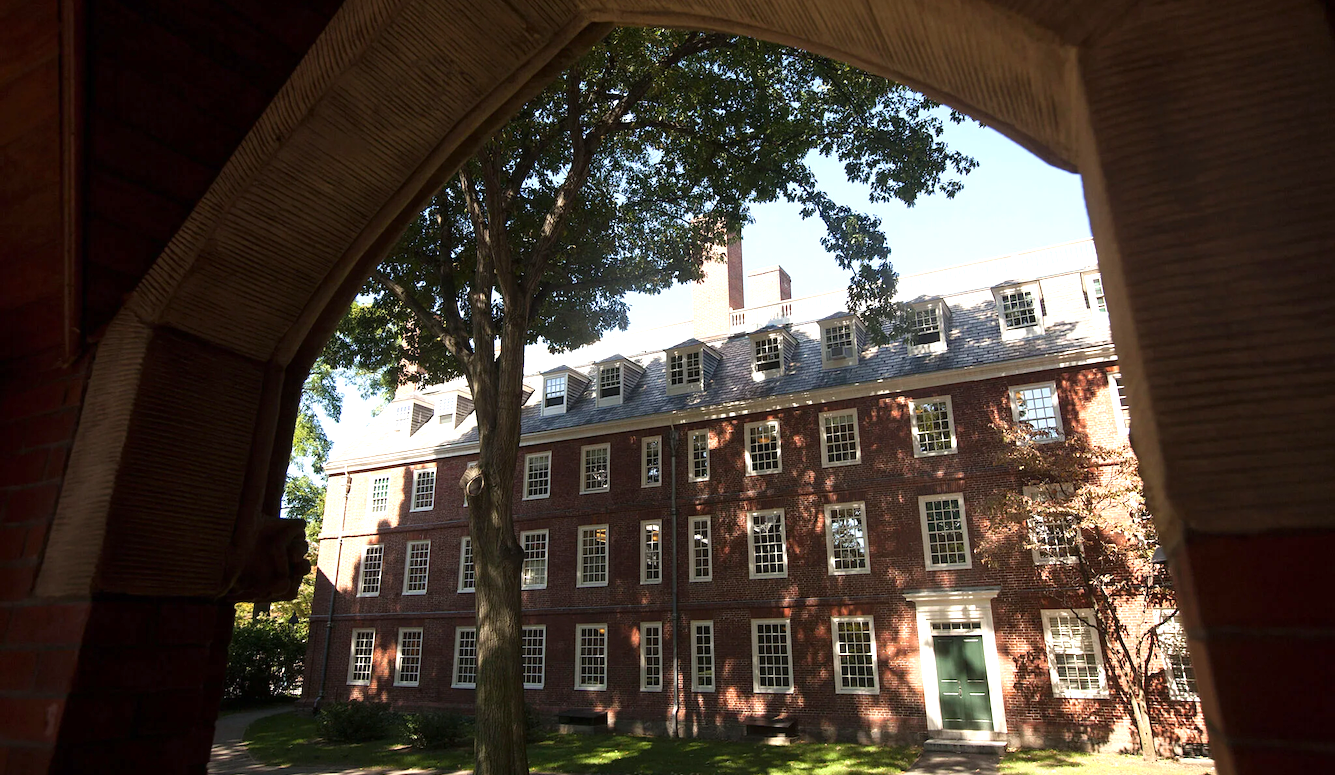
I was actually surprised with how beautiful the university grounds were. They likely spend a fortune on landscaping alone.
Our older grandson went to the same school studying CS and EE. I’d say he’s doing very well.
I agree education is over priced, much like any other investment or asset in this day and age.
Perhaps my world view is narrow, but what are examples of these “affordable” schools with spotty wifi?
I think the old buildings or drab dorm argument isn’t a huge deal. Call me old fashioned, but I’d prefer my grand kids being safe but having some challenges. Otherwise, we’re keeping them in a bubble. As long as their is climate control and cleanliness, I’m fine with them not getting a 4.5 star hotel treatment.
I think government backed so urgent loans are a big reason why people are not price sensitive.
On top of that students are sold the idea that, as the above poster said, "you get what you pay for," and that cheaper schools are somehow worse and will mean they'll earn less money. If you're getting into debt to increase your earning potential anyway, it makes sense that you would try to maximize things. But you're 17, and might not realize that these adults who are in positions of power are likely misleading you.
Also, honestly, a lot of 17 year olds don't seem to be able to grasp the idea that debt is something you actually have to pay back (a lot of adults even don't seem to grasp that). What do people think would happen if they gave every 17 year old a credit card? Yet their financial competence is somehow expected to be completely different if we give them a much larger loan?
The government backs the debt.
The schools get cash.
> The government backs the debt.
I'm not sure if there's a name for this style of argument, but it happens a lot, particularly in defenses of uniquely or primarily American phenomena.
Agree. Part of what is enabling this is all the easy money to pay that tuition.
How is this related to tuition? Do you not cook your own food or eat from private restaurants in US universities?
Yes - loudly signalling that the parents can blow $100K/year on an exclusive country club-cum-college for their kids, and never miss it.
Treatment #1 - Immediately start treating the $$$$$$-no-object "colleges" as for-profit luxury resort corporations. Donations NOT deductible, fully subject to property taxes, zero state/federal money for anything, rights to have their own police forces yanked, subject to all SEC regulations, degree-granting powers revoked, etc., etc.
If the underlying cause were primarily administrative overhead, that should be readily apparent in the (public) budget of any public university. I’m not going to go do Silvergate’s research for him, but I’m surprised he doesn’t cite such a readily available piece of compelling evidence, which at best suggests he’s too lazy to track it down, and at worst that reality does not support his hypothesis.
Per https://nces.ed.gov/programs/digest/d21/tables/dt21_334.30.a..., after two minutes of googling, if I am reading correctly, the percentage spent by four year institutions on “academic support”, which includes admissions, has remained at about 8% from 2000 to 2020. That seems like a basic statistic Silvergate should have on hand, and one that invalidates his hypothesis, right?
I think Baumol's cost disease explains a lot of the increase. I find it suspicious that it's not mentioned in TFA. But there are other drivers, of which much higher student expectations play a part. A school patterned after a typical university in the 60s would have some charm but probably students would not enjoy the Spartan living environment or the lack of support services.
In fact given that the numbers of admin staff per student and per graduate has increased, you could credibly argue admin productivity has declined.
Why do you assume these influences to be mutually exclusive? Upward price pressure for unnecessary bureaucratic positions does not invalidate the problems with those positions, but rather exacerbates them.
That was my point: not addressing alternative theories, while failing to furnish seemingly readily available supporting evidence, seems on its face dishonest.
Easy credit made it so demand for degrees outstripped capacity. Schools raised prices to meter demand. At these increased prices, schools felt compelled to invest in programs and administration.
Also, as I understand it, the accreditation process is pretty broken in the country. Whatever the top programs are doing becomes the benchmark for everyone else to match. So it's a never ending treadmill to keep up.
a lot of cultural differences (and other historic path dependencies) led to using degrees and other signals for hiring instead of actual performance.
even by-definition woke (and I'm not using it pejoratively here) employers have trouble letting go of their mindless credentialism.
https://twitter.com/mattyglesias/status/1539188973553299457 [audio version seems non-paywalled https://curio.io/publications/matthew-yglesias/matthew-ygles... see also https://www.slowboring.com/p/crt-school ]
https://www.pewtrusts.org/en/research-and-analysis/issue-bri...
If you look at Figure 4, within the last 10 years, and for the first time ever, the amount of federal money flowing into state universities exceeded state money. There are all sorts of consequences for this. Mostly, I mention this to echo that state contributions to higher education have gone down consistently and the editorial's assertion that the high cost of a university education can be reduced to a bloated administration is a simplified argument of a complex issue that is likely made in bad faith.
> In 2018, the United States spent $14,400 per full-time-equivalent (FTE) student on elementary and secondary education, which was 34 percent higher than the average of Organization for Economic Cooperation and Development (OECD) member countries of $10,800 (in constant 2020 U.S. dollars). At the postsecondary level, the United States spent $35,100 per FTE student, which was double the average of OECD countries ($17,600).
https://nces.ed.gov/programs/coe/indicator/cmd
How much spending is enough?
1. State cuts funding
2. Public schools need to raise tuition to make up the difference
3. The gap in price between public and private school decreases
4. Schools need to improve their product to attract students in order to make up for this lost savings
5. Schools work to improve amenities and add ancillary services (and this can now become cyclical when other schools improve, sending you back to step 4 again)
6. The administration bloats as they hire people to work in these new areas.
Basically one person's "administrative bloat" is another persons "investment in attracting students". I think really the only difference between the two is whether the return on investment is positive or not.
In principle, this helps two ways. It increases the prestige of the school, thereby attracting students. More directly, it brings in new revenue streams, both from tuition (paid directly or via federal training grants) and via overhead on research grants. However, it requires more--and fundamentally different--kinds of admin.
Even better - make colleges guarantee loans. If people can't get a job after 2 years of graduation make the schools start making the loan payments until they do get a job. BS degrees would dry up overnight too.
https://studentaid.gov/understand-aid/types/loans/subsidized...
My wife wrote five articles on the myths behind rising education costs, including administrative bloat: https://michellelessly.com/2016/08/08/5-myths-behind-the-ris....
And why should they be? Why can't students partake of the services that the rest of the population does? This is how it typically works at European schools which seem to cost much less. Why can't schools just be schools?
She casually mentions Title IX and “high touch services”, and then calls those expenses a “necessary cost of doing business”.
I think most of the folks who end up paying the bills would rather them not be.
Save for most STEM and subjects that have an external certification (bar exams).
The article nails the cause of more administrators--the schools have more money to spend and need to spend it--but completely misses the reason schools are able to charge so much more these days.
Collage is largely an exception to that as elite schools don’t charge 100+x the average the way say watches, clothing, etc do, and most people aren’t going with the low cost options.
Do you have an example?
Supply and demand is exactly what drives the prices up. People have a huge supply of dollars due to financial aid loans, and cannot spend those dollars on anything but education. With more money available, schools charge more.
It’s the same mechanism as inflation.
Commodities often follow a similar trend with global Steel production resulting in lower prices per pound over long stretches of time. The trend is less obvious over short periods of time but compare steel prices every 50 years say 1820, 1870, 1920, 1970, and 2020.
Some things like beachfront property are inherently in short supply, but it’s hard to argue that applies to collages across decades.
Yeah, but you're ignoring the mechanics of that happening.
> completely misses the reason schools are able to charge so much more these days.
I don't think it misses it. I think it just ignores it as a matter of practicality. It would take an act of god to get money removed from the system, but there is a very real chance he could cut some cost and bloat from single, incredibly influential, school.
Students who wish to pursue higher education shouldn't even have to think about finances for that education, aside from maybe the travel and food expenses (although now with remote work/learning that also is going down)
However, university can be very cheap. Here in Sweden university education, which is here funded in the way proposed above (i.e. the government pays for it all, for those students who get in) costs the state less than high school education costs the state (72 000 SEK/a for university, 124 300 SEK/a for high school).
I imagine that it could be the same way in the US.
Quite few people play it anyway.
No, we do not agree that this is a problem, or the cause of a problem.
https://www.forbes.com/sites/noodleeducation/2015/05/28/more...
The evolution of education has already been diluted (die looted :p).
I just saw a video on California's education system in the middle of the 20th century, compared to where it is today (actually thier ecomony). Not the finest of the bunch in the 21st century.
https://worldpopulationreview.com/state-rankings/public-scho...
Economic evolution happens :)
It is a reward puppy mill scheme and a triple-dippy pension scheme ... all at taxpayers' expense.
a growing portion of the bloat discussed in this thread goes toward increasingly luxurious lodging, amenities and services
generally agree with your broader point, with caveats (e.g., how the credentialism encouraged by the university system might be considered an obstacle to personal and civic development)
"Hey Siri, could you go back over step 3 for me? Where did you get the X-squared term in the denominator?"
What is better is the hub approach of key-research public universities, say five per state and then ten commuter campuses that re-use courseware from the research facalities.
In fact in the USA several states are moving to this model, including such states as Indiana.
College is too expensive, but it's not because people who work at universities are overpaid.
I worked in EDU.
Colleges are investing in amenities instead of quality, affordable education, because the bloated admin is useless and corrupt, so they spend on big ticket sports facilities and buildings (where does the money go?) to justify the administrative excesses (if you build a $100 million stadium it's easier to justify a few million to renovate the presidents office).
The root of the problem is the terrible leadership, that is enabled by the broken funding model. Fixing the funding model won't resolve the leadership problems.
There should be a middle ground in reducing costs of overpaid bureaucratic bloat while also providing everyone on campus enough support, from undergrads to grad students to professors, etc.
The best solution here is just to start enforcing pip quotas lol.
A lot of unskilled lazy people want to have a salary being in-between those who actually produce value.
Surely the rationally-acting rational actors at all of these institutions are acting rationally in accordance with rationality?
After all, we live in a time when any "entrepreneur" can affix his name to a suburban sprawl wasteland strip mall storefront, open a University, and get accredited by at least SOMEONE and drive all of the wasteful and bloated (and liberal sissy-manchild-- their words not mine) institutions out of business, using the holy and righteous motive of PROFIT to deliver a better, cheaper, more rationally rational product to all of the young impressionable minds out there, right?
They’re kinda the worst of both worlds: massively subsidized by the state and federal governments, with very little government oversight.
None.
Several open every year. All you need is the capital and that’s what we’re all about, baby!
And then you can get the same subsidies and low levels of oversight as the big boys!
People really lost patience with that crap after Corinthian, Capella, etc. so there are a lot of new limits and regulations. Basically the only non-accredited colleges that can make a go of it are those that have some other kind of rich sponsor - most often a religious one.
It would be interesting to see the trends in the costs of getting accredited over the decades.
You can't make risk disappear magically.
Demand is through the roof - there are 20 candidates for every 1 place, and those candidates have almost unlimited access to loans. So the price is immaterial, if you get a place, you pay whatever they ask.
So sure, there's going to be administrative bloat - because there's literally no limit to the purse strings. And this is exacerbated by university rankings which will literally list staff:student ratio as a metric. But none of this has anything to do with Quillette's racist agenda.
The last 40 years has seen interest rates steadily fall, allowing students to pay the cost of education further in the future. This in turn allowed students to bid more for education that they otherwise would have paid less for.
If interest rates and inflation reverse their long term course, then there is no reason to believe that students will be able to afford their previous rates.
And the banksters who make the student loans which are difficult to discharge in bankruptcy. The price ramp started after the no bankruptcy provision was made law.
https://thehill.com/blogs/congress-blog/economy-budget/28362...
Simply repeal this law which was a gift to the banksters in the 1990s.
https://www.cbpp.org/research/state-budget-and-tax/state-hig...
The same school is now $46/unit with no cap.
Though, through the google, it looks like there’s some sort of two years of free tuition program so it’s probably a wash practically speaking.
So why bring it up?
In STEM? Certainly not.
Calculus I/II/III(vector)/IV(linera algebra) Physics I/II Chem I/II
That's two whole semesters just getting the basics. You've only got 8 courses left.
In EE, that gets you: Circuits I/II, Digital I, Data Structures I, Computer Arch I, Signals & Systems, Electrostatics, Electrodynamics,
You're out of courses, and you haven't even gotten outside of the minimal major basics--and no labs either.
First year is general math and science. Many people earn some of those credits in high school, so it's already effectively on an as-needed basis.
Second and third year are the core engineering curriculum. At that point, you have all the specific course prerequisites to start a master's program.
Fourth year is a capstone project. You could do that over a summer in the second calendar year. The electives are redundant if you're going to do a master's.
General education requirement is also redundant with high school, and is about a semester's worth of classes.
So depending on your first year preparation needs, it could be as little as two calendar years. Assuming the program requirements are reformed.
Only if you assume that the purpose of a bachelor's is to provide job training in one specific profession. Not so much if you believe in the value of a well-rounded education, for people who are likely to change careers multiple times, maybe also be civic leaders, etc.
I'm not saying you're wrong, but the debate between these two visions has been going on for centuries and IMO it's not very useful to assume one answer (especially without recognizing the assumption as such).
Do you think university graduates in France, for example, are less “well-rounded” than those in the US?
It's hard to totally dissociate this from second-language issues, but I've noticed that international science grad students sometimes struggle to organize their writing, often in ways that go beyond grammar/vocab. I didn't realize this at the time, but writing essays on (e.g.,) feminism in The Canterbury Tales are really just exercises in putting together a cogent argument. Those skills transfer over to project proposals and design docs too.
In a similar vein, European PhDs are also laser-focused on one topic so that they can be finished in 3-4 years. I think there's a pretty widespread sense that many need to spend a little longer as a postdoc to "round" out vs. Americans with slower PhDs.
A big part of education is studying what you don't necessarily want because it helps inform your intellectual interests.
Is your suggestion that YouTube could function as a way to audit potential college courses? Good idea, except you would already need to know what you're looking for to not be captured by the recommendation algorithm.
https://www.manhattan-institute.org/html/underfunded-teacher...
Just grabbed a random link for the above, but underfunded retirement accounts and underfunded pensions explain math in 2022 quite well.
Any inferior integer is good enough /s
A few links that date back to 1993 (pulled at random):
https://www.investors.com/etfs-and-funds/sectors/sp500-ge-no...
https://www.deseret.com/1993/12/12/19081151/list-of-underfun...
https://nrtwc.org/underfunded-union-pensions/
Many industries are "beyond a crisis", its not a permacrisis :p
The public employee pensions are their own mess too