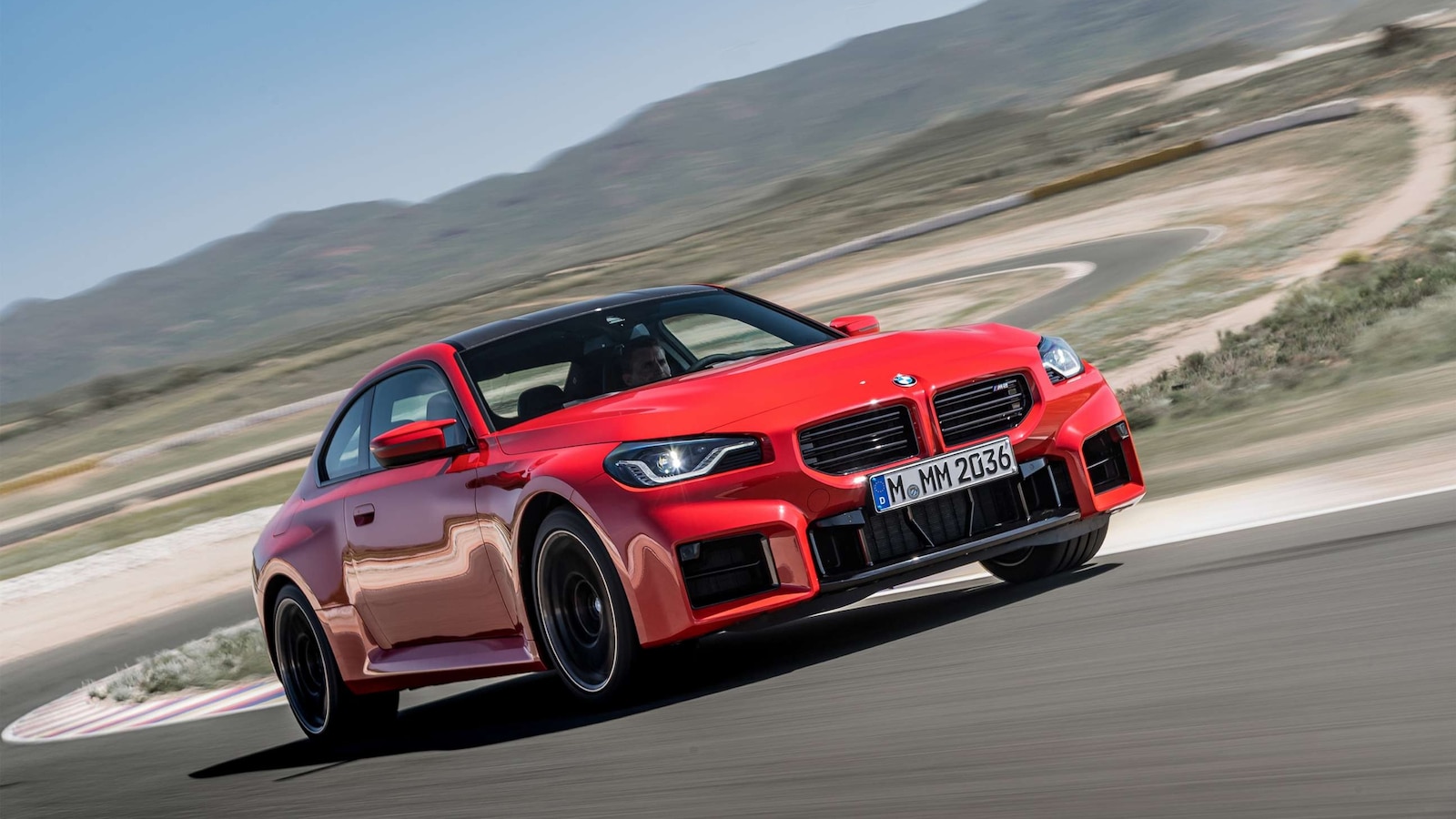
The unintended consequence of electric vehicles: More demand for manual transmissions
Porsche, BMW, Toyota and Honda are seeing high demand for manuals.
ABC News
21 points · by throw0101c · 4y ago · 37 comments
After driving a dual-clutch automatic transmission, I realized that our Scion will be the last manual transmission car we buy (mainly because the next one will be an EV, like our current first-gen Leaf, but even if we bought ICE...). Oh, I could wax nostalgic about "driver control" and "enjoying the car", but it really boils down to "old man is willing to give up performance while shaking fist at cloud". Hell, I might as well get out and crank start it, and then hop back in so I can manually advance the spark with the steering column lever. You kids don't know "control" until you have the ability to burn a hole in a piston with the flick of a lever! I don't need a computer to decide when to light the fuel/gas mixture!
I used to think manual was the "only" way for driving fast sport cars until I test drove a Nissan GTR Nismo producing 850hp. The speed between shifts is faster than your eyes can blink (even at low speeds). It's something you can't do justice by describing. The only way to believe it is to try it.
With all that said, I don't quiet see EV manufactures going manual anytime soon since we're still in a transitional period with many challenges and problems to solve before serving a niche market. Plus, most drivers nowadays that are looking to drive a manual car, probably aren't shopping for an EV.
It's about control.
It's about disengaging the clutch instantly, and re-engaging just as fast. It's about feathering the clutch, and fast drops from 6th to 1st.
It is about control, and about feel too. It is about the driver deciding, not a machine.
So sure, speed maybe, but not control.
Feathering the clutch is mostly useless in everyday driving and performance driving. Likewise, dropping from 6th to 1st. Above 20mph, it's nearly always a mistake to downshift to 1st, and who is going 20mph in 6th?
The only legitimate reason I can see to prefer a 3 pedal gearbox over a DCT is the ability to clutch kick to initiate oversteer, which is purely for drifting.
Mostly 3 pedal cars are useful for a display of mastery, but 99% of drivers fall way short, and don't even realize it, leaving gobs of performance on the table or mismatching revs and introducing undesirable weight transfer.
There is nothing an abacus does better than a calculator, but I don't begrudge abacus aficionados, and abacus mastery is quite impressive.
Source: Porsche Driving Instructor for 5 years with thousands of hours in the passenger seat.
I agree with all your points. I have lots of track experience and training with a range of cars, including Porsche and one of my favorite "no pucker factor" cars, track-modified BRZ. In fact, next year I am hoping to go to Formula 3 training [0].
That said, for street and lots of track driving, I think the manual (stick shift) transmission is simple, brilliant and can be used to develop skills and understanding. The other aspect of these transmissions is that they are simple and inexpensive to maintain and repair. Their next generation computer-controlled dual clutch manuals are fantastic, of course. However, I really think full manuals still have a lot of value.
You might appreciate that I have taken all of my kids through race driving school as a requirement --at least by my standards-- for being safe street drivers. They've spent a good deal of time at both Willow Springs Raceway and the local Porsche Experience Center learning and doing fun things with cars.
Nothing like being on track behind a car driven by your kid, seeing him come out of a 120 mph sweeper sideways (because another driver made a mistake in front of him and he had to react) and then watch him instantly correct the situation to conclude: Yeah, he can drive. It also removed any desire in them to go fast on the street and do stupid things with cars.
[0] https://simracewaydrivingschool.com/programs-experiences/rac...
Madness.
You may be right about that 99%, but there are probably 1/100 the number of manual cars, compared to 50 years ago.
So it all works out in the end.
There's no demand for a stick in any other segment (in the US). Otherwise, we'd see them! They cherry picked a couple examples from Porsche, because the rest of the lineup is overwhelmingly PDK sales.
Cars like the Civic Type R, GR Corolla, and Supra (w/ a manual) are a double edged sword. On one hand, I think they're awesome cars, and I love that they're being offered. On the other hand, the chance to buy them is reserved to very few people. Paying 50k-55k for a Civic sounds absolutely insane to me.
Whether people are actually buying new ICEVs and converting them into EVs is doubtful, but if they are, then that would readily explain the uptick in manual purchases.
I live in Seattle now. Hills aren't nearly as bad as SF. Unless you count those atrocious, gravel-like roads in Eastlake.
I always owned manual cars but I drove many miles on automatic cars. In my experience manual is safer on hilly terrains when you either have to feel the car or drive really slowly and hope for the best (but a friend with a new automatic car told me this is changing.) Automatic is great inside cities where you always stop and go. It's a tie on the highway because nothing happens and there is no difference driving 50 miles always in manual 5th gear or in automatic 5th gears. For electric, flooring the pedal at the traffic light, no clutch, full torque is great. I won't add a manual transmission to my future EV, if ever.
Except, most automatics are going up past 5th gear. 7, 8, even 10 speed auto's are pretty common. Those higher "highway" gears make a big difference in terms of engine revs (which equals less noise and better MPG).
Ex: https://media.ford.com/content/dam/fordmedia/North%20America...
Note that the top end gearing is pretty similar between the manual and automatics. There is a larger difference in 1st gear, which implies that the automatics might launch a bit faster, although I'm no expert it might just be compensating for the lack of being able to dump the clutch.
Also, it is possible to build manuals with more gears, it just isn't usually done for weight and ergonomic issues unless your driving something like an 18 wheeler.
https://www.fueleconomy.gov/feg/Find.do?action=sbs&id=34210&...
I never learned how to use a car with a missing pedal. For example, how do you tell it to produce adequate power right now (not 3 seconds from now) so you can pull out into busy traffic or overtake?
When can I rent a manual Corolla at a US airport?
But in the US where gasoline is cheaper than water and the CO2 emissions won't heat up the planet, nobody cares about fuel efficiency.