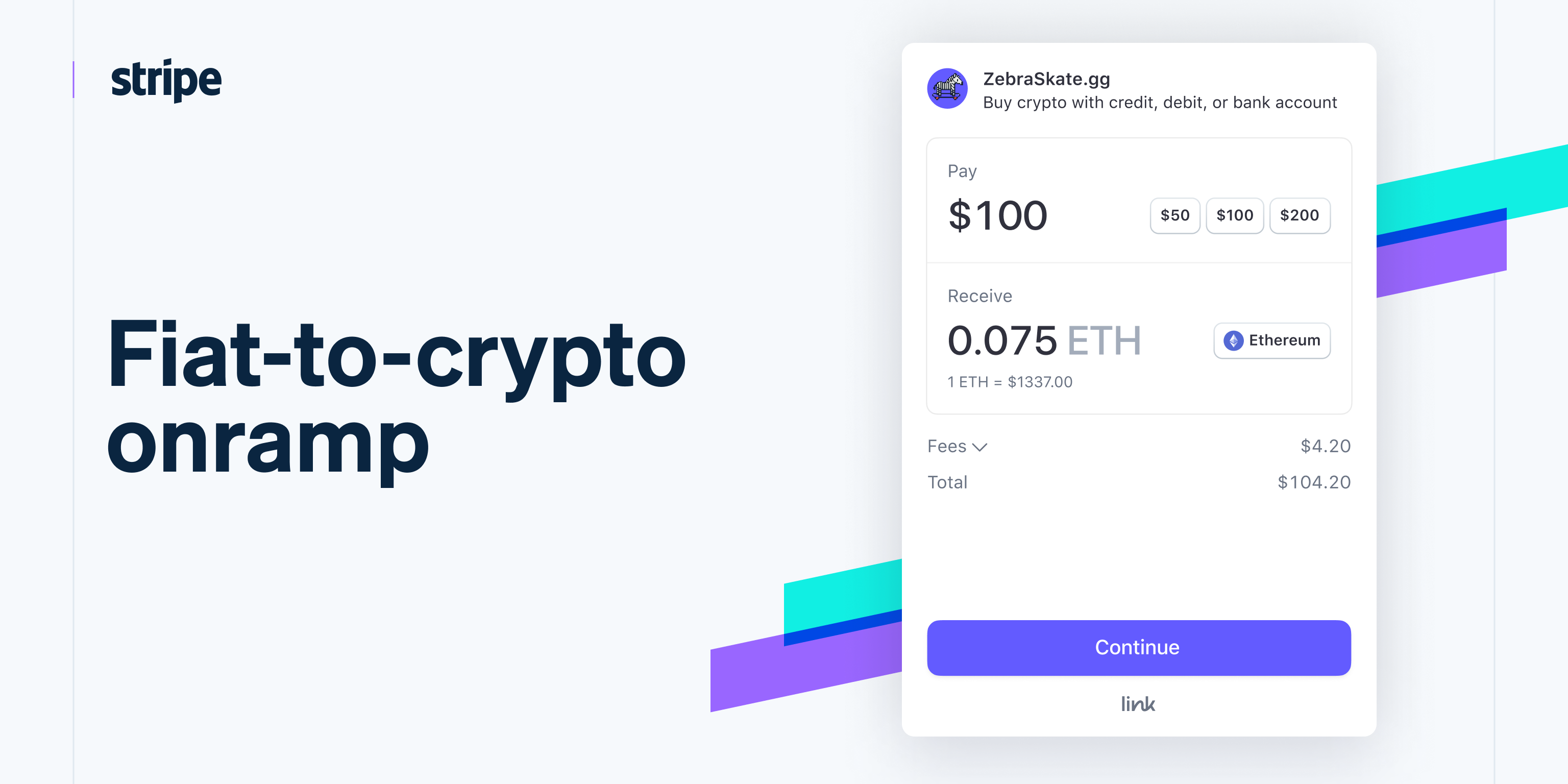
An embeddable and customizable fiat-to-crypto onramp
Let customers instantly buy crypto within your Web3 app.
stripe.com
158 points · by dayve · 3y ago · 232 comments
Merchants seamlessly convert crypto back to USD and cash it out.
So what is the point of crypto again other than giving Stripe (and similar centralized providers) a needless cut?
https://reclaimthenet.org/dick-masterson-new-project-2-maste...
This is a potential way around these behaviors. but I assume it will eventually be blocked by visa and MasterCard simply by threatening to blacklist stripe as a payment processor.
You may not like the logic, but the reason it was so easy for V and MA to cut porn is because the insane amount of porn chargebacks ("yeah I didn't make that purchase, it's fraud").
Crypto is just a wasteful overcomplicated bad solution that's worse than wire transfers, so I agree, let's work on visa-like payments on different rails with no fraud protections (so that way consumers can choose when they pay for that protection, rather than you and me subsidizing people who regret buying porn).
let's say a verboten but legal business embeds this widget on their website. a user then uses their visa credit card to exchange for cryptocurrency and make a purchase. I believe Visa would argue that stripe is laundering money through cryptocurrencies to get around high risk payment processing.
Visa could demand all cryptocurrency addresses associated with stripes embedded widget and compare that against known blacklisted destination addresses. It would do so under the guise of preventing terrorism, child exploitation, and money laundering.
stripe is huge so rather than immediately cutting them off as is what happened to new project 2, I believe they would give stripe an ultimatum of sorts to remove the functionality, or demand stripe prevent transactions to any of the vague/subjective categories of businesses deemed high risk.
The latter would likely be impossible because a high risk business could generate a new address easily which would only later be blacklisted and associated with the business landing stripe in breach of the agreement.
The way you get around the utterly stupid rules set by them is not through more technology layers. It involves a bit more physical violence at MasterCard HQ, as it always happened when unjust rules were made.
You may not like the logic, but the reason it was so easy for V and MA to cut porn is because the insane amount of porn chargebacks ("yeah I didn't make that purchase, it's fraud").
A system without fraud protections (i.e. wires) is a much more efficient solution than a farm full of GPUs in Austin.
The assumption here of efficiency by any metric is the wrong thinking for crypto. Energy/speed are being optimized for, but they are not the goals.
Wires don't have composability. Blockchains do.
https://ethereum.org/en/developers/docs/smart-contracts/comp...
Access to BUSD, USDC, (shudder) USDT, DAI, CUSD for folks across the globe is a good enough reason [0] (right now, the Stripe on-ramp is US-only, but that needn't be the case)? Stripe did bootstrap an alt global payments network in Stellar.org, but that hasn't worked as expected, it'd seem? Stripe is wise to participate in the stable-coin business, which is a way better bet.
MobileCoin, which is embed in every Signal installation, also has Stellar-like features but it isn't mainstream, just yet. Meta's Diem / Libre had similar grandoise visions for an alt payments network given its very global, commerce-hungry Instagram and WhatsApp userbases, but for some reason, they never got the legal side of things over the line.
I've done that a number of times this year, UK->Australia, in the six figure range. It went great, fees were low (in the range of 0.3%) and the transfers were usually complete in an hour or so. All of this was regulated and insured at every stage in both countries.
All of this is interesting, but the system also needs an easy way to get "into" and "out of" the system for those that don't want to hold crypto (or for those that are just coming to the game without any crypto). Instead of forcing them through a shady CEX like FTX, they can just buy tokens through this Stripe embed.
and unfortunately, we still have to rely on a company who can choose to deny you business for any reason they want (perhaps stripe doesn't like the addresses you are sending crypto to, for example).
This could be an actual use case for central bank digital currencies though I expect the result will be more fine-grained control and micromanagement rather than less.
1) Stripe builds out the current functionality as a beta for accepting crypto payments.
2) Stripe lowers fees and expands the merchant base.
3) Stripe begins offering stable-coins on credit. Stripe is now Visa, but with way lower fees.
Outside of the USA, credit card fees are low and capped. Outside of the USA, bank transfers are free and more or less instant.
All of these apparent drivers of cryptocurrency adoption are regulatory and marketplace failures inside America.
SEPA is fixed rate. Everything else is a percentage. Also, you don’t get any purchase protection from bank transfers, but of course the protection is paid for via fees.
On the other hand, it would be immediately visible why a cryptocurrency with both low volatility and no inflation would be very popular and you wouldn't even need to shill it to a greater fool.
[0] https://support.link.co/questions/where-can-i-purchase-crypt...
Only the on-ramp side needs to be in the US. The off-ramp user can just use their exchange.
Therefore, this having a KYC probably narrows its use cases quite a bit. You won't be able to sell drugs, you won't be be able to collect ransomware payments.
It work only in the US, which means its not good for international payments. Unbanked people either don't have money or keep their funds outside of the governments reach for tax or legal reasons, therefore not good for them too.
What you can do? Maybe if you are so much and crypto and what to do transactions in crypto as an ideological performance, then this could be for you.
You trust random people on the street?
This comment falls apart because your premise here is wrong. All trading parties (and the individuals that make them up) do NOT trust each other without shared history.
Crypto as a base layer recognizes this - the base layer is supposed to be trustless with game theoretic rules to keep the system functional and secure.
Layers on top of crypto can have all the rules and functionality you desire. That includes KYC, that includes reversing transactions, that includes wallet recovery through social multi sig mechanisms.
All the time, no transaction is possible without trust. The crypto enables one sided trust, i.e. the payee doesn't have to trust anyone but the payer needs to trust that will receive whatever is promised.
You pay your ransom with hope that the attackers will unlock your files, the attacker doesn't have to hope.
When you build traditional system over crypto, you don't use crypto. Like exchanges basically being unregulated banks that might just disappear with your money. Your money is now gone because you wasn't using crypto, you were using an illegal service and you were paying with crypto and that's what crypto is good for.
I'm no crypto fan but this is a strange question. Yes, generally people trust each other on the street. If I were walking and someone dropped something, I would (at least attempt to) hand it back to them. Same as if I visit a new store, I generally trust the cashier or storeowner not to take my money and run.
Really? When you're paying at the supermarket, you have no trust that the cashier won't just run away with your cash? When you pay someone in the market, you don't trust that they will give you your bags after counting the cash?
I've seen this with lots of crypto enthusiasts, where they seem to live in a parallel dimension where people only comply with basic social norms under fear of loss or violence. The reality is of course the opposite: most people trust random merchants (especially in person) not to screw them over much more than they trust the police to get their money back if they are screwed over.
This is patently untrue. When I buy something with cryptocurrency, its not because I don't trust the merchant or am doing something illegal, its because I care about my privacy and dont want a huge list of my financial transactions available to visa/mastercard/paypal/the government, and I don't want to schlep to the gas station to buy a prepaid debit card with cash, which is the only other way to maintain a semblance of financial privacy if you want to buy things online.
- they establish local accounts everywhere
- a transfer is you send money locally to their account, and then they send money from another local account to your destination
- they take some (small) mark-up over the actual rates
- they aggregate the many smallish transactions to exchange with optimal rates and fees for themselves, and probably do a bunch of stuff around mitigating risk of having too much float in a particular currency
It's a model that impressed me when I used it, relatively simple conceptually but solved a big pain point. Not sure that crypto adds much other than offloading risk (of exchange rate fluctuations) onto the person doing the transfer - I quite like that wise essentially bears that risk
It is costly...(expensive)
It is not for micro-transactions...
You can get kicked out like Russia... (So, as a government, you cannot rely on it)
As a government, you don't have a right to vote in decision making or government in SWIFT system. (not inclusive)
So yes, it does indeed fix it.
Voting that you can trust
Governance and managing Roles publicly
Currencies with own monetary policy
Contests and fair judging
Fundraising
Escrow
Voting is already trustworthy in most countries and organisations.
Governance has been a thing for literally millennia without crypto.
Currencies... I mean sheesh, do I need to list every real-world, huge-scale, widely used example of how all of this is already happening and has been since like the dawn of history!?
They said exactly this about the Internet… why do you need it? See all the well established solutions at the time:
My brief experience with crypto involved the couple hundred bucks in Stellar/Lumen/whatever-its-called that the peddlers of that crypto coin gave for free to established Keybase users a while ago. I spent many hours trying to figure out how to convert them into real money without giving my government ID to some sketchy crypto companies, to no avail.
Yes, I know, KYC. But still, what struck me as interesting is, there is tons of first and third-party guides and articles on everything you can do with those Stellar/Lumen coins, except the one thing that I'd think most unwilling recipients are interested in: how to cash it out and forget about it. It's like this part of the crypto space (and I suspect most of the entire ecosystem, really) is heavily biased towards ingesting money. It feels like videogame virtual money you can buy, but not sell.
Usually, you can't buy money with a credit card. That's a personal loan, and has higher rates. None of the major US banks allow buying crypto with a credit card.[1] Debit cards, yes.
[1] https://www.forbes.com/advisor/credit-cards/buy-crypto-with-...
There are plenty of different ways to implement money systems but the law only knows a specific one and it is the type that makes a lot of people unhappy and therefore it needs an ever growing list of regulations and interventions.
2. Even if I built such product myself and paid all necessary costs, it wouldn't get any traffic. nobody would use it. These days, if you're a no-name company/developer without any special social connections, it will cost you a fortune to get a good rank on a search engine... The ranking algorithms are completely opaque. Social media influencers never respond to my messages, even if I offer to pay them money. Nobody ever answers any emails or messages these days. It's like talking to a wall.
Does anybody take statements like this seriously any more? I realise if you're spruiking a crypto product you need to have at least drunk some of the koolaid, but are we still pretending that blockchains are actually useful constructs?
Very few technologies are all good or all bad as you desire to paint this one to be. The world exists in the gray area in between. It’s a tool that has the potential for good and evil, like cash, or nuclear power, or encryption, or the internet.
Anyway, this is a digression and something I find infuriating about cryptocurrency stories on HN. Scroll down and people pop in and want to relitigate whether cryptocurrency should even exist like they are the first person that ever had this idea on HN.
This is a story about how Stripe is implementing fiat to crypto on-ramps. It’s not a story about “should cryptocurrency exist?” or “is cryptocurrency a scam?” But that’s all this conversation will devolve into.
Now ... if there was just a killer app that was actually useful ;)
- software your government doesn’t want you to have
- services your government is rationing
- goods your government doesn’t feel you qualify for
- remittances your government doesn’t feel your relatives are entitled to
For the same reason some people line to use linux when windows works everywhere. Actual technical use cases, ideology, and 'tinker-friendliness'
1) there are some use cases where it is better (typically when you want to do something that the state doesn't want you to do)
2) there are ideological reasons to prefer decentralized ownership of the financial system rather than assuming the state can be responsible with the dials and levers of that system
3) There are neat properties of crypto that are fun for tinkerers - money is programmable and you can do neat tinker-toy things with it like micropayments, fintech like collateralize loans and decentralized derivatives trading, dumb things and experiments like the old peepeth, etc.
I think eventually if adoption is wide enough there will be society-altering implications inherent to crypto but for now I think it's those 3 things.
Technical minded people showing hostility toward Bitcoin because of some obvious scammers is as unfathomable to me as showing hostility toward TCP/IP because of malwares.
people who deal in pure crypto have no reason to use Stripe , which goes contrary to the whole ideology and narrative of crypto.
I prefer to do crime in cash. Cash doesn’t have a permanent public ledger associated with it. Even if that ledger is “zero-knowledge” - I’m betting my freedom on bullet proof math staying bullet proof for the statute of limitations.
I understand that “at scale” cash may be a higher risk than crypto. But I’m not “at scale.” Local, last-mile, cash transactions are preferable in nearly every way.
And what's worse they have incentive to get you to roll on your dealer. So they're more likely to hammer you with charges to force you to take a deal to testify.
Compare that with my situation. You need to prove that I received the package, associate that shipment to an order, that order to a payment, and that payment to me. It's a multi-jurisdictional effort that would require subpoenas and some sloppiness by my dealer.
And to what end? All I know is that I sent bitcoin to an address and drugs showed up some time later. I have no idea who I paid, where they got the drugs, who mailed the package or anything useful at all.
They get a criminal financial system committed to a permanent public ledger. Between deanonymization techniques and zero-days, its likely they view chains as an asset. They can use them to see how money is moving through criminal organizations. Best of all, it’s likely they never have to reveal their hand (they are using chains for investigations) since they can use parallel construction once they know where to look.
Or take your chances handing over cash to some dude in an alley.
(2) Search reddit/internet for marketplace on tor
(3) Be very sure that you have actually reached the marketplace. Lots of scammers MITM them and steal your crypto by changing the pay to wallet
(4) Buy crypto (which kind depends on merchant & market place)
(5) Place order on marketplace
(6) Send crypto to the address they give you
(7) Encrypt your shipping info with the merchants public key and send it to them
(8) Drugs show up 1-2 weeks later
The simple answer is because there is existing demand, not because any of that demand matches any of your use cases
Sending any amount of ETH it costs between $0.01 (on the Loopring network) and $0.46 on the Ethereum mainnet (with the most popular layer 2 network, Arbitrum, costing $0.02).
So not quite there to send 1c micropayments, especially since sending USDC would instead cost something like 2x-3x more, but not inconceivable that it might get there on newer layer 2 networks which do more aggressive batching (using proof techniques called STARKs and SNARKs).
There are some other networks, such as Solana where transactions are effectively free (though even very small fractions of a cent add up for an algorithm): https://solanabeach.io/transactions
And in countries like Argentina, it doesn't work for them.
Hence why this [0] and this [1] exists.
The Argentinian peso is not worth the paper it's printed on.
In the end it is a soft family-friendly version of "stop being poor".
If you're in a country with a weak currency, what you really want isn't crypto but rather a stable fiat, mainly the USD. Cryptocurrency only really helps the relatively privileged people in these countries to bypass currency controls.
A bunch of beta users went live already too—you can see them here: https://twitter.com/gponcin/status/1598363240634888193.
This is just Stripe trying to get on the NFT bandwagon (too late by the way). They'll probably close this service in 2 years.
To some extent they should be able to do this internally, when cash flows balance out.
"Overall, we maintain fundamental optimism about how crypto can help to facilitate a more globally accessible financial services ecosystem."
Sure; either that or the tasty 5% fee from the example flow?
For example you can send cash from your Coinbase account to PayPal instantly with no charge. You can also do your bank, but obviously that will take a few days.
What would be once-per-decade anomalous events with real money seem like an everyday failure with cryptocurrency exchanges.
The idea of a free-as-in-freedom, flexible, secure, and more democratic and independent payment system seems quite attractive.
At the same time I seem to see mainly examples of high-to-extreme volatility, fraud, technical and regulatory exclusion and suppression, and a total lack of real-world practicality.
I am quite sure my view is skewed.
If you have used crypto currencies in real life, ideally for more than speculative investment, would you be willing to share (parts of) the experience? I'd be very curious to learn more about this part of the puzzle of crypto.
How did you acquire crypto? What did you use it for? How did you feel about the transaction? Would you do it again?
Or anything else you'd like to share for that matter.
Transaction went fine, I cashed out through Coinbase, didn't sit on it too long. It was not inconvenient. This was before BTC hashing efforts were consuming nation-state levels of electricity. I'd probably decline nowadays based on that alone.
> How did you acquire crypto? What did you use it for? How did you feel about the transaction? Would you do it again?
i got some Bitcoin back in 2012-2013 when people would operate faucets. i realized most of those faucets worked by displaying ads and just giving users a cut of the ad revenue. i spun up my own faucet on the same principle and made a bit of $BTC that way. since the ads only pay for human impressions, i gated the faucet behind a captcha, but i got clever and wired that to an API where the captchas i showed my visitors were actually sourced from 3rd parties who wanted their own submitted captchas to be solved by a human and were willing to pay $ for that.
i killed the whole thing a month later once i properly confronted the fact that i was enabling bulk spammers by doing this.
since then, i’ve used crypto to purchase VPNs, shared data replication (i.e. i want to backup 1 TB of data offsite, and also i have 2 TB of free HDD capacity: i’ll back up your data if you & a someone else backup my data), and the occasional donation to charity or “content creators”. i used Sia/Siacoin for the storage bit, but the UX was a little weak and i’ve just gone back to Backblaze in the meantime — will revisit the area at some future point. as for the donations bit: it’s nice to be able to donate to a project anonymously so that it doesn’t impact my relationship with the devs/artist/etc. even “independent” media outlets are in a weird place where the desire to keep advertisers causes a bit of self-censorship, but the authors don’t want to paywall their work because that limits their audience; sponsorship (Patreon style) plays a role here, and enough people have been bitten by Paypal/Patreon/others that things like Bitcoin have a small foothold.
i’ve also used cryptocurrencies to purchase medications before getting an official diagnosis, and then take these findings to my GP or a specialist and get proper prescriptions for whatever treatment worked best. it’s generally faster and a bit more intuitive than working through the official healthcare system from start to finish, and people have so far been surprisingly receptive when i list my symptoms and then say “by the way i’ve tried medications X/Y/Z and had the following experiences with them: …”. make of that what you will.
Have you used fiat to buy crypto as well, or do you still use the original crypto from when you started?
I can see how in theory crypto could be interesting in the creator space as touched on by you. Do you think Stripe's implementation could facilitate this?
As to medication: sorry to hear you had to go that route, but it totally makes sense to me. Glad to hear it's been working out for you. Yay for crypto in this case!
oh, yeah i’ve used exchanges before. even in that bitcoin-powered “business” i described, it wasn’t closed: a bitcoin faucet drains BTC, while ads (at the time?) pay in $USD, so i had weekly USD -> BTC exchanges on a centralized exchange (i forget the name of the exchange).
sadly, i didn’t keep any of that Bitcoin. i was away from the space during the major bullruns — came back to it only in the last few years once i entered the workforce and wanted a place to store savings. i couldn’t make sense of the banking and investment systems (Fidelity, Vanguard): what happens if they lose customer balances due to datacenter fire/hacks/etc? what controls do they have in place to prevent that? at the time i just stashed my $ in BTC because it was the only place where i felt i understood the security model.
yeah, onramps help. several of the commercial transactions i’ve made with BTC have been through bitpay’s embeddable web widget. Stripe’s thing seems like the next evolution of that. it likely won’t alone cure the issue of creators who get kicked from payment platforms today (Stripe could kick them off just as well as Paypal/Patreon/et al), but it may pave the way toward future iterations that better solve that — just by getting more users familiar with cryptocurrency transaction flows. we’ll see :-) do you have any predictions?
The problem with crypto-as-payment network is that their central appeal is that they bypass all of the regulatory frameworks that protect every day people from money laundering and fraud; bypass sanctions, etc.
As soon as they're subjected to the same regulation and oversight that other payment networks and money transmitters are... there's no point. As a network technology it's slow, inefficient, difficult to develop on and extend. And any organization set up to follow regulations that exist today would have to have reserves, charters, submit themselves to regular inspections, etc and... be exactly what we already have.
Some people think by-passing international wire rails (SWIFT etc) is the big win: I can send money to friends/family in the global south without the fees/sanctions associated with such transfers in the regulated system. I would like to see that become a better experience for people in general but I don't think crypto and bypassing the state is the answer here. It's way more risky for a lot of reasons.
(a) Shouldn't the USD then be comparatively volatile relative to goods and services as well?
(b) With the USD (in this case) the de-facto currency for practically all end use cases compared to crypto (ppl need to cash out eventually for practically everything), doesn't this mean that for all practical purposes it's the crypto that's volatile, since it determines the eventual real-life value in USD?
Let's see it this way: surveillance is needed and those who seek privacy may indeed conceal illegal activities. But I think we can agree not everyone is a criminal and if I have a right to privacy with cash, I should have the same right with cryptocurrencies.
Except with crypto you have the government after you directly for tax avoidance, money laundering and the prospect of $GovIssuedCurrency being sidelined. With torrents it's the MPAA sending lawyers after you.
My feeling is if you can't do it anonymously with cash the government probably has a reason to be interested. What should happen is all businesses must be forced to accept cash transactions, I don't like then trend towards cash-free shops.
In fact it shows how bad KYC is, because Celsius users transactions, funds, addresses etc were "leaked" in their bankurpcy filings.
Personal responsibility to understand how things work? Unwelcome to most folks, but the only thing that works.
If your institution is keeping their internal operations hidden (no provable compliance), then “regulation” is at best a delay of the inevitable corruption.
-lawless: e.g., ponzi scheme, rug pulls, etc. -useless: "this is just a database"
For crypto to be useful, both of these challenges need to be addressed; well-designed regulation certainly will help the former, and also its perception.