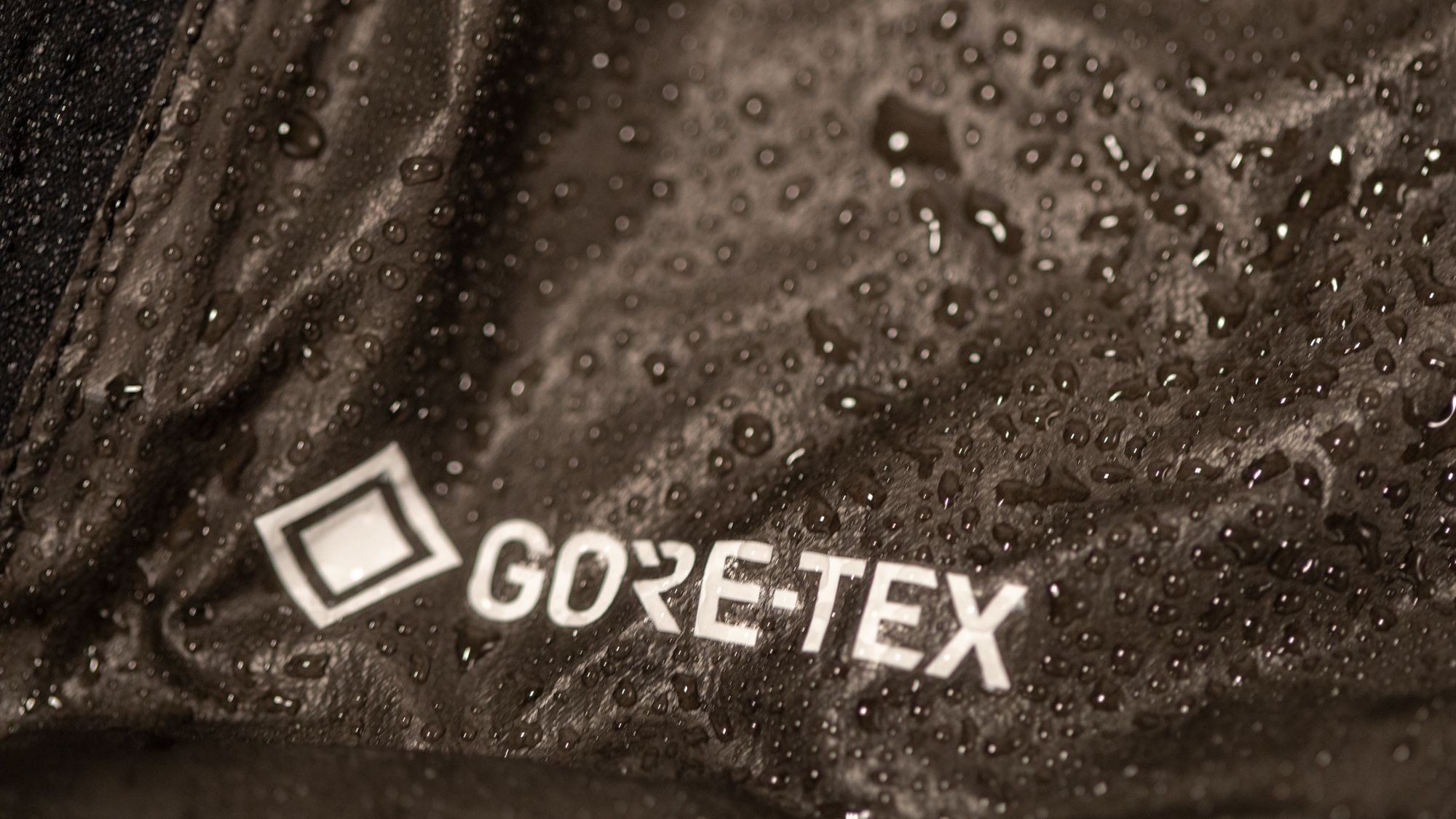
PFC bans are set to change the face of all waterproof garments
The retirement of Gore-Tex Shakedry is just the tip of the iceberg
Cyclingnews
391 points · by goesup12 · 3y ago · 385 comments
This is basically the way most outdoors products have been marketed since the previous century so I’m not sure how much we’re actually talking about here. What I was hoping to see in that article was something more quantitative — does “heavy and doesn't breathe as well” mean something is 20% heavier or 200%, etc.?
Durability is a big factor now though since I’m primarily bike commuting where it’s about daily use & weight is less important.
Shakedry actually delivers on this promise.
FWIW I do endurance cycling in the Seattle area, a.k.a. "The Pacific NorthWET". We tend to stress the hell out of waterproof clothing.
I have questioned the averseness northerners have towards getting wet. Living in Maryland now, so many I've interacted with will just not go outside all day if there is rain. They've been raised by parents who've trained them to wait for the rain to stop, to postpone yardwork, to waste time and space fiddling with umbrellas.
Is it just a comfort thing, or is there a real advantage to waterproof/breathable clothing?
I’ve done 30 mile runs in the pouring rain w/ my ShakeDry jacket and come out “dry” at the end. The material never wets through. The only downside for me is that it does wear “warm” so I mostly wear it in under 45F degree weather — which coincides nicely with Portland’s rainiest weather.
My jacket was around $300 and more than worth every penny.
Not to mention the main downside of getting cancer
Only thing I can think of would be very rainy and very windy weather but those are pretty rare in my area.
Yeah. For cycling, I wear short-sleeved summer jerseys under the Shakedry down into the 30s Fahrenheit. It gets pretty warm and sweaty in the high 40s but beats alternatives. (I'm up in Seattle.)
Not sure it’s revolutionary.
You reduce weight and bulk by eliminating the outer fabric but at the expense of abrasion resistance. Why it works for road cycling but not much else.
My guess is that road cyclists have a tendency to buy new gear on a shockingly frequent basis, so if your jacket only lasts a year it's not really a problem.
Shakedy is however a gamechanger for anyone doing ultra distance and self supported racing. The ability to bike through a rainy night without worrying about Your upper body being wet is nothing short of amazing. And I say that as a proud owner of a not-too-old Goretex Pro mountain jacket and some older membrane jackets before that.
Sounds reminiscent of asbestos.
I'd call attention to the "Upper Midwest": Minnesota, Wisconsin, Michigan, and Illinois. These are all states with severe winters and frequent snowfall, and all ban the use of studded snow tires.
Edit: TIL it's not banned for bicycle/motorcycle
> As it turns out, that press release was a big deal. Expanded polyethylene is the future of the Gore product line.
That sounds reasonable, and by the way, today I learned we were so casually wearing Teflon clothing all the time just to be comfortable in rainy days. That's atomic.
Why is there even a market for potentially harmful cookware? Was it driven by marketing or am I mistaken, and my pans aren’t any good?
Eggs. There's a reason almost all professional chefs, despite knowing more than anyone about how to season metal-based pans, use nonstick pans for eggs. (And sometimes fish.)
Where teflon nonstick is as foolproof as you can get, as long as the coating hasn't worn out things basically won't stick. It also makes cleanup very easy even for things where you don't specifically need nonstick, which is very practical for how a lot of people cook, especially people who don't particularly enjoy cooking. Can't really put carbon steel in the dishwasher either, which again people who enjoy cooking and maintain nice gear look down on, but is just a practical consideration that a lot of people weigh heavily so you can't ignore.
If you're talking about cast iron that's a different thing. A lot of overlap with teflon nonstick but some things aren't comfortable or practical in it so it's not a complete replacement.
I'm not specifically an expert on cookware or anything but I have like 20 years of professional cooking experience so not totally ignorant either.
https://nutritionfacts.org/video/stainless-steel-or-cast-iro...
More generally, ingesting anything your body can’t break down doesn’t end well. It typically builds up and causes cancer. E.g. asbestos, silica lung, stomach cancer from chewing tobacco, etc.
btw I’d recommend cast iron over non-stick for frying pans. Liberally used oils on heat treated pans work the same as nonstick coatings but require much less care. PTFE surfaces are more suitable for stew pans and rice cookers than pans.
But this is true of most plastic fabrics, and plastic fabric is to blame for much of the microplastics in our lifestyles. Just throwing a nylon top into the dryer and you'll see all the lovely little plastic fabric particles making their way into your laundry.
The modern materials can be effective while being very light weight and take up little space. But I think these are much more niche concerns than most people like to acknowledge.
I think the real reason the modern materials are more popular than wool+ is that they are more profitable when marketed, and hence are heavily marketed.
But generally speaking I do think we're going a bit crazy with the exotic materials in travel/active gear. It's probably just not necessary for a lot of people's use cases.
Here in Denmark, "Fjällräven" is a household name to the point that it can be used to refer to their small backpack model.
Perhaps soy wax could be used for this...
It is a bit on the heavy side, though. Not really good for sports/cycling/etc, I wouldn't imagine. Also gets a bit ratty/threadbare wherever it gets repeatedly creased and un-creased.
But it really does work, and is long-lasting. I had previously been buying a new raincoat every few years due to some tiny crack in the waterproof layer that can't be easily fixed.
There's probably no perfect solution here but this definitely isn't a direct replacement, though sure it's practical for a lot of applications.
You get the warmth from something else underneath use the very thin Shakedry shell to keep the rain and wind out. Except that with a breathable fabric you won't get (as) sweaty[1].
If you pair it with arm and leg warmers you can cover a really big temperature range, like you might encounter on a multi-day cycling tour without taking up much space or weight.
Despite the marketing you can still get a bit sweaty with Shakedry if it's hot weather.
Not everyone has the option of “just don’t stop moving”.
As for the PFC-free DWR membranes that apparel makers have been using, I don’t know enough about them but I don’t believe them to be toxic per se.
When it comes to Gore Fabrics, it has actually telegraphed its next move, at least to an extent. Back in September, a press release went out but never got much traction. I remember it coming through my inbox at the time and the title "Introducing New Gore-Tex Products with Innovative Expanded Polyethylene (ePE) Membrane for AW22" didn't exactly catch my eye. I sent an email out to Gorewear and asked about it, but there was nothing to test and it fell off my radar.
As it turns out, that press release was a big deal. Expanded polyethylene is the future of the Gore product line. Like existing products, it's available as a three-layer fabric with a membrane-embedded between an inner and outer face fabric. It still carries the "Guaranteed To Keep You Dry" promise and it's still a microporous breathable design. What's different is that it is free of PFC [ed. Per-fluorinated compounds] and half the weight for footwear and clothing. It's currently unavailable in any cycling product, so for now, it’s a waiting game to see how it performs.
ePE refers to a replacement of the ePTFE membrane (which, in a 3 layer piece, is sandwiched between the liner and outer shell). That’s not what I’m referring to.
What I’m referring to is the DWR coating on the outer shell (that keeps the membrane from “wetting out”). Traditionally it was PFCs but there are non-PFC options now
The ePE membrane sounds cool though, if it works
perfluorocarbons themselves are among the least dangerous materials in the world, but the materials used to make them are very nasty indeed
additionally such levels of resistance to biodegradation are rarely found in combination with either of the previous two qualities
no other known organic compounds, out of the currently 182 million assigned cas numbers, are as thermally stable
we are not talking about the kind of research and development that a company can carry out over a commercially viable timescale; we're talking about fundamental breakthroughs in material engineering
perfluorocarbons were discovered almost a century ago, and nothing equaling or exceeding their properties in these ways has been discovered since
moreover, there are fundamental reasons to suspect that nothing ever will be; fluorine is the most electronegative element that exists or ever will exist, if we restrict ourselves to ordinary atomic matter, and there aren't any plausible room-temperature substitutes for carbon chains in this role either
so it wouldn't be surprising if the company tries to palm off inferior polyethylene substitutes as 'gore-tex' in preference to just declaring defeat, but it's not plausible that they're going to discover an equivalent or better non-perfluorocarbon alternative within the next decade or two
this is science, not magic
some things are just impossible
The perfluro- line of chemicals are quite amazing.. if it werent for them being completely obnoxious and stay in the body like lead.
Edit: Ah adding chlorine destroys the ozon layer, what's why.
And yea, when people put sno-seal or whatever else on their winter boots they typically call it “waterproofing” even if it’s not technically the same meaning of that word as what you would say about a rain jacket
People are ripping on your for the technical difference between 99% waterproof and 100% waterproof. It really doesn't matter in practice since your body is going to sweat _and_ some of that will never, possibly leave the garment you're wearing.
Nikwax is amazing for crossing the threshold of "I'm freezing cold because I keep getting new water on my skin" and "I'm slightly damp, but warm".
It seems very likely that the same structures that give modern high tech materials their unique abilities are the same ones that make them so environmentally unfriendly.
Nature is full of stuff like spider silk, chitin, bone, phosphorescent materials, sponges,etc.
I find it hard to believe that the meat industry throws their bones away instead of selling them back to the fertilizer manufacturers that supply their feed vendors. Only chicken bones thrown in the landfill by consumers are lost and these are hardly a problem compared to the volume of other crap we discard.
Everything "effects the environment" in some way, after all.
If we want there to be humans in the far, far future, more of us need to start going childfree NOW, and encouraging others to do so, AND working on sustainable ways to have a decent standard of living without eviscerating the Earth.
This certainly seems plausible, but on what basis do you find it likely?
Gore continuation: biodegradable:degradeable ::(->) unbiodegradable:undegradeable
I have worn plenty of boots with Gore-Tex reinforced regions and they most definitely break down and become frail and brittle given enough kilometers of trekking.
PVC and PVDC have lower oxygen permeability so keep food better, but both environmental and food safety concerns in food contact applications.
“Why Isn’t Cling Wrap As Good As It Used To Be?”
Threw all non-stick pans away and learnt how to cook with just cast iron or inox pans.
Side note: I wish HN would change Wikipedia links to desktop by default. It seems most people post the mobile version. It is a bit annoying, because when you are on mobile, a desktop version gets switched to mobile by wikipedia; but if you are on desktop, you end up with a mobile version which is not optimized for desktop reading.
All you can do now is get an extension that redirects you. https://addons.mozilla.org/en-US/firefox/addon/redirect-mobi...
Ironically the whole thing should be done with CSS, not with different URLs. That's such an old concept. Shows how outdated Mediawiki is. But make sure you donate to Wikipedia today! lol
But so what? For the purposes of reading an encyclopedia article, it's perfectly readable. The mobile page is better than most desktop web pages out there.
Because they are incredibly useful when it comes to certain kinds of food, especially eggs and fish.
I find all the "self-congratulatory" posts on the topic of non-stick pans, and demonization of people that use them, of the "thou doth protest too much" quality. Tons of renowned chefs, like Jacques Pepin, have spoken of the benefits of non-stick. There are ways to get closer to the quality of non-stick with other techniques (e.g. a meticulously cared for and seasoned cast iron pan), but it takes a lot more work and is still finicky.
I totally get it if you don't want to use a non-stick pan because of health or environmental concerns (I find there isn't much to be concerned about if you're not using too high heat on the pan), but this pretending that non-stick pans aren't super useful is silly. I'd challenge anyone to make a perfectly light and golden French omelette with, say, just butter on a non-nonstick pan (it can obviously be done, it's just way harder).
And my first attempt was just on a cheap pre-seasoned Lodge pan and it worked like a dream. It's not particularly finicky and didn't require meticulous labor — the seasoning is way less physically delicate than nonstick coatings.
Behold my l33t level 10 cookware maintenance skillz:
We got it on sale for like $20, new, but then I accidentally left outside for a few years, which created some rust spots.
I fixed it by hitting it with a stainless steel pot scrubber and dawn for about 120 seconds, then put it in the oven at 350F with some canola oil on it for about an hour.
These days, I scrub it with a nylon brush (no soap) or wipe it out with a paper towel.
I've never been able to do a decent crepe or egg in non stick, due to uneven heating.
shrug
The exception is for eggs, we have a dedicated pan we only use for them, and although I've just read the other comments here about how easy it is to fry an egg in other pans, I find it goes much better in nonstick. And only frying eggs + using a plastic spatula seems to pretty much eliminate any wear on the coating.
Cooking eggs on a stainless pain isn't particularly difficult, you just need to change your technique and use quite a bit more preheating along with more oil or butter than you traditionally would for a non-stick pan. So, it's useful in that sense, but it's not as if we wanted for pan fried eggs before non-stick existed.
(To be clear, I'm really interested in what the issue is. This isn't meant to be asking a question as a form of sarcasm.)
Your stainless steel, high carbon steel, and cast iron pans require using a small amount of oil/butter to have nonstick cooking properties.
Non-stick was popular well before the early 2000s, its popularity is not due to any “war on natural fats” that occurred at that time. (And the early ’00s is late for that, anyway.)
Non-stick is (and has been for a long time) most popular for particular forms of cooking that use natural fats, whereas particular steel designs (sometimes referred to as “waterless” because of their properties in other applications) were specifically promoted (including in the early 2000s, though they were around before and remain on the market now) as eliminating the need to use fats as one would with conventional and non-stick cookware.
Saturated fats were and remain to be generally thought unhealthy (if we say things like 'all' or 'always', we're almost certainly spreading misinformation; the world doesn't work that way). Other fats (polyunsaturates and monounsaturates) are believed to be healthy or neutral. There is ongoing uncertainty and debate; the degrees and nuances change; we don't get sure, hyperbolic answers.
https://www.heart.org/en/healthy-living/healthy-eating/eat-s...
https://www.nytimes.com/2022/09/29/well/fda-healthy-food.htm...
https://www.nytimes.com/2018/01/29/well/good-fats-bad-fats.h...
I'm not a grammar and spelling critic, but I'm going to be a style critic here (sorry to the parent; lots of people write this way): Hyperbole commonly leads to misinformation. 'War', 'all fat', 'nutritionists declared', 'bad' etc. divert us to an emotional, adversarial contest with a strawperson enemy, rather than into the pursuit of truth, whose object is always nuanced and whose pursuit is difficult enough as it is.
Canola oil looks like a superfood when you swap butter for it in the literature.
Scotch pancakes is still the one thing I can't cook without non-stick.
If anybody has any tips that doesn't include half a kilo of lard, then I am very interested.
A carbon steel wok is my favourite cooking implement of all.
Non-stick is not for people who know how to cook.
I grew up in the area during the worst of the dumping. It destroyed basically all of my baby teeth and created cavities in a couple of adult teeth that no dentist has ever seen before. None of us at the time understood why it was happening. I had so many teeth basically just crumble that I had steel caps on one with a spacer where another was missing. Both my parents assumed it was something I was doing/poor care when I was at the other one's house. Turns out it was the goddamn water supply.
My stepdad actually worked at the plant long enough to retire from there too. I think he had mesothelioma from asbestos, or god knows what from the plant.
A lot of people in the area were heavily contaminated: https://www.uc.edu/news/articles/legacy/healthnews/2017/05/h...
From Our Place’s FAQ [1]:
> our Always Pan uses a sol-gel non-stick coating that is made primarily from silicon dioxide which is known in the cookware industry as "ceramic non-stick." It's tested not only to the standards of a ceramic coating (meaning no heavy metals are able to pass through the coating) but also tested to the standards of a polymeric coating (which means that absolutely nothing can pass through the coating).
They seem to be refuting that things can pass through the coating, but isn’t the concern more around the coating itself leaching into the food? And the claims around impermeability of the coating go out the window once it wears down too, right?
I’d love to believe that these pans are safe. But is it just wishful thinking until more extensive testing has been done?
There is an older technology that involves coating cast iron with actual ceramic. It is non-stick "enough", lasts generations and is safe. Example (high end) manufacturer:
But "made primarily from" gives me pause since they don't say what the other ingredients are.
probably neither any kind of fiction, nor any kind of movies, but least of all fictional movies, are a good source for information about scientific facts, toxicology, or risk assessment
movies lie to you on purpose to manipulate your emotions
there are lots of reliable information sources about pollution risks, like mmwr, the cochrane collaboration, msds, toxicology textbooks, wikipedia, epa assessments, and so on
there is no need to make yourself dumber by making life decisions contingent on beliefs you acquired from movies
I have some items from Fjallraven which is made from a cotton/pollyester blend and I find it to be amazingly breathable and water resistant (when waxed).
The thing is, I own so much waterproof gear but I hardly do a great amount of anything in the actual rain, even if hiking or camping, I usually avoid wet weather, I suspect a log of people do?
I spend a lot of time in the snow but the was cotton works fine for snow.
It's heavier than other options, so it's not going to be popular for a lot of people in the outdoors.
It was used for immersion suits in the war!
It was a long time favourite with hunters and special forces due to it not rustling. It was also very durable.
If they didn’t degrade quickly, they wouldn’t be such a threat to the environment.
Edit: Sorry, I didn’t mean PTFE above but PFC.
At some point we're going to just move away from WPB rain gear and go back to waterproof but nonbreathable gear (e.g., silnylon and silpoly) and rely on mechanical ventilation (pit zips, 2 way front zips, wrist and waist cinches) for breathability.
Regarding the fit, though, their sizing more generally might also have deliberately changed. I’d expect a “large” to be bigger in some places, for example, than it was twenty or thirty years ago, for the obvious reason.
I doubt that recycled materials play a role.
Sadly i gave some away that were of the good vintage when i moved to a hot climate. i wish i'd kept them. (and i'm sick of the hot climate...miss snow)
Underneath I usually wear a wool singley and wool long sleeve shirt.
This keeps me very warm and comfortable all day.
You can’t make computer chips without pfcs.
Or like ducks use preen oil, something closer to that.
For the whole letter?
> reader
Only if the reader completely unfamiliar with Roman numbering system. I didn't even thought about it until I saw your comment. Get off my lawn, son?
The last time I wore a heavy wool greatcoat in solid rain while walking, it stayed dry for a while, but got much heavier as it took up water, then started soaking through on the shoulders after about an hour. Admittedly it is antique and I'm guessing it has lost its original waterproofing (lanolin?).
Oiled fabrics like a traditional stockman's jacket can last a working day, but they weight a lot relatively, they need occasional re-waterproofing if used, and are not particularly cheap: https://drizabone.com.au/search?q=Oilskin
One could guess that they meant “synthetic chemical”, as if that was somehow meaningfully different than a “natural chemical”, but it’s not and it’s just as wrong.
(I also have a couple of pairs of brandless rubber galoshes that would be unaffected. They're waterproof but I actually wear/wore (when I was cycle-commuting) them year-round - more to protect leather soles from the pedals than uppers from the rain.)
PDMS rubber, polypropylene, polyethylene, and PTFE all have very high water contact angles (a measure of the strength of interaction of water and the surface) and low water uptake [1]. I work with a stretched polypropylene film (Celgard — a material that is often used as a support/spacer material in Li-ion batteries) and it’s extremely hydrophobic. I used a piece of this film to build a bubble trap ([2]), for example (bubble traps typically use PTFE membranes…). It is not optimized for water resistance, so it does wet eventually, but it’s pretty good for “not trying”. Surfaces coated with PDMS (or glass coated with short PDMS chains — i.e., silanized glass [3]) are extremely hydrophobic.
The only time I personally use PTFE (or PFA, MFA, FEP, or ETFE) is when I need materials to be resistant (including both resistance to chemical degradation as well as swelling) to strong organic solvents (like NMP, THF, etc.) or strong acids and bases (like piranha, aqua regia, or a nitrating solution). These conditions are unlikely to be encountered while cycling.
This all said, I’m not an expert on the design of Gor-Tex type materials. However, I assume it is highly related to the pore structure of the materials to prevent liquid water intrusion (the same as for membranes designed for membrane distillation). Given the similar hydrophobicity of these materials, it seems like it should be possible to produce similar results with PP, PE, etc. And this is all before introducing the ability of nanomaterials and nanopatterning (perhaps transferred with imprint lithography [4]) to produce metastable ultrahydrophobicity [5] on the surface of materials.
[0] https://www.sungodtech.com/how-much-do-you-know-about-ptfe-w..., https://outdoorguru.com/how-to-en/how-does-waterproof-and-br... [1] https://www.accudynetest.com/polytable_03.html, https://omnexus.specialchem.com/polymer-properties/propertie... [2] https://static.wixstatic.com/media/ec0ae9_aacc723ea77d46619d... [3] https://en.wikipedia.org/wiki/Silanization [4] https://pubs.acs.org/doi/10.1021/acsomega.8b03138 [5] https://en.wikipedia.org/wiki/Wetting#Cassie–Baxter_model
They're good jackets in my experience--truly waterproof and breathable like goretex, and very inexpensive. They are very very fragile though and easily rip or tear open from any sharp objects, like getting poked with a branch. As I understand it's basically like tyvek house wrap material but made into a more flexible material for clothes. Goretex stuff is more durable in my experience.
Stop using DWR. Buy frogtoggs or Columbia outdry and leave this stuff behind.
Outdry is lighter stronger, doesn't wear off after three outings, and the material breathes better than a wetted out goretex jacket ever will.
Unless you're in snow, goretex is next to useless.
Can you come up with a single incentive that would make the industry invent non-toxic alternatives faster than a ban on the toxic substances would?
“In November 2008, National Air Transportation Association president Jim Coyne indicated that the environmental impact of aviation is expected to be a big issue over the next few years and will result in the phasing out of 100LL because of its lead content.[45]
By May 2012, the US Federal Aviation Administration (FAA Unleaded Avgas Transition rulemaking committee) had put together a plan in conjunction with industry to replace leaded avgas with an unleaded alternative within 11 years.”
"Introducing New Gore-Tex Products with Innovative Expanded Polyethylene (ePE) Membrane for AW22"
Anyways the other stuff is extremely harmful to the planet. There are other (less effective) waterproof materials in the meantime.
Considering they are called forever chemicals, I suspect the results will favor the ban.
Someone's running hobby is not as important as clean water. Neither is your omelette. I'm sure there are professional and medical uses for those clothes, but we can't just spew crap that never goes away into people who don't get a choice not to consume it.
Also didn't they have unleaded avgas for years? I thought the leaded gas was just to keep some really ancient engines running? Probably wouldn't have been that expensive to subsidize replacements if so.