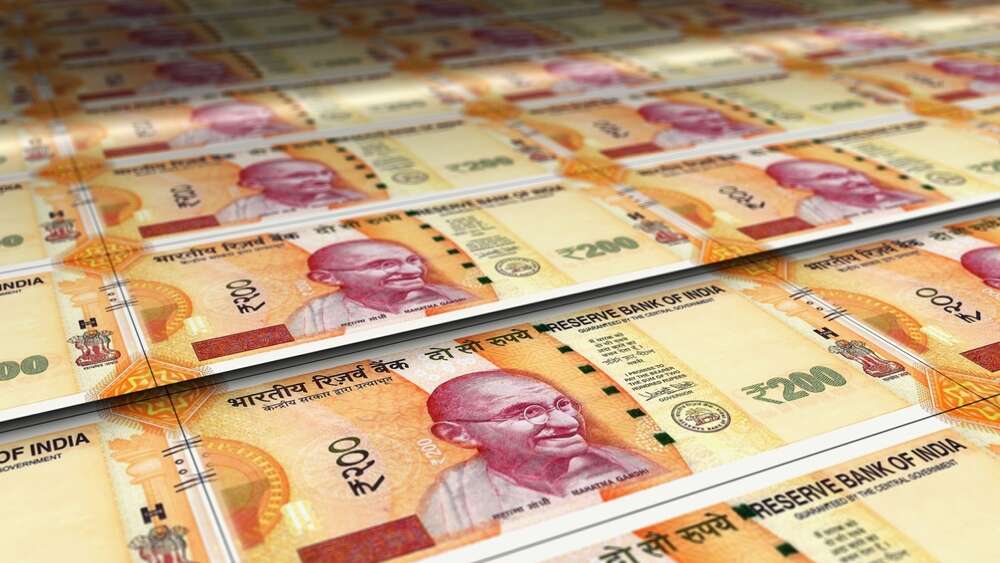
Nobody's using CBDCs. India's piloting one anyway. - Tech Monitor
The slow uptake of CBDCs in Africa and across the Caribbean does not bode well for India’s new digital currency.
Tech Monitor
51 points · by TT482 · 3y ago · 158 comments
This is a very important topic as it has the potential to reshape banking/economics on the timescale of decades. For a good down-to-earth understanding of "layer 1" -vs- "layer 2" money, refer the following post [2]. India's digital payments ecosystem (the "UPI") has been an unparallelled success at the second layer. Beyond that, there are many motivations that make it potentially interesting to consider digital layer 1 money -- starting with the costs of managing paper money, reducing settlement risk, potentially smoothing cross-border payments, the possibility of setting negative interest rates, etc. There are definitely pros and cons, but I'm yet to find a comprehensive and well thought-out analysis (and would appreciate any links!), especially in the Indian context.
[1]: RBI Concept Note on CBDC: https://rbidocs.rbi.org.in/rdocs/PublicationReport/Pdfs/CONC...
[2]: https://brettscott.substack.com/p/casino-chip-cashless-socie...
There was a good discussion here on CBDC sometime back -
I appreciate the privacy concerns, but for anyone reading, the tradeoffs have a completely different meaning in the Indian context.
1. A fraction of the Indian populace is so poor that the cost of operating a cash economy (printing currency, transporting it securely, stocking and operating ATMS and bank branches) might prove forbiddingly expensive to service rural areas -- leading to financial exclusion. So, for them, digital infrastructure (which reduces cost of transacting) is a matter of life support, rather than the luxury that it is in the developed world (where everyone has bank accounts, access to cheap credit, and can swipe plastic cards everywhere).
2. While demonetization might have been a horrible fiasco, India's digital payments system (UPI) has been a phenomenal success -- there is substantial evidence on the ground to support that. (The former was arguably used to drive adoption for the latter, but whatever.) The state derives substantial trust from its citizens for this and other developmental and sociopolitical factors.
3. To generalize from those two nuggets -- the Indian populace (with its distinct history and cultural context) has a different relation with the Indian state -vs- banks -vs- corporations, compared to the situation in other countries. Therefore, the factors influencing trust/distrust, the developmental needs & aspirations, the politics, etc are substantially different. It makes very little sense to try and understand Indian concerns and preferences with a perspective honed elsewhere. Eg: In a system where you might trust the state more than possibly corrupt intermediaries (for a complicated array of reasons), the trust calculus is completely inverted. I'm not saying this is necessarily the case, or that nothing generalizes across countries, but the point is that the ground realities are completely different, and they influence the tradeoffs one is willing to put up with.
4. On the specific theme of privacy: the RBI concept note devotes section 7.7 to it. I wish it were more thorough, maybe it's acceptable at this preliminary stage, and can be improved through iteration... but that's an example of the kind of thoughtful commentary that would be very useful -- an analysis of specific shortcomings and/or potential improvements.
But please, let’s not credit demonetization with any of it. To the extent demonetization helped, it was an unplanned accident. And it was a result of the fact that the previous administration had begun the Aadhar project (which to its credit the current govt continued and even took credit for).
Demonetization was nothing more than a massive destruction of wealth and growth, done for only one reason. To starve the political opposition of funds over the next few elections.
So poor, but well-off for paying for mobile phones/laptops and internet, and educated enough to understand the app interface/language?
CBDC (along with its less august bitcoin sibling) are ultimately questions rather than answers: what are the fundamental building blocks of trust in society (whether analog or digital), how invariant are they under cultural transformations and what might be optimal or at least stable designs (that do no depend on a perpetual pool of "low information" crowds).
govt / RBI might be able to give a boost to the CBDC by giving some Sec80c benefits. historically that's been a good channel to 'nudge' people into putting money where the govt wants towards.
Western (and even a lot of Indian) media likes to paint a lot of Modi’s support based on his religious discrimination, but in reality that’s only a tiny fraction of the support he enjoys. Most of his support comes from the fact that, for example, even as demonetization has probably led to India’s GDP being far smaller than it would have been otherwise, many poor people are still better off because funds and services that would in the past have largely been eaten up by political and administrative intermediaries actually make it to the people.
And a large part of that is the result of some of the problematic measures like the central identification numbers and the digitization of money.
Besides that: why should I put my effort at the management of people I do not trust so that they do what they deem appropriate without paying for their mistakes? Am I his slave or something?
For example, with the creation of a national identification number (which, thanks to the initial poor security measures has already been hacked), government welfare schemes which involved the distribution of money to people now actually results in the poor benefitting from them, since the money gets deposited in their bank accounts directly. In the past over 80-90% of the money would be stolen by intermediaries.
This is entirely the result of the creation of a massive identity database which by any angle is a security nightmare.
Further, the digitization of money has led to tremendous benefits to the population. Not having to carry around cash greatly reduces the risks of loss or theft. A lot of abuse faced by vendors in the unofficial sector (which is the bulk of the economy) has also reduced because a customer promising to pay cash later because they wouldn’t have it on them, and then either “forgetting” to do so, or delaying it and effectively getting an interest free loan from people who were least able to afford it, is something that has reduced dramatically because the vendor can demand the customer pay them directly using any of the digital means whose receipt they will get confirmation of instantly.
Digital currency has also led to a reduction in fraud and claims of fraud. If a vendor sends a product to a customer with a delivery person, for example, in the past they’d bring cash. This opened up a lot of opportunity for abuse against the largely powerless delivery person where either the customer would not pay enough, and the vendor would blame the delivery person for stealing the money, etc. But now, that simply doesn’t come into play. The customer pays the vendor directly and the vendor sends the delivery person a confirmation and they hand over the product to the customer.
A whole class of exploitation tactics have basically been eliminated.
Generally you are either directly or indirectly their elector so they are in fact accountable to you. But yeah, that's kind of how democracy works.
I'm personally only supportive of privacy-preserving CBDCs like the Rohan Grey e-cash proposal.
https://www.bis.org/about/bisih/topics/cbdc/mcbdc_bridge.htm
The accounts that members banks have at the Federal Reserve are legally equivalent to paper money. The banks can exchange part of that account balance for paper money, or exchange paper money for that account balance at any time. To settle debts between banks they almost never cart truckloads of cash between each other, but simply ask the federal reserve banks to adjust their balances accordingly.
This looks a LOT like the layer 2 money that banks create, but it is layer 1.
If RBI works similarly, then it is not really apparent why a wholesale CBDC would have substantial value. Interbank settlement would already occur via balance transfers at the central bank. It is not even remotely clear to me how an "account-based" wholesale CBDC would differ from the status quo at all. The main thing they mention is allowing more conditions to be attached to transactions allowing "programming" the central bank money (presumably in ways similar to "smart contracts"). There is no mention of why that could not simply be done by enhancing the existing systems, but they also point out that it could be a new tech stack from ground up, which suggests that they feel the existing tech stack has flaws.
Retail CBDC would be potentially more interesting, but also far more controversial. Nobody really cares about a central bank keeping a close eye on how banks send money to each other, but a retail CBDC is effectively an attempt to replace cash. There are a lot of issues with that, like people want privacy in cash transactions, but there is no way the bank wants create a new means of money laundering or similar. The fact that many plans for retail CBDCs seem to want desperately to adopt as many crypto currency technologies as possible causes lot of worry. Thinks like losing private keys meaning loss of money (and if intermediaries hold keys instead, you better hope they have really good information security.)
Hence the reason why the RBI will eventually use UPI to piloting their CBDC on top of it anyway and force all of India to use it.
That should scare us all.
Why?
Oh dear.
[0] https://reclaimthenet.org/digital-euro-spending-saving-limit...
But my understanding (correct me if wrong) is that the total money running in the country at any momemnt is never more than what is printed.
With digital money the central bank can issue it without the cost to print. As per (1) it costs around Rs 10 to Rs 17 to print Rs 100 note and have to be reprinted once they get damaged.
(1) https://www.hindustantimes.com/business/will-digital-currenc...
For example, USA has ~$2T of physical cash printed (https://www.uscurrency.gov/life-cycle/data/circulation) ; the M1 money supply (effective cash in circulation, including account balances, etc) is ~$20T - https://tradingeconomics.com/united-states/money-supply-m1 .
It's all elastic, and central banks have sophisticated mechanisms to tighten or loosen that elastic band. The entire financial industry exists to think of novel ways to create leverage, stitching together assets and promises into towering edifices of economic power... all founded on the idea/hope/prayer that nobody will call in all the bets at once.
Honestly, you might not want to look behind the curtain on this one. It's one of those existential risks you can't effect as a single human. It's a collective suspension of disbelief that allows the modern world to function. If/when the correction happens... it will not be fun to live through.
If you're a glutton for punishment, here's some reading:
"Chapter 2 studies leverage in the nonfinancial private sector before and during the COVID-19 crisis, pointing out that policymakers face a trade-off between boosting growth in the short term by facilitating an easing of financial conditions and containing future downside risks. This trade-off may be amplified by the existing high and rapidly building leverage, increasing downside risks to future growth. " https://www.imf.org/en/Publications/GFSR
https://research.macrosynergy.com/the-global-leverage-proble...
https://www.imf.org/en/Blogs/Articles/2021/03/29/confronting...
https://en.wikipedia.org/wiki/Fractional-reserve_banking
https://en.wikipedia.org/wiki/Money_multiplier
That's important, because central banks are considering negative interest rate policy, which would mean your bank account would drop by a percentage each month. This would drive people to spend or invest their money, supporting consumption and inflating asset prices.
The reason they can't do that right now is because many people would withdraw their funds and hold cash. That option needs to be removed for negative interest rate policy to be broadly implemented.
(There are a few places, like Europe, where interest rates already went negative, but only slightly and it only applied to institutions like banks).
Imagine the horror of having to pay a parking fee instead. Truly horrifying. How are we supposed to pretend that it is ours anymore and extort payments from other people by blocking all the free parking lots?
>This would drive people to spend or invest their money, supporting consumption and inflating asset prices.
You know, in neo classical economics the idea of not spending your money on consumption or investment or saving your money isn't even considered to be something that even happens (by that I mean in neo classics all saving happens at the bank anyway) So if you are against that then you leave central banks no choice other than to create exponentially growing quantities of money and use inflation to devalue all assets instead of only shrinking the type of balance you have the least of. The poor store most of their value in their body and need to trade their body for money that they spend quickly, only the rich who can block their withheld money from being available and thereby extort interest payments from the rest of the economy.
It is like you are arguing that the current system of exponential debt is somehow the height of morality.
The problem, of course, is that when the money is just a number on a screen, it's very difficult to ensure that the humans running the database don't magically decide they have a bigger number than they aught to. This is an unsolved problem.
> On 8 November 2016, the Government of India announced the demonetisation of all ₹500 and ₹1,000 banknotes
> Several people were reported to have died from standing in queues for hours to exchange their demonetised banknotes.[180][181][182][183][184][185] Deaths were also attributed to lack of medical help due to refusal of demonetised banknotes by hospitals.[186][187][188]
> The exchange of banknotes was stopped completely on 25 November, although the government had previously stated that the volume of exchange would be increased after that date.
> The push for digital payments was one of the stated intentions of demonetisation.
So if someone missed this 17 days or has not managed to exchange their funds - then they would lost all their cash they were holding using demonetized banknotes.
this sort of shit is what makes a gov't a low trust gov't.
It exacerbates the informal economy - people would not want to pay taxes to fund such a govt, because they don't see that the gov't is running with their interest in mind (despite india being a so called democracy).
It was a poorly thought-out policy.
that reminds me about another gem:
> The use of demonetised banknotes was allowed for the payment of municipal and local civic body taxes, leading to a jump in their revenue collections.
It was robbing people. Poorly thought out policy is an expression for people with good intentions, I just don't believe in that when it comes to the Indian government.
The first deadline of 17 days was to get rid of the demonetised notes by depositing them with banks.
The logistics of the demonetisation was a total clusterfuck. The banking infrastructure was kept in the dark so they were utterly unprepared to handle the rush. They were provided with zero information and SOPs so they were also totally clueless to handle different situations. To make matters worse the new weren't readily available. So the withdrawals were rationed. 500 and 1000 notes formed the bulk of notes in supply, something like 90% of notes in circulation. And this was at a time when digital payments weren't adopted by the masses. Most of the daily wage earners didn't even have a bank account. India is a large country with lots of remote, hard to access places. People were still clinging on to these old currency notes, as their primary savings, to discover that they were useless 2-3 years later. All of these lead to a cascading failures. Imagine removing 90% of circulating blood from a large animal. That's exactly what happened to Indian economy.
I'm sure there's like a dozen PhDs in there for humanities, economics students in there.
Here's a good (but hard to find) video on the topic: https://www.youtube.com/watch?v=qELSFa5NtYc
The speaker has researched on this topic for decades.
Yes. Unless this Wikipedia page is horrifyingly misleading.
But this alone would ensure that I would keep all my funds into something more trustworthy. Even freaking Bitcoin starts to be a sane solution, to say nothing about dollars/euro/gold.
After 2 years it was not legal to pay with them but you could still exchange them in national bank...
...for next 14 years
It's just WTF.
This particular demonitisation was done as a shock move to ostensibly catch corruption, black money etc.
It was lauded and welcome when it was announced, including by yours truly.
It was quickly seen as a poor execution by most except the ardent supporters (which doesn't include me)
I am sure most in the govt would secretly agree it was a bad move.
> India’s central bank has estimated that 99 per cent of the high denomination banknotes cancelled last year were deposited or exchanged for new currency, dashing government hopes that its contentious demonetisation exercise would wipe out huge amounts of “black money" ... complex money-laundering networks sprang up in the wake of the demonetisation to help wealthy Indians deposit huge volumes of previously undeclared currency without exposing themselves to tax authorities. Such people allegedly sold the old notes, at a discount, to brokers who then dispatched low-income Indians to deposit or exchange them at banks.
however, if you love the freedom of holding cash the way you want, then this was definitely not a good time.
Wow.
They should have gone back to the drawing board after seeing their announcement lop off a huge chunk of their equity market capitalization.
Surprise! Your bank and credit card company can do that now.
As being proposed in the USA, a CBDC will only affect settlement transactions between banks. Everything else will stay exactly the way it is now except transactions will be much faster with settlements taking place in real time, 24/7/365 instead of only during "bankers hours".
You'll be able to split the dinner check with a friend by putting money in his account instantly at the dinner table.
And this is all much closer than most people realize. It is in trials now and expected to go live in mid-2023.
We literally have just that. It is a lie that digital money is required for that
This is just side effect of them putting new system up just for that that allows that.
There would be nothing stopping them to do that for the "old" money. Hell, there are already systems for it, a bunch of banks in my country have it... of course they want extra for it (gotta pay for itself)
https://www.pymnts.com/cryptocurrency/2022/cbdc-weekly-feds-...
FedNow is the solution the Federal Reserve is proposing for a "digital dollar". It will only be used for inter-bank settlements.
You can also get mugged in the parking lot by the waiter or accomplices once he sees your wad of cash. Carrying cash is risky and cumbersome. This is why banks exist.
Those who don't want to carry cash will now have the new found ability to pay anyone instantly without it.
I was happy to see at least some footnotes from a recent pilot CDBC mentioning this. https://www.riksbank.se/globalassets/media/rapporter/e-krona...
It's bascically exactly how the bank+card+cash system works. When I purchase a car with a bank transfer, it's easily traceable. When I purchase a guitar with my card, it's traceable. But if I really want to buy something untracably I go to an ATM and get cash. Similarly in any CDBC that citizens shouldn't be protesting loudly about, you can simply grab cash-like tokens. They might have an amount cap, but so does cash. You could never really go and fetch an unlimited amount of cash without having authorities ask questions due to KYC requirements.
Few reasons to implement this stuff unless that's your endgame.
Sure, with paper money you could just take it out of the bank and pay directly but you can do stuff to that too like making it more expensive to take out then track people who just take out big sums of money
Like, sure, all electronic makes it easier, but it is by no means impossible or even hard now. Again, only thing stopping it is the law, if that is fucked doesn't matter how money are transferred
I've adopted it too when merchants strongly encouraged it during the lock downs, and it's just so easy, I've kept it. I do spend more, but I don't know if there's a causal relationship -- would handing over bank notes make me more aware of what and how much I'm buying?
For Europe I believe VISA+MC, SEPA and maybe one or two domestic solutions handle most of transactions.
Payment processors being a near monopoly, this has a disproportionate effect.
It only becomes a problem if it's mandated. If you can only get paid/pay digitally, it becomes incredibly easy to track you.
There are some people who have a legitimate, non-criminal reason to hide their work.
Elsewhere, when a business touts itself as cashless, I consider if they're discouraging armed robbery and/or hostile to the unbanked.
The West will think they understand them. They will assume they understand them. They will be sure they understand them. But they will never understand them.
Hence the implication in the headline (well-written headline, by the way), that if nobody else uses it, India is wasting its time.
The same people said about UPI (Modi's digital payments push):
- hardly anyone has cellphones in India
- it'll take years to train India's illiterate masses how to use an app on a phone
India now has 850 million cellphone users. And the government is creating incentives to put one in every hand.
UPI now conducts more digital payments than China or USA (I've heard that it handles more than both combined, but I don't want to make that claim without a reference, and am feeling too lazy to look for one right now).
It enrages me how quickly the opposition memory holed its nonsense criticism of UPI when it was first launched. And now they are doing the same thing to erupee
It is the end of privacy and the beginning of telling you literally what you will be able to do or not with your own earnings abd for how long, if they decide it is appropriate. This is more of treating people like animals than individuals IMHO.
Then I remembered the RBI had made a ruckus about it a few months ago.
I doubt anyone cares since almost every one uses their mobile phone and UPI for money transfers.
It's customary to expand shortcut in full if it there is chance it might be unknown to the reader and this isn't even a financial blog but a tech one.
People with brains can infer meaning from the context.
If they can't, then they aren't smart enough to have around.
> From China to the UAE, the Bahamas to Nigeria, countries around the world have started trialling the use of central bank digital currencies as a way to translate their national fiat currencies into a means of digital exchange.
CBDC = Central Bank Digital Currency.
https://bfsi.economictimes.indiatimes.com/news/policy/digita...
The CBDC being a zero interest instrument, only a scare created about lots of counterfeit paper currency could increase adoption, IMO (just like a fake bogeyman about “black money” was told when declaring more than 80% of the currency as invalid in 2016. [1]
Cash is simple. Cash is easy. Cash doesn’t need smartphones. Did you know that less than half (or half) the population in India has a smartphone? At least one major “too big to fail” bank [2] is distributing an Android app for the CBDC on its website as an APK file. [2]
[1]: https://en.wikipedia.org/wiki/2016_Indian_banknote_demonetis...
[2]: https://www.icicibank.com/personal-banking/online-services/f...
> For 11 years now, Chaitanya has been working with retired Colonel Mathew Thomas to nullify the UIDAI’s contracts with foreign companies allowing access to Aadhaar data ... “Our major concern is: Did the citizens of India give express right to the government in the year 2010 to hand over their data to US. foreign companies? For sure, I did not give any consent,” said Chaitanya. Aadhaar data consists of citizens’ bank accounts, ration cards, addresses, mobile numbers etc.
> ... the High Court has advised Thomas to approach the Supreme Court again ... the Supreme Court in the Aadhaar judgment had clarified that “private entities shouldn’t have access to Aadhaar data.” The Supreme Court also said that before accessing biometric data even by the government, judicial authorisation must be a requirement.
CBDC in India will probably be used to curb hawala, black money and underground economy.
And if the "popularity" of physical money does not diminish, they will get rid of physical money. But physical money is still popular for people in many cases.
CBDCs need to be resisted with everything we have. They are not about convience, they are about control "on the fact that it provides another opportunity for the state to peer into private individual transactions."
India is hostile to crypto because its cannot be (as easily) controlled.
I am no fan of crypto either.
  - value pegged to some existing currency
  - unforgeable and easily verifiable, preferably offline
  - non-traceable, just like coins or banknotes without a serial number
- usable offline and without third parties, just like handing over physical moneyOnce you reach a certain level of density, be that most of India or east-coast American cities, you have to rely on public services to facilitate most things in your life. The Govt. already has indirect financial veto power on you. This won't change anything the Govt. is already able to do everything that you claim CBDCs will facilitate.
Note that 90+% of India operates in a permanent survival mindset. All positives associated with libertarianism are much higher on Maslow's pyramid. These people are on the bottom rung, so the rights citizens would have to forfeit as part of CBDCs feel trivial.
Second, India is a low trust society. So, anything that increases tracking, surveillance and transparency is welcome. Trustless systems are welcome. Cash is easy (to launder) and cash is simple (to hide). The elimination of cash adds significant barriers to the most important facilitator of the low trust economy : cash.
The entire point of negative interest rates is to get people to stop holding 70% of their balances at the bank in checking accounts. Because checking accounts cannot be used for loans, the bank creates new money which lands on another checking account which repeats endlessly like some sort of out of control recursive function resulting in a perpetual increase in the M1 money supply.
The current structure of central bank networks required governments to offer an incentive for banks to join it
In the US thats a 6% dividend every year for the past 100 years
The same tactic will work again