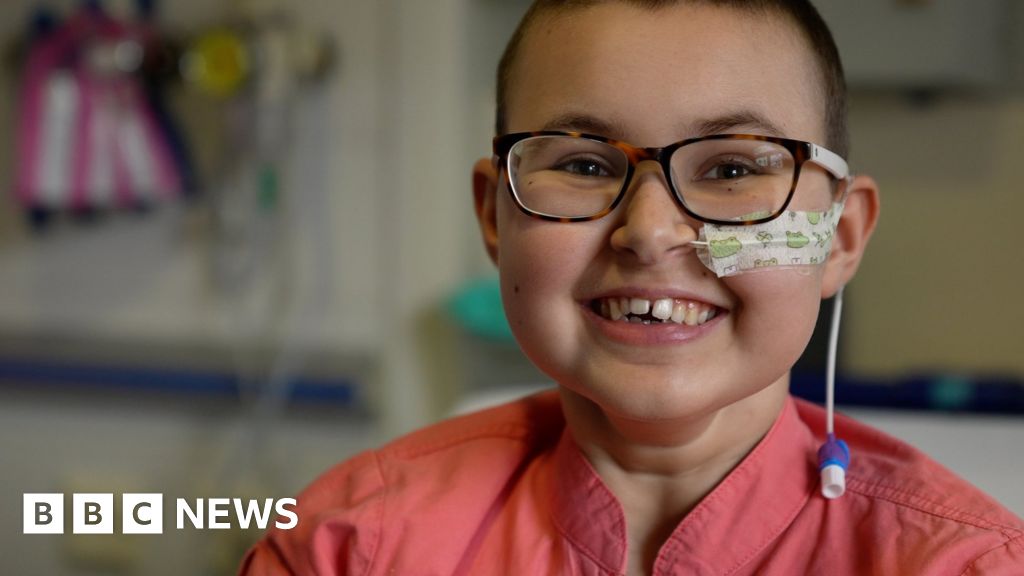
Base editing: Revolutionary therapy clears girl's incurable cancer
New way of altering DNA is used to engineer an "exciting", experimental therapy for a 13-year-old girl.
bbc.com
722 points · by sonabinu · 3y ago · 211 comments
I'm squeamish about genetic research, but this looks really good to me. I hope she recovers fully and there are no further complications, though I imagine it's too early to guess what her prognosis might be.
So there are already trials of base editing under way in sickle-cell disease, as well as high cholesterol that runs in families and the blood disorder beta-thalassemia.
That's a big deal for people with those genetic disorders.
And I'm sad about millions upon millions of mostly well-meaning people, who died of ultimately preventable causes - if only we could push the research from the lab to clinic faster.
Everybody is prone to ageing, and very soon it will be our turn.
It’s an amazing power for good and bad.
Why can't our legal system deter the obvious high-level publicly visible perpetrators of the recent "gain-of-function" fiasco is really some food for thought.
Asking for a friend.
Is this technique broadly applicable? Or limited to very specific cases
From the article:
In Alyssa's therapy, each of the base edits involved breaking a section of genetic code so it no longer worked. But there are more nuanced applications where instead of switching an instruction off you can fix a defective one. Sickle-cell anaemia, for example, is caused by just one base change that could be corrected.
And I already quoted (in my previous comment) the next paragraph that indicates they are already doing trials. This is potentially a big deal and they seem to be pursuing it in a very reasonable and conservative fashion, which is always something that concerns me with this type thing. There's a lot of potential for terrible and horrifying abuse and that is not what I am seeing described here.
I remember looking into the state of the art around in utero and neonatal health when we got pregnant. I was astonished at how limited the knowledge is. I quickly realized the big gaps are just because it’s too risky to study. You can’t morally experiment on pregnant people and infants.
More broadly, the technique of precisely editing DNA of select cells to perform specific engineered tasks is very broadly applicable. But that is a technique for developing treatments, not a treatment itself.
We should be moving away from chemotherapy. It really is poison (cytotoxin) that has "treatment" of cancer as a side effect, just because it will readily kill cancer cells more than healthy cells whilst also taking a lot of the healthy cells with it. But, it's the "established" standard of care, which many doctors built their careers on, so I suppose it won't go away soon.
How does this overturning occur? Do care providers agitate for change? Or is it typically a response to headstrong patients and families?
I knew a guy with cancer that had this done. He survived the process, but unfortunately the cells they restored him with were not cancer free like they thought. He died anyway.
I think increasing the survival rate for these things could be very useful.
Then after that a bone marrow transplant was done to restore it.
That is why this kind of therapy is only used when the patient faces death anyway.
Can you elaborate on what makes you squeamish about research?
There is a genetic disorder that runs in my family. I used to be on a bunch of email lists for the condition. People with the condition routinely volunteer for drug studies in a desperate attempt to get help that current medical science can't provide them and/or to get free care for a condition that's very medically expensive.
People with serious medical conditions are all too often treated like lab rats whose lives don't really matter. Treating people like me humanely isn't a real high priority. Quality of life is not much part of the discussion. Keeping us alive a little longer is the only metric that seems to count and horrifying things get done in the name of it.
A big part of progress is fighting and defeating the natural.
That said, not all genetic manipulation will end well.
Should we base ultimately coercive society-wide regulatory framework on mere "squeamishness", appropriately rationalized, or should we instead embrace a non-discriminatory, laissez-faire approach in this domain?
You could just as easily make the argument that there is probably no body of data more stable than existing genomes.
Laws can be written to limit its use if we find it morally objectionable
If gene tech can make future generations healthier and smarter with informed choice by the parents, those future generations will look back in horror at the barbaric pro death & disease lobby of the 2020s.
Yes, I for one can't imagine why editing the genes of humans would cause alarm. After all, who wouldn't want to have children that are smarter, more docile, and healthier? Or, for other people's children, who have qualities that make you uncomfortable and can't be edited out, like dark skin or homosexuality, you have the option to edit their reproductive ability so that such qualities can come to an end humanely, without violence.
In the same way, I can't understand are those people against longevity research. Who wants to die? Not me, and certainly not those in power. You know, the people in power earned their positions, they are good at it, and mortality just means someone new and inexperienced will fumble around at the job. For continuity and safety, immortal leaders will do a better job and keep us safe. I don't see why anyone would consider this a bad thing.
And probably other similar diseases.
https://www.nih.gov/news-events/nih-research-matters/study-s...
E/B virus is suspect in Type 1 Diabetes too. E/B Vaccination could eradicate a group of diseases potentially.
Fun fact: J M Barrie who wrote Peter Pan donated the copyright of both the book and play in perpetuity to Ormond Street children's hospital. It's been a significant source of funding for them over the years.
After seeing your comment I did a little googling, and fascinating to me is that a special law was passed in the UK specifically to make one of the Peter Pan copyrights held by Great Ormandy Street never expire: https://www.plagiarismtoday.com/2015/10/21/peter-pan-and-the...
TFA:
> Still, best estimates are that it’s not a hugely important part of the hospital’s budget.
which links to The Guardian [0]:
> The hospital has abided by Barrie's wishes expressed in his will and always kept the proceeds from Peter Pan a closely guarded secret. With copyright expiry looming, De Poortere is at pains to point out the revenues are "significant", but not as great as many suspect.
> "People who talk about millions a year have a strange idea of what a character is worth," she says. "On the whole, it's been significant but I wouldn't call it huge. I am on my own doing the Peter Pan administration, but I am part of a charity that has 100 people."
> If the newspapers of 1929 were right about proceeds of £2,000 a year, that would be £90,000 a year in today's money, according to the Office for National Statistics.
Just to expand ;)
[0]: https://www.theguardian.com/business/2007/dec/28/gtormondst
The enzyme used by CRISPR is Cas9 (which is why you'll often see it referred to as CRISPR-Cas9), which acts like a pair of molecular scissors and cuts strands of DNA at a specific point in the genome.
Base editing is a newer technique and utilizes an enzyme called deaminase, which can change the chemical structure of a base pair without doing the "cutting" part. There are specific deaminases based you use depending on which base pair you're trying to modify.
To oversimplify a bit: base editing is a more precise version of CRISPR, which is less likely to cause more changes than actually desired, as is a problem with CRISPR. That doesn't make CRISPR obsolete though, because if your goals actually is to remove entire portions of a genome, CRISPR is a more effective technique. Regardless, there is a lot of overlap between the methods: both usually use adenoviruses as the delivery vehicle, you can use both enzymes in tandem, etc.
Great interview where Dr. George Church talks base editing and CRISPR: https://www.foundmyfitness.com/episodes/george-church
1. Donor T-cells added with receptors to destroy the recipient's cancerous T-cells.
2. Donor T-cells' markers removed to prevent them from attacking each other.
3. Donor T-cells' existing receptors removed to prevent them from attacking the recipient's other cells (since the donor T-cell will see them as 'foreign').
4. Donor T-cells altered to resist chemotherapy.
It seems each of these changes were achieved by editing specific base pairs to break the relevant gene, except perhaps for (1)
Sadly, cancer is vicious. It only takes one rogue cell to keep building, about 2-years for it to surface again. Luckily, this process seems repeatable.
I can't imagine the euphoria that family feels right now.
T-cells immune from the chemo targeting cancerous T-cells during the chemo treatment is pretty potent.
I sincerely hope she survives at least 5 years, and significantly more. If she gets only a single year of treatment -free high quality life outside of respite care, that would be a bitter pill outcome but might still be held a success. Sometimes giving people a year of quality life at end-of-life is a good outcome.
The article as written is light on for data and time info. She's had at least 3 post treatment checks one of which was 3 months, the other 2 not stated but 6monthly might not be unusual.
Recurrences in blood borne diseases are not unheard of. She had some signs of recurrence at 3 months but it went away. Maybe fragment traces? Non viable remainders flushing out of the marrow? (I don't know if this is even plausible. I'm not in medicine)
It's great news, but so was Christian Barnard's first transplant. In modern terms the survival wasn't very long. (200 days in the first 4)
A better outcome would be like Steptoe's work on assisted conception and birth. (IVF) and I certainly hope she and future patients have that.
Otherwise, it would seem they (the engineered T-cells) would hang around, and destroy the T-cells created by the marrow transplant.
It doesn’t explain what “designer immune cells” were, so it’s hard to tell what’s different in this more recent treatment.
> “Base editing allows scientists to zoom to a precise part of the genetic code and then alter the molecular structure of just one base, converting it into another and changing the genetic instructions.”
can be reduced to “gene editing.”
In software terms, they did a clean install of the immune system after formatting it.
Tangent: before undergoing some kinds of chemotherapy, patients are injected with drugs that stimulate white-blood-cell production. Most of your body's WBC production happens in the long bones of your body, and the sudden burst of "factory" activity makes your legs ache, the way growing pains hurt in children.
Leukemias are cancers of bone marrow.
Usual tactic is chemo + bone marrow replacement and hope new tcells mop up cancer cells.
Didn't quite work so they started with new marrow and made some changes to a supply of tcells they flooded her with. Once they couldn't find cancer they put the marrow on.
Plus I think the modification made them basically only good for killing the native (cancerous) T cells
The most famous case is from 2018, when Chinese researcher He Jiankui created the first genome-edited babies. Using CRISPR to give the babies resistance to HIV-1. [0]. This change will propagate to the decedents of the subjects [1]. The Chinese Academy of Science, along with the global medical community, denounced this experiment; and He Jiankui was arrested.
[0] The necessary mutation, while rare in humans, is naturally occurring, and generally thought to confer HIV-1 resistance.
[1] Subject to normal genetics that arrises from sexual reproduction, where a given parent is responsible for only half of a child's genes.
I would bet money someone's doing it anyway.
So if we want to start getting cynical we could suppose that there are shadowy forces trying to prevent the development of this technology.
Something Dr Crusher would come up with.
It makes a distant future where we quickly engineer a fix and inject it seem almost plausible.
> Barclay's Protomorphosis Syndrome
> Attempting to cure Lieutenant Reginald Barclay of his Urodelan flu, Dr. Crusher used synthetic T-cells to activate the gene that would fight off the infection. However, an anomaly in Barclay's genetic structure caused the T-cell to mutate and activate all of Barclay's dormant genes, including his introns. The T-cells then became airborne, spreading throughout the ship like a virus and causing the crew to "de-evolve."
https://memory-alpha.fandom.com/wiki/Barclay%27s_Protomorpho...
However would it not make more sense to try and prevent the disease in society, since there is a viral component to it? It is a retro-virus and was first discovered in 1977. Is there even research on a vaccine? We have one for cervical cancer. (Hit's a nerve since I have a child with Lymphoma)
https://www.who.int/news-room/fact-sheets/detail/human-t-lym...
The article even talks about other trials also underway, so the parent comment doesn't even make any sense:
> Dr Robert Chiesa, from the bone-marrow transplant department at Great Ormond Street Hospital, said: "It is extremely exciting. Obviously, this is a new field in medicine and it's fascinating that we can redirect the immune system to fight cancer."
> The technology, though, only scratches the surface of what base editing could achieve.
> Dr David Liu, one of the inventors of base editing at the Broad Institute, told me it was "a bit surreal" that people were being treated just six years after the technology was invented.
> In Alyssa's therapy, each of the base edits involved breaking a section of genetic code so it no longer worked. But there are more nuanced applications where instead of switching an instruction off you can fix a defective one. Sickle-cell anaemia, for example, is caused by just one base change that could be corrected.
> So there are already trials of base editing under way in sickle-cell disease, as well as high cholesterol that runs in families and the blood disorder beta-thalassemia.
―https://dictionary.cambridge.org/dictionary/english/revoluti...