162 points · by signa11 · 3y ago · 136 comments
I feel IDNs are part of a larger trend of "Unicode should be everywhere", without any consideration for whether this is actually a good idea. Programming languages are guilty of this too, with many allowing almost any Unicode codepoint in identifiers. This has created an entirely new class of security vulnerabilities that are serious enough that VSCode now flags such codepoints by default if they look similar to certain ASCII characters.
Basic ASCII Latin characters are the only characters that can be entered using almost any input device in existence without additional tools or configuration. This makes them a universal baseline, and software should carefully consider whether deviating from that baseline is really worth the security vulnerabilities and incompatibilities it may introduce, just so people can write their source code comments in Vedic Sanskrit, for a programming language where every keyword and almost every function name is in English.
But that doesn't mean domain names should, or identifiers in programming languages. Those are critical, fairly low-level technologies, and allowing all of Unicode raises significant security concerns. I strongly believe those concerns outweigh the usefulness of non-Latin characters in those contexts.
The accusation of anglocentrism is unwarranted here. Every mainstream programming language ever created has all of its keywords based on the English language, including languages like Ruby and Python whose creators aren't native English speakers. This isn't anglocentric, it's a best-effort attempt to make the language as universal as possible in the world we live in. Internationalization at this level of technology simply leads to fragmentation. Domain names and programming languages are very different from user-focused free-form web content.
Also, I disagree that domain names aren't user focused. It's the first thing you learn as a regular web user (at least that used to be the case before, now it's usually the app name).
Perhaps with current level and awareness of multi-lingualism in computer science/engineering, this whole discussions about anglocentrism in computing and possible solutions is too early to take place; very few are even aware, much less accept, that the spoken language active during a decision making affects its result for multi-lingual people.
It's a reminder that we live in a shared world.
And if we start seeing more keywords in alternative scripts...
That's more improvement in strong typing, IDEs, LSP, dev containers, static analysis and a slew of related technologies. It's exhausting, but it seems a little more fair than the URL debate. Of course there will be human auditing and approval advancements there that are exploitable. But it is what it is.
As for the homograph problem mentioned in the article, that's not an anglo-centric fluff. It's an actual major problem that affects speakers of all languages. It hinders the ability of people to reliably type or recognize domain names. That's going to cost some people their life savings.
Overall, IDNs would cause more harm than good by making URLs unreliable. It would just serve to empower search engines.
Also with a push from Google (and Firefox too) most users no longer type URLs - they enter a search query and go to a site from search result. I don't like this trend but site names become increasingly invisible for users.
Also, Firefox sadly has all individual countries TLDs enabled by default if I enable the whitelist. It should be the opposite.
As far as input devices have you used an IME hands on before? Non-latin characters aren't really any more "additional tools or configuration" than when during install you select "English" as your language. Others may select something like "中文(中华人民共和国)" and now without additional tools or configuration they are entering via pinyin instead of qwerty even though it's the same physical keyboard symbols being pressed. These IMEs don't always have a 1:1 latin character to unicode character mapping you can rely on either e.g. for the prior example on modern Windows the same set of latin characters can result in different outputs in a similar way to how english autocompletion suggestions on a mobile device work.
Sure, but with ASCII there are just two or three sets of homographs ("l1I|", "O0" mostly), whereas with Unicode there are potentially thousands of confusable characters, and more are constantly being added.
> As far as input devices have you used an IME hands on before? Non-latin characters aren't really any more "additional tools or configuration" than when during install you select "English" as your language.
This ignores the millions and millions of devices still in use (and not going anywhere) that don't have "input methods" or anything like it.
Try setting up an IME on a computer running DOS (which is still everywhere in many public offices), on an industrial machine with a basic keyboard, on an aircraft avionics system, etc.
Basic English Latin is the common denominator. That won't change until all those "long tail" devices are gone.
Regarding the millions of pre-unicode devices the exact same can be said about public machines running DOS, industrial machines with basic keyboards, aircraft avionics systems, etc of non-English countries too. After all the rest of the world didn't just use latin text or avoid computers until Unicode finally appeared and was supported. Many did, many didn't - the systems and encodings being so painful is what resulted in Unicode.
The whole point of using Unicode for base things like programming languages, domains, etc is so everyone from all languages (including English) can take advantage of the 10s of billions of devices that do support unicode instead of being limited to the long tail of a millions of devices until every last one is turned off. The support of these use legacy use cases was designed into Unicode and is why ASCII maps to the first 8 bytes, Unicode is just smart enough to not require everyone do that for every device because some 30 year old machine in a warehouse needs it.
That doesn't work; without additional configuration you'll just end up entering the same ascii that matches the keys you press.
You have to enable the IME. (In the example you appear to be suggesting, you do that by hitting shift.) You can't be in Chinese input mode all the time, because that would make it impossible to type non-Chinese text.
Regardless I don't consider this additional configuration anyways in the same way I don't consider holding shift to get capitals changing your input configuration but maybe that's just me.
The attack is someone you don't trust modifies your source code, using unicode to make the modifications more subtle. What type of threat model is that? There's tons of ways for a malicious party to sabotage source code. Most are probably more subtle than unicode hacks. It is like complaining about how the person you gave a key to your house to might rob you.
I do think that in a code editor already doing syntax highlighting, individual tokens should be bidi isolated so you can't have RLO and friends affecting too much, but beyond that i really think this whole issue is way overhyped.
That's not at all how the open-source world works. Many unknown (to the project maintainer) people can create pull requests and try to sneak in a backdoor through, say, an homograph attack.
if ( id == "root" && some_other_condition )
Pull requests comes in: if ( id == "rοοt" && some_other_condition && some_even_better_condition )
I totally vet that! Beautiful added security measure, that "some_even_better_condition" is the nuts, nothing can go wrong: it's an added protection! I merge that ASAP and release!Except your diff tool missed that on that same line "root" was changed to "rοοt" (and the attacker created an account named "rοοt" on your website).
Game over.
The point is not to bitch about my pseudo-code or how account creation do work: the point is that it's easy to miss an homograph attack during a review.
I feel like many diff tools highlight character changes besides line changes. This is especially helpful when someone makes changes to a long line.
It would sidestep the entire issue if the code properly checked ACL's, role, or userId.
If the malicious party has unfettered write access to your source code, then sure. But if all changes get reviewed by a maintainer before being merged, then there's way fewer ways, and Unicode attacks are a really large portion of them.
Add stress, dyslexia, poor eye sight etc on top of those and you can see how this becomes a real issue. Humans simply aren’t very good at string equality.
As for mitigations, in ascii only you could color code lowercase/uppercase/numbers/symbols differently I guess, enforce font that renders glyphs different enough (probably monospace), highlight the domain name, etc. But even these solutions only go so far, and doesn’t naturally translate to all of Unicode or all situations where identifiers are needed.
[1] https://no-hanja-domain.github.io/ (in Korean)
That said, that would be the a very good step towards ameliorating the confusables issue in IDNs.
The first part of this sentence does not imply the second. The world's first programmable computer was in fact created by a German. That doesn't make German the language of computing.
> are you okay with only using Cyrillic as the sole script
No, because Russian/Cyrillic lacks the properties that make English/Latin so useful as a universal language/script:
* Almost all languages have widely used, standardized transliteration systems into a Latin script. That's not true for Cyrillic.
* English is far more widely spoken and read than any language written in Cyrillic.
* The subset of the Latin script used by English is essentially the common denominator of all languages written in Latin. That's an extremely important property and immediately predisposes English for the role it has today.
There are objective arguments for English as a universal language for computing. This isn't just "cultural imperialism" or something. English is not my first language, but if I try to imagine my first language being used in its place, I immediately see dozens of serious issues that would arise, all of which are non-issues with English.
The "objective arguments" you're saying is simply hand-waving on the fact that the English (and Americans, which mainly descended from English pioneers) have spoken English. I should remind you that French is still the primary language of diplomacy (even it looks like English has replaced it) and French has also a robust transliteration system to many languages (and in some cases which is even better than how English handles it due to its fewer phonological edge-cases), mainly because it also have historically controlled some parts of Africa, Asia, and the Pacific, and have a serious diplomatic force for areas which the French haven't bothered to conquer with.
Now, the question is simply what if Cyrillic is the lingua franca of the computing world, and you've never answered it directly. You instead doubled-down on the supposed benefits of the standard English and alphabet which is not what I'm asking. You might not have an answer here, being that it's hard to imagine that alternate reality, but I should remind you that a lot of people globally have significantly different scripts and doesn't know any Latin letters. Sure, the Chinese knows it, but it doesn't apply to many other people in Asia and Africa.
> * Almost all languages have widely used, standardized transliteration systems into a Latin script. That's not true for Cyrillic.
There may be standard transliteration systems for non-English alphabet languages, but there are often multiple standard transliteration systems (e.g. Russian, Arabic). Also, Chinese transliteration is pretty gobbledygook without diacritics that aren't present in the English alphabet (and kind of gobbledygook even with diacritics).
> * English is far more widely spoken and read than any language written in Cyrillic.
What if the de facto language of computing was Mandarin instead?
> * The subset of the Latin script used by English is essentially the common denominator of all languages written in Latin. That's an extremely important property and immediately predisposes English for the role it has today.
The Latin script used by English is exactly all the letters you need to write English. Many other languages written in Latin script either have more (e.g. Spanish, Norwegian), or fewer (e.g. Italian, Serbian), or have different rules for certain things (e.g. Turkish).
Well, it's not true by any measure. It is not the case that almost all languages have widely used, standardized transliteration systems into a Latinate script.
> The subset of the Latin script used by English is essentially the common denominator of all languages written in Latin.
This isn't true either. Why would an Italian consider the weird English letter 'j' more universal than the weird French letter 'ç'? The French might not mind 'j', but what are they supposed to think about 'w'?
Which is in particular?
>Almost all languages have widely used, standardized transliteration systems into a Latin script. That's not true for Cyrillic.
Combination of historical circumstances and you confusing cause and effect. You can write english in cyrilic.
>English is far more widely spoken and read than any language written in Cyrillic.
See above.
>The subset of the Latin script used by English is essentially the common denominator of all languages written in Latin. That's an extremely important property and immediately predisposes English for the role it has today.
Why? It makes english almost the only language you can write properly. This is a bad property.
Domain names are nothing like programming languages.
In the end the anglosphere should never be able to dictate the usable charset on the entire internet. That'd be utter nonsense.
Heck, it might even be a reasonable idea to bake anti-unicode into the system (kernel) and require elevated access to process it at all in a sandbox...
FWIW, I agree with this viewpoint 100%. Thanks for stating it so clearly.
Sadly, no. There are actually huge swaths of Unicode disallowed in IDN [0]... although not everyone is aware of this and/or implements this check. Which is a shame, I'd really like to have e.g. "🃏-vd.name" for a homepage.
[0] https://www.iana.org/assignments/idna-tables-12.0.0/idna-tab...
It's a well-known semi-posh dish [1] (and yes it's an open sandwich since in Sweden that is the default), as well as a fun word since it contains all of our three national characters (åäö) at the same time, thus popular among programmers when dealing with i18n etc.
[1]: https://sv.wikipedia.org/wiki/R%C3%A4ksm%C3%B6rg%C3%A5s
Also, no I don't this is a good way to provoke a flame war with Swedes. I can barely register an emotion after seeing this.
Punycode is a bad compromise but nothing better is available. At this point entire TLDs now rely on it, it cannot be phased out any more. Hopefully this will be a lesson next time someone invents a protocol (though I doubt it will when I read through the comments of some anglophone commenters here).
Punycode is complexity, for sure, and it could perhaps have been avoided by just decreeing that non-ASCII labels are UTF-8 on the wire in DNS. This was considered, and you can imagine the lengthy threads that that topic produced then and still occasionally produces now at the IETF!
There are so many examples of this:
- DNS (for a lot of other reasons than domain names)
- IPv4
- TCP (see the motivation for QUIC)
- a *lot* of incredibly obscure text encodings
- IBM 3270 control codes
- Sometimes even just ancient code no one understands anymore (search for the source code of Plan 9's `troff` for an example)
- …and so on and so forth
…and if someone wants to tackle such a situation, usually the outcome is either: - build another hack to add to the pile of hacks we won't be able to get rid of
- XKCD 927 (n+1 competing standards, because the old one will live on for ever anyway)
- face second system syndrome (resulting in an overcomplicated mess)
- get no traction because not enough people will switch to your new and shiny solution (due to the other calcified things in the stack or new flaws with the new solution)
So, my question: How should our civilization deal with this?Bruce Schneier, more than 20 years ago (a short read, I highly recommend it):
Security Risks of Unicode
I don’t know if anyone has considered the security implications of this.
Unicode is just too complex to ever be secure.
https://www.schneier.com/crypto-gram/archives/2000/0715.html
What is the alternative here? Not supporting non-ascii chars?
E.g. for Finland .fi could do fine with just allowing ASCII + ä, ö, å.
In that case, you won’t have roundtrip conversions with any legacy encoding beyond Latin. For example, every legacy Cyrillic encoding treats the Latin A and the Cyrillic А as different letters. (Lest you try some sort of context-sensitive transform, both are in use as single-letter word: a French verb form and a Russian conjunction, respectively.)
Even if we could deal with that, the Cyrillic letter that is written as д (pronounced [d]) when used in printed Russian is written exactly like a Latin single-storey g when used in Bulgarian (never as a double-storey one). This is a problem for your idea even in vacuum, but every legacy encoding also treats this as a mere font difference.
As a further example, a and ɑ denote different sounds in the IPA (present simultaneously in French), yet there are fonts where the former looks like the latter (this is frequent in italics, but e.g. regular Futura and Andika do that as well). Those fonts are unsuitable for IPA, of course, but that shouldn’t mean a universal encoding must be unsuitable for it as well. Then there’s the Greek α, which is definitely not an a but kind of like an ɑ.
Do you want to distinguish the German Eszett ß (sometimes has a small protrusion on the left due to its origin as a ligature of long S + S/Z) and the Greek β (never has one)? The Greek τ, the Cyrillic т, the Latin m (used as the standard shape for т in Bulgarian), and the Latin(!) m-overbar (used as the standard shape for т in Serbian)?
I guess what I’m getting at is that the equivalence classes under “some language’s writing tradition has a glyph for C1 that is very similar to some other language’s writing tradition glyph for C2” end up much larger than anyone would ever want for general text-on-computers use.
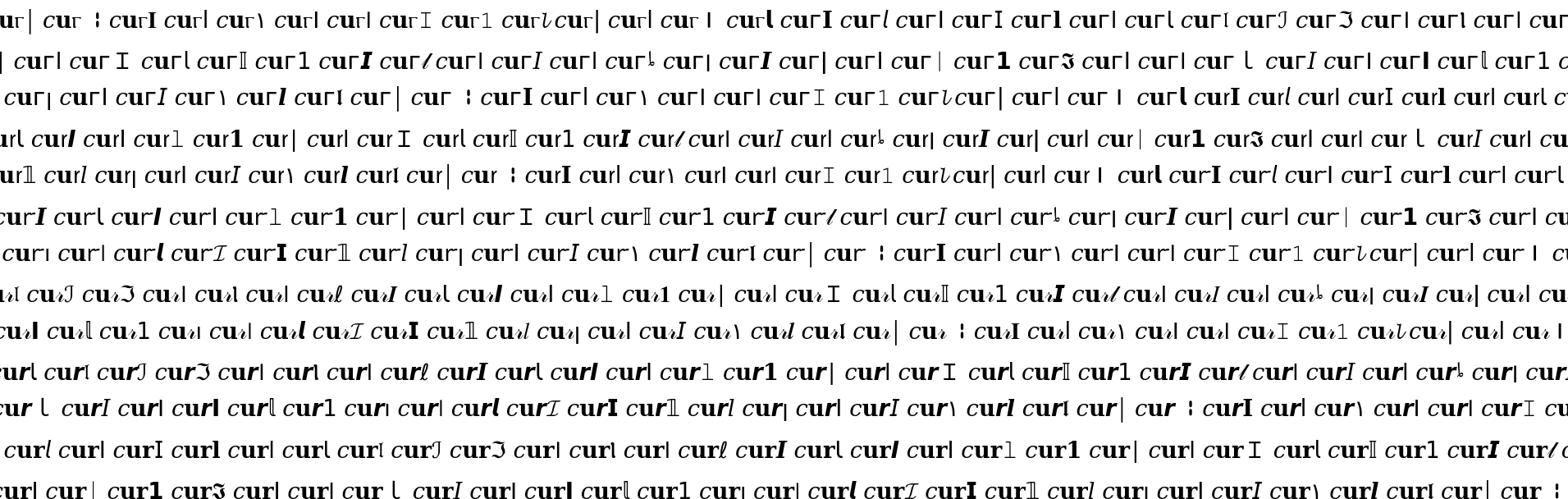
Also. Perhaps domain names should be validated against the Unicode confusables list, forbidding confusable collisions.
Also, gonna bet that there are still confusables within character set constraints. A trivial example, the unicode confusable set considers "rn" and "m" to be confusable (in certain fonts and sizes). But I bet that's even more so in the broader european set.
Also it's a bit sad to be unable to, say, mix math symbols and english...
It seems to me that using the confusable set would be stricter (and safer) but also more flexible too...
Look closely, and you'll see it.
Your solution helps. But the better solution being pushed for, which is frankly the correct one, is "out-of-band" certification of domain names. Whether it's a little padlock next to the URL, or locking down the browser completely on non-certified domains. This will of course require more infrastructure, human and technical.
And, ugh, we'll get moral leakage.
Your advice is good. It's helpful if you don't fall victim to feeling too secure.
But, for the debate as a whole, I'm exhausted reading through everything like a lawyer. And dealing with it as a crisis instead of a meeting of minds.
On both my computer and phone, your "l" vs "1" swap is obvious even at a quick glance. But "lame" and "lаmе" look exactly the same in almost every font.
Still, if the craziness comes from Unicode, one could be forgiven for wishing IDN had never happened and that Unicode in domainnames was not a thing.