265 points · by CharlesW · 3y ago · 209 comments
As an Elite Athlete I'm training 20-30 hours a week. I got covid last year (triple vaxed) and it wiped me out for a good 6 months. It took me 3 weeks to be able to walk longer than a minute without needing to lay down for the rest of the day and sleep.
I have dealt with fatigue problems for 6 months and only just now, do I feel like I'm getting "back to normal".
The most frustrating thing is alot of people are dismissive of the symptoms and generally say, "Oh yeah, I get tired too" but fail to understand the severity of it as they haven't experienced it.
I have a fairly good understanding of my body and the associated symptoms of overtraining/fatigue in a heavy training cycle but covid fatigue was soemthing completely different.
Thankfully after 5 months I seem to have kicked it fully, and am ripe for another infection. Needless to say I got the bivalent booster before the holidays
On Garmin you can indicate you are sick and it will stop your poor training from disrupting your VO2 inference.
You cannot exercise your way out of Long Covid, or other postviral fatigue syndromes - it presents identically to Chronic Fatigue Syndrome. Any attempt to exercise - even something as small as a short walk, or in severe cases merely taking a shower - results in a hard crash that feels completely unlike exercise fatigue, and can effectively confine you to bed for days. And every time you provoke a crash, you set back your recovery, potentially permanently. And you can't really tell by feel what your limits are, you just have to work it out analytically and be conservative. And the whole time, your brain feels like mush.
It's really no joke.
I have been sick for 1.5 weeks (which is an extreme time for me by itself), afterwards I did not feel quite normal and got right back to being sick just after a few days, progressively getting worse. After another 1.5 weeks, I almost felt normal, only super-tired, I got to rest all day, only to wake up in the night feeling sick again. Another 5 days went by, to get back to the point where I feel tired but not sick and again, I went back to feeling generally unwell, although it may be better than the last time. It goes for 4 weeks now.
Most recently, I woke up, felt sick right there in the morning, feeling like I should rest rather than work but with great mental exertion I overrode it and carried a full day, with little to no rest, every minute pushing against that feeling and doing some light exercise too. At the end of the day, I felt like I did not sleep the entire night and as I went to sleep, I slept like a stone. The day after I got that tiredness feeling without feeling sick I wrote about earlier - which felt like progress.
I don't have extreme tiredness like you describe, but something is clearly wrong and it cut my weekly work capacity by half. I never had something like. I also have been hearing about friends of friends also feeling unwell for 1 month or 2 months.
My whole family got covid so I expected to be next. But I only needed to take 2 days off at work and I paused my training for just 3 days and was almost back to my normal HR/pace in less than a week since I got first symptoms. It took me 3 more weeks before I started getting negative test results.
And it's never just extra fatigue. It's can't walk for 60 seconds, or up a flight of stairs, or open a jar.
N.B. I'm not denying post-viral fatigue. I've experienced it myself multiple times
I found that liver support supplements made a measurable impact.
I tried it because of doing research on my high numbers for Epstein-Barr (aka mono). I found via NIH papers that liver issues are common with mono patients so I figured I could be having that since there were no other obvious blood results.
I had Covid beforehand and when I had extreme fatigue I had the mono tests done. The EBV numbers were off the charts and then I found some NIH paper talking about how it’s thought Covid can reactivate EBV.
My biometrics jumped almost immediately up on my Garmin and stayed there. It was a life changer.
liver support supplements
I'm sorry, do you mean it literally?
Note: I had mild-to-serious COVID myself with severe fever and 12% of lungs damaged, and was literally one day from rushing to the hospital. 0/10 will not recommend, had to fight with after effects, but nothing even near what you or OP described.
* About 10% of people getting COVID get some form of long COVID.
* There's long term damage. At least years. Maybe permanent in some cases.
* You can get COVID more than once.[1] Somewhere above 6-10% of infections are re-infections, and that number increases over time. Immunity seems to last 3-18 months.
What is this going to look like in 5 years? 30% - 40% of the population disabled?
[1] https://www.everydayhealth.com/coronavirus/what-if-you-get-c...
It doesn’t follow that reinfection means everyone is going to get disabling long COVID eventually, especially if they weren’t susceptible the first couple times around. At least part of the reason most people don’t care about COVID much anymore is that (1) almost everyone has had it at this point and (2) if you survived the first one, there is ample empirical evidence that subsequent infections don’t have the same potential consequences so there is much less to worry about. This appears to be priced into most peoples’ view of COVID policy these days.
https://www.reuters.com/business/healthcare-pharmaceuticals/...
> Reinfected patients had a more than doubled risk of death and a more than tripled risk of hospitalization compared with those who were infected with COVID just once. They also had elevated risks for problems with lungs, heart, blood, kidneys, diabetes, mental health, bones and muscles, and neurological disorders
> priced into most peoples’ view of COVID
I 'm curious who this view is formed. Is it hearsay? Because there's probably no empirical data supporting that view
> Experts not involved with the study said the VA population does not reflect the general population.
> Patients at VA health facilities are generally older, sicker people and often men, a group that would typically have more than normal health complications, said John Moore, a professor of microbiology and immunology at Weill Cornell Medical College in New York.
The view that risk from subsequent infections is negligible is informed by the fact that vast numbers of people have had subsequent infections, including most of the people they know. Personal experience around this is widely discussed socially, so there is a broad consensus that their personal experience was normal and not an outlier. I live in progressive urban enclaves, so if these people are all misinformed then your cause is lost.
Constantly misrepresenting the science around COVID and fear-mongering over things that are manifestly not the case discredits the people that promote that, which runs the very real risk of causing people to dismiss the real risks of COVID. We already went down this road with climate change, where chronic gross misrepresentation of the science in popular media caused people to dismiss the actual and serious risks associated with climate change.
Disasturbation may be fun but it is a terrible way to convince the broader population that a category of risk needs to be taken seriously.
Again, though, I’m unique. Go me.
Unless you're using a loose definition of "disabled".
That assumes likelihood of getting long covid doesn't drop after successive infections.
It's not looking good. December 2022 study [1][2]:
"The risk of hospitalization, organ damage, and death rises markedly with repeat COVID-19 infection. Assistant professor of medicine Amy Barczak shared a Nature study that used data from the Veteran’s Administration to assess the cumulative risk of post-infection effects in people with one, two, and three or more SARS-CoV-2 infections, as compared to noninfected controls. The data show a consistent pattern of increased likelihood of hospitalization, cardiovascular effects, clotting and other blood disorders, diabetes, fatigue, gastrointestinal distress, kidney damage, mental health effects such as depression, musculoskeletal damage, neurological deficits, and pulmonary damage with each episode. Prior infection does not change the course of disease in subsequent infections, just the risk of severe complications."
[1] https://www.harvardmagazine.com/2022/12/covid-reinfection
Our analyses should not be interpreted as an assessment of severity of a second infection versus that of a first infection, nor should they be interpreted as an examination of the risks of adverse health outcomes after a second infection compared to risks incurred after a first infection.
I am not aware of any study that supports the claim that reinfections are worse.
These stats were true prior to covid and the pandemic.
People widely underestimate how common disability already is.
https://www.science.org/doi/10.1126/science.abq1841
and that covid causes immunological dysfuction even 8 months later
https://www.medrxiv.org/content/10.1101/2022.12.17.22283625v...
See Figure 2 (end of the paper). Preprint, but pretty straightforward census of hospital staff.
And, it seems like related CF viruses (Epstein-barr) may reactivate. Having a lot of covid spike protein in your body is not good for you.
I'd never experienced anything like this before in my life, but suddenly the world would fade to black if I stood up too soon from a reclined position. I also experienced intense brain fog. I actually scheduled a doctors appointment specifically for "brain fog" at the time and they were confused as to what I was explaining. All I could say is that it felt like I was thinking through "mud" and lost my ability to focus. I wasn't even thinking of Covid when I booked that appointment, but looking back it makes sense.
This has gotten better with time, but I have no doubt that Covid had something to do with this. The timing was just far too coincidental. The fact that it has strong binding affinity to ACE-2, which can cause cardiovascular issues, only lends credence to this theory.
- I was almost perfectly healthy and in my early 30’s. Long COVID isn’t that rare and can happen to anyone, even with a mild case of COVID.
- After first getting COVID, I didn’t rest much. There’s research showing this increases chances of getting long COVID. If you test positive… rest and fully recover. Don’t make the same mistake I did.
- Quite a few people I’ve met seem to have the opinion it’s all neurological. The linked study has plenty of proof it’s not, but people seem to like putting things they don’t understand in a nice bucket.
- If you’re reasonably healthy, don’t take it for granted. Health won’t always last.
Thankfully, I’m doing much better the last few months. I think I’ll be 90% back to normal within a year. Not everyone is so lucky though, so it’s encouraging to see so much research being put forward.
My condolences to everyone dealing with Long Covid, which includes both the actual disease and the social consequences. It is already exhausting, but even more so when you need to convince people it's real, struggle to deal with skeptical or poorly informed doctors, and politely deal with the continuous unprompted medical advice from well-meaning friends, family, and internet strangers.
If COVID increases the hazard ratios there isn't much I can do. As far as I can tell, everyone is going to get COVID. There is no avoiding that. It would be interesting to know how much worse it is than a typical flu though, just for academic interest.
This is a common feeling, but remember: You can greatly affect the probability of an infection through precautions. And if unlucky, you can greatly affect the number of times you get infected through precautions. Fewer infections, fewer rolls of the dice.
As far as I'm aware, I'm still infection free and hope to remain so. I am in a much better situation than most readers though, so good luck and try not to be defeatist and lose the war before the 2nd or 3rd battle has begun.
not to mention that even if you do get sick it's a continuum of sickness. you can get a little sick by getting a little bit of the virus and having an immune system that can handle that with ease. you can have the same immune system but spent too much time with your SO that got covid and was giving you a huge viral load of it that your immune system couldn't handle. masking up when out using an n95 is a layer that lets a little bit in if you are around someone sick.
people seem to think "oh it's a crapshoot if i get bad covid or not" no it's a confluence of reasons that you could get sicker than you would have otherwise. masking, off hours shopping, delivery, working from home, not going to really crowded places. that's all stuff you can do even if you don't plan on getting updated vaccines which you should.
Most people here are privileged enough to not work a service job or anything like that, so you do in fact have the opportunity to drastically reduce your likelihood of contracting contagious diseases.
I can read data and understand it, but any good data scientist knows that you need real expertise in a domain to contextualize that data. It would be naive to think that my understanding of data directly translates to a strong understanding of this work. I'm not the domain expert.
The flu, the real flu, knocks you on the ass so hard that you actively start considering that death is a possibility and that heading over to the hospital would be a good idea.
I’ve had the flu perhaps twice. Once as a child, once in my early 50s. The latter completely recalibrated my understanding of illness.
The lay explanation of a virus is that it invades your cells and hijacks their machinery to make more of itself. That makes them all sound the same. For bacteria we at least can understand that they have different types of metabolism, come in different shapes, produce different defensive compounds, etc.
You could wear a mask. You could, if your profession allows it, work from home. You could avoid large social gatherings. You could - if you aren't yet - get your vaxx up to date.
Less direct, and with a longer time horizon, but more lasting impact: You could lobby for clean air laws. You could lobby for easier/cheaper access to testing as well as a better data collection to know where we are. You could lobby that we don't just abandon Operation Warp Speed, but get our shit together and invest in research on mucosal pan-corona vaccines.
> It would be interesting to know how much worse it is than a typical flu though, just for academic interest.
Well, if you choose to do nothing "because everybody gets it", it likely won't stay academical.
Not if everyone gets antibodies first.
The best evidence available suggests most cases of "long COVID" are misattribution:
https://jamanetwork.com/journals/jamainternalmedicine/fullar...
However, that study is not the best evidence available. I agree that the original study could be improved, but the Jama Network paper doesn't account for the fact that many people test negative for Covid antibodies after a true infection (as explained in the original study).
We can't start talking about the true prevalence of Long Covid until we have a sensible definition.
Reminds me a little generally of how some have an inner voice when they read and others don't.
Before that point, I had never before considered tomatoes as even having a smell.
Part of the confusion probably comes from words like "neurosis" or "neurotic" which in fact fall under the discipline of psychiatry.
The hardest part was, by far, feeling like I was making it all up, I felt a tremendous relief when I got diagnosed.
For me, it lasted almost a year, but I can say that I was lucky to fully recover.
There is a bit more info from my personal experience in this post: https://www.geekwire.com/2021/veteran-software-engineer-laun...
I'm glad to see these findings get serious attention by researchers. It was really frustrating getting dismissed by my local physician when sharing symptoms like sugar sensitivity, fatigue, and focus issues. It was like being perpetually tipsy for months. It was a big shock as a knowledge worker to have to relearn how focus.
I hope they further study vaccines as well. In my anecdotal case my long covid symptoms resumed, along with additional symptoms like body bruising / bone pain for several weeks. There may be classes of healthy adults that react differently than expected and we can learn how to improve from the evidence.
In my case it seems to be autoimmune, so maybe that's part of what's happening with long Covid as well.
There are various protocols (mostly dietary) that attempt to help, under names like "Autoimmune Paleo". It all seems under-studied. Maybe now that millions of people are having the same symptoms, there might be some movement on it.
That or GSK will come up with a drug that doesn't really help and has a lot of side effects but the medical community will declare the problem solved and move on.
The term used in Germany for "long-covid like symptoms after vaccination" is "post-vac syndrome". Having seen something similar in English yet.
The symptoms started with swollen red feet (which I somehow dismissed) followed by really strange vivid dreams that night. The following day I woke up in the morning and was unusually tired, and so took a nap on the couch and silenced my phone for a while.
I was feeling relatively normal post-nap. Later in the evening before sleep time I took my dog for a walk. It was -2C outside and the air felt warm as it hit my face, and as I was walking the stairs back up into my flat (on the third floor) my legs felt abnormally weak, and at that stage I took a test, which was a solid positive.
That same night I contracted a high fever and informed all my co-workers. I don't recall having had a virus where I would literally spend minutes/hours self-negotiating to get a glass of water, or go to the toilet, and for the first four-five days I had no appetite whatsoever. I was in and out of sleep for that period and fully devoid of energy for about ten days. I tested negative on the ninth days.
For the next three weeks, I had almost no energy, little ability to concentrate - overall it took about a month to get back on my feet and about two months to feel "normal" again.
Overall, I think there's something to long covid, but I'm no doctor.
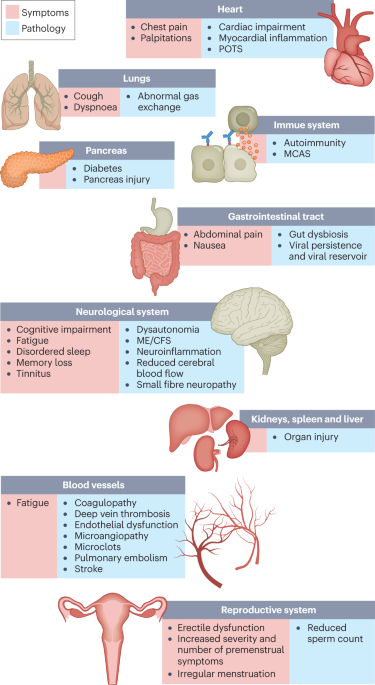
Wow.
I wonder how one convinces doctors to take that seriously?
It’s been a real nightmare.
Seeking a referral for the specific underlying symptom and abstaining from mentioning long covid finally resulted in better care it seems.
https://xdrx.substack.com/p/how-i-recovered-from-long-covid-...
And then I got infected 4 months before I could get a vaccine. It's just not fair.
Especially around diagnosis, markers, and treatments. Many are just self diagnosing given many cannot find any underlying cause.
While I’m one of the unlucky ones who gets long Covid with each infection, many are throwing darts at what helps manage their day to day symptoms. The good news in my case is each long covid bout is shorter than the previous.
Here’s my story: https://jondouglas.dev/long-covid/
Think I am most concerned with the reproductive implications, which seem under researched. Coupled with the unrelated decline in sperm count the past decade... I'm hoping my ruminations are just me catastrophizing.
Can anyone more medically and scientifically literate provide some context to temper my doom and gloom?
Most of these issues stem back to endothelium damage. And the good news is that, in addition to taking all the vaccines you're eligible to get, there are a bunch of other things you can do to strengthen and protect your endothelium, e.g. doing HIIT and taking ACE inhibitors. The one risk we (afaik) don't really know how to mitigate is the risk of developing an autoimmune disorder, but this can happen after any viral illness and isn't necessarily a COVID-specific risk.
And in terms of reducing the risk of neurological issues, Palmitoylethanolamide seems to a least be much safer than NSAIDs, albeit expensive and still somewhat experimental.
Sure, because the MRNA spike protein appears to be rough on the endothelium even in healthy individuals, so it's easy to see why this could be problematic for people who already have vascular damage. But there are a lot of other long covid symptoms that folks have reported improving after getting vaccinated, e.g. loss of smell.
I hate to ask - but what sort of research is available so far?
Based on the submitted paper, if it is intended to apply specifically to the long covid population, then it seems to be a reasonable comment. It did mention post-long-covid vaccinations seemed to be more harmful than helpful - something like ~15% found their long covid symptoms improved afterwards while ~20% had their symptoms worsen.
If that second sentence was intended to apply to the general population, then it's neither supported nor contradicted by the submitted paper. I don't believe it addressed risks outside of those already suffering from long covid. While it did address protection against long covid, it didn't come to a particular conclusion on the matter. It mentioned that studies on this aren't in general agreement yet, and pointed out a number of potential reasons for this, such as varying and potentially incomplete standards for discriminating between both long covid and control groups, in addition to the basic difficulties involved in keeping up with new strains.
As for other research... well that's a whole other thing.
Could you provide a link to that research ?
If you're scared for your health the best thing you can do is be healthy, eat right, exercise, don't smoke, etc.
That was my point as well - if everybody wore the proper mask for a month around the globe, this would have been over with long ago! But, no, people feel entitled to make this stay here and continue to kill millions each year!
Most of the long COVID cases stem from the first and second waves here.
Now that we have a vaccine and a bivalent booster, realize that you're suggesting masking for at least another 5 years. You said this, but it also has to be N95 at this point with how contagious it is.
> people get reinfected every few months
The realistic estimates are more like every year.
It’s very very contagious and you have higher odds with worse measures but it also isn’t magic.
As a data point, I also had Covid and also recovered fast, without any of these.