86 points · by PaulHoule · 3y ago · 89 comments
Short of achieving everlasting fame with no permanent decline, I grow more and more thankful everyday that I chose to have kids, so that I have the next closest thing to immortality.
Even if you somehow achieve mega-fame it doesn't take, but 50-200 years for people to start really not caring. 1-4 generation, and a nanosecond in geological time (maybe a picosecond).
I do agree that death seems like an ideal one. I don't want to die slowly of a debilitating condition... on the other hand, there's some pluses to knowing you'll die and being able to prepare.
There's no justice.
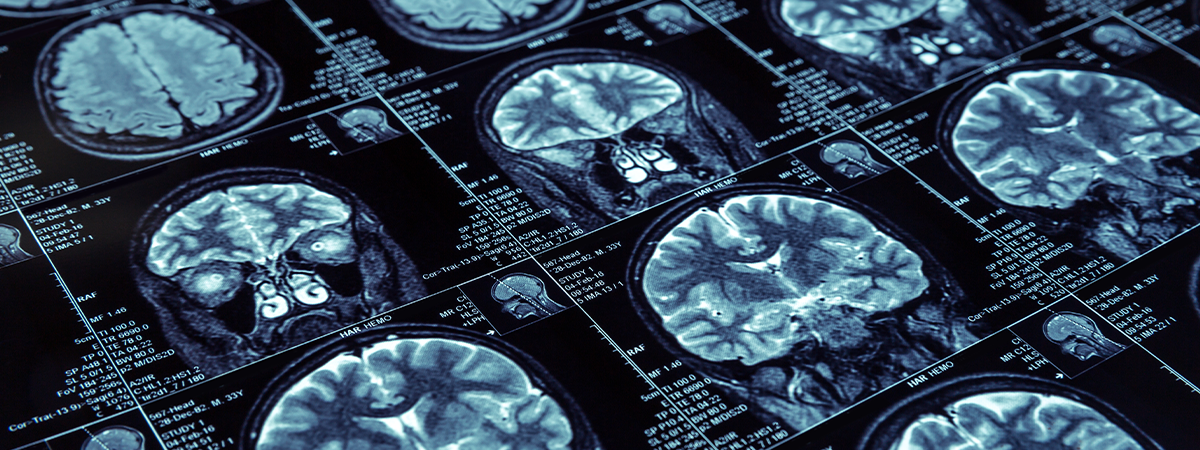
> Cerebrospinal fluid, known to doctors as CSF, as clear as liquid crystal, circulating through the strands of the arachnoid, flashes and glistens like silver in the microscope’s light. Through this I can see the smooth yellow surface of the brain itself, etched with minute red blood vessels–arterioles–which form beautiful branches like a river’s tributaries seen from space.
Previous HN discussion on that chapter here: https://news.ycombinator.com/item?id=9733730
I wish him well.
Death and aging sucks; and that is fine. It is part of being alive. The utter fear of death many of us harbour inside is a strong force that manifests itself in many beautiful forms.
I am terribly afraid of death, yet I would not choose to upload my consciousness to a machine. I would not put myself in suspended animation. I would not like to live 300 years either. There is deep comfort in knowing that my days on this planet are limited and life is short. Better get a move on.
That's understandable. I'm concerned for my loved ones and the impact it may have on them when I go, but I have no fear of death for myself. I have no memory of the millions of years that passed before I was born and expect to have no memory, feelings or consciousness after I have died. I just won't be here any more and that's perfectly okay.
The solutions to the horrors of aging are psychological and social, not scientific, and entail coming to terms with your own mortality (life is fatal, your capacity will inevitably fade), and having mechanisms in place so that the elderly can live with dignity. Anything else seems like a sure path to dystopia.
Dictators are only a problem because the population let them take power. They could not do anything or even stay in power without population consent, especially the aristocracy/priests caste of this particular society.
Dictators/Billionaires themselves are in practice only a very small part of our power distribution issues. (really the very visible but small tip of the proverbial iceberg)
Is the solution to losing short range vision in your 40s philosophizing about how literature is best left to the young, or getting reading glasses?
Anything else seems like a sure path to dystopia.
Are you opposed to researching cures for cancer or Alzheimer's? What about preventing heart disease and strokes? What about treatments to help older people preserve their mobility and short term memory? At what point does allowing people to retain their physical and mental health become a dystopia?
If you want to reduce the effects of aging we already know how to do that though physical activity, proper diet, sleep hygiene, toxin avoidance, etc. Most people don't care enough about aging to optimize those factors.
Once you start thinking just a little bit about this problem it becomes increasingly horrifying. If we cured aging today, how long before India or China enacts forced sterilization to prevent their populations from starving to death? How long before countries start to cull parts of the population? How could we possibly cope with Africa, where women have 5 kids in the hope one lives?
Famine like the world has never seen. Energy wars over the last scraps of land you can put solar on. Fresh water in the middle east would be unobtainable and spark some of the worst wars ever.
Then all the carbon emissions from an ever-larger population would destroy a climate that just barely survived the 2020s.
Curing aging creates a thousand times as many problems as it solves. Curing aging without already having a population control system in place globally could very easily destroy us.
I think we will eventually solve aging one way or another, but whether we can control the population of an entire planet I'm not so sure of.
Defeating aging would be the most significant achievement in human history. But sure, let's worry about centuries old overpopulation concerns instead, despite having demonstrated them false continually.
Yes, a 2-3°C increase in earth's temperature would be an unbearable cost for DEFEATING AGING.
Aging and death are awful. Unavoidable, currently, and so must be acknowledged and prepared for, but still unspeakably destructive.
Let's make it so everyone's body is 25 until they suddenly painlessly die around age 125 or so.
I have one to add, let's imagine that we science our way into living much longer - our bodies may continue to live, but what state will our minds maintain? Keeping a body alive by no means guarantees a healthy mind.
We might discover that despite the healthy condition of the human body, no sense of self is able to survive over a few hundreds years before losing coherency. Perhaps the human brain just wasn't designed to contain more than one lifetime. In such a scenario we would be sitting on a whole lot of perfectly healthy vegetables who will continue to live very long lives thereafter. I for one never want to live as a vegetable. My dad told me the same thing, if ever he's a vegetable then pull the plug. I would do that for him, and I hope someone would do it for me if the day came.
But living much longer is definitely something to be desired, and I don't see why people have a problem with it.
Imagine having a young body into your 100s. People do change their mind with experience and age, mostly for the better, so I think it will be a net good thing. Having a long time at your physical best would allow the world to benefit more from the experience, wisdom, and skills acquired.
The human spirit is young and deserves a body that does not age.. Aging is an affront to it. It is a disease that we have a moral imperative to eradicate.
Life itself is not aging. Sexual reproduction manages to regularly reset the aging clock by building a new organism from already existing cells, there is no discontinuity in life.
At some point, the mother and her child are the same organism.
Biology is already immortal, but the resetting process is quite lossy.
I am pretty sure that at some point our biology can be hacked to perpetually rejuvenate, in this case our bodies would look like 25 years old, not centenarians.
Evolution is inherent to the universe, and our spirit yearns for it.
It is not. Change and entropy is. And what is more change than death and dissolution of your physical body?
Life is anti-entropic, and acts in the opposite direction than the universe itself. But eventually entropy has to win, for it is the universal law.
-- unknown poet on a card my wife was given by a friend