120 points · by paulpauper · 3y ago · 118 comments
It's unclear how much of this is is due to changes in diet, hygiene hypothesis, or environmental pollutants/endocrine disruptors.
I wish we understood this better.
Right out of the gate you hit the issue that there simply aren't many "very early onset IBD" (impacting children under 6 years old) specialists because historically there were so few cases. We've seen well regarded IBD specialists who reflexively try to order tests and procedures that their own hospital will then refuse to even perform because they can't be done safely on young children. The IBD specialists are in general simply unfamiliar with young children because of the historical rarity.
From the VEO IBD specialists we have worked with they all report that the numbers are exploding and no one has any real idea why.
On top of that most of the more modern and effective treatments for IBD and Crohns aren't approved for young children at all and even top tier insurance will fight tooth and nail against covering them because their use in children can be considered off-label.
I would bet MONEY that if you looked at IBD rates among people who tend to frequent taco bell (lots of beans == lots of fiber) and people who tend to frequent, say, McD's, you'd see a lower rate among TB-goers. Doesn't seem like a hard experiment to set up.
Are we sure Taco Bell has not discovered a novel way to remove important nutrients from this item as well?
[0]: https://www.ncbi.nlm.nih.gov/pmc/articles/PMC1588096/ [1]: https://en.wikipedia.org/wiki/Denis_Parsons_Burkitt
The USDA [1] makes their calculations from a proportion of 14g fiber for each 1000kcal consumed - if you're an adult male with a healthy diet you're likely consuming around 2000-2500kcal, which puts your fiber needs at 28-35g per day.
You probably need more of it, but I'm not a doctor and even less *your* doctor, so please don't just take my word for it. :)
[0] https://www.mayoclinic.org/healthy-lifestyle/nutrition-and-h...
[1] https://www.dietaryguidelines.gov/sites/default/files/2021-0...
- you
https://www.jacionline.org/article/S0091-6749(22)01477-4/ful...
Detergents, preservatives, pesticides and low quality ingredients are all great examples of things you can cut out eating at home. While we don't seem to have enough data to point to each one of them individually, it seems pretty common sense these are the new contributing factors in our environment.
What they don't tell you about wheat very often is that people figured out that if you defoliate a wheat plant, it will shove its remaining calories into the developing seeds and then die. You can control the maturity of a wheat field by spraying it with RoundUp late in the season.
So where the reality versus PR for the decay rate of RoundUp in the environment leaves a very long safety margin with early season and pre-emergent uses of the stuff, whatever you sprayed a matter of weeks before harvest very much matters on variance between fields and between customer and manufacturer.
We may be feeding ourselves RoundUp here.
Nowadays it seems that there are more and more people that are affected negatively by gluten consumption. Because this was much less frequent in the past, there must be an additional unidentified factor that causes gluten sensitivity and which has not existed formerly.
Is that really the case? I suspect it was more that people who had IBS or gluten sensitivity in the past just...died. If there was no understanding of the problem, then those suffering from it probably appeared to have something like dysentery, and would like just be lumped in with everyone else that had similar symptoms from various causes.
Emmer contains twice as much gluten as modern wheat according to this summary paper of chemical composition, see table 3: https://www.researchgate.net/profile/Anna-Zaparenko/publicat...
Nowhere in this article an emmer with twice more gluten is mentioned.
From their results section:
> "Interestingly, detergent residue from professional dishwashers demonstrated the remnant of a significant amount of cytotoxic and epithelial barrier–damaging rinse aid remaining on washed and ready-to-use dishware."
> A professional dishwasher completes 1 or 2 wash and rinse cycles using 3.5 L of water per cycle. The detergent and rinse aid are automatically dispensed into the water at a concentration of 1.5 to 4 mL/L and 0.1 to 0.5 mL/L, respectively. At these concentrations, the residual dilution factor after rinse ranges from 1:250 to 1:667 for detergents and 1:2,000 to 1:10,000 for rinse aids.
> Household dishwasher detergents in a normal cup and plate washing program typically consume a total of 12 L of water: 4.8 L during the washing cycle, 3.6 L of water for the intermediate rinse cycle, and 3.6 L of water for the final rinse cycle. Between the washing and rinsing cycles, 200 mL of water remains inside the dishwasher. Accordingly, the dilution factor for one 20-g tablet of detergent is 1:80,000 (w/v).
They found nothing wrong with washing with detergent, just using rinse aid to dry in a commercial setting due to the detergent residue the rinse aid could leave.
Also, I think we should all be skeptical of someone who says, essentially, "Don't want colorectal cancer? Rinse your dishes and don't eat at restaurants!" Such a simple explanation for colorectal cancer seems suspicious... at best.
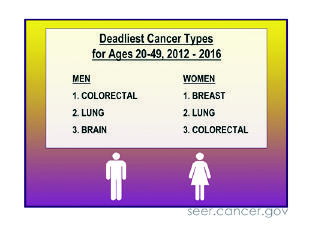
This rapid increase is especially puzzling because the rate of colorectal cancer has plummeted among older adults—largely due to regular colonoscopies and lower rates of smoking.
“We don’t understand a lot about the causes, the biology, or how to prevent early onset of the disease,” said Phil Daschner, a program director in NCI’s Division of Cancer Biology. “And that’s important to learn more about because it may affect [approaches for] the treatment and survivorship of early-onset colon cancer.”
Though I would de-prioritize "rinse your dishes" and say the food we eat is more of the issue.
Is there some logical reason you would down vote without any explanation or counter argument?
I'm sure someone thought the same as me, but they thought clicking the down button was the correct response. I don't agree, but I understand that not everyone is put together before the coffee kicks in.
I have had 2 quarter-coin sized growths removed from my colon. The underlying cause is undiagnosed. They were not cancerous, by analysis. I believe the growths started in Washington State 6ish years ago and black mold was a contributor, with other factors. Growths have not returned.
Good on your friend ;) It's important to look after your brain's meat suit, particularly that area considering the growing body of research between the gut/brain
edit:
noting: "There’s mounting evidence linking an unhealthy diet—in particular, one high in processed meat and fat, and low in fruits and vegetables—to early-onset colorectal cancer."
Sounds like it's the meat/fat/cholesterol myth 2.0 ... Not that I'm massively in favor of overly processed meat... but the body needs fat... we're still suffering from the hormone production issues a half century of disinformation on dietary fat has lead to... and the heart disease over a century of processed fats in unnatural ratios has lead to.
Fruits and Vegetables are not naturally available year-round, anywhere. If you want to choose to be vegetarian, cool... but to assume it's meat (part what makes us human for many millenia) and not the processed "foods" that didn't even exist 150 years ago is just absurd.
[0] https://www.mayoclinic.org/prebiotics-probiotics-and-your-he...
If you are bottoming a lot you can consider screening for that every 1-3 years.
The issues are wattage and whether the radiation is ionizing or not. I think, so far, every reputable study has shown that cell phones, radio towers, and wifi routers are utterly harmless to the people that use them as intended.
As an EE-type guy the issue is actually the dose rate. Even if the effects were sub-linear, which it seems they probably are not (like, why would they be?), there is an incredible range in dosage from FCC permitted rates up to "those crazy broadcast engineers and ham radio operators doing questionable things".
If effects were proportionate to dose rates, then my broadcast engineer bros would keel over dead at work the first five minutes of employment, etc. Maybe not THAT bad, but pretty bad. If carrying around 0.6 watts peak increased cancer rates by 1 ppm, you can imagine what would happen to EEs working on MW class military radars, MW class broadcast transmitters, they would essentially all die of cancer before retirement. But they don't. So you can put a firm estimate on the death rate from cell phone radiation at "less than 10 people a year" because if more than 10 people a year died of cellphones then essentially all communications industry personnel would die very young; and they don't; so it seems likely to be many orders of magnitude less than 10 people per year, but it certainly can't be more.
Another way to look at it is there's a 50 KW broadcast farm near the interstate where I live; if a 0.6 watt phone increased the risk of cancer, then driving by 100000 times the power would realistically result in every car driver breaking out in tumors and dying the first time they drive past the antenna; yet no signal appears in the statistics, so it seems very unlikely a 0.6 watt transmitter could be killing people if something a hundred thousand times worse is definitely not killing anyone.
> A court-ordered study has found that electromagnetic waves beamed by Vatican Radio leave residents living near the station's antennas at a higher risk of cancer, Italian media said
They're not getting exposed to MW level field strengths, or else they would be literally cooked.
The amount of power you get from a 0.6W phone in your pocket is dramatically higher than your exposure from the 50KW broadcast due to the inverse square law.
An isotropic radiator at 300m distance with 50kw power results in a field strength of 0.04421 w/m^2, while a 0.6w isotropic emitter at 3cm results in 53.0504 w/m^2. About 1200x higher. And unless you work at the transmitter you're not going to be within 300m of it most likely (there are fences set by exposure limits!), even if you work around it you're not going to be around it long while the phone is near you 12 hours a day, nearer than my 3cm example too. Though to be fair it's not putting out 0.6w all the time (though its maximum is also a lot higher than 0.6w for a normal phone, try more like 3w).
(the station is also not isotropic, but depending on the type of station the radiation pattern probably lowers exposure near the station-- no point in illuminating the ground!)
I'm mostly correcting your justification, the fact that we have limited evidence of problems from high power (except due to heating) is a good argument that lower levels of exposure are not likely an issue, but exposure levels from a running phone in your pocket are higher than you might expect simply because how close it is to you.
And when it comes to weak long term effects like cancer rates, it might actually be hard to tell for sure particularly since we lack any natural control group. Anyone different enough to NOT have a cellphone is different enough to make their cancer rates incomparable.
Its the modulation, polarization mostly, and to some degree frequency that are the culprit.
Did you even look at the linked study?
Which science has updated this conclusion?
> Weasel-wording like "every reputable study" can't change that.
Is that a civil way to word things? And why call me a weasel, if one sentence earlier you charitably assumed I was simply out of date?
> Did you even look at the linked study?
Which one - The one you linked? No, I'm not paying $62 to see how they did their review.
The vatican radio thing linked by someone else? Yeah, I did. I replied to the guy who posted it with what I perceive to be some flaws in that study. If you want to discuss it civilly, I'd be interested in that. But not if you're gonna bring this reddit-style "screw you for being wrong" kind of energy.
The specific FDA bans reference relatively high incidences of food poisoning in Europe which can be directly connected to inadequate bacterial contamination controls that would be required in the US. One can say many things about food in the US but their bacterial mitigation standards are among the strictest in the world.
I suppose both "young people are generally drinking less alcohol" and "more young people than ever are abusing alcohol" could both be true statements.
That's a dark concern to have :(
Unsurprisingly, I found out you're about four times more likely to die in a car crash than to be diagnosed.
Also unsurprisingly, the research in the article is at cross purposes; if you're fat the risk is apparently very much higher, if you eat a diet that makes you fat but you somehow remain thin then the risk of getting the cancer is slightly lower, therefore the advice is to eat the diet that makes you fat, carb and fiber up to the max.
Finally the end of the article is the stereotypical clickbait "don't actually do anything, just feel anxious and raise awareness".