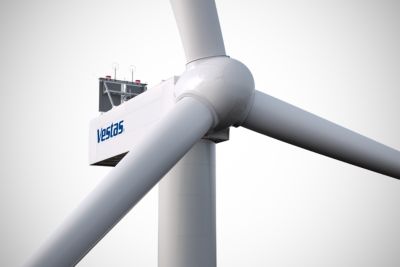
Vestas unveils circularity solution to end landfill for turbine blades
vestas.com
170 points · by toomuchtodo · 3y ago · 149 comments
One of my favorite books is "The Wizard and the Prophet", and it's great to see more and more companies following in Norman Borlaug's footsteps and finding new ways the science/tech fields can serve humanity.
If anyone out there is feeling a bit down about the general state of the tech industry, I highly encourage you to look into jobs in the green energy field. It's an exciting space filled with lots of passionate, mission-driven folks. (And, in case you're wondering, most of us aren't the neurotic, perpetually angry types that dominate the activist space. We're pretty chill people who just want a healthy and affordable planet.)
I’d second this - I’m not in green energy, but I am in a field that looks to have a substantially positive climate/environmental impact. If you’re feeling particularly existential about the world right now, there’s a real sense of relief from knowing your work is aligned with your values and where you want the world to go.
Yes, it's not a perfect unicorn magic solution, but the basic idea of putting a price on carbon and letting the genuinely hard to decarbonise sectors pay for the low hanging fruit in other areas is deeply powerful.
If you think that market forces are a powerful tool, then carbon offsets are a similar thing.
In many ways it's "effective altruism" for carbon (though that movement is under a bit of a cloud lately).
There are so many things this world needs smart people doing. A slowdown in the tech sector might just be the catalyst.
https://pubs.acs.org/doi/full/10.1021/acsapm.1c00896
From my reading of the press release, the novelty in this work is that they've found a process that works with "ordinary" chemicals, temperatures and pressures, so it can be scaled up economically.
I say "ordinary", because it might very well be working with mildly toxic chemicals at 80°C and 7 bar pressure or whatnot, so far outside the range of (at least economic) feasibility in the home lab.
MSDS: Material Safety Data Sheet
Looking in my workshop, nearly 100% of the "stuff in solution" there have solvents you do not want to breath. Then you do a bit of skiing and you see the composition of the waxes. You do a bit of woodworking and home improvement and you look at the composition of the glues. They are full of deadly compounds. So yes, we should not worry but still handle with care.
My simple advice: if you see on the product that it should be used in a well ventilated place, do it!
I use mostly safer compounds in my workshop (platinum-cure silicones, polyurethane resins, and occasionally good grade epoxy), but I still put on a proper mask, glasses, and gloves. Especially when working with my daughter. Those half-mask respirators are surprisingly comfortable (I found them easier to wear than N95/FFP2 masks).
https://www.sandia.gov/labnews/2021/01/29/carbon-fiber-for-w...
> "Wind blades containing carbon fiber weigh 25% less than ones made from traditional fiberglass materials. That means carbon fiber blades could be longer than fiberglass ones and, therefore, capture more energy in locations with low wind. A switch to carbon fiber also could extend blade lifetime because carbon fiber materials have a high fatigue resistance."
Carbon fiber could plausibly be made without reliance on any fossil fuel inputs. The chemical synthesis pipeline is (working backwards):
acrylonitrile -> polyacrylonitrile -> carbon fiber
propylene + NH3, O2 -> (catalytic ammoxidation) -> acrylonitrile
butane -> (dehydrogenation, olefin conversion) -> propylene
atmospheric CO2 + H2O -> CO + H2 (Fischer-Tropsch) -> -> butane
This is basically replacing petrochemistry with aero/hydro-chemisty to generate all the feedstocks. Once you get past the initial step (CO2 capture, conversion to carbon monoxide, and reduction with water-sourced hydrogen at high temp & pressure) it's basically just providing simple hydrocarbon feedstocks (non-fossil-sourced) into existing chemical processes developed by organic chemists over the past century or so.
Also, if you just bury the worn-out carbon-fiber blades in stable landfills, they don't degrade over time, so it's also removing carbon from the atmosphere (very slowly, of course, and not really enough to be very noticeable).
Put another way, you can either build 10 wind turbines with atmospheric carbon fiber, or 11 turbines with carbon fiber made from petrochemical feedstocks. Which option ultimately has a bigger reduction in CO2 emissions over the lifetime of the turbines?
It seems obvious that if synthesizing butane from atmospheric CO2 was anywhere near economic after applying a carbon tax, global warming would not be an existential threat. I'd love to be wrong, obviously...
The crisis is that its politically hard to coordinate that agreement and transition and we've not made as much use of the last four decades as we could have. Potentially passing irreversible tipping points.
Currently, these technologies are approaching parity on cost fairly quickly. It's basically at the prototype stage presently, so much more expensive, but widespread adoption and economies of scale could change that within several decades. The upfront costs are quite high, similar to any petrochemical complex, i.e. in the multi-billion-dollar range for any facility capable of significant industrial-scale output.
Sorry, but how could that possibly work from even a first principles perspective? Oil is literally just pumped out of the ground, whereas you have to overcome the entropy of highly disperse atmospheric CO2, and then you have to add the enthalpy of the hydrocarbons!
I know spacex had trouble finding autoclaves big enough for carbon fiber tanks. I would expect windmill blades need to be even bigger and hence need a bigger autoclave. So that would be a major challenge.
Then again this is a huge market, and the mentioned gains are quite big. So the economic benefits might be big enough that someone dares build an autoclave for carbon fiber windmill blades.
https://www.lmwindpower.com/en/services/the-problade-ultra
> "Leading edge erosion (LEE) is a phenomenon where the leading edge of a wind turbine blade is eroded due to rain, hail, UV, sand, dust, and numerous airborne particulates. Since wind turbine blades are built to last over 2 decades, this erosion exposes the fiberglass beneath and ultimately impacts the blade’s life causing the turbine to produce less energy over time."
I think it's probably better to just burn the carbon fiber. As you point out, it's not a significant amount of carbon, and it's a tidier solution with less risk of unintended consequences. If you want to capture and store carbon, burn it in a trash burning power plant that captures CO2. Then you have a more general-purpose solution for CO2 capture that you can feed any other carbon-based waste. (Of course, Reuse, Reuse and Recycle first, but eventually everything degrades to the point where it's best to burn it. This also helps pull out environmental toxins and heavy metals from materials we've made)
There's an interesting project in Norway to test trash burning with pure oxygen. The gas in the chamber will in effect be a mix of O2 and CO2. The released CO2 is recycled and the O2/CO2 mixture is controlled to optimize the temperature. This makes the trash burning, the cleaning of the exhaust and the CO2-capture more efficient.
So it seems to only be worth it if it doesn’t increase the total cost of a new wind turbine by too much compared to the added efficiency.
For example BMW invested a lot of money into carbon fiber production development and can now use some of the knowledge and technology in more mainstream products starting with iX SUV.
Of course, glass fiber wins here, being just molten rock extruded through a nozzle (well, quite simplified, but you get the idea). No expensive hydrocarbon synthesis required.
Nice one! Is there any literature on this without beeing a PhD in Chemistry (but in another Natural Science)?
Split CO2 to CO and O, split H2O to H2 and O.
CO + H is syngas, used as feedstock for synthetic fuels.
Then using a metal catalyst (iron or cobalt for example) and heat and pressure good old "organic chemistry" does the rest, various hydrocarbons form (and water as residual by product). This reaction itself gives off heat, so at least this part doesn't need that much energy.
https://en.wikipedia.org/wiki/Synthetic_fuel
https://en.wikipedia.org/wiki/Fischer%E2%80%93Tropsch_proces...
https://www.theguardian.com/environment/2020/aug/06/nautical...
Interested if someone finds out a reference on how much waste is expected from recreational boats.
I doubt it is possible to cover the total energy needs without a reliable source like a power plant. I am all for green energy, but reliability and cost are equally important parameters.
So yes, it is actually quite difficult to get to even 95% renewable energy for an entire year and to do it for multiple years with unpredictable and changing weather is harder still. Also, not every place is Australia.
[0] https://twitter.com/Rainmaker1973/status/1623295579542659072
Forget a banana, "bike for scale"
https://www.energy.gov/eere/wind/articles/carbon-rivers-make...
> Allegedly many blades fail after few years rather than expected 15~25
[Citation required]. Unless you're referring to leading edge damage, which has already been determined to largely be caused by excessive speed during heavy precipitation, and thus can be controlled: https://wes.copernicus.org/articles/3/729/2018/
I'm so tired of people trying to 'gotcha' green energy.
https://www.americanthinker.com/blog/2023/02/wind_power_make...
> The greenies’ dream of “clean” (except for millions of dead birds) energy from wind farms is dying in the face of the poor economics (even with tax subsidies) and unreliable technology
Stupid greenies! I was right to be sceptic, look at the end:
> It is beyond the time to end subsidies for wind power. Not only has atmospheric CO2 risen without serious consequence, the doomsaying models proven consistently wrong, but the financial thumb on the scale via subsidies has encouraged development of a technology that is still immature, if it ever will be viable.
Can't trust an article that gets basic facts wrong. FT reports differently: https://www.ft.com/content/74ff8ff7-8009-413a-8f2e-2a3c34695...
https://electrek.co/2023/01/12/this-company-turns-wind-turbi...
Holey schmoley. The environmentalists have become obsessed with "keeping stuff out of landfill". "Keeping stuff out of landfill" has become the primary goal of many environmental movements.
There is nothing wrong with stuff going into landfill. In fact in many cases, putting things in landfill is the ideal outcome.
Obsessively trying to keep stuff out of landfill leads to unintended consequences that are much worse for the environment than putting it in landfill.
Consider waste plastics. People go crazy with the idea that waste plastic ends up in landfill, so they become obsessed with "recycling". But it's simply impossible to recycle the vast ocean of plastic waste.
So what they are doing now is putting plastic waste into PLASTIC ROADS, and calling this "recycling".
And then cars and trucks grind microplastics out of the plastic roads and into the water, air, land, food, animals and people. The plastic would have been much more safe in a landfill, where its toxic effects are constrained ot the area of the landfill. But hey "at least the plastics aren't in landfill, right?".
Every time you hear about the plastic waste issue it always comes with someone fretting about "keeping it out of landfill", like landfill is our most precious land that must not contaminated with waste plastic. It's just wrong.
Put waste plastic in landfill, stop pretending we can "recycle" an ocean of waste plastic into stuff.
The entire environmental movement is focused on mopping when it should be turning off the tap.
As a pro-conservation minded person I'm in sympathy with this viewpoint, a concentrated landfill could be less damage than an expanse of plastic in roads. But the article is suggesting an economical circular reuse:
> The newly discovered chemical process shows that epoxy-based turbine blades, whether in operation or sitting in landfill, can be turned into a source of raw material to potentially build new turbine blades
That's why it's not really called "recycling" but downcycling. It does not re-enter the "cycle". It just goes in a different (and arguably worse) landfill.
The argument for recycling is also not usually that landfills grow, but that stuff on landfills is not used for new things and the materials that are now missing have to be covered by oil, mining, etc, all the stuff "environmentalists" worry about.
Roads are the worst place as they are constantly open to the elements and mechanical wear and are washed over and over by rain water.
Using it for housing is a different and possible a better scenario given that environmental risks are taken into account at the end of the life when the material is disposed (or recycled or up/down cycled) after demolition.
Near my house is an outdoor playground with a spongy floor made of recycled tires and god knows what else that STINKS during the day. There’s no way they know the origin of all of the materials they’ve made into this playground sausage that kids are touching and breathing all day.
Anyone have tips on where to put my energy into fighting things like this? I guess I can start locally but anything else?
https://www.theguardian.com/us-news/2019/jun/25/lawmakers-co...
"Profiling and potential cancer risk assessment on children exposed to PAHs in playground dust/soil: a comparative study on poured rubber surfaced and classical soil playgrounds in Seoul "
https://pubmed.ncbi.nlm.nih.gov/31134396/
"substances of concern that were recently detected in recycled tire rubber samples.3 The nine chemicals are benzo(a)pyrene, hexavalent chromium, zinc, 4-methyl--pentanone, benzothiazole, lead, dibutyl phthalate, diethylhexyl phthalate, and 4-tert-octylphenol. UC staff identified acute, subchronic, and chronic TRVs, where available, for the oral, inhalation, and dermal routes"
https://www.cpsc.gov/s3fs-public/Final-Report-on-Technical-S...
There's a vast array of stuff on google if you search for playground cancer.
There is, and it's called "plasma gasification". The main reason it hasn't become popular is because it's not profitable. But it is a legitimate technique that can enable actual recycling of plastic.
Couple plasma gasification with green energy, and we can use all the plastic we want, as long as we're willing to pay the cost of properly recycling it.
Tax the amount of plastic used in any transaction.
It would be amazing how much less plastic would be delivered if it cost something.
Plastic accounting - force companies to report on the plastic they buy or sell.
If someone can extract resources with no environmental cost, I would definitely NOT want to penalize them.
We really don't have time to care whether broken solar panels end up in landfills or whether lithium mining ruins some picturesque landscapes in Australia.
This isn't really as big a deal as some people like to say here (Oz) where greenfield but plausible coal strip mines are a valid high risk question, and are being aggressively opposed and with good reason.
TL;DR its like the PETA campaign against Kangaroo meat/leather: misplaced activism. The lithium mining environmental concern isn't the problem.
Compared to massive crop failure, mass starvation, wide scale species extinction, and resulting resource conflict, the toxic byproducts and landfill of wind/solar are inconsequential. Even the risk of nuclear (increased radiation from failures, proliferation) is bearable if we can decarbonise faster.
> The entire environmental movement is focused on mopping when it should be turning off the tap.
I'm not sure how much of your general screed I agree with ... but this is very much on point. We know that plastics are hard to recycle, expensive to recycle, and what is recycled is hard and expensive to actually use. We need to look for alternatives to plastic use in the first place. And this needs to be legislated. There's no need whatsoever for that pack of five tomatoes to be put in a plastic tray and then wrapped in more plastic.
This will change at some point. The inexorable march of technology.
In the mean time we have companies getting in trouble because they claimed to recycle plastic but instead they were just stuffing it in warehouses - https://www.theguardian.com/australia-news/2022/dec/23/envir...
It sounded promising, and does sound better then ending up in the ground or oceans. No idea if the science supports this though.
Most plastics can be incinerated pretty quickly, releasing quite a bit of energy. The only downside is the release of CO2, but that should be reasonably easy to capture.
And you'd avoid creating massive toxic landfills. Just putting stuff in a big pile and hoping nothing bad happens to it isn't really a solution.
Oh I'm not attacking renewables and recycling, I'm just championing those sadly overlooked technologies the dumb green hippies have ignored! Don't listen to them, they're all stupid and communist. They can't do maths and science and are probably female. They can't handle the manly truth about climate change like me.
Except they've not been ignored. Landfill is at the bottom of the waste hierarchy because it's not as good as the other options. Nuclear isn't going to make up the majority of energy production because it's not as good as solar and wind. There are lots of scientific papers that go into this in mind numbing depth.
I know the fossil-funded "news" and "politics" organisations you follow told you this was all a hoax and a conspiracy, but turns out, they were lying to you. At some point you're going to have to deal with that and face reality rather than spiral further into conspiracy land.
The more I look the more the environmental movement is a complete scam. In almost all mesure we are still tiny on the surface of the earth.
Make some exceptions for fluorinated compound leaking into water, high grade nuclear waste, ocean overfishing, habitat destruction/diversity reduction.
What's your reason for excluding the biggest one of all: greenhouse gases released by human activities. It sounds like you are just artfully denying global warming by that omission, without saying it outright.
The CO2 increase is greening the earth (make plant grow more in harsh dry conditions) slightly increase temperature, increase humidity and plant growth also.
I am not worried a bit about global warming anymore, it’s another media/research/government feedback loop were more attention bring more money that bring more attention.
Now, there is an increase in CO2, it’s man made, it will increase the temperature, but that doesn’t mean it’s the biggest problem that we have. We have to be carefull, sort the problems by their importance, timescale, cost to fix, etc. (Bjorn Lomberg)
Another thing that make it non problematic is the massive increase in solar efficiency and reduction in cost. Just based on cost solar will rapidly replace coal in almost all places (Look into Tony Seba work) The increase in technological knowledge also mean that in 50-100 years we will be so far away that CO2 will not be an issue anyway.
I used to think it was a big deal, but the more I dig, the more I find it won't ever be a problem for humanity. I am still a big fan of Solal PV, EV, (renewable are still good)
Turbine blades have previously been challenging to recycle due to the chemical properties of epoxy resin, a resilient substance that was believed to be impossible to break down into re-usable components. This has led to many technology leaders attempting to replace or modify epoxy resin with alternatives that can be more easily treated. Vestas’ solution is enabled by a novel chemical process that can chemically break down epoxy resin into virgin-grade materials. The chemical process was developed in collaboration with Aarhus University, Danish Technological Institute, and Olin the partners of the CETEC project, a coalition of industry and academia established to investigate circular technology for turbine blades.
I wonder if they're testing it on pure cured blocks of epoxy, or actual samples of turbine rotors - often these kinds of processes end up having a loss fraction in real world usage, which would be understandable. I'm just an armchair chemist, but I do see a lot of epoxy resin used all over the place, so breaking it down completely would be pretty extremely useful, and certainly make me a lot less reticent to use it.
I don’t think the amount of waste is that important, relatively speaking. It’s probably far, far less than 1% of solid waste.
Problem is the energy input required for those high temperatures. It costs money to consume that energy, quite often more money than you make by reselling the simpler substances that come out the end of your pyrolysis process.
https://english.elpais.com/usa/2021-11-26/how-the-wind-power...
https://www.evwind.es/2021/11/30/the-manufacture-of-wind-tur...