101 points · by nradov · 3y ago · 284 comments
From what I can gather, the $145K cost was the cost of medical care over the months (years? the article never says) at the end of the grandmother's life -- not the cost of "dying at home".
The bulk of the cost seems to come from:
> the total monthly cost was $16,200: $13,000 a month for the 24-hour care, plus $3,200 to rent the apartment
It seems silly to include rent, and then of course round-the-clock private care is going to be $$$.
As far as I can tell, the grandmother needed hospital-level care, but the family didn't want to keep her in a hospital. It's not surprising that hospital-level care at home costs a small fortune.
In the UK when my mother got told she was terminal and had a couple of months left, she chose to spend them at home. In the end she left hospital in mid-December and died the following May. 5 months at home in a specialist bed, provided by the hospital, all of the equipment required to keep a dying person comfortable again provided by the hospital. Nurses and doctors there every day.
Because of her illness, the government paid her rent, it paid my father a carers allowance, so he was able take time off work.
Total cost: £0.
5 months of excellent at home care for £0.
You shouldn't be dismissing the article as clickbait, it shouldn't cost $145k to die, there shouldn't need to be a discussion here.
You should be so very angry that a country that takes in $3tn a year in federal taxes won't support a working healthcare system
"In December, as many as 500 patients per week were dying in Britain because of E.R. waits, according to the Royal College of Emergency Medicine, a figure rivaling (and perhaps surpassing) the death toll from Covid-19. On average, English ambulances were taking an hour and a half to respond to stroke and heart-attack calls, compared with a target time of 18 minutes; nationwide, 10 times as many patients spent more than four hours waiting in emergency rooms as did in 2011. The waiting list for scheduled treatments recently passed seven million — more than 10 percent of the country — prompting nurses to strike. The National Health Service has been in crisis for years, but over the holidays, as wait times spiked, the crisis moved to the very center of a narrative of national decline."
https://www.nytimes.com/2023/01/25/opinion/uk-economic-decli...
Correct, but the US has the rather odd status of spending even more per capita in public funds towards healthcare before they even get to the privately funded portion. The NHS has a lot of problems, but at least it's not (outside of dentistry) making us pay both ways at once.
We know perfectly well that we pay for it through taxes.
In the words of Luke Skywalker: Amazing. Everything you said in that sentence is false.
But focusing on the "it's not free" part; perhaps a distinction should be made in terms of "background passive costs paid regularly (e.g. taxes)" vs "additional costs once you're ill".
What is "not" free in the NHS is the first, but the latter is generally free.
This distinction becomes very meaningful when you realise that, in the US, things like the £145k quoted in the article fall in the latter category, while still paying for the former (in terms of regular insurance or whatnot).
This "dishonest" comparison made when the "NHS is not free" argument is thrown to justify why in the US things cost money, is to ignore the fact that you are also paying the background stuff in the US too, even in the absence of illness, but this is rarely counted in these discussions.
I would love it if someone armed with more numbers than I could give a breakdown of what it costs annually a person to passively contribute to the NHS through taxes vs an average US medical insurance scheme (assuming the US does not have other healthcare related taxes which I do not know about).
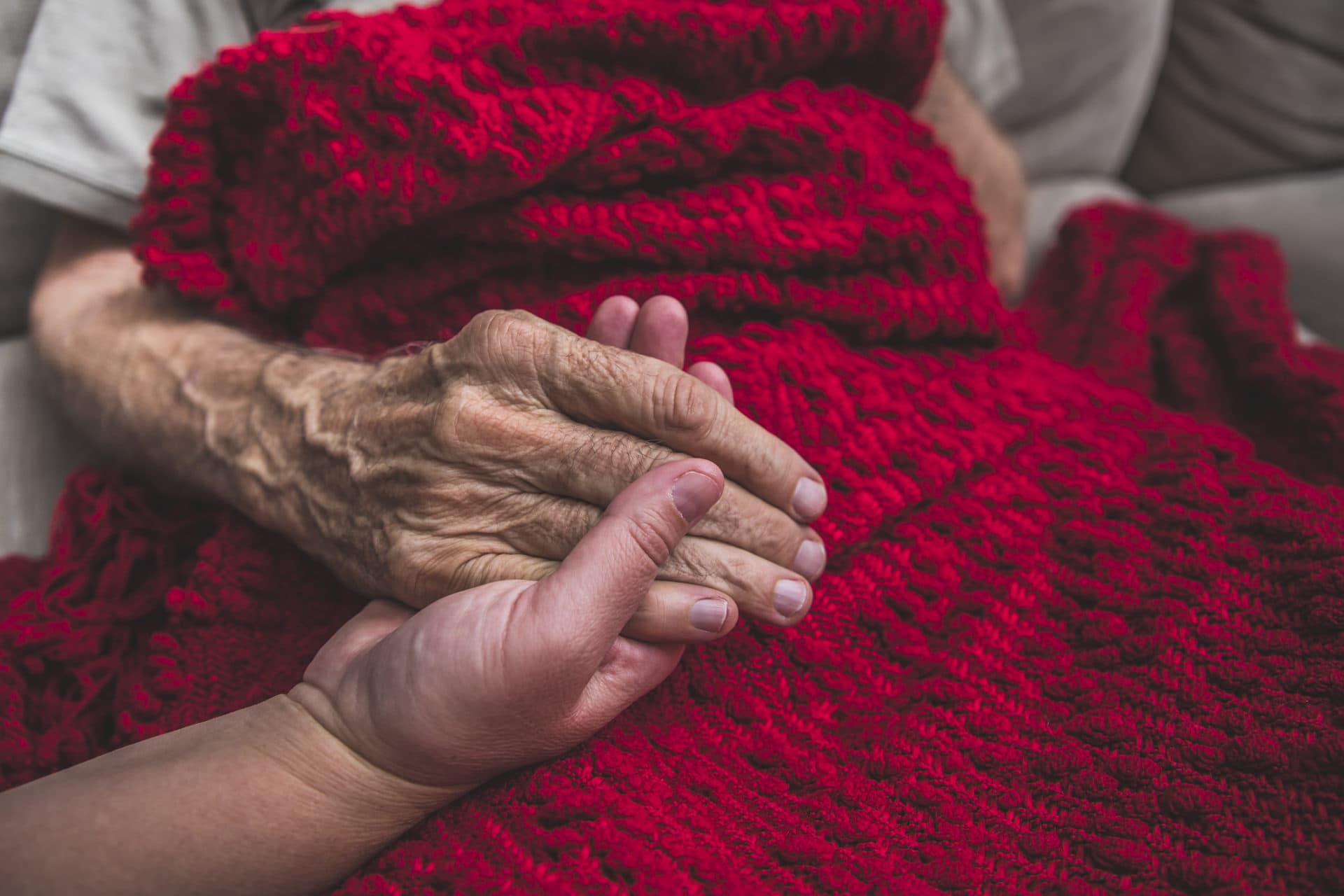
This is complete nonsense. The British public knows very well that the HNS is (or was) and should be "free at point of use", and also paid for via tax. The public want it and want it well funded. The current British political establishment does not like this state of things and seeks to privatise it, but due to the popularity of the NHS, cannot just come out and and say it.
"That's the standard technique of privatization: defund, make sure things don't work, people get angry, you hand it over to private capital."
No, the collapse is caused by the government which has been methodically dismantling it for a couple of decades now, replacing it with private health insurance and moving the ownership of NHS trusts and GP offices to private companies.
And somebody has to pay the medical support staff.
The sense that "this is necessary so it should be free" is not unique to the parent comment, but it is incorrect.
It’s basically what they chose in this case, Medicare would’ve paid for the hospital and hospice. Even if there was a bill no one is obligated to pay it unless the estate has money for private care. In this case it’s assumed her estate doesn’t have the funds to pay for private care or rent an apartment.
Her case also seems complicated because assisted living and hospice couldn’t tend to her needs but the hospital thought a lesser facility could provide it. Bouncing her back and forth.
But presumably not 24/7 = 168hr per week, which makes all the difference (and the vast majority of the $145k in costs). 168hr / week of care will require 3 to 4 FTEs, no way around that.
I just had an elderly family member that would have died if not for the hospital saving their life but they can't stop complaining about the $4k they have to pay.
One would have to be painfully ignorant of basic economics to not see that setting up a mini hospital in a person's home is not going to be cheap. It is practically like complaining about the cost of taking a private vs commercial jet.
What's the long term plan for the UKs elderly healthcare programs that it's an aging country?
No it is clickbait because it says "she died at home" when in fact she died in an expensive rented apartment. This fact is unrelated to the reality that the system is broken and people can't get the care they need.
https://en.wikipedia.org/wiki/Liverpool_Care_Pathway_for_the...
As others have pointed out, it didn't cost "£0". It cost your fellow citizens the full amount. "The government" didn't pay her rent. Your fellow citizens did. "The government" didn't pay your father a carer's allowance. Your fellow citizens did. "The government" didn't pay for doctors and nurses to travel to her home. Your fellow citizens did.
Now, I, personally, would prefer to see massive reforms in the U.S. system. But pretending that any system is going to cost "£0" is just intellectually dishonest.
a lifetime of having way more than HALF your income stolen from you..... 0? okay..
I would argue taxation is only theft if the money is spend on extremely bad, costly and possibly corrupt policy decisions like US wars in Vietnam, Iraq, Afghanistan or even the war on drugs. Probably a lot of these policy decisions are influenced by lobbying from various industries and special interest groups. Follow the money.
The American Healthcare system is insane but at least in this one regard the cost of being an unreasonable egoist is not being paid by the rest of society. Go fucking die in a hospital like everyone else and don't take away limited resources from people that might actually get better. Or if you do, at least pay the bill yourself.
State paid nursing home fees are like $150k/yr last time I checked, most of that going to administration. It's certainly not going to the nursing assistants that they don't hire who aren't checking on you. Plus the portable mobile equipment (xray etc) that someone drives over and wheels in to perform perfunctory diagnostics, plus the ambulance rides back and forth to the hospital as the nursing home covers their ass, plus all the bills you rack up at the hospital as you're repeatedly dumped into the emergency room.
Like it or not, that system has already been heavily socialized in the US. The only time someone is on the hook to pay is if their estate has money, which is avoidable with some estate planning (5?) years ahead of time. That's the fallback option for everybody "lucky" enough to reach it. It's gruesome, but not because it's cheap.
FWIW When I was going through this with my dad, the private "insurance" company (a medicare advantage vendor) was starting a program where they had on call doctors that they wanted to send to your home, because keeping you out of the hospital saved them a significant amount of money.
In fact it even motivates me to start planning out costs with them.
Sometimes the point of articles can simply be to relate one’s own experience to other people.
If the deceased person owed the medical bills - well guess what? she is dead and won't have to pay them unless the creditors go after her estate - if the family's complaint that now their inheritance is going to be less than they thought - too bad.
"I saved my whole life, and wanted to make sure I could give a little back to my loving family, but instead the healthcare industry soaked it all up during my final months."
In civilized countries, somebody else would pay for it. Not through magical fairies, but through taxpayer-funded public healthcare. Instead, in the USA, we're Rugged Individuals™ so we prefer to have a gigantic profitable End Of Life Industry precisely designed to sponge up whatever remains of an elderly person's savings. If you have $500K in assets left, your end of life care will cost $500K. If you have $100K left, your care will cost $100K. If you have $10K left, it will cost $10K.
The solution, in our flawed system, is to do smart estate planning so you die with zero assets. I don't need my parents' money when they go, and I've already told them if they want to help out my sibling or give it to charity, either do it before they die or get it in a structure that can't be confiscated by death profiteers. Either way, have $0 to your name when you finally pass away. Don't give these vultures another gold-lined toilet for their executive suite.
"I saved my whole life, and wanted to make sure I could give a little back to my loving family, but instead the healthcare industry soaked it all up during my final months."
An awful lot of people in this country will never get an inheritance; why is it fair to ask them to pay higher taxes so that the most privileged people can leave bigger inheritances to their kids?
I have no problem with people leaving money to their kids - after they pay their own bills. Don't ask me to pay them so your kids can get a bigger windfall.
Somebody else paying doesn't make the cost go away. Would it be better to make their children or grandchildren pay?
Would they be better off if they payed 150k in taxes and had no inheritance because of that?
Why is this civilized?
The tragedy of modern medical care if you're over 65 is that it's hard to die. Medicare only pays hospitals for results, so there are powerful incentives to limit hospital stays as much as possible - unless you're in an ICU or similar scenario, if you are hospitalized more than a week it's likely because someone fucked up, and Medicare will reimburse the hospital next to nothing as a result.
It's easy to get sick or become incapacitated, but people can and will "save" you and leave you in a situation where you are not well, but not dead. The options are 120 days of Medicare nursing home coverage, followed by a slow drain of all of your assets and ultimately Medicaid enrollment. Nursing home means you're effectively warehoused, and the more help you need, the less care you get as you become a cost center.
It's not just a matter of finances, it's a matter of humanity. The harsh reality is your disabled loved one will be treated like cattle unless someone who cares is directly engaged in caring for you. After the horror that my father went through after a suffering a stroke, and the pain caused to my mother after she took on full-time care, I did what most doctors do and have DNR care instructions on file with every hospital in a 50 mile radius.
>Medicare should restructure hospice reimbursement to cover more of the hands-on caregiving, thus decreasing the financial burden of dying at home.
The main pitch is somewhat hidden in the middle of the article. Its a tough point to open with, but I think leading with the thesis statement is proper.
Yes. Where are all the people who were apoplectic about the Nord Stream post?
My father died in Canada last year after a 9 month battle with cancer during which time he spent almost 2 months in cancer ward. He was not rich. He recieved cutting edge targeted chemo-therapy. He died peacefully with the aid of MAID in his small home town.
It cost my mother $150.
You're welcome.
Of course at this point in his life he had 4 doctors. His cancer doctor was not happy with the decision, she wanted to (and they could perhaps have), kept him strung along for several more months. His cardiologist and nephrologist (cancer was targeting his heart and kidneys) has done multiple proceedures and had plans for the rest of his life (again, we're talking months, at most). His family doctor was a wonderful provider and friend. There were no whispers from any medical staff saying "do it", "do it".
My father was fiercely logical, probably akin to many who post here. It was his choice to end his life on his terms. I have the conversations where he was assessed recorded, the only coercion was his.
I recognize MAID has detractors and is a very complex subject. We still (of course) discuss what happened and are grappling with his loss, but from my perspective it was empowering, it minimized suffering (for all of us, not just Dad) and gave someone their last feeling of agency.
I think the biggest point of contention is that reasonably well kept and healthy people are receiving little to nothing for their money in the present. eg, I got tons of push back asking for simple lab tests like cRP or dermatology cancer screening which would have been less than 10% of what I contribute to the system. Another time I literally waited in a ER room until my loss of blood made me a triage priority. The amount of resources available due to the market distortions means they have to defer you until you're worse off than when you walked in.
Compare that to fast (always <1 hr, even for non emergency things like a dislocated finger) and reasonable waits anytime I've been to a hospital in the US. Mind you I've also probably spent a total of $40k (not my portion) in ~8 yrs of residency between insurance costs and copays, more than half due to a heart attack scare and ER trip that ended up being myocarditis from the vaccine.
So what's my point in all this rambling? I think there's a ton of unlocked value in the US system to do more preventative care, but the US is anti-paternalism and often lets people do stuff that costs them in the long run (unwittingly or knowingly). But there's a hidden truth to Canada's system appearing so rosy -- at least as the payer and consumer I feel I get more for less in the US. Whereas in Canada you have better average outcomes because you take marginal care (eg preventative tests) from those who pay, and give it to those who cannot pay but may have a marginally more improvable conditions (eg bleeding out, having a heart attack).
[1]: compare to about a quarter of that in medicare on much higher earnings
I’ve waited months to be able to see a doctor. In fact, I’ve just recently seen a dermatologist after a 9-month wait. No one else had anything sooner.
I’ve learned with the US system there are a lot of hoops you have to jump through for care if you want insurance to be happy. I have to go to one or two other clinics or quick care facilities in order to get in to see the doctor that I actually need. And once I have a prescription it’s always a prior-authorization fight to actually get the meds.
And all of this, knowing that I can’t ever take a sabbatical since COBRA, on top of my monthly expenses, would be prohibitive.
So, it feels like the US system is the worst of all worlds. I’ve got the waiting and the pushback and the expense.
Even if I never use public health services my entire life (I mean I obviously already have) I'd still be happy to keep paying that tax.
Why? For the same reason that I don't mind as a gay man who will never have kids that my taxes also go to: welfare/benefits for families in need, helping children, building/benefiting infrastructure I will never use.
All of humanity is in this together, on this tiny blue sphere. If people are focussed only on maximising things purely for themselves and not others at all, then have we really progressed at all as a species?
IMO Rejecting someone preventative care ($1k tops), when they give $18K to the system is a broken balance. The claim/demand is not $18K in, $18K out.
Cheap though.
Finally, the day of, anyone accompanying the family is asked to wait while “the lines are put in”. The wait is far longer than the time required to put in lines: they interview the patient again, this time to ensure that they are there of their own volition and not being pressured by the people accompanying them.
The entire is graceful and professional.
Sure, but by being taxpayers, your parents already paid a substantial portion of the cost forward by paying for the healthcare of other people. Perhaps they were net takers from the system, but presumably people on HN have parents that are net contributors to the system.
I would rather die a few years earlier than live my last few years this way. It'd sure cost less too.
So it does depend on the individual and their specific circumstances.
Terry Pratchett, after being diagnosed with early-onset Alzheimer's, made a documentary called Choosing To Die, which you might be interested in. He had stated that he wished to die by assisted suicide, but ultimately Terry died at home from Alzheimer's.
That being said I think assisted suicide should be an option and everyone should have this option.
This is under-reported but there is a very high number of suicide in this age category.
I don't think the desire to live vanishes, but some of us are simply not willing to live miserably for months or years.
At some point it is clear that there is no turning back, being stuck in bed for a few days or weeks can be acceptable, but not if there is zero hope of regaining autonomy.
Also, I am not found of the business side of this, I think this is extorsion, preying on the weak.
I recall my grandmother in the hospital with pancreatitis, in serious pain, saying she was ready to die, but her doctors reassuring everyone that actually her situation probably wasn't life threatening. She was in her 90s already. She had outlived her husband by decades by that point. She had outlived multiple batches of friends at her retirement community. She did live for a few years after that incident, but I understand why she was ready to accept death.
When she could no longer care for herself, a hospice nurse came twice a day. When the end was close, family moved into the house, and children were taken out of school. She pass in the comfort of a familiar setting surrounded by loved ones, and everyone witnessed her last breath and death rattle.
It was a very wholesome experience and how I would want to go.
Not true.
My father wanted to die for the last 6 years of his life.
He would talk about it and obsess about his death in eager anticipation.
His last words that followed by three days of not eating or drinking were "Can't this go any faster?"
Just not wanting to live, and not being depressed about it, made transition easier for me personally.
He was never in pain during this time, so I didn't feel compelled to help him die.
People plan and choose to exit early all the time. Some people don’t want to live, even when death is nowhere near, but stick around because they don’t want to devastate their family.
Honestly, you sound like someone who likes to pretend to have insight into the human mind, but you can’t be bothered to actually invest the time listening to people you don’t understand.
What's your plan?
You'd rather die than have a tube stuck up your arse for 5 minutes? A colonoscopy is really not that big a deal
You can now chose to be on life support for 2 more year at the cost of pooping pants and being on drugs. I bet, life support does not sound so bad.
Which parts of your body are you willing to let degrade just to continue breathing and reading reddit about stuff that you will never live to see happen anyway?
We treat animals better than this.
I hope by the time it's my turn my family is able to end my life once the outcome is certain instead of watching me waste away day after day in a hospital bed until my body finally fails.
It’s not for everyone but she is much happier here than in a nursing home.
Once you've been down there for 5-10 years, why would you come back? There are huge communities of retired expats in Mexico. We're talking 5-10k expats all visiting the same grocery stores, churches, etc.
My parent's best friends down there grew up in the same era they did, often in the same regions of the US. I don't know what my parents would come back to the US for?
Sure. Once you have a community in another country, there are very few reasons to return back. But not everyone can build a lasting community. For them, returning back is still an option.
That said, I agree that even hospice and LTC is cheaper in other countries. Just take your money and live there in peace.
1. Kid(s) that will take care of you, or at least hands on supervise your care and fill in gaps in staff.
2. As little time as possible between being in rehab/hospital, and hospice.
3. Money
If you have at least two out of those three, you won't have a horrible experience dying. Otherwise you end up in the state-paid nursing home gristmill, where you can at least take solace that they've checked the boxes on the paper saying they're turning and cleaning you.
A really worthwhile read are some of the essays online with basically the same title: How Doctors Die. Doctors, who are familiar with the process of dying in a hospital, typically do not wish to die there (it is miserable), and choose to die at home.
I wish our society had a better ritual around death. Having an option for the dying person (if they are of sound mind) to choose euthanasia would be very merciful.
I'd like to know what this actually means. Where did the money come from? Was her grandmother destitute and so the money was pooled from other family members? Was this debt that her grandmother accumulated that was written off when she died? Or, was this paid out of her grandmother's retirement funds?
If you're including rent in the cost, did grandma have a home that she sold? Would she have been paying that much in rent anyway if she wasn't sick? Would it have been cheaper if she didn't live in one of the nations more expensive cities?
I would be willing to wager that the 'cost' was in a reduced inheritance.
Assisted death will get a lot of callout as its becoming popular but its not 100% the answer either. Legitimately wondering how older generations dealt with this problem. Did old people just die randomly and then they were buried and that was that?
My grandfather had a heart attack and bypass fifteen years ago. He's been pretty much bedridden for the last two of those, needing my mother to look after him full time.
My grandmother passed away after 6+ months of needing more and more oxygen. The last three months she needed full time care.
100 years ago they both wouldn't have lasted more than 2-3 months, and would have needed very little care for most of that time.
Now, for the most part, both spouses work and neither has any interest, or ability in providing that care because their own living expenses are such that they can't just forgo one salary to be an at home caretaker.
In most places on earth the elderly live with their children. The children care for them, then yes they die.
They’ll often be buried in the yard if they have land or in a plot designated (graveyard). Alternatively, they’ll have some sort of cremation ceremony.
Pretty much been that way forever. The last 70 years in the US has gotten exceptionally weird, looking through a historical lens. Frankly, it looks like we hate our elders.
Leads to interesting debates/arguments on what is living versus simply being alive
edit: Wouldn't have thought any of that was terribly controversial. I'd be interested if those having a negative reaction would post some response so I know what makes that opinion problematic. No need to get into an argument, I'm just genuinely curious.
>unless they have family members who are willing to give up their own lives to be caregivers
Where my ancestors are from, this is what happened. 99% of the time, this responsibility fell on women, because they had no option.
I have no interest in seeing my wife or daughter or sister (or son) suffer the same fate, so suicide (preferably assisted) is the answer in my view.
Being "on hospice" when you are in your last months (again I don't remember the medical term), in Massachusetts is free. The family is responsible for the round-the-clock care, though. The real difficulty isn't the money: The state is very good at placing people who can't pay. The people who get squeezed are those of us who want an inheritance, or the spouses who need to keep money for their own end-of-life needs, yet are unable or unwilling to take time off from our lives.
In my case my dad was under quite a bit of emotional stress, and when he's in that state, he gets irrational and can't make a decision. My mom was clearly in her last few days, but he was afraid he'd have to pay for many weeks or months of onsite hospice stay out of his own pocket. Even if that happened, he still had her brand-new Lexus and his own 1-year-old Highlander, a much larger house than he needs...
There's the world's smallest violin playing for these people. The amount of delusional privilege to be in a position where you not only expect an inheritance, but also expect a certain amount of the inheritance, and yet refuse to care for your elderly is mind-blowing.
It's on par with parents who kick out their adult children out at 18 years out of the house.
Those 2 groups of people will firmly be labeled as pieces of shit in my mind and no amount of arguments will ever sway that position.
You just said the quiet part out loud, and is my biggest gripe about sob stories like this - it is almost always about the children resenting the fact that some of their parents money is going to be spent on their elder care when they would prefer 'someone else' pick up the bill, so that they get a bigger inheritance.
They determined that we should pay. The (cough) mistake that we made was we gave her painkillers before the visit because she was writhing in pain. If the social workers saw the writhing, they would have picked up the tab. (The hospice later retroactively admitted her so we paid nothing.) Edit: And I don't regret giving my mom painkillers.
But, I had to make a point to my Dad that the social workers saw his nice, well kept house, all of our nice cars, pictures from nice vacations, ect, and decided that $400-$1200 to keep Mom comfortable was well within our budget.
And a brand new Lexus sells for much more than $30k.
So my general point is that someone not wanting to have their own financial situation severely destroyed by long term care of an ailing spouse isn't categorically unreasonable. And as far as the next generation - you can either accept that medical vultures will devour your parents' estate and you'll get nothing, or you can step up and take responsibility for their care when the time comes, and perhaps inherit something. Your parent's quality of life will generally be much better if you do step up, but it's not the kind of job that can just be outsourced as we've become accustomed to with everything else these days. (and obviously this advice is modulo one's specific relationship with their parents)
I'm sorry for your loss, and hope things are going alright between you and your dad.
Then an inevitable conclusion is reached: being a homemaker is like being employed but not compensated.
The point is taking care of your family is something people want to do to maintain family relationship, connections between generations and self-identity. It's a choice, not a forced expenditure.
And it's not meant to be pleasant or easy. It's not a hobby. It's a fabric of a well lived life.
We've had this talk with both my parents and my wife's parents. All four of them insisted they do not want to be a burden to us and we should never allow them to move in with us. Most of our parents took care of at least one terminal person in their life and experiencing that changed their opinions radically. It can be an almost impossible burden, no matter how much you love someone.
Thankfully in our country we have both the law and basic insurance that takes care of all those costs in the last (terminal) phase of our lives, but you still have to design your testament and other documents in such a way that your money cannot be claimed for these costs.
When the time comes, i want to be put in the Euthenasia Coaster ( https://en.wikipedia.org/wiki/Euthanasia_Coaster ) , but if they have not built that yet i might settle for the $20 heroin overdose.
The question that society seems to be encouraging is "how are we going to pay people to take care of the old?".
The question we should be asking is "why are we paying strangers to take care of you when for most people, their children should be there at the end of life helping, showing love, and thanking mom and dad for all they've done?".
There's a significant cost to the direction that society has gone in the last hundred or so years.
> Deemphasizing the importance of family bonds by encouraging government to be the social safety net. This problem will only be exacerbated by increasing the social safety net further.
> Compelling nearly all women into the permanent workforce, ensuring that most families are in no position to be able to do anything other than maybe get in debt to pay a stranger to care for their elderly parents.
> Encouraging women to have fewer and fewer children even while encouraging mass migration to replace the existing population, ensuring that the problem will be even worse the more time goes on.
Speaking to the possible point that kids 'owe' their parents for their upbringing: As a father of 5, I strongly disagree.
Fatherhood is, by necessity and actuality, service. Children don't ask to be born; I believe creating them into a position of debt is a poor rendering of that service.
The point is that every parent should treat their children well enough that they love and honor their parents so much that they want to do all they can to help when the parents need help.
Even the worst psychopath parent has a bit of incentive to treat their children well if they knew that this was the difference between having some comfort in their old age or being forgotten in some dreadful government facility being half taken care of by some stranger who doesn't give a fuck if they lie in a pool of their feces for hours.
In Canada a growing in popularity option is to kill yourself.
This is Denmark.
Yes it was a sacrifice. But it was a sacrifice that was worth it, and nothing less than what we owed to our parents.
Offering advice on the provision of goods and services without cost information is stupid. It’s like one grade schooler telling another “yeah, you should totally buy that real life Ferrari.”
> The problem is that the bulk of the hands-on care in hospice — including changing diapers, feeding and giving medications — still falls to the family.
Amazingly, she acted as a salesperson for services whose service level she didn’t understand. On top of that, instead of learning a lesson and sharing better approaches with others she promoted additional subsidies to the existing dysfunctional system.
It did require having nursing help at home and it did cost some money - but it was still cheaper than being admitted in a hospice or a hospital.
You mean like what Grandma or Grandpa did to bring life into this world. Your life I might add. You owe them so much and you haven't clue. It is worthless and shameful.
I don't agree that my children should be responsible for the obligations that follow my choice to have sex. Further, decades of parenting taught me that as far as there is a debt, it is mine to pay. Parenting is service.
ref: Father of 5. https://news.ycombinator.com/item?id=34724289#34725607
But more specifically...
Leviticus 19:32
Exodus 20:12
Ephesians 6:1-3
It is more than a restrictive immigration policy. Many other caregiver policies exist as well. I have an acquaintance that runs an adult foster care home with 5 rooms. When he added a second facility he went from providing care to being a paperwork pusher for the federal, state and local governments. This is the real reason is costs so much.
This article left me fairly confused. Why is the author talking about dying at home and in a hospice interchangeably?
I'm just speechless about all of that at this point and very glad the I live in Europe, where we have things like these figured out.
(edit: yeeeeaaaaaah, not everything is perfect in Europe, either, but nobody will be left with a bill of 150k € if your grandmother wants to die in her home.)
OP's grandmother had a team of support people giving her medication, changing diapers, monitoring equipment for an undisclosed period of months.
No where in Europe is 24hr support available for free in your own home. That simply isn't scalable.
Moreover, it should be noted that none of the family was willing to do this - so they were forced hire outside care.
The US healthcare system isn't great - but this article smells like spoiled rich people annoyed that they have to pay for rich-people-level service themselves.
She was fortunate enough to afford the constant care and was basically employing a full-time nurse. That adds up.
Watching someone pass away is never pleasant, but there are limits to public generosity.
Also, check with your local council as there's a lot of support that is not well publicised (particularly for making modifications to your home - which can lead to reduced council tax bills). Unfortunately GPs often don't seem to be aware of what is available - it could be worth talking to your local hospice (even if you aren't end of life) as they tend to be much more clued in.
i'm not complaining about the nhs here - in general the help and treatment i've received has been exemplary.
> Currently, Medicare only covers an average of two hours per day, five days a week, of home health aide coverage for a patient in hospice care.
But yeah, if you've got the money to take care of yourself, you'll have to pay it. My grandparents had a low-enough income that the care takers (twice a day) were free for them.
In the US you have a lot of different options depending on financial ability and your choices. Some aren't choices, and some are. In this case the individual choose to spend an in-ordinate amount of money - their choice and they have to pay for their choice.
Do you have the luxury of choosing in your country or does the government choose for you?
I'm unsure where this belief originates from, but it's not true that state provided care is the only care in countries that offer it. There's very few places on earth where money cannot be used to improve quality of care: the state guarantees provision of a minimum level of care, rather than impose a limit on the maximum.
My father passed away last year and towards the end he had carers at the house 24x7.
A 24/7 _at home_ and _medical_ care will cost a fortune anywhere in the world and is never covered unless you have a very expensive private insurance to begin with
I seriously doubt that.
That’s what this person spent on their grandmother. There’s a huge difference between “wanting to die at home” and “wanting round the clock care at home”.
You can die at home for effectively free.
You could do that. I have seen it before, back in Spain. It is expensive, but not $13,000 a month.
It would not make much sense to pay this much, when nurses themselves make, on average, a small fraction of that.
As everyone knows, most of the US budget goes into defense. Most Americans are not keen on that fact, but I don’t see Europeans complaining about it when countries like Russia go on the rampage.
- article from CNN
Some of this is driven by ideology - low tax, small state. And some of it is driven by greed - lobbying by large US healthcare groups, or more obviously owning shares in those groups.
This has led to an almost deliberate policy of mismanaging and underfunding in real terms the NHS.
In the USA, my grandma died in my parent’s home 10 years ago and there was no bill. She was upper 90s, refused treatment, and doctors prescribed morphine for us to give her so she could die peacefully.
I think a nurse came everyday just to check on things.
For a 30-day month, that's $16.77/hr to the worker plus $1.28 to SS/Medicare if you allow for 0 minutes of shift-hand-off, PTO/sick, etc.
How much less than $16.77/hr do we think that care should cost? (Note that Massachusetts has a $15 minimum wage. This care cost less than 12% over minimum wage.)
That being said the corruption in the us system is insane, insurance companies being protected by regulations against competition, big pharmas regulatory capture and media control, etc.
The answer is a more competitive marketplace, including non profits. Not a eu socialized model.
Honestly, if I lived well into my 80s and a last few horrible months was going to cost over $100K of money I didn't have to spend and eat up 2-3 peoples full time efforts, I'd probably just opt out.