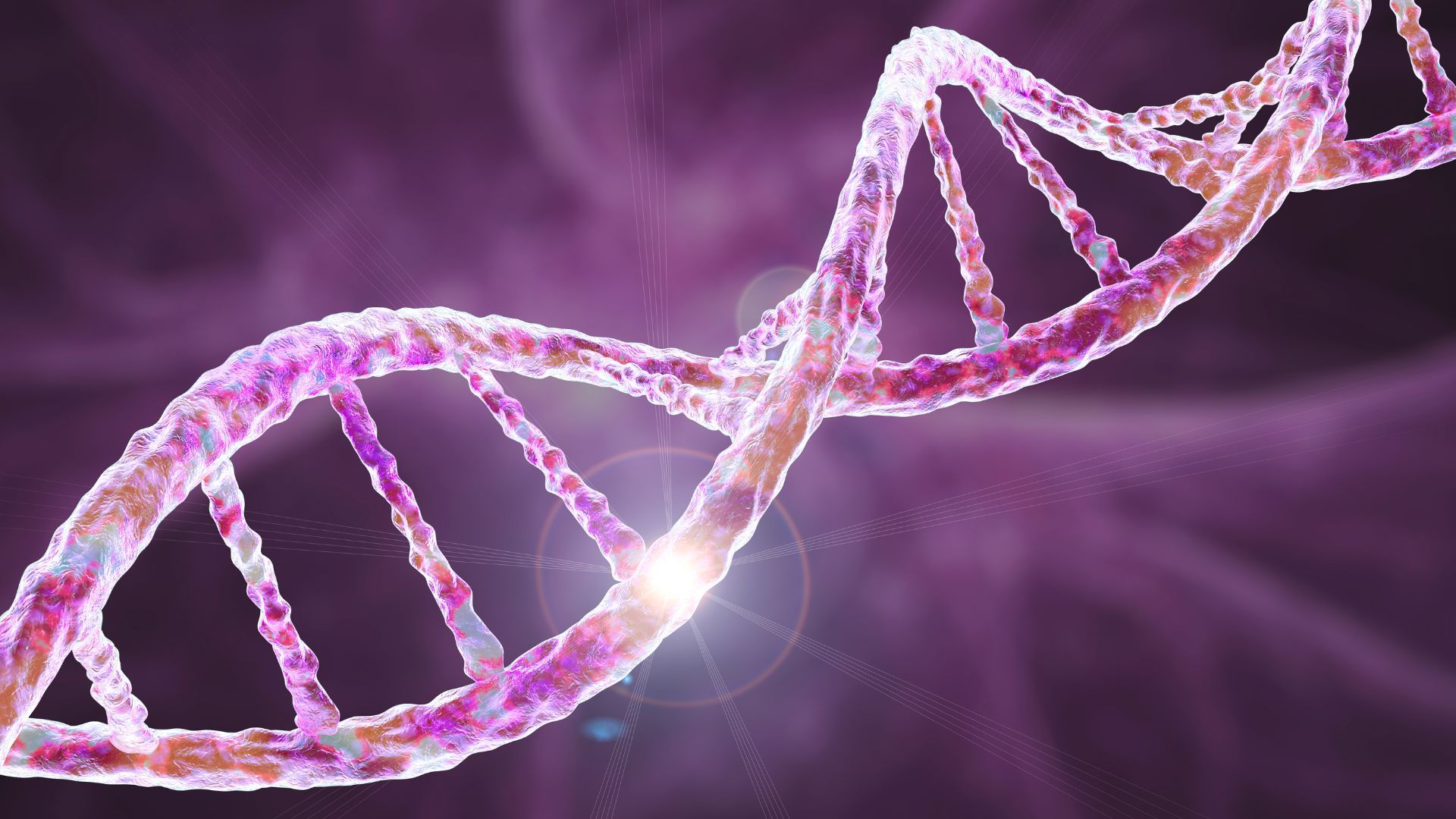
1st UK child to receive gene therapy for fatal genetic disorder is now
A baby with a rare inherited disorder became the first child in the U.K. to receive a new gene therapy for the condition.
Live Science
791 points · by ryzvonusef · 3y ago · 187 comments
> The new gene therapy [...] works by inserting into the body working copies of the genes that are faulty in MLD, thus restoring the ability to break down sulfatides.
How does the new copy of the gene get into every existing cell that needs it? A virus?
In general, gene therapy is probably most useful currently for diseases that affect the bone marrow (and the eyes), because these are two tissues where you can precisely deliver the virus. It's still challenging to control where the virus goes and which cells it infects if you just inject it straight into the bloodstream.
I would also have to imagine they would have to do myeloablative chemo or radiation to make sure the fixed cells propagate more than the diseased cell line.
Edit: read the study, they do give them the same chemo used for normal transplants.
https://ashpublications.org/blood/article/104/12/3501/89040/...
>Previous studies have shown that 30% to 70% of all patients surviving beyond 100 days after HCT require treatment for chronic GHVD,2,4-6 often for more than 2 years.
Re: a better system is where you don't need donors:
https://www.cbsnews.com/newyork/news/l-i-woman-dies-after-ma...
usually a massive dose of radiation, right?
This paper seems to have more details on the actual procedure
Patients were treated and monitored according to the schedule described in the appendix (p 17) and as previously reported.16, 17 HSPCs harvested from bone marrow or mobilised peripheral blood (MPB) were transduced with clinical-grade lentiviral vector encoding human ARSA cDNA under the control of the human phosphoglycerate kinase gene promoter.
This does not imply that germ line cells were changed and COULD mean the person could still have a high risk of making children with the original gene defect.
In most cases, the original disease-causing stem cells are effectively eliminated by the conditioning regimen (high-dose chemotherapy and/or radiation) used before the (autologous) transplantation, so they do not regenerate and cause further harm to the patient. However, in some cases, residual disease cells may survive the conditioning regimen and persist after transplantation, leading to disease relapse. This is more likely to occur in patients with aggressive or refractory disease or in those who receive a mismatched or haploidentical donor graft. To prevent disease relapse, post-transplantation maintenance therapy, such as immunosuppressive drugs or targeted therapies, may be used to eliminate residual disease cells. Additionally, close monitoring of the patient's blood counts and immune system function can help identify and manage any signs of disease relapse.
    > Libmeldy is made using stem cells that are derived from a patient's blood or bone marrow and can give rise to different types of blood cells, according to the European Medicines Agency(opens in new tab) (EMA). These stem cells carry the new, functional genes into the body, where they give rise to white blood cells that travel through the bloodstream.

    > In clinical trials, Libmeldy offered clear benefits to infantile and juvenile patients who hadn't yet developed MLD symptoms; these patients were able to break down sulfatides at normal rates and showed typical patterns of motor development, for example. The benefit of the therapy seemed to last several years, but at this point, "it is not yet clear whether it will persist life-long, and extended follow-up is needed," the EMA noted.

    > Libmeldy is approved for use in the European Union and U.K., although the U.K.'s drug price watchdog initially rejected the therapy due to its hefty list price of £2.8 million ($3.4 million at today's exchange rates), BBC News(opens in new tab) reported in 2022. The therapy's manufacturer, Orchard Therapeutics, then offered Libmeldy to the NHS at a significant discount.

> The gene therapy has not yet been approved by the U.S. Food and Drug Administration(opens in new tab).First gene therapy for Tay-Sachs disease successfully given to two children - https://news.ycombinator.com/item?id=30408104 - Feb 2022 (77 comments)
“ Mutations in the VHL gene cause von Hippel-Lindau syndrome. The VHL gene is a tumor suppressor gene, which means it keeps cells from growing and dividing too rapidly or in an uncontrolled way. Mutations in this gene prevent production of the VHL protein or lead to the production of an abnormal version of the protein. An altered or missing VHL protein cannot effectively regulate cell survival and division. As a result, cells grow and divide uncontrollably to form the tumors and cysts that are characteristic of von Hippel-Lindau syndrome.”
https://medlineplus.gov/genetics/condition/von-hippel-lindau...
Like, it is very, very small thing. How do you even measure it, let alone replace it?
Measuring is an absolutely fascinating procedure. The predominant method is called sequencing by synthesis. Illumina is the company that basically rules the market for this technology, they have some decent explanatory videos if you’re interested.
The first steps are to isolate DNA, then break it into small bits, replicate those small pieces thousands of times, and then anchor these to a glass slide. Then flow a solution over the slide with the individual DNA bases (ATCG) that have been modified to fluoresce when illuminated with a certain wavelength of light. These fluorescently labeled nucleotides get assembled one by one into strands that match the small fragments from the DNA sample. Each time the fluorescent DNA bases are added a laser is shined on the glass slide and a very sensitive microscope camera reads how many strands shone at the frequency that corresponds to A T C and G. This tells you which base just got added to which strand. Repeat a couple hundred times and you have a huge number of sequences of ATCG’s corresponding to each short strand of DNA in the sample.
The problem now is assembling these short sequences into a full genome. Basically, the puzzle is finding the arrangement of short sequences that maximizes the overlap between them and their agreement with a reference genome. It’s a pretty interesting problem that (I believe) is classically solved with dynamic programming, although I don’t know the most recent methods.
I really don’t think it’s well enough appreciated how integral computation is to DNA sequencing. Signal processing in the camera, assembling the genome fragments, determining whether a mutation exists, and all the subsequent analysis to give biological meaning to a sequence.
Edit: editing is a whole other, extremely complicated procedure. In fact, direct editing isn’t really possible now. Instead we can basically just delete and insert.
This is the kind of content I visit this site for.
Don't take the chance, people. Edit your DNA with notepad.
We have a set of tools that let you determine biological structures (sometimes entirely, sometimes only partially).
We also have a set of tools to modify genes. Some viruses already do this, so we use them. Were also using CRISPR which is based on the machinery of bacteria.
So you use the modification tools to change genes and the analytical tools to prove you did it correctly.
Of course the level of complexity is way higher since your dealing with a living organism and the modification tools (and analytical tools) aren't perfect, so there is a ton of trial and error to do to correctly.
This formulation has the added benefit of not being easily answered with a flippant remark.
With genetic diseases often the difference between healthy and not is a single enzyme is missing.
If you can prove the enzyme level is restored and all the downstream effects match healthy individuals, youve basically restored them to what healthy people are.
Durability of the change is the big issue. Some gene therapies wane over time.
And of course if damage had occurred before the gene therapy, that may never go away.
> Roughly six months out from treatment, "Teddi is a happy and healthy toddler showing no signs of the devastating disease she was born with," the NHS statement reads.
and later
> In clinical trials, Libmeldy offered clear benefits to infantile and juvenile patients who hadn't yet developed MLD symptoms; these patients were able to break down sulfatides at normal rates and showed typical patterns of motor development, for example. The benefit of the therapy seemed to last several years, but at this point, "it is not yet clear whether it will persist life-long, and extended follow-up is needed," the EMA noted.
Which is much more nuanced.
Of course, it shouldn't have to be either/or. Unfortunately, the institution (NHS) has been driven into the ground and we're all paying taxes for practically nothing in return.
> The National Centre for Pharmacoeconomics (NCPE) in Ireland recommends "that atidarsagene autotemcel not be considered for reimbursement unless cost effectiveness can be improved relative to existing treatment."
Wow… instead of a lifesaving cure they recommend the treatment of the symptoms until the kid dies because it’s cheaper.
Somewhere in the middle is where most people disagree.
It's worth mentioning that the study in Ireland indicates that the treatment extends life by 14.49 QALYs (average "Total Life-years" moved from 8.92 to 22.74), which is a long way from a cure. If this is truly a cure, and the treated population lives a full life (life expectancy in Ireland is current 82 years, not 23), then this treatment will become cost effective without any change in the treatment or it's cost. The posted article agrees that this is the big open question.
> The benefit of the therapy seemed to last several years, but at this point, "it is not yet clear whether it will persist life-long, and extended follow-up is needed," the EMA noted.
Even if the estimate is accurate, there is a massive qualitative difference between slowly dying horribly for 'x' years and living a normal life for 'y' years. You can't just subtract 'x' from 'y' and come up with a delta and compute based on that.
Reminds me of the studies that showed that Tamiflu is ineffective because it only reduced the duration of influenza symptoms by 1/2 a day on average. Yes, that's true, I've taken it myself and the symptoms continued for about the normal period of time. But it reduces the severity massively. It's like a light switch. The most severe flu suddenly turns into the mildest of mild cold-like symptoms in a matter of hours. But... that's hard to measure objectively, so it is not recommended because the according to a metric that doesn't matter it doesn't work.
The statistics and metrics in medical papers are woeful, which is why it's commonly accepted that 1/2 of all medical research is false.
If only there was a measure that was adjusted for the quality of the year. Some sort of quality-adjusted life year.
Yes, it's not a perfect measure (how could any quantitative measure of a qualitative thing be perfect?).
The difference in measured in QALYs - quality-adjusted life years. The study attempts to take that into account.
> They can't possibly know that the drug extends life to "22.74" years, because it has only been approved for use for the last 3 years! This is like asking for 30 years of Kubernetes experience on a job application.
Yes, exactly my point. The long-term effects of this treatment are what will make it worthwhile or not. Trying to extrapolate a few years to a full life does not make that an easy exercise.
Ok, this probably needs some extraordinary evidence …
> which is why it's commonly accepted that 1/2 of all medical research is false.
The irony
You might not like the utilitarian approach but this is how the UK measures effectiveness.
No policy decision can change that.
I suspect we can somehow find enough pennies in the couch cushions to get those kids a therapy, especially if it's curative.
That's the same sort of ethical calculus that goes into deciding the distribution of any life-saving resources.
We can always spend more (resources/social capital) to save more lives/years of life. How do you decide where that line gets drawn?
Most medical systems decide it by looking at the cost of treatment (Dollars, organs, risks), and quantifying years of quality life gained. If you'd like that bar raised, increase the tax rate/insurance costs.
'Save every life at any cost' is not compatible with a world where you have decide whether your budget goes on a low-ROI, or a high-ROI intervention. 'First come-first-serve' is not compatible with a world where you are optimizing for overall positive outcomes.
Do you have any alternative guiding principle for where money in the healthcare system should be spent?
Compromises always have to be made because the world does not have infinite resources. Unfortunate, but true.
One way to allocate resources between all our competing needs is by using money.
You can come up with other systems of allocation, however all systems will be unfair and arbitrary in surprising ways. There is always a need to choose between ugly choice A and ugly choice B, because our resources are constrained.
Rules for life insurers are different and in some circumstances they may deny coverage.
You have X amount of dollars. You can spend Y percent on healthcare. How do you spend Y to have the greatest benefit? Save 1 patients with a $300,000 gene therapy, or save 1,000 patients with effective treatment for their diabetes.
Until we have unlimited resources, that trade off will always be made.
Look at the Blue Cross Blue Shield plan for Michigan. It covers a number of gene therapies at a cost of $2.2M for one of them.
Not all European countries pay for it.
https://www.bcbsm.com/amslibs/content/dam/public/employers/d...
Best of the both worlds.
I think a big problem is you don't currently realise just how many different worthy causes are currently underfunded. At a guess you could probably spend a couple of trillion a year in the UK before you've exhausted most of the nice things that could be done. There are sooooo many good things to do and only so many person hours (which is what money pays for mostly) to do them.
If you did scrap the defence budget then the money shouldn't go on treating these kids but instead should be invested in the surgery backlogs, ambulance wait times and the justice system trial backlog.
If you buy 1600 doses of it at a time they're going to sharpen the pencil for you.
Holy shit. My god, I'm just thinking of the parents.
"Sorry, we can only save one of your kids."
"You can't give Nala the treatment?"
"Well, we could. We won't, though."
I'm sure there are good reasons, but Jesus, that's harsh.
In the case of the child who already shows neurological symptoms, the treatment can help stop the progression of the disease, but most likely not reverse the already existing damage. However, there are already treatments approved to help stop the progression of the disease, including enzyme replacement therapy (provide the enzyme in charge of degrading the sustrate through the bloodstream every so often).
Some would argue that if treatments with similar outcomes already exist and are approved, it could be unethical to test this experimental treatment on a patient (I disagree).
Does that mean clincal trials didn't show a benefit for patients who had already developed symptoms? Does it mean it wasn't studied in patients who had already developed symptoms?
I don't think it's unreasonable that the NHS won't spend large amounts of other people's money on a treatment that hasn't been studied or wasn't found to be effective.
It likely wasn't studied.
It's a pretty new treatment, so the vendors start with clinical trials for use cases where the clearest/greatest impact is expected, and maybe later on move to related use cases.
King Cnut demonstrated it with the tide.
Just shockingly amazing!
I wouldn't make any bets based on Musk's posturing about Mars.
In general if Elon says it'll be done in two years time you can be confident it will take at least 3 years. Average of 4, but possibly more than 10
'Only' the mass extinction of species part isn't fixable without clarketech.
Geoengineering can stop global warming if necessary, but bringing back a destroyed ecosystem is effectively impossible.