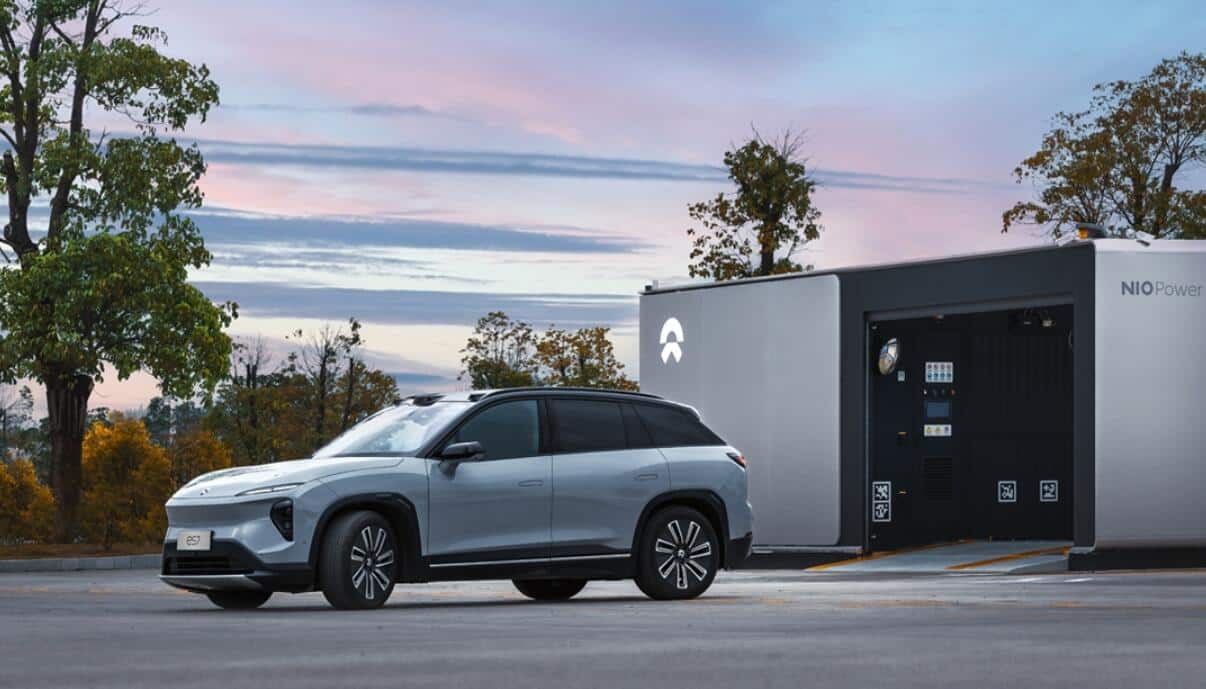
Nio reveals aggressive plan to add 1,000 swap stations in 2023
Starting in June, Nio will basically maintain a construction rate of 120-150 battery swap stations per month.
CnEVPost
35 points · by clouddrover · 3y ago · 77 comments
IMO if technology progresses and we can get rapid charging times close to 10 minutes or less, battery swapping technology will become entirely moot.
My prediction is that NIO will have to sink a lot of cost into this technology to build all the swapping stations and have all the spare packs available, and that will likely be its downfall. If you think I'm being silly, then please consider that NIO is the same company that invested in having yoga lessons at its dealerships[0], which seems like WeWorks-level stupidity to me. This company does not know how to deploy capital in a lean and effective manner IMO.
[0] https://cnevpost.com/2022/12/17/nio-opens-first-nio-house-in...
Being able to keep these things rolling and deal with battery warranty claims without downing a truck would be a real cost saver - when trucks break down it’s really expensive to either reschedule or lease short term.
https://www.theguardian.com/australia-news/2021/apr/29/swap-...
A swap station would need maintenance and refilling, so it's starting from behind and has to earn back its keep by eliminating latency that absolutely can't be hidden any other way.
It seems like something the size of a briefcase ought to be suitable for just about any format of electric vehicle aside from motorcycles, which likely would have less need for this facility anyway due to quick charging.
For that matter, any outlet in the entire world can already function as a charger for last-minute emergencies, which is a density that dedicated infrastructure could never hope to match.
1: https://insideevs.com/news/515641/tesla-models-plaid-chargin...
Renault tried to have a standard swappable battery but gave up due to too little industry following.
This is actually the same issue with using EV batteries for grid tied storage. You end up putting (many) more cycles on the battery which devalues your car.
You lease the battery, so the capital outlay for the consumer is significantly lower.
Since you can get your battery swapped you also don’t even have to worry about battery longevity either.
Not lugging around hundreds of kilos of batteries you don't need makes the car more efficient. Just swap in a big one when you need one. And you don't have to worry about battery life either as long as the battery is within specs, you are good to go. And if it isn't you just replace it and get another one.
Makes the car cheaper to buy but probably more expensive to use. And NIO gets to re-purpose the older batteries for things like grid storage without having to wait a few years for the cars to come back.
Batteries degrade the most near their limits, so a large battery that you use a small part of most of the time will live far longer than if you had a battery with just the capacity you need.
The optimal strategy is having configurable charge levels. Eg, Dell laptops allow you to tell it to only use 80% of the battery to preserve battery life when you don't need the full capacity. Then before going on a trip you change the setting and charge it fully.
On the other hand, every time I have traveled by car between the bay area and LA (~400 miles, 5-6 hours one way) , I/we never* made any stops longer than 10 minutes.
*I say never, but there have actually been a couple times when I set out not well rested and on the return leg I needed to stop in the middle somewhere to catch some shut eye. But the vast majority of trips are on the road the entire time except one stop for 5 minutes to fill gas and empty bladder.
I think a more efficient solution would be series-hybrids with small onboard generators for range extension. Minimize weight/cost of the battery pack while maintaining the ability to drive cross-country without frequent charging stops.
Most fast chargers are located near or at amenities. This is how it should be. I could see rest stops on the highway being outfitted with fast chargers in the future.
Picturing a small keg battery with a handle on top that has LED's on it. You insert and twist into the spot on your car to fuel it up.
Suspend disbelief and follow that thought to its logical conclusion.
You have almost certainly PLANNED your trip. You know what time you will depart, and the trip may take 4 to 10 hours, done in a single day. Additionally, you will spend 30 minutes packing your car, and more space is a premium. Keep following me, just a little bit longer..
The day before you depart at, say 3pm, a worker from an established car rental service pulls up in front of your house and parks on your street. They unhitch a trailer from their car, do some technical checks, and are gone in 5 minutes.
You arrive home from work, and have a trailer that will add 400 miles of range to your car and offer extra packing space (for things). You pack up the trailer & car and go to bed. In the morning, as you pull out, you get out and hook up the trailer.
Depending on your trip, you may charge up the car & trailer once, or not at all. I'm guessing that it will be able to connect two chargers at once.
This seems like not-a-bad-idea, and compatible with current infrastructure. While it incurs a cost, and requires EVs to be built for the purpose, it's a much more minor change than battery swapping. The cost could be quite small compared to the other solutions for the same problem, and it frankly sounds more direct.
- charging allows for parallel charging while a swap station would allow for 1 vehicle to be swapped, so you could have a line of cars waiting to swap that would take just long or longer than charging
- swap stations need full size battery packs that could otherwise be used to sell another BEV
- battery degradation would upset folks who had a battery with 100% range only to be swapped for a used battery with 80% range
- unless they carry different form factor battery packs, they are limiting their vehicles to same size packs basically forever, so forget about larger packs or smaller packs depending on vehicle size
* Somebody with a pristine battery takes a risk by swapping. They probably won't, because they're extremely likely to get a worse one than they arrived with.
* Somebody ruins their battery in some way. A battery swap lets them with a high likelihood get something better. They'll probably do that.
* People doing a swap have a risk with getting something worse, and getting stuck somewhere. Every time that happens the reputation of the swap stations gets worse.
* All the above results in the quality of batteries being available at the station going down and down, until the entire system collapses.
What are the possible counter-measures? You could have user registration and punish people with a fine if they drop in a broken battery, but the batteries are expensive, so the fine would be large. That'd be a risky proposal.
And if people don't own it, why would they take good care of it?
That doesn't sound like a thing a lot of people would want.
Battery degrading is only an issue if I own the battery instead of getting it like a subscription. A 10% swing in range shouldn't matter in most scenarios as long as I only pay for the energy used.
All these problems here are solvable. I think there are way bigger issues for the company like now they need to own a bunch of batteries and house those on the books.
Companies could reduce that overhead cost by reducing charging times, but as charging times reduce it becomes more likely the consumer will choose to simply just choose to charge their own vehicle instead of swapping a battery. How much are consumers going to be willing to spend to save 5-10 minutes? I drive past Sam's Club every day after work where people wait in line easily 10-20 minutes to save 5-10 cents per gallon of gas.
This is what I'm referring to as "housing on the books" you've got this insane infrastructure that goes beyond simply charging.
I also agree, how much time are people willing to spend to save money and the answer is, a lot. Grows quite rapidly lower on the economic ladder you go.
To be fair, it's not saving 5-10 minutes. A Tesla supercharger still takes ~15m for only 200mi. To go to full charge, you'd be saving an 30-45m easy. If all the bays are full, 2-3 hours?!
But to agree with you, if you put the battery swap next to a charging station and charged less for the charging station (because less infra), how many people would be willing to simply take the lower cost and wait a bunch of time? Quite a lot I'm afraid.
Nope. Nio's current pack sizes are 75 kWh and 100 kWh. The 75 kWh pack replaces the older 70 kWh pack.
Nio is soon to introduce its 150 kWh pack:
https://cnevpost.com/2023/02/12/nio-150-kwh-pack-costs-as-mu...
You forgot about improvements in battery chemistry. Nio has thought about this more than you have.
Does anyone know the context of this? Seemed somewhat out of place, why would a battery swap station have particularly high computing power and what does Lidar have to do with it?
Compatibility isn't really that much of problem, because you know, you designed for it. It's not like they're going to be all "oh shit, the compartment only fits AAA batteries and we accidentally made it into a 9V form factor."
If you've gone to a battery store lately (batteries plus), you can see that keeping track of battery inventory isn't really a hard problem.
When I first heard about NIO's battery thing it sounded pretty interesting. Ideally you'd go in, get a cup of coffee, and you'd be done - in about the time it takes to fill your gas tank. You don't have to build out an electric charging infrastructure, and you can centrally charge your batteries at whatever speed you feel like. You don't have problems with recycling, and you can also directly monitor for battery issues.
And since it's a service center you can keep an eye on the cars and what's happening with them.
In any case, our opinions don't matter because they're doing it and have been relatively successful at it.
Propane tanks have 10-12 year life spans.
Plus, they're presumably very heavy. How easy is it for the elderly / infirm to manage?
They're heavy, which is why a mechanism changes the battery. No human could swap an EV battery without mechanical assistance - they're all in the 400Kg + territory! You drive up to the station, and the machine does it for you.
They aren't manually swapped, robots do all the work.
I don't see how battery swapping doesn't result in a race to the bottom.
OTOH almost everything - cost of batteries, no heavy lifting, unattended swap stations, etc. - is easier for scooters.
The only real answer is to have multiple players place their bets and see what works.