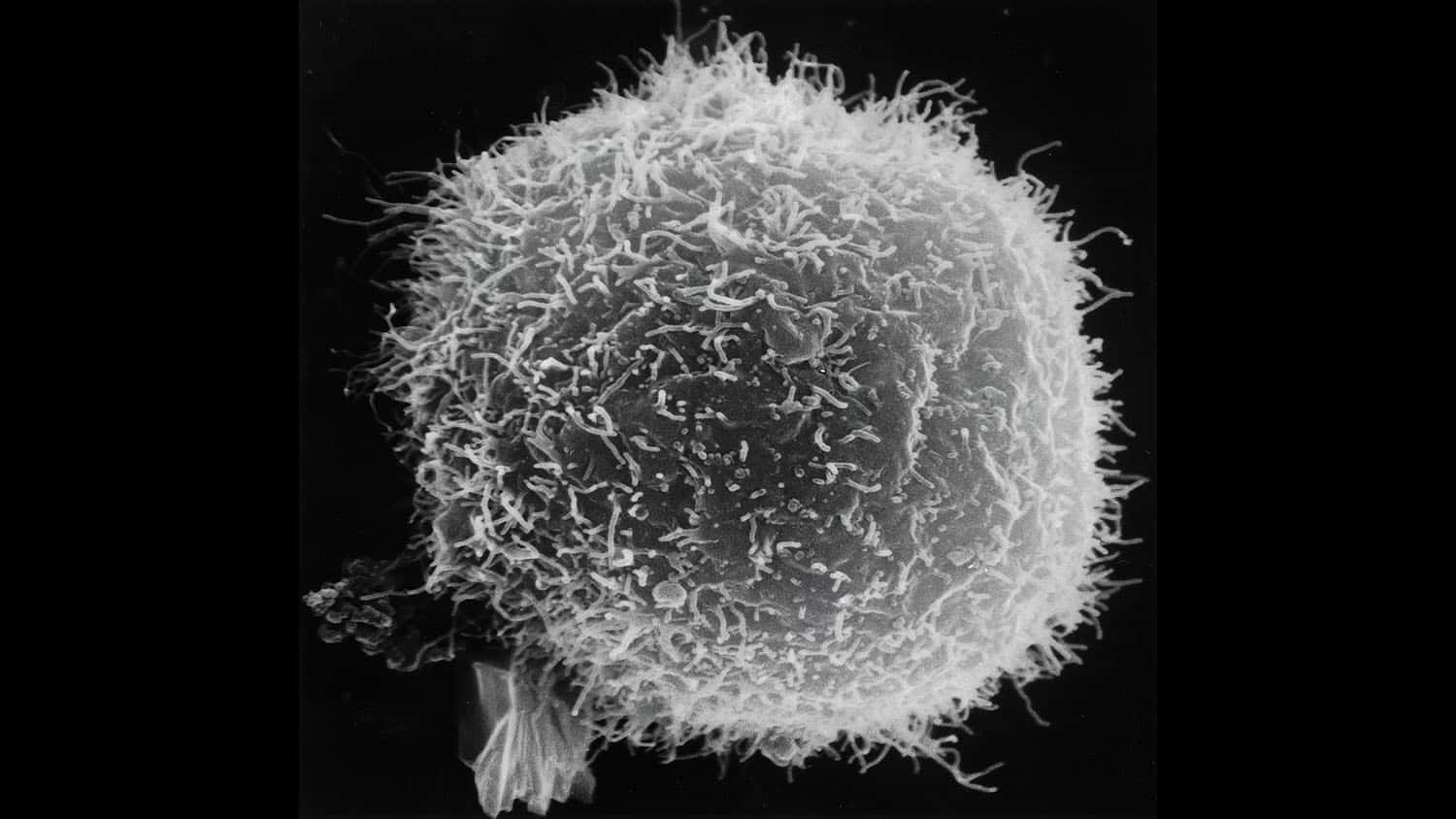
PFAS Can Suppress White Blood Cells' Ability to Destroy Invaders
GenX can suppress some white blood cells' ability to kill invaders.
NC State News
189 points · by clouddrover · 3y ago · 207 comments
“Oh boo hoo I have to scrub my stainless steel pan a little harder cause I don’t have a Teflon pan any more.” You know what, when you don’t die of cancer at 60 due to lifelong PFAS exposure, you’ll thank me.
PFAS is the tobacco of our time, with deep-pocketed industry interests lobbying hard and spreading FUD about the risks. Let me be extremely clear on this point: It is toxic as hell and it will kill you dead in horrible, horrible ways.
Stainless steel, while typically being derided by many home cooks for being "hard to clean", is actually quite pleasant to work with if used properly. What does that mean? Well, I've discovered that it means you should start with high quality pan (I use All-Clad BD5 and Copper Core, though there are many other good options too), heat it up fully before adding anything to it, throw in some fat and wait a few seconds for it to heat sufficiently, then add your food. Keep the heat up while cooking (good pans help with this part a lot).
Try it and thank me later. It changed my life. :)
If you do this correctly, even eggs can be prevented from sticking on stainless steel pans. The extra advantage for stainless steel is it can be cleaned back to like-new condition relatively easily and without significant concerns over /how/ you clean it. You can even use acids to clean stainless steel to polish it to a shine like vinegar or lemon juice, without damaging the metal in any significant way.
The advice to pre-heat the pan first is because if you forget an empty pan on the stove you get a hot pan, if you forget an oiled pan on the stove you get a grease fire.
Also try out carbon steel for a more nonstick type situation. Stainless is best when you want some sticking, like for building a fond for a pan sauce. Carbon naturally seasons similarly to cast iron, but much lower maintenance because you can wash it however you want and essentially rebuild the seasoning from scratch for each use.
However, I've never gotten scrambled eggs to work without just coating the entire pan in egg.
Scrambled eggs don't play nice with high heat, and too high heat and the butter will brown or just burn. I can absolutely coat the pan with butter, and the eggs still stick.
Not sure what the solution is here.
If you knew nothing about smoking and read a long rant on smoking's health effects, would you dismiss it as easily as you dismissed this one? Probably yes -- but you would be deadly wrong.
It's interesting to me how people, although saying they know nothing about a subject, they still have opinions about what's true or false on that subject. What can one say about something they know nothing about except: I don't know. Maybe: "this opinion (GP's) seems aggressive, is it warranted? I don't know". Just say: I don't know.
> The above makes it sound like people are dropping like flies left and right. There must be a reason why it's still on the market and used widely.
Smoking was dropping people like flies left and right. And indeed there was a reason why it was still on the market and used widely.
Sort of. Smoking was initially only modestly dangerous, but became vastly more dangerous over time. So the situation isn't entirely analogous.
[0]: https://www.nytimes.com/2016/01/10/magazine/the-lawyer-who-b...
That's the problem with carcinogens - it's hard AF to link cancers to pollutants, but e.g. airport firefighters have succeeded with these claims [1].
> There must be a reason why it's still on the market and used widely.
On the part of consumers, similarly to our use of plastics, it's convenience.
On the part of producers, the usual: money, bribery ehhh campaign donations and, in some cases, a lack of alternatives.
[1] https://phys.org/news/2023-02-seattle-airport-legacy-pfas-ch...
Bottom line is that all the liquid PFAS has been pulled from the market. The last thing I have seen was some ski racing wax had these liquid PFAS compounds, and they got fined pretty heavily.
Who do you suggest is doing the lobbying and for what cause?
Please, everyone, try cast iron. It's amazing.
I'm heterozygous for a hemochromatosis gene and my ferritin is elevated (although not nearly as much as if I were homozygous). I give blood every month to maintain normal ferritin levels.
I'd never thought about my cast iron fry pans as a source of dietary iron. Obvious in retrospect.
I still use my cast iron cookware for times it is appropriate, but highly recommend carbon steel as well.
Tiny chance I'll be able to convert her to stainless for most things, but we're never not going to have one teflon pan for eggs and crepes and such.
The truth is that the non-stick is the most non-stick of the bunch when compared across all things you could cook in a pan. Sometimes I just want to reheat my pasta quickly and uses a quick splash of water and a paper towel to totally clean the pan.
I am a total nazi though about making sure metal never touches the non-stick. It always gets cleaned and put away in its special spot immediately after using it.
This ought to combine the lower weight and superior heat distribution of a multilayered pan with a seasonable cooking surface.
https://greensciencepolicy.org/our-work/science-policy/madri...
https://www.nrdc.org/experts/anna-reade/epa-finds-replacemen...
> "The EPA report confirmed that GenX is associated with harmful effects on the kidney, blood, immune system, liver and development. The EPA also linked it to an elevated risk of cancer (suggestive evidence of carcinogenic potential). EPA’s proposed health threshold, called a reference dose, for GenX is in the same range as EPA’s reference dose for PFOA (0.00008 mg/kg/day for GenX versus 0.00002 mg/kg/day for PFOA)."
The plastics industry is producing dishonest PR material on this issue - this one is from a site run by "The Plastics Industry Association", claiming that GenX and other 'alternatives' don't have the same health issues:
> "After the removal of PFOA and PFOS, companies developed alternatives to these long-chain fluorinated substances that perform the same tasks without the same environmental or public health risks. All of these replacements are safe to use according to governmental agencies like the Food and Drug Administration (FDA) and the EPA."
Whenever I consider a town to live in, I google {town name} + {ewg}. The Environmental Working Group has water analysis for pretty much the entire country. Eye opening and terrifying.
My advice, don’t worry about it and live your life.
If you're not damaging them by using metal tools, which many people do.
Just throw the stainless steel pan in the dishwasher.
It won't be nice and shiny anymore but neither was the teflon pan.
How on earth can I find bottled water that doesn't contain PFAS in it? and chances are it's aleady in my body.
Teflon is not toxic, its used in medical implants. Its made from a gas - tetrafluoroethylene. It has nothing to do with PFAS.
2. The "high temperatures" in this context is above the smoke point of most cooking oils. As long as you're not using it for high temperature applications (eg. searing meat), you're fine.
[1] https://en.wikipedia.org/wiki/Cape_Fear_River#Suspended_soli...
The source they reference [2] says:
> So is teflon safe now?
> Absolutely. PTFE is inert in its solid form and will most likely pass through your digestive system with no issue. In addition, the temperatures used for cooking aren’t typically hot enough to release PTFE fumes into the air – though toxicologists are quick to remind people that overheating Teflon coated cookware is a bad idea.
The source they reference, a dead-but-archived page on the University of North Carolina's website [3], says:
> Assuming you use your cookware appropriately, i.e. not heating it excessively and unattended, always heating the pan with something in it, not scratching off the Teflon and consuming it for dinner, using non-stick pans is relatively safe for humans. Risk of “Teflon flu” due to inhalation of fumes during typical kitchen use is minimal. Ingestion of PTFE is not reported to be toxic and residual PFOA in PTFE-coated pans is minimally transferred to food. However, long-term exposure studies to PTFE-fumes and PFOA have not been conducted so we can’t say that it is completely safe. Regardless, you should keep Larry the bird away from the kitchen.
> If you wish to avoid the Teflon risk altogether, stainless steel and cast-iron pans are recommended alternative, albeit not necessarily non-stick, cooking options.
So it seems to me that it should be fine, though as a layman, I can't determine the veracity of the sources.
[1] https://en.wikipedia.org/wiki/Polytetrafluoroethylene#Safety
[2] https://www.bhg.com.au/the-truth-about-teflon-are-non-stick-...
[3] http://web.archive.org/web/20180523015658/http://tibbs.unc.e...
So don't leave your teflon cookware in the oven on self-clean cycle and you should be fine, right?
Like I said - FUD.
The fact that others using PFAS impacts us all, since it is distributed into our environment and stays there an incredibly long time, is what makes this issue worth regulating. Similar goes for many other ecological issues (e.g. microplastics).
https://theconversation.com/new-evidence-shows-blood-or-plas...
It also lowers bad cholesterol levels (no affiliation):
https://www.joinparachute.com/blog/benefits-of-donating-plas...
The local plasma center in my city pays $800/mo ($9600/yr) for donating twice per week.
https://www.sciencedirect.com/science/article/pii/S143846392...
The highest concentration of PFOS type substances we could expect in blood is 6 ng/mL.
The molecular weight of PFOS is 538 g/mol. Use the molarity calculator at https://www.graphpad.com/quickcalcs/molarityform/ to see that that is 11 nanomolar.
The 80 uM amount used in this study is 7272x higher than the highest amount we would expect in the blood.
This isn’t to say that PFOS isn’t bad, it is bad but this looks like the standard university PR department nonsense and researchers using ultra high concentrations looking for a positive result. Honestly this looks like something I would expect an undergrad to do that doesn’t understand concentration.
For expedience many of these studies are done at the Maximum Tolerated Dose, which is the amount that does not otherwise outright kill the subjects. It’s understandable that this is useful for magnifying sensitivity but it also leaves them with a tinge of doubt. That compounds with the career benefit for publishing sensational results to generate some bad science (especially frustrating when there are tinfoilers looking to distrust science as it is).
You see that a lot in studies - models that bear no resemblance to actual exposure.
All you can say is “at levels that will never occur in the human body, X happens”
Ok?
>The embryos and cells were exposed to 80 micromolar solutions of each chemical:
For example, your phone screen is likely coated in a very very thin, factory applied coating of large molecules that are perfluorinated at one end and covalently bonded to the glass at the other end. It might even be applied by a CVD or similar machine without the use of solvents. It makes the screen easy to swipe and much less smudge-prone. And there is very little of it, and only the tiniest amount is likely to come off in your fingers.
Compare to essentially any anti-fog goggle spray. You spray it and probably inhale it. And it is made out of soluble PFAS [0] that don’t stick very well to your goggles, and you put those goggles on your face, and probably get some of the chemicals in your eye and nose, and then you do it again and again. (Seriously, what’s wrong with gel toothpaste for this application? Good old sodium lauryl sulfate is an excellent defogger, and any gelled version sticks to glass or plastic well enough for a long swim, and the entire formulation is extremely non-toxic. And in the tiny amounts needed for goggles, it doesn’t even irritate eyes.)
PFAS are everywhere, and it’s uses really do vary widely in how problematic they are and how useful they are!
For example, BPA in polycarbonate is being replaced with very closely related compounds that could be worse. And companies are apparently replacing PFOA and PFOS with “GenX”, the compound found to be problematic here.
Every time I see something “BPA-free” or “PFOS-free” I shudder a bit. It’s a worse-than-useless statement.
Xylitol is an additional possible risk.
https://www.thespruceeats.com/is-nonstick-cookware-safe-2246...
https://pets.stackexchange.com/questions/20434/how-why-is-no...
https://www.ncbi.nlm.nih.gov/pmc/articles/PMC3276392/
https://www.liquidimageco.com/is-any-non-stick-cookware-safe...
Most of these cases have been due to overheated frying pans within the household. At temperatures above 280 °C, PTFE-coated surfaces begin to emit degradation products in the form of particulates and gas.5,9 Subsequent inhalation of these by-products by birds can result in various clinical signs, including open-beak breathing, chirping, incoordination, lateral recumbency, convulsions, and death.
So I assume it's still ok to use at normal cooking temperatures.
(It's especially troublesome if you have parrots, because one overheated pan will kill any and all parrots in the house - and it's non-toxic for humans?? lol)
As one example, I bought some hexclad pans. They had very strong wording about their use of teflon:
https://hexclad.com/blogs/posts/pfoa-free
when you try to figure out what their coating is, you are told:
"We’ve used a high-grade non-toxic Japanese coating infused with diamond dust for extra toughness." (https://hexclad.com/pages/hexclad-science)
and... well keep digging.
Finally you can find this:
Q: Are your pans free of PTFE?
A: Our pans are PFOA free but contain some PTFE. PTFE is in over 95% of all nonstick cookware including our ceramic-based nonstick. PTFE is safe and inert. In fact, it is used in surgical matches meshes, dental implants and heart stents which are all implanted in the body. We do not use PFOA chemicals and other chemicals that gave many other nonstick pans a bad name. Why do we use some PTFE? Sadly, non-PTFE nonstick cookware does not work well for long periods of time. In fact, in our tests, the largest non-PTFE nonstick in the world only held up for 45 minutes of consecutive use.
https://hexcladcommercial.com/pages/frequently-asked-questio...
What's especially ridiculous is that the "good" hexclad sets you can get at costco also put this coating on the BOTTOM of the pan, against the flame or burner! High temperature is the achilles heel for these chemicals.
took them back.
First we release the product because we can make money, then problems appear as adoption ramps up. I find it wonderful we're still around to be honest.
Now balancing progress with safety is something we're going to be debating for a few more centuries because no company can afford a thirty year study on a product to understand its long term effects on a population before production. So we're all the experiment.
Social media is alcohol for narcissists. It provides very little utility or value, and the drawbacks (depression, FOMO, etc) far outweigh any "benefit".
Don't compare apples and oranges.
Granted, the scale of the problems are different, and the axis onto which they act is also different. But I stand by my comparison.
There's no evidence to support that link - what is provable though is the fierce opposition of the GQP, the far-right and conspiracy preachers to mask mandates and even stuff as basic as vaccines.
If you read what I wrote though, you'd realize I'm acknowledging very clearly that other factors played a larger part, without trying to make this a pointlessly political conversation. So, please don't do that, it does not improve the discourse on HN.
https://www.tandfonline.com/doi/pdf/10.1080/1547691X.2023.21...
Instead of looking for products that have certain modern conveniences that require these types of chemicals to manufacturer, I think a better path for people who want to avoid exposure is avoiding these types of unnecessary modern conveniences. There's nearly no reason to use a non-stick pan when cooking, there are many techniques to get nearly as effective cleaning and release from pans which are made from cast iron, carbon steel, and stainless steel without the health risks. There's nearly no reason to use spray waterproof coatings on clothing, when you can instead use inherently waterproof layers or buy clothing from natural fibers with tight weaves, or use traditional methods of waterproofing like wax treatments. There's nearly no reason to use almost any product you find in a cosmetic store because you can choose to simply wash your face regularly, use simple moisturizers and sunscreens (although sunscreen is its own chemical minefield), and go through the necessary mental conditioning to accept yourself as you are (which is generally healthy anyway).
I appreciate the link, but I wish people would do a better cost/benefit analysis when weighing modern conveniences that are enabled by disastrous population level and environmental consequences.
In the past three years or so, I’ve been making more and more conscious decisions to avoid conveniences and do things a more traditional way, because they work, and with more known side effects.
Hear hear, I only use two: toothpaste and soap.
> although sunscreen is its own chemical minefield
Absolutely, I'll choose physical shade/cover over sunscreen any day of the week.
This is true for many studies I see here. So always read carefully.
“It’s pretty well-established that PFAS are toxic to the adaptive immune system”
Certainly the idea of “forever chemicals” seems like a bad idea.
https://www.nbcnews.com/science/science-news/forever-chemica...
[1] https://www.tagesschau.de/investigativ/ndr-wdr/pfas-chemikal...
[EDIT] Incidentally, there's nothing at all magic about microwave popcorn bags. You can just put popcorn kernels and a little oil in a paper bag, fold it closed tightly, and put it in the microwave. Stick a plate under it if you're worried about the oil getting on your microwave. Obviously don't fill it too full or it'll unfold and popcorn will get everywhere. Or use a wok with some oil (I like coconut oil—doesn't make it taste like coconut, mostly imparts a slightly buttery flavor) and cook it on the stovetop. You can use a regular pan but the wok is way better because it tends to keep the popped corn away from the heat while letting the unpopped kernels settle down where it's oily and hot.
Cordura often has a coating on the back to make it waterproof, usually polyurethane that is sprayed on—also not PFAS.
It may have a DWR treatment on the outside, which makes water bead up and run off. Many DWR treatments are made from, or break down into, PFAS. DWR coatings are far more common on clothes than backpacks, though.
You can test by spraying water on the fabric. If it immediately forms round little drops that roll off, like it can’t “touch” the fabric, you’ve got a DWR treatment. If the water sits flat or starts to soak in a bit, you don’t.
If it’s part of a gortex thing, yes.
"Dr Tungs Smart Floss: 48 parts per million (ppm) organic fluorine"