Someone else’s cool AI project doesn't make your project less valuable
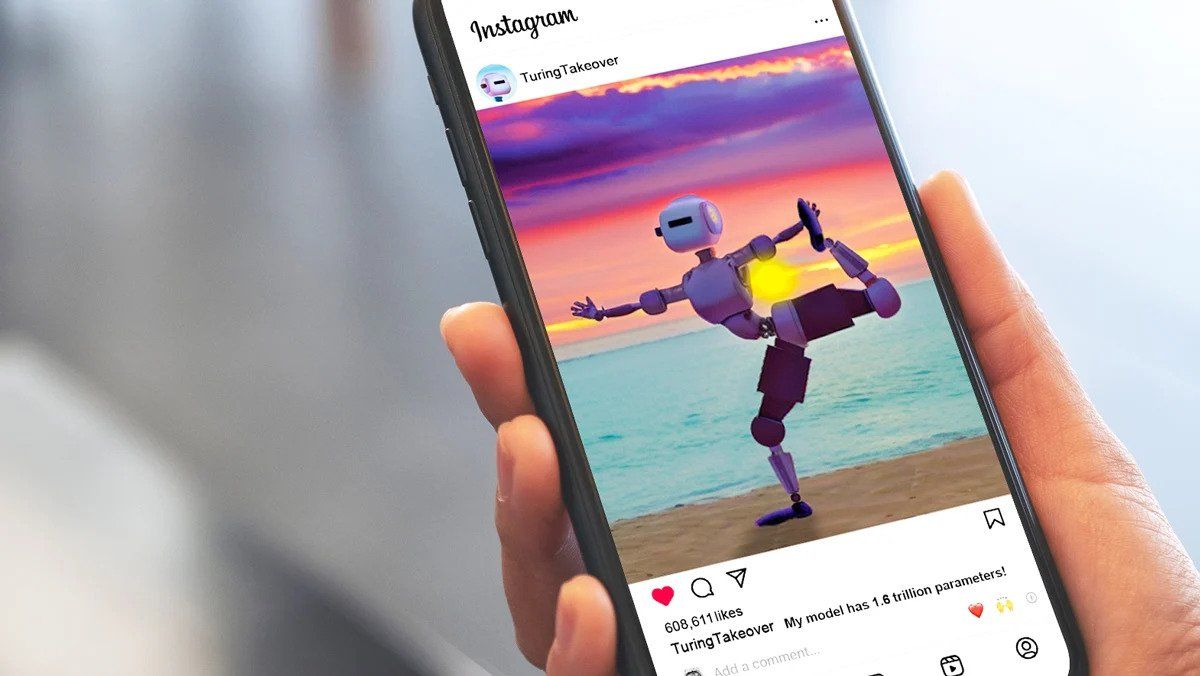
AI has an Instagram problem. Just as Instagram’s parade of perfect physiques makes many people feel they don’t measure up, AI’s parade of exciting...
DeepLearning.AI
230 points · by deepwaters · 3y ago · 96 comments
This is why academic research is so important. All the corporate money is flowing to deep learning, grant agencies should be sustaining the other more fundamental areas.
This is particularly infuriating since fMRI studies are not statistically robust and should be held in deep distrust.
The same happens everywhere in academia unfortunately. The current big thing is building “Apps” for your project even when no app is needed.
In the average academic lab, the GUI they just published had one maintainer, and it’s a grad student that’s been gone for a year already. Good luck getting an email about support, even though it doesn’t work out of the box and the code is unreadable.
The problem is academia just doesn't pay a livable salary these days. When I'm getting hit with thousands of dollars of medical bills on a regular basis, despite having insurance, having a corporate salary cushion helps for peace of mind. A lot.
To think otherwise is naive. The whole point of research is to have an advantage. Unless that money has no strings attached, you’re beholden to someone. Every historical scientist had a major donor whether it was some kingdom or nation.
So many folks get no funding, even if their field of work is important to society at large.
Intel and whoever else funded you because they see some long term value in your work.
I wish research was done with “purer” intentions but hey.. I mean we are having this conversation based on a technology invented by the gov/military, Arpa. On my drive home I used GPS. And at home I’m using a microwave to make some popcorn lol.
Can you say what are some of non-Deep Learning branches in AI that aren't getting play relative Machine Learning/Deep Learning?
Boosting generally is very competitive with (or better than) neural networks on small to midsized datasets.
Bayesian techniques are always interesting.
Personally I think there are great opportunities linking knowledge engineering approaches (which are very manual-labor heavy) with neural network approaches so we can bridge the taxonomy/unstructured data divide.
or enlightened corporations - ahm … never mind.
Most of my AI text-generation and image-generation projects and tools have already become obsolete by technology released in the past few months, and I've almost given up competing.
I myself know I'm very slow, specially developing projects. So I don't try to race anyone, except contribute to things I know are neglected. There are so many neglected problems, you don't need to work on the most coveted fields.
If there are only two directions and everybody runs in one of them, there's probably a good reason. If there are virtually infinite directions, trusting your gut about an unexplored direction that you find interesting is a much better bet. See also: startup advice.
"It will be unlikely we will be able to plan for the disruption as it will simply happen before anyone can reason about what is likely to happen next or what to do about it. Any such planning efforts will be obsolete before they begin"
It's a bit like the original dot-com bubble, when people were throwing what was then vast amount of money out just to be in the space. And not knowing what the business model was going to be. The business model then turned out to be advertising but it's certain that advertising is well suited to a chatbot or other new AI stuff, stuff that is computationally and dollars-wise expensive.
AI projects are often valuable if given away. I assume people will ask how valuable per watt they are after a while.
And remember we are 6-12 months off having good, open source chatGPT class open source models and the software support to make it possible to run them at home.
So I don't think being the first one is that much important, it is not also important to take care clean coding etc. Someone with better marketing skills probably would ruin every work you did.
And if some project "narrowly shipped before you", how much value or moat is there really if we're talking multiple projects and they're so quick&easy to do? Sorry to be a bit harsh, I just don't get feeling deflated by others making the same MVP as you do if it's just a natural idea on top of some existing tech. Your focus on code quality is also moot, it's delivering value that counts, not the tech stack beneath.
Case in point -- once upon a time, there was a big race called Dawnbench for training CIFAR10 to 94% accuracy in the shortest amount of time a little while ago by Stanford University. During that time, there was a lot of cool movement, and there were a few notable people who really moved the bar (Chen Wang is underrecognized for their contributions, while David Page is relatively well known for his, which indeed truly are excellent).
I remember reading Page's notes on it and thinking that I could never come up with the caliber of ideas that he brought to the training table for these networks, and plus, 24 seconds on a V100?!?! Crazy.
That was years ago that I saw it. I didn't touch it at all -- not anyone really did, transformers were sorta the big thing now, and still are. And the one or two times I did try to do anything with it...anything I tried made it worse, and I really struggled with his code (it's very functionally-written stylistically, very cool but didn't jive with my rapid experimentation style).
In any case, I thought maybe I could do better though if I really and truly took a cool crack at it. And even if I didn't, I sorta needed a good living resume to prove that I could make a good software project. So I reimplemented it in a more hackable (to me, at least) kind of way ala karpathy's nanoGPT (and was almost way too meticulous with writing, organizing, and documenting my code), reorganized and streamlined a few things, and moved it to a more-accessible-to-me GPU, an A100. ~18.1 seconds or so (17.2 with some other open-source code). So that was the line.
Since then, every single time it feels like I've found all that I can find, there's something else (eventually, at least) waiting behind that wall for me. 18.1 seconds turned to 12.7, which I thought was about as far as I could go. Then 12.7 turned to 12.3, which turned to ~9.91 seconds. Then ~9.91 seconds became, incredibly, ~7.7 seconds or so.
Earlier this week I released an update that brought it to roughly ~6.97-6.99 seconds or so. That is unreal, to me. At first, I was numb to how much things could improve, now I'm sorta in denial. The throughput is totally insane, roughly 88,389 training images through the GPU _every second_. This also means that our step time is roughly ~11.35 microseconds per batch, which is...blistering, to stay the least. Hard really for me to wrap my own head around it.
I'd say from the experience that I've had, I've felt similar feelings to what you've talked about here, especially if someone already with a lot of followers from a more hype point of view does something like glue huggingface code together, make a fancy GIF that's well stylized, and gets a ton of adoration from it.
But that said, the market for quality software is small, and the market for hype is large. Not that the above project doesn't have hype, but it's meant to be more valuable as a researcher's workbench than a toy. It did thankfully get a huge boost early on because Karpathy tweeted it out, but even the last release, for example, maybe got 10 likes on Twitter, and an additional 10-20 (or 30) stars on Github from the sum total interactions (including a Reddit post), even if that.
But! The good thing in some senses is that the people that I get to talk to if I'm proactive, that like this software, are often people who are known or are skilled in their field of work. And I honestly don't have too many warm fuzzies about that from lived experience as that is new to me. But I can say that I appreciate the opportunity.
Everytime I've thought about going down the hype/vaporware road just to get eyes on the project(s) I do, I have to ask myself -- "Do I want these eyes on the project? Do I want this kind of attention from this kind of person to make up most of my interactions and what I am building?"
Sure, if you have to feed a family, that sort of make sense. And we have to feed ourselves and our emotional needs too. But maybe we can be okay with being content with the smaller audience, as it is. At least, that's what I'm working towards, though I do fear that I'll stumble and give in to the allure of chasing the hype every now and again. And if I do, I'm sure that particular extreme emptiness (of a sort) will help pull me back towards just working on being content with the little things I have.
I want to close with a video that was made almost exclusively for you, and would like to ask you to watch it in its entirety if you have the time. It talks about content creation (which is what we do, in a sense), but is taught in a way that is very general and I think is the best take I've ever heard on this topic in a condensed/beginner-friendly way, that I can remember at least.
It should not only help alleviate some of your concerns or negative feelings from the shipping arms-race, it'll give you clarity on good next-step solutions that will help hopefully contextualize and give a good 'path forward' to making software that people like. I really cannot recommend this video enough, the wisdom is simple, practical, distilled, and hard-won (and has certainly helped me, I am glad I got to learn this earlier rather than later): https://youtu.be/lNzWsp5UUPA
Happy to discuss or offer any thoughts on any questions. I do recommend the video first, I often enjoy talking about that kind of particular topic.
Our company [0] developed a cutting edge computer vision system focused on detecting cardio machine exercise cadence (hyper specific!) and became the only reliable camera-based solution to do so. We then tried to generalize to all exercise motion (rep tracking, a still unsolved problem), achieved mediocre success, and put the exploration to sleep later because we think waiting for other technologies to mature would be easier and faster (better 3D cameras, AI pose models, etc). On the other hand we've picked other niches that meet our business needs to expand our CV R&D into, with pretty good success but mostly just for internal use (video content creation tools). More importantly, we're still the best camera-based indoor cardio detection tech out there, and that's a big part of why we're still alive as a bootstrapped business founded in 2010.
Quadruple down on your niche first!
At first it was interesting. Now it's just annoying.
Then the Instagram algorithm, if you comment on coffee ads that you drink tea, you'll get tea ads. It will show you progressively naked women, cameltoes and similar softcore erotica. Sometimes even real porn. When you report that porn accounts your report will not even be reviewed and denied. But God beware you post the word tits. Instant harassment automoderation. All the women that follow you instantly message you saying hi, how are you, how old are you, what is your name, where are you from etc. I think they're infobots trying to build profiles and sell your data.
Some play the old " I'm a hot girl but can't post my picture, please buy me an iTunes gift card ", like I was born yesterday. And how dumb their game is. They see you commenting on a picture you liked, take that picture, claim to be that person, only on a private account, and they picked you, their loyal fan. Many of them are cheap porn actresses or accounts of people having built profiles from the pictures those porn actresses post, only modified by AI.
I am so tired of that platform. And then they serve you small 1 minute clips of stand up comedy, cats or dogs, or some stupid 1 person having a chat with themself. Let's not forget those "how do I say it at my workplace" "expert" vids. And lots of ads in between.
Instagram is so disgusting.
Why are you still using it? (Not trying to troll you, I'm legitimately curious -- it really doesn't sound like it's offering you anything positive at this point)
But yeah, the bad outweighs the good, and other than spending the time to archive data, I do plan to shut it down.
I’d delete my account instantly otherwise.
Edit: I have a plan to stop adding people on there I want to keep in contact with. A phase out plan.
I will say that I prefer going to the Explore tab rather than the Reels tab because this one starts by showing relevant stuff and then as I scroll down it turns into tik-tok skits.
I have been working on this stuff since 2005 or so and I can do more than I ever did and if there is one thing I am certain of it is that other people are going to research things and publish even better models in the future that I'm going to download from huggingface or whatever comes next.
(On the other hand the fact that I know how to pose well-defined problems and I am willing to work hard to make training sets really does put me in the top 5%. If I am kicking myself it is for the times when I didn’t have the courage to ask clients to put the resources in to make training sets.)
- Facebook enters the geolocation game (dowalla/foursquare/instagram)
- Google releases reviews to maps (yelp & co)
- Amazon starts it's own airline (Fedex)
- Microsoft adds ChatGPT to search (Kagi, Duckduckgo, etc..)
Sometimes it's hard to recover your startup when a big player does something to fill the void you were targeting.
That's why Google, DDG, Kagi and others are all putting summary blurbs.
Now that we have ChatGPT a lot of people are going to cut out searches in exchange for prompts.
Why? You're not going to make money if you're losing in a fast-moving field.
People seem to (very understandably) conflate "impressive because of the technology" with "good," but either way thats not going to last forever, even for the most passionate AI-heads. We will take this stuff for granted pretty soon here, and then inevitability remember again what actually enjoying and connecting with a work of art or song or film is.
I think its probably impossible to actually appreciate an AI work on its own terms right now, simply because its too loaded with external significance. You can't take it in without considering what it means to like it or not. In this, we seem collectively to be erring on the side of saying its positive or worthwhile if only because of the promise each AI work carries with itself.
This makes the fervor and proselytizing of some make sense to me at least. Most people have better taste than enthusiasm for AI art would seem to show.
I have seen many examples of AI-generated art where it's beyond my taste level to see how it could be improved on by human hands. And stuff that I genuinely appreciated for what it is, divorced from how it was made.
I am reminded that very early on with Midjourney, before this wave of AI gen art was wider known, there was a story of someone winning an art competition with a piece generated with it. [1]
But, aside from disagreement on the dimension of "good", the one area AI gen seems clearly unparalleled in is "fast". That's likely enough to disrupt.
[1] https://www.theverge.com/2022/9/1/23332684/ai-generated-artw...
> I have seen many examples of AI-generated art where it's beyond my taste level to see how it could be improved on by human hands
This is my overriding point, beyond matters of taste. Everyone who talks about this stuff can't seem to talk about its value without reference to the hypothetical human artist or writer or whoever who didn't make it. The awe of just the fact it was made by AI can't be separated from one's appreciation of it, especially if you are someone who is incredibly passionate about AI. You say you could appreciate it without reference to the origin, but how can any of us claim that? In the same way one's thoughts about George W Bush's paintings are necessarily influenced one way or another by the artist himself, I just don't think we have the ability to separate these things. But that's not like a failing or anything, its just how it is. The total almost dizzying excitement of this AI moment/new future can only reinforce this. The more you are excited about AI art, the less you are probably really looking at it.
As for the competition thing, that looks like a fine illustration for some random fantasy novel or something! It has to me so many interesting but superficial markers of artists who use AI: somewhat baroque but stunning complexity, figures and faces of slender and/or beautiful women, a vague sense "humans right beside a large and great thing." But otherwise, can't you feel a little emptiness in it? If you really try to take anything from it at all other than a fleeting aesthetic experience?
Maybe so, maybe not, but either way, can we even speak at all to what the painting itself is trying get us to feel or think? The artist states that they were making a statement about AI artwork, but what is the statement in reference to the work? I can't tell, other than, of course, what I am saying: it is nothing about what we see represented in the painting, but simply the painting itself as a painting.
The article goes on indeed to say that the judges knew AI made it, with only speculation that maybe "they didn't understand," but I suspect that's just coming from the vocal anti-AI crowd on twitter; such that they can say its unfair or a trick or whatever. Either way, the artist's point wasn't in anything they drew, but simply seeing if they would win, and then telling everyone they did. "..and I'm not sorry." It's all quite telling!
The painting, and all the others like it, can only speak one thing: themselves as technically novel works. Which is why all the pro-AI people find themselves emphasizing this bare aspect of a work. Is a sea sponge in the bona fide style of Francis Bacon a novel work? Definitely. An amazing achievement for a computer? Certainly. But what is it after that?
After the dust settles with all this we will remember what we like and don't like again. This stuff wont go away at all, and people will continue to make interesting things! But I have a feeling eventually 95% of it will be considered in the same cultural breath as kitsch art pieces and elevator music. But this is a stronger claim I could definitely be wrong about. The main thing is, right now, its just too early to tell.
Taste is always sticky. I don't really believe in "levels," just differences. But one thing I know for sure is AI art to me is not great, even if it has masterful technique and style its just got no inspiration!
Easy, you tap the like button without wondering if it was made by/with AI or not. I'm sure many people that don't really care about the tech and just want a endless feed of cool pictures do that.
Consider that it's because that's the interesting areas of conversation to be had. The overwhelming majority of art I see all day does not warrant comment, and so it goes with AI art that is of a quality to replace that everyday art. The AI art that I do share and comment on tends to be works that are hilariously broken in some bizarre way. And I agree that that's possibly a novelty that will pass, but that would be due in part to AI gen improving to the level where it's consistently indistinguishable from artist-made art.
> I just don't think we have the ability to separate these things.
Perhaps not entirely, but it seems to be an overreach to claim the impact is necessarily debilitating. With my very modest amount of formal arts training, I approach analysis piece by piece. Composition, color, shape. Line and form, light and shadow, anatomy, texture. Subject. Abstraction and realism, style and tone. While not objective, it's easy to clinically assess the subjective quality achieved with an individual element, up to one's limit of taste.
Further, when I am knowingly looking at AI art I'm not doing it from a place of enthusiasm, but criticism. I am aware of a set of flaws that current art gen models are prone to include, and I actively look for them. Each one found speaks to the limitations of the technology, and the patterns suggest challenges that may be un-resolvable with consistency.
So yes, when I say that I genuinely appreciate an AI-made work for itself, I am indeed confident in the truth of that.
> The painting, and all the others like it, can only speak one thing: themselves as novel works.
Your concern with "statements" suggests that the area of art you are talking about is narrow, indeed. To clarify, I speak of the wide world of works made for primarily aesthetic goals. Well no, that's not entirely true. For the purposes of this discussion I've been speaking of static visual arts. But that ranges from museum oil paintings to product labeling, from the stunning to the mundane. That's all preamble to this blunt point: being visually pleasing is sufficient to provide worth. AI gen can provide that.
I am sympathetic however to what may be your position: what meaning can be learned from a work if no mind was behind it to intend meaning? If your appreciation of art requires the belief that you are part of communication between souls, then clearly knowing a work is authored by AI would render that work worthless in your eyes. And I can understand that, or some version of it. It does not apply to me, however. In a death-of-the-author way I care much more about the meaning I can find myself from a work, considering the meaning intended as optional spice.
Lastly, no: I'm aware of what I like and do not, thanks.
I've written a fairly long piece with some related content, the most relevant portion is the section "AI owns creativity". Would be interested in your point of view.
Maybe chopsticks?
Because as I see it, this is how the future is splitting out. This goes back to the blacksmith producing unique items. People still buy things like to this day and pay a healthy sum of money for it. But this is not the economy either, the vast majority of consumption is items that are mass produced with as little human interaction as possible. I don't see it in any way controversial that large chunks of this market will be automated away.
And example of this is in game asset design. There is a still a lot of manual human work here, but the workflows are being highly automated by 'smart' tools. I can promise you that my friend in this industry don't want to color in 50 bajillion pieces in an armor set. The tools for transfering things like style across multiple pieces massively reduce the workload. And as time goes on I expect we'll see these tools affect other areas of art. Another good example is music. A single artist can produce and distribute their own digital music easily. Entire portions of the music can be handed off to tools to put in things like drums and such.
Now when you're playing a game, or in the elevator listening to whatever's being piped out of the speaker, do you think about or care about if it's made by a human or not? It won't stop you from buying a human painted mural for your wall. You'll still listen to your favorite human artist. But expect huge swathes of the ambient art/design/possibly music around you to be automated in one form or another.
Mostly its not inspiration. Just chewing of what is trendy, to fits in narrative and conformity. To be liked. Have more attention, more time qlued to screen...
But it is completely opposite if your livelihood depends on it, your income or your business, all trades depends on money, and there is limited amount human attention out there equal to number of people online multiplied by number of minutes spent.
So, there is uneven spread, and the same reason why some artist thrive and many starve. Same for writers, and many other arts and sports. If you take tennis as example, you will see that only maybe 100 or so tennis players earn amount of money that is good for the comfortable life style. Others are struggling to get by.
Same in any arts, or creative work ... only very small will actually manage to live out of their art ...
I would really like a different category in ‘show HN’ which excludes vapourware.
I wonder what’s wrong with us as a species. We love to run into one direction all together chasing the next big thing just until the next big trend comes along.
Quantum AI crypto LLMs for the win!
We ask for faster horses, when automobiles would get us where we want to go. It is a lack of imagination for what is possible in the future that keeps us risk-averse and focused instead on a quest for incremental improvements to the status quo.
This was the focus of the idealistic vision of the whole "disruption" meta-meme as it spread through Silicon Valley.
Not to say that maintenance and refinement aren't important, but innovation doesn't look like just adding more parameters and ways to scale massive computations.
The main concept that AI laypeople (even those who burn OpenAI credits on a hobbyist basis) are missing to really grasp the possibilities of these kinds of statistical analysis techniques is a deep understanding of the notion of inductive bias. For instance, Transformers are so powerful precisely because they have generalized that idea of inductive bias one level up by using multi-head attention to project onto many different linear spaces and attend to them differently in different contexts, rather than just filtering through effectively one linear perspective at a time as with your traditional dense NNs.
The kinds of innovations we have witnessed most recently are actually pretty small steps in the space of possible architectures, not to mention training methods, etc. For instance, predictive coding approximates gradient descent[1] which opens up all sorts of new architectures (feedback arch, modular/federated/local compositions, etc.) that are intractable with traditional backprop-based techniques unless you can manage the infrastructure around periodic global parameter/state syncs.
By and large, I believe, people are conservative and would prefer for things to stay as they were, unless the change solves a specific problem.
Sometimes people actively tried to resist "progress" and had to be forced into their luck by those in power. E.g.: https://en.wikipedia.org/wiki/Luddite#Government_response
In general your most staunch conservative doesn't mind things changing if it personally benefits them greatly (especially if they don't bear most the burden of its effects).
Your most avid progressive commonly want the things that bring them comfort to stay the same, even if its potentially harmful to someone else.
I believe the issue here is we're playing "everything everywhere all at once". Everywhere on the globe is pretty much instantly connected to everything else via digital communications. There is no more sit by the sidelines zone that gets to avoid this connectivity. You may not want it, but you have to stop everyone else from bringing that connectivity too, and somehow maintain casual connectivity economically unless you want to play caveman.
> OpenAI, is estimated to have reached 100 million monthly active users in January
That's 1.3% of the estimated population of our species. It's only 1/3 of US population.
Like vaccines - inactivated viruses isn't a different "wave" than mRNA, they are logical successors within the same intellectual pursuit.
Or Vulkan vs. OpenGL. They aren't separate "fads" that gained traction.
Or ARM vs. x86. They aren't "fads" so much as entirely reasonable evolutions of technologies based on the evolving knowledge of the field and its needs.
Not everything is a popularity contest.