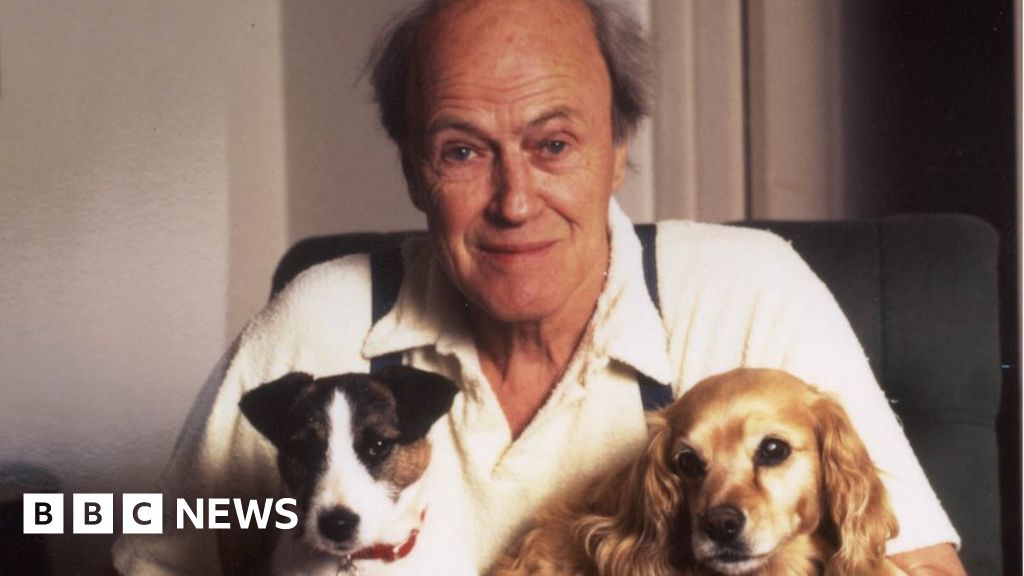
Roald Dahl: Original books to be kept in print following criticism
His original books will now be printed unaltered, after the decision to update them was criticised.
bbc.com
210 points · by berkeleyjunk · 3y ago · 303 comments
> The company said it would publish 17 of the author's books in their original form as The Roald Dahl Classic Collection along with the planned edited versions so "readers will be free to choose which version of Dahl's stories they prefer."
To me, it feels like a way to quell anger but still proceed forward and possibly even make money. I bet that the “classic” editions will be quietly discontinued in a few years.
So buy them now, before they go out of copyright.
This feels like a way to drum up publicity and sell more books. Many grandparents will be reading this outrage in the express and buying the full original set for their children this christmas.
(it seems that copyright will last until 2060, which is crazy - 100 years after they were written)
I think copyright should last long enough to encourage the following type of creation: An author writes a fantasy book series. The author publishes books in this fantasy world for the next 25 years. Then she signs a deal for the movie rights and the studio spends 15 years producing a trilogy. If copyright only lasted 50 years, the entire fantasy world would still be under copyright for a decade after the last movie was released (and that movie would be protected for 50 years).
Now think of the benefit to society. The '60s and '70s produced a wealth of cultural content, and modern culture would benefit from seeing that material enter the public domain.
[1] I presume the copyright holder here is doing the changing
Shocking!
When it's culture warriors vs Capitalism - who do you put your money on?
If they dont sell they will be discontinued, if they sell they will continue to be published.
> possibly even make money
Of course. Publishing is a business. If they dont make money they will stop existing.
There is no mystery here.
In my country publishing existed without any concern for making money for decades. State funding.
I've got plenty of issues with modern literature written to confirm the readers opinions rather than challenge them. Reducing books from the past to fit the same modern views just history-washing. Let us all naively believe that all authors in the past have our same identical values so we are never challenged to look beyond them.
It's revolting and frightening. No one is ever going to learn anything outside of their narrow world view if this trend continues, and I have a bad feeling that it will. Who's next? C.S. Lewis? Tolkien? I wouldn't be a bit surprised.
I would truly be happier if these books got censored. Let them remain on the list of corrupting literature because at least then the bold reader can seek them out.
If Dahl was writing today, and his editor said they had to change some phrasing, of course he would have done it. The important thing is getting kids to read his marvelous stories, not insisting on some form of literary purity.
This whole issue only exists because of a generation of people trained to fear criticism and to avoid anything that might attract it.
It was always about selling more books, not making them "better" or "less offensive"(1).
(1) the move sure seems to have offended many people.
It was done so poorly that this thought had already crossed my mind. A bunch of the changes were obviously unnecessary by any standard, and they didn't even pay attention to things like meter when editing poems.
I'm not even necessarily against this (we do this to kids' literature all the time and basically always have—as longs as the originals can still be had, not a big deal) but this was so lazy and awful that it's hard to believe they were serious—this was straight-up an illiterate editing effort.
Exactly. If they weren't artless hacks they'd write their own books instead of butchering others.
All that to say I am actually surprised they went back on their announce.
Based on what?
As I said on reddit about this:
Warner Bros. have done fine with the pre-amble to their older cartoons that says something to the effect of "yo, this was written back when attitudes were different, they were shitty attitudes, but to erase them is to pretend it never happened."
A similar preface in the books would have worked much better, but wouldn't give you any amount of PR like this.
Then the PR statement came out, and anti-woke people are up in arms about it, and everyone else is going “huh that’s just weird to do”.
I feel like it surely has to be just a push to get the books back in the public mindshare if sales were slipping.
Should we edit Shakespeare to remove all that hard-to-read 'olde English'? Maybe edit Romeo and Juliet to give it a happier ending, and get rid of that nasty violence with daggers and poison? (that's much worse than Roald Dahl describing characters as 'fat' or 'female' isn't it?)
I liked his books quite a lot as a kid, and haven't prevented any children in my care from accessing them. But on revisiting as an adult there is a kind of... meanspiritedness to them. It's hard to describe but almost like, spiritual viciousness or a deep nasty pessimism about people.
Part of this may be why they appeal to children anyway. I didn't consciously notice as a kid but I suspect they registered as slightly transgressive in some way, and were alluring for that reason. Anyway none of the edits really address that, or could. To a significant extent that feeling is a fundamental part of the books and can't be removed.
Im basing this on the fact that anti-woke usually is considered right-wing/libertarian etc
Whereas nobody I talked to who opposed these changes would consider themselves “anti-woke”.
Im not trying to pick a bone with you, but I’ve been lately thinking about a common trope where if someone opposes a change/policy , they get labeled “anti-this” or the worst is they get hit with a question of “why do you care” Where the goal isn’t to debate the merits of the change but simply shun the other person.
(also it definitely happens from both sides)
Maybe the problem you're trying to point out is that, like most labels, anti-thing leaves no nuance. To what level is a person against something? Are they questioning that thing to gain better understanding? Or are they trying to justify their bias?
Maybe in your mind but not mine. Good liberals are anti-woke because woke is anti-liberal. It's a coercive force that any decent person should be against. At least anyone who critically examines it and the methods it uses to manipulate and gain unjust and unearned power over others.
That’s not a label I’m applying to them without their consent. It’s a term they use themselves as a matter of pride.
I did also mention that other people found it odd too, which was meant to imply that nobody was really for this change.
You're right that one of these is unfair, but it is the latter not the former. "Woke" is the progressive fringe, not the mainstream. Opposition to woke is a set that includes both the moderate mainstream and the right fringe. Liberal enlightenment values, which represent the moderate majority today, are distinctly "anti-woke".
The publisher does not have a rational unified will. It is made of up people and its actions are a product of internal politics.
In this case, as is usual, a tiny group of hyper-motivated woke ideologues would have banded together to push for these changes, and deployed the usual array of ideological superweapons that the woke have access to in our culture-space (there are no antibodies to their power plays unlike traditional religions, and pushback against woke ideas in institutional contexts is often legally punishable by various mechanisms related to civil rights law).
This tiny group swung the publisher to its will, because they care with the self-destructive fervor of religious zealots, and everyone else is just trying to get along, so they win despite being a microminority.
It's another step in the long march through the institutions; basically all our academic, corporate, cultural, military, and scientific establishments have fallen under woke control by the same mechanisms.
Ref: https://medium.com/incerto/the-most-intolerant-wins-the-dict...
This may result in some additional sales, as people scramble to get the old versions. But it also puts egg on Puffin's face, and may hurt their reputation among buyers and authors. Overall, it seems more like inertia and incompetence rather than a finely-tuned publicity stunt.
Are people looking for the Oompa Loompas as African Pygmies from the original version of Charlie and the Chocolate Factory, before they were removed in the 1972 edition?
And that, compared to references to African pygmies, some of the things that have been changed in this new edition are totally baffling.
The reasonable answer is "they should still be something people can readily access but not endorsed/actively reprinted" but usually these arguments boil down to very partisan takes on speech unfortunately.
Earliest known variant: Hana, man, mona, mike; Barcelona, bona, strike; Hare, ware, frown, vanac; Harrico, warico, we wo, wac.
The rhyme potentially comes from old English.
That is, the parent is saying they won't be surprised if Florida requires the line "catch a tiger by the toe" to instead be sung as "catch an [racial slur] by the toe".
https://groovyhistory.com/oompa-loompas-the-original-ones
There are a lot of wonderful things in his works that don't change because of minor edits to bring things in line with a modern zeitgeist.
It shouldn't be terribly surprising that an old British guy was a bigot, nor that some of that bigotry crept into his works.
I'm not sure why this instance of censorship feels particularly egregious, though. It's ultimately for children, and we censor content for kids all the time. We do it with movies and TV shows and music, and I don't see much rage directed toward that practice.
Is it because it's a book? Is it because it's a medium that hasn't really been censored like this before? Is it because it was done posthumously? Is it the specific content being censored?
Something feels different about this one. Maybe it's just the fear that what was once sacred is now fair game for defilement, or the sinking realization that the dam is now broken and this will become the new norm.
It's because it is fraud. I want to buy a copy of Roald Dhall's original work - unadulterated by leftist wankers.
If censorship is required when reading to my children, I'll be the one to decide how to do it.
If they want to tone police literature, let them produce their own dull sanitised works and see if anyone wants to buy them. But they know that noone does want to buy them, hence why they have to mutilate someone else's work instead.
I'm not even necessarily agreeing with the publisher's approach here, but I can certainly see there being a market for "modernised" versions of older books that tired parents can relax into reading aloud as a bedtime story, without that constant low-level unease about the possibility of some dodgy dated stuff popping up out of nowhere.
We don't know if Dahl would have been convinced of the need to make any of these new edits, because he died over 30 years ago. These unknown editors peddle their changes using his name, they trade on his popularity, rather than write their own unloved, status-quo compliant stories.
We the public are so lucky that the publishers deign to keep selling his original books in addition to their Bowdlerised versions. But if they felt like it, thanks to copyright law, they could stop that at any time for the next 40 years or so. It's ludicrious!
It doesn't sit right to me that there is someone owning the rights of the deceased author's work and should try to profit maximize the catalog. That is kind of what is happening here, trying to change the text to sell a slightly different book. It is their incentive to try to keep their sales alive, but it feels like an artificial thing. I guess I'm not used to how this particular sausage is made.
This was probably just a money/publicity grab. I wouldn’t be surprised if the reissues of the originals were the original goal, but copyright didn’t have anything to do with it.
(Though the antiwoke mob strangely seems to want to ban any modifications to classics).
https://reason.com/2022/07/05/rise-of-the-sensitivity-reader...
Edit: oh, someone else did go to the trouble to quote the problematic part of the parents link, but they, too, where downvoted.
Known as sensitivity readers, or sometimes authenticity readers, consultants like Sally are a growing part of publishing, hired to correct the pre-publication missteps of authors who don't share the same traits—or "lived experience," to use a favored buzzword—as their characters.https://www.theguardian.com/commentisfree/2022/mar/08/stop-m...
It isn't like you can't publish your book. Some publishers just decided to implement this workflow. I think it's pretty dumb but it definitely isn't anything new.
> Known as sensitivity readers, or sometimes authenticity readers, consultants like Sally are a growing part of publishing, hired to correct the pre-publication missteps of authors who don't share the same traits—or "lived experience," to use a favored buzzword—as their characters.
God, what kind of a horrible person would take up such a job. Jesus Christ I mean just don't publish the book don't hire some couch sjw to "fix" it. I guess the author can still choose to not publish
Take a job as an editor? That is all this person is doing. It is something that publishers have done forever except this editor has a more narrow scope of what they are editing.
The publishing company holds the copyrights, they make a lot of money from Roald Dahl, but they're worried about the long term prospects for that revenue stream due to social change. Maybe they have additional feedback from retail buyers or customers. They decided to take an approach of retooling their product to fit with changing mores, and either went too far or made a poor PR job of releasing the information.
As far as I know, nobody asked for this. It's fairly well known (at least in the UK) that Dahl harbored many prejudices typical of his generation and demographics, and himself watered down some of them to make his books more salable, eg the original Oompa-Loompas were modeled on African pygmies.
If they were following public demand, then why did they get so thoroughly blindsided by public opinion? They were clearly listening to a handful of fringe nuts and didn't actually have their finger on the pulse of the mainstream zeitgeist.
They have now realized their error and are trying to backtrack from it.
I am not privy to their sales data; perhaps it looks terrible and they panicked. While there has been a big backlash, I don't think adult nostalgia is as profitable as childhood enthusiasm; parents might buy Roald Dahl for their kids, but there are plenty of other authors competing for their attention.
Or they're capitalizing on the backlash by offering both options, with the added benefit that they'll get to A/B test what direction the market wants them to go.
> If they were following public demand, then why did they get so thoroughly blindsided by public opinion?
Hey, if that's what you want to believe...
A canny publisher wouldn't quietly discontinue the "original" (ignoring the fact that the books have been revised before) editions. They're merely announce that they're a limited run and that stocks are running out...
No: I am not defending it. I am just explaining it.
>"The rise in demand has been even more extreme at Wob, an online seller with a reported catalogue of two million. It has seen a 600 per cent surge in sales of Roald Dahl compared to the week before, while the author accounts for eight of the 10 top-selling children’s books since Saturday. Not bad for someone who died more than three decades ago."
Source: https://www.telegraph.co.uk/books/authors/roald-dahl-books-s...
Similar example: Tintin in Congo is by today's standards absolutely racist, but reflects the era when it was published. The last decade the (Belgian) publisher was sued multiple times to try and force it off the shelves.
Also: calls to remove statues of King Leopold II (who committed horrible atrocities in "his" Congolese colony).
In both cases, why not leave access to the original books/statue/... intact but add an introductory section on why this is no longer appropriate today. Or place a contrasting statue, opposite King Leopold II, that embodies the struggle for independence / the colonial horrors / the blight that is racism / etc.
Overall it feels like there's a drive to remove "inappropriate" materials from society, instead of leaving them accessible as living proof of the mistakes that were made, and to provide backstory, context, and the "appropriate" contemporary view.
I share this view, but I also recognize that as a white dude, what is to me a learning opportunity about the things that folks (who mostly look like me) have done in the past isn't necessarily seen that way by everyone.
Unfortunately, even if you get a whole mess of folks of different backgrounds to have an honest and meaningful conversation about what to do about these many things, you aren't going to please everybody. The easiest solution is to just remove the materials rather than having to continuously justify leaving them available and reinterpret the historical context for them from a contemporary standpoint.
Leopold II isn’t far down the list from Hitler and Stalin.
The only place a statue of him belongs is in an exhibit on the worst actions taken against fellow humans.
Mind you, Leopold was a horrible person, did horrible things and the Belgian monarchy and state have only recently begun to issue apologies for their atrocities. The debate on statues is settled, except in the minds of those who glorify wrongdoing.
The other difference is agency - there exists a legal successor to the belgian monarchy and a legal successor to the powers of the monarchy in the form of the belgian state. These have power today to acknowledge and right the wrongs of the past. In contrast, Georges Remi and Roald Dahl are both dead, unable to correct their errors.
Roald Dahl is a very interesting target here, editing "fat" out of the description of Augustus Gloop, I assume, was to be more gentle towards more portly folks. The character seemed to have a real eating disorder though, those are real issues that real people also suffer with. Does a discussion of bulimia and anorexia need to accompany Charlie and the Chocolate Factory? Is it read at an age appropriate for that? Was this edit even material? It seems like the real theme is one of greed and humbleness and the eating disorder is just a foil.
(Probably because they judge Joseph Conrad by the outdated language he used, rather than by the ideas and values he presented. Because they are shallow fools.)
> A certain enormous buck n*** encountered in Haiti fixed my conception of blind, furious, unreasoning rage, as manifested in the human animal to the end of my days. Of the n*** I used to dream for years afterwards.
Maybe there's someone around you can ask who Kipling is, but there's a good chance they either don't know the issues or are going to be unwilling to have a conversation about the historical context of racism with some child over a one sentence mention of Kipling. More likely, the child will continue reading the book gaining at most a recommendation for future reading.
I don't know if that small recommendation should be changed, but I don't see it's inclusion as some potential learning moment. The line has been in the book for thirty years, and I doubt it's taught many children about the historical context of racism.
The line has been in the book for thirty years, and I doubt it's taught many children about the historical context of racism.
This sounds like critical race theory. That gets people far more fired up than changing a few words in some kids books ever will.
Because the copyright holders (Netflix, in this case[0]), decided it would be more more profitable.
This wasn't the result of an outside public campaign; it was initiated by the rightsholders.
Netflix makes money if they can market an entire franchise (akin to the MCU, albeit less crossover). If they feel that a more "palatable" version of the books helps them do that, they will.
[0] The editing began before Netflix acquired the Roald Dahl company, but it continued under them and they're the ones who decided to publish them (and now walk back the decision)
To get people talking about these books again with the intend of increasing sales.
Hate to say it, but I think this is the only reason why.
Thank the absurd copyright laws that grant a piece of work two lifetimes of money extraction (70 years after the death of whoever made it) for whoever "owns" it.
The publishing industry has been taken over by a certain kind of person. The same kind of mildly privileged, free of adversity person who is looking for something to suffer from and fight against who is pushing this kind of "woke" nonsense all over the place.
Let's say that I believe that past authors are problematic. Ok, then why reprint their works? Why not print children stories from modern and more sensitive authors? The job of the publisher is not to keep history alive, it's to provide customers with a good selection of children's content.
On the other hand the publisher knows that these books are cherished by the general population and are indeed immortal classics. So it would be stupid not to print them and leave a good chunk of money on the table.
So here comes the contradiction: we need to publish this author because we want the money, but at the same time we don't agree with him. The solution? Editorialize his works, not with footnotes but by destructively changing the verbiage of the stories! This way we can both get rich and alter history to our liking!
When I was in public school, the adults got sick of kids using the word "retarded" as an insult so they renamed the class for people with actual disabilities to "special education". So kids started calling each other "special" as an insult synonymous with "retarded". Euphemism treadmills always lag, they're reactive and can't keep up with the rate at which people can invent new insults.
  Full throttle mode (and)

Grandma mode.I know no Grandmas that like when things they had on their youth are changed.
Speaking of Oompa Loompas, they were even originally tiny black people, but Dahl changed them to white himself in a later revision.
I don't know what the right balance is, but it seems the recent Dahl changes missed the mark.
https://www.resetera.com/threads/so%E2%80%A6-willy-wonka-and...
like the oompa loompas aren't just a whoopsie, didn't realize that was racist thing. dude said some racist grandpa shit, there's no beating around the bush on that one lol... and boy he had some thoughts on the jews too... in 1983.
https://www.bbc.co.uk/culture/article/20160912-the-dark-side...
(stolen from down-thread:) https://groovyhistory.com/oompa-loompas-the-original-ones/2
so like yeah this is basically the "difficult literature from 50 years ago" question. Dude was kind of a racist and wrote some shit that would be pretty offensive to write today. On the other hand it's also good entertaining literature that's beloved by a lot of kids, minus some offensive pages and occasional themes. what do you do with that? answers vary - don't teach it, edit it to tone down a few things, or just teach it unfiltered with some flavor of "yeah, product of its time"?
I guess I personally fall into the "teach it as a product of its time" camp but I'm also not the one personally affected either, and over time it may fall more and more out of favor as sentiments on casual racism change, I'm sure there was a "teach it as a product of its time" for huck finn too and nowadays ehhhhhhh maybe we just find a better example for english lit. And that's really the danger if you don't want to tone it down (which, I'm not saying that's a good idea either), that it just falls into obscurity over time as people decide "nah african pygmies are a little too racist for 2050".
But also — I mean, I guess nowadays there’s YouTube and TikTok, but some kids still read for fun, right? They are fun stories, so it is nice to produce a version that can be read lightly without having to address weighty historical issues.
Imagine I created an annotated critical text of Oliver Twist. My new annotated text would be copyrighted from the date of publication, but Oliver Twist would still be in the public domain.
I suppose someone could create a second censored version, but if the changes they made were too close to the current publisher's, they might lose a copyright case on that. So all the publisher has to do is keep up with the mores of the time on what must and must not be airbrushed out.
Modern book "cancelling" is not (yet?) so effective as that. Huckleberry Finn is a popular target for cancelling, yet is still widely available. Being in the public domain gives the book relative safety; even if one publisher gets cold feet, another will jump in to fill the demand. The real threat is to books which aren't in the public domain and won't be for a long time.
People should be exposed to all types of views on things, so they can better empathise with other people.
Score one for Library Genesis (et al.), -1 for these rewriters of history (et al.).
Personally I've stopped buying online books because of this kind of shenanigans and reverting back to having local music and movies for similar reasons.
The idea that some remote working technocrats can change words of a book while I'm reading it just creeps me out.
What a fragile Society.
Music (used to?) do something like this. One version for Al Gore’s PMRC and one version for everyone else.
So long as the original is also available, why not?
In the case of deceased authors, ensuring your work is treated the way you want is why you put a literary executor in your will. In the absence of direct instructions, the literary executor gets to decide, and it's not relevant if there's no mention of changes in the will.
I may be simple-minded but I would have thought that people either want to read a book or they don't. But now is there really a market for people who want to read a book but only if that book's content is made different from what it actually is? (I'm worried if that's the case).
On the other hand, I fully understand that the aim of a publisher is to sell more.
People have been willing to pay for this kind of thing for a long time.
It's a little different now in that it's the original rights-holder doing it but money talks and why argue over fair use when you can do it yourself?
Tipper Gore.
You're making the assumption that rightsholders will continue to publish or allow others to publish the old edition. Maybe this time when it becomes a big deal in a news cycle, but the next time it happens, it won't be as big a deal. The tenth time it happens, nobody will know or care:
"Old news. Fascists trying to make a big deal out of something that happens every day. You didn't see them crying when they censored all of the atheist books, so why are they crying now when we're censoring all the Nazis? This is just foreign propaganda trying to exaggerate the differences between us, most normal people are united in their support of The Homeland against Eastern Mind Control." --comment on RedditHN circa 2035.
The thing that alarms me most is that these are people censoring extremely successful masterworks from revered authors. The stuff being written today, by nobody-yets, is being pre-corrected.