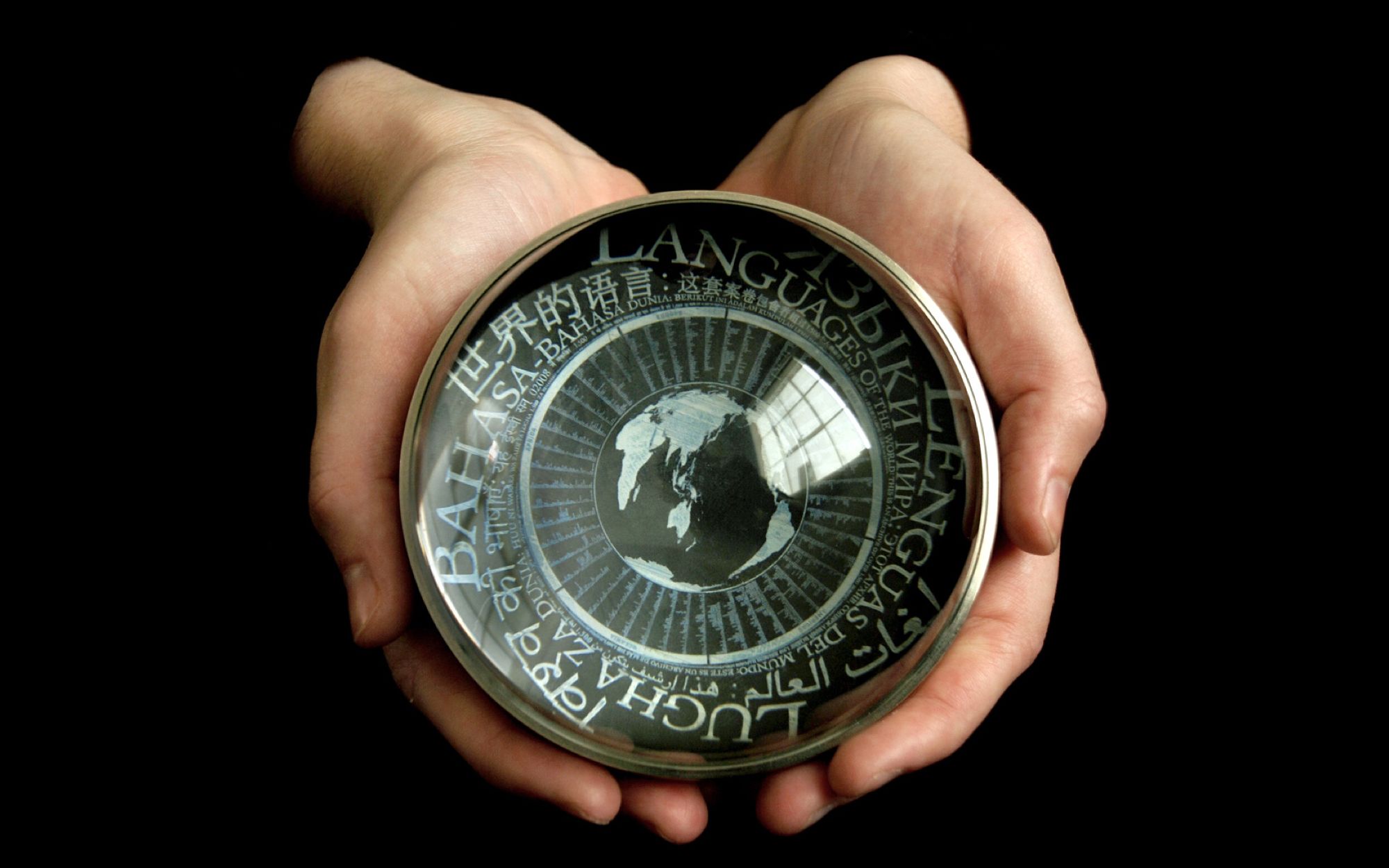
Very Long-Term Backup
The Long Now Foundation fosters long-term thinking. Our work encourages imagination at the timescale of civilization — the next and last 10,000 years — a timespan we call the long now.
Long Now
206 points · by tnorthcutt · 3y ago · 142 comments
Some years ago when I was Unix sysadmin and responsible for backup I had a call from a draughtsman trying to find a rather important drawing. I asked him when he had seen it last, He said he wasn't sure but that it must have been at least two years ago. He was totally flabbergasted when I pointed out that we recycle the backup tapes after twelve months and that there was very little chance that the file would be recoverable. It had never occurred to anyone in the company that an archive would be a good idea all the files were simply kept on live disks; quite remarkable really when you consider that the products often cost a million dollars and are expected to last half a century and be repairable to last even longer.
I have seen this almost everywhere I go. Large companies used to have libraries and librarians but now such things and such people are regarded as non-productive and hence to be wiped out.
It didn't occur to them that to make it useful we needed to know what was actually on the media. After the only people that knew anything about the data contents and purpose left, the archive became an ever expanding data/tape junkyard that occupied one of the rooms in the basement.
One 18tb drive isn't an 18tb drive, it's an 18tb ticking time bomb of catastrophic data loss. I think that cost is kinda ignored when people talk about storage costs.
(Two isn't enough for some... Raidz2 with two drive failure survivability is what I most often hear recommended, because resilvering after one drive failure has high chance of killing another drive, at which point you're just fucked)
What I found deeply fascinating, as a technie working with/for librarians, is that these are people who have a solid and agreed-upon understanding of where to place physical objects which contain information, but when it came to storing data? They might as well be anyone off the street. Everyone had their idiosyncratic methodology, which wasn't even consistent over time.
If you have less data you can go with the 25GB M-DISC Blu-ray discs (more drives can read these) or even with their DVD-R discs.
Make sure to keep an external optical drive with USB-C around as well. I know that none of my PCs from the last 5 years had a builtin optical drive.
If you have more data, consider LTO drives and copy them every 5-15(?) years.
Every year i burn an identical set of discs with the past years photos, and store them in separate locations. I use a mix of 25GB and 100GB discs, depending on the previous years photo activity (Covid-19 years fit on 25GB discs :D )
I also maintain a couple of external drives at the same locations that are surface scanned/updated/rotated yearly.
I use no form of encryption or archiving software, and while some discs have a PAR2 file "embedded" this is not my regular practice. I don't want to be in a situation 20 years from now where i've forgotten the encryption password to my archive (though in 20 years todays encryption will probably be "trivial" to break)
> They also seem to get harder to find
I have noticed the same, and i hope that the industry realizes that there is a need for long term archiving at a consumer level price. Considering that all family photos these days are essentially all digital, there is either the option to archive it, or make physical copies, which is something i have considered as well.
When it comes to documents, i make normal backups, but i don't archive them. The archive is disaster recovery, and if everything else has failed (including 3-2-1 backups), i doubt my 10+ year old documents are worth anything to me. Anything important exists in government databases and/or as physical copies. This may of course not be the case for everybody.
SSDs are big enough now that one can hold everything I want. If you want to go bigger for your downloaded movie collection you're never going to watch, whatever your scale, ok you have that many 14TB hard disks.
two years from now, the newer model SSDs and hard disks are going to be much bigger. I'm about to jump to 4TB. Buy them. Copy your stuff to them. The old ones? there's your offsite back up. No bit rot because you're going to do it again, soon.
lather, rinse, repeat.
interfaces and formats change? you won't even notice. Too expensive? Don't use the latest most expensive size, use the last model each time. Yes it's slightly smaller, you said you wanted to save money.
really long term storage: keep doing it, takes a few hours each year. need something fancier, visit it every month.
Think of it - how many ancient texts survived because we found papyrus in a jar in some cave? The Ancient Greek works and other things were mostly preserved by monks and others making copies over time.
I consulted with an archive a few years ago. They had acquired from records to be preserved from another entity - delivered on circa 1997 DAT tapes. That was challenging to recover circa 2017, in 2030 it will be very difficult and expensive. Ditto for MDisc.
I believe the spec only demands persistence if they're powered on at least once every 90 days, the same applies to USB sticks btw.
The data isn't lost after 90days, but bit rot occurs at a highly accelerated frequency. So you might not notice or care if there is a gray pixel in your image you've stored on your USB stick, but that's what it means to use volatile storage.
I do not recommend "longer term", I suggested swapping your old drive for a new one every two years, that's the length of the term. I do every year, because that's how often I buy stuff, but I didn't want others to say "too expensive"
Notably this article is from 2008, which is when Dropbox was first founded.
2. Disk-as-a-service - you pay, you get, you stop, you lose. Everything.
3. Oops, your cloud provider blocked your account. For the great justice, for porn, because their stupid government decided that your stupid government is their new enemy, or because it's just Google.
4. You don't have Internet anymore. Earthquake caused by either a volcano or drunk neighbors disrupted your only line. And they're too busy to fix it.
5. You've lost your key. Gaymower.
6. (there may be more)
(It goes without saying that you have to have more than one place to store your backups.)
If you kept duplicate copies at the top N cloud providers at any given time, then you could probably go for 1000 years if N>=3. But this would require an active effort to keep your data alive as companies came and went. A true archival copy can be ignored and still be readable.
I think finding a device to read the media is likely to be a bigger challenge than finding media that lasts 100 years. I strongly doubt a normal Blu-ray player would last that long unless it was kept in a controlled environment.
Once it's obvious that the most recently built drives that can read the media are getting unreliable (due to their age), it's time to switch to a new medium.
Somewhere between 2014 and 2018 I needed to read a CD/R, so I plugged it in and... nothing. I tested other discs, including factory made ones but looks like optics are dead in it. Sure, that time I could read the CD on ThinkPad X301 I had lying around, and I think I used it again circa 2020, but it still has a chance of just dying and then I wouldn't be able to read any of my not so big but still a collection of CDs/DVDs.
Sometimes I fancy myself buying a USB DVD/BD drive... but just like I need to search the whole apartment to find that X301 (I have no idea where it is now again) I would not only need to find that drive (and it is even easier to lose it than a 13" laptop) but it can just die like my NEC one.
So if you reaaly need some data, not only you should use appropriate media, you should have the means to read it back and that means should be redundant. Same applies to LTO, because while you still can find anything since LTO3 on eBay, there is no guarantee what it would work at all, because the drives are quite finicky and have a limited life-span in tearms of read/write cycles.
But considering everything else worked (it actually tried to read, just couldn't) it's something in optics or it's electronic parts, so it doesn't really change anything for me - it's unrepairable by myself and, without a spare/donor, by anyone else.
No point in having a disc survive 300 years if no one has working blu-ray readers at that point. You would have been better off with microscopic text etched into metal, or plain old paper. Or maybe some variation in between like metal sheets with stamped out QR-codes that do light compression reversible by humans manually into english and numbers.
Drives: Pioneer. Lite-On stopped manufacturing them, AFAIK.
Discs: M-Discs are made only by Verbatim/Milleniata factory. Quality of the usual BD-Rs varies. Sometimes you can get decent disks from CMC. But not LTH.
You need more things:
1. Develop a storage system with "consistency groups" so that you are able to take a snapshot from a distributed storage system in a consistent state.
2. Keep investing into such a system as you probably want to add to your archives on a regular basis.
3. Pay for physical storage of whatever you are storing (i.e. pay rent, electricity bills, salaries for people who come to check on your archives).
(if anyone finds such 12+cm container on chinese stores, I'd be very grateful)
BUT.
I would not give up hope on old digital storage mediums. I have recently read a casually stored CD-R containing code i wrote 25 years ago with surprisingly no issues. I know of friends who have read the 40 year old floppies from their childhood after discovering them in the garage. My ROM based game cartridges also read fine after 2 decades in an unheated barn. curiousmarc and friends (youtuber) have read the runtime state of the memory of Apollo-era computers among other things.
Correspondingly, nearly all of the paper records I've come in contact with over the years have been disposed of, damaged or last (many of them pictures and memorabilia). I think the issue we face is a lot about choosing what to preserve more than what medium to preserve it in.
Glad to hear it. The opposite happened to me, I archived a bunch of music I had made to CD-R in 2004. They're now unreadable. I do still have the final renders of the tracks I finished, but the source files are gone, along with a bunch of sketches, notes and pictures from that time. I'm not sure what I'd do with them, but I wish I still had them.
https://archiveprogram.github.com/arctic-vault/
https://www.piql.com/case-studies/github-chooses-piql-for-pe...
I also I always find it very amusing that some of my shitty code is preserved in the Artic due to this GitHub project.
Look i was just happy that mine was not used in a mars mission ;)
I’ve thought of putting the photos, videos, and document scans on archive.org. Also wondered about using IPFS or long-duration DVDs. And of course miniature archiving as in this post (But it sounds awfully expensive.)
As of now experience shows that the media that survives abandonement the best is physical. Paper (not every kind of paper tho), Film, Vinyl survives being in an attic for 100 years.
I keep seeing this idea pop up from time to time and I just don't get it. Even if the format is somehow still undocumented despite once being popular, the original players/viewers for it must still exist. Due to the popularity, sure enough there will be enough copies of that software around forever, including on places like archive.org. From there, you have options:
- Run the original software on hardware from that time
- Run the corresponding OS in an emulator and run the software on it
- Reverse engineer the software, document the format, and build a player/viewer for those files for your modern
In the particular case of RealPlayer videos though, I'm sure I could play one on my M1 Mac in IINA or VLC with no trouble.
After all, if I said "try opening a Generations Family Tree .cht file and you'll know what I mean" - would you know what I mean?
Perhaps the most famous example is the BBC Domesday Project [1] which paid homage to a 900-year-old book in the form of... a LaserDisc. The data isn't entirely lost - but only thanks to the effort of computer history museums.
Any FFMPEG-based player can play it, including bundled ffplay. And lots of others. I actually have a hard time to find a player that does not play .rm/.rmvb files.
What do you mean?
It is great if todays VLC plays your file. Just make sure to regularily check over the course of the next 50 years if that is still the case. If stable archival is your goal there not many things that beat lasering something onto physical film where in the worst of situations you'd be even able to look at the pictures with your own eyes and rebuilding a projector after the collapse of society is probably easier than rebuilding a computer running an OS that reads that disk with software that plays that file of which you might know precisely nothing without being able to decode it.
This is why e.g. national archives use film for storage.
Not that this is a feasible solution for the private person, but sometimes considering a low tech solution might be the least complicated "do and forget" option.
If your ancestors find your bluray disks or some old hard drives they might find some challenges:
- they might not know what those are
- if they have an idea what those are, they might not have the connectors or devices needed to play them back
- if they have the devices needed the device might not be able to read the file system because it is not supported anymore
- if the filesystem is supported, the file format might not be
This is a lot of hoops to jump through for something where you don't even know what is on it.
Meanwhile a old picture book can be just looked at.
I eventually downloaded the zip and made it into an iso that I could mount in a VM of Windows that had RealPlayer installed. Failed attempts included VLC and some other Mac video player (Elgato?), and trying to navigate to the page from a Windows VM (no https). I would love to here of a less tedious solution.
As far as I know film is what the National Archives have chosen for the archival of all relevant movies even if they have been shot digitally and I guess they know a thing or two about archiving.
A computer that plays back a Prores file has so many more "moving" parts it is not even funny. You have the spinning rust that may or may not be faulty, then you have the read head that may or may not be faulty, then the spinning rust has a disk controller on it, that may or may not be faulty, then you have a connector on that drive that may or may not exist anymore, then you have a filesystem on that disk that may or may not be supported anymore, and then you get the container format, that may or may not be supported in that version anymore and you get the CODEC which may or may not be supported anymore.
But from the outside it just looks like a hard drive. Unless someone really made good labels and they are readable, and you trust the label you won't even know what is on there and if it is worth all the hassle. Meanwhile with a roll of film or a photograph you just see the thing that is on there. It might have scratches, be half rotten, faded colors and all, but in many cases such things are still somewhat "readable" after a century of bad storage.
What's the best way to preserve the artifacts of your own life and ensure they're disseminated after you're dead, or at least available, especially if you're a solitary person with no foreseeable descendants?
GitHub?
Why isn't there a service like that? or is there? Something that makes your files public based on some condition.
That would be a barrier for many people, especially those with Impostor Syndrome who would never consider anything they do "valuable", but would still like to leave something behind.
Basically a snapshot of your digital footprint at the time of your death.
Do it yourself while you’re alive.
Failing that curate everything in the ‘release’ state and then have a law firm execute your last will and testament with everything they need to make it public.
If you have the tools you can also use microfiche.
And since you need a second copy to be even close to safe, I'd try to prepay a historically reliable web host for many years of service. And/or get a safe deposit box.
I've personally wondered what other types of biological processes could be mimicked to help with encryption (perhaps using some sort of enzymatic process to act as a gatekeeper to reading the DNA - this is totally outside of my expertise, so could be way off track). But fun to think about, nevertheless :-)
[0] https://www.scientificamerican.com/article/dna-the-ultimate-...
[1] https://www.twistbioscience.com/resources/video/how-does-dna...
I think they are right in the idea that humanity lost something important when it ceased building monuments and I hope I will be able to be a part of their monument in some way beyond the rather antithetical monetary fashion.
The thing I want to make more than anything for them is the actual key cap on the button people press or the knob on the lever which they pull to get the time, that thing which people will touch for 10,000 years to come. It is a tiny and ultimately insignificant piece of what they are doing and ultimately I would be thrilled to make anything related to the movement, but to make that insignificant piece that everyone who wants the time has to touch but has no real impact on purpose seems more meaningful than building the clock itself.
I don't expect to get anything from them beyond a form letter, but maybe I will get to make the completely useless knob that sits on top of the lever which allows people to get something as banal as the current time for generations to come and that is their point. They succeeded in their goal when it comes to me, they got me to see humanity beyond what it is for me but for what it is I can offer them 10,000 years down the line even if all that is is a fleeting touch at the push of a button or a bench where they can rest their weary legs after hours of waiting in line to pull a lever or push a button so they can know what time it is.
https://www.earthpyramid.org may be an exception to this
First of all, humans have already solved this problem successfully with the invention of oral traditions. If you combine a stubborn social practice with a sufficiently effective and fault tolerant stenography, you should have storage that can reach 50K years (Australian aboriginals boast 60K+ years of records). IOW a record keeping written language and a social practice (like a religion) would have the practical survivability of oral traditions but a much higher storage capacity.
Second, and perhaps this should be first, why are we assuming our knowledge is even remotely relevant to the distant futures? Absolutely none of Ancient Egyptian science exists as practice today, their entire cultural horizon is dead (a corpse in Nietzschean terms) and the only ones with a devoted interest are an elite few in a science of archeology that has only existed once in humankind to our knowledge. That the future cultures have the social or biologic capacity or motivation for archeology let alone science rest upon some rather huge and unfounded assumptions.
The only thing I can think of that should be transferred 1000 years into the future which they also have a high probability of caring about regardless of what motivates them would be e.g. where we store nuclear waste.
And even if you do, future people are too entrenched in their beliefs to understand past people.
Also, I think things have value beyond their bare utility.
That was also my first reaction, but thinking about it a bit more there might be a practical reason for it: they included genesis 1-3 in 1500 languages. I bet there aren’t many texts available that have that many translations, if at all, outside of the bible.
I'm also not sure about thousands of languages (the goal being all of them). Throughout history, there may have been a hundred of lingua francas. A few hundred tops. We also see a constant desire of people to leave writings in the most popular language of the era. It makes sense, too: they want the largest percentage of people to be able to consume their writing.
Creating dictionary pairs + grammar textbooks + science textbooks for a (still) large but limited number of languages popular now and in the past would be more beneficial to future linguists.
Edit: and yes, I know they are philosophically opposed to doing anything quickly.
That and Jesus' legitimacy as a saviour is based off a bunch of prophecy and lineage from some of the earlier texts, including Genesis.
Very Long-Term Backup - https://news.ycombinator.com/item?id=282572 - Aug 2008 (28 comments)
Other than that I rarely look at old journals unless I need to find something i forgot. I think I'm just too busy and focused on the now. That's probably ok.
I've been visiting my friend who was recently hospitalized unexpectedly and he says he's really bored all day. I feel like in his shoes that would be a good time to read and reflect on my life a bit, especially if I was nearing the end. I don't know, it doesn't really matter, the process of writing alone is valuable enough.
(Plus I journal in org roam and org roamify all my entries. Maybe one day that'll be useful to me. It already has once or twice when I'm looking up prior software evaluations)
(a) Tools that synthesize down your life story and most interesting thoughts into N pages, (b) AIs that train on all that data to create a virtual version of you after you're gone (several companies already do this).
Preserve by simplifying
I haven't used a DVD in at least 5+ years, so this statement is becoming reality very quickly.
Archival at home is time consuming and expensive. If you absolutely must, consider hot storage, say, a ZFS array with ECC RAM, that runs periodic scrubs. You have to attend to the storage system, and migrate the pool every 5-10 years to new technology. It’s a pain, frankly.
Iron is the most stable element, but I suppose this is mostly irrelevant at the kind of scales we are talking about.
It depends. If it's some unimportant personal data, sure. If it's the only backup of the entire Wikipedia, I'm sure we can find a way to read it off whatever it's on.
Currently, for all its high techness, each disk is hand crafted, and so they have a corresponding high hand-crafted cost: $25,000
Let's say for example, we tried doing that underground on Pluto.
Copying from one digital medium to another is a very easy operation (to the contrary of copying from paper to paper). At equal "care" I don't see why digital backups should be worse than paper ones.
01998. Please.
Maybe they have an additional assumption: that humanity won't ever need to consider years past 99,999 in a Gregorian calendar.
01998 will stay unambiguous even in the year 019980, and in the year 0199800, etc.