Yes, it's OK to be mad about crime in San Francisco
Let's not make excuses for Chaos City.
noahpinion.substack.com
118 points · by jdkee · 3y ago · 197 comments
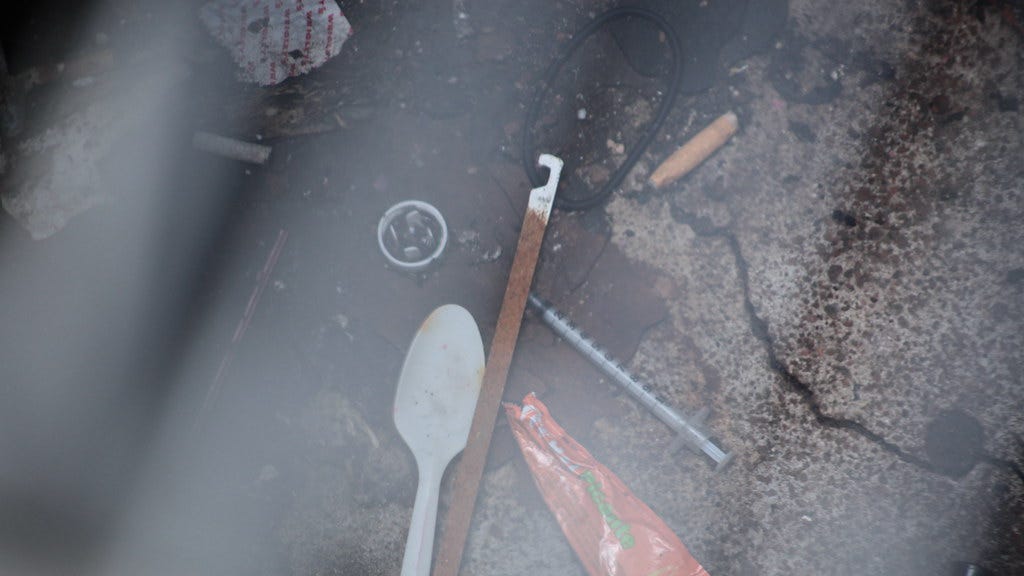
It's getting bad in LA as well. I've lived in Westwood (UCLA) and now Santa Monica since I went to school here around 2012. You'd always see homeless people every now and then, but they were mostly isolated to encampments and the "bad areas." Not anymore. I walk around a lot and work in coffee shops and hotel lobbies, and in the past year, I've witnessed people shooting up literally next to a kid's playground, I've been offered meth in the middle of the street (at like 10am in the morning, mind you), I hear people screaming/yelling at the top of their lungs outside of my apartment at midnight, had to dodge human poop in the middle of a sidewalk, a homeless person used my garage (the door was stuck open for a few weeks until someone came out to fix it) as a drug den, etc.
I'm literally considering running for city council to try to fix this. We changed the city government a few years ago, but it's gotten worse, not better. It's honestly insane. I have a few friends that just had babies and I have no idea how you could raise a child in a city like this. When I get married/have kids, I'm not sure I would stay here.
The problem is the people who with great intentions make things worse. Wait a few minutes until someone posts that “statistically it doesn’t happen and you are wrong”.
Of course nothing complex has a single root cause. The main one I'm seeing though is extremely addictive drugs, specifically Meth and Fentanyl. A certain percentage of people, if they try these drugs, will become hopelessly addicted until they are living on the street stealing to buy more drugs. SF seems unwilling to do anything to disrupt this cycle.
I always imagined giving people much lighter sentences for most things and if they repeat, then give them harsher and harsher sentences. Only the worst repeat offenders would get what they get today. I imagined not overcharging people hoping to scare someone into a plea. I imagined police not being able to interrogate and lie to children without a parent present. I imagined getting rid of pre textual stops to get innocent people's id's. I imagined "I smell marijuana," as not allowable probable cause. I imagined removing most K9 units. I imagined removing most SWAT units except for the largest cities. I imagined being able to remove bad police, bad prosecutors and bad judges from their positions of power. I never imagined letting people commit crimes with no fear of any repercussions.
> I never imagined letting people commit crimes with no fear of any repercussions.
This is a myth. Police everywhere prioritize violent crimes. Jails and prisons everywhere prioritize retaining violent criminals and when they have to, attempt to release the lowest risk offenders. When people have been prematurely released from jail it is not out of misplaced compassion. Mostly people are being released because the system is already at capacity. In fact many jails in the U.S. are well above capacity before they decide to release people. Some as much as 150%
No matter where you are, a lot of violent crime goes un-solved. That has been true for decades. People cover up their crimes and many are reasonably good at it.
The rise in crime during and following the pandemic has been significant for small, medium and large cities regardless of the policies adopted by those cities and regardless of the overriding politics of the state they are situated in.
>This is a myth. Police everywhere prioritize violent crimes.
I was speaking mainly to petty crimes. I should have been more clear.
Cue Rob Henderson’s luxury beliefs theory: Many rich white liberals support policies that lead to crime/chaos because it signals their high status and the options it affords (ie. I’ll just move to my other house in Marin if SF gets too crazy)
AND by doing that you do harm, by perpetuating racist systems of of injustice and oppression. The only way to solve that more important problem is by addressing the root causes and allow longer term healing to happen.
Yes, that means some people will be inconvenienced, but that's acceptable and a necessary part of the solution. The only way to speed that phase up is to implement comprehensive reparations quickly.
It's okay to say "killed" here. We all know that's the true cost of these policies.
This is sickening, the fuck is wrong with these people?
Would you have acted differently? Specially if you risk going to jail yourself if you have to use violence?
Another time this guy was screaming on the street, with blood running down his face. He'd been mugged, and the mugger pistol-whipped him when he didn't have anything worth taking. I took him to the ER, too. I'm rather grateful to him - he used my kleenex to avoid turning my passenger seat into a biohazard area. Not a drop on my seat or floor.
When bleeding homeless people have come up to me in SF (not uncommon) I usually just try to move on. I assume a similar reaction here, though I don't know if I'd have been able to tell this was a Normal Person who was dying.
I think a lot of citizens have rose colored glasses. I just can't figure any other way to square my horrifying personal experiences in the city and anecdotes like this one with the impassioned defense the city receives whenever it is criticized
Communities are made of people who look out for each other. If you put enough people together who don't, you've created something else entirely.
If I just left someone to die like that it would be hard to look in the mirror after.
I do not know. I’m ashamed to say but I might do the same.
You might be hit by a metal rod [1] Calling 911 will not work since police will just ignore it.
[1] https://abc7news.com/amp/sf-fire-commissioner-attack-don-car...
I was chased by a homeless man covered in blood at 8am...not a single person even bothered making eye contact
I was walking home through a park and saw a girl who was slumped over and it looked like she was dead. My heart started pounding, for some reason it scared me pretty badly. I went and found the police and they refused to even believe me. I then found another homeless person and asked her to check (part of the reason I didn't want to go near is that I'm a male).
Anyhow, I was scared.
Lack of empathy, morality, compassion- extreme selfishness
Wanting to reap all the benefits of being born in/living in a functioning society without giving anything in return…
Seeing the average human around you as a walking bag of meat to be exploited for your own gain & nothing more…
y’know, typical traits that seem to yield a bit more $USD over one’s lifetime.
Neither insinuation is supported by evidence.
As for the welfare system, people are using EBT to buy bottled water, dumping the bottles out in the parking lot, then turning the empty bottles back in for cash through the recycling program. They use the money for drugs or alcohol. That’s one example.
This is only a problem if "policing" these crimes actually removes them. All evidence shows that unless you just intend to permanently lock up all homeless people (therefore giving them....housing), policing drugs and poverty doesn't fix the problems for anyone
> Billions of dollars in taxpayer funds have been given to nonprofits to improve homeless conditions
True. The west coast has a massive homeless problem. And a progressive government. So they invest in trying to fix it.
> but they’ve only gotten worse
Housing inequality has also gotten massively worse over the last several decades. And in general many other social programs have gotten defunding (Such as mental health support)
And in general North America-wide drug usage is only going up and indicators of despair are going up.
Western society has problems and we are not dealing with the root causes. Middle-class millennials have resigned themselves to never owning a house, and never being able to retire. While they have a social safety net from their boomer parents, it's not yet a crisis. When the boomer parents spend all their accumulated wealth to survive the last decade of their lives, it will become a societal crisis.
But the early signs are already being shown by the lower class.
My point is that we don't know HOW MUCH WORSE the problem would be if those organizations weren't in place. For all we know, they are dramatically reducing the rate of regression.
> while the nonprofit operators grow rich.
[citation needed].
This is an absolutely ubiquitous conservative talking point but the only evidence I see of it is that people working for these non profits make living wages (good, shouldn't they be able to?), and the CEOs of these companies make comparable money to CEOs of profitable organizations. Which...is good, isn't it? Don't you WANT to be able to hire the best people for these roles, and don't you need competitive comp to be able to attract it.
> People exploit loopholes in the safety nets to get money for drugs.
Drug addicts will do almost anything to do drugs. The root causes of drug addiction may be character weakness (they're not, but we don't need to have that debate today) but once someone is addicted, it doesn't matter what happened - they have a medical disease, and treating it as anything but does not help anyone.
But if we want to help people not become drug addicts we need to deal with the underlying societal causes of despair.
> These are all unintended consequences of poorly conceived policy making.
You're right. For instance, one terribly conceived policy is policing this problem and spending millions of dollars to lock up people in jails and prisons for this instead of just spending money on socialized subsidized housing.
A social safety net from housing to universal basic income will dramatically reduce the problems in questions.
But even in the most progressive cities of North America, this is just not on the table. And instead when people speak about "bad policy" what they're really saying is "I want to see MORE police".
People elect the government they deserve.
Edit: This is a situation with most metro areas. Definitely with Chicago where there is a large contingent of folks who commute from the suburbs.
It's possible for harmful but popular policy to go forward with no one but your average constituent to blame, but when every option is a different set of false promises and failures to execute, and "the discourse" is driven mostly by dollar-driven propagandists, it's hard to place the blame for dysfunctional government on voters generally.
It's possible for harmful but popular policy to go forward with no one but your average constituent to blame, but when every option is a different set of false promises and failures to execute, and "the discourse" is driven mostly by dollar-driven propagandists, it's hard to place the blame for disfunctional government on voters generally.
What you're experiencing is confirmation bias. You read about one crime, then started noticing all of the stories about crime, formed a theory based on this hyper focusing, and now you believe it's worse than ever despite the stats clearly showing otherwise.
https://www.sfchronicle.com/projects/2022/fixing-san-francis...
https://sfgov.org/scorecards/public-safety/violent-crime-rat...
If you are a resident, you very well know that a huge portion of crimes, violent or not, are not being reported because of the end result. Property crime is through the roof. My car has been broken into 3 times in the last year or so. Before that, I've only had my car broken into once in a decade before. I've had to call the police 3-4 times (apart from the car break ins) in the last 2 years for individuals in crisis, sometimes threatening violence. I never had to do it in the decade before. In fact, the first time I had to do it, I wasn't sure if I call 911 and had to look up the non emergency line. Yes, all of this is anecdotal or "personal experience", but talking to everyone I know around me, all of their "personal experiences" have only gotten worse recently. Which makes me believe that at this point, the data paints as accurate picture as anecdotes these days.
https://www.sfgate.com/crime/article/San-Francisco-crime-Che...
https://www.macrotrends.net/cities/us/ca/san-francisco/crime...
Exactly. The whole "crime is terrible in SF" is just a Republican propaganda narrative that people who should know better are buying into.
Same shit in SF, Portland, Seattle, and even Vancouver CA!
It's a PNW problem. We are simply too libertarian and hate cops too much. Everyone else in this thread thinks it's something else. It's not. People here fucking hate cops and will turn society to anarchy to be rid of them.
Its tough to balance reading https://www.sfgate.com/crime/article/San-Francisco-crime-Che... that kinda shows crime is average for a large US city with the Bell Riots in the DS9 storyline https://memory-alpha.fandom.com/wiki/Bell_Riots as an outsider.
Either way, shouldn't San Fran have plenty of money from all the tech there and plenty of extra office real estate from covid to try and put a dent in all the circumstances that lead up to someone needing to steal or getting addicted to drugs? Probably too optimistic of a take ...
Incidents are actual reports to police, not a log of all activities happening in the city. Several factors can influence reporting rates in a city, causing over or underreporting. Especially if you doubt the effectiveness and corruptibility of the police. Homicides are direct reports of victims and more accurate.
Plus, the linked article is based on the San Francisco Police Department website's crime data. Not saying that nefarious activity is the case, but has this data been audited by a 3rd party? There's definitely an incentive to show that things are better than they are if funding, elections, etc. depend on it.
SF is especially "bad" because it has an incredibly high cost-of-living. If you're living in the area without a high-paying (tech) job, you're very likely to be only one or two surprises away from losing your housing.
Due to the very real issue of police brutality in SFPD, local politicians are opposed to increasing funding for SFPD without oversight, and a number of politicians want to decrease it due to their police brutality record.
That said, SFPD is having a hard time retaining and hiring officers as they can get better salaries elsewhere in the Bay with less overtime. Fresh out of Academy cops in San Jose can earn a $111k base that caps at $189k, but SFPD's starting base is $103k and caps at $147.5k. Even factoring overtime, SFPD comes out to less than SJPD for hours worked, and other richer suburbs can pay even more than either wth even less hours.
Add to that politicization of the SF DA's office and Public Defender's office for the exact same reason (pay sucks so political hacks from both sides of the aisle fight for control) and you have dysfunctional local law enforcement.
On top of all that, SF had massively redeveloped a lot of formerly redlined neighborhoods (Western Addition/Hayes Valley, Mid-Market/Civic Center, Mission Bay+Potrero/Hunters Point) which in turn displaced those who couldn't afford to move to cheaper working class suburbs like Antioch and Vallejo.
Add to that the very real issue of neighboring states and cities (both Republican like Nevada in the 2010s and Democrat like NYC in the late 2010s to present) bussing their basket case issues out to San Francisco.
All this lead to the dysfunction that is seen today in San Francisco.
SF has very high property and overall crime rates. This is objective fact. It has the 4th highest property crime rate in the country, and the 7th highest overall crime rate in the country[1][2].
However, the _violent_ crime rate is only slightly above average in SF. Some people don't care much about the rampant theft; they still feel safe.
The same is true of e.g. the homelessness and drug issues. There are objectively more homeless people & drug addicts laying out on the sidewalks in SF. Some people don't care, some people are really bothered by this.
[1] https://en.wikipedia.org/wiki/List_of_United_States_cities_b...
[2] https://www.neighborhoodscout.com/ca/san-francisco/crime#des...
SF has reached a tipping point and the wildly inflated values of multi-million dollar condos and trophy commercial buildings are falling fall enough to start putting serious wealth at risk.
No one likes walking down the street and seeing a guy yelling incoherently at passing cars, or getting on a subway car and finding someone sprawled across one of the benches smelling like shit.
Please give it a rest. That things were even worse under Dinkins is no reason we should tolerate things getting worse now.
On the other side you have idealistic liberals who want to solve the problem by adding more social services but taking no further action.
This is likely a problem created by extreme wealth inequality and the fix is probably not what the posters on this site would be interested in entertaining.
1: In almost all cases the statistics show that crime is actually going down, but the media reporting is going up.
2: Cities being crime-ridden hellholes is a narrative that is very convenient to the North American conservative narrative that cities are hellholes, progressives are soft on crime, the "real" citizens are in the suburban/rural areas who are scared, and that they are justified to be scared.
It's how despite the fact that overall trends of policy perspectives are moving leftward, the US Republicans and Canadian Conservatives remain relevant disproportionate to the polls for their actual policies: They feed on the fear so they create more of it.
3: West Coast cities (San Francisco, Portland, Seattle, Los Angeles, and Vancouver Canada) get hit with this even more disproportionately because the citizens there confuse crime with visible poverty.
People hear "Someone was randomly stabbed", then they go on the streets, see someone homeless and on opiates passed out in the street, or get screamed about by someone on meth, feel unsafe, and correlate the two. Then they look around at the state of certain parts of the cities and scream the city is dying, and demand superficial solutions like impeaching the DA, or cleaning up a homeless encampment.
But the cities don't have a crime problem (more than other cities in North America). They have a VISIBLE POVERTY problem. They have a houselessness problem. And they have a drug addiction problem (which almost certainly is an outcome of poverty and houselessness.
The root cause for these is complex, from wealth imbalance, to insufficient social services, but the reason why THOSE CITIES specifically have them is that the west coast provinces and states are 1/ Progressive, 2/ Mild-climated in the Winter.
There is no other province or state that is both consistently progressive (and as a result offers SOME social services for homeless, mentally ill, or drug addicted people) AND you can survive a winter in the street. The east coast has the former, but not the latter. The southwest has the latter but not the former.
The combination of the above creates the effect you see.
No, the statistics show that reports to the police are going down. The reports are NOT going down because crime is going down; they are going down because victims are less and less likely to report the crimes.
For example, the Whole Foods that shut down in the gentrified area around 9th street is a couple blocks from Hyde & Turk - which is the main drug market in the city.
The high rises along 5th Street near Moscone are adjacent to the SROs and homeless shelters on 6th.
Similar stuff in Mission District and Polk Street/Lower Nob Hill as well - a lot of older SROs/cheap apartments got converted into Hotels, Airbnbs, or resold as condos.
And despite all this, no one noticed the intergenerational poverty and gun crime in the Projects in Hunters Point and Visitacion Valley because they are cut off from the rest of the city.
People hear "Someone was randomly stabbed", then they go on the streets, see someone homeless and on opiates passed out in the street, or get screamed at by someone on meth, feel unsafe, and correlate the two. Then they look around at the state of certain parts of the cities and scream the city is dying, and demand superficial solutions like impeaching the DA, or cleaning up a homeless encampment.
But the cities don't have a crime problem (more than other cities in North America). They have a VISIBLE POVERTY problem. They have a houselessness problem. And they have a drug addiction problem (which almost certainly is an outcome of poverty and houselessness.
The root cause for these is complex, from wealth imbalance, to insufficient social services, but the reason why THOSE CITIES specifically have them is that the west coast provinces and states are 1/ Progressive, 2/ Mild-climated in the Winter.
There is no other province or state that is both consistently progressive (and as a result offers SOME social services for homeless, mentally ill, or drug addicted people) AND you can survive a winter in the street. The east coast has the former, but not the latter. The southwest has the latter but not the former.
The combination of the above creates the effect you see.
The city of San Francisco spends $70,000 annually per homeless person! <https://abc7news.com/sf-homeless-plan-housing-all-san-franci...>
I think you decide what is a bigger moral crime:
* To leave someone who needs help without it, even when you have funds to help them
* To fund someone who doesn't need help, and who will take advantage of it?
It's similar to strong-link/weak-link theories on societies.
Ultimately, the homelessness is not the root cause. The root cause is poverty, mental health, drug addiction, or all of the above. Those are the things that need to be addressed first.
probably the very best place in SF is the corner of Broadway and Broderick...still within half a mile of a tent camp
SF will probably never be "solved"
people have been trying to "solve" SF since the 90s, it has only become worse every year
SF has to hit total Haiti-grade rock-bottom before it can be repaired, maybe in five years
until then, just go somewhere else and live your life
Anyway, the only how to fix this problem is to get involved. Contact your supervisor, police capital, etc. Be persistent. That is all I can say.
[1] https://www.ktvu.com/news/neighbors-complain-of-rampant-pros...
Honestly, I think the reason there are no studies proving that punishing crime works, is because it's such a brain-dead obvious conclusion that I'd guess nobody ever felt the NEED to make such a study. Society has been punishing crime for thousands of years. We've all changed our behavior to avoid punishment. If you've ever had a pet it should be perfectly obvious that avoiding punishment is an innate behavior baked into every animal and OBVIOUSLY it works to deter bad behavior. It's something as obvious to me as 2+2=4, or water is wet, or the sky is blue.
Fortunately there are other cities out there with actual sane leaders. But as long as SF keeps pushing this politically-motivated, head-in-the-sand "compassion not conviction" nonsense their city will continue going to shit.
>I think the reason there are no studies proving that punishing crime works, is because it's such a brain-dead obvious conclusion that I'd guess nobody ever felt the NEED to make such a study.
It's pretty easy to imagine how punishment might not have an appreciable effect on certain crimes in certain contexts, so it's confusing to assert that your conclusion is "brain-dead obvious". Punishment as a concept is indeed obvious, but only because it serves as an obvious outlet for our angry emotions, not because it "obviously" works effectively and in all cases.
You're injecting really strongly biased/unthoughtful wording into your opinion, which is a needless distraction.
I'm not sure what you mean by this - the purpose of all functions for dealing with crime (which may be called punishment) in civilized society is, in no particular order: 1. To protect people, e.g. by physical separation, 2. To rehabilitate, and 3. To deter (and, unfortunately in many cases, 4. To provide the basic human need to see the wicked punished).
>Depending on how severe the punishments it absolutely can affect crime rates.
That's an understatement! I only said it was true that some studies show punishment is ineffective, and that punishment "might not have an appreciable effect on certain crimes in certain contexts."
>This is a very simple problem to solve. Remove the people from the streets.
I think we should be able to agree that justice is complex in practice, and "remove the people from the streets" is leaving quite a lot unsaid. Maybe you meant that the problem statement is simple, which it is: "SF laws and/or enforcement are failing to keep people safe".
>Do you think if we rounded up all the criminals and put them in jail, the crime wouldn't decline?
This is unrealistic even in cities where enforcement is healthy, but even going along with the hypothetical: The topic was punishment as a deterrent. I.e. how well does the punishment of those people prevent them from doing it again once released, or prevent new people from doing it. Obviously regardless of the answer to that question, we need to separate from the rest of society those people committing violence, menacing, public drug-use, public defecation, etc (how best to keep them separated and rehabilitate/help them if possible is another obvious topic, but not one in the scope of my comments).
My original post was not a defense of SF - it was a criticism of another post that I think was written in a way that damages the conversation. Most of what I've written here is an attempt to clarify my post in light of your interpretation, rather than providing new information. Maybe this is my fault - but I also think you might be making assumptions about the specifics and degrees of my opinion, which is frankly the common thread of dysfunctional conversations everywhere, especially on topics poisoned by politics.
On a somewhat quibbling note, I will point out that violating traffic laws makes one a criminal, and I am pretty sure you have exceeded the speed limit.
You probably do not mean to put all the criminals in jail. And that raises the question of which criminals to put in jail which makes it much harder.
Addiction is lifelong so you're going to put drug addicts in jail you would need to use a life sentence. Based on my TV understanding of the penal system, this will not cure the addiction.
Also, if you put all the criminals in jail what you're really doing is providing a fertile breeding ground for criminal education, which is also not very healthy for society assuming you plan to ever let criminals out.
And of course we do also have the escape from movies and Australia as previous investigations of how to best deal with high crime rates
[1] https://www.neighborhoodscout.com/ca/san-francisco/crime
[Yes /sarcasm obviously]
But on a serious note, mental health and addiction is not solved by prisons.
And it doesn't have to be jail if they have mental health or whatever issues. Just put the people that hurt other people in a place where they can't hurt other people.
What... a stupid measure.
To demonstrate, four out of the five articles that are supposed to be "the other side" are non-editorial news articles citing crime statistics. The other one is hardly an argument to "not get angry."
Whoever this person is, they spend too much time on Twitter and it really shows. Pushing and monetizing anger itself like this should be outright spotted for what it is: flame bait for clicks.
The whole "talent pool" was a self-fulfilling prophecy - there's no reason they couldn't have set up in more business friendly places like San Jose or Sacramento or even Nashville Tennessee for that matter. But it was always a bit of a flex of muscle to be in SF.
San Francisco as a city never needed these businesses. But they came anyway. So in most cities you have city planners that work really hard to build a desirable environment for attracting talent and businesses. I think people miss the point of SF's political problems.
And until Bob Lee's death, the VC class always had the money to kind of rise above San Francisco's problems and not see it for the dump it was increasingly becoming. It's as frustrating as it is needless - there are a hundred other cities in America better suited for VCs to set up shop in.
WTF? yes we do.
High bail
Held in lockup till trial
No early release from prison
No consideration for race
Develop philanthropic apparatus for post-incarceration employment with the presence of their ex-criminal peers
This has worked for over a century until everyone was bamboozled into thinking it was inhumane by revolutionaries (aka commies)