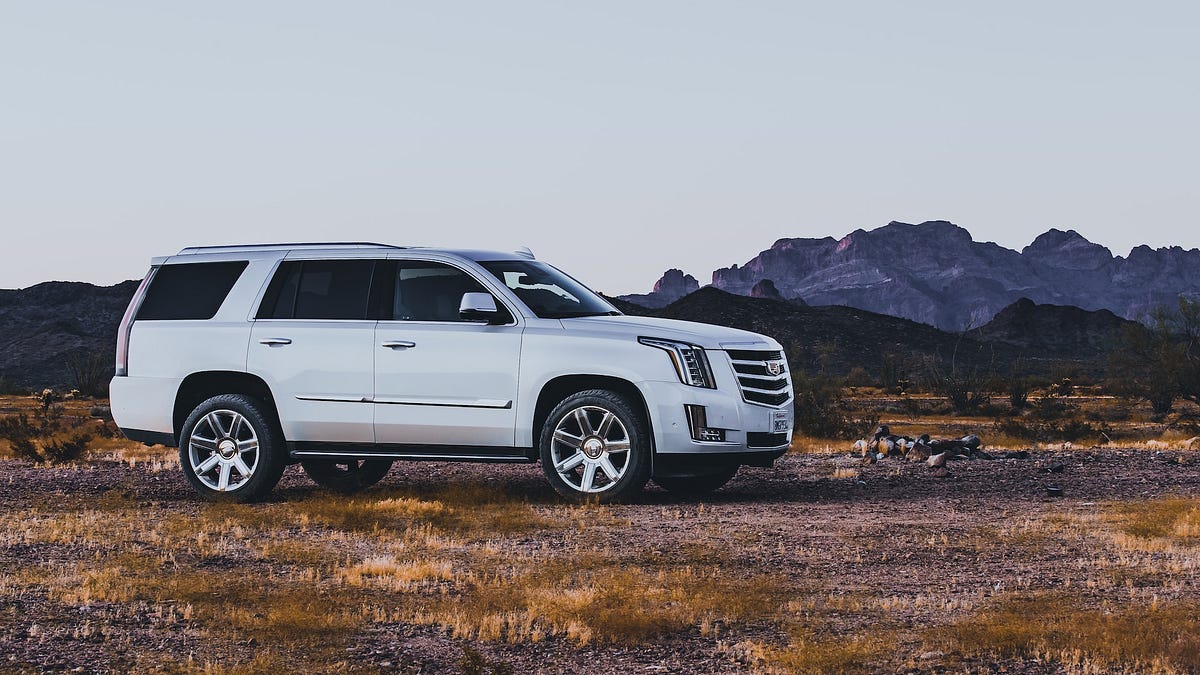
The Loophole That Made Cars in America So Big
Here's why American cars and trucks are so big
distilled.earth
107 points · by jseliger · 3y ago · 145 comments
It makes sense that you'd want a larger car when you live in a place that is designed for driving and everyone else is doing it too. Give people other viable options, like walking,cycling, and transit, and I guarantee that they will pick them instead because they are more pleasant and convenient.
I also don't buy that Americans don't want to live in walkable and bikable places either. The two most desirable and expensive cities in the United States (SF and NYC) are largely built this way.
The problem is that the walkable / bikable places are so few and far between that they're gobsmackingly expensive. Even on a FANG salary, getting a reasonable place in one of the few walkable neighborhoods is beyond what I'm willing to pay these days.
If you want more than 900sqft for your family, trading a 15min walk for a 25min drive just makes so much more sense with how American cities are laid out and how much competition there is over the desirable places.
There are efforts being made, it will just take time. Can’t move almost a century of car centric public policy on a dime. Vote with your dollars and feet.
The fix is simple: just get rid out the laws that prevent them from being built.
Like try driving a huge SUV on narrow German village roads or parking in the tiny parking spaces there. Or try weaving though heavy NYC traffic or finding a new parking spot when you need to move for alternate side parking. It’s nearly impossible in an SUV, but an SUV is an objectively better car choice if you don’t care about efficiency or sporty handling.
What I struggle with is how it's socially acceptable for people to ignore all of these negative externalities. Just another example of Moloch winning: https://slatestarcodex.com/2014/07/30/meditations-on-moloch/. For some reason we scorn people who drop litter, but air pollution is totally fine
You can get all of those things in walkable cities. SF and NYC have single family homes with back yards in walkable neighborhoods, they are just really expensive.
Also all neighborhoods have truck access, including fully pedestrianized streets.
American family sizes have steadily dropped for many decades so the editor’s mention of millennials and family sizes contributing to demand for large vehicles is nonsensical.
Americans just love big cars and that desire vastly trumps and concern over environmental impact.
I know a surprisingly nontrivial number of people who needed an SUV, but upsized because of the tax deduction.
That tax deduction requires having a business. The general population only knows the bare minimum to file their personal taxes, not how to create a LLC to take advantage of tax breaks.
Makes sense to while about it. And is an oppression, while definitely not the worst.
Not like it’s just Americans either.
At that point it's about showing off more than anything.
Chubbiness of my fellow patriots aside, our commutes suck. Plush seating, ample leg room, and a corpulent selection of infotainment amenities help ease the pain of a 30 mile or more slog through traffic.
When everyone else on the road has a big one, then yes it is the only safe option.
Take houses — Americans are richer than Europeans, and spend some of that on houses that are significantly larger than European houses.
https://www.reddit.com/r/Carpentry/comments/vcvanr/why_are_a...
It doesn't help that the well intentioned policies mentioned in the article have effectively bifurcated the market in small and very big, removing consumer choice for smaller (but still large) vehicle designs (i.e. I would love to buy a modern small truck or a hatchback approaching station wagon size, they don't really exist.)
The correct conclusion to me seems to be that, given the physic situation drivers experience on the road, it's foolish to continue pushing on fuel efficiency as we are and instead we need to focus on making the road physics situation unpalatable to these kinds of vehicles to lower their value to consumers (with the added benefit of increasing road safety because the things that make the physics situation unpalatable to huge vehicles are in the same design real as all the stuff people like not just bikes on youtube push that will also make the city more walkable and bikable aka livable).
The trade-off is that the back seat might as well not exist. I keep mine folded down to make a two-seater with lots of legroom and cargo space.
Oh the irony of this comment if that was a BMW "Mini Cooper"...
I am quite large in every dimension and my Mini Cooper is the most comfortable car I've ever driven, so I think you're way off on this one.
https://www.thetruthaboutcars.com/2012/10/how-cafe-killed-co...
Americans constantly overestimate the standard of living of the majority of their citizens compared to the rest of the developed world
no-one in Europe, Japan or Australia worries about medical bills of bankruptcy regardless or their income
I might like a slightly larger house but I'd rather have a Fiat 500 than a giant US "sofa on wheels" fake SUV with the turning circle of 100ft
The median income is just 20-30% higher compared to Europe.
See [1] and [2] for examples.
Note that the second link is to an Australian site, so may be using car seats that are not available in the US.
Here's a unit, not available in the US, that fits 3 kids in the back of a Fiat 500 [3]. They have a 4 seater [4] that works in a Honda Civic and similar sized cars.
[1] https://www.carmax.com/articles/cars-that-fit-three-car-seat...
[1] https://www.onlineauto.com.au/best-cars/5-seat-cars-fit-3-ch...
2. There are tons of car review sites touting three cars seats side by side. I own one of these cars. They don't actually fit. Not in real life. Think of it like the McBurger commercial on TV. In real life... bleh.
3. A big car solves many problems other than transporting three kids. Ive only put 2800 miles on my SUV this year, but:
- Ive driven six (six!) people on two >600 mi journeys.
- Ive loaded it with all the tiles and flooring needed for my remodel
- picked up 2x4s and the like
- taken my neighbors kid's to the theater with my family many times
There are still 4 minivans on the US market, and really I don’t think there’s space for any others to sell successfully. The ones that exist are damn competitive for what they are, and they still don’t sell well.
Unless you're looking at an expedition or the like, they're all unibody, front wheel drive, and turbo charged inline fours. Just like a minivan.
The SUVs of old had a truck chassis, a large V6 or V8, rear wheel drive.
I can put them in the Sorrento.... But I have to buckle her into her seat belt while shes standing holding the boosted. Then I have to lift them both to get them i to position.
We want a new car. We were going to buy a Sienna hybrid. But they're ridiculously priced, unobtainium and, frankly, not that big. So Im looking at a low milage Expedition Max or convincing the wife for a Sprinter.
When I had a kid I went from a golf to a full sized SUV and was shocked to find that the usable space was barely any larger.
It was easier to pack my firstborn's stuff in it than the Golf. We got rid of it for the Sorrento when we got rear ended when my daughter was four days old. Then I decided I'd get the heaviest vehicle I could then afford - the Sorrento.
Maybe some people are buying SUVs because they can't wait until their new baby is walking and talking before driving them somewhere?
Why did Toyota drop the Yaris?
Why is the Honda Civic so big?
Cars have gotten bigger due to a lot of factors and this article addresses none of them.
They talk about SUVs the size of the Ford Expedition, which certainly sold well, but smaller SUVs like the Ford Explorer, Chevy Blazer and Jeep Cherokee that are more similar to the crossovers our roads are jammed with today sold even bigger number and continued to grow in popularity.
I think the number of reason is cheap fuel compared to Europe, marketing, infrastructure and norms. We don’t have old cities with narrow streets like Europe does. Our suburban homes have space for a large car. Our cars were always big.
And then again, other countries have lower limits on the weight of vehicles you can drive with a regular driver's license.
We're stuck in a race to the top.
Intuitively, a larger car is safer: if two differently-sized cars are in a crash, the big one will win while the small one suffers greater damage. In the modern age of safetyism, that means that if I'm on a road surrounded by larger cars, I also must by a large car in self defense. Thus, everybody keeps upping the ante, buying larger cars.
(FWIW, I don't subscribe to that approach. I favor a nimble and agile car to allow me to avoid a collision in the first place.)
In short, because SUVs are built on a truck frame and are considered trucks, they are not held to the same fuel standards as cars.
Create more small, local neighbourhoods with everything needed in them. Make sure everyone has a grocery store, a school, a doctor's office, and green space like a park within walking distance.
So this basically killed off wagons, which were what people actually wanted to drive. My last three cars have gone from 2500 (1998) to 2750 (2016) to 3300 (2022) despite being basically the same size and same function.