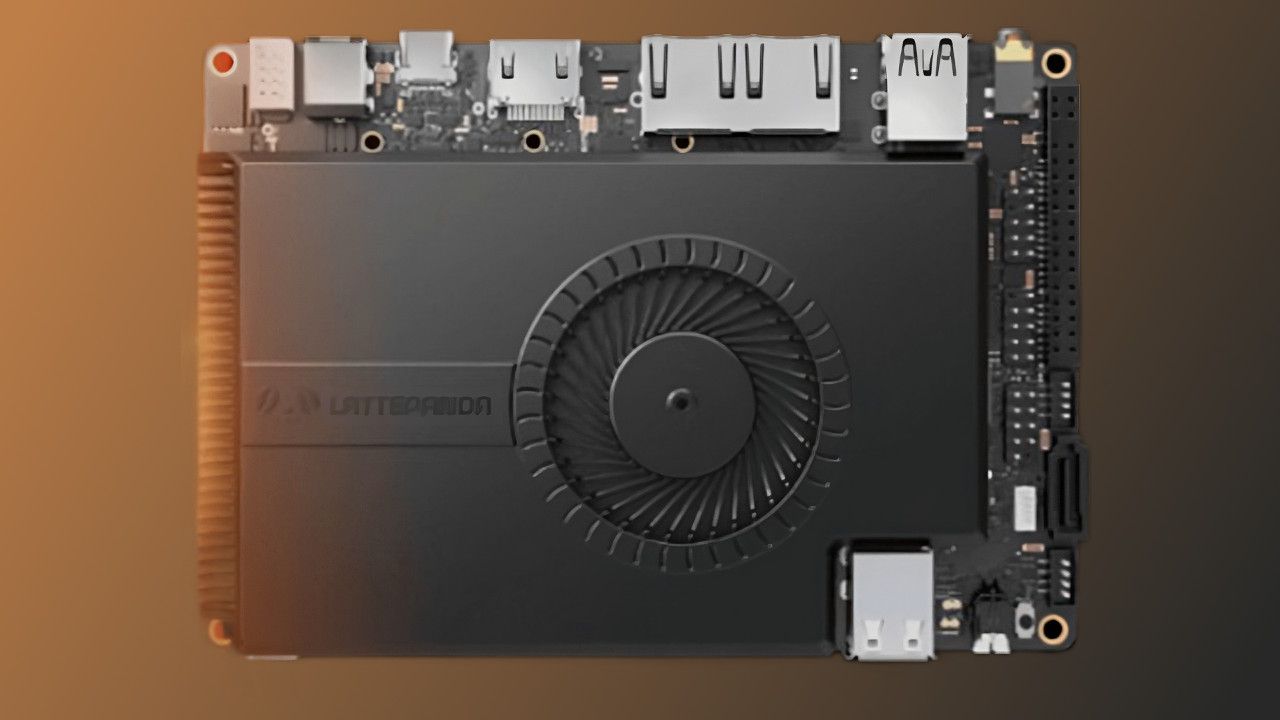
LattePanda Announces Sigma, a
Raptor Lake CPU, Intel Iris XE GPU and 16GB of LPDDR5
Tom
58 points · by ZunarJ5 · 3y ago · 54 comments
1. Quad-Core Processor Jasper Lake N6005 2Ghz/3.3Ghz boost
2. Up to 64GB Dual-channel DDR4 PC4-23400 with 2 SO-Dimm Slots
3. 2 x 2.5Ghz Ethernet
4. SATA-3/HDMI 2.0/DP 1.2
5. Intel onboard GPU
I have multiple of the predecessors (H2) and LOVE them. Kitting out a node with 16G and a cheap Sata SSD puts you around $250. They're fast enough to run multiple USB cameras for OctoPrint. I believe if you check the forums, they can run windows as well, but I've never tried. And they are totally silent!!
1) https://www.hardkernel.com/shop/odroid-h3-plus/
edit: formatting
https://www.armbian.com/download/?device_support=Supported&t...
https://dietpi.com/#download (click Odroid).
I wrote a document with a few notes about the Odroid-XU3.
They've also been maintaining Linux support for their 8+ year old ARM boards, as well. I generally avoid ARM boards because you're dependent on manufacturers for continued kernel development, but Odroid/HardKernel/whatever holds up their end of that deal very well in comparison to other manufacturers.
For example the TL-POE10R PoE splitter. https://www.tp-link.com/en/business-networking/accessory/tl-...
From time to time, I search around for something like a PCI-express card to expose a bunch of 3.3V GPIO, SPI and I2C lines, but all I've been able to turn up expose old-fashioned 5V logic levels, no SPI/I2C, and at distinctly 'industrial' price points.
It also wouldn't be useful for real-time applications, since these machines don't generally run true real-time operating systems.
Delegating I/O to a dedicated controller usually makes much more sense than trying to do it by bit-banging ports (or addresses) on a general-purpose CPU running a general-purpose OS. Not advocating the Arduino model necessarily, but if you want memory-mapped I/O, my guess is you really want an FPGA connected via PCIe, or at least USB HS. And if you don't need an FPGA to handle your I/O tasks, then there's a darned good chance that the Arduino is actually good enough.
What might be interesting is integrating something like a Teensy 4, so that you could offload not only I/O but a non-trivial amount of processing on the data to be acquired or transmitted.
[1] https://docs.lattepanda.com/content/sigma_edition/IO_Playabi...
[2] https://docs.lattepanda.com/content/sigma_edition/Powering_O...
In the first place, it was possible to document them succinctly enough.
In theory, I would love to pay for a device which is well-documented and provides a repair and modification friendly interface at all levels of hardware and software abstraction but in practice I’ll probably buy a macbook air because they mostly just work and the air is cost competitive vs the “open” niche.
And I don’t know about System76 in particular but my overall impression of binary blob driver acceptance is that the open folks lost that battle which narrows the gap with Apple tech.
So far I resort to aftermarket Supernicro ITX boards with fanless Intel CPUs of yore; they support ECC and can be had for $150-200. Intel stubbornly keeps ECC support for server CPUs only.
I wish newer AMD-based compact boards were available, offering unofficial ECC support, because Zen-series CPUs have ECC support even in desktop and laptop models. Likely they are, I just did not look hard enough.
Its not that importánt.
I don’t think it was ever commercialized though.
If part of your motivation is the act of physical clustering then you can't beat those as nodes.
If you want cores with your RAM with more performance and less hassle, a modern Mobo with 8 dimm slots for 256GB RAM running vms across is faster cheaper and way more versatile.
How much RAM do you need? More than 256GB a host is basically the max for consumer hardware
I would not be surprised if the i3 CPUs can handle much more than what Intel says they can.
This would be cool if it had new Intel ARC graphics that could encode av1 (av1 live server for everyone coooool! wow could be super next-gen!), but unfortunately it doesn't have that, just old intel integrated graphics. Bummer. Probably sticking with Odroid stuff like mech422 said.
True. But watch out for Veyron Ventana, due H2 this year, and Tenstorrent Ascalon, due next year.
The latter expects similar performance as projected Zen5, but using less power.
Intels built-in is great for that and that makes all the sense in the world on an sbc.
Not sure what you mean. E.g. recent AMD cards work on RISC-V just fine.
How about a framework board since both share the board form factor?
Booting up a LattePanda board is a real breath of fresh air, compared to the thermonuclear tire fire that retail Windows has become. As far as I can tell you lose absolutely no functionality with LTSC IoT.
Technically it's not kosher to use the license for general work around the home/office, natch. The IoT licenses are supposed to be used only for developing, testing and selling hardware (and selling it directly to end users only, at that.) But at least the license exists.