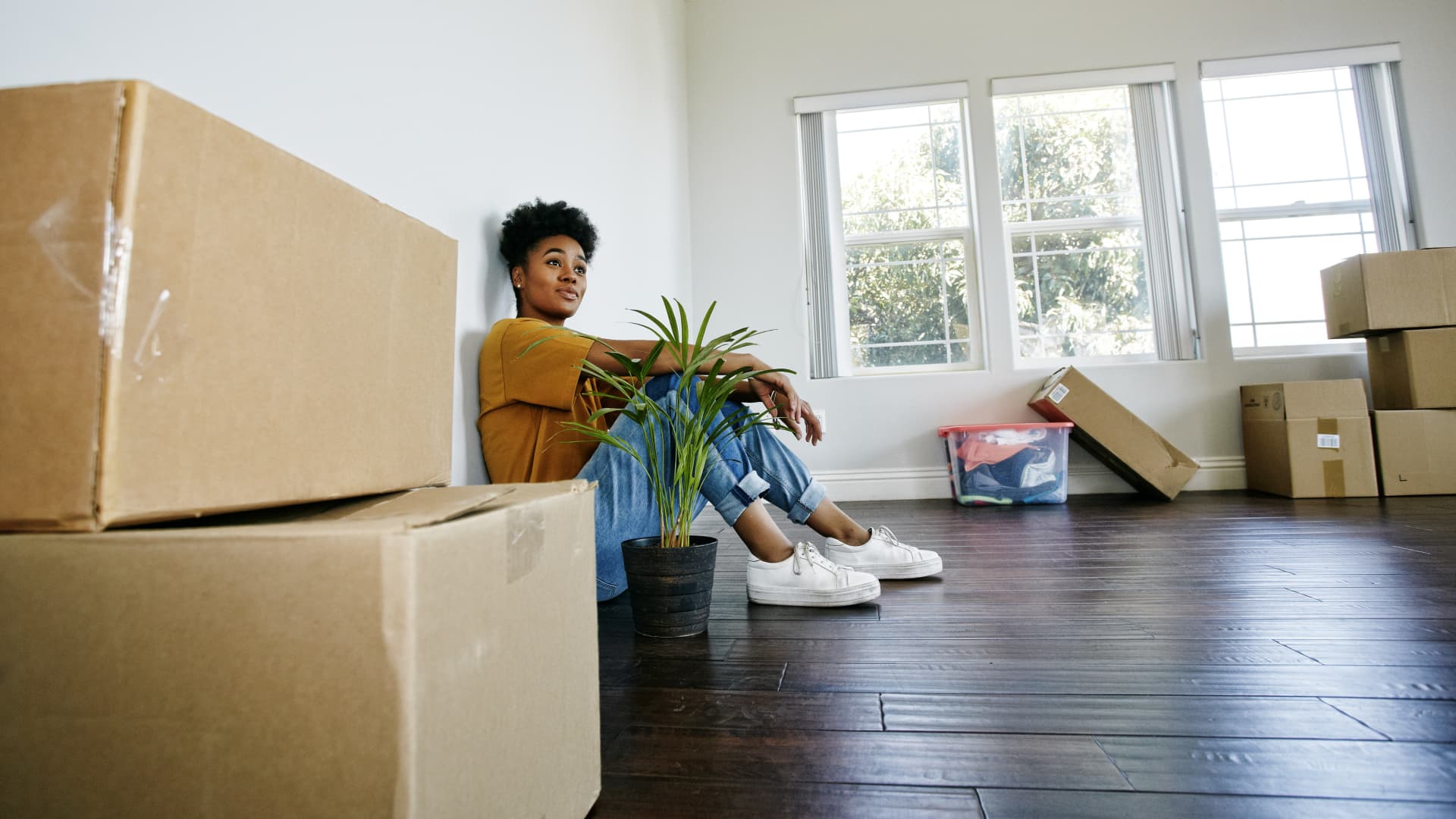
66% of renters say homeownership is 'hopeless'—here's how they'd rather spend their money
Most renters are focused on saving for retirement savings or paying off debt rather than buying a house.
CNBC
114 points · by donsupreme · 3y ago · 125 comments
In major cities where people want to live (slash where well paying jobs are), it is very difficult to justify ownership. For example, a $600k house at 7% interest will loose money over 5 years even if you sell for $650k. And not just loose money, but loose even more money than renting for like $4k/mo. (And this accounts for a $100k down payment!)
There is basically no way to justify ownership in these areas financially without coming into a significant amount of capital. And while you could afford it with a high cashflow (two high income earners, which is doable in major cities), you can get a nice apartment for $4k/mo that might have even more amenities than your house would have (like a hot tub).
I think this is a huge bummer, especially because owning an apartment or condo is becoming more rare as well, since renting is more financially attractive to property owners. This basically makes it much more difficult to build wealth, and allows large developers to make off with a huge amount of money.
So it does feel kind of hopeless in these large cities, even if you make a ton of money. You basically either have to accept taking a huge loss on ownership (unless you stay there for decades or get a great deal), or settle for renting.
Hey, it could be worse; I’m in a privileged position compared to many other people where they can’t afford the rent. But this inflationary environment feels demoralizing where everything goes up faster than what you can earn in raises.
You pay the savings in sanity points when you get roommates or family. No amount of savings is worth it.
Downpayments for houses in that area with a 740+ credit score is at least 200k and only goes up from there, don't know many parents that could help that much given the high amount taxable event, that's also not taking into account most homes have significant maintenance the first year, you never know what you'll find.
I've seen some places where they found out they had to fix the foundation after opening up to do some safety fixes, ended up costing around 120k. Involved a hillside sliding too so geotechnical engineer had to come in, no clue how much that cost after all was said and done. Wasn't found during the normal pre-sale inspection.
Anything we could pay for even if we really stretched irresponsibly would be twice the price and likely not provide anything we don't have except a shit ton of debt, stress, and an extra closet
Cedar Point and King's Island would like a word. ;-)
Obviously, roller coaster's aren't everyone's cup of tea, but I've often heavily considered moving to Sandusky, Ohio after I retire just so I can spend all day every day at Cedar Point.
But the home ownership rate isn't even particularly high in Ohio. Based on home ownership rates it appears to be easier to buy in other states like Minnesota, Maryland, and Utah. Lots of options depending on what you're looking for.
https://ipropertymanagement.com/research/homeownership-rate-...
Isn't this kind of how it should be, though? The idea that owning a house is some kind of guaranteed investment is strange to me. It's not "losing money" per se, it's "spending money" so you have a place to live.
In a healthier market I feel like owning versus renting should be a choice people can make without any obvious financial winner.
That said it seems like both owning and renting are too expensive relative to median wages in desirable areas.
if your burn as a renter is substantially lower you could invest the difference in a non-real-estate asset and make a lot more return, in many cases.
In my area, the price-to-rent ratio is nearly 1:1. When I bought my house in 2015, my mortgage payment (30 year fixed) was about $1,500/month (Plus ~$400/month property tax). Zillow estimated the rental value at $1,700/month. From the listings I've seen in my area, Zillow's rental value is pretty close to what people are paying.
In my case, I would have been insane to choose to rent instead of buy. The thing to remember is that rent always goes up. 30 years from now, the rent could easily be anywhere from $4,000-7,000/month. Meanwhile I'll be making my final $1,500 mortgage payment.
Yeah, if my water heater explodes, I'm on the hook for it. But a single month of savings in the difference between renting and buying years from now would cover the cost.
Unless the house appreciates a lot very fast, or you have very low interest rates, it’s very unlikely that a house in these cities ($650k, for example) will make you money at all in the mid-term, let alone beat renting.
What it isn't higher than is the peaks of home ownerships hit during the low the low interest rate booms before the recessions of the '80s and 2000's.
I don't think the current housing crunch will be forever - we've seen shortages like this several times before in US history. While some cities are fighting new housing furiously, other's aren't. Over time, the population migration to the places that are building will continue as it has over the last decade. Building houses is a boom and bust phenomena, and I've seen nothing to say that it's never coming back.
It's not so much "the economy's" fault as it is my [yearslong] attachment to a company where there's been no wage growth (hopefully I'm out by September!).
Altogether very much not what I ever thought "30"+ would look like for me.
It's not for everyone, but I'm happy. Not being a slave to the bank (mortgage) feels incredible.
Then a few months ago they mandated return to work, with no exceptions. He tried to negotiate, but just got an ultimatum – move back or get fired. He has had his resume out for months but in the current job market fully remote jobs have all but dried up.
So, the situation you mention is all pleasant until it isn't. Our lives are still tied to our corporate overlords, and very few have the luxury to pack up and get away from the grind.
then find ways to change that. it's painfully clear your incentives -- and those of society on the whole, honestly -- don't align with theirs.
push for some changes, or watch as each generation gets poorer and poorer.
My family has a pretty rustic piece of land quite a ways out of the city, and it's nice to go out there for a bit of quiet time when I get the chance; tranquil. I'd love it if there were more viable ways to get out there though, and better connection possibilities, the latter of which I'm optimistic for in the near future.
Northern VA: 22030
I've got 3 kids, so no bungalows, and nothing that's in the ghetto, cuz SE DC almost certainly has cheap real estate -- and the highest murder rates in the US.
My rent went up 20% last year (5 years in the same location) with no improvements made. My parent's house had their tax assessment go up 65% (they are retired, same house for 40+ years).
I know of several companies that all just shut down due to someone purchasing the building where many small shops were operating from and doubled the rent.
It is a shame being able to watch the destruction of the town I grew up in...even worse to know that I won't be able to live here much longer. Granted it is a vacation destination now...but when I was a kid it was the middle of nowhere where nobody wanted to live, downstream from a superfund site.
Building more houses won't help if they are all used as investment. More developments need to have rules about the housing being used as primary housing, no rentals (short or long term), no flipping the house after 2 years. Focused on people who want to live and build a community long term.
Turning all the affordable housing into hotels while turning vacant hotels into homeless shelters is an insane proposition...but it is currently the reality many cities are facing (see Spokane, WA as example of this exact thing).
Supply and demand applies to housing as well. If many new units are constructed, both rent and prices go down, even if they are used as investment.
The problem is lack of diversity of housing. There are no more rural suburbs and there's no urban housing centers. There's suburban SFHs, townhomes, and apartments, and nothing but. And no one likes it, but we all have to live with it.
Not to mention the potential walkable areas might as well just be a open door prison with the amount of crime and drugs.
We need serious changes that are actually going to make a difference, along the lines of (for residential property):
* Outlawing mortgages for non occupiers.
* Sharing of capital gains with tenants.
* A complete end to no fault evictions.
* Universal right to buy for tenants.
* Putative tax for rental income.
I moved across the country after college for a job and my brother has done that like 5 times changing jobs. Buying and selling a place is a huge pain and has an extremely high transaction cost compared to renting.
Singapore has become so expensive for non-multi-millionaire foreigners to live in that many are now forced to leave.
70-100% rent increase in a year. Starting from already a several thousand dollar base.
https://www.channelnewsasia.com/singapore/housing-rent-price... https://sg.news.yahoo.com/singapore-tenant-slapped-75-rent-0...
But in the current situation you actually pay more to buy than you would to rent in most/very many cases, unless you’re counting on things like appreciation or planning to hold for 20+ years (if you are rent controlled/stabilized you may never come out ahead).
So while homeownership is unaffordable in both situations, the repercussions and solutions are very different. Because policies like providing downpayments (which CA is considering/doing) will just exacerbate the situation in this case. And the negative impact is more qualitative like being established in a community or wanting to own a home as a right of passage, vs actually materially making you better off.
I’m sorry, but I just don’t have the empathy. I see the horrible financial decisions, and advice, all around me. I suppose this means the bulk of the 59% are financing their vehicles? If you have nothing to your name except debts, and want to change that, you should drive a POS. If you would like to own a home, but currently rent and have $40k in car debt, you’re not doing it right. I make quadruple what many of my friends and family make, and most of them have nicer vehicles and a driveway full of toys, like campers and motorcycles and boats. I went from making $65k in the Midwest to owning a million dollar home in Seattle in about 6-7 years and paying off all student debt, on a single income, while having multiple kids. I didn’t do anything crazy, I just saved more than I spent, invested in index funds, and never took on debt.
In my experience/opinion, a major problem is people think in terms of monthly cash flow when trying to decide if they can afford something. That’s the fast lane for ending up in a place where you’re breaking even with monthly payments and never having much to show for it. Or, “the average person” I think you called them. The very same person that can’t come up with $600 in an emergency or whatever.
Bingo bango friend. People's thinking is rooted in how they think the economy is moving. It's irrational but here it is, if they feel hopeless about ever become homeowners, they will spend money on smaller things because...why wouldn't they? There is no greater expense than a home.
Rich people with low empathy are something we could use less of.
It’s generally not a good “investment” at all and renting is better.
Plus all the upkeep and chores you need to do for a house.
Why do people want a “home”? It provides a security renting doesn’t, you can make it your home.
Renting can be more flexible if you are nomadic, it can also be a huge pain dealing with leases, rental increases, dodgy landlords, a lack of security so can’t truly settle on a 12 month lease.
It’s totally fine to buy a home if you want to own a home. Sure there are plenty of reasons to want to own a home. But because it’s a great investment is rarely one of the reasons.
You buy the house with a mortgage, tying up your downpayment and obligating you to make monthly payments on the mortgage (which in the initial period go mostly to covering interest)
Before moving in, you realize that you could keep living at mom's house and rent the house you bought out at market rates. Let's say the market rate for your house is $5K a month, money that you can put toward your mortgage or building back up your savings/nest egg. (if you are renting your house out, some other benefits accrue to you, depreciating it, etc, but we'll ignore those, keeping that in mind in case you start thinking it also has some costs associated with it)
Now you have the thought... hey, wait a minute, does this mean that if you move into your own house, that act will cut off the $5K per month rental income, which makes it the equivalent of you having to pay the $5K rent yourself? Cuz, you could keep the rental income flowing if you rented another property, but if that one costs $5K too, the cash flow nets out to zero.
Could this be true? owning your own house doesn't save you on rent? Because investing in a house entitles you to the rent from the house, so consuming the housing yourself costs you the monthly rent whether or not you are the owner?
Yes, that's what it means. Buying a house does not save you money on rent, does not save you money on "housing consumption".
We need to give our kids a better financial education, there are so many myths that keep people on hamster wheels they don't know that they are on. This is the reason that housing seems "unaffordable"; why should it be any more affordable than rent?
Nope sorry, I'm out. Everyone who thinks they have decent equity in their house is going to feel pain when no one can afford their million dollar condos in a few years
housing prices and rent go up at the same rates, their prices compete in the same market, and if you want to rent a place out, you have to buy the places first. How much rent does it take to pay for the place you bought? It's all linear math, it's proportionate.
Stock market investments go toward value creation, housing market purchases do not. Stock market better, it goes up faster.
Naive expectation is that they should, but in practice they don’t.
https://www.sfchronicle.com/bayarea/article/rent-own-housing...
Rent's are affordable but are a waste since you have a lot of restrictions and can be kicked out anytime. Housing is long term in general.
In most places the numbers worked out few years ago, with low interest rates so people kept buying.
Now that money is no longer free flowing folks are realizing what sort of sham they were participating in and both parties are feeling stuck with what they have.
As long as prices go up, no one if going to heed advice as rents jump all the time but mortgage remains almost the same and most folks can't see beyond it no matter how much education they get.
read it again, if you reserve a private piece of real estate for yourself, whether by leasing it or buying it, you pay the same rent every month. Buying a house does not save you rent.
The rent that you think you are not paying is rent that somebody else would be paying you. Not receiving that is the same as getting it and paying it back out.
Please read these statements and tell me if you agree or disagree:
1) Paying actual rent helps someone else pay off their house and that money is never able to be recouped by you.
2) Buying a house and living in it requires you to pay for it.
3) Buying a house a paying for it eventually ends when the mortgage is paid off.
4) when the mortgage is paid off, you now can choose to sell your house for money.
5) you can now use that money to buy another house in the future and live in that one.
6) you could rent out your house to others in which case they'd be paying down your mortgage.
7) when you rent out your house to others, you yourself need somewhere to live.
8) wherever you live you will need to pay for. Either through renting yourself or buying another property and paying down it's mortgage.
Go to Ireland, then complain about rent and home ownership.
You will own nothing.
the big business only cares about getting their rent in time. if there is something damaged, the maintenance department takes care of it. at least in germany responsibilities and rights are regulated by law, and the businesses know what they can and can't do. a small landlord takes every issue personal, and you have to negotiate.
i don't live in the same city as my parents, and i'd have no use for any property i would inherit from them.
so yeah, your future is my preferred reality.
> if there is something damaged, the maintenance department takes care of it.
In 3 weeks. At 11:15 AM. On a workday that you have an important meeting at 11:30 AM and cannot miss. Oh, you need a different date? Well, how about in 2 months at 11pm on a Sunday? Of course, we won't be able to actually do any of the work that late because of noise issues, so you'll need to schedule a follow-up maintenance appointment. (I'm only roughly paraphrasing what happened to a friend when their dishwasher broke.)
On the other hand, renting from a private landlord who's renting out their old home or similar has been much more fruitful for me. Perhaps it's because I spent the time to vet the landlord a little bit as well.
There are good management companies, and there are bad ones. There are good private landlords, and there are bad ones. Companies, and more specifically the people at those companies, also take things personally.
I saw some of these properties (Progress Residential) and the properties were not maintained in the slightest. These were move in ready propeties that haven't had an ounce of cleaning or maintenance.
They'll take your rent, ignore your maintenance beyond the required minimum and evict you if you don't pay.
Henry Ford's words ring true. Sure, there are some that can't afford to buy-- always have been-- but many can.