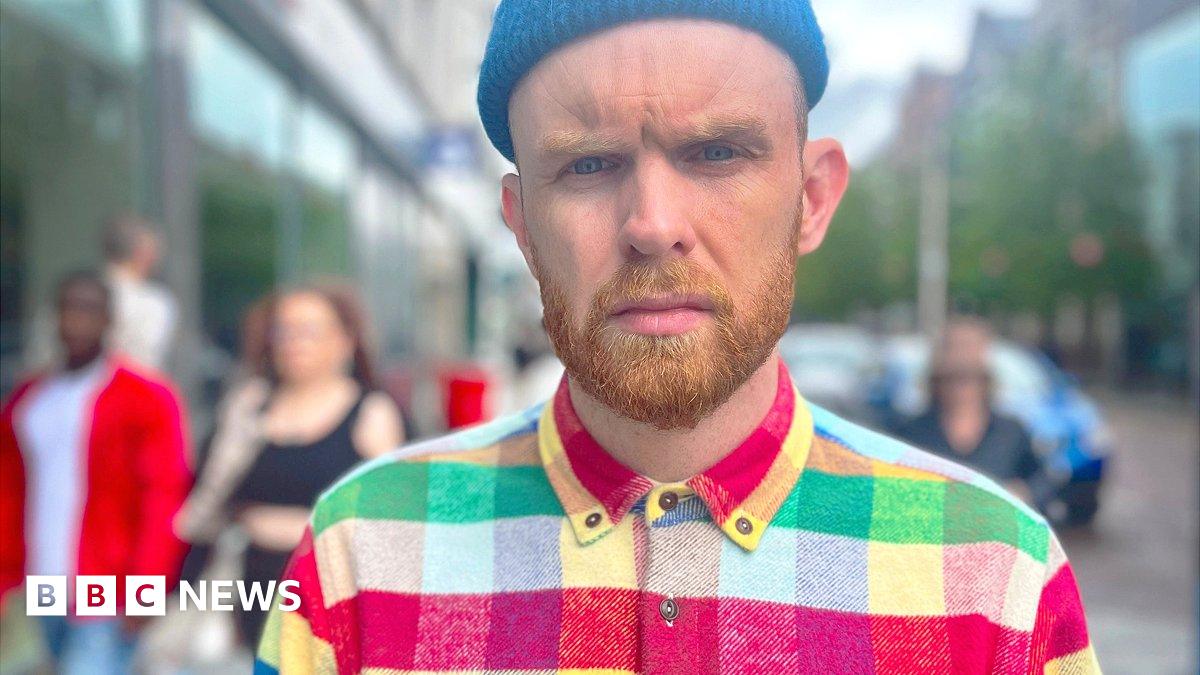
I don't have ADHD, but three private clinics say I do
A BBC journalist was told "You do not have ADHD" by an NHS doctor - but private clinics said otherwise.
BBC News
42 points · by walthamstow · 3y ago · 143 comments
It’s easy to get medication because you don’t have ADHD (or are high functioning). The rules that have formed around ADHD medication are designed to prevent abuse, but in reality are one huge ADHD obstacle course that is incredibly difficult to navigate for someone who actually has ADHD.
Many of the steps you take to get on medication when you don’t need it seem trivial. To someone with ADHD, each of those steps is a barrier that they have a high chance of failing to clear because they “just forget” or “don’t follow up.”
Needing to setup and coordinate appointments amplified by the regular required checkins, the monitoring of “steady use” in filling your prescriptions, on-again off-again potentially impacting your eligibility. Needing to coordinate migrating your entire diagnoses and treatment history over (including childhood) to get a new prescription from a new doctor. Etc.
I don’t like being on ADHD medication because of the side-effects and the impact on how I communicate. So I frequently fall off the wagon. As soon as I’m off my prescription, the obstacle course starts over and I have to navigate it to get back on my medication.
And that's when you're already medicated. If you've been getting sugar pills (yes, this has been happening to some folks), you'll be trying to do all of this with high emotional disregulation, high executive disfunction, and a severely impaired sense of time.
Taxes are bloody easier, since there's a strict date once a year with lots of surprisingly clear written instructions. Plus you can pay someone to do it for you.
I agree. In fact I have many friends who likely have it that haven't been able to get medication.
I was "lucky" because I had a childhood diagnosis which really sped things up for me.
> Many of the steps you take to get on medication when you don’t need it seem trivial. To someone with ADHD, each of those steps is a barrier that they have a high chance of failing to clear because they “just forget” or “don’t follow up.”
This is truly a profound thought I hadn't thought of.
I'm embarrassed at how long it took me to just answer the first question on my ADHD questionnaire.
The amount of friction I had at just searching for help was insane.
If I compare that to me on medication though, I know that the quasi-"normal" experience of this same thing is "this is easy - just... do it?". In fact it's sometimes quite hard to have compassion for non-medicated me struggling to do a few chores while me on medication does the whole week of chores in a day.
> Needing to setup and coordinate appointments amplified by the regular required checkins, the monitoring of “steady use” in filling your prescriptions, on-again off-again potentially impacting your eligibility.
Yes, in the periods of time I've forgotten to take my medication I've missed many of these checkin appointments and was warned missing them could affect my eligibility.
> I don’t like being on ADHD medication because of the side-effects and the impact on how I communicate. So I frequently fall off the wagon. As soon as I’m off my prescription, the obstacle course starts over and I have to navigate it to get back on my medication.
I agree with this. I would give the advice of giving a buffer day where you take your medication because the first day back on for me (and probably others) is things can be quite overwhelming.
So one thing I try to do is make sure if I skip meds for Fri/Sat I take it Sun or Mon productivity will be affected by the jarring difference between medicated/not medicated.
I don’t know if this impacted you in childhood the same way it impacted me, but to pretty much every one of my teachers I was the “smartest kid in the room” who “just didn’t try” and I would “do amazing things if I just applied myself” - and now as an adult I know that’s just my ADHD, it’s a super power and a curse all wrapped up into one. I wouldn’t be “the smartest kid in the room” without it, but I’d also be able to keep a calendar.
The buffer day is a fantastic idea. I’m considering getting back on the my medication again. If I do, I’ll give this a try.
Yeah, it can be a journey that can seems to pull you back in randomly.
> I don’t know if this impacted you in childhood the same way it impacted me, but to pretty much every one of my teachers I was the “smartest kid in the room” who “just didn’t try” and I would “do amazing things if I just applied myself”
Yes, exactly the same. I think a result of it is self-esteem issues or identifying as lazy along with other types of self-shaming.
> and now as an adult I know that’s just my ADHD, it’s a super power and a curse all wrapped up into one. I wouldn’t be “the smartest kid in the room” without it, but I’d also be able to keep a calendar.
I can relate to this quite a lot.
> The buffer day is a fantastic idea. I’m considering getting back on the my medication again. If I do, I’ll give this a try.
To be honest, in true ADHD form, I haven't been able to consistently do it but I've found it has good results when I manage to do it. Kind of like meditation :)
Really? Cause it took me a single visit to get my prescription. And they never checked my health records.
getting that diagnosis was life-changing. as a funny side-effect of getting medicated, I've been able to build up a life over the past 8 years. now I have a full time job where I've been for 3 years, a long-term relationship, family + friends, pets, a house to take care of, etc. etc.
People with ADHD being denied medication to help something like extremely bad executive dysfunciton that drastically lowers quality of life.
People being able to take advantage of the system to get medication that shouldn't get it.
Do we really believe the second group is larger than the first?
I'd also like to point out that if he talked to the NHS counselor about his project before-hand, that makes it a big confounding factor in the negative diagnosis.
On a more personal level if you're interested in knowing if you have ADHD or not, anectdotally it seems quite effective to see what your reaction to adderall is. I wonder if there is some way to judge your likelihood of ADHD by reaction to medication?
For me personally it's "Now I can 'just do the dishes'" or other obligations without 1000s of other thoughts raining down on me that make doing the dishes seem pointless before addressing the 1000s of other thoughts.
However there are other days where taking medication feels like literally nothing happened and I have what feels like the same amount of challenges.
Well, it might be possible to reign in drug-seeking behaviour without denying medicine to people who need it. For example, with more rigorous oversight of healthcare providers, to make sure they're all providing an equally thorough diagnosis.
There are risks to turning a blind eye to drug use. We turn a blind eye to bodybuilders and hollywood actors using steroids because it's their choice, and it means the non-steroid-users either have to start using, or get left behind.
If we applied the same pressure to the nation's top scientists and mathematicians, or kids trying to get into the top colleges, and they all end up drugged to the gills like sam bankman-fried - we might not be doing the country a favour.
It may be possible eventually, but in the meantime which side do you err towards?
If you err towards denying adhd medication to people that may or may not have ADHD, you will almost certainly deny it to people who need it.
That basically leaves that group of people out to dry.
Also if someone wanted drugs, wouldn't it be cheaper/easier to get street drugs instead of this whole process which costs a ton of money? These treatments can cost thousands. Unreal, garbage piece. Leave people that need help alone. ADHD has been known to be underdiagnosed. There is a reason for a spike in dx and it's awareness and societal pressures. This article will hurt people.
Sincerely - ex medicated ‘adhd’ diagnosed.
I hope.
That's under diagnosis, not over diagnoses.
The diagnosing is hogwash. There isn’t a scientific test. All ‘psychiatrists’ do is take you in for a visit or two, listen to your story, and write you the prescription.
I used to be ‘unable to focus’, and took pills for it. I even see people addicted to them to the point they take sleeping medication and other pills to make up for those side effects. No thanks!
These are intense drugs, and not the good kind like DMT, LSD, or Marijuana. Which those, actually had a profound effect on me and my way of thinking. For example, weed makes me productive - and makes otherwise shit work - amazing.
Another thing is eating healthy, organic foods, vegetables, and pasture raised meats, along with exercise. These do wonders for your state of mind. Organic foods (and pasture raised meats, eggs, dairy) have up to 200x the nutrient levels compared to non-organic. Lastly, self discipline. I had to learn to master my mind and truly discipline myself for my actions. And to make the effort to constantly ‘make it happen’, no matter what. It’s a set of values instilled and the courage to back up your own values when no one else is to judge you but your own mind. Don’t let you mind off the hook for so many things - “oh I didn’t make the bed…it’s fine” no, it’s not fine.
Actually some of the modern computerized continuous performance tests are getting pretty good (a friend of mine in Germany had to undergo one prior to a diagnosis).
Every psychiatrist won't prescribe them unless I'm seeing a therapist that they personally know. The pharmacies often can't fill the prescription, and insurance requires significant pestering to pay for it.
Wait, as someone who super-duper probably has ADHD but is nearing 40 without having ever gotten a diagnosis or meds, despite getting partway there a couple times, because [list of reasons in other posts here complaining about how hard it is to navigate the ADHD medication dance when you have ADHD]... they've got what now? Is there like an ADHD version of the easy, fake-but-gets-the-job-done online medical screenings for medical weed cards? Because if so I'm doing that today (um, haha, maybe).
Ha. I just tried this and was told I didn’t score high enough on their assessment, mainly due to not having issues as a child in school.
For some reason, saying “school was easy for me because I was two to three levels ahead of the rest of the kids and I never had to do any real work” wasn’t a reasonable excuse.
Also, I talked about concentration issues at work but then was asked if I make careless mistakes. I explained it’s not really possible to make mistakes due to the nature of the job. This also meant that I don’t have ADHD, I guess.
I also believe that those that abused drugs to advance in their careers need help as well, just not ADHD meds, and so the stigma can be reduced both ways.
It's very regional and the regions you mention it being easy in make me suspect political.
In say Missisippi or Florida, I've seen many accounts of challenges.
I mean, he says "I can forget things, I fidget, I will on occasion zone out of long meetings" but that's true of every human being to some extent.
I feel like the difference is whether you can decide "I need to pay attention to this meeting even though it's boring" and then are able to actually do it.
With ADHD it's more like "oh crap! oh crap! I did it again.. I'm not paying attention to this meeting. I'm going to do it now. But man I suck for falling into not paying attention again. How could I prevent this in the future? Oh I can improve sleep by getting a sleep mask. grabs phone to order sleep mask on amazon"
Meanwhile the meeting has ended and your co-worker you eat lunch with asks "are you coming?" and you lookup to say "huh" with a dazed look.
> When I was 14, I witnessed the aftermath of my sisters being knocked down by a car. Ailis survived, Claire - who was 11 - died. Almost 17 years to the day, my dad died unexpectedly. I was a different person after those events. The reason I am sharing this is because I was told the effect of such trauma can sometimes manifest itself into symptoms similar to ADHD.
> A friend of mine - who had been privately diagnosed with the condition - had once suggested to me that I might have it too.
"I don't have chronic pain, but three private clinics say I do, and offered me medication
Yes, medicine does not have any real way to read thoughts right now, and medicine instead has to trust patients to give a reasonably accurate description of their own mental state. Really hard-hitting journalism, there.
It seems likely the amount of harmful abuse prevented by stricter policies would be overshadowed by the amount of positive treatment which is no longer dispensed. If you’re diagnosed and you don’t find medication helpful, you’re not obligated to continue taking it. You discuss it with your provider, you look into alternatives, and you keep eliminating things until you find the best way to cope with whatever issue you have.
That being said I’m totally biased, I had a pretty bad experience with trying to find treatment myself. The first nurse practitioner I saw didn’t diagnose me with ADHD and I ended up dealing with it for another two years until being frustrated enough to follow up again. Then, the first appointment I made was abruptly canceled by the doctor, who sent a message saying that I can schedule another appointment but that they weren’t likely to disagree with their colleagues assessment. This put me off for another few months, led me to waste time seeking out-of-network alternatives who intended to charge me absurd amounts of money for assessments, until I finally managed to find a doctor at the original clinic who was pretty appalled at their colleagues message, and looked at my original responses and didn’t understand why the first practitioner hadn’t diagnosed me with ADHD. She figured exploring if medication would alleviate my symptoms and improve my quality of life that it was worth pursuing. I started on Vyvanse and life is definitely a lot more manageable now.
When did everyone suddenly start spending what seems to be a non negligible amount of time worrying if they are affected by this or that or that or this?
To be clear: I do not mean to belittle / deny the right or need of people who are genuinely affected by certain conditions. But I do worry (as a parent of teenage children) as to whether this sudden (a few years? max a decade old) wave of "I'm pretty sure I have <INSERT_ACRONYM>" or "I'd better get tested for <INSERT_ANOTHER_CODE> before X or Y happens" is real or not. In some cases, could it be a fad?
As the insensitive bastard that I am (to almost quote my eldest the other day... :) my god I love this child), I cannot help but conflate this with how overwhelmingly present "mental health" issues have become. Twitter? Check. The BBC? Check. Instagram and YT? Check. Everywhere. Like it or not, the "me-me-me-I'm-a-victim" also feels like a very trendy thing nowadays.
Whatever happened to toughing it out and becoming better/stronger in the process? Has such a view of things and self-betterment in adversity completely fallen out of fashion? Have we all become babies to be nannied? Is this now all viewed as "male, pale and stale"?
I cannot help but think (the "300x" is made up, but you will get the idea I hope): . either genuine mental conditions have started to plague humanity 300x times more in the past 30 years . or today's physicians have started to worry 300x more about it, hence diagnose it 300x more often . or physicians from 30 years didn't give a flying flamingo about it . or all of the above
What times we live in. We all have our small (or larger) problems -- and I do worry about the the system's influence on my children's ability to become beautiful, responsible and independent adults in the future.
To quote: "The busy bee has no time for sorrow".
This literally is not possible with a lot of mental health problems.
When your brain chemistry or your literal brain development is messed up, how are you supposed to just tough it out?
It's crazy to think that people can just overpower their own brain chemistry.
In case my original post was not clear, I wonder if the _idea_ of being affected by ailment X or Y has become fashionable. That's all.
I don't spend time "worrying if I may be affected". Who does?
My reaction to reading up on the topic was "oooooh, so many things that didn't make sense about my behavior suddenly make sense now". It was a happy moment.
Reading up more, I started to find advice that actually works. Which was extremely refreshing, as most of the advice I was getting before outright failed, regardless of how hard I tried to implement it. Now I know why.
Are you sure you aren't fighting a straw man?
Mindlessly "toughing it out" is exactly how you end up with people who aren't responsible and independent and have no slightest clue on why or how to change it.
Just because they are more present doesn't mean they are being faked. I believe that mental health issues were largely ignored before.
Now people are paying attention, so more cases are caught.
> To quote: "The busy bee has no time for sorrow".
The busy bee I picture when you say this also lives with high stress, is easy to anger, and doesn't talk about their feelings in a health way or at all.
When someone comes to me thinking that they might have ADHD I start by asking them how messed up their life is. How many jobs have you been through? How many colleges have you dropped out of? How many good relationships have you cycled through?
ADHD is a disorder and it can be debilitating. It's not about some 1% efficiency improvement at work. It's the difference between being able to function as an adult in society with a job or being homeless/in prison.
the germans tried this with their troops in ww2 - hint: it didn't go so well for them.
I see it claimed a lot, but if so I'm surprised there isn't more open discussion in places like HN with people saying "I did the research and boosted my productivity by taking drug X".
Even if it only makes you feel better, there were people talking about micro dosing LSD for a while when that was fashionable.
As someone who was diagnosed several times with “adhd” - there is zero science to it. No medical tests to prove its existence. You’ll just get a drug after the first or second visit and who doesn’t want to defend their addiction online?
If you want focus, don’t take drugs. Exercise, eat healthy, self-discipline yourself
For most people with ADHD, staying on the drug is the hard part. On top of all of this, there are ADHD drugs that aren't stimulants if one reacts negatively to it. It's not the 70s anymore. Pushing stereotypes is a horrible thing to do, please refrain from it in the future.
Physical tests, or checklists?
The same thing happens on opiate threads. The people who have been on opiates for a decade explain that their pain is the real kind that can only be helped by opiates. Take anyone with no pain at all, put them on opiates for ten years, and they'll say the same thing.
Because it's true. If you take away the opiates, they will be in all kinds of agony. They may have created deficiencies in their reward system that will never recover. That's not the same as saying that opiates are helping people (in the long term), or that pain is a deficiency of opiates.
edit: and there's no way out of this other than stopping big pharma from funding patients' rights groups, either directly or indirectly, and/or lobbying through them. Patients' rights groups from the 80s on were the Patient Zero of non-profits acting as political front groups for large financial interests.
How can you state this so confidently?
> You’ll just get a drug after the first or second visit and who doesn’t want to defend their addiction online?
Do you know how much people with ADHD hate their meds and want to avoid taking it, but cant?
Then they avoid taking it for a few days for a break, but the break turns into 2 weeks of disarray without medication.
Can you explain why experts believe there's science behind it?
ADHD is real. It's helped with meds. Denying its existence because of your own bad experience is going to hurt others.
Listen to professionals' advice, not self-help advice.
I have genuine low testosterone (using the current, quite broad, range). When I first tested I was at…352? And the low end of the range was 350. The doctor wouldn’t prescribe me anything but let me see an endocrinologist. That endocrinologist let me test again, and that time I came in close to 200.
I had actual symptoms that made me test in the first place and testosterone supplementation has greatly helped with that. The downsides aren’t great for most though. It’ll wreck your fertility and you very well may suppress you levels even further without supplementation for life.
All that said, we’re living in a time where we know levels are low for men - and they very well might be for women. Teens are having less sex than ever, many identify as asexual or trans, etc. Sperm counts have absolutely ranked.
A lot of that could very well have the same root cause and we need to figure it out. Testosterone supplementation is a cudgel but it’s basically all we’ve got right now.
I'm very curious where this sudden change in political opinions is coming from.
It can't be that a doctor who can't look into you decide if you are better with it or not.
Abuse is real but gatekeeping is a real problem.
Kids is a problem and imature people are.
But also everyone above some magic line are absolutely able to get it one way or the other
What do you suppose the market rate for a 3 hour assessment from an MD that leads an ADHD specialist service for NIH?
It doesn't feel like a fair comparison, unless NIH is willing to provide everyone with easy access to the 3hour assessment.
So, I'm starting to think it's all a bit of a fraud.
I've found that very high caffiene use has a mild and very temporary ADHD medication like affect on symptoms.
Pretty much all ADHD medication is a stimulant of some sort, often related to the amphetamine family.
I never much liked speed, mostly because it simply didn't do much for me. I felt like I'd have been as well snorting Lemsip.
That seems to be a big source of disagreement and people talking past one another.
If you make it significantly harder those who actually need help might not get it, and the harm from a limited stimulant supply for everyone else isn’t all that bad compared to even things like alcohol, weed, etc.
Little kids are another thing entirely, though I know someone in my family in the US had to go through quite a lot until their 8 year old son was given medication. That included things like therapy with coping strategies.
Now she has insomnia, but refuses to acknowledge that it could be her newfound "ADHD" is just a pill shill program and that adderall makes everyone perform better at their job.
The NHS doctor told him, he didn't have ADHD, 3 private clinics told him he did
and your reply is 'The NHS is not fit for purpose' ?
The reason he was able to get a diagnosis from the NHS is because he is a BBC journalist, and is able to navigate any bureaucracy as part of his work day and get paid for it, and ultimately does not suffer from the disorder and thus doesn't really care how long it takes for him to get seen by the doctor.
The average person would be stuck in a kafkaesque maze of bureaucracy and months-long waiting lists before they get anywhere close to a diagnosis (which is even worse if you actually do have a disorder and is impeding your day-to-day life and/or work) - that's why these private clinics have business.
Not really. Many stimulants can have counter-intuitive (but desired) calming effects on people with ADHD.