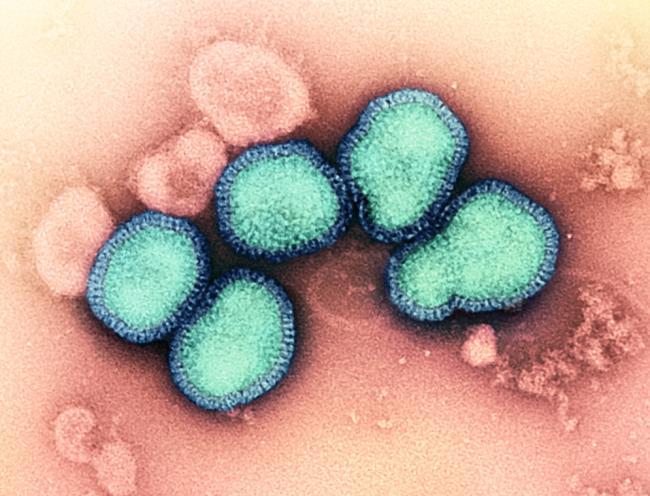
Clinical trial of mRNA universal influenza vaccine candidate begins
Trial will test the experimental vaccine for safety and its ability to induce an immune response.
National Institutes of Health (NIH)
166 points · by geox · 3y ago · 178 comments
If they couldn't do it for Covid vaccines, what makes you think they will be able to fo it for imfluenza ?
For example: deaths. Look at the Pfizer RCT trial results. There were more deaths in the vaccine arm than the placebo arm. The extra deaths were mostly cardiac/clotting related.
There's a reason so many people are confused about this. Governments, academics and media conflate COVID-induced mortality and overall mortality because if they admitted that COVID vaccines could kill a healthy person, it would have led to lots of people at low risk from COVID to not take the vaccines, so they pretended that there are no side effects or only very trivial side effects. But that's not how it works. You have to weigh all the benefits against all the costs. Inject people with a lethal dose of battery acid and then claim the resulting deaths are all a coincidence, and you'll discover it's incredibly effective drug against COVID mortality! But that doesn't mean you actually solved any problem. It's just a statistical artifact caused by dishonesty about side effects.
For another example: reducing the spread. No it didn't. Firstly, again, the RCTs didn't even attempt to measure this because you can't. Think about it. So any such claims must rely on inference from dubious observational evidence. But secondly, the observational evidence says the opposite. If what you say was true then cases could not have been higher in 2022 when the majority was fully vaxxed than they were in 2021 or 2020, yet that is the case.
Those are just two of the problems with how the authorities work with the data. Even the apparent claims of effectiveness against infection in the early days turn out to be wrong because of a methodological error (deliberate or otherwise) in how the trials and observational data was processed. In reality the vaccines may never have worked.
It's all very unfortunate.
Influenza is well understood by now and has had decades to research
So, one shot and no more flu? ever?
Hemagglutinin has 18 subtypes, this style of vaccines are targeting them all, but we don't have data on how complete coverage will be (and or how common a mutation exists that could allow partial of complete circumvention).
We also don't have data on how long before the immune system needs to be retrained (aka re-vaccinated).
This isn't to foo-foo this vaccine; this legitimately could create a "universal" vaccine that could last years with only some minor reformulation every so often to catch new sub-types of HA.
TL;DR: This thing could be great. We'll need more data to know.
That's much more about the virus than the vaccine type, no? The non-mRNA vaccines acted similarly.
ending up with a cough is very different ending up in a hospital, needing a ventilator.
people forget that flu vaccines are important: many people die from the flu every year. even if flu vaccines don't 'last' in the sense that they might not stop you from getting any sort of sick, they almost certainly are effective in preventing major illness.
https://www.science.org/doi/10.1126/sciimmunol.adg7327
And also the quite disappointing efficacy that the CDC reports for repeated Covid boosters.
There are two major strains of the flu, and one or the other becomes the dominant strain every year; it's difficult/impossible to predict which. And due to the way vaccines are made (injecting the inert virus into unfertilized chicken eggs for replication), the annual vaccine has to be made off of one strain or the other.
This "universal booster," instead of targeting one strain or the other, would be able to immunize against most/all. That doesn't mean that it's a one-and-done vaccine like measles; it could still require annual renewal. But it would be affective against all strains, so you wouldn't find yourself with the flu despite getting the shot (i.e. what happens to me literally every year).
But it doesn't make a lot of sense to me since influenza will be mutating to escape the immune response.
Not all mutations are equal; the flu has antigenic factors that rapidly change in response to evolutionary pressure that don't significantly affect the fitness of the virus. If you're able to target another element of the virus that is conserved, or target a large segment of the possible antigenic conformations in a single vaccine, you'd force immune evasion mutations to significantly lower the virus's fitness, which is a very big deal.
unless there is sufficient number of people that take it and it works well enough to eradicate it like say polio was.
A couple years ago typing that would get accounts banned on most sites.
So I think the promise of a 'universal' vaccine means one that would target all/most strains.
Because of this scattershot approach it's also not clear how long it actually lasts.
This is also one of the main reasons mRNA is supposed to be such a huge boon to vaccinations: one of the major reasons so few are targeted each year is manufacturing costs.
I'm physically active, no big health issues, and my Dr. says I don't need it.
Why even take a shot? If results from 2020/2021 are to be believed, all it took was some half-hearted masking to practically eliminate the flu from the face of the earth.
It took a pandemic where people were basically a) scared for their lives and b) threatened with bylaw and legal ramifications, to actually get them to respond to civic health concerns and comply.
Visits to mine sites were glorious because MSHA didn't promote the OSHA theatrics. My child and I were invited to the yearly pig roast for workers and family at one mine, and it was awesome. We then drove back to big city and unfortunately went to grocery store seemingly in a different world of masked gloved stink-eye scared shoppers wiping down their soup cans.
On the other hand, I’ve managed to avoid getting HSV-1 even though it seems like everybody else in my age bracket (over 60) has it. Must be something genetic.
Think of "influenza" like "dog", "strain" like "chihuahua" vs "golden retriever", and "variant" like "chihuahua with blue eyes" vs "chihuahua with brown eyes".
The distinction can get a bit muddied at the border* but I don't think we've reached that point yet.
*Like these dog breeds: https://www.countryliving.com/uk/wildlife/dog-breeds/a345060...
Like a single dose is less effective than multiple doses, especially if later doses are targeted at the circulating virus, but the first shot has an enormous protective effect, alerting the immune system to the type of virus.
And probably a semantic misunderstanding.
I’ll take it.
Antivaxxers will of course find some other explanation for the reduction in flu cases or point to the people who still get it as proof the vaccine doesn’t work.
I wonder if an mRNA flu shot would be twice as bad, or better, in terms of impact on my health?
But compared to actually getting the flu, you get to skip the part where the disease eats at your organs and rips through your body destroying things.
So yes, you may feel sick after a flu shot. But I consider the alternative makes it worthwhile.
This is why we are seeing things like a 40% reduced risk of Alzheimer if you get yearly flu shots. Short term you can feel bad from the shot but long term you are much resilient to the actual Flu's impacts. It looks like this could be the same with Covid.
https://www.medicalnewstoday.com/articles/flu-vaccines-linke...
> More research is needed to understand the biological mechanisms behind the results in this study. For example, it is possible that people who are getting vaccinated also take better care of their health in other ways, and these things add up to a lower risk of Alzheimer’s and other dementias.
This is interesting and may warrant actual studies beyond lookback data mining.
Since it's been a couple of decades since I've had the flu, the shot isn't worth the cost to me in burned PTO if nothing else.
But perhaps the mRNA one they're testing would be different. I'm also aware that it's probably not the vaccine itself that is causing my symptoms, but other ingredients and different formulations are available that I'm likely to tolerate better. I just haven't actually tried them yet.
Compound that with the fact many adults don’t actually get the flu that often and it’s not exactly a sure choice for most. I have a terrible immune system and I’ve gotten the flu once as a teen/adult and I’m nearly 35. Apparently the average is 1-2 times a decade.
A more effective, longer lasting vaccine would make it a lot more palatable for people.
I have never had a flu shot, and also never had the flu in over thirty years. I just don't see why I should get myself sick to risk not getting sick(er)? Anytime I mention this people call me antivax.
I was never skeptical about taking shots until the way the government handled covid. There is no chance I will take something that hasn't been thoroughly tested and proven to actually work the way our standard immunization schedule does.
Nobody has been held accountable for coercing (and worse) the US population based on bad data. I don't see any reason to trust the government going forward.
But immunocompromised people and others most at risk can catch it regardless of how bad you feel - mass vaccination is for those people too, not just you.
It has now devolved to the vaccine will make covid suck less if you get it, there's a non-zero risk of complication from the vaccine, and lets just not talk about transmissibility.
I'm not sure what probability dropping like flies equates to, but I think it's probably something pretty far off from reality.
Also, whatever your position on any of this, the whole Herman Cain Awards thing is not something to be proud of participating in. Even if you buy the line that not taking the shots was some sort of major crime against your fellow humans (pretty hard to argue at this point, but for the sake of argument) HCA was disgusting.
You should politely and directly point out to them that the "flu shot" is not a vaccine and referring to it as a vaccine is ignorant.
If everyone acted this way, we'd never reach herd immunity with any vaccine-preventable disease, so yes, this is an anti-vaccine position. You're missing the fact that vaccines protect not just you, but the people around you.
I'm not against vaccinations as long as there is evidence that they actually work.
Or, at the very least, it is a deeply selfish one.
You could try one of the non-egg based vaccines and see if that helps with your side effects for example Flublok Quadrivalent[0]
#1 FEELING sick is not the same as BEING sick. Even if your perceived experience is comparable, almost certainly there's less long-term damage to your health from a controlled vaccine than from an uncontrolled viral infection
#2 Some selection bias is definitely in place here. Those times you got a flu shot you didn't subsequently get that season's flu strain that the vaccine was targeted for. Since you didn't get that season's flu strain, you have no idea how much worse it would've been if you didn't have the vaccine. (And if you DID get the flu anyway, then you DO know that it would've been even worse had you not had the vaccine).
#3 Getting flu shots isn't just for you, it's for your community. Even if you don't get sick from the flu or don't mind getting it, by passing it around you increase the risk to those more vulnerable than you - the immunocompromised, and the elderly.
Please continue to get flu shots. Your future you and the rest of humanity thanks you.
#2: I haven't got a flu shot in over 15 years, and I also haven't gotten the flu. Before I gave up on flu shots, and after my children moved out, I never got the flu either. There's no actual selection bias going on with me.
#3: Which is why I'm hopeful about this mRNA vaccine. If I can tolerate that, I'm on board.
> and the elderly.
Not sure when "elderly" starts, but I may qualify.
> Please continue to get flu shots.
I would if it didn't cost me so much.
Isn't it backwards to ask the young to make health sacrifices for the elderly? Plus it seems influenza vaccines don't even reduce hospitalisation in the elderly: https://pubmed.ncbi.nlm.nih.gov/37045684/ .
>"Please don't use uppercase for emphasis. If you want to emphasize a word or phrase, put asterisks around it and it will get italicized."
But let's go ahead and stipulate the conclusion is true. The takeaway message is not to _not_ protect against influenza, it's to find better ways of protecting us from the other seasonal respiratory viruses. Relying on viral interference as a way to avoid infection is like starting a fire in your house to avoid the wildfire outside.
Phase I is “is it immediately dangerous?”
Phase II is assessing side effects at various dosages, to dial in possible dose ranges. There is some measurement of clinical effect here, to assist in dialing in dosages.
Phase III is does it work / what is the effect size.
The problem is "if it works": There's been a few attempts in the past and from what I've seen, none of them worked well.
Because the logistics is easier if you are trying to vaccinate the world.
Because you could dose yourself at home, maybe a daily microdose after brushing your teeth or a yearly round for the family when you change your smoke detector batteries.