147 points · by jaredwiener · 3y ago · 134 comments
From the report:
> [SFPD have] by far the highest costs per square mile patrolled of California’s six major-city police departments (Table 2). Meanwhile, the SFPD has the lowest rate and biggest decline in arrests per reported crime and crimes solved by police over the 2010-2020 decade, even as reported Part I felony offense rates rose (up 19%).
> The SFPD’s low rate of clearing violent crimes compared to other police departments is especially worrisome. San Francisco’s reported rate of Part I “index” offenses (the four violent and three property felonies used as a standard measure of crime) is by far the highest of any major California city, yet SFPD arrests have dropped 41 percent by number and 60 percent per reported offense during this period. That crime rose and arrests fell while the SFPD’s budget and staffing expanded challenges conventional beliefs that more police mitigate crime.
[0]: https://www.cjcj.org/media/import/documents/san_franciscans_...
SFPD (as well as other Bay Area law enforcement agencies) are hamstrung by the judicial system. From policies that effectively eliminate accountability (thefts below a dollar amount, individuals below an age, etc) to DAs cutting people loose as soon as they are booked so they never even see a day in court.
Think of it this way: If you are a QA engineer working on a video game, and week after week 100% of your bugs get closed as WONTFIX. Are you going to continue finding 10 bugs a day, or will maybe 2 a day get you by?
To be perfectly clear... I believe policing should be hard work. From an investigative perspective they should have to put in the hours and not just get a surveillance state handed to them. But I also recognize that once a potential perpetrator is located, we give them no good options for how to proceed and make our community safer.
One way to measure the success of this is to provide a bedding-in period to give the new DA a chance to settle her office and hire people, etc. and then compare.
The UI there lets you select the period from Jan 1 to May 21 and compare year on year. This lets you see the change in crime. Given that the hypothesis is that DAs that cut people loose significantly affects crime, we can get some evidence for this by looking at that period against the previous year (thereby getting rid of seasonal effects like crime being higher in some months).
We can get an idea of how much of the variation is natural by looking at that period for the last two years, since the previous DA was in charge from Jan 2020 to Jul 2022. I won't repeat the numbers here since the UI makes this really easy.
Eager to hear about anyone else who would like this form of hypothesis-examine loop and what other testable hypotheses they can put forth.
1. https://sfist.com/2022/05/23/report-sfpd-refused-to-particip...
San Francisco and California in general still have a lot of additional work that needs to be done to now empower the DA (they can obviously only enforce what is law).
This bit from the Chronicle I think sums up the DA change and its effect on policing: "A previous Chronicle analysis showed officers immediately made more stops after Jenkins was appointed, and the District Attorney’s Office’s data shows that has translated into more arrests. The D.A. data shows that police have presented about 100 more arrests to the office each month on average (about 755 a month) since she assumed office than the last months of Boudin’s tenure (640 a month). This increase didn’t happen in any of the past three summers, suggesting it’s not a seasonal pattern." https://www.sfchronicle.com/sf/article/brooke-jenkins-chesa-...
i don't trust the current DA's office either bc she was appointed by our incompetent mayor + is very cozy with the sfpd w/o recusing herself from cases involving them.
> The SFPD’s low rate of clearing violent crimes compared to other police departments is especially worrisome. San Francisco’s reported rate of Part I “index” offenses (the four violent and three property felonies used as a standard measure of crime) is by far the highest of any major California city, yet SFPD arrests have dropped 41 percent by number and 60 percent per reported offense during this period.
As to the rest of your point: if the judicial system says "we're only going to prosecute violent crime" then wouldn't the logical reaction be to... focus on violent crime? Why bang your head against the wall of low-level theft, if not for the explicit purpose of overriding the judicial system, which is 100% not the job of the police?
The biggest reason that they can't hire is that the house you can buy in SF on even a high police officer's salary is much worse than what you can get elsewhere. Due to geography, it's also hard to even commute from a much lower cost area.
If the Bay Area simply built more housing, so many of these problems would be reduced.
Or does the SFPD need access to it because it is otherwise restricted from performing conventional policing acts?
I thought that I heard political rhetoric, while living in SF for 20 years, about how the SFPD also is hamstrung, limited by local laws which prevent them from chasing certain suspects because they have a higher standard of that the alleged incident needs to meet before they can engage.
It's not as simple as, "pay money get peace." At least that's what I observed.
They exist only for themselves and their masters: the landed gentry of the city.
The offenses reported are up 28% in 10 years, and case clearance is down -33%
The problem with this stuff is that it cuts both ways. You think you are protected by these surveillance schemes, but then your local government starts tolerating petty crimes like vandalism, auto theft, vagrancy, and shoplifting because it centralizes their role in "managing" (read: extracting value from) it, offering protection to favoured constituencies in exchange for support, and then when you want to shovel a tent off your property, paint over grafitti, or discourage a shoplifter, those cameras neutralize you because you can't take the risk of being charged because you actually have something to lose. Cameras don't stop criminals, they just neutralize law abiding residents from discouraging threats to themselves and their community.
On the side of the alley within the USBID the streets would be cleaned of litter, poop would be washed, and private security (off duty SFPD hired by the USBID) would monitor the neighborhood.
On the side of the alley that wasn't within the USBID, trash would be dropped, you would see open PCP and Meth use, and poop on the street, and cops wouldn't respond unless a weapon was drawn.
The distance between the two was 5-7 feet. The area within the USBID didn't change drastically compared to pre-pandemic, but the area outside the USBID basically collapsed.
There are a lot of these invisible borders across San Francisco which townies and unhoused people can recognize.
And honestly, looking at how Rincon Hill and Mission Bay both privatized their operations and keep the neighborhoods extremely clean and safe, I am starting to feel privatization is the only short term solution that might help, no matter how unsavory it is.
Sounds like a perverse incentive to me
There's a very real issue of understaffing and underfunding which leads to the issues that exist with SFPD today. The exact same neglect and funding crisis is impacting SFUSD, SFMTA, and other public institutions in the city.
Normally, I'm not a fan of privatization, but Rincon Hill and Mission Bay have both proven that public services are better provided by the private management those neighborhoods have.
Discussed at the time,
https://news.ycombinator.com/item?id=32954926 ("San Francisco police can now watch private surveillance cameras in real time", 170 comments)
Eye glasses store I go to just got burglarized: https://www.youtube.com/watch?v=bcWfJijiLkU
In the middle of the day. Everything recorded but nothing.
It's happening all over SF and several other major cities, but SF particularly. And it seems like nobody is interested in doing anything to stop it. It's truly ridiculous and it represents a complete breakdown of social mores.
2. Most of the regulations which make the criminal justice system in California (and the United States) ineffectual come from state regulations and common law precedent. For example, the court system deemed that bail must be offered in almost all situations (even for high risk defendants) and be affordable, and an attempt to revise this judgment to allow DAs to detain repeat violent offenders was defeated by the unholy alliance of bail bond companies and the ACLU.
Both really hard jobs that suffer with retention and recruitment. Both fraught with union agreements that make it really difficult to fire bad actors.
But where the analogy breaks down is around funding vs performance & accountability. Poor crime stats are usually followed by a conversation around policies and lack of funds that hamper police activity, whereas poor test scores are usually followed by school closures, reduced salary negotiations, and state/federal oversight.
It’s interesting that educators always get the blame and providing more resources is met with some version of “we already spend more than X”. But police often get sympathy and no push back for more resources even though US LEO get more funding than any other country and spends a greater % of GDP than most countries. (even in the face of massive police reform protests over the past decade).
I hold the opinion that education produces greater positive network effects on society than incarceration does, so this disconnect is really mind-boggling.
Not in San Francisco.
Whenever SF public schooling comes up in a f2f conversation, I ask people how much they think SFUSD spends per student per year.
People's estimates are usually 1/3 to 1/2 of the actual figure: $22k per year.
$1.1bn/year for ~50k students. About half of them can read+write at grade level. Same for math.
In many states teachers are not allowed to bargain collectively and the unions have no power to prevent anyone's firing, and these states do not have better education outcomes, so I think for education at least we have to rule out the unions.
https://en.m.wikipedia.org/wiki/Smith_v._Maryland
Apologies to non-American readers, and acknowledgement that the US is not the whole world.
Turned out the plates were reported stolen, by clerical mistake (typo?) and the towns license plate scanners picked up the car when he got off the freeway. The parking lot we were located in was two stoplights from the highway, and took about 3 minutes to travel. They picked him up that fast and basically drove around til they found the car (assuming off a picture/video feed since stolen plates won't be on a car that matches the original cars description).
That's when I knew we were definitely in a tracking nightmare most people don't even know about.
An unoccupied car doesn't need to be swarmed with firearms. It's a car; its not going to shoot you. Its not great that the car was misidentified but the response by the police wasn't appropriate even if it was identified correctly.
Tracking nightmare is not the real problem; it's the abuse of power.
I have cars that I accept I can just lose. And the one that's so expensive I can't, I have insurance. I have little insurance against getting screwed by the government if I happen to be that unlucky. Just a general feeling, idk if rational or not.
There are a lot of anecdotes, occasionally newsworthy, about SFPD watching theft happen and doing nothing about it [2]. SFPD also appears to have refused to assist the DA in arrests related to theft rings for political reasons [3].
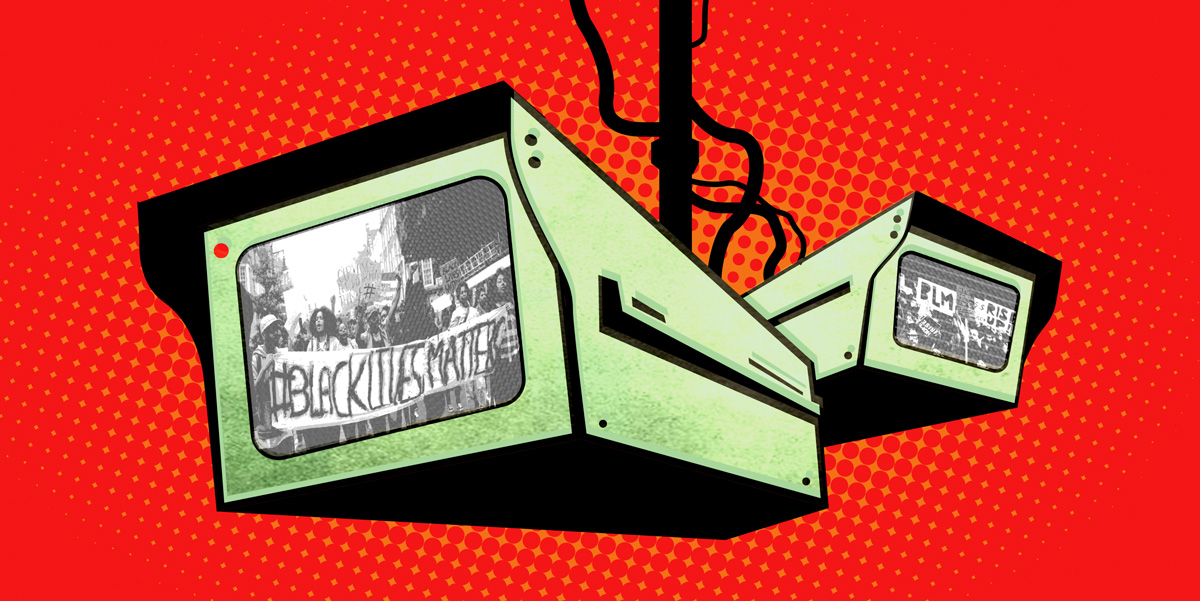
It's noteworthy that SFPD chose to pursue such broad surveillance access for a protest of police violence. Their past record on theft and vandalism is an exceptionally flimsy justification.
[1]: https://www.sfchronicle.com/sf/article/The-state-of-the-SFPD... [2]: https://www.sfchronicle.com/bayarea/article/San-Francisco-po... [3]: https://sfist.com/2022/05/23/report-sfpd-refused-to-particip...
The U-Haul stunt was largely just a stunt. It was later revealed the DA’s office just didn’t get their paperwork right to organize evidence transport.
Let's assume that understaffing and additional work required to close cases are the main causes for the low clearance rates. Monitoring a legal protest in case crimes are committed seems profoundly wasteful, compared to working to resolve crimes that actually happened.
I don't envy SFPD. Trying to reduce crime in SF seems like a huge challenge that they are poorly equipped to solve, for many reasons. But the original comment in this thread is trying to justify surveillance here as preventing possible property crimes, and that just makes no sense to me.
But that's the problem. Each incremental step towards more surveillance, less privacy, and more potential for government abuse is perfectly justifiable and seems reasonable.
But then temporary turns to permanent. And the "significant events" restriction gets dropped. And 450 cameras from local businesses turn into thousands from others, or Rings, or Teslas, or whatever.
And then manual monitoring by humans turns into AI-powered monitoring. And the looking at cameras gets combined with location data.
The point is, each step is reasonable. But who knows where it goes? We have no idea, nor do we have any idea who will be on the other side watching or what their agenda will be in 5 years, 20 years, or 100 years.
So it's important to stay vigilant of any incremental privacy incursion or expansion of government power. It doesn't mean saying No necessarily, but being aware and cautious.
The "convincing case" is China's "social credit" system and the numerous abuses of subpoenas for dragnet surveillance in the US. In Germany, back from the IP address collection debate over a decade ago, we have the saying "Wo ein Trog ist kommen die Schweine" [3] - where there's a feeding trough, pigs will come on their own.
[1] https://taz.de/Ueberwachung-auf-Demonstrationen/!5167172/
[2] https://www.juraforum.de/news/ovg-muenster-fordert-waehrend-...
[3] https://www.zeit.de/digital/datenschutz/2009-12/vds-bverfg-k...
No one ever seems to have information about non-hypotheticals and I'm tired of slippery slope hysteria.
For one, you're falling towards the "preparedness paradoxon".
But much worse: Yes, we absolutely have examples in the real world just how fucked up surveillance can get. The GDR's Stasi for example tracked people, just using people instead of technology, to an insane degree. Erich Mielke would openly drool in his grave if he knew just how powerful technology has become. In recent times, look at China and their "social credit" score.
Don't believe for a single second the US is unable to sink that low. Even decades-old stuff believed to be safe can be struck down with the stroke of a pen of the Supreme Court. Get your expectations codified in a constitutional amendment, or be prepared to literally have to fight for your expectations. Abortion was just the beginning.
This is why Jefferson wanted sunset dates on everything, so every group would have to fully come to grips with why things are the way they are instead of going with Madison's view of a state of affairs where "deference to the dead" was the norm and an eventual State where all the laws in existence were handed down or made on the basis of the lives of people who are long dead.
Governments should serve the living. Not the dead. Governing is hard. Anyone who jumps into it thinking otherwise is a fool.
Here’s why it counts for me. It’s not scary new tech, but it is a case that shows that police departments will be as aggressive as possible about collecting data.
This isn’t “cops are bad.” Most of us would do the same thing, as evidenced by the endless thirst for data that most tech companies have. When there’s a way to learn more about something, humans tend to lean into it rather than worrying about inchoate potential misuse.
Everyone seems to be offering, "Think of how bad it could be," but most of their examples center on right wing politics rather than technology.
https://news.ycombinator.com/item?id=36041059
I'm pretty sure since you made your way to Hacker New you can also Google the relevant information you are asking other who came to a random article to somehow have already compiled for you.
Police men are logically expected to use the tools given them to do their job most effectively.
If you doubt this... then just read some history of labor rights in the world. Absolutely horrifying things were done by the law in the name of suppressing unionization all around the US and abroad.
Plus, some protests turn ugly. We saw this in Seattle and elsewhere during the BLM protests. Some protestors engage in property crimes and violence, granting an air of legitimacy to a strong police response.
tl;dr: having a "chilling effect" is, according to SCOTUS, often (but not always) the same thing as "actively suppressing" freedom of speech.
The answer to 'The police are indiscriminate and unaccountable in their use of violence against the public' always seems to be 'Employ even more indiscriminate and unaccountable violence against the public.' It's almost like that's the only response these institutions are capable of.