141 points · by gmays · 3y ago · 75 comments
How can they stop something they never did
https://www.dupont.com/position-statements/pfoa.html says "While we no longer make PFOA..."
The "we no longer" could be referring to "the US" as "we", since they talk about the FDA outlawing it. So DuPont never made PFOA.
"Manufacture" might be used in the chemical industry only refer to creating products. And DuPont was earlier in the supply chain.
Or, even more upstream, DuPont may have made precursor chemicals that other people mixed into the final PFOA.
Maybe they "synthesized" them, not "manufactured"
Maybe they bought them from some other company (which they might happen to own)
Maybe they manufactured PFAs in general, but not the specific chemicals PFOA or PFOS (it's an awfully specific statement, after all)
I suspect that just like the whole BPA in plastic thing - the "___ free" alternatives will not be any better.
They will just be sidestepping the very precise legal definition of the chemical that got them in trouble.
If they thought they weren't liable then they would have fought this in court.
Look at these numbers, extrapolate them to the decades they've been in business, and then compare them to DuPont's payment here of $400 million. The numbers aren't even close.
> The three companies said they have agreed to contribute a total of $1.185 billion to a settlement fund. Chemours will contribute 50 percent (about $592 million), and DuPont and Corteva will together contribute the remaining 50 percent, at about $400 million and $193 million, respectively.
This is not accountability for infecting the worlds population with these nasty chemicals.
Prozac, Lipitor, Flonase and about 30% of upcoming new pharmaceutical drugs are PFAS, so they aren't going away completely, because society has determined that they are valuable even if they can reach toxic levels if not disposed of properly (every chemical is toxic after a certain human concentration, including water).
Companies wouldn't be able to manufacture semiconductors without PFAS as well, or high temperature components for warfare.
Now that we are smarter, we know how to mitigate risk and reduce concentrating materials to keep below relevant ppb thresholds.
If America isn't educationally sophisticated enough to handle this manufacturing and risk, it will just be done in zero regulation geographies like China and the world will be worse off.
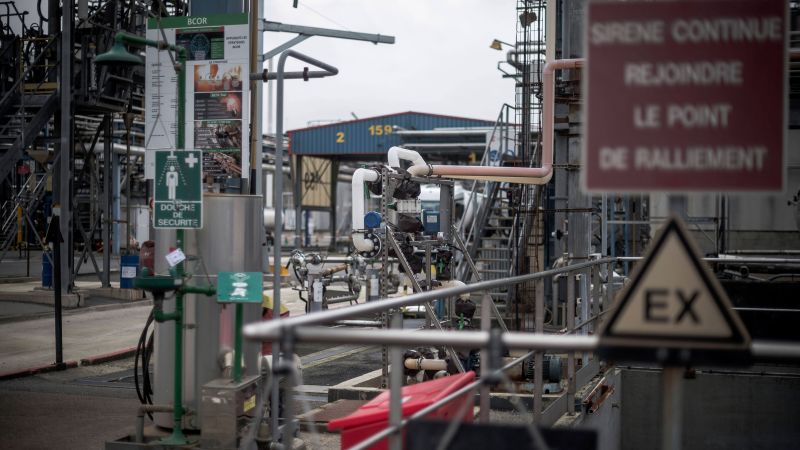
You don't gain any longterm competitive advantage by poisoning half of your population, giving them wonderful cancers, infertility, massive amount of birth defects etc. You just destroy society and bankrupt medical insurance.
This isn't some economics and plying with abstract numbers, these are people out there and messing this up badly will have massive negative impacts for many generations.
Society never decided this one way or another. Rich and powerful corporations did.
https://en.m.wikipedia.org/wiki/Fluoxetine
But I’m unsure the line where perfluoralkylated is reached. I’d think if the compound had alkylated chains instead of a fluorine-linked head group.
As for if that is a trivial amount for what they are paying for, I don't know.
Once again, these huge corporations are destroying the world for profit and getting away with it.
I believe the judicial system does do the fine as you mentioned, but the prosecutors have to be realistic and settle out of court at the risk a skeptical judge/jury.
Without LLC laws, you could go after personal ownership too. Privately owned company means there is a few billionaires to have their wealth confiscated. Publicly, our 401ks empty + risk of losing our homes.
Isn't that insane to think about? What would a world look like if that was the case. Would companies be incredibly responsible? Would investors be incredibly responsible?
I don't claim to say this is the best economic system, but it might solve our climate crisis by forcing people to be liable for themselves and what they own.
IMO, what really needs to be reigned in is this blanket extension of natural/individual rights to synthetic entities that receive limited liability protection. That government-granted charter with limited liability means that they're not merely groups of people exercising individual rights collectively, as the supreme council has decreed.
I think it's the fact that you can get a company incorporated to do pretty much a vague _anything_ is the problem. There should be an ounce of thought by the State as to if what the person wants a company for is actually useful for society before granting them immunity.
The second major issue is that the State is never willing to dissolve a company once it reaches some size no matter how much wrong doing it does. Like Walls Fargo willfully creating fake accounts to charge consumers money should've just be an instant disqualification for a banking license.
Second, incorporation does not protect the business, it protects investors. Without it, investors would be general partners and would be personally liable for anything the business does, including all debts and torts, even if they had no active role in running the business.
Third, where owners of a corporation or LLC do participate in running a business, they often can be held personally liable for the debts and torts of the business. This is called “piercing the corporate veil” and happens all the time in lawsuits against small businesses.
So, no more Kevlar for police protection? The problem with the idea of a corporate death penalty is that it would shutter the corporation, shock the supply chain for critical materials, terminate the employment of thousands of people, and devastate their communities (e.g. because employees have families and those families consume food and stuff from the local economy which, in turn, supports other families).
It's obvious why we haven't adopted it as a viable punishment.
But we did. It used to be a tool that was implemented when a corporation behaved egregiously badly. At some point, though, we stopped (I think it was in the 40s, but I'm not sure).
We really, really need to bring it back. There is no other way to hold them in check.
You forgot 'think about the children' part, but in this case, it actually goes against that fucked up corporations. We may have to see half of our kids infertile in a decade or two and shitload of birth defects that can bankrupt any health services (in case of US rather half of population), no amount of thinking about Kevlar or Goretex (for which there are tons of great alternatives too and I stopped using their stuff in mountains long time ago) is going to fix that
They're basically getting off scott free, and they made tens of billions of dollars in profit for only having to pay 1 billion in damages.
i really think this problem is out of our hands, i wonder how much time we have until the food and water has so much plastic and forever chemicals that it isn't safe to eat anymore