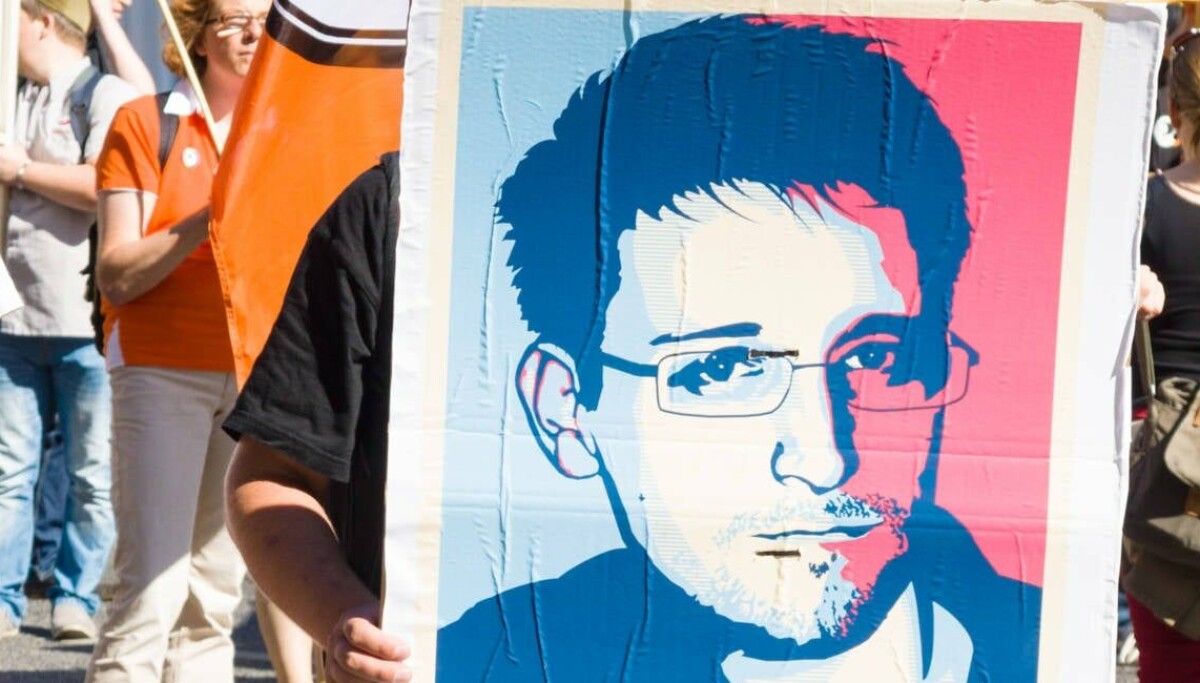
10 years after Snowden
Feature: Spies gonna spy
theregister
277 points · by rntn · 3y ago · 462 comments
When I first heard his story I expected him to be hailed as a hero, and thought we might even have a holiday to celebrate him for risking his life, freedom, and career to inform us that our government is doing something deeply unethical in secret with our own money, that violates our basic freedoms. Thank you Snowden.
No surprise, following the leaks Snowden was painted as a traitor that clearly only pandered to Russian interests.
US media is just Propaganda.
Oh, the best one (not in the above book as that was written in the 1990s, before the following): Israel offered the Palestinians up to 94% of all lands they claimed their own. Unilateral, without demands. On 3 occasions and under 2 different PMs. The Palestinian leadership refused each time with no counterdemand.
Read a book.
Footnote: This isn't to say propaganda isn't ravaging the West.
I think there's something really fundamentally wrong with US media. And not just with Fox News, but with all of them.
I remember all the talk about quiet quitting and working home and all that, but because media has slowly shifted away from that, I seemed to think about it less. In fact, I completely forgot about quiet quitting until you just mentioned it, when I realized they have slowly blocked it out.
Imagine that. It took me a while to realize that. And I still needed something to remind me of it. A lot of people aren't constantly reminded about it, which means they'll think more about whatever is currently in the media and keep falling for their trap.
Therefore corporate media ends up defending the status quo, by default or by design.
More pieces of the Zeitgeist, really.
Snowden, despite the injustices he revealed, fell on the wrong side of American opinion in relation to the military, foreign policy, and associated intelligence agencies.
Americans know they have spies, they know the CIA and the NSA exist and have a vague idea what they do. They know it's unpleasant and may be technically illegal and they're fine with delegating their elected leaders to deal with that for them.
I don't know; maybe there are plenty of people like this. But I think there are many (more?) of us who are not OK with these things but feel powerless to do anything about them.
And that includes those of us who do appreciate America's hegemony and the relative safety and prosperity that it affords us, but who think that doing things like spying on citizens, bombing weddings, supporting coups, assassinating dissidents, invading and occupying countries for no good reason, torturing (e.g. waterboarding) prisoners, detaining people indefinitely, etc. are both morally wrong and counter-productive toward maintaining our position of power and prosperity and esteem in the world.
Degenerate is a stretch, but 'criminal' does not seem controversial. Whether you agree with the laws or not, hate the USG, love Snowden, whatever, the fact remains that he did most likely break the law. He hasn't been convicted, true, but his own choice to stay out of the US suggests he believes he would be.
Yes, the level of wiretapping and surveillance was bad. It should have been exposed.
However, that's not all he took. And those documents have had negative effects on U.S. operations and that of their allies.
I have my conjectures and speculations, but ultimately, I do not believe Snowden is completely in the right.
Page 20:
"As of August 19, 2016, press outlets had published or referenced taken by Snowden.'™ This represents less than one-tenth of one percent of the nearly 1.5 million documents the IC assesses Snowden removed."
Page 22:
“As of June 2016, the most recent DoD review identified 13 high-risk issues . . . . Eight of the 13 relate to [redacted] capabilities of DoD; if the Russian or Chinese governments have access to this information, American troops will be at greater risk in any future conflict.”
I am not sure why we struggle so much with that idea given the complexity of the situation.
See: https://www.aljazeera.com/opinions/2022/12/18/the-trouble-wi...
That Isa false dichotomy
Being opposed to capitalism does not make one a communist.
There are more than two things
Snowden is a half-way martyr.
He made the decision to die for a cause, and then backed out of that decision and swore an oath of allegiance to modern day Hitler.
He showed an example of someone who didn't like the consequences of his actions and if you want to escape the consequences of your actions, you do that via corruption: swearing loyalty to someone powerful and reaping the benefits of that loyalty (them shielding you from consequences) in exchange for your servitude. In order to prevent being a victim of corruption, he chose to engage in corruption.
Him and Wikileaks together delegitimized the American government and ultimately created a fertile ground for a fascist to be elected president. (I think it's more arguable that Obama was the person who delegitimized the establishment).
His ultimate fate, to see his legacy largely ignored and unaddressed, to become a slave to a dictator, and to see that his oath of allegiance calls into question his sacrifice... I don't think America could have created a harsher punishment if we had tried.
I think America's founding fathers would understand and be sympathetic to his plight, but be disappointed.
FWIW, I have been in rooms talking about hardening infrastructure against government malfeasance. There were a lot of engineers at companies mentioned in prism docs that said "lets assume this is true, how did it happen," and worked on hardening infrastructure against the attacks they could imagine. So while outwardly his sacrifice seems largely in vain, it lives in the memory of many engineers who see hardening their systems against government action as a real importance many of whom donate to many organizations like the EFF.
  1. Snowden materially damaged the US government.
  2. Snowden swore an oath of allegiance to the entity who most desires to damage the US government.
My personal opinion is likely closer to the idea that Snowden was a ethical person who wanted to do good, and he was handled as an asset by people who knew how to manipulate a desire to do good to achieve goals like chaos and distrust. That is a casual opinion, not informed by facts or significant research.
Lol. After Assange/Manning, that demonstrates a singular failure of imagination.
This really is the core of it. If it were anywhere but Russia, I would probably hail him as a hero who made a great sacrifice, but instead despite my general distrust and dislike of the US government, I feel like his motives deserve questioning.
I am open to being convinced that I am over emphasizing Russia. I am definitely no Snowden scholar and I'm not very well read past the various headlines and comments I've read over the years.
Any proof to back up this wild claim?
Certainly it's debatable whether swearing an oath to Russia is the same as swearing an oath to Putin. I don't believe there's much of one.
Just curious, do you consider Bush, who started the Iraq war, to be a modern Hitler too?
Bush did more damage to America than Russia could ever hope to have done. I think he damaged America more than Trump.
I think America's time in Iraq was not fundamentally genocidal and I don't remember America violently putting down opposition to the war at home so I think it falls short of "Hitler". While we did destroy the regime, I don't think we tried to destroy the notion of "iraq" or of being "iraqi." I could be convinced that we were worse than I think.
Snowden released unredacted classified documents that lead to real-world damage and potentially casualties. Compare that to wikileaks which redacted locations, IP addresses and other sensitive information.
He wasn't a hacker by any means. He was a lowly SharePoint admin that was rumoured to have been coerced remotely by the Russians.
He was angry with the NSA for being denied a promotion for TAO which drove him over the edge.
It isn't hard to theorize that Russian and Chinese assets lurk the corners of chatrooms, looking for depressed/vulnerable US assets to coerce and corrupt. Money well spent for the West's enemies.
If a single American intelligence asset lost their life because of Snowden's leaks would your opinion change?
Can you point to a specific article in the Washington Post or The Guardian which you believe lead to casualties?
(The rest of your comment is rumor, wild speculation, and in the case of 'lowly sharepoint admin', outright misrepresentation)
Do you realistically think the Washington Post or The Guardian would make Snowden look bad by aligning IC asset fatalities with his leaks? I doubt it.
Consider this: IP addresses and devices of Western assets were leaked in the documents. Counter-intelligence can use those to correlate known or suspected IC assets. This has real-world consequences.
The way Intelligence works is much more shrouded in secrecy. Everyone in the know knows he had privileged access via his job and leaked the entirety of the documents without redactions because he was mad at being passed up for the TAO job. His bosses were interviewed which confirms my statements - 1
Swift on Security is an example of a Twitter account with connections to IC. Her statements on the subject echo how the industry feels about Snowden. - 2
1/ https://slate.com/news-and-politics/2016/09/what-snowden-get...
2/ https://twitter.com/SwiftOnSecurity/status/64971712356500684...
It’s not like he has any good options. I don’t blame him for staying in Russia.
Ecuador
You can't trust a single word intelligence agencies say. We have no idea what they are collecting, how it is stored, indexed, searched, or used, or how long. They actively deny operations they are currently engaged in, i.e. they lie, at the highest levels.
There are only technical limitations imposed by computational resources. Which aren't really limitations when they have effectively infinite funding at this point.
They've infiltrated hardware; inserted backdoors, not just at telcos, but into privately-developed and owned locations.
They consider encryption to be a stumbling block and are willing to intervene to weaken it to serve their purposes.
Absolutely shitbirds, all. I don't care what their ends are, their means are to create a digital dystopia that simply cannot be trusted. They basically broke tech; usurped it to serve the power structure. And so many people and companies went along with, are going along with, and are enriching themselves by doing so.
This future sucks. I hate my own devices.
Installing GrapheneOS on my Pixel was the closest I'm come to feeling like having an actual PDA I could trust and living in a cool future. But of course it's still on Google hardware, so it's not trustworthy. And it still requires apps, some of which are not trustworthy. And, worst of all, I still have to communicate with other people on their phones, which voids most privacy efforts. I don't even give new friends my real phone number because I can't trust their contacts list not to be shared with everybody who wants to buy it.
Iff the design is secure with regards to storing the secret used to unlock user data, then Google signing a blob to unlock signed boot for a new arbitrary image still wouldn't allow that new image to spill existing user data. (I have no idea if this is actually the case though)
But on a practical level, that's just wildly unlikely to ever happen or ever have an impact on a normal person's life, so why stress about it?
Don't get me wrong, it's not to say we shouldn't advocate for govt. orgs not doing this sort of thing - but I also don't know why you'd spend so much time and mental energy trying to avoid a theoretical bogeyman.
Data is eternal, and is analyzed and aggregated forever. Just because there's nothing realistically to fear _today_, doesn't mean that a future AI won't find reasons in that data to label you a terrorist/murderer/wrongthinker, and apply whatever policies are deemed acceptable at that time. We're really not far off from a Minority Report future.
This may happen by accident, BTW. "Whoops, we sentenced you to prison on a wrong conviction" happens far too frequently. People spend decades getting out of the system once they're already in it, and lives are ruined by this.
You can think of all this as hypothetical, but realistically, there are other concerns as well. Do you trust your government to keep the data they collect on you safe from corporations and other governments? Aside from the top intelligence echelons—and maybe not even those, I'm not sure—governments are awful at information security. Data leaks can happen anytime without your awareness, at which point you can only hope that you're not an interesting target for whoever now has access.
Also see: https://en.wikipedia.org/wiki/Nothing_to_hide_argument#Criti...
Because, one day, you will make a mistake or say something wrong. And then they will correlate this wirh all the information they have about you.
Remember NKVD ? Remember STASI ? Remember Gestapo ? Remember CIA ?
Every time government abuses its power and isn't held accountable, the likelihood of future abuses goes up. Eventually the frog is fully boiled, and "wildly unlikely" becomes "commonplace."
Even assuming that's true for an ordinary person, which I don't think it is, let's consider what constitutes an ordinary person. Maybe it has no effect - if you never run for office. Or if you never participate in a political campaign. Or if you never challenge the political status quo with direct action. Or if you never run a business and express views that could be viewed as potentially threatening the status quo. Et cetera. In other words, it's fine if we're controlled as long as you're ok being controlled. But if you think, "I'd like things to be different," you're in danger, because the police and other government orgs know everything about you.
Wait for an advanced AI to get hold on that information. Not even for its own purposes, just one serving a rival power.
Constant stream of beeps and buzzes, notifications, text messages and phone calls from unknown origin, phishing attempts and more. They are conditioned to enter their phone number or email for the most trivial of reasons, to use apps for everything, and to leave them on their phone forever, sapping their attention and privacy.
I think it's nice to see people pushing back and telling others about it.
I think you should help normalize the pushing back, not the giving in.
To shape the society you want to live in.
There are a number of ways to answer this.
This is the type of mentality that led to sudden surprise with "What? We have to take our shoes and belts off? Not just those guys but us?" It is an example of how ignoring the issues could end up having them affect you.
At the time of this writing, there are over 270 comments in this thread. I submit to you that it is very likely that multiple commenters have been directly impacted. I've known two people charged with bogus terrorism offenses. One of them stuck it out, had his day in court, and was acquitted - at the cost of over a million dollars in legal fees that his family had to pay. The other guy was not as wealthy and was presented with a fantastic deal by the prosecutors that he took the deal and pleaded guilty. He's out of prison now but with that record, his life is ruined. And he very likely was not guilty.
Another guy I know was messed up by the government on similar grounds - it destroyed his livelihood and cost him his marriage. He did, however, manage to (mostly successfully) sue the government for what they did to him, although one of the suits went to the Supreme Court and he lost the case there. He didn't have the means to mount these lawsuits - thank heavens for the ACLU who did it on his behalf!
I know a few people who were on no fly lists for extensive periods of time. They were never accused of anything. Just all of a sudden ... could not fly.
My gentle suggestion is that you expand your social circle to get to know how not rare these things are.
I also submit that more people are directly impacted by this than are directly impacted by gun violence. Would you agree we should chill out about guns?
If you're white, you are a lot less likely to be impacted by police brutality than an African American. Would you argue that white people shouldn't be bothered by the issue?
Having said all that, I do agree to the utility of what you are saying. I tend to be more concerned with corporate surveillance than government surveillance, and have gone extended periods with primarily cash purchases and limited CC usage. I didn't get a smartphone for a long time for the same reasons (and oh boy, when I did the privacy loss was very palpable). And yes, I can say right now that I have discovered that the utility of using those devices and paying with CC definitely exceeds the risks - for me. I have automated flows tied to both and they are very valuable.
Still, though, the comment you are responding to is not discussing anything extreme. I've not installed GrapheneOS but I have installed custom ROMs like LineageOS. It's not a big burden. An hour of effort perhaps? The main down side was things like Netflix not letting me download episodes and the inability to use Google Wallet (which I didn't want to use anyway!)
And on a purely practical level, law enforcement and prosecutors really struggle to make use of technical data to make cases, even in situations where they have warrants! Consumer encryption is so good that countries around the developed world are actively trying to pass laws to limit its power.
"Privacy is the right to a free mind," Snowden said. "Without privacy, you can't have anything for yourself. Saying you don't care about privacy because you have nothing to hide is like saying you don't care about free speech because you have nothing to say." Mar 28, 2016
It is a huge pain to worry about your privacy all the time and I make many tradeoffs, but I fully support and am glad that others take it very seriously.
The PRISM systems have data on NSA workers’ exes, everyone who’s ever criticized the government, and every gang of shoplifters/carjackers/drug dealers, but most of that data is probably tossed in the garbage. If America ever turned fascist that could be a serious problem (and China’s probably using their equivalent to stop dissidents and criminals), and it’s a massive invasion of privacy, but it doesn’t effect 99.9% of people’s everyday lives.
I doubt that. The best we can hope for is that such information is compressed and moved to long-term storage or pointers to it are lost. More likely the only protection it really endures is that it is being obscured by the massive influx of new data; i.e. buried under an endlessly silting riverbed of new data.
> and China’s probably using their equivalent to stop dissidents and criminals
Check up on China[1]. They've massively stepped up the surveillance to the point where it's actively intervening on people's behavior to make them act "better" and discourage such bad things as....playing loud music on trains. They are barreling towards a dystopia where they can digitally un-person you for wrongdoing and wrongthink. Right now it's just the soft whips of not being to buy a train ticket or fly, but it will absolutely reach into every aspect citizen's lives, from charging different prices to determining where you can live and whether you pay fines or go to jail. China has a long tradition of un-personing politic dissidents, including jailing and killing them. The future looks horrifying.
[1] https://en.wikipedia.org/wiki/Social_Credit_System#:~:text=T....
Although I know it's a made-up statistic, it's worth pointing out that even if that's true, that's a horrific number of people it does affect:
https://www.wolframalpha.com/input?i=.1%25+of+the+us+populat...
People I've met who might've been involved in IC don't talk about it, at least not with me (and I assume it's improper to ask), but I did once meet someone peripheral to that, who vocalized one kind of thinking about it.
Years prior to the meeting, around the time of the Snowden thing, in a private research forum, I said something like: one of the IC orgs did important work, etc., but seemed to need guidance on Constitutional balance. It was a random comment, and I forgot about it.
Years later, I was meeting with someone from that forum, about a (non-IC) job, and their attention was divided with laptop while they talked with me, like they were also reviewing my resume or something. Suddenly, they were agitated, and seemed to be referencing -- not our conversation, nor my resume -- but my forum comment from years earlier, as they angrily started saying how people at such-and-such org "know the Constitution better than anyone", etc. Then angry impromptu speech about (public) information about threats, and (public) information about a claim of why such-and-such org had done certain things.
I'm somewhat sympathetic to that, and I also realized that I needed to get the interview-gone-sideways back on track, so the discussion recovered after that. But at the end of the interview, there was obvious (renewed) irritation in their voice and manner. (And that's not my worst interview ever. :)
I realized that the person's work had probably led them interact with IC orgs before, the person had been impressed by the orgs, was very concerned about threats, and was offended on behalf of the org by armchair critics like me.
I imagine that person is not the only one with strong feelings like that, but that people actually at the org, and who had similar feelings, wouldn't speak with an outsider about it.
That's a pretty good description of most people IC affiliated. I'm not sure about your interviewer friend though, doesn't sound like someone I'd want to interact with.
That said, almost all of how these things work are out there in memoirs, biographies and non-fiction books. Robert Gates is a prolific writer and did a great job in his memoirs describing the IC. I mean yes the majority are purely discreet in their current or former capacity. It took me a long time before I would discuss my affiliations etc... and I generally don't discuss anything more than structural "how it works" kind of things that can be found in a lot of memoirs etc as described.
I'm always happy to discuss to a point but most of it would just be boring stuff.
The IC consists of:
-16 domestic partners (CIA, FBI, US Army, US Navy, NSA etc...),
-Five Eyes (Canada, UK, Australia, NZ, US),
-NATO,
-Whatever non-NATO intelligence service we are working with internationally as a coalition partner, or Major non-Nato Ally (MNNA) Singapore is a great example here.
So your question is better asked: Which civilians does the IC track, for what period of time, based on what requirement, using what tools?
"Dragnet" surveillance is kind of a misnomer. If data is created and stored somewhere, even on a private server in your basement, then the IC might have an interest in knowing what and where that data is. This exists in the form of the Warrants and National Security Letter process, or many other processes wherein private data becomes public via national security interest. However, until the IC actually begins investigating and (depending on jurisdiction) has an analyst look at that information for a specific intelligence requirement - it isn't technically "collected" - which is important legally but doesn't make a difference to most people.
The IC at it's most effective, using international treaties and a combination of Title 50 and Title 10 authorities, could find anyone, anywhere, anytime in the world and then could arrest/capture that person without firing a shot within lets say a week. That's the service guarantee that the IC provides to presidents and world leaders. However those ops cost MILLIONS to do and with hundreds of people. That kind of effort is for someone who is legitimately an imminent mortal threat to someone from the above coalition.
7.999M of the 8 Billion world citizens are so uninteresting in this context that they are not worth the time of a GS-13 analyst or case officer/agent making $120k/yr.
Any information/data you produce that is stored somewhere, or recoverable can be "collected" should you be involved in something that the Five Eyes determines is a threat.
So it's much like Capitalism: in the background and present always, able to do productive, positive things and operate effectively and efficiently BUT over the long run, generally is there to maintain power structures that exist, keeping adversarial organizations in a box on behalf of the ruling elite.
So for most citizens the "spying" is neutral and invisible and keeps the world running within the law/power structure as it is built - which, depending on which side you're on can be great or terrifying. As with anything that powerful though, has a tendency to crush and run over a lot of things unintentionally too.
So if your perspective is that the EXISTENCE of such an organization is itself a threat then you'd rank it 10/10
If you're wondering what the chances of being directly and individually oppressed by "spying" from the IC, I'd rank it 0/10 unless you're an international criminal of some sort.
The more interesting question to me is: What are lawmakers and elected officials asking the IC to do?
If if they were able, how could they possibly win people over? They've violated our trust, privacy, and (arguably) our legal rights. Even if they're literally keeping the nation from being taken over by China or Russia, they're also the bad guys. I can accept that it's possible I'm better off with them than without them... but I hate them, because they abuse me.
The idea that they wouldn't win over a majority of Americans seems unlikely.
Maybe there's some string of successes they can't brag about, but they still regularly defend themselves in the court of public opinion and further often dominate the discussion.
to assume that everything companies tell you about security and encryption is an intentional (legally bound) or unintentional lie.
to realise that there are shadow laws that we are not aware of that govern these things.
Simply make unelected people have lifelong careers within governmental organizations. Snowden talks about this in his book. Yeah a new ~puppet~ figure head gets elected every 4 years. But what about all the layers of folks who actually perform the "Government" actions? They are the same people for decades, they say yes or no to actions you can/cannot take, they influence in their every choice they true meaning of policies...
Early in the history of the country, we experimented with evicting the entire government when party changed hands, all the way to individual post offices. It turned out to be ridiculously inefficient. It turns out institutional knowledge is extremely important, and institutions are generally terrible at writing everything down that the next person will need. Imagine trying to conduct a business with 95% turnover every 2 years.
As a result, we intentionally established standards for employment and safeguards against arbitrary firing of unelected bureaucratic officials. The elected officials have control over setting policy and, in the long-term, deciding the criteria by which the unelected officials retain their jobs.
None of this implies that the unelected officials are unaccountable. They are held accountable by our elected officials. But that process does require the elected officials to do their homework and, to some extent, understand the Chesterton's fences that exist in the system. A failure mode I observe is that we seem to keep trying to solve the problem by electing conspiracy nuts who are then basically ignored because they try to approach the problem of reining in unelected bureaucracy from the "Why don't you show us the secret UFO tapes?" direction instead of the "The president needs a full accounting of how many terabytes of data have been stored for terrorism fighting purposes" direction.
It's a feature when positive, and a bug/liability when the institution is criminal/rogue . The NSA/CIA/FBI have (presumably knowingly) broke the law and using shady techniques. Which is of no surprise -- it's in their DNA to be secretive, shady, and create and exploit loopholes.
James Garfield’s assassination was over his refusal to give a patronage job. That lead to a backlash against patronage in general.
Jobs as patronage continued at the lower level for a long time. In many states, the most powerful political official was the Postmaster General because he controlled the jobs.
At the federal level it still continues in various forms: appointments to military academies require congressional sponsorship, Supreme Court justices hand out clerkships based on ideology, etc.
When people talk about the civil services reforms being inspired by efficiency, they usually are talking about the British civil service (Northcoat-Trevelian report) or Chinese civil service.
But those are very different things than the American civil service.
America never really had a civilian civil service in the “Yes, Minister” sense of the phrase.
It was quite a hard path over decades to finally admit a reality that was obvious since decades. That realization has far more impact to mankind than petty politics.
Nah, the smart ones know they're not. They're just keeping up appearances.
Somewhat like those stories about being chased by wolves through the snow. Once in a while one who got ideas is tossed out as a distraction (Liz Truss, anyone?).
https://en.wikipedia.org/wiki/Spoils_system
It was reformed for a reason! Putting politicians in charge of all hiring and firing turned out to be bad for everyone.
The rational is that you always get road assistance when needed. Never trust that conversations inside a modern car are private.
https://www.svt.se/nyheter/inrikes/professorn-myndigheter-bo...
I feel like if that were exploited at scale, we could see a huge number of criminal indictments etc., of the sort of behavior that's technically illegal but nobody enforces, but would suddenly be exposed through such an effort. Of course if they took it to court they'd have to discuss how they got the evidence.
But the fact that we're not seeing this makes me think it's not as bad as we think, that some amount of discretion is used, or that there is just so much data that nobody is acting on most of it.
I frankly think the more scary abuses of the post 9/11 era are things like Guantanamo. The idea that they can round up people and hold them indefinitely, with no or little due process. If someone does warrantless surveillance and brings a case against you based on that information, the expectation is you can challenge it. If they falsely claim you did 9/11, then... Less so.
This might or might not be true, but let's say it is. But what then in 10 years when something you do or are becomes the next Red Scare?
I personally think the resurgence in the last few years of "tough on crime" political rhetoric is another similar wave. The people who want to lock up the homeless or whatever. People demanding more incarceration of petty criminals. Judges are frequently described as weak if they let someone go due to insufficient evidence. If we start thinking due process is for chumps and that we need to lock everybody up no questions asked, I think mass surveillance can be a terrible input to that system.
His career was largely derailed, and his post-retirement second career options are most likely severely limited.
To be specific (and iirc):
- He was not kicked out of the military. He retired due to “bullying” and a big congressional kerfuffle that was about to happen because of his delayed promotion to full bird.
- Iirc, he was told that he could remain in his career, but he would have to move from a hot shot track he was in to something like being commandant of a nowhere base in Alaska so he could lay low. Note that moves like this happen when being promoted to full bird, but I got the sense that this was not his trajectory pre-testimony.
- His post-retirement options probably exclude working at any organization that is pro-Trump and most that are pro-Republican, which is a not small number of DoD contractors (common landing spot for retired military).
- Note that his lawsuits were dismissed. This type of discrimination is fairly easy to do in such a way that makes it difficult to sue successfully, usually due to something like “documented personal opinion or discretion” that the discriminator had. Note that I have personally seen this knowingly done several times —- it was super creepy to see in action.
Wikipedia does a decent job of summarizing.
https://en.m.wikipedia.org/wiki/Alexander_Vindman
Some of his interviews were enlightening if you search for the links.
We were talking about protections from prosecution which Snowden absolutely had.
(Too dark?)
I love that saying. But if it would be true, then why do people lock their bathroom doors?
Julian Assange should have come to Russia, not Sweden
we are 20 years in the dark. we are 20 fucking years, in the dark.
we shine the light on the present and they hang us by the balls.
We would never see something even remotely similar to the Gracchi in the US today.
And because of the increased saturation of the MSM with "former" three letter agency staff, we also see today's liberals as staunch defenders of the same agencies they used to harshly question. That's a huge shift and I think it's attributable mostly to needing to do damage control post-Snowden.
Such secret networks, to the extent they exist, generally value stability. Chaos is dangerous to the powers that be.
If these groups felt threatened by leftists and liberals rocking the boat, don't you make the mistake of what they feel threatened of.
It's not primarily the ideology, it's the rocking of the boat.
If the right is now rocking the status quo, don't you think that is also threatening?
Somewhere mixed in here are also (probably a huge majority) of bureaucrats, for better or worse, just doing their jobs.
Neocon figures realized they couldn’t rely on popular Republican support for intervention, so they started making alliances with liberals who had shown willingness to be swayed.
https://www.theguardian.com/us-news/2023/jun/07/edward-snowd...
The article mentions revelations of Verizon participating in illegal spying. It was also revealed ATT and others participated. This prompted congress to pass a retroactive law making the illegal telecom spying, during the Bush Jr. administration, legal. I guess the US hypocrisy is more plain now? The US is a nation of (retroactive) laws that protect powerful men.
There were a few technical fixes. The NSA presentation slide that stated, OpenVPN and SSL were "not a problem" led to using stronger ciphers by default.
Google reportedly encrypts its inter-DC links since the revelations that the US was tapping and spying on the communications.
You are less likely to be treated as a tinfoil hat nutter if you talk about US spying on its own citizens and the rest of the world.
The rest of the world's population stated the US as the greatest threat to freedom in the world today in polls across allied nations, so some who had prior, are no longer believing US propaganda. Although recent US illegal wars of aggression and revelations of torture and other war crimes, probably played a large part here too.
The powerful have tried harder to ensure secrecy, and control over documentation of their misdeeds. It is highly likely that the powerful also are more careful now to ensure there is no record of their crimes.
But, what should have happened was the displacing of all the federal prisoners convicted of non-violent drug offences to make room for all surviving politicians and surviving members of the NSA, CIA, FBI, federal courts, etc., who reasonably could be expected to have known of illegal behavior of those agencies, and who did not do everything within their abilities (including whistle blowing) to end it. There would have been a lot of powerful members of the corporate party's far-right wing (Republicans) and the corporate party's right wing (Democrats) being locked up, so of course, go after the messenger, sweep what you can under the rug, and as a last resort, pass retroactive laws to make the illegal, legal.
so, it seems to me that we've learned a lot, but the "nothing" you claim would be more appropriately describing the response from what was learned.
I'd agree with the parent that no, we haven't.
By nobody I meant the amount of people who care is rounding error.
It's akin to how we seem to be getting more and more info about UFOs lately. When it's finally confirmed, we can't just act like we knew nothing about UFOs existing, we had a clue for a long while - just no official confirmations.
right, and for the 99.999% of the population that is NOT, we learned all about it. what a weird caveat you've added that assumes "we" are only HN readers that could have possibly have learned anything.
* That the U.S. Government is above the law and no one will ever be held to account.
* Privacy in the U.S. for citizens is dead, but alive and well for corporations and government.
* That 50% of Americans would glady kill the other 50% so that they can be little racist Nazi shitheads.
* That things will get much worse before they get better.
> “The Committee further found no evidence that Snowden attempted to communicate concerns about the legality or morality of intelligence activities to any officials, senior or otherwise, during his time at either CIA or NSA.”
> “The vast majority of documents Snowden removed were unrelated to electronic surveillance or any issues associated with privacy and civil liberties.” (p. 22)
> “Since Snowden’s arrival in Moscow, he has had, and continues to have, contact with Russian intelligence services.”
> “Some of the personal network drives Snowden searched belonged to individuals involved in the hiring decision for a job for which Snowden had applied. On these individuals’ network drives, Snowden searched for human resources files and files related to the promotion and hiring decisions.”
Are any of the claims inaccurate?
Edit: OK, here's some actual data on this and a little less hyperbole. "Almost nobody" is wrong. But it's not obvious that most Americans care.
* On most questions about surveillance Americans are pretty evenly divided (it's about 50/50 for/against government surveillance and wiretapping)
* On the question of monitoring non-citizens Americans are broadly supportive (80% in favor)
* When you ask people about their own data they actually turn out to be less concerned than if you ask them about surveillance in the abstract (a majority are "unconcerned" about surveillance in that context)
Source: https://www.pewresearch.org/short-reads/2018/06/04/how-ameri...