663 points · by lucasv07 · 3y ago · 1229 comments
Please make sure you're up on the site guidelines: https://news.ycombinator.com/newsguidelines.html.
For most things in life where we could impact the lives of other people materially - driving is a good example - we ensure some minimal amount of training before letting people perform that activity.
However with parenting we have nothing and the result it seems is we pay with a ton more resources downstream in the way of therapy, detention centers, jails etc.
How about some minimal coaching so that all parents are aware of the state of the art in child psychology and techniques to do better as parents. Potentially break the cycles of bad parenting that have been running in families for a long time (I write this as one such person).
I expect it will be hard (nay impossible) to institute a parenting license (like a driving license) in a democratic society. So instead have a strong incentive in the way of a financial grant for every parent who clears a parenting curriculum sometime before their child turns 1 (or some appropriate marker). Keep the freebees /incentives piling on during the kids childhood so parents are motivated to undertake "continuing education"
Parenting is truly important stuff - for many parents it is the most important responsibility we'll ever have in our lives- but we seem to leave it to chance to get the right outcomes.
To me it seems quite trivial to create unfalsifiable arguments, for near anything, using extremely nebulous terms like "reducing public health risks." It's not like anybody's ever going to say, "No way man - I really think we should work to increase public health risks!" But what separates science from pseudoscience is falsifiability. So it's only once you break things down into actual, specific, and measurable goals that the conversation can even begin.
---
As but one example, the most fundamental component for a society to perpetuate itself is fertility. And so, in my mind, a child's upbringing should absolutely be focused on ensuring this person will be able to both raise and support their own healthy family in the future. Yet of course even this simple goal is going to prove controversial because there's some conflict between it and certain cultural norms. And you'd need to reconcile this in some way that people, independent of worldview, can be generally happy with. I'm not sure this is possible.
Amount of psycological trauma and repression, neuroticism, insecurity. Suicides.
All easilly measurable.
define repression? given that this is HN I'd imagine the definition will be different than from someone who was from, say, Malaysia or Saudi.
what does neuroticism mean? at some level we can agree what "crazy is" but where do you draw the line? ditto for insecurity.
most of this is NOT easily measurable, outside of suicides, which are discrete events. definition of things like sexual assault, child abuse, or repression vary by state, and even more so by country.
It's very hard for people to swallow their pride and admit humility, to say "I don't know" and listen to the experts. I have an immense amount of respect for anybody who does, and it is an example I try to live by (though not always successfully).
I was born in a time when kids were supposed to sleep with their backs up and mothers were supposed to wash their nipples using antibacterial before breastfeeding...!
Sometime before that there was a time (at least around here) were kids were supposed to eat sour cream porridge from early life.
Of course kids died left and right, but the logic was, if so many died following the best practices, how many wouldn't have died if babies were left drinking only milk! (Retold as best I can describe it from what an older person in the family told me.)
All this is before we start talking about parenting fads like "no rules parenting" (not sure about the exact English term) which must have caused untold harm.
So creds to your dad for finding the correct advice and sticking with it.
How do we make sure that what you call 'correct advice' is not again a reflection of today's zeitgeist and 50 years from now will make fun of these suggestions in a similar way as of applying antibacterial before breastfeeding?
As a new parents we got tons of books as gifts on pregnancy and baby's first year or two. But then it ended. I continue to buy books on parenting, child psychology, etc. But sadly it seems once baby turns toddler, most parents are done with learning.
One of the most common toxic phrase I keep hearing from these parents is I was raised this way, look I turned out to be fine. Of course, later in the same conversations they will admit they are not fine.
Maybe it is us geeks who love to learn and feel proud to deep dive into whatever we get into.
For example, plenty of schools teach media literacy, and yet the kids who desperately need it don't pay attention because they are not motivated to learn, nobody encourages them to learn, they and the people around them do not value education on it's own merits, and sure enough ten years later they are posting that Obama is a lizard person.
We have a giant amount of, essentially, knowledge skepticism. These people are convinced that studying something robustly for four years is valueless, and meaningless. Some of them are so "skeptical" they want to homeschool their kids expressly to just teach them the bible and nothing more.
There's alot of people pissing on public schools, whether to sabotage the general public or have special non-standard curriculum only available in private schools, I have no idea.
While reading the book (attending the course) would likely provide more benefits, just the intention to be a better parent and the willingness to reflect on one's parenting practices may still be valuable step leading to an improvement in parenting abilities.
The sole thing that is universal is simply giving a shit and putting effort in. If you legitimately care about your kids and live a life to ensure they get the best reasonable outcome you can achieve for them, things are likely to turn out fine.
This goes across countries, continents, cultures, socioeconomics, you name it.
Anything else after that is basically focusing on micros vs. macros. It's amazing how rare this train in parenting actually is.
After that it's largely on society in most places. The suburbanized atomic family expected to handle everything on their own are extreme headwinds for the average parents to push against for example. Only once you get beyond this would I feel "parenting education" would be worthwhile of any serious society effort.
A little nitpick : you seem to imply that buying a book is having an influence on parenting skills. I'd argue that's its correlated but does not have a direct influence.
As you said, if you're buying a book it means you're ready for self-reflection, which is what has an impact on parenting.
Seeing this repeated in this thread. Who are these "experts"? What makes them "experts"? Is there some kind of track record I can look at?
They updated their views based on expert peer-reviewed evidence instead of relying on their own armchair theories. I laud them for that. I used to be pro-spanking since I turned out OK and was stunned to later learn my parents regretted it all after what they subsequently learnt. They earnestly wish they had learnt sooner it wasn't necessary.
At the other end, modern parents have so many restrictions and expectations put on them.
1. We don't know as much as people think we do about what constitutes "good parenting". At best, we know some behaviours which are typically harmful (molestation, violence), but everyone already knows that, and the people exhibiting those behaviours need therapy themselves, so a parenting course won't fix that.
2. You're basically turning what is normally considered an innate human right into a privilege for which you need to earn a license. This invites all kinds of abuse (only the right kinds of people get this license!).
Horse crap, a huge amount of parents genuinely believe violence is a necessity for child rearing (including frequent repetitions of "spare the rod, spoil the child") to the point that they've even pushed to bring it back into public schools!
Even the very basics are not accepted as fact by many.
The effects of corporal punishment are small compared to the effects of molestation and physical abuse. If corporal punishment were our only "issue", we'd be much better off. I wouldn't even classify this under "the very basics".
That question is incoherent.
Unless you've worked out how to obtain consent from someone that doesn't exist either we create kids without their consent or society ends.
Is this satire?
Our options are to keep creating support programs to cover for bad parenting (not nearly as effective as good parents) or to stop “bad” parents from having kids (not super moral).
Good parenting is foremost about growing up before your kids do.
Kids are VERY counterintuitive (mine at least). Our kid has had behavioral problems at school and at home. And it's extremely difficult to understand the root of the issues (it turns out that the pandemic, moving houses, starting school and having a baby brother all at once can be a bit much for a 3 year old).
Literally EVERYONE who is not a professional told us to smack our kid into submission. But by reading stuff and talking to professionals, you learn that some kids do have weird ways of expressing their emotions, and that acknowledging that and supporting them works. You have to completely turn the way you speak to them around. It's really hard to do cause nobody wants to confort a kid who's annoying, but it works.
None of the stuff I do with my kids would have been possible had I not learnt it as an adult. Stop the magic thinking. Read about children, they're weird and wonderfully different.
What does this mean? I never talk child care in any significant way on the net, so I feel there are way to many ways too misinterpret this. Even the nice interpretation of this would border on illegal here.
(FWIW I think I agree with you on all accounts and I have had it easy)
Respectfully, if that's true I urge you to find a new social circle.
My grandfather was married to my grandmother and had nine kids and then even a few grandchildren all before the age of 52 when he died.
So here I am now no children, not married, I'm past at the age my grandfather died. Staggering to my mind how mature the previous generation was or had to be.
Or how immature they really were?
Actually I do.
This is exhibit A, not only have they learnt nothing, but will reject every opportunity to learn. Exactly like my Father.
I have a daughter growing up, and every time there is a decision to make, I check what people like this would do, and do the opposite. Or at least make sure to avoid that.
This unfortunately is not a given and that's the crux of the discussion.
If every parent were able to achieve complete knowledge and wisdom about all things parenting before they had kids we wouldn't be talking of any of this.
My mother tried to be a good mom but never addressed her mental health issues, leading to four kids having pretty severe problems twenty, thirty years later.
She took decades from us, though she "tried to live" but didn't want to learn anything she didn't already know.
Society decided to dump most doctrinal support but unfortunately this has left a significant portion of the masses with little direction. But also many have little inclination or time to work it out for themselves. And even if you did start to read Jung, Nietzsche, Hegel, Hiedeger or whichever philosopher you chose there's a myriad of directions one could take it and it's a heady mix. I've started to read these philosophers but I bring it a traditional Creator grounding and it's still pretty wild.
Ultimately I don't think we have a clue what we're doing and we are prone to getting very scared and taking it out on those around us or in our care.
That we wouldn't actually do that speaks spades about our priorities.
Also, as someone not from the US who heard unsubstantiated rumors about parents getting in trouble with law enforcement for leaving their kids alone for 5 minutes, I doubt this could in any way be sensibly handled. Similar problem exist in other countries too of course.
Best make room in school for some basic education, as there isn't any in most countries.
> How about some minimal coaching so that all parents are aware of the state of the art in child psychology and techniques to do better as parents.
In my country, we had a housekeeping class in school, that taught everything from basic cooking skills, to safety with electrical appliances. There was also a woodworking class, where you were taught how to use various tools correctly and safely. Later, in university, there were courses that concerned things like paying taxes in more detail, employment law and how small businesses work etc.
I think that parenting classes sound like a good idea. It can also help people figure out when they're absolutely not ready for something or are not comfortable with it - like happened to me and getting a driver's license.
So for example, the one for 3,5 years has sections on how to deal with food pickiness, or with excessive preference for one parent.
Historically, the role of the “parentin school” you’re proposing has been played by the family, most importantly grandparents. As we move away as a society from relying on family structures, we need to recognise their utility and find equivalents.
We moved away successfully from family structures in many areas of society: succession of rulers, for example. So this doesn’t need to be a bad thing. But I think the role that grandparents played should be studied carefully when proposing certain types of schooling for parents.
Seriously though, those tribes or large familial structures that keep the youth accountable because their authority is established and trusted is what all children need. Sometimes that trust comes from teachers but rarely.
There is no equivalent. Full stop.
Maybe you could re-create an extended family w/ friendship and local community - "the village" so to speak - but let's say I have my severe doubts about finding enough like-minded people in at least the US to accomplish it. Very few with options have the commitment.
The government and institutions seriously cannot even hope to replace a tiny fraction of this support structure though. People actually have to care about each other on a individual human level. It turns into checkboxing CYA otherwise - having seen a bit of this implementation in social work.
And country after country has demonstrated how relatively easy it seems to be to reduce fertility. Iran is a not so well known example. Back in the 80s Iran started to feel that their fertility was a problem. Their population was growing far faster than they had the resources to sustain, so they instituted birth control availability and mandated 'marriage classes' [1], not entirely unlike what's being suggested here. And in these classes they worked to try to reduce overall fertility.
It succeeded far beyond any expectation. Their fertility went from 6+ to 2 in less than a decade. And then it just kept dropping. Today it's down to below 1.7 and it keeps falling. They've long since tried to reverse this trend and started an equal but opposite pro fertility program, but like China also showed - it's far easier to reduce a population's fertility, than it is to bring it back up. These sort of programs work as a perfectly viable proof of concept of a practically invisible eugenics program, and that's quite dangerous.
One of the things that Finance people do is force employees to have short computer-based trainings every year. They seem stupid and bother everyone, but I think they are fairly effective (and they've been going on for years, so they must have proven some level of effectiveness).
Health insurance providers could be forced to have parents do a yearly 1-hour training on how to handle kids to enable benefits.
You're not going to solve the biggest problems, just like SEC trainings don't prevent money laundering, but whateveer moves the needle a little bit may be worth doing...
They are effective
In reducing the liability of the company that is forcing it's employees to take the course. As for actual behavioral change, that is often not the case.
I think it’s a situation where we can’t stop people from having babies so we don’t even attempt to limit.
There have been attempts to prevent births in “undesirable” populations that people thought weren’t capable of properly raising kids. [0]
But unless we’re going to have a super controlled society with forced birth control and abortion, there’s not a qualification to give birth. And developing nations have really low birth rates so anything to further lower birth rates has some negative societal and economic impact.
That being said, there are many free programs available to parents but they have to reach out to find them. I live in a pretty backwards, relatively speaking, state and there were numerous state, county, charity, and religious programs to help with parenting coaching before and after birth.
It does seem like a good idea to add coaching into the maternal health programs to give more education and support to expecting and new parents.
[0] https://www.npr.org/sections/itsallpolitics/2015/08/14/43208...
Did you mean to write developed, perhaps? I'm under the impression - and a quick google confirms - that the more economically developed a country is, the lower its birth rate tends to be.
(I'm sure I'm oversimplifying. I've not studied in this area, which is why I'm replying)
There does seem to be a function of the more money and education for women, the lower the birth rate. Some countries are increasing immigration to compensate.
[0] https://en.wikipedia.org/wiki/List_of_sovereign_states_and_d...
Now which PhD candidate will bite :)
Not to mention that unless the adoption of kids are done blind by parents, there has to be some biases there. As an example out of my ass, kids with behavioral problems might have way less adoption rate, and potentially those are the one with below median outcome in any case.
What is "state of the art" in psychology? A bunch of irreproducible papers?
Many people have such broken relationships with their parents that they refuse to believe their parents can offer them good advice.
Before they take a parenting class, they might be better served taking a counseling class to repair their relationship with their own parents.
Something along those lines, such as cheaper hospital stays or government covering part of childcare or some incentive like that could support what you are thinking. Not required, but a financial incentive. This is especially useful because it targets lower income families, hopefully reducing the correlation from parental income and career/health/etc outcomes.
PS: Smart of you to wear your nomex, this thread is a conflagration.
Kids in families with good parenting, a focus on education, etc are the ones that make it out.
In rich countries, most of the kids "make it out", not just the ones with good parenting.
every factor we mitigate helps
The issue is that in US driving license is trivial to get and it shows on the roads ( queue explanations that it is just the function of car being a necessity -- true, but irrelevant too the point ). Even if instituted, I don't think people would accept that kind of infringement though I admit this is probably one place, where we should be able to self-regulate ( we clearly can't though and some systems are built for ever increasing population, which is a separate force that would prevent that kind of change ).
In short, I agree. I don't think we are doing it well now.
> Potentially break the cycles of bad parenting
You can't break cycles of bad parenting, because they are 2nd order effects of cycles of trauma. And cycles of trauma have been a fundamental part of human civilization since we've existed. We absolutely should teach compassion, good parenting 101s and basic logistical upskilling as a part of high school for both men and women.
But, expecting humans as a whole to suddenly start acting with decency is not going to happen.
By what metric? Economics?
Economics, ironically, is the reason I don't have more kids. My family is doing, what I would consider, "quite well", but we'd still be pretty fucked with one more mouth to feed, the need for a larger car and possibly larger house.
I truly don't know how people that aren't that far below us on the resources / income scale have any hope of comfortable retirement prior to actual death.
I was quite amused that in your comment you explicitly talk about expanding your lifestyle to have another child: "the need for a larger car and possibly larger house".
Poor people have more children than well off people until you hit top >1% incomes. Economics is not the thing stopping people from having kids, reduction in lifestyle is.
"Comfortable retirement" is a luxury of the recent past. It wasn't a concept for most of human history and will stop being one for most people fairly soon.
If anything, for most of human history, having someone to take care of you when you're old has been a primary incentive to have kids.
What do you consider "quite well"? Does your car have a backseat? Does your home have more than one bedroom? If so, you don't need larger of either.
Yes, there are some sacrifices to having a family. Nothing in life is free. The problem is that it sounds like you don't want to your lifestyle hindered by a child. That's fine, but saying you "can't" is untrue. People much poorer than you are doing it all around the world.
There's 8 billion of us.
Reducing the number of (unfit, unwilling, unplanned) parents is a net positive.
I'm with you. We can have fewer people on earth. But, that means 2-ish generations will have to do 2x-the-work per capita while receiving 0.5x the care when they retire. Our social welfare and economic systems are not built to deal with decreasing populations, let alone halving of population every 2 generations.
I am approaching 30. I very much feel like the generation that is going to pay for a comfortable retirement for boomers, never be able to afford real estate, pay huge amounts to raise kids and get nothing in return. Because, by the time I retire, the work-force will have halved. If even fewer people have kids, society will find itself staring at collapse.
The definition of 'good parenting' has changed rapidly over the last few decades and it is going to keep changing. As of now, it seems like an impossible bar to reach. It's better to expect just 'slightly less worse' from each generation, and let the momentum carry it forward.
People, who have enough resources (financial, educational) don't have much children. I don't think that this will affect this group.
People, who have no access to education or anticonception, have disproportionally more children. Many of them are unwanted. Some are irreversibly damage due to abusive susbtance intake.
If anything it's the opposite.
> You can't break cycles of bad parenting
Because you said so?
I think a better reward would be the ability for someone having gone through the parenting program to have the ability to tell child protective services, or law enforcement, to fuck off straight to their face without any negative consequences.
We inherited a world where for many generations, men were hostile to women. It was unfair and needed rectifying.
But increasingly, we fixed it by normalizing hostility to men. Overemphasis on "toxic masculinity", hyper focus on promoting outcomes for girls while doing nothing of the sort for boys. Plenty of various "Women in X" supporting each other, but try to sed s/women/men/ and you're a toxic macho.
I think the outcome is unsurprising.
Just to be clear, a lot of the initiatives for promoting women's success are good and necessary. But to me the emphasis should have been on promoting equality, not bashing men for the benefit of women.
So at first I liked the pushback against toxic masculinity as I didn’t like jerk men. But then the concept expanded to everything. “Mansplaining” isn’t something unique to men, but it’s ok to point out “mansplaining” but not non-men explaining stuff. “Manspreading” is used quite a bit, but there’s a reason why men sit with their legs open so there’s a polite about of space that’s ok for comfort. Etc etc.
I hope this is overcompensating for a long time of jerks being jerks but I fear that the bullying resulting from “strength = power” and jocks has now changed to “money = power” and people other than jocks have power.
I go to an esports bar quite a bit and an esports team was there. And they were totally bullying people and it was weird because it was multiple genders and races being total jerks to people. But the bully’s were strong, tall, handsome jocks. They were esports-types. So the jerk dynamic was still there.
I don’t think it’s progress if we end up with the same number of “toxic” jerks.
Me, neither. And, in fact, I've never met anybody who did. Have you ever noticed how many of the movies we grew up watching were about a "shy, sensitive boy" who "wasn't like the jocks" who ended up getting the girl in the end? Ever notice how that trope appealed to almost everybody? That's because that's how everybody remembers their teenage years, too - even the guys who actually were on the football team taking group showers.
Your belief that everybody felt like the shy sensitive kid is wildly out of touch.
In my high school the jocks got the girl. Movies are fantasy and there was no sensitive kid who got the prom queen. At least for the limited experience I had.
I do think this can be true while there can also be elements of society that push the other way. Culture is made up of many micro cultures and the kid born in SF will have a different experience than the one born in Mississippi, but we do have bigger issues than people on the internet making fun of mansplaining or something. It’s just too easy to have one’s perception of reality distorted by your perception.
Food for thought: the types of men who are likely to rely on macho masculinity and the abuse of power dynamics are the least likely to be phased by an undercurrent of anti-male sentiment.
Sensitive men, the men who are not propagating these patterns are the men who take such sentiment seriously, and are more likely to be harmed/held back by it.
The issue is not “men”. The issue is bad behavior. But as long as the framing is men vs. women, people who are not exhibiting the targeted behavior get caught up in the broader backlash, leading to a very hostile situation that does little to address the real issues in a sustainable way.
It may be that the pendulum swing was necessary for a time, and indeed there have been times in our history where this was obvious, e.g. the women’s suffrage movement.
And there are still clear wage gaps and the issue of bodily autonomy among others that remain critical to solve. But those can be addressed without perpetuating a culture that demonizes boys for being born male. This is a shift in thinking that we must make.
Like the problem here is seeing some sort of bio-essentialism or just a form of masculinity that is unhelpful, and unhealthy in very much the kinda way that some feminist thinkers believed for a long time. Yes, I very much don’t like rad fems for a lot of reasons, but for every one of them hurting society there are 10 women and men afraid society is going soft. Do you know what the most popular source of news in this country is? Have you seen polling.
Semantics get messy and people can use terms however they want but the basic to me feels obvious and just. It is no surprise that such men don’t have their emotional needs met. But there are layers upon layers of issues that create this circumstance.
Women still get payed significantly less than men, and men work significantly more hours than women and at more dangerous jobs. Those two inequalities also hang together with inequalities related to non-paid work like parenting, and also that men are twice as likely to not have children than women (sometimes refereed to as reproductive inequality). Solving those require a lot of different initiatives that all work in unity to reduce inequality for both men and women.
Women are also at much higher risks of sexual assault, and men are at very higher risk of assault. Reducing sexual assault and assault involves solutions that are fairly similar, ie higher cohesion in society, more trust, and stronger social connections, social networks and social support among the population. Inequality in social economic status is also a strong indicator of high amount of sexual assaults and assault.
A big silence in terms of women’s equality is found in the most drastic case in fields like the military, where even though women have been allowed and encouraged via advertisement, is still overwhelmingly male worldwide. It’s obvious that women’s bodies are not the same as men’s bodies in general… so why would we aim for full equality (aka identicalness) given these basic facts that men are not like women?
Also see pay and work: the more time a woman spends at her job is less time with her kids, which directly impacts society in many unfortunate ways, especially since men are still often the breadwinners, and even sociobiologically, the role of motherhood cannot equal fatherhood. So is work pay more about capitalism & lowering wages or more about a nebulous sense of empowerment?
In terms of assault and harassment: there is also the general culture on both genders of situations that encourage this. For example, things like clubbing, heavy drinking, proximity with strangers, hookup culture, a culture focused on individualism and bringing attention to oneself in terms of clothing, behavior, etc… all of these are factors.
Perhaps to obtain the outcomes people wish to see, “equality” is not the answer.
Were they really though? I mean, yes there always were and always will be some abusive men, but men _as a group_ have been more associated with protecting and caring for women than being hostile to them. Until very recently in human history, women actually couldn't physically survive without men - it's only been in the past few generations that the nature of work has changed to where women could actually perform it.
But sure, tell me that men forever were actually so nice and good to everyone and slapping your wife or threatening her harm for basic things wasn't normal, or that women had the freedom to do what they wanted like every innocent human deserves, or that there weren't explicit societal pressures to be subservient to men, not by choice.
>Until very recently in human history, women actually couldn't physically survive without men - it's only been in the past few generations that the nature of work has changed to where women could actually perform it.
This is just wrong. The vast majority of women are as physically capable as the vast majority of men. There are only differences in the extremes
Taken from someone else:
"Men are the biggest abusers."
No. In fact, women initiate domestic violence more than men.[1]
“Analyzing data gathered from 11,370 respondents, researchers found that “half of [violent relationships] were reciprocally violent. In non-reciprocally violent relationships, women were the perpetrators in more that 70% of the cases.” Out of all the respondents, a quarter of the women admitted to perpetrating the domestic violence and, when the violence was reciprocal, women were often the ones to have been the first to strike.
Reciprocal violence was more dangerous for the victim, both men and women, than was nonreciprocal violence. In fact, men in relationships with reciprocal violence were reportedly injured more often (25.2%) than were women in relationships with nonreciprocal violence (20.0%); this is important as violence perpetrated by women is often seen as not serious.[2]
"Oh, but reciprocal violence is because women are only defending themselves against men!" Reciprocal partner violence does not appear to be only comprised of self-defensive acts of violence. Several studies have found that [in cases of reciprocal violence] men and women initiate violence against an intimate partner at approximately the same rate.
"That can't be right. Everyone knows women are less violent than men." Women are at least as likely as men to kill their children—more so if one counts killings of newborns—and account for more than half of child maltreatment perpetrators.[3][4]
"What about the fact that it is well known that most violent crimes are committed by men?"[5] But, whatever explains the higher levels of male violence—biology, culture or both—the indisputable fact is that it’s directed primarily at other males: in 2010, men were the victims in almost four out of five homicides [6] and almost two-thirds of robberies and non-domestic aggravated assaults [7]. Family and intimate relationships—the one area feminists often identify as a key battleground in the war on women—are also an area in which women are most likely to be violent [8], and not just in response to male aggression but toward children, elders, female relatives or partners, and non-violent men, according to a study published in the Journal of Family Violence.
How will your typical new age western feminist react to this? For the most part, feminists’ reactions to reports of female violence toward men have ranged from dismissal to outright hostility. Straus [9] chronicles a troubling history of attempts to suppress research on the subject, including intimidation of heretical scholars of both sexes and tendentious interpretation of the data to portray women’s violence as defensive. In the early 1990s, when laws mandating arrest in domestic violence resulted in a spike of dual arrests and arrests of women, battered women’s advocates complained that the laws were “backfiring on victims,” claiming that women were being punished for lashing back at their abusers.
Some excerpts taken from: The Surprising Truth About Women and Violence [10]Feel free to copy paste it whenever someone like the above poster posit that men are the biggest abusers.
[1] https://ajph.aphapublications.org/doi/full/10.2105/AJPH.2005...
[2] https://citeseerx.ist.psu.edu/document?repid=rep1&type=pdf&d...
[3] http://www.jaapl.org/content/35/1/74.full.pdf
[4] http://www.acf.hhs.gov/sites/default/files /cb/cm2012.pdf#page=76
[5] http://users.soc.umn.edu/%7Euggen/Lauritsen_CRIM_09.pdf
[6] http://www.fbi.gov/about-us/cjis/ucr/crime-in-the-u.s/2011/c...
[7] http://www.bjs.gov/content/pub/pdf/cv10.pdf
[8] http://www.researchgate.net/publication/226871004_The_two_fa...
[9] https://web.archive.org/web/20140708085504/https://www.socio...
As much a slaveowner has been "protecting and caring" for his slaves.
Seriously though, it does absolutely no good to anyone if you make such a snide remark. Even if you'd be right, what's to be done next from that statement?
It’s pretty trite and meaningless to boil every dependent relationship into one of slavery.
In the past, most women had to pick between marriage with an established man so she can have many kids starting young, versus working for herself and having no or few kids.
It’s no surprise many women chose marriage.
On equality, I find it highly disturbing the current policies have amounted to a zero sum game.
"Toxic masculinity" is self-criticism. We men are harming ourselves, and the article discusses this. For example, "Fathers are also more likely to sing to and soothe their toddler daughters at night when they cry." Both girls and boys have emotional needs, but we're ignoring the emotional needs of boys. We expect boys to be "manly" and "strong", to bottle up any problems and never show weakness. That's toxic masculinity. Toxic to ourselves.
Women have a strong expectation for men to be this way too. Ask a room full of men their experience with being totally emotionally candid with their SO and you'll hear the same "she left me" refrain ad-nauseam. Go look up the reddit threads when this topic comes up, the comment volume is insane. Many guys reading this have their own story too, I know I do.
But I don't even blame women either. They are just acting by natural instinct. And so are men. I think it's a fools errand to try and uproot instinct.
Agreed. Although I would say that mothers tend to be more emotionally available than fathers to their sons. The problem is that "momma's boy" is considered an insult.
(Incidentally, there's been some discussion in the comments to this article about divorce and child custody, i.e., which parent should get custody. But nobody seems to be discussing which parent the child would prefer to live with.)
Regarding women's attitudes toward men's emotional needs, there's likely a crucial distinction between "son" and "sexual partner", where neediness is much more acceptable in the former.
> I think it's a fools errand to try and uproot instinct.
Disagreed. What separates humans from the rest of the animals are civilization, rationality, science. We should aspire to more, not less.
It's not about "bashing" men, it's about helping boys, who are in obvious need of help. I'm not seeing the level of self-reflection that the article ought to stimulate. "Criticism", for lack of a better term (maybe critical reflection?), is necessary for progress. If any criticism is interpreted as "bashing" and a defensive refusal to self-correct, then no improvement or progress will ever be possible.
> hyper focus on promoting outcomes for girls while doing nothing of the sort for boys.
I feel this bit of your context inspires some really useful analysis.
My perspective is that we have finished the easy part, having made progress on the most obvious harms. The work that remains is dealing with more deeply embedded issues - and that they are far more subtle and complex. We can see evidence of those issues manifested, when and where there is hostility toward women and for our systems that effectively safeguard them from historical risks.
And as ever, the group with the best insight to puzzle out how to proceed is the group that suffered. I believe this is true, even if they're still working it out (because it is immensely complicated). They will work it out, if we give them enough room and trust to do so.
As far there is an imbalance in fulfilling the needs of children, the most worthwhile solutions should be ones that are loving, inclusive and sow a unanimity that uplifts everyone toward their individual potentials. If girls are in a better place, then bringing boys into into that place seems like what we should try next.
What evidence do you have of this? All my friends who want healthy views of women consider me a valid human being, deserving of respect and care, even though I have a penis. Sure, lots of young men are glomming onto this absurd train of hatred, that women or "femoids" actually naturally enjoy rape and other horseshit, but they are being told this stuff by adult men, who clearly and overtly do not consider women to be equals, or deserving of anything but nonconsensual sex.
How the hell do you blame the toxic masculinity problem, caused by assholes like Jordan Peterson, Andrew tate, Nick Fuentes, "Fresh and fit podcast" etc, on women asking to be treated like people. It is not women driving the hatred against women, it is morally bankrupt individuals quite literally profiting off boys who were never told that they shouldn't be trying to pressure their girlfriend into sex, or kids who have no idea how to treat women being told "here's a simple mental model" that surely explains all their problems, they just have to be fit enough or attractive enough and then they will get the sex they "deserve".
Meanwhile, all these "Manosphere" influencers seem to be really against anyone being gay, or anyone being trans, and also for some reason are great friends with actual neo-nazis, and I don't remember those people being very pro-women's rights.
Perhaps in an American/European centric view of the world. I would heavily challenge/reject that assumption across the globe.
There are exceptions, but to pretend that they are relevant to current public health crisis is a red herring at best.
What it is, is her engaging with the ideas around how in some ways men are disadvantaged in modern society. It's fascinating to me that the fundamental issue in the red pill is, whenever someone tries to point out where society is failing boys and men no-one listens and they get shouted down.
As pointed out by Corrine Barraclough, of the Australian tabloid newspaper The Daily Telegraph, who said in her review of the film that "the message of The Red Pill is compassion" and the film made her "wonder why feminists tried so hard to silence this crucial conversation."
With this movie, the critics could have said the filmmaker, Alex Lee Moyer, avoided the most misogynistic fringe that could be associated with the Men's Rights movement and been correct but that would undermine the safe thing to say, that the _entire_ Men's Rights movement is fringe and misogynistic.
I'm not especially interested in Men's Rights but I thought the movie was a refreshing surprise, commend the risk taken by the creator, and hope people continue to take risks when the evidence leads them into the unexpected.
PS: The film maker went on to make "TFW No GF" which followed and explored lonely, young men. Searching "Alex Lee Moyer", the second result is a Rolling Stone article on this movie with the headline, "‘TFW No GF’ Is a Deeply Uncomfortable Portrayal of Incel Culture". Here are just a couple quotes that show how much bull this director has had thrown her way for her troubles:
> This non-judgmental approach has made many viewers deeply uncomfortable, with writer Eric Langberg tweeting that the film is “one of the most irresponsible docs I’ve ever seen,” leading to a barrage of abuse from incels on Twitter.
> But even if you believe that objectivity is the best approach to capturing a subculture marked by misogyny, violence, and racism, it’s hard to accept the argument that the film’s relationship with its subjects is wholly objective in the first place.
Clearly, how dare she go and explore this sub-culture by meeting and filming some of its members, willing or not, without reminding the audience that these are bad people that say bad things on the internet and laugh at bad jokes.
I think it’s the same phenomenon of people skipping the article and going straight to the comments where they make statements based on the headline and their own existing contexts.
By the time they learn the content, if they ever do, they dig in and try to defend their positions.
I think this is caused by the incentive is for karma/whuffie/whatever rather than actual knowledge and benefit to fellow man. So macro is that the first to comment gets the most points. And everything else is downstream results.
So people assume the doc is about bad people doing bad things and talk like that. It doesn’t help that it also falls into the complex zone of “Hitler loved dogs” where people who truly are jerks also are into redpill stuff, but likely a very small percent of the total number. So it’s easy to make reductive comments of “this jerk is into redpill let’s talk about him and get more clicks and ignore the thousands of men blowing their brains out [0]”
[0] about 80% of US suicides in the 2021 were men, https://www.kff.org/other/state-indicator/suicide-rate-by-ge... The rate different isn’t as stark globally but still much higher for men than women, https://en.wikipedia.org/wiki/Gender_differences_in_suicide
While they're ignored up to the point they do blow their brains out, they're then a welcome addition to the number of gun deaths, which is often used interchangeably when referring to statistics describing gun violence.
The film maker responsible for The Red Pill is Cassie Jaye.
Alex Lee Moyer was behind TFW No GF.
Try /r/menslib for a healthier discussion that isn’t centred around blaming women for everything.
It is not symmetric to assume that all female equality issues and all male equality issues must be the fault of men. People are human. Faults in human society is from humans, and humans are 50% women and 50% men.
Could the same be true for the whole gender discussion? That biology gets side-stepped in the name of common sense (that does not answer questions regarding toilets, sports competitions and mis-pronouning; but it would give us some space without totally invalidating biology)
Without clicking the link, I just know it's gonna be the patriarchy/masculinity, right?
So yes, you're correct.
I don't think a single person blames masculinity for mens problems. Did you by any chance hear the word toxic masculinity and assume all masuclinity was under attack because that is not the same?
Also, ngl your comment reads like "ohh why am I bleeding, without checking with a doctor I am gonna guess the answer is the knife lodged in my back, right?" Like the sarcastic tone is there but the answer is still right. Post-sarcasm is a 10 year old concept but damn your comment is almost museum worthy.
> We use many of the tools created by feminism to discuss and address men's issues.
They hit every feminist buzzword in existence here, including patriarchy: https://www.reddit.com/r/MensLib/wiki/glossary
This place appears about as toxic for men as any place I could ever imagine. I feel sorry for anyone tricked into joining that community.
"I'm nearing 30. I've internalized the "leave women alone at all times" and "men are trash" rhetoric so hard that I almost consider myself a burden to them simply by existing. I've gone out of my way to minimize interactions with women because I've catastrophized that my mere presence is bothersome."
https://old.reddit.com/r/MensLib/comments/13ov3wh/spare_a_ki...
If we think broadly about who cares about whom, it goes like this:
* Men care about women because they want to mate with them,
* Women care about women because it's in their own best interest to look after each other (men only care about them for selfish reasons),
* Men don't care about men because it's not in their own best interest to do so, in fact it's advantageous to defeat other men,
* Women don't care about men because it's not in their own best interest to do so.
Essentially, women support each other, men compete with each other.
Generally in a group of healthy young population with 50% sex ratio, about half of the men are selected, and they help eachother.
But in the online dating / birth control age this ratio has gone more extreme, and there's no real ,,parenting advice'' or emotional need support that can help, just accepting the new normal for everyone, and competing harder.
Maybe that is true if you are only talking about mammals. But it is certainly not true in general.
Here is an example directly from Wikipedia:
"In the size dimorphic wolf spider Tigrosa helluo, food-limited females cannibalize more frequently. Therefore, there is a high risk of low fitness for males due to pre-copulatory cannibalism, which led to male selection of larger females for two reasons: higher fecundity and lower rates of cannibalism."[0]
This means that in this species of spider is the male who applies the selective pressure.
You can look into sexual monomorphism/dimorphism to find more examples.
Gender differences in automatic in-group bias: why do women like women more than men like men?
The only solution I see to this problem is bringing down the value of reproduction through technology. Think artificial wombs.
That should hopefully lessen the social pressure of men to compete.
This seems to be a common misunderstanding of how natural selection works. Giraffes don't select other giraffes consciously because of their ability to reach higher leaves. They select them unconsciously simply because they are attracted to giraffes with longer necks. And they are attracted to giraffes with longer necks because they are descended from giraffes who were attracted to giraffes with longer necks and those giraffes were able to reach higher leaves and could slightly out-compete the other giraffes.
https://en.wikipedia.org/wiki/TED_(conference)#TEDx
> TEDx are independent events similar to TED in presentation. They can be organized by anyone who obtains a free license from TED, and agrees to follow certain principles. TEDx events are required to be non-profit, but organizers may use an admission fee or commercial sponsorship to cover costs.
This is true, but that's true of all talks (and credentials). It's also no guarantee that I said it was a good talk. But here we are.
At least 4 times mothers were called on to step forward— once to have a song sung to them, another to receive a flower, etc. Fathers were not mentioned at all.
This prompted me to look around, get a rough sense of the distribution… Counting the kids & counting the male attendees, I can’t say for sure that all were fathers but it roughly balanced the # of kids.
Maybe it was just her though. I'd talk to the school director over this.
In modern society we're normally conditioned to avoid confrontation, but it's the best way to initiate a proactive solution.
I don’t know if I have a suggestion to OP. One option would be to offer to contribute to buying the flowers next time. That’s a soft way to engage and remind there’s others in the audience not being celebrated. Personally, I’d probably be put off by the whole thing and just let them have their moments. Or bring dark chocolate. Chocolate because theobromine acts a little like a happy “everything’s good” buzz for people and men might tend towards dark chocolate over milk. But bring some milk chocolate too-shows you’re being inclusive.
Granted, I absolutely hear what you are saying. Not to search very far, I have cousins, who managed to get bamboozled their father was an absent father, because he was a trucker and clearly did not love them enough ( apart from ,naturally, securing their future several times over, but as kids they could not understand it -- and their mother certainly was keen to capitalize on it ).
And I doubt I was the only divorced father with shared custody.
Also the parents delegate can relay useful info from the teacher's as the only one who has direct immediate (without taking an appointment) through that channel. State is maintaining an app/website where teachers can send messages to parents but while some do it correctly, other teachers ignore it completely.
It is also interesting when some parents find out they have an issue with a specific teacher. Like this year one of my daughter had one lazy one and parents expressed their concerns to the delegate and debated on a common message to send to school.
Regardless of the debate on how tough (or not) love should be, the absent fathers issue seems like something concrete and impactful that we should be trying to address.
There is a general corruption of the concept of masculinity in American culture. It’s similar to what’s happened to the symbol of the American flag, but more insidious.
When I say masculinity, or masculine values, what do you think of? When you think of someone who values their masculinity, who do you perceive? Now do the same for femininity. Which model is healthier?
Men and women have, on average, physiological differences. These differences are pronounced in puberty. That’s when these frameworks matter the most; they thus must be embedded in childhood. There is no right answer, I think, but there are right questions that boys dealing with a burst of testosterone should ask themselves. That we’ve ignored or even repressed that seems to link both failures in boy and fatherhood.
It also seems to naturally extend to trans and non-binary kids, another situation we are culturally bankrupt in addressing. Boys understanding and speaking to their feminine sides is, ironically, a classically masculine strength in the way women understanding and acting on their masculine sides is, traditionally, a classical sign of motherhood and through that feminine strength. (The linking of feminine strength and motherhood is obviously dated, though as someone who lives in bear and moose country I can see why it was originally embraced.)
Masculinity can be wholesome or toxic.
Femininity can be wholesome or toxic.
Which one is discussed more, by a literal order of magnitude? [1]
[1] https://trends.google.com/trends/explore?geo=US&q=Toxic%20ma...
I really struggle to understand this question. Between masculinity and femininity is there one that is supposed to be obviously healthier?
If we go by what the marketing is pushing it's a toxic tarpit on both sides (see The Rules vs The Game).
I don't think of anything aside from obvious physiological differences
> but there are right questions that boys dealing with a burst of testosterone should ask themselves
I mean, everyone's different, different personalities, different trials and tribulations of life. I have no idea how you can generalize across all teenage boys without making a bunch of stuff up
Sure. Enduring this kind of misogynistic classification of their womanhood when they don't have a child (regardless of the cause). The idea that someone isn't "feminine" or "strong" if they haven't pushed a child through their vagina† is complete and utter horseshit.
† Take note sometime of how much crap women who get c-sections will get from society.
In modern media, woman are nearly always portrayed positively. Woman are always the 'girlboss', who need to show they are equal or superior to men. Practically, every male space has been feminised.
Current culture doesn't really respect Men.
[1] http://jezebel.com/294383/have-you-ever-beat-up-a-boyfriend-...
Can you give some examples? I'm really struggling to understand this point.
Why is romanticism the only way to "invest in bonding"?
There seems to be a large subset (maybe very large?) of the population where the only way to bond on some level is sex.
Sure, you can, and should, keep working on repairs and rebuilding, but that's additional work on top of all additional work on top of actual work of living in modern society. Not everybody, always, has energy for that, and you need 2 for that or it just doesn't work. Hence the difference of what looks nice on paper and how things should be, and how they actually are.
Sure, a good relationship might not resemble the hollywood ideal very much, but "duty to the family" leads to misery for a lot of people, and kids don't grow up happy and well adjusted when mom and dad are very unhappy with their lives and each other.
That ship has sailed. We live in a culture that not only has doubled down on the idea that the happiness/romance of the marriage is far more important than children, but even tells us that the marriage itself must dissolve when unhappy or this will do damage to those kids.
Imagine going to work and telling a coworker that your marriage is a disaster, but that you and your wife are considering staying together for the sake of your kids. What would your coworkers say? Do any of us know anyone that we believe might tell us "hey, that's a good idea, and I hope it works out that way for you"?
It shows us where our priorities as a society and culture lie.
Even if someone could intellectually admit that this assertion of mine was correct, it has inconvenient implications. The larger culture war around us relies on the idea that children simply aren't important to a marriage.
I think this is important because the "absent father" is often used as an excuse, when it rather represents the last breached line in a long list of failures of society, which have ripped boys from the men who would look after them.
(I admit that there's likely some who won't like hearing this, as it cuts against the grievances of those who find pride in specific fatherhood ("I will raise MY child.") and see society's manner, or the dissolving of the nuclear family into a larger community unit, as working against that.)
Joseph Campbell emphasized the idea of the “second father.” A mentor who takes a young man further than his father can.
A father has to love you, but the second fathers love has to be earned. Think NCOs in the military, coaches, sensais in martial arts.
We aren’t just missing fathers, we’re missing second fathers.
Not many people would describe a gunny sergeant, or football coach, or the guy who runs the local Karate America as a second father.
If you include foremen, clergy, and union bosses as second fathers, a man living in 1960 could expect to spend his entire life under the tutelage of second fathers.
Traditionally masculine institutions like the military, workplace, and churches have renounced their “second family” status, and tried desperately to feminize to appeal to women.
What sorts of institutions offer “second fathers” to young men now? Predatory ones, like far-right groups. And some sports.
Edit: there are plenty of institutions that market themselves as second families - tech companies for example. But they tend to eschew masculine gender roles.
You're thinking institutions, when I mean uncles and grandparents who live down the street, or even with the family; trusted neighbors (perhaps distant relatives); teachers who can afford to live in the same neighborhood; local workers and entrepreneurs who are included in neighborhood life; and so on.
Must it be institutionalized? Can't this be encouraged without some one-sized-fits-all framework? I learned from a lot of guys in church related groups, yet with so much garbage messaging it made me hate myself. Also encountered some very good guys in school, forums, and LAN gaming, and without the religious strings attached.
I am Gen X, and I think one of the social institutions which has quietly vanished before I could quite get to it was the old Roman concept of "patronage." Without understanding I was doing it until embarrassingly late, I spent a lot of time looking for those second fathers, the mentors, the patrons. What broke it for me was someone who was clearly suited for the role, and had benefited from it himself, but was simply too self-involved to pay it forward, as it were. I realized that the Boomers as a trend just weren't thinking patronage or even the idea of planting trees they wouldn't see grown.
So, no mentors for me. Nor am I, sadly, in the position to be much of one myself. I can at last see myself doing it and cut that off at the pass.
If the "wrong" groups have something to offer in the way of second fathers, maybe their values aren't as bad as expected. Nobody wants to even consider that. If only The Bad Guys are making sense about some issues, what else might they be correct on?
More communal countries, both in Europe in Asia, still have some personal contact: From a pharmacist to an ice cream man, a town or a neighborhood can have community, and with that community come the children seeing those workers as people, and having a relationship with them. When most business is done on foot, people see each other down the street, or in the park, and there's a chance of community. With suburbia an cars, all social contact takes effort: Community get expensive, and few pay the price.
But those third place institutions have been gradually replaced by the internet.
Quite the contrary, it seems that those who would modify and engineer culture have been pushing on everyone the idea that men are fungible. That step-daddy, or mommy's new boyfriend, or all the men in the hippy commune are adequate substitutes... and it seems like that's just never the case (at least not often enough to count on).
It may just be down to math. All those other men who might substitute just have their own lives. Your grandpa likely has other children and other grandchildren. Their focus is diluted. Uncles might be trying to raise their own families. Step-dad just thinks your inconvenient and a competitor for the attention and resources of his own children, either from a previous marriage or after he knocks up mommy.
And if that's not bad enough, think about the circumstances we tend to see in these situations. Mommy (and it's usually her, isn't it?) just doesn't get along with the rest of her extended family. Not only is she demanding extra attention for her own offspring, she's showing them all how bad she is at judging character, at planning her life, etc. It's a high risk investment in a person who doesn't look like a good investment at all, for someone they already have negative feelings for.
Divorce is ultimately at the root of so many social ills but it's verboten to even mention
You just did.
I find it curious, though, that a number of commenters seem to focus almost entirely on the "present" aspect and not on the crucial emotional investment aspect discussed in the article: "when fathers are present and emotionally invested in children’s lives", the title of which says "what boys really need is emotional support from their dads".
Presence alone is not necessarily helpful, and indeed can be harmful, as demonstrated by countless abusive parents. On the other hand, an emotionally invested parent can make a positive impact regardless of whether they're married.
I disagree on that point. It takes a village to raise a child, and a large enough extended family has space for all sorts. Not everyone is called to the married life: I agree that divorce is a problem, but divorce rates would go down quite a bit if those for whom marriage is not compatible with their personality didn't get married in the first place, and there was a space for them to thrive within the family/community.
Divorce is frequently mentioned but as usual life is a compromise.
I was reading recently about suicide and depression numbers for women, especially, going down significantly when divorce became socially acceptable.
There is no society or commune to take care of the immediate needs. There can be large families that offer a very good and secure support network and there are families that form clans. In that it seems to be a very neutral influence.
> I admit that there's likely some who won't like hearing this
You have to advertise this larger community unit a bit because I don't really see it aside from the latter example. The time of the utopia commune parenting with the weird third party uncle was never very popular and most importantly, not very successful.
Father that take pride in parenting will get much better results and to say that is egotism seems like a very sad and reduced perspective.
You need both. Fathers that take pride in parenting their own kids, and the random neighbor kids, and their sister's kids, and their friend's kids when they happen to be around. And other parents that support said fathering.
A totally disinterested father cannot be replaced by a broad functional community. A functional community cannot be replaced by a highly invested father. They simply fulfil similar but differing needs.
You could say the village is made up of fathers (and mothers, etc.) who take pride in parenting.
Was your dad mostly absent, over-working, or what? Or emotionally invisible?
In the nearly 40 years since re-establishing contact with my bio dad, he hasn't exactly proven himself as a role model. He falls into the "woe is me" category of low income people. He always finds excuses.
I didn’t quite believe it at first. Over time it has become abundantly clear. Boys without dads, not even someone to step in to support them, are often swimming upstream at best.
And its not just physically absent fathers, those working long hours constantly (under false premise of 'providing for my family'), or for some other messed up reasons are simply not there often enough, physically or emotionally, often cause all this.
Its a vicious circle too, people take this baggage with them into their own relationships which suffer then, and cycle repeats. Lack of trust, running away from solvable issues, sleeping around etc, I've seen it all and some more. Some of my relationships failed exactly due to women on the other side not being able to deal with exactly this baggage, to the point I gave up on trying to fix other people's lives, because you basically can't anyway.
Where would we even start? The only circumstances where we could hope to do anything at all are those where it's either not a problem, or is still only a minor one... if daddy's doing 20 for murder or dealing at the kilo level, are we supposed to let him out so he can sing lullabies?
There exists an entire class of problems that people only seem to comprehend the causes of once those same problems have escalated far beyond the capacity for comprehension to allow us to fix them. Perhaps the universe hates us. Or maybe we just deserve it.
Society itself doesn’t prioritize upbringings of children
Today, most people work long hours away from their family (both men and women) not to buy another ski trip but just to keep a roof over their heads and feed their kids. How can all of us find our way back to family business?
Another set of approaches would be to fund pro-natal/pro-family initiatives such as child income tax credits, to make it easier for fathers to participate in family life; at the margin economic instability drives families apart among other things. (More paternity leave (and better maternity leave while we’re at it) would help a lot here too).
I think you can look to other countries for examples here, Scandinavian countries for example have much better pro-family programs we could copy if we were really serious about this.
Of the divorced couples I know with children, the mothers were awarded custody in every single case, often over the strenuous objections of the fathers and other family members like grandparents (and in one case, even in the face of documented abuse by the mother).
I feel like studies on the effect of children who grow up with a missing parent need to somehow control for couples who split because of mental health issues. Otherwise, it's studying not the effect of the absent parent, but the effect of the behaviors of the parent who was granted custody, and some of those behaviors may strongly correlate with not being able to maintain a marriage or other partnership.
I’m not finding great primary sources, but here’s some articles on it https://legaljobs.io/blog/child-custody-statistics/ https://www.liveabout.com/child-custody-there-is-no-gender-b...
Couldn't that be confirmation bias - if you don't think you are going to win, and it will cost lots of money - why fight?
Which is why when fathers fight for custody they may win more - because they have a stronger case.
Last time I looked at data about this, it appeared that even a poor father who was present was better than no having a father in the home. If I remember right it was measuring the likeliness of a teenager to end up in prison. If there was a segment of fathers that were worse than not having a father, I don't think it shows up in any study I've seen.
Gilder's Wealth and Poverty book cites a lot of studies and examples showing how society has changed in ways making it harder for dads to stick around with everything from how drug policies are enforced to the way that welfare resources are allocated.
I think their point is that those bad fathers don't show up, because they don't care about their children.
Even if this would be the case, we should allow those fathers to spend more time with their kids. For example, it is very difficult for a man to find a part-time job. Most companies take "I also want to spend some time with my kids" as "I don't really care about the work I do". You can care about the work without wanting to devote your entire life to it.
You're looking at the drug war, high school graduation rates, ability to find a job, attached to teenage pregnancy, lack of commute options, and below living wage - likely connected to public health issues including water treatment, sewage, inneficient or unsafe homes (hook worms, sceptic, HVAC)
So instead of a 1 time $10k (which is delusional) think marijuana being legal, healthcare and childcare being affordable, public transport - or at least not a food desert in a walkable community, and $15+/hr 30+ hour weeks at a single employer.
Are you doing something other than assuming that 'caring' is the primary factor?
But the good of the children is part of why past societies have incentivized keeping parents together to care for their children and maybe we've gone a bit too far in the other direction, away from a happier medium.
Stigmatizing divorce does absolutely nothing to make fathers emotionally invested in their kids. If anything, it can make them resentful of their kids.
The article was about how boys need emotional support from their father. A father who is present and married but still demands that his son "man up" and bottle up every problem is of no help.
Interestingly, only a few years ago, Bill Cosby himself made an impassioned plea to address these issues. He saw it a lot.
[1] https://en.wikipedia.org/wiki/Bill_Cosby_sexual_assault_case...
If anything, it makes it even more poignant. Haven't you ever seen a man in prison, pleading with his son not to turn out like him? Does the father's murder conviction undermine his admonition against violence?
It's my belief that this neglect has had a big role in the insecurity, lack of vulnerability, lack of self-esteem, and lack of honesty throughout my entire life. I don't blame my parents and I own my mistakes. But it's freaking wild to me that it's only now in my 30s that I'm going through emotional development that I can look back on and see people I knew in high school who had already done this sort of growth. After having read Running on Empty I started asking people about the dynamics with their parents growing up, and it really solidified how uncaring my childhood was in many ways.
The first time I had a heart-to-heart with my father, the center of my chest felt viscerally tender.
Mother stole a car and sold it to pay for a cocaine addiction. Father was such a workaholic that he simply marked her behaviors as "strange"... like her taking phone calls into a closet.
After the divorce my father had custody and remarried to continue his absence. (Normally left before I awoke, and I went to bed before he returned. He was even normally late for family dinners on holidays. When he was home, he was sleeping or watching TV)
Sometimes stepmother would return from work and vomit anger onto me and my stepsister. (Only about 2 years ago I realized it was Verbal Abuse)
Re-encoding memories was crucial for my awareness, and mental-emotional progress.
It's challenging at first, but after processing a few traumas, now when a deeper layer surfaces, I know I can immediately bring it to a therapeutic resolution.
"It's never too late to have a happy childhood."
1. The Western world (born/raised/educated in Canada)
2. The Arab world (lived for years in Jordan, have Muslim/Arab roots)
3. Eastern Europe (currently living in Ukraine for many years, now volunteering in the war)
My observation is that 1. has an overly effeminate culture and harmfully stifles masculinity, or the other extreme 2. has an overly masculine culture and harmfully stifles femininity, 3. celebrates both feminine and masculine qualities in a mostly healthy way, and is the most "balanced" of the places I have lived. The one problem I would say that is way too common here in Eastern Europe is absent/cheating dads, but that is balanced by a strong and independent feminine (not feminist!) expression.
For me it was a real awakening and a welcome cure to live in a place where men are men and women are women.
Of course, this already implies problems with people with non-traditional orientations and identities. But I wouldn't regard those as the main problems. They even seem somewhat easy to overcome when compared to the usual sexism in Poland.
I find sexism in Poland to be a very different thing than sexism in Germany for example. With regards to both genders. It is more reciprocal, with more obvious sexism against man than in germany. It would be a too big subject, to even outline it here.
Poland has plenty of issues… and wiping the whole lgbt-free zone thing under the rug seems quite negligent.
Are people as glued to social media in EE as they are in the US? Have they had a #metoo movement? How about religious zealots?
Granted, in UA it goes a long way to face your own existence in war to clear the mind of certain topics.
I’m guessing though there’s some event UA has or hasn’t experienced that helps explain the difference-possibly many. US contends with a lot of guilt around the past as something like societal psychological trauma. Guilt and sexual repression are bigger in the US than elsewhere.
Edit-note, the metoo movement had a strong legal component replete with legal, criminal consequences. That would tend to compound the effects, yes?
Millenials and Gen-Z? Absolutely.
>Have they had a #metoo movement?
Not really, other problems abound.
>How about religious zealots?
In Poland thanks to them abortion was recently banned. Other countries don't really pay attention to them.
I don't think that's ultra masculine. At least people around me like that are self obsessed, appearance obsessed but ultimately fragile men. I also know because I was probably almost the same. I had a beard and looked like a lumberjack. Was I a real man? Not really.
I'm not saying I now know what a man should be, but it definitely isn't an ultra masculine gym bro. It is someone who can create a stable, responsible, potentially loving environment for a family, someone who can endure a lot of strain and responsibility while still holding it together. It also helps if you have a goal in life other than "look good naked".
How is this different from a woman's role?
You can build an impressive body because you're running from the thoughts and feelings you get when you're at home alone without the endorphins in your blood. Or you can have a vision and build towards that actively.
You'll always have both to some degree in everything but the core point here is what percentage are spending in which pole?
Also, re: "men are men and women are women" -- how are LGBT rights doing in Ukraine outside of Kyiv these days?
This made me think of Andrew Tate, who is a douchebag, but has a huge following with young men, apparently because he has found a way to appeal to them emotionally. Anyone who is looking at how to push boys in the right direction should look at what appeals to them and meet them where they are, not try to push some idea of emotional help that will only preach to the choir, which is what I see society doing. I definitely agree this role is best filled by fathers.
If the terminally online people that lose sleep over Tate could stop equating somebody disagreeing with them with that person being a piece of irredeemable human dogshit, he would be a nobody.
"We based that character on this insane man, Jordan Peterson, who is this pseudo-intellectual hero to the incel community. You know the incels? They’re basically disenfranchised, mostly white men, who believe they are entitled to sex from women. And they believe that society has now robbed them—that the idea of feminism is working against nature, and that we must be put back into the correct place. Yeah, they’re actually succeeding in many different ways. But this guy Jordan Peterson is someone that legitimizes certain aspects of their movement because he’s a former professor, he’s an author, he wears a suit, so they feel like this is a real philosophy that should be taken seriously."
If you're integrated into the modern US corporate society and media landscape, and think that some portion of Peterson's outlook is potentially helpful, keep that shit to yourself. That you will even humor his ideas is grounds for people with brain worms to attack your moral character. If it starts to make noise, your employer may not want to deal with it. Your friends and family may not want to deal with it. Mum's the word; you are only going to hurt yourself.
I would say that one of the few people in this specific media market that stands any chance of telling people that are looking to Tate and Peterson for advice something that may actually help them is Sam Hyde. Outside of his inflammatory comedy, his commentary on how to deal with being lost is hard to hear for somebody that's there, but ultimately as close as some talking head on the internet will ever get to helping somebody like that. He has pretty much completely checked out of "normal" society, so lost people looking integrate with "normal" society aren't going to find him. They'll find Tate instead, who has a relatively easy "answer" and is trying as hard as he can to change the world to fit it. Reasonable people commentating on this are doomed to fail in the current environment.
Is he? Nuking a prolific academic career to write terrible self help books, that you yourself ignore and giving yourself brain damage while you endlessly rant on twitter about mostly made up terminally online nonsense seems like the complete opposite of "doing a decent job" to me...
Instead, boys are discriminated against academically, emotionally, in terms of support and scholarships and these people who are in charge of starvation are shocked, shocked! when a guy like that appears to meet their needs.
If someone asked me an obscure sin, something that went unrecognized but was none the less heinous, I would say that attempting to inculcate the innocent with self-loathing, to saddle them with Original Sin, and to more or less attempt to have that hatred internalized, that would be a mortal sin, if for no other reason than there's simply a finite capacity you can find in humanity for that self-abnegation and past that point, one or more will snap, will turn on you, and it will always be in a way you most dread. Most dread because these ground-down types will have an endless flood of hearing the particulars of what another would like that they can simply do the opposite.
As someone raised in a hardline Calvinist worldview I couldn't agree with this more, claiming someone is fundamentally disgusting and contaminated on a basic level simply for existing can do awful things to them whether the beliefs stick or not.
Yet Tate seems to promote strength, power, and confidence as silver bullets for all ones problems -- mixed with a lot of get-rich-quick BS that boils down to "pay me to teach you to selling teaching to others". And this from a guy who got rich pressuring women into camming and taking a huge cut.
Boys and men need nuanced male role models (even modestly flawed), not one dimensional grifters.
All individual people are nuanced and flawed people when you interact with them one on one (even Tate I imagine).
What's toxic is social media and it's ability to portray a life that doesn't exist.
I'm not really sure how you got that from the article, practically the entire piece is citations of how boys are different from girls, just not in the way that we think they are culturally.
Perhaps you're referring to the line
> Fathers and mothers use far more emotionally rich language with toddler-aged daughters than sons, for instance. Fathers are also more likely to sing to and soothe their toddler daughters at night when they cry.
I interpret this as a call to resist specific gendered parenting behaviours that propagate harmful norms. Not that gender should be excluded from consideration.
Just as society has historically dissuaded women from pursuing stem it has historically dissuaded men from growing emotionally. We've started to tackle that first element but I truly believe that the second one is the next breakthrough. As it is, men like Andrew Tate are trying to fill that void. I think this is because we as a society have failed to lift up boys and give them healthy role models
Maybe public, unashamed contempt is more recent?
The only shocking moment I had was taking a Women Studies course in my sophomore year of college… as I felt my childhood lacked this tension, it would be helpful to uncover blind spots. In particular I remember we had a 2 day discussion on the harmful impact of the Cosby Show on society (both race and gender relations) and the other male member of the course piped in with what I felt was a well reasoned comment. He was eviscerated in such a manner that it was apparent our presence was not welcome. I kept my mouth shut the rest of the course. It was certainly educational.
Could you expand on this?
Education (and a lot of other parts of society) has(ve) left men behind, and it starts in the childhood and never stops.
just saw the error now
I worked in a place a long while ago, being the only male in that department.
Everyone was nice and we did our jobs.
Over time I discovered 'rumors' about me from people outside the department. I'll call these people, the observers. They had no interactions with our team, aside from seeing who worked in our office as they walked past.
It was quite concerning that people would assume the situation meant anything but myself working with a team of peers.
To some extent, society is becoming more effeminate. This is a good thing in giving more opportunity for women, but there seems to be less space for men to grow or learn to be men. The main options seem to be Boy Scouts, martial arts classes, military, frats, father/older friends etc. or your out of luck and looking up to online grifters.
I dunno man. In school it seems that gossiping is more or less accepted where roughhousing is clearly banned. That sure seems to me like the world is trying to repress at least part of "boys will be boys".
In its majestic equality, the law prohibits boy and girl alike from engaging in socialization activities overwhelmingly favored by boys.
You are saying this based based off of.. what exactly?
I disagree with this entirely. The world has a huge effect on what boys do. In a social media world driven by likes, clicks and endless consumption, you have to be very careful about what is said or done as it is easy for something to be take out of context, and magnified for the whole world to see.
Based on the fact that boys are indeed boys, and hence, they will be boys.
This seems wildly overstated and naive.
Things are rapidly changing.
Forget the world, a mother alone has a massive influence on whether a child will engage in the behaviour you are describing.
Yes, some children will shine through all odds stacked against them, but to put all your chips into nature over nurture isnt even close to reasonable.
It sounds like you're saying that "what we are" is less instrumental than "what we are told to be". We can agree to disagree.
Society is losing some of the toxic masculinity because women are achieving leadership positions and have legal remedies available to them when men behave inappropriately. Parents are attempting to intervene appropriately.
Besides, the default state of raising a boy in the United States is to abuse the child.
Feelings? Not valid. Keep them to yourself. (This is how I ended up with depression at age 8 when my folks used me as a pawn in their religious dispute while my sisters sat there, oblivious)
Pain? Not real. And even if it is, don't show weakness. (This is how I ended up with a burst appendix during a wilderness hike in the Boy Scouts)
Your role? Provider. If you aren't providing, why are you even breathing? (This is the cause of a lot of breakups)
Everyone knows that these are more or less true. It's something that should resonate with people regardless of their political affiliation. And every bit of it is emotional abuse. None of it is about "being a man or learning to be a man." There's nothing more dehumanizing for a child than to be told that their thoughts and feelings don't matter and that their reason for living is to work until they can't anymore.
People here are explaining why fathers are being emotionally unavailable to their sons.
It's not a mistake, and it's not neglect. The fathers aren't idiots or abusers.
It's to train the son to be able to function in a world that doesn't care and will never care about his feelings, his pain, his safety, or his life. A world where all acceptance and love is conditional on being useful to someone else.
The fathers understand that showing weakness or needing emotional help as a male simply makes people distrust, reject, abuse, and abandon you. We've all had this experience over and over. They care about their sons, so they try to teach them the easy way, before the world teachers them the hard way.
It's "the talk" for boys.
I disagree.
> The fathers aren't idiots or abusers.
Well, a lot of fathers (and mothers, and non-parents) are idiots or abusers. There are no qualifications for the job other than having functional sexual organs.
> It's to train the son to be able to function in a world that doesn't care and will never care about his feelings, his pain, his safety, or his life. A world where all acceptance and love is conditional on being useful to someone else.
The question is, to what extent are we just "preparing" boys for that world, and to what extent are we creating and perpetuating that world by brainwashing boys into this mentality?
> The fathers understand that showing weakness or needing emotional help as a male simply makes people distrust, reject, abuse, and abandon you. We've all had this experience over and over.
Speak for yourself, not for me.
> They care about their sons, so they try to teach them the easy way
It's not the easy way, though. Boys do have emotional needs, and neglecting those needs takes a hard, enduring toll on them. It's like throwing the kid into the deep end of the pool and forcing them to sink or swim.
> It's "the talk" for boys.
Except there's very little talking. Talking about it would be emotional availability.
Again, "Fathers are also more likely to sing to and soothe their toddler daughters at night when they cry." That's not "the talk". You don't sit down and have a hard talk about the future with a toddler, who hasn't even learned how to speak yet.
You're right about the lack of talking. It's not literally talking, it's conditioning/training. I was using the expression "the talk" to link it to something else you might understand.
100 years ago father’s wouldn’t even talk to their kids. I don’t think dads even went into the delivery room
Dad’s didn’t get time off from work to be with their wives when the baby was born or get bonding time
Things are definitely getting better on this front
She was a little offended by the question (itself interesting), but said it was just her and the medical staff. No other support people. She thought my grandfather was at the hospital, but wasn’t sure.
Heck, I had similar expectations a few years ago and then I was set straight about modern reality :-))
My grandfather was the epitome of "manliness". Blue collar worker. Hunter. Army service. My mother and her sisters have vivid memories of him singing to them.
Something is honestly sick with so many families in this country. Men have been caring for their children for millennia. It's what separates humans from the lesser beasts.
By comparison in my wife's "backwards" country, the female relatives of the woman in labor are traditionally not allowed to attend labor. Sure, the men weren't allowed to see the baby for forty days, but thats to protect the newborn from dirty ruffians who'd spent all day wrestling hogs and ploughing fields. All the men of this society - regressively conservative to a tee - Ive met are far more involved with kids than your average modern day phone addicted westerner.
Nor are fathers, generally, cold and uncaring for their children in classical literature outside very militaristic societies. Curiously enough, you mention "100 years ago". Those fathers were literally shell shocked.
I would be curious to see a study on what happens to those men who do seek it. As in every last case I anecdotally am aware of, that perception quickly became reality and those men regretted it.
> I was not prepared to hear over and over from men how the women — the mothers, sisters, girlfriends, wives — in their lives are constantly criticizing them for not being open and vulnerable and intimate, all the while they are standing in front of that cramped wizard closet where their men are huddled inside, adjusting the curtain and making sure no one sees in and no one gets out. There was a moment when I was driving home from an interview with a small group of men and thought, Holy shit. I am the patriarchy. Here’s the painful pattern that emerged from my research with men: We ask them to be vulnerable, we beg them to let us in, and we plead with them to tell us when they’re afraid, but the truth is that most women can’t stomach it. In those moments when real vulnerability happens in men, most of us recoil with fear and that fear manifests as everything from disappointment to disgust.
I posted this on HN before, and out of the woodworks came all the anecdotes of bad reactions to male vulnerability. I strongly advise other men to not discuss their feelings in depth with any woman they have romantic interest in, and possibly women in general since I've seen mothers similarly affected.
As men, when we need people the most, that is when they are nowhere to be found. A stark contrast with women, who naturally seem to support each other in such times, and aren't hung up on the social stigma that encumber men.
The disdain and even revulsion makes them think it was their idea. Revulsion is the correct term for it; now trending is women endlessly discussing what gives them "the ick" when it comes to a prospective mate. A tear at anything other than your mother's funeral? You'll get dumped soon.
It's like a dreadful little magic spell and one of the components you use up at each casting is your faith in what society at large tells you.
Average looking men are already dealing with an incredibly challenging dating market. Now you add on that they have higher expectations for their partners behavior - you're going to be completely alone for the rest of your life.
I hate to say it but the reality is - you're better off trying to mold/brainwash/train your partner to become more accepting of men's feelings than looking for some unicorn that already accepts them.
(I'm not saying this is specific to boys, don't read too much into pronouns.)
And why the article's guide point is 'Encourage them to share their struggles — with you, of course, but also with other trusted adults, a therapist or even friends.', not 'Encourage them to share their struggles with all their acquaintances'.
Basically you get answers like:
“Man up”
“Grow a pair”
“Boys don’t cry”
“Life is harsh, get used to it”
Last but not the least: “psychologists are for weak people with mental problems, not for you”.
Two more observations again based on my life experience:
1. Weakness is generally accepted in girls/women, largely acknowledged and supported. Can’t say the same for boys/men.
2. Often times I’ve been said the above phrases either by girls/women of my same age or by people like teachers/educators.
Basically you end up appearing weak, sometimes get mocked, and in general you’re better off shutting up and keeping stuff inside. Over the years I’ve developed quite a cynicism, that I acknowledge and that (sadly?) works fairly well.
We don't cry because we manage our emotions. We know words cannot physically harm us. If it's truth, acknowledge it. If it's a lie, it can be ignored and the liar pitied.
Teaching violence because it teaches respect, physical limits, and healthy lifestyle. We know how to be gentle because we are strong. We will kill bad guys. We will be good guys. Violence can lead to death. We love life and will protect it.
A child capable of this kind of violence needs to have their emotions in check. He gets hurt? Ask for a hug. Ask for advice how to win.
People aren't equal. We don't pretend. We don't go 100% against smaller or less trained. We don't expect everyone to behave as we do. We don't all value the same things. We can still be friends. We can ignore inequity. Sometimes we have more or can do more than others. We do not boast. Sometimes we have less. We do not whine or envy.
He is a man when he no longer has to obey me when he tells me he can be responsible for himself. Until then I get to discipline him and limit his freedom. We explore freedom along with the responsibility.
Life is harsh and wonderful.
Words can absolutely physically harm you. Have you ever felt your heart beating fast when someone says something that upsets you? At some point that might become a heart attack.
In his excellent review [1] of Nostalgia Critic's idiotic, embarrassing and awful review of The Wall, Dan Olson points out that much of the part of the film that Doug makes fun of is specifically the main character being told to hide/suppress emotion and struggling with that and failing.
In other words, the "satire"'s primary take is basically that men showing feelings is being strictly something to be mocked.
The men are the same, whether they seek emotional support or not. However, seeking emotional support gets them treated very differently verses not seeking it and it is rarely in a compassionate way.
Ideologies are not something you are, people are not patriarchy-ists. Ideologies are something you do, which means people act in a patriarchal way, likely based on ideological reasons, often without ever consciously thinking about the underlying ideology. To better understand patriarchy, what are some examples of people "doing" patriarchy?
How do I test if something is patriarchy?
I think the emotional neglect and detachment you mention (and are mentioned in the comments of this post) are a symptom of the underlying ideology of patriarchy. We don’t always recognize the hidden biases we hold men to, leaving them in a place where the feel trapped and untrue. It’s much in the same way women might have been denied their athletic ambitions because of a destiny prescribed to them. [1] Be it a cruel friend or a selfish lover, I think a lot of men in our lives have a piece of their individuality and humanity supplanted by an ideal that only works in theory.
I can’t claim knowledge of a perfect patriarchy test. That said, since making the distinction between a “good man” and a good person who happens to be a man, I see a lot of my friends feel pressure to be something they’re not. And the thing they truly are often isn’t a bad thing in the first place.
[1] https://www.businessinsider.com/why-womens-ski-jumping-was-b...
Obviously I'm quite suspicious of adults talking about how to raise boys, but only because the only problem they should be trying to solve at all is how to be a worthy example, and anything else is a substitute for that essential element. But the "concern" about boys is just another form aggression against them, imo.
People without good enough “father figures” turn out emotionally volatile. I see it in myself, and I see it in others. Sometimes, emotions should be observed and not yielded to. “Toxic masculinity” is just taking this to the extreme of disregarding all emotions. “Toxic femininity” is just yielding to all of one’s emotions. It mirrors the narcissist:BPD relationships (absent, cold, and self-absorbed man; next to the hysterical, ever-present, and needy woman).
A healthy person has cultivated both aspects of themselves in moderation (learning to listen to and identify one’s emotions, and having the good judgement to know when they should and shouldn’t be allowed to continue) — this is usually best done by emulating others with this healthy outlook, most commonly with a healthy mother and father (but with the dissolution of gender norms, gender doesn’t matter on the surface, so long as the people involved have nurtured both parts well).
The best way to raise boys is in a village with all sorts of people to learn from. The worst way is to neglect them and let them figure out life for themselves.
The best way to raise boys is to become a good man.
That would stand if you considered every guy talking shit about their father as "bad" men, regardless of how they behave otherwise.
I agree having a settle relationship with one's father is better, but people with legitimate grief against their father and having objective disgust about what they did as human beings shouldn't be a disqualifying situation.
I'm also a bit perplexed by the opposition between hating someone and accepting them. You can acknowledge what someone did for you, see where they come from and accept they are who they are, while hating their guts.
But... I don't let that define my life. I miss mom, and I always will, but I made peace with it and have moved on. You can't just spend your life sobbing into a pillow or grinding my teeth in rage, at some point you have to go back to just living again.
They said "accept him", as a direct object.
Not "accept the fact that he had negative qualities", which is something entirely different.
Now, that doesn't mean you should just act as if nothing happened. Actions have consequences, and those consequences should be determined by the gravity of the actions.
"Abuse" is a vague term and often people mean very different things by it. Some people call their father throwing a fit of anger or cussing their kids out about something every now and then "abuse". And then other people use the same term to refer to really diabolical stuff, like child-buggering. With the less serious and more understandable stuff, you should also take into consideration what your father was going through at the time, and how that might have influenced his actions and his judgment. When I got older and began to understand what my father has had to deal with (including me lol), it really made me not care at all about some of the rough-ups we had. So I mean whether or not you should want to patch up the relationship with your father should really be determined by the character of the abuse, the extent of it, the circumstances, et cetera. This should also determine what exactly "patching up" that relationship means - like what kinds of boundaries you set, and so on.
At 5yo, he threatened to take me to the sheriff's and adopt me out because I was "horrible".
Was told constantly to "man up", and ignore any sort of emotions I was having.
He also beat me. Naturally, that was perfectly acceptable in the 80's, even in public. Instead, it was called "spanking".
He would buy toys, then take them away to take a hammer to them, or otherwise destroy them in front of me.
Told me that I'd never amount to anything and that I should just join the military cause thats where stupid people go.
Anything bad that happened to me was always my fault. Didn't matter what it was. My fault.
It also didn't work out that my mother was/is an enabler and a narcissist (and, well, abused by him too).
I don't care what people call this. Patriarchy, etc. Those're just labels. But did they hurt me until I figured out how to undo the damage of childhood? Damn straight they did. And I wont perpetuate these abuses on any other.
And I've met people like you, motohagiography , that defend these sorts of abuses as the general mantra "man up". I find defending obvious assaults and child abuses to be disgusting.
And, well, burying my dad did finally put a nail in that coffin, so to speak.
Are their children supposed to "accept" him regardless, and feel bad about themselves if they can't?
Keeping toxic people in your life, regardless of their gender, is not something that somehow makes you a better or stronger person. And most psychologists with licenses agree.
The animus in the culture right now is divided between those who have some acceptance of their fathers, and those who don't. It's not just a right/left thing either, as that animus decides whether someone chooses to be an unworthy person who blames, betrays, and justifies their own cruelty to others because of what they imagine they suffered themselves - or not. Understand who he was and consider that a lot of the anger at "The World," was really just pent up anger at him. Personally, I think a key role of a father is to moderate the urges for cruelty, vanity, conceit, self pity, and other vices that mothers often overlook and forgive, and mainly by example.
I get the moral point you're trying to make. But otherwise this statement simply is not factually tenable.
Granted, some children who don't "accept who their fathers were" fall into the borderline spectrum that you're referring to. Or are needlessly resentful of their parents due to simple human failings, such as a single lapse of judgement at some key moment. Of course.
But a very significant portion have perfectly valid reasons for "not accepting who their fathers were". And it would be psychologically unhealthy for them to try to force themselves to do so.
Any more than any other victim of violent (or comparable) crime needs to "accept their attacker for who they were". Or force themselves to "understand" their attacker's motives. Let alone forgive them for anything.
And it's important to accept those things we cannot change, lest they torment us.
I won't pretend to know her family struggles, but the public lynching of present fathers is becoming a strong dark theme.
From reading the article I would say men might need mentors who give them good advice and wisdom. That is what I felt I needed at times, anyway.
And "Praise them when they ask for help. Encourage them to share their struggles — with you, of course, but also with other trusted adults, a therapist or even friends."
And the article is full of links like this: https://www.irp.wisc.edu/resource/involved-fathers-play-an-i...
which suggests:
- Positive engagement: Involved fathers directly interact with their children in positive ways, including caregiving such as changing diapers and shared activities that involve play.
- Accessibility: Involved fathers are available to their children even when not directly interacting, such as cooking while the child plays nearby.
- Responsibility: Involved fathers take ultimate responsibility for their child’s welfare and care, including participating in decision-making regarding child-rearing and ensuring that children’s needs are met.
Actual emotional support can take a lot of different forms. I'd say that it includes someone recognising the emotions you're having, not judging them, not stopping you from expressing them, and talking about the emotions afterwards if you're up for it.
I’m currently trying to teach my 4 year old daughter to swim, so this is very front-of-mind for me. If it was up to her, she would just splash around in the shallowest part by the steps without trying anything she’s afraid of, and she would never learn to swim. It takes gentle but insistent pushing from me to keep making progress. It’s a fine line—when I do it well, she tries new things and has a great time too. If I overdo it, she shuts down and won’t try anything else.
The emotions that make her hesitant are totally valid and natural, and I try to empathize with her and talk about them, but I also can’t overly indulge those feelings, because she needs to learn to push past them in order to gain an essential life skill. It’s tough.
It is a very fine line but this part is probably not true. She's 4 years old and doesn't need to learn to swim, unless you really want an Olympic swimmer.
If she keeps going swimming in the shallow end, do you know what will happen? She will get bored and want different things (including deeper water).
I see this kind of thing frequently, kids work at a slower rhythm than parents and parents are still human and have limited time and patience.
There's not much space between emotional support and indulgence. Parents' anxieties fill that space tho :)
Unfortunately I was raised by two people so opposite on the emotional scale that I still have no idea how to regulate my emotions so I just don't show any.
To expect otherwise is to expect a fish not to be wet.
Take care.
The article is saying that I, as a man, need to jump through a bunch of hoops to become "emotionally mature"?
The comments in this thread are saying that I, as a man, am being persecuted?
Okay. Cool. Too many stereotypes for me personally. Can't say I've gained anything from sifting through all the political signaling and angry baggage
I have met many people in my life that virtue signaled using this issue. I opened to them assuming it was safe. They used any vulnerable moment to amplify my pain for their own enjoyment.
It sounds insane, but this is a fundamental(could be instinctual) aspect of human societies. Look at prisons. Look at war. Look at how online spaces react to men vs women.
https://www.theguardian.com/education/2015/nov/17/row-after-...
> A row has broken out at York University after plans to mark International Men’s Day on Thursday were cancelled following an outcry from staff and students.
There is a big rift in feminism which feminists seem loath to acknowledge, preferring instead to claim that it isn't real, it's made up by anti-feminists, and it isn't important even if you can point to actual evidence. Well, it's real, it's important, and despite the posturing, we aren't all ignoring it.
More:
https://time.com/3432838/emma-watson-feminism-men-women/
> Just in the past few days, many feminist commentators have taken great umbrage at suggestions that soccer star Hope Solo, currently facing charges for assaulting her sister and teenage nephew, deserves similar censure to football player Ray Rice, who was caught on video striking his fiancée. Their argument boils down to the assertion that violence by men toward their female partners should be singled out because it’s a bigger problem than female violence toward family members. Meanwhile, in Watson’s native England, activists from women’s organizations recently blamed the shortage of services for abused women on efforts to accommodate abused men (despite the fact that, as Guardian columnist and blogger Ally Fogg demonstrated, even the lowest estimates of the prevalence of domestic violence against men suggest that male victims are far less likely than women to get help).
Dating is much the same: the majority of the hetero/bi female dating pool selects in favour of features that are often red flags for toxic masculinity. This gets better as one gets older, mercifully, but gender is a verb as well as a noun, and men and women alike aggressively gender one another and unwittingly punish people who deviate from the rules.
Still, at least we're talking about it. Previous generations succumbed badly to gender essentialism - "men are from Mars" and that stuff - and as ever, left a mess for the next generations.
This is so insane. Anyone who's been enough a player of the dating game and treed to optimise your strategy known you will end up becoming or (in my case) pretending to be "toxic masculinity" because it work so much more on girls.
insert meme about selection bias here
There's a whole world out there of fairly normal people who don't play those games. They are not in nightclubs. Try to live an actual life.
Maybe we could make progress by tabooing words that frame being male as a bad thing?
Teaching boys to epxress masculinity through strength, assertiveness, self-reliance, etc. is totally healthy in moderation. Teaching boys to be violent or domineering isn't, nor is teaching them that showing emotion or asking for help is weakness.
That didn't happen to me but I live in a large city where I've come across (many) other dads who seemed to have more flexible schedules as evidenced by said dads showing up for pickup/dropoff and playdates. I'm not sure if there is/was a greater acceptance for fathers taking care of young children more visibly in metropolitan areas.
>> Previous generations succumbed badly to gender essentialism... and as ever, left a mess for the next generations.
Perhaps previous generations--thousands of them? millions?--realized there's more to gender than blank-slate social constructionism. And the mess is self-created by a younger generation wanting to rebel for want of anything else to rebel against?
See how easy it is to apply ageism in the other direction? /s
Entire entertainment genres are built around portraying men as inept fools who can be looked down upon by the opposite sex. Seinfeld is one of the few sitcoms where a female character is as flawed as the men. You couldn't even do that show today.
It's Always Sunny in Philadelphia? Succession? Yellow Jackets? The Righteous Gemstones? Beef? White Lotus? House of The Dragon?
You could argue about percentages but it is in fact extremely easy to do a show with flawed female characters today.
To that point, culture is absolutely full of baseless attacks on women too, often in a far more damaging context. Lots of people still feel way too comfortable suggesting women are biologically unsuited for high status jobs and really only valuable for making babies. And the vitriol directed at women in the abortion debate, and the actual reduction in rights that rhetoric has led to, sort of puts dumb male sitcom characters in perspective.
Yes, men are more privileged than women in many ways. But men are also disadvantaged in many ways -- many individual men are actual quite vulnerable! -- and negative stereotypes about men cause real harm. Yes, society is sometimes quite shitty to women; but that doesn't somehow make it okay to be shitty to men.
Feminism at its best treats both women and men with respect and dignity. Feminism at its worst uses "gender equality" to justify hurting men. Right now you're doing the latter. Please stop.
We had a stunning lack of shows which tried to depict well adjusted male characters: i.e. people who could have emotions, who could have flaws and were allowed to work to correct them, but who could also be sources of wisdom or correct. Instead we had "sitcoms" and "drama".
And in Australia at least, our "drama" is...pretty god damn messed up - but at least that was obviously something you didn't want to watch.
It's why show's like Bluey have exploded the way they have: it fills that need for a middle ground of something in media to say "this is what you can be" in a way which isn't playing to stereotypes.
Though I suppose all of that could be summarized as: the death of boomer humor about hating your wife is long-overdue.
I would venture to guess that's because you are not in the socio-economical bracket where this is not just something you see on TV but become how people actually treat you.
In my arm-chair and widely unqualified perspective, the life experience of men is very very bi-modal. A select few with whatever the characteristic du-jour are can have such a different experience that it become harder to related to the less fortunate.
> Humor at the expense of traditionally more powerful groups works
About the same remark, traditionally, the most the people with the most power were/are men, doesn't follow that most men have power or that even that the average men have more power than the average women. The distribution of power/social status is usually very skewed for men.
> because it can be seen as both a way of balancing the scales a bit
Two wrong doesn't make a right , and the sin of the father do not belong to the sons. The problem with balancing things like this is that you are punishing people who weren't not involved in a situation...
> it doesn't come with the uncomfortable connection to examples of people taking the underlying ideas way more seriously.
And racist joke were also justified before because they were just joke that nobody take seriously.
> Comedy about my gender is funnier because nobody actually thinks my gender is a weakness.
You would be surprised... Sure not weakness... But things like emotional maturity and basic organization skills that's a different story.
> To that point, culture is absolutely full of baseless attacks on women too, often in a far more damaging context. Lots of people still feel way too comfortable suggesting women are biologically unsuited for high status jobs and really only valuable for making babies. And the vitriol directed at women in the abortion debate, and the actual reduction in rights that rhetoric has led to, sort of puts dumb male sitcom characters in perspective.
This also a big problem every time men/boys problem are brought to the for front. It seems to always been turned into "but what about women... etc..."
I can only speak for myself, as fairly liberal man. We all understand (even if we don't always relate to them) the tribulation that women face. Those things should definitively be addressed and fought for. But we don't need to solve ALL the women problems before we give some attentions to men issues. And certainly shouldn't use that as excuse to continue detrimental societal stereotypes.
Stereotyping an entire gender as dumb, un effective buffoon is wrong and as you mentioned yourself not very funny. Let's just stop it and move on... there is no need for mental gymnastic to find bizare excuses.
Oafish bumpkin of a husband, the wise and understanding wife always coming to the rescue.
I don't think the Munsters is about the wife rescuing the husband. The humor is often about the family thinking they are normal, and the reaction they get from interacting with actual normal people. None of the characters are "wise" they all misunderstand the basic nature of what a normal family looks and acts like and fail to realize they are scaring normal people.
Velma and Clone High have women as bad as the men and female villains. Wednesday is pretty removed from it's Adams Family roots and is only occasionally a comedy, but also features at least one female villain.
The recent Beavis and Butthead made for TV movie had a subplot where a female politician is chasing Beavis and Butthead through the country and trying to murder them to cover up a scandal. That's certainly not treating women as "paragons of virtue."
So you observed a whole bunch of modern shows and judged that none met the same standard... Which one of them did you watch that was closest?
> Misandry is normalized in society.
Is it?
I don't regularly (if ever) encounter "baseless attacks on men"... excepting situations where "reversing the roles" would result in the perpetrator still being a man and the victim still being a man.
> there'd be pitchforks for treating women as anything other than paragons of virtue.
Wait, are you doing a sarcasm?
Who wields the pitchforks? It's the husbands, right? Those who were wronged when their wives' virtue was called into question?
"Trans rights are human rights!"
Okay, fair enough. Then a few metres later, in the same colour and obviously by the same person:
"Kill all men!"
People will say "yes, but it doesn't mean literally kill all men", and of course it doesn't. But it's not exactly positive, is it?
Prior to my transition, I was an outspoken radical feminist. I spoke up often, loudly and with confidence. I was encouraged to speak up. I was given awards for my efforts, literally — it was like, “Oh, yeah, speak up, speak out.” When I speak up now, I am often given the direct or indirect message that I am “mansplaining,” “taking up too much space” or “asserting my white male heterosexual privilege.” Never mind that I am a first-generation Mexican American, a transsexual man, and married to the same woman I was with prior to my transition.
I find the assertion that I am now unable to speak out on issues I find important offensive and I refuse to allow anyone to silence me. My ability to empathize has grown exponentially, because I now factor men into my thinking and feeling about situations. Prior to my transition, I rarely considered how men experienced life or what they thought, wanted or liked about their lives. I have learned so much about the lives of men through my friendships with men
What continues to strike me is the significant reduction in friendliness and kindness now extended to me in public spaces. It now feels as though I am on my own: No one, outside of family and close friends, is paying any attention to my well-being.
I can recall a moment where this difference hit home. A couple of years into my medical gender transition, I was traveling on a public bus early one weekend morning. There were six people on the bus, including me. One was a woman. She was talking on a mobile phone very loudly and remarked that “men are such a–holes.” I immediately looked up at her and then around at the other men. Not one had lifted his head to look at the woman or anyone else. The woman saw me look at her and then commented to the person she was speaking with about “some a–hole on the bus right now looking at me.” I was stunned, because I recall being in similar situations, but in the reverse, many times: A man would say or do something deemed obnoxious or offensive, and I would find solidarity with the women around me as we made eye contact, rolled our eyes and maybe even commented out loud on the situation. I’m not sure I understand why the men did not respond, but it made a lasting impression on me.
[1]: https://www.washingtonpost.com/news/local/wp/2018/07/20/feat...
Claiming those feminists aren't feminists does nothing to stop them from calling themselves feminists.
Doesn’t seem ok now does it? Because no matter what it’s not ok to call for the death of any group. JFC why is this is hard?
edit: radicalism is a real thing
As an honest question: why “of course it doesn’t”?
I use "Muslim", mostly because there's been a lot of negativity and discrimination surrounding Muslims in my own country, but obviously whatever works for you.
They are often more than happy to confide in what they think of ------------ when they feel they are in a safe space. A friend of mine, who is half-black, but passes as a white guy gets way more of that than he should in North Carolina [1].
[1] It really helps that he's working in a profession that is majority-team-red. Some people really can't help but run their mouth when they think they are preaching to the choir.
Public opinion oversimplifies things to good vs bad and works like a pendulum, and I just hope it doesn't swing too much in the opposite direction. If people saying "men suck" is a temporary by-product of addressing systemic gender inequality then that's a price I'm willing to pay. I've benefited plenty from the power of average white male mediocrity.
The above attitude I feel like minimises men's problems - the implicit assumption is that everyone else has it worse, whether that attitude was intended or not.
I've done literally no research into the problems these groups face comparatively, but I find it interesting that above case is usually assumed.
I don't have time to show my thoughts with any objective metrics, so I'm just going to lay out how I see things, so this will be touchy-feely. This is merely my opinion and I have no problem with people disagreeing.
I think the biggest impact is in how people can function in modern society - pay gap, positions of power, tokenization - a good book is "Invisible Man" by Ralph Waldo Ellison which is about more than being black in America but about being an individual that everyone wants to put in a box or a particular group - he's invisible because people don't see the individual. It's universal, and everyone feels that to some degree, but the degree I feel it as a white male is much smaller. Basically your ability to project your will on the world is easy mode for white male (btw - me).
Anecdote alert: For example I was literally just talking to an old friend who I've worked with in the past who is a great architect but kept getting the in-the-middle-of-nowhere projects at a very well known and old NYC firm, so she started her own architecture business and is doing quite well.
But not that it makes things easy for men! Because there is also expectation to be a provider, suck up your emotions and be tough. These things, which some point to as "the problem" are harming men as well and should be addressed. And this is where it gets very messy - some of the things that are "evidence" that men are privileged are also things that harm men in non-obvious ways. And as for the "easy to project your will", there is also an expectation that you have to and you're a failure if you don't. Why can't someone live a simple life without feeling like a failure?
Ultimately I think the ideal goal should be to not push gender based expectations - both for male and female.
- How about the fact that in some countries women can't even show their hair, have the right to drive or vote?
- How about the fact that women are several times more likely to be sexually assaulted?
- How about the fact that women have to worry about potential unwanted pregnancy?
- How about the fact that abortion laws are being repealed across the United States?
- How about the glass ceiling and the fact that women are paid less for the same jobs across many industries?
That's not to say that men don't have their own challenges as well, but it's borderline delusional if you think that men and women face the same level of challenges.
But I'm with you in the frustration that this isn't talked about.
I’ve got a 7 month old boy, I’ve done everything I can to read up about how to be a good parent - obviously time and attention is not infinite, I’ve definitely missed stuff. The best I’ve seen is the stuff around Emotion Coaching. Give kids (note, non gendered) a safe, loving environment and act as teachers/guides to learning to be comfortable with their emotional selves and hopefully they’ll sort the rest out from the solid foundations you’ve given them to allow them to be in the world.
So much hair pulling pro anti feminism, Andrew Tate whatever itt and so little talk about the actual act of parenting.
Our childhood needs were not met, hence we lacked the common lovedness that draws social groups together. In later life we find it difficult to form good relationships and find it difficult to function as part of a team.
I believe that neglect is the single most important cause of health issues. Neglect is however almost impossible to diagnose, because it is a lack, and not a thing in itself.
I think about what men need most, and I'm pretty sure it is brotherhood. People that you can go, hang out with, and not hold back with. I've thought about getting into men's health because I see the future in my nephew. I don't want him demoralized by the world... I want him to become strong, manifest virtue, and build a better world.
What I want to say is: for me, this is mostly an economic debate, and boys vs. girls always seems like a red herring to me.
"men suffering...women most affected"
For example, a man could allow himself to be triggered into rage. And afterwards there will be no visible signs it happened within him.
But his wife could've been around him, and now she has purple bruises.
External signs are more easily measurable, and therefore reported more, therefore readers assume the most affected.
If the man had internal bio-signals measured, such as HRV, blood pressure, etc, you'd see the effects even BEFORE that of a beaten wife. (Of course there are also long-term health issues for being a slave to rage/anger/frustration)
1. Have experienced some of what's discussed
2. Has historically read quite a lot
The following book, and others by the author, have proven to be the most efficient filter for 'compressing' sometimes challenging life experience into something manageable:
'The Tao of Fully Feeling: Harvesting Forgiveness Out of Blame', by Pete Walker.
https://www.amazon.com/Tao-Fully-Feeling-Harvesting-Forgiven...
https://www.theatlantic.com/ideas/archive/2021/09/young-men-...
https://www.brookings.edu/blog/up-front/2021/10/08/the-male-...
https://www.wsj.com/articles/college-university-fall-higher-...
Women are now more dominant in universities today than men were in the 1950-70s
There's an article I can't find that specifically documents how douchy fratboys are having the time of their life due to the surplus of women and dearth of men in college now.
I have no real answer, but coming from old country in Europe, I do think that culture in US holds a lot of the blame.
I'm frequently told that I have no right to treat my own depression with mushrooms, with my depression and its consequences held as proof that I don't know what I'm talking about and should have no decision making autonomy.
The long term destruction of self that resulted from only three months of that is difficult to comprehend if you haven't been there.
What a bizarre thing for them to say. In my experience, psilocybin mushrooms are absolutely amazing for mental health. I think that everyone should take mushrooms at least once a year to clear out the cobwebs.
There's not a single conversation that I've had where my subjective experience has been relevant to the other person's opinion or position, both with family members and medical professionals.
Casually discounting my internal understanding and experience in conversations pertaining to the internal emotional state of my mind. It's fucking infuriating.
One of the weirdest parts has been the way that mental health practitioners react whenever I bring up mushrooms. They don't say anything - just look at me and wait for the topic to change.
This has happened several times, and with several different people.
The most ridiculous example was a woman who dismissed my need for mushrooms and then chastised me for refusing to slip back into SSRI induced asexuality.
Wouldn't it be better?
Well it wasn't for the first twenty years, so I'm gonna run with no.
It is hard to take a step back and empathize with your children when just getting through the day seems like a victory. I needed counseling to understand these things and that is a problem because not everyone has access to that.
I don’t know how we fix something that most people don’t acknowledge is a problem. How many of us acknowledge the trauma our parents endured and what that did to us? Hopefully articles like this help get schools, groups, etc to shift this trend in a better direction.
Anyway history has a way to do away with dysfunctional cultures.
History, just like nature, is almost completely random and "unfair".
Thus making it "Fair" if we had all the variables
Small consolation for the dinosaurs when the asteroid hit...
But while I don't necessarily agree with the messages of all the above, I do think they have done one thing that seemingly everyone else has ignored. They understand that men have feelings, need a purpose, and need to feel useful, and they provide outlets for those feelings in a way society at large is not. The political culture in the United States has become so split that we can't even talk about these issues without someone being labelled an incel, or part of the patriarchy. It's a shame because it's causing a lot of men to feel disenfranchised, which causes them to seek validation from sources that are willing to provide it, which don't always have their best interests in mind.
I wouldn't put him in the same category as the other three men mentioned who deliver value for free.
Old ways of educating boys existed for so long because they worked.
If boys are extra sad nowadays, it is because of articles exactly like this one.
Although I don't agree with everyone here, I see a lot more nuance and reasoning behind a lot of the discussion here. It overrides the overall MSM/social-media picture that says there is only one right answer and all who question it are evil.
Jordan comes out and says, basically: hey men maybe yoj aren’t actually the worst thing in the world, eh? Maybe you have some things to contribute to society.
And look at how he is attacked for that. Think of all the people who are warming up to type out how wrong I am and post some out of context clips of him saying something provocative.
Here’s a guy who started seriously improving the lives of millions of men and look what was done to him for it.
His tone has become more and more aggressive, now he’s just a shadow of himself, drowning in hatred and paranoia. That’s sad because 10 years ago he sounded like a reasonable guy with sane advices. He was saying stuff like "the battle between his and evil starts in oneself. We all are capable of the worst and we must fight it inside ourselves." Now he just considers he’s 100% good, right on everything, he’s oppressed and his "attackers" are evil. What a letdown.
Toxic masculinity is perhaps a thing, but boys are told endlessly how they shouldn't behave and how their nature is flawed. Girls on the other hand, all is well.
Take as one point the fact that boys brains develop slower and later into life than women. Should then boys be competing against women of the same age given what we know?
Take as another point the decline in physical activity in schools and the reduction is recess time. Does this negatively impact boys more than girls? I think so, but it hurts then both to be sure.
In a perfect world, education would not be a competition at all. Everyone would proceed at their own pace, differently in different subjects.
And maybe at the end, where would still be a certification of people who mastered something versus people who didn't. But we would not freak out so much about whether someone understood something e.g. at the age of 12, instead of 13 or 14. The important thing should be that at some age they did.
And that's why most entrepreneurs/successful people are men. System was rough to them since the start, putting them down during every occasion and most boys have learnt how to stand up back on their feet again since early age. The system offered them failure and gave them resiliency.
Girls were carried around and when real life come around and they fall down, they now have no idea how to get back up.
Maybe it's something that female administrators and teachers fail to understand. Or rather, willfully ignore trying to push a certain (extremely liberal) agenda on captive boys.
It would also explain the current epidemic of ADHD and especially ADHD medication prescribed to young boys.
I have a niece and nephew who are being home-schooled (both testing in the top 10% of their respective peer before and after moving to home schooling). While their home schooling encompasses quite a bit more, they cover the traditional material for their age (everything covered by standardized testing), including drills, practice worksheets, and other typical "homework" in about 10% of the time they were previously spending in school.
While there are obviously other aspects to school, including social interaction (which their parents are making certain they do get), watching the whole process as an extended family member has really driven home how much of current American schooling is just kid-warehousing.
Nothing would make me more miserable than shoving PE up my throat on account that I got to 'need' it. It was the worst part of my school and uni days, which in turn was the worst part of my life, period.
The assumption that boys are all extroverted, physically active and agressive is a big part of the problem.
Well, that ability to mask is exactly what increases their likelihood to be spared from the worst of the pain of being ASD (the negative treatment from others due to inability to mask).
Autism really does hit men harder
Girls, on the other hand, get told their body is flawed. Gotta constantly be on a diet, and spend like an hour a day on beauty stuff.
We are all victims of society.
That said, gym and sports (typically recommended to men) seem healthier to me than starving (typically recommended to women).
Oh I know there are some men who struggle with body image issues. And the tiny proportion of men working as hollywood actors probably care about their looks a great deal. But do you shave your legs or wear make-up? Read beauty magazines? Me neither.
We men have a wealth of role models showing we can succeed regardless of appearance. Nobody gives a shit about Elon Musk's BMI, or how Richard Stallman dresses, or whether Donald Trump has a six pack.
This is also far from the case.
> This is also far from the case.
Yes, all is not well with girls, but I don't think they have to deal with an analog of the condemnation of "toxic masculinity" and messages that "their nature is flawed." I believe their problems are frequently blamed on external actors (e.g. beauty magazines, social media, etc).
Masculinity itself is a wonderful thing and necessary for men to (at least partially) embrace - but not the parts that stunt their development and keep them alone! Instead it should be aspects like reliability, trustworthiness, empathy, confidence, emotional strength - what comes to mind when you think about what makes a good man.
But also, I think most of the HN crowd are men, and I don't think we're broadly the populace to discuss with any serious authority whether or not women are raised to blame themselves in some way lol.
You might be right that the question of who exactly is sending and spreading these messages has many answers and external (f)actors definitely come into it. But that too could be said about the claims of toxic masculinity.
"Toxic masculinity" is a problem because of cultural standards where it is seen as manly to harm others. I know lots of very manly men, who are secure in their manhood where that isn't the least bit toxic. I don't think that, for example, cat-calling is manly. But I would describe it as toxic.
Something I think people miss sometimes is that there’s a big market for messages loudly affirming girls’ identities and choices because things are not, in fact, going that well.
It's been an ongoing adventure with my partner, she works very hard for a good salary while I'm the successless indie game dev. We talk a lot about it and our feelings about it, and I realize how privileged/lucky I am to have found her and that she accepts me.
She's crazy enough to agree with me on the fact that I might get exponentially more useful in case of a war/disaster, and that I'd make a perfect dad when we get to it :p
I really doubt this describes the experience of 90% of people on this planet.
Later, the monstrosity called the "manosphere" completely gutted our movement and turned it into a grievance fest against feminism. They stole our issues but instead of working on them, they weaponized them against feminists, especially against us feminist men. Domestic violence by and against men, paternal rights, genital mutilation, psych support, male fragility and toxic aspects of traditional masculinity, etc. But then they never did anything about any of these problems but bitch and bash feminists with them. As if it's womens' job to clean up our mess.
Step one to improving the situation for men is to destroy the right-wing MRM. "Let men be men again!" is the cry of the regressive who sees the problems and plugs his hears screaming "Naaaaaah!" No progress is possible from that position. If you bother to look, the MRM does absolutely nothing to confront the problems men face in this world. Why? They don't want to. They do not care about men's problems, they only care about protecting men's ability to rape, dominate, and abuse.
Take a look at this thread. For so many commenters their problem is with acknowledging the problems. Pointing out the toxic aspects of traditional masculinity is seen as an attack rather than an attempt at resolving the issues. How the hell are things supposed to improve if we can't acknowledge problems or ally with the movement [feminism] that did the first work to outline such problems? Feminists have been pointing out toxicity of the "man up" attitude for decades. So have queers. Feminists and queer men are natural allies in this struggle to improve men's lives. But we've let proto-fascists hijack the conversation.
My greatest fear is that reactionary men join across class and race lines to form a united front for fascism. That's certainly the goal of the MRM. We must stop them. Let's go back to a Men's movement that forms alliances, rather than buries heads in the sand.
If we did that, we could have men's domestic violence shelters, an ACLU for paternal rights, education policy makers that tackle bullying and lack of emotional support for men, and so much more. But we don't because too many are lured in by propagandists who would gladly destroy democracy to protect the status quo.
Can you share some examples? Honest question, I've never seen this happen in modern day America (it's usually just one side taking and taking instead of give and take).
Based on what you wrote the men's circles you talk about were probably influenced by Sterling Institute, Mankind Project, and the mythopoetic men's movement. I've attended related events in the distant past but I was much too young to "get it" (and honestly still don't get some of it coming from an immigrant family viewpoint).
Men's rights have been denigrated to the point my younger male (Western) friends are Andrew Tate fans because there isn't anything else left.
I remember this. I wasn't old enough to join up, but I'd not have.
It was widely ridiculed at the time, and most folks didn't really respect it.
It wasn't the MRM that killed your movement; it just never took off, and was never really positively received by wider society.
* Straight and gay men talking about emotions and hugging * Men confronting unearned privileges * Men confronting their own unjustified anger and aggression * Men trying to gain emotional intelligence to understand and control their moods and triggers * Men grappling with women invading traditionally men-only spaces
So it was absolutely a hard sell. But so is every other anti-oppression movement. No one expected to eliminate a millennia-old system overnight. The thing is, when you're right, you're right. Regressives can't keep a good idea down forever. The progress I've seen in my short lifetime confirms this.
Even if anti-feminists succeed in their efforts to overthrowing democracy and bringing about a patriarchal authoritarian state the gain will be temporary and we will return in force. After denial, anger, bargaining, and depression, comes acceptance.
"Farrell is widely considered to be the father of the men’s rights movement. In a series of books published since the 1980s, he has made the case that the primary victims of gender-based discrimination are men—casualties of a society that relies on their sacrifices while ignoring their suffering. He blames this phenomenon for a litany of woes, from the plight of blue-collar workers to the state of veterans’ health care and rising suicide rates among young men. Many of today’s men’s rights activists view Farrell’s 1993 book, The Myth of Male Power: Why Men Are the Disposable Sex, as their touchstone, and the online forums where they congregate are steeped in Farrell’s ideas"
[1] https://www.motherjones.com/politics/2015/01/warren-farrell-...
I'm a man who's currently deeply lonely, depressed, and struggling with poor self-esteem. I hear feminists talking about "toxic masculinity". But none of what they say feels applicable to me. I've never been violent; I'm currently trying therapy for the third time; and I can't remember even a single time when someone told me to "man up". So, while I'm sure toxic masculinity is a real problem for some men, I don't feel like it's the issue that's hurting me personally.
The issues that do feel like they're hurting me personally are things like:
* Negative stereotypes of men as incompetent, boorish, etc.
* The widespread attitude that "men suck"
* The stereotypes of socially awkward men (like me) as gross/creepy/neckbeards/etc.
* Difficulty navigating expectations around how dating and relationships are supposed to work, especially as a socially awkward man
The feminist movement does a great job of addressing the issue of toxic masculinity. But when it comes to the issues I listed above, many feminists don't take them seriously, and some feminists are actually making them worse:
* A feminist in this thread making excuses for the "incompetent, boorish dad" stereotype in media: https://news.ycombinator.com/item?id=36473710
* A feminist in this thread making excuses for saying "men suck": https://news.ycombinator.com/item?id=36474484
* That time when a socially awkward man talked about his feelings (https://scottaaronson.blog/?p=2091#comment-326664) and a feminist said some extremely toxic things in response (https://web.archive.org/web/20150113081455/http://www.rawsto...) (Yes, that controversy was eight years ago, but it's really stuck with me)
Now, I'm definitely not trying to say that "feminism is terrible" or anything like that. Feminists are fighting the good fight on many gender-equality issues. Feminism arguably deserves credit for why I never had to struggle with toxic masculinity, and I'm grateful for that. But at the same time, there are unfortunately some really shitty people in the feminist movement, and they're are causing real harm to people like me. And my experience has been that the feminist movement defends and enables those people, rather than letting them be held accountable.
So my reaction to the article is: I know toxic masculinity is a real problem, and I'm glad feminists are fighting against that problem. But the problems that are hurting me personally are different from toxic masculinity, and unfortunately some feminists are actually exacerbating my problems. So, when I hear feminists blaming most/all of mens' problems on toxic masculinity, that actually feels to me like it's derailing the conversation from the issues that are most important to me.
I hope my perspective helps you see another side of the issue.
On "Men suck!"
I can understand how hurtful could be, but it never personally bothered me. Oppressed people let off steam in all sorts of ways and some of those ways are unfair. But compare "Men suck" to "Billionaires suck", "Cops suck", "White people suck" etc. Do all of those bother you equally? The fact is that waaaaaaaaaaaaaaaaaaaay too many men do suck in so many ways while being perfectly lovely in so many other ways. Rapey, dominating, violent, criminal, oligarchic, etc. People who have been harmed by such men have an absolute right to vent. I've got friends who regularly bitch about White people in front of me. It does not bother me. White people do suck in so many ways. And even though I don't have an "All Lives Matter" sticker on my truck, I know that even I exhibit some racist thinking and behavior my self and that I benefit from a racist system.
My only recommendation is to seek understand the hurt behind the speaker's statements. Empathy with their suffering may help explain why they are acting out.
On Popular Feminism
I would never suggest that popular feminism isn't feminism. We are what we do. And yet, not all who identify as feminists are particularly good at it. WitchesvsPatriarchy, for example, strikes me as a rather immature expression for young women who are just beginning to work out their relationship to the world. This is valuable for them and us. People need a playpen where they can develop. Just as we expect college students to express the dumbest, most strident, and self-defeating version of whatever political philosophy they have adopted, we must recognize that newbies are stupid in every discipline.
There are, of course, terrible people who are feminists. There are those who simply use feminism as a cudgel to gain status.
And there is a Imperial shit ton of anti-feminists who parody feminist positions in memes. I am ogen accused of supporting a "feminism" which I do not recognize.
One of the rules for good debate is to argue against the best possible version of your opponent's argument. This is hard to do in the context of a well that has been poisoned by those who spew falsehood so hard and fast that it's difficult to sort the true from the false. And yet, there are plenty of coherent and internally-consistent feminisms to be found for those who can put the effort in to find them. I wish we were doing a better job to make things easier for those trying to make sense of things.
On Negative Stereotypes
The stereotypes are too often true. I have never raped or abducted a child, but when a parent gets nervous around me for being too close to a child, I just have to swallow my indignation and realize that the actions of others have ruined things for me.
The men loudest about "Not all men!" are those who never made an effort to understand the critiques in the first place.
And yet, these stereotypes are hurtful. Especially to men already struggling. The only advice I have is to do your part to build a world where these stereotypes have no basis in reality. In the mean time, thicken your skin. If you're not the creepy type, then realize that such unfair statements do not apply to you.
On Navigating Relationships
I'm gay and can't imagine how hard this must be. Straight people have such overwhelming and conflicting social expectations laid on them, that I don't know how they even function. We queers are used to making things up as we go along. There's a freedom to being a hated outsider.
So I guess my advice would be to make things up as you go along. Ignore all the advice you've ever heard about what women want. And listen to the specific individual that you are interested in. The are few interpersonal problems that can't be resolved by prompt, honest, and empathetic communication, and there are few problems between people that can't be made MUCH worse by the lack thereof. Listen. Express. Compromise. Repeat.
As a Christian, my faith tells me that we are each divine beings made in God's image. This informs how I treat my partner. Even when they are acting badly I try to remember that they have infinite Godlike potential within them and that my love for them can help them reconnect with their deeper nature. Indeed this is the point of a relationship. In bell hook's book "All About Love" (highly recommended} she suggest that romantic love is not about the pleasure of fucking or feelings of infatuation, but about a desire to see your partner realize their highest potential. When you start from that perspective, the specifics of the relationship become much easier to work out. The problem is when we see our partner as a fuck toy built for our pleasure and service. That is not a loving frame for a relationship, and only exploitation is possible from that position.
Under patriarchy, women are seen as servants who clean, nurture, and cook for men. This attitude is the root of so much suffering for both genders. I knew a guy who never learned to cook, ate ramen and canned spaghetti daily, and was way too desperate and lame to find a woman to serve him. Patriarchal expectation left him unable to even care for himself. His only solution was to try to trick some poor soul into being his servant.
Men and Feminism
Feminism started with women and has been primarily focused on their needs and the harms to them under sexism. It took quite a while for people to realize that men also suffer from the system. But women who have been harmed are focused on their own resolution and are under no obligation to develop feminisms focused on men's needs. That's our job and we simply have not done enough of the work to present a comprehensive, well documented, easy-to-understand feminism that addresses men's needs.
So if you feel like feminism isn't focused on you, you are absolutely correct. In an emergency, you put on your own mask first, even before your own child. The version of feminism we need isn't written yet. That's why it is important for men to introspect deeply over these issues, to take up the tools and clues previous feminists have left us, and to build what we need.
Think of the project of creating a men-focused feminism in terms of programming. You've found a project on Github that looks close to what you needed, but whole chunks are missing for your use case. No logging, no authentication, no input sanitization, random open ports everywhere. These you will have to write yourself. But that is still much easier than starting from scratch.
I hope this unpolished rant addresses the issues at least some of the issues you raised.
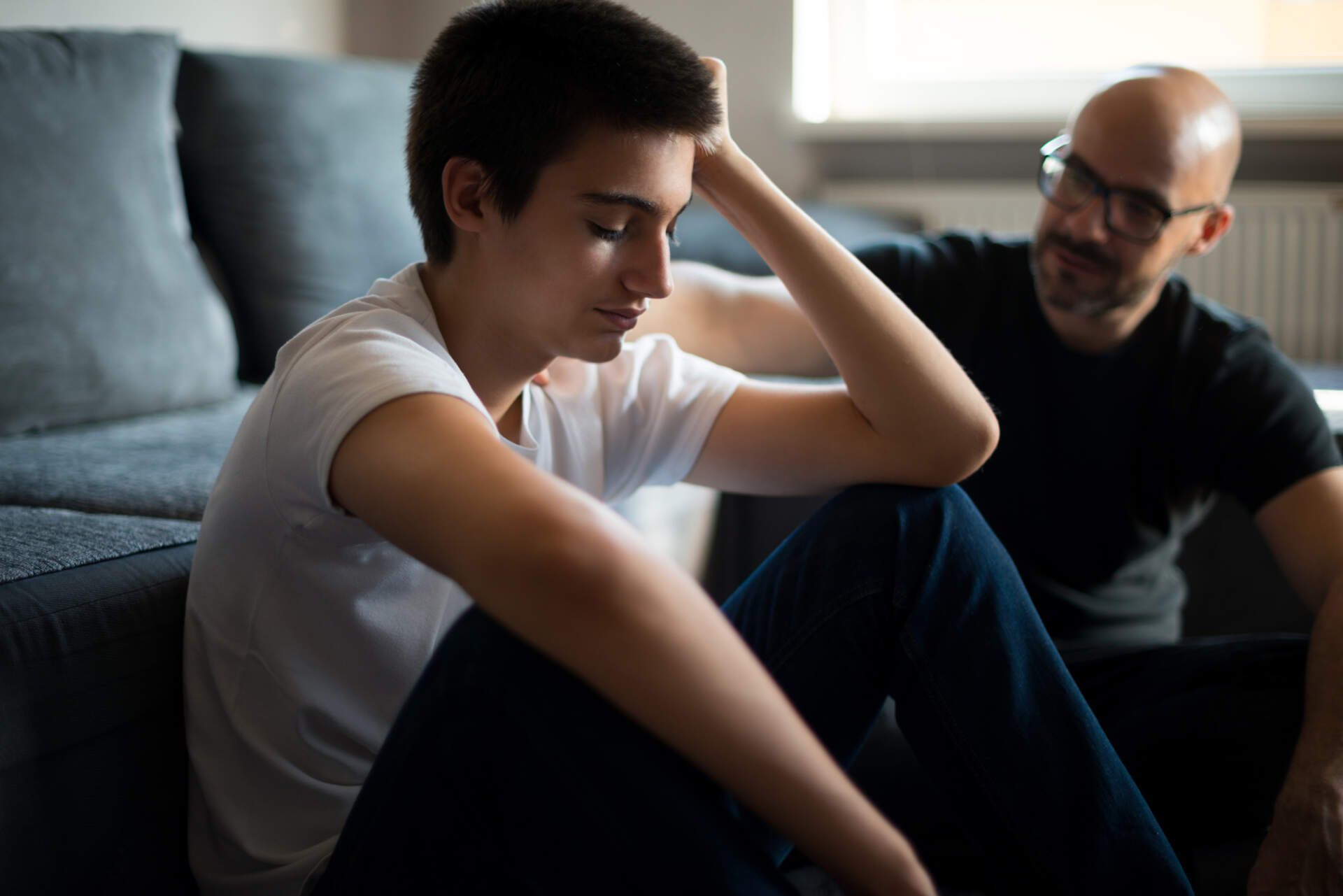
It's true that some men are rapey, dominating, etc. Those men have deeply hurt many people. This is a real problem. The victims of those men have a right to vent about those things, and society needs to listen and hold the those bad men accountable.
But the vast majority of men are decent people who aren't rapey, dominating, violent, criminal, or oligarchic. (Many men aren't even particularly sexist! Every man internalizes some amount of sexism, but that's true of every woman too.) So the victims of bad men don't have a right to make generalizations like "men suck". In fact, that's misandrist hate speech.
Analogy: Many socially awkward nerds have been deeply hurt in their lives. They have a right to vent about the pain they've experienced, and society should listen, and should hold accountable the people who are hurting them. But that doesn't give the victims a right to become hateful incels who make generalizations like "women suck".
The key is to distinguish the good men from the bad men: treat the good men with respect and decency, while holding the bad men accountable.
And society does hold many of the bad men accountable. Every single day, society sends men to prison for rape, violence, and crime. And men regularly get censured or fired for sexism. It's true that society doesn't always hold bad men accountable, and this is a real problem; but society really does hold many of the bad men accountable.
> One of the rules for good debate is to argue against the best possible version of your opponent's argument. ... And yet, there are plenty of coherent and internally-consistent feminisms
I agree there are many good feminists out there, and I support them. But there are also many bad feminists out there, and they've hurt me deeply.
By analogy to above: Some feminists are misandrists. Those misandrists have deeply hurt many men (including me). Men like me have a right to vent about those misandrists, and society needs to listen and hold the misandrists accountable. At the same time, I know that most feminists are decent people, which is why I'm careful not to make generalizations like "feminists suck".
The key is to distinguish the good feminists from the bad feminists: support the good feminists, while holding the bad feminists accountable.
Unfortunately, what I've seen is that most feminists make excuses for the bad feminists, rather than holding them accountable. For example, you just now made excuses for the feminists who say "men suck"! Throughout your post, you put the onus on me to tolerate being hurt, instead of putting the onus on the bad feminists to stop hurting me! And this is a pattern throughout the feminist movement: Most feminists, even otherwise-good feminists, are unwilling to acknowledge that the bad feminists are causing real harm, and that men have a right to be upset that the bad feminists are hurting them.
> So if you feel like feminism isn't focused on you, you are absolutely correct.
It's fine that feminism isn't focused on me. The problem is that bad feminists are actively hurting people like me; and the broader feminist movement is enabling that behavior.
Did you read the link I posted above? https://scottaaronson.blog/?p=2091#comment-326664 Scott Aaronson wrote a very thoughtful and introspective post about the issues facing socially awkward men, while also being careful to respect women. His post resonated with me deeply; he put into words many of the things I had been struggling with. This is exactly the kind of thing we need more men to do. And yet, he received some extremely toxic responses from feminists -- e.g. https://web.archive.org/web/20150113081455/http://www.rawsto.... And in the end, the harassment was too much, so he stopped talking publicly about these issues, and nothing got better for me or other socially awkward men.
This kind of misandry needs to stop happening. I know most feminists aren't personally saying horrible misandrist things. I'm not saying "feminism sucks". Yet, the misandry needs to stop. Do you agree the misandry needs to stop? Will you stop making excuses for misandry?
(P.S. I know you touched on a lot of other issues, but this post was getting pretty long, so I wanted to focus on the core issue and leave the other issues for some other time.)
Step one is building the future you want to see. Step one isn't waging a cultural battle.
A well articulated alternative might even sap the wind from it's sails. But if you want to wage war without anything else to offer them... you'll just be entrenching the status quo.
Connecting to men might require discussing sore cultural subjects with a bit of impropriety. The problem for you, is that all the people willing to say "fuck good taste" aren't following it up with the message you want.
Have you been to Ukraine?
The corollary is that if you do not fit into the men “mold,” you will not prosper. Most men in the Western countries would not have a place in Ukraine or any slavic country (except as an ATM) — because the values needed to be internalized are at odds with more polite societies.
This is true in much of Russia outside Moscow, St. Petersburg, etc. (the more metropolitan and “Western decadent” parts of Russia).
Boys have different needs than girls. Treating boys like girls will not do them any good. All children need fathers, but boys are perhaps especially sensitive in this regard as men help model for boys what masculinity means. We see how the absence of a father translates into higher rates of various pathologies and delinquency in single mother households. Father also have an authority no mother can have, an authority that helps boys, and children in general, achieve the kind of moral formation need for adulthood.
There's a reason virtually every culture is patriarchal. Patriarchy exists in service of the common good, beginning with the family unit. It provides the structure and order that enables everyone to flourish. Can things go wrong? Sure. But that's true of every social order or arrangement. You don't abolish something because it can go wrong or goes wrong sometimes. This is like solving poverty by exterminating the poor, or cutting everyone's hands off to "solve" theft. A healthy masculinity, the via media between effeminacy and brutishness, is sacrificial and it is good not only for men, but all of society, including women. The common good depends on it.
It's because men are physically stronger than women. That's it. That's all it is.
But I second that is a weird take or point to throw in.
But that doesn’t really mean they weren’t involved in decision making, it just means they aren’t involved in the sorts of places where people will write any of it down for posterity.
From a long time ago, we were the aggressive hunters, warmongers, protectors of everything that “belonged” to us, including women and children.
To this day, we’ll often be the protectors (and usually aggressors) in a violent situation, for the reasons above.
Every study I've seen on the subject has said that children of same sex parents, including having two mothers, do as well or better than their peers across any metric of wellbeing or success.
If so, given that most children are born of conventional couples, it makes sense to say they should have their father in their life.
The Americas has strong, persistent matriarchies. And even Sparta had a politically-active group of heiresses who rivalled the Kings for power.
> All children need fathers
> Father[s] have an authority no mother can have
> There's a reason virtually every culture is patriarchal. Patriarchy exists in service of the common good
Really?? Where's the research that supports any of this? If you're going to make charged statements like this, you better at least bring some research to the table.
Let's all take a good long hard look at ourselves. Just because we might feel frustrated, or displaced, or ignored, doesn't mean that we (and I'm talking to the men on this site who upvoted this comment) need to abandon the truth-seeking parts of us that desire the gold standard of logical, evidence-supported arguments. If you blindly support any statement in favor of "your side" just because it feels good to you emotionally, regardless of how speculative or questionable the reasoning is, then you have little right to criticize the "other side" for doing the same.
Here's the steelmanned version of the ideas you're saying are causing issues:
- Instead of defining men / women, think of each human as a person. There are no strong men, sensitive boys, intelligent women, vulnerable girls - there are only strong people, weak people, hard people, soft people. Our job as society is to compassionately accept people as they are and encourage them to be their best authentic selves, instead of arguing there is some role they must force themselves to fulfill because they were born with a set of genitalia, because this promotes individual happiness and is the kind thing to do.
- People's virtues are learned, not innate. Independent people can learn to accept help. People who are unsure of themselves can gain confidence. People are allowed to be vulnerable, but also to have the space to find roots, solidarity, strength and growth. Roles that traditionally would have gone to someone with a penis - head of household, soldier, provider - are achievable and manageable by anyone, because the virtues needed to hold those positions are learnable and not rooted in biology. The same holds in reverse - roles that would traditionally have been held by women are open to everyone.
- People should be given freedom to flourish as they best see fit. They have rights to their bodily autonomy, securing their financial futures, achieving scholastic pursuits, respect and equality for their contributions, and more. Historically, this has not been the case, and this does not just apply to women's rights here - it applies to anyone who has had these opportunities denied.
- Some human but deleterious attributes we should all grow beyond. Brutishness is an excellent example - as is shallowness, closed-mindedness, entitlement, ignorance, greed, dishonesty, and more. Some attributes are contextually awful - being stoic, for example, is a boon when you need to handle stressful situations, but it can also manifest as a lack of empathy for other's emotional lives.
Note that none of these are attacking masculinity - if anything, point two contradicts exactly that, literally anyone can learn the virtues associated with masculinity and is why trans men are supported even conceptually. Rather, point four holds - there are a subset of awful virtues that are unacceptable or contextually awful from anyone that have been attached to being a man, such as entitlement to sex, resorting to anger in lieu of healthy expressiveness, and assuming they must shoulder all burdens instead of being allowed to seek help. In other words, mainstream movements are attempting to abolish toxic masculinity, not masculinity itself.
You discuss the emotional needs of boys and girls as being different (which may or may not be valid, depending on the best available evidence), but then you argue that treating boys like girls is not the right thing to do, which is not what anyone is proposing at all. Again, the idea is that people are people, not their bodies. Girls and boys are people, capable of feeling, wanting and expressing the full range of emotions. People want to treat children in ways that allow them to be emotionally expressive and mature adults.
Further, when you talk about the patriarchy, you are again not taking point one and two into account. Nobody wants authority, strength, boldness, vitality, etc. to go away - these are all great virtues. Rather, they want the idea that these qualities are somehow gendered to go away. If you want strong leaders, find them in both genders. Additionally, historically, the patriarchy you are discussing has tended to enshrine point four virtues rather than eliminated it - it's the same system that inflicted foot binding tortures, made Indian women throw themselves into funeral pyres when their husband passed, allowed female infanticide to flourish, and so on. These are all terrible things and bundled into a parcel of ideas about what men "should" be: not just protectors, but architects of their offspring / wives / sister's fates. We have managed to overcome many of these core underpinning beliefs, but there still remain a lot that should not go unchallenged.
So, respectfully, I would ask you to at least attack the right thing. It is possible your value systems are opposed to all the points above, and that's fine. But if a value system has to reach towards attacking strawmen of other viewpoints, then it is not a good sign that that value system has been arrived at fairly.
Still when it comes to leadership, it suits a man by his qualities to be a leader, while a woman is suited for other roles. You can just see this by the role mothers play in their families versus fathers. If you have an imbalance or the women starts taking control or leadership in the family when the men are still present, then you get a lot of wonky results.
Here's one. When people collect datapoints and observe a difference in one case not present in the other, they sometimes fall into the trap of thinking that their dataset is exhaustive - that it captures all the variables that matter.
In other words, it's easy to start with the observation "women tend to be more represented in fields that exhibit qualities of care and less represented in leadership roles" and conclude that the absence of the variable "has leadership" makes up the core difference.
But this is a conceit that you, the observer, made. Your choice of variables to look at influenced your observations of what is different and therefore important.
Here's a counterpoint that contradicts your observed conclusion. Female heads of state and politicians have been increasing in number throughout the last century, and have done remarkably well in those roles. Has the nature and autonomy of executive power changed like medicine (according to you) has? It has not. It is a sign that you have not taken all variables into account.
Here's another error in your reasoning. Why those variables specifically? How do you know those are the variables your subjects are thinking about? When women sign up to be doctors and nurses and not CEOs, are they expressly telling you the shared decision making are the important variables? Or is it because you inferred that those variables are important because you can measure them?
In the interest of correct methodology, here are some other variables that people have suggested to explain the same data: women are conditioned or socialized into early expectations of caregiving roles; women are rewarded for pursuing caregiving roles in a way men aren't; there are more barriers for women than for men, and so on.
Now are these variables the correct answer? We don't know. It is a complex topic, because humans are complex. It is possible biology and perceptions of role play a part, as does socialization and others.
But what we can do is go a little meta and ask the likelihood that a biological variable is a good explanation in the first place. Consider what a good explanation has to do: it has to provide a causal mechanism, and be able to explain how the cause led to the effect you see. The trouble with every single biological explanation that's been proposed in this area is that they don't provide this causal mechanism. What exactly is it that makes women gravitate towards submissive roles? Is it estrogen levels? Hormones? Menstrual cycles? But then people on hormone therapy, people born with extra chromosomes, people with hermaphroditic parts, and so on should all display manifestly different behaviour and choices, which they don't. To explain these differences, you need to invoke more and more factors, until you end up with epicycles all over again.
More generally, the history of biological explanations simply don't fare all that well in comparison to sociological explanations. A reasonable prior is to assume that it may play a small part, but that larger effects are driven by how society treats and works with people.
It was a "deer in the headlights" experience. His family indifferent if not annoyed by his revelations. He had nervously prepared for the moment but the message was plain and clear: you can't fail.
I think it serves as an example of how cold and loveless men perceive this world to be. You need to deliver without fail for life. Fail and nobody cares or you're cast aside as trash.
So if the messaging is that nobody loves you for you and you're judged by utility only, we shouldn't be surprised by men's growing issues.
https://en.m.wikipedia.org/wiki/Transactional_analysis
Personally I've encountered the thing you've described, and think where it went wrong was falling into a persistent parent/child dynamic instead of returning to an adult/adult one. I'm a bit wiser now and can confirm that once you recognise the modes you're falling into, you can shed the (toxic) ideas like "nice guys finish last" and start having deeper relationships.
I can count the number of healthy relationships I've seen in this life on one hand.
I don't know exactly how we ended up here; but unless things get better fast, over population will be the least of our troubles.
If a man is told by a heterosexual woman he's not in a relationship with that he's a nice guy, he should take that to mean she's not attracted to him. But this is confusing because the majority of men's advice about women comes from women, and the messaging they've received is that they should be a "nice guy." And being nice at a surface level is antithetical to things like assertion, which is a quality many women look for in men. Until the advent of YouTube, my impression and experience is that elder men have failed to teach men anything useful about how to interact with women, including what it means to be nice. I know of no men my age in real life that received any wisdom from their fathers besides "wear a condom."
So called "nice guys" are treated like trash, not because they're nice, but often the opposite. If a man is a pushover, lacks confidence, doesn't seem like he knows what he wants out of life, and is willingly subordinate to women, but he is superficially very nice, that signals that his behavior comes from immaturity or to get laid. Women do actually like guys who are nice, but a scant number of them are into men who lack a spine or need women in order to feel complete. A man can be nice but also be assertive, confident, and not be needy.
And sure, plenty of women are into bad boys, but that's their prerogative, and a man may not want to be with those women anyway.
That doesn’t mean I’m a robot without feeling. Doing your job isn’t “toxically masculine”.
Growing up I was raised in all the bullshit about not crying or never appearing “weak”. It turns out bottling all your emotions isn’t a super healthy thing. Even worse when you don’t gain the meaningful perspective of understanding the implications of them because you’re conditioned to pretend to ignore them.
Men are emotional creatures whether some of them want to admit it or not because they’re human.
Cleaning human shit for a living or part of your living doesn’t change that no matter who you are.
If so, then we're in trouble.
you need some kind of expertise to feel like you can make even the most basic of professions out of
you need responsibility
you need role models that you can choose and can talk with, and practice having complex and sophisticated conversations with
you need a meritocratic environment
you need physical development, and to embed the need for building physical and mental habits that guide you through your life in a sane and stable way
you need an environment that encourages kindness, hard work, and neither babies nor feminizes you. you need to, specifically, avoid idiotic environments that promote violence as part of the social hierarchy of peers.
How are they (the boys?) being characterised as women?
Who is claiming that men need to be treated like women?
Why are you so concerned by femininity?
Mothers on the other hand are supposed to be the primary person that provides emotional support and care. But, the immediate community is supposed to provide that support as well.
This is how human society has functioned through history. This is how we naturally function.
Fathers being emotional support, mothers being distant and the community being a cold and harsh distant group of people does not work.
Teachers and social workers are not "the community". Children don't need psychoanalysis and being taught to think of themsleves as victims if their parents are too busy to attend their school presentations and sports activities and all that, because you have the community right there embracing you and supporting you.
"It takes a village to raise a child" not paid employees of schools and governments and psychoanalysts helping politicians draft policies.
The entire context of how this question is even being asked is wrong imo.
"A child that is not embraced by the village will burn it down to feel its warmth"
Asking masculine fathers to be emotional or telling children the entire burden of their successful upbringing is on the shoulders of their parents is not only incorrect, it reminds me of the proverb "don't grade a fish on its ability to climb a tree". If it is unnatural for a father to support a child a certain way and it is natural for a mother, what is wrong with that?
To argue that stoic fathers tend to produce better sons requires evidence. We might ask, "Better for what?" Better to be a disposable cog in a rich man's machine, perhaps? There's quite a bit of evidence that stoic fathers produce sons with emotional problems. There is quite a bit of evidence that expecting fathers not to express intimacy with their sons is destructive for both. There's quite a bit of evidence that men who don't understand their emotions and have not been supported in expressing them safely tend to act out in dangerous ways.
Yours is a recipe for an exploitative, dangerous world. Intersectional feminism offers a path toward a safe, loving, and moral world.
All social systems are constructions, and yes you are correct, we can observe and critique them. The sky is also blue. I like oranges. Snails are slow.
> To argue that stoic fathers tend to produce better sons requires evidence.
Likewise, to argue the opposite also requires more evidence than saying that "there is quite a bit of evidence" for your point. Saying that there is evidence is not evidence.
Being stoic is not what I mentioned but being strong and masculine, except in certain modern western societies is not optional. To put it differently, I wouldn't want my child to be violent in any way but I would also want him to be strong enough so that he wouldn't become prey to bullies and anyone trying to take advantage of him. But also to be strong enough to defend the weak and if the time comes, to serve in the military to defend his homeland and people.
Think of it as a job opening. Someone has to be masculine and someone has to be feminine . If your argument is that a boy should not have to be masculine, although horomones and generics disagree, I say that's a different topic because my argument is that both masculinity and femininity are required and for parents who wish to raise a masculine child, unless the mother is masculine and knows what growing up as a boy and becoming a man is like, the father is the only person that can do that.
> There's quite a bit of evidence that men who don't understand their emotions and have not been supported in expressing them safely
I did not suggest that. What I said was that it is not a father's job or rather, if a mother is available then she is best suited for that job. Boys want their mothers to comfort and emotionally support them and their fathers to teach them how to be a man and to be proud of their progress. I did not support toxic masculinity, just masculinity.
> We might ask, "Better for what?" Better to be a disposable cog in a rich man's machine, perhaps
Better equiped to succeed in life and be able to care for themselves and others. To live a long and likely happy life and find their place in society.
America's prisons are filled with men who never had a father model. Mothers, hard as they may try, at some point their inability to understand what their boys are going through makes it impossible for the child to trust them with emotional support.
A well rounded upbringing with all emotional, social and psychilogical needs met is all I advocated.
Fair enough, but then:
> What I said was that it is not a father's job or rather, if a mother is available then she is best suited for that job.
Who says that she is? Plenty of women suck at nurturing. Plenty of men are good at it. Why not have both parents capable of providing emotional support and guidance? What about single dads? Why assume that dad is better than mom at training a kid for fitness and to stand up for themselves. There are a lot of women jocks and soldiers. Have you ever seen the arms on a bread baker? She could punch you through a wall and go back to kneading without missing a beat. Why assume that girls don't need to throw a punch? They deal with both bullies and rapists. You are falling into the trap of gender essentialism. There are sex differences, but they are not the straightjacket traditionalists say they are. Did you think Neanderthal women laid around on fainting couches waiting for some dude to hand them a hankie?
If you want to know what men and women can actually do, don't look at traditionalists, look for us iconoclasts. The fags, the dykes, women athletes, men that stay at home with the kids. We are living examples that essentialism is dangerous bullshit. If you want to see true bravery watch a drag queen walk down a city street past all the people who want to kill her. Balls of fucking steel. Talk to the girl coder in a room full of coder bros trying to either fuck her or drive her off. Imagine being Madeline Albright in a situation room full of generals. That's bravery.
My grandmother was a pioneer in computing and women's liberation. When her husband was off in the merchant marines under the constant threat of U boats, she wanted to do something for the war effort. She saw a sign for engineering classes. When she went to sign up the man told her, "Sorry honey, engineering is for men." The instructor happened to overhear and replied, "Let her take it Harry. Then she'll learn her place." Of course, my grandmother took the class, did better than all the other guys, and went on to a long career designing nuclear torpedo circuitry and keeping the mainframe running, while raising four kids alone, and dealing with a constant stream of sexist men. Pure bravery. On the flip side, she couldn't cook to save her own life, thought Sanka in tepid tap water was coffee, and was hopeless at nurturing her kids, who have the emotional scars to prove it.
My father is an example of a boy who was never taught emotional intelligence. He simply doesn't understand his emotions or why they change. If I say, "Dad, it seems like driving is making you anxious. Do you want to switch?" He doesn't recognize the category of "anxious". All he knows is that something is wrong, it could not be him, so it must be mom's fault. On the flip side, dad is one of the best people in the country at programming cultural events for college campuses and single-handedly transformed student life for generations of students and is one of the funniest guys you'll ever meet.
Humans have evolved to be flexible and resilient. A big brain frees us from the monorail of instinct. Men and women can be whatever we need to be. This period of reaction to progress will pass like so many others have. You can't stop a good idea forever. And we who know freedom will NEVER go back.
This reads like satire. "ChatGPT, please write a paragraph that embodies the concept of toxic masculinity."
I'm becoming a father in a few months, so I've spent this entire year reflecting on the fathers I know - strengths, weaknesses, things to emulate and things to avoid. Every one of the "good fathers" in that reflection is someone whose child would go to him for emotional support.
It's astounding to me that anyone could believe it's possible to be truly masculine while neutering one's experience of human emotion. Being too afraid of emotion to ever express it, and making your child suffer for your fear, is cowardice, not masculinity.
I did not claim that fathers should be devoid of emotion or neuter their emotion. You added that strawman on your own. This is the 3rd or 4th comment in this thread where someone made a similar claim.
Clearly even in your quote I said "the person a child goes to" as in the person responsible for that. Just because your child does not come to you first for emotional support, does that mean you have to be cold and unapproachable to your child? When did I claim that or why would you assume one extreme or the other?
Why do you people insist that parents should not have specific responsibilities based on their abilities. If you honestly believe you can support your child better than their mother emotionally then take on that role. No problem there. So long as the mother is able to exchange masculine responsibilities with you.
Why do you insist that fathers should be responsible for everything and mothers should do whatever they feel like doing? It sounds to me like 80% of parenting is done by the father according to you.
A son needs someone to teach them how to be strong and manly as well as gentle and kind and intouch with their emotions. Why so you insist thr father should do all these things? Why do you resist havig to share the responsibility with the mother?
This is basic human organizational structure. You can't have the CEO and CFO have the same exact job. You can't have two commanding officers responsible for the same subordinates in the military. Lookup "tyranny of the structureless".
In your attempt to do everything on your own, you rob your child the opportunity to get close to both parents bot worse than that, you rob them of structure and clarity which are essential to healthy development.
If you believe that 4 different readers are "misunderstanding" you, perhaps the failure to communicate exists on the writer's side.
> This is basic human organizational structure. You can't have the CEO and CFO have the same exact job. You can't have two commanding officers responsible for the same subordinates in the military. Lookup "tyranny of the structureless".
Based on the frequency with which you compare parenting to hierarchical corporate or military structures, I sincerely hope you aren't a parent. It's intensely creepy and I would never want you around my kid.
Fathers should absolutely be there for emotional support, especially for small kids.
Also, distant mothers are not a modern creation, there have always been distant mothers.
A CEO should know about corporate finance but that doesn't mean he should also be the CFO. Both roles are important enough to have separate execs. Parenting is similar. I did not advocate for an emotionally shutoff and cold father, but rather the responsible person and the person the child runs to for emotional support is the feminine parent which is the mother (usually at least). Similarly, boys need to be taught how to be men. Women have their own unique perspective and as such, mothers should take part in this but ultimately, the parent who should be responsible for masculinity education is the masculine parent, who knows how to handle a testestrome filled body and the specific society's expectation of men and how to address or confront that, and the father (usually) is the right person for this due to biology.
You and others are saying both parents can do this. I am saying, the parent with the most experience and qualifications should be the responsible parent without excluding the other parent entirely. You can blame the CEO for being ignorant about the company's financial state but you can't hold him/her responsible for mismanging finances without making sure the CFO did his/her job right.
> Also, distant mothers are not a modern creation, there have always been distant mothers.
100% agree with this. But so are fathers that teach boys weakness, cruelty and cowardice or who themselves don't know how to be a man (like abuse their wives). Parents who suck at their roles exist and that sort of is my point. If a mother is cold and distant then should the father take on the role of an emotional support primary parent as well as masculinity training? What is the mother doing? Neglecting the child? Is that really ok for the father to be expected do both things or maybe should the mother teach the boy to shave and to fight off bullies and succeed in the sport of the boy's choice? No problem with that so long as you are not saying one parent is responsible for everything. That's the root cause, you and others are caught up in politics and appearances and avoid holding both parents responsible. Neither fatherhood nor motherhood is a shared duty, parenthood is. These terms are not some patriarchal social construct that you must rebel against. They simply mean children have specific needs that need to be met and parents need to choose which role to take on and be an expert in that role who will meet that need. If a father doesn't know how to take on the role of emotional support for the child because the mother is distant and cold, then why are you blaming the father for not being two parents when you should be asking what could be done to help both parents figure out a way to share parenthood and decide who will take on what role?
And yes, I'd expect the father to do both things if that happens, for the sake of the child. The inverse is also true.
I don't think you can force a distant mother (or father) to be more involved but knock yourself out if you think otherwise.