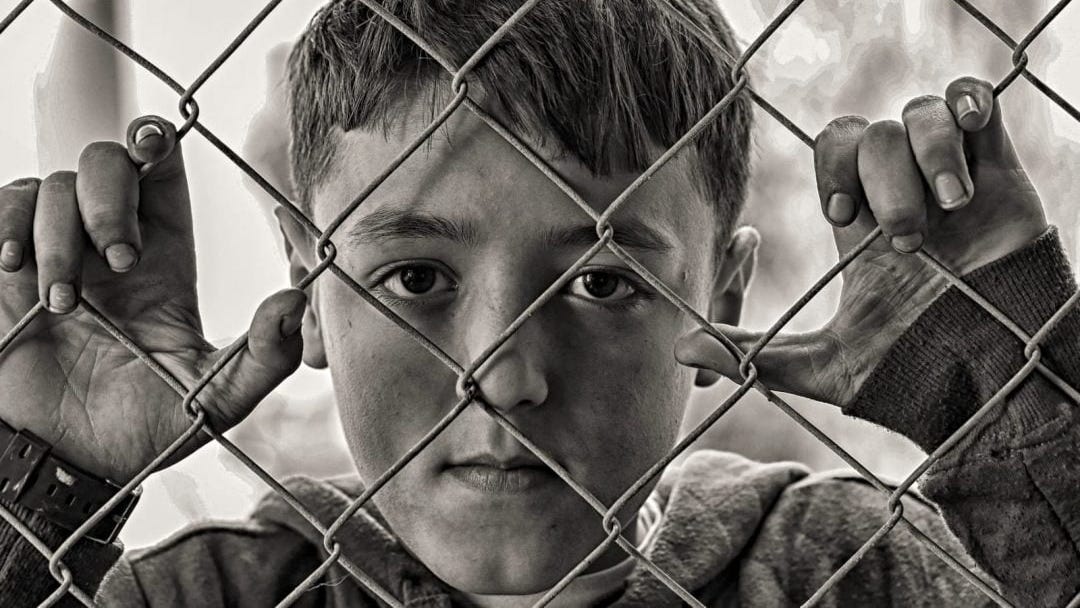
Play Deprivation Is a Major Cause of the Teen Mental Health Crisis
Allowing more unsupervised free play is among the most powerful and least expensive ways to bring down rates of mental illness
jonathanhaidt.substack.com
467 points · by trevin · 3y ago · 395 comments
"they're not playing. 'Play' is a misleading term. They're testing the world. They're learning how things work. How gravity works. How friction holds lego together. How actions cause reactions. How friends and strangers behave when you do things. How to use language with make believe. How to comfortably and safely explore new ideas out loud with their action figures. How to discover what feels good and what doesn't. They're not playing. They're growing."
My kids are young. But I'm confident this is generally true for teenagers, too. One quick example: I played WoW and looking back... I learned a ton about how to work in a team. How to be social. What social behaviours work and don't work. How to deal with people you don't like. How to delay gratification. How to plan. And it was all in a low-stakes environment.
Parents generally have a strong instinct to try to make things easier for their kids than they were for themselves growing up. We know the food is hot, so we blow on the kid's food or let it cool before giving it to them. We know the toy will break if it's repeatedly thrown down the stairs, so we impose a rule that "we don't do that in our house". We know X, Y, or Z, so we sit down with them and explain it to them.
I don't think that these explanations and rules have no place (I don't want a child learning what heat is by falling onto a wood-burning stove!), but we need to recognize that it's a strictly inferior way of learning something when compared to experience. And as you point out, unstructured play is where kids get that experience in a low-stakes environment.
Play serves a valuable purpose, but as soon as parents get involved to try to assist the purpose evaporates.
I've had this instinct whenever my kids are on the jungle gym to say, "slow down!" "That's too high!" etc. but I usually catch myself and think, "if they fall is it a cry or a hospital visit?"
I also like to protect my shit from harm. Kids can be quite destructive in their play.
Another way to phrase this:
Your job as a parent is to expose your children to the maximum amount of love that is healthy and the maximum amount of pain that is healthy.
Too little or too much of either is possible and damaging.
He stressed the importance of spontaneous, unstructured play. As you note it leads to important social development, it improves creativity and could lead to much better academic performance into the teens according to the studies he showed me.
When he designed a playground it wasn't "here they can do A and there they can do B", but he strived to provide spaces that facilitated spontaneous play. He wanted the kids to do their own thing, and provided as many options as possible. An important factor here is that kids enjoy different kinds of play. Not everyone wants to kick a ball, some want more social play so might need a space that allows for that, perhaps a secluded sitting group.
However as you note safety is a big issue. He had a guiding principle of two kinds of safety. There's subjective saftey, if you're high up you know falling might hurt. This is what kids should learn, and it's important they get to do that without permanent injury.
The second kind is objective safety, which relates to the environment and equipment, which facilitates this learning of subjective safety. There shouldn't be rocks near by equipment which could cause permanent injury if a kid fell of the equipment. There shouldn't be gaps in the swing attachment where a kid could lose a finger, and so on.
And one day he just had to try it and feel what all these stories were about. He started crying immediately. We went to the hospital and came back rather quick. It wasn't so bad, just had to have a bandage for a couple of days.
Some weeks later he does it again. On purpuse.
!!??
I tell my brother and he answers: "I kind of understand him. Sometimes I want to do it too."
Similar story: I have a good friend who, as a kid, regularly had to have poison control called for him. It didn't matter what his parents did to hide the stuff he shouldn't drink, he would still try to get to it and drink it. Despite having to have his stomach pumped multiple times.
What children perhaps need is a different amount of parenting in different stages. Someone wrote that first you are the authority figure and the lighthouse for love and safety, then you become more of a mentor as they grow up.
Again, the best you can hope for is that they learn good enough values and let them live their lives, it’s THEIR LIVES, not yours and maybe they will come to you for help. And when that happens, go to town!
Note: I have no children nor do I plan to. Exactly because I have no idea how to deal with them nor do I want them to suffer being with me lol
You mean parents can't seem to tolerate even a single dead child. And that's true, especially when most parents only ever have one or two children.
Obviously they don't want them to die. To parents, their children aren't an abstract idea or a number that they can rationalize away.
Famously, the Dusun in Borneo teach their children to respect knives by allowing them to play with them (and cut themselves) as toddlers.
I guess my point is that anyone who needs to train safety totally understands how important it is for someone to understand the specific danger intimately
montessori teaches 3 year olds how to properly handle sharp knives by letting them cut the fruits for snack breaks. they also don't use safety scissors but learn how to use real scissors.
a lot of danger is removed by teaching kids how to properly use tools. when they feel how the knife cuts through the fruit, they learn that a knife has a sharp edge, and can cut things.
my son learned to cook at age 8 or 9. yes, he gets burned sometimes, but he knows how to properly use a gas stove and he has learned to be careful with it because he had the opportunity to use it frequently and become familiar with it. he can cook a meal unsupervised, and i guess that will boost his confidence as he tries more complex recipes.
For many parents, the toy is expensive enough that it warrants a rule (like the stove.)
> a theory in education which posits that individuals or learners do not acquire knowledge and understanding by passively perceiving it within a direct process of knowledge transmission, rather they construct new understandings and knowledge through experience and social discourse, integrating new information with what they already know (prior knowledge).
A bunch of the big One Laptop Per Child people were strong constructivists. It didnt seem super successful, but the OS really did a lot to build a more open sandbox for compute that kids could more directly be involved with, see & manipulate. I wish that effort had gone a bit better, had developed more compelling learning software & been given a shot at a much bigger scale, where more could have been learned/tried.
I disagree. It's best done with adult supervision, by adults who either at least allow play, if not are still playful themselves.
Yes teens do need some time without adults for a sliver of contexts, but the vast majority of learning is optimized when having the availability of at least 2 responsible adults who aid when called on but do not impose.
Lots of our ideas about teenagers, what kids can and cannot do etc are very recent and very contrary to history's proof that they absolutely can
I think if I had kids my gut feeling would be to prevent harm and unpleasant experiences, because I wouldn't want to experience those things myself, much less those in my charge who may not be equipped to handle it as well. If I allow myself to be driven by that instinct however, they'll never be well equipped which does not make for a well rounded adult. It hurts to see immediate family hurting even in trivial capacities, but a parent must seemingly be able to endure that if the children are to come to be able to stand on their own.
I like this a lot. That is so true. Personal anecdote:
When I got my first car as a teenager (a cheap, used, beat-up sedan), I would often take it out to 'play', ehm, 'test the world'. I lived in a rural area and would drive random, remote backroads for hours with no maps (and no cell phones at the time). I would try to see if I could get lost. I never succeeded. I was always able to eventually find my way, while I was simultaneously building spatial awareness and a general sense of direction that accompanies me to this day. The winter time gave me the best 'testing' environment. I would drive these backroads when they were icey and very slick. When I had certainty there was no traffic anywhere near, I would see how I handled my car when I lost control. A few rotations later, after spinning uncontrollably, I was able to regain steering and was able to navigate out of the problem.
Risky? Sure. Useful skills? Yes. Would my parents have stressed out knowing what I was doing, definitely. I'd like to think I'm a much better driver today because of it and have gotten myself out of some potentially consequential accidents because of my awareness of how a vehicle handles when out of control.
Many people learn from doing - many kids especially. Being raised in proverbial padded rooms may mask very beneficial learning that corresponds to the real consequences of life that we will inevitably face in adulthood. There will always be risk by letting our kids loose a bit more, and thats probably the scariest of things for many parents..
They’re very keenly tuned in to social feedback, far more so than we may realize as adults.
IMO this is also why it’s so important as an adult to be very intentional and unambiguous when appropriate. Flat statements like “that’s rude” or “that was very kind” can be very powerful.
Also worth considering how online interactions change the game- they’re trying all the same gambits, but the kinds of feedback they get are very very different than in person.
Labels without understanding is kinda pointless. My friend's 5 year old has translated 'rude' to mean 'something I don't like'. Whenever he gets a timeout he calls his parents rude. It's actually pretty hilarious.
What I’m really getting at is that we don’t always point out to other adults when they’re being rude, and when we do, our goal isn’t to teach them that they’re being an ass. With kids and teens, it’s worth taking a conscious effort to reframe these kinds of interactions.
Specific language choices are also very important - eg always “that’s rude” and never “you’re rude”.
The parents realize that their children will be screwed if they don't get into a good college, and the poorer parents need scholarships too! The principal's philosophical musings won't pay the bills.
As someone who never ever even remotely had the grades to get into an engineering program and has spent his entire career as a robotics engineer, experiencing a lot of terrible engineers with advanced degrees (among a ton of incredibly brilliant ones!), I'm just not sold on it being that big a deal. I think the larger harm is a parent applying that kind of pressure.
All that being said, everything in moderation. I don't think it means, "hey let your kid do whatever." But it also doesn't mean, "force your child to study the violin and load them up with an entire childhood of structured programs until they hate you."
In psychology, the rest of your post is what "play" means. It's basically anything done as practice, or with low stakes, or without other purpose.
I suppose the question is whether the “learning density” is high or low, and diverse, in video games. I spent a lot of time on single player games as a kid and am open to the idea that MMOs give you more learning (particularly social, of course), but I do wonder how they compare with, say, team sports or running around the woods with your friends.
The way I'm approaching it is simply: all things in moderation. Did you go outside today? Do a bit of tidying? Spend some time at the craft table? Go nuts with Super Mario after dinner. Did you wake up and play Mario for a few hours and get cranky when your brother asked you to play outside? Might be time to press the parental finger on the scale.
Seems really hard to tell, and perhaps we should just be skeptical of "easy" / "dopamine hooks" things like games, and perhaps unskeptical of hard things like science, art, etc. -- if a child wants to spend lots of time on a hard thing that's probably a good sign, if they want to spend lots of time on an easy thing that may or may not be good.
When you screw up team play on the playground you can make enemies, rivals that will follow you through school for years to come, a reputation (for better or worse). You may have to look another kid in the eye and tell them, "No".
I don't doubt you can acquire some skills from online play, but if you think you're leveling up in self-esteem, social skills, I imagine that will get really put to the test when you find yourself alone at a party, or in an interview for a job.
Like flight simulators, they can be educational but I suspect it's a whole 'nother level of learning and experience when you could die if you screw up.
To be clear, im not saying it has to come from their parents. Just that it’s usually the dad powerbombing the kid on the bed and advocating for contact sports. This dynamic illustrated: https://imgur.io/8RZn2YF
That’s been the big challenge. So then there are these magical days where they all don’t have any activities and those invariably happen to be the days ALL kids look forward to. Cuz at the end of the day, they just want to play with their friends.
But that has taken planning in the past where we coordinate with parents for those free play days.
But those days are the exception. I wish they were the rule.
We’ve actually noticed how amazing his mood is after a day full of unorganized play hanging out with friends.
There is something deeply wrong here. I blame other parents who overschedule their kids.
What we should have done is expand access to elite colleges commensurate with demand, and thereby dilute the status of the "elite" college. Harvard still accepts ~2000 people, around the same as 40 years ago, even though demand has skyrocketed. That is basically leading to more and more competition over the same slots, same as the bidding wars in the housing market. And all of the alumni of the University get to ride the wave of more and more exclusivity (they benefit from a low acceptance rate), so this is unlikely to change.
Artificial scarcity rules the day.
Guess what? Kids who have never had time to play are ones who have never had time to develop cool interests.
Jack Nicholson said it best (repeatedly): All work and no play makes Jack a dull boy.
Meeting other parents is a huge effort, though! It's basically dating all over again. If your kids ride the school bus, that's a big help because you automatically meet nearby parents who are home in the afternoon. Otherwise, you have to go to lots of events and ask parents for their phone numbers, but the majority don't work out for random reasons.
I'd talk to people in class and they'd claim to have like 1 or two hours free between school and sleep. And I had something like 8 hours free. What the hell?
Fast forward to present day and my kids are beginning to build ramps for their bikes just like I used to do - and I'm right out there with them building so I can shred on my MTB just like the old days lol.
The neighbors have been gone every weekend to a different part of the state or another state entirely for 8U baseball, and I can't help but feel sorry for them as someone who went through the same thing as a kid.
But as I've studied this issue and experienced life, it seems to be the case that credentials are in reality overrated compared to competence and experience. The vast majority of colleges will admit anyone, and the vast majority of employers requiring a degree just ask that you have a degree of any kind.
So now I think parents should just chill, not because it's the altruistic strategy in game theory, but because that's how the actual labor market works. Parents are killing themselves and their kids for no reason.
Ah, the mantra of our parental lives!
These classes kids go to aren’t always some kind of arduous, academic overachiever factory. My kid goes to a Spanish immersion after school program once a week and she loves it. She’s made a ton of friends there. We’re not shoving her through the door.
Don’t get me wrong, some parents do go over the top with it, no doubt. But a lot of these activities are genuinely enriching.
The problem is over the holidays when all your kid's friends have been sent to camps and summer schools (mostly as a form of holiday childcare for working parents presumably) or taken away on holiday, leaving your kid with nobody to play with. It presumably varies a lot but it's a real thing in our and our childrens' lives. The summer holidays should be filled with friends and play, not spent at home with your parents because nobody's available.
Why don't you move to an area that's not like that, or you go an play with your kid at the park until other kids show up.
or build an app that makes the makes scheduling the play time very seamless.
Gotta say though, this seems to be purely a thing in the english speaking cultures. Apart from sport and maybe an instrument, extracurriculars aren't a thing in most european countries.
Extracurriculars are so peculiar that our ministry of education deems it necessary to make it a mandatory point for teachers to discuss when talking about american childrens typical day in school.
This is a major thing in many East Asian cultures as well, China/Taiwan/Japan/Korea. Korea had to pass a law saying that private academies have to close at 10pm, so that kids aren't studying past midnight, but some academies still stay open secretly as the parents are demanding the extra hours. It's a vicious circle: kids compete for the few spots in top universities so they can get into the best companies, average qualifications rise, so next generation have to compete even harder for the same few spots.
This is carried over to the US as well. Asians compete for the few spots in top universities, as they are held to higher standards already, and this just keep ratcheting up the average standard for Asians each generation.
Bring back the pop-in!
- don’t focus on GPA, focus on actually gaining knowledge and understanding how the world works. good grades are a measure of how you understand things. they should never be the goal. I was a C student and I am more curious about things than many of my peers with fancy degrees.
- forge your own path, there is always a thousand different paths out there. College is just one.
- no replacement for hard work. don’t expect anything in life. anything worth getting, you’ll have to compete with many others to get it so learn to be a good competitor.
- college should be approached with all the tradeoffs and as any other investment. We’ve told them we will not pay for their college. so they will have to make choices about getting the best bang for your buck. We’re the only parents in our whole social circle that aren’t saving for their college. it feels weird and isolating when that topic comes up.
- first think about the kind of life you want and then make choices to get you that life.
they’re already sick if my lectures. and they’re 10 and 5. :-)
There’s no exemption for “I want to teach my kids financial responsibility”. If you’re high income your children will be ineligible for any financial aid and have few options for funding their own education.
In college I didn't care about grades. Still graduated.
At work I don't care about promotions. I still get raises well above inflation and am doing great.
I've read this before from Americans, and I don't get it. In my culture if parents can pay for their kids' education, they do it. There's a time and a place to teach them financial responsability, I feel distracting them with financial concerns during their most challenging years of schooling is not it.
When I went to college (paid for by my parents), I had friends who had to work on the side to pay for rent and groceries. They barely hung by, very few had great grades since they had to split their time between work and study. One of my close friends ended up dropping out because he was burned out.
Of course this doesn't mean you should pay 50k for a degree in feminist dance therapy, you make sure you only pay for something with ROI (That's another thing I don't understand about Americans. In a country with tuition so high, how can so many pursue degrees with such awful job prospects?)
Full scheduling of random stuff doesn't mean it would always help the children. It's the children's version of appearing busy.
Anyways, point is, this fostered my interest in nature (looking for bugs), my sociability and strategy (card games), and my agility and teamwork (wall ball). This was stuff I worked hard at too, because they were my interests.
In surrendering utterly to the preeminence of streets, we have essentially taken our open, free world and overlain it with an immense grid of electric fences -- thick lines all over the map that, if children wander across them, might easily lead to their deaths.
So "hold hands everywhere" and "don't let your children run free outside" become the norms. The only safe place is locked inside or behind fences; the wider world is a death trap for children.
Play inherently requires a degree of freedom, but children have none. We are just prison guards eternally transferring them from one captivity to another.
The driver who led to Sammy's Law (which still hasn't passed) only received a 180 day license suspension a year and a half after the accident, even though he sped past a stopped vehicle on the righthand side (the vehicle had stopped for the child). Death by car is often considered acceptable.
There is really no disincentive to dangerous driving, to say nothing of the preeminence of driving more generally.
this is a great example of where whataboutism is not a logical fallacy. i mean what is your solution? ban all driving?
sure, but give me a proper public transport network that can supply the suburbs and rural areas. fix urban cost of living while you're at it.
Step 2 is to change the highway code to make stroads illegal and make more normal safe roads.
Step 3 is change the fha rules so more dense homes are built.
Step 4 change cafe standards so smaller lighter cars are the norm, possibly tax suvs and trucks.
These are all stroke of a pen changes.
Neighborhood != community. Imo with: - Lack of interesting nearby spaces - poor walking options (unsafe, unpopulated, unshaded) - poor transit options - growing options online - polarization
Families are less likely to spend leisure or errand time in/near their neighborhoods. And kids suffer for that.
https://en.wikipedia.org/wiki/Bowling_Alone https://www.youtube.com/c/NotJustBikes
So kids are stuck at home, miles from a playmate.
Helicopter parents don't let things like logic and convenience get in the way of taking every atom of independence from their kids. It may also have something to do with trust. Nobody trusts their kids with anything these days anymore and then they expect them to somehow grow up capable of taking responsibility? Like, how?
Granted the numbers are lower now than before but that’s because of various safety and traffic calming efforts. Seems like we should push harder on that front, so parents can feel safe encouraging their kids to just pop over to their friends place on their own.
https://reason.com/2014/08/19/august-2014-reason-rupe-nation...
Americans are split regarding whether there should be a law requiring 12-year-olds be supervised when playing in a park - no cars there.
As an European, to me this is absurd. At twelve I had a bus card and the privilege to go wherever, as long as I respected curfew.
Things like the sex offender registry "help" but don't at the same time. It's not something I ever concerned myself with ("I know the stats, it's usually a relative!") until someone encouraged me to do it while closing on a house. I'm now acutely aware of the fact that there are dozens of child predators within a 1-mile radius of my home.
I think a big part of this is just our risk tolerances change. We naturally want to protect kids, and looking historically we've taken safety to relative extremes compare to 20 years ago (and similarly before then). Its natural to want more security, and its obvious how it helps. But its not as obvious what we've given up in return.
Interestingly, I moved to Portland recently, and live mid way between suburbs and downtown; its fairly dense but mostly SFH or townhomes in my neighborhood, many businesses, some homeless. Kids of all ages walk to school and are... just everywhere, around here. Its quite normal to see people walking with their kids too. Its just got a really great mix of urban density -- you can walk to stores, bars, school. There's a few high traffic streets, but they are not large and the speed limit is 20mph. I think what this neighborhood has taught me is, while our risk tolerances are lower than ever, its still a bit of a design and culture choice to not let kids walk around. Its nice to see here, in Portland of all places, there's a bit of a counter trend going on. I hope its what the future looks like in other places (here and elsewhere) too.
At 6 years old I was literally biking by the river or wandering in the woods with my friends after school for hours on end. Every day was an exciting adventure without any adult supervision, just random groups of 2-10 kids who would gather in the afternoon to play together. The rule was "home by dinner or there won't be any dinner for you". I never did any extracurricular activity, ever.
This did not prevent me from going to a great university in my country, get my master in Computer Engineering, graduating in the top 5% of my class, have a curriculum good enough to legally immigrate to the US, and working at several tech companies including FAANG, making high 6 figures now.
I would never give away those wonderful memories and early life experiences for some random extracurricular activity just to "stand out" later on, I do believe such freedom helped form my character to a much greater extent than any scripted activity would have.
Independence, life skills, and fun stem from the freedom to explore on one's own. If anything parents, should be constantly nudging and encouraging kids to be more independent than is typically expected by:
1. Letting them have some unstructured, unsupervised time, especially out in the neighborhood.
2. Not automatically doing or thinking for them, especially by answering advice questions with questions that encourage reflection and independent decision-making.
3. Expect them to help with chores and needs self-service, pushing back against the expectation that parents are the forever barbers, waiters, and maids while the kids are on permanent vacation.
In my darker moments I fear this may be one of those things where the tradeoffs between a high performance society and a take-it-easy culture just can't be squared. But then I remember that it's more likely downstream of other, more transient issues in American culture - the ever present fear of getting cancelled, the heavily bike-hostile ecosystem, etc. It's worth fighting to get back.
The key question is more, could you do that today and would you sacrifice that to give your kids that childhood? Would your grades and lack of extracurriculars have earned you admission in this year's cohort? Is that path still really available?
I am 9 years out from the university admissions game, so still pretty young, but some time has passed. I would not be a competitive applicant today for many of the same programs I was admitted to back then.
High school was by far the most stressful time of my life and the fun part is, it would have had to have had more pressure to be where I am today.
Disclaimer: I live in the US but didn’t grow up here. I also grew up in the 90s.
In my experience, in higher education the prestige of the school has a smaller impact on learning than most people seem to think. Mostly, it seems to function as networking and a badge on your resume which can open the next door.
But once you have a bit of experience, more doors will open. In a few years, people care more about what you worked with than what school you went to, even if it’s an Ivy for instance.
Plus, working at smaller companies is a much faster way to learn than faang, imo. Sure, you get good at politics, perf reviews, and learn some best practices, but in terms of domain knowledge and practicing decision making, faang is terribly inefficient for “growth”. I wish I had worked more at smaller companies/freelancing, because frankly most of big corp was a waste of time (although money is good).
what is the point of growth if not to make more money?
you could quit your faang job and work as a janitor while hacking projects on the side if so inclined. except one has a pathway to 500k+ and the other does not.
I love this article with the comparison across generations.
I grew up in Europe in the '80s, and was riding streetcars and taking subways when I was 10.
We live in a society where a small mistake can ruin the rest of your life; where parents can be jailed for allowing previously common freedoms to children; where children are increasingly subject to age restrictions; where parents are under increasing threat of legal actions; surveillance is everywhere; and more.
Many of these things were done with the best intentions of protecting children. How much joy does one get out of keeping a toy sealed in a box, preserving it's "value"? How much more valuable would that toy be if one enjoyed it during their childhood? We're keeping our kids in the packaging to protect them, but we're losing the real value.
Wait a minute, what?
Nearly 1 in 10 attempted suicide? So in a middle school of say 400 kids a kid would know almost 40 peers that tried to kill themselves? I wasnt in middle school in 2019 but this just doesnt seem right. Maybe im misunderstanding.
Edit: it says high school not middle school, but point stands
This is horrifying. These kids are going to become adults who will, to some extent, struggle to have successful, satisfying and rewarding lives.
Still, 10 out of 400 needing medical treatment for a suicide attempt, is awful, and seems much higher than when I was in high school.
The 2.5% number is more directly comparable to past numbers, if we assume that suicide attempts that lead to requiring medical care are more likely to get reported somehow.
Maybe, in the past, some high schooler one night decides to drive his car faster and faster on a deserted road, hoping that it will end up with death by car wreck. Then, they decide against it, slow down, pull over, cry, and eventually go home. We never hear about it unless they admit to somebody that it happened. But, if they end up putting the car in a ditch and get treated at a hospital, perhaps we do.
My goodness what a depressing topic to comment on. Anyway, hope everybody out there reading this feels ok! If not, it gets better, keep trying!
https://www.forbes.com/sites/maryroeloffs/2023/07/19/teen-su...
https://www.scientificamerican.com/article/childrens-risk-of...
But having graduated high school in 2014, my anecdotal reaction based on that experience would be that it seems on the high side but is plausible.
My reaction certainly isn’t “no way.”
It's the police and CPS that I am afraid of. The ubiquity of smartphones has made tattling and "calling someone" so easy. And it's almost never from other parents! The parents are more worried about "what people will think" than they are their own kids actually being hurt!
Also, there are so many fewer kids in a neighborhood than when I was a kid (both from a declining birthrate - and also the monopoly older/kidless people have in suburban housing right now is very underreported) that there is less safety in numbers. There are only 2 other kids on our block.
I threw up an arm in disapproval, and he flipped me off in return, like I was the problem. Sometimes the entitlement is unreal, and I'm not sure how much enforcement it would take before people did the right thing.
There was a YouTube video of a man standing on the sidewalk next to a puddle with an umbrella, then a brick. Perhaps staged, but I'll let you guess which one kept him drier.
Usually sports, but sometimes something else. I actually really enjoyed this sort of setting. Kids would get hurt accidentally, there were some harmless fights, and that sort of thing.
I'm just concerned that, independent of my own viewpoint on the subject, I will be unable to find sufficient other parents with this approach, or, should I find them they'll be clustered with other beliefs that I think are suboptimal for success.
Ultimately, if there is a place with this culture then I will try to make it so I can reasonably live there.
I took music lessons, did Cub Scouts Weeblos & Boy Scouts, played little league, played Pop Warner & high school football and ran track. All after school activities.
As for freedom.. I took SF MUNI, BART, Ferries and Golden Gate Transit starting at 7 year old. Any free time I had was spent playing with friends. And I had to be home by the time the street lights came on.
So it is possible to have a lot of after school activities and plenty of time to play with friends and explore the world.
We ramp up the pressure younger than ever, tell people that their entire future hinges on their success and getting ahead of their peers right now, then we're surprised that people crack under the stress?
(FWIW, the sports that seem to come up on top are rich, exclusive sports like fencing and polo, because they serve well as class signifiers in admissions)
Those people are dumb; ignore them. They're "fighting the last war", so to say.
Seriously, an orchestra needs 30-40 violins per tuba. There has to be a lot of violin players, or there is no orchestra (the Harvard orchestra is short on violin players right now [1] - they certainly aren't going to be taking many more "unusual" instruments without more violins)
The injury rates for young athletes keeps increasing (as in younger than 25-30). Plenty of research shows that specializing in a single sport at a young age is a strong contributor to this. Of course those "elite" coaches want your kid to give up everything else; when your kid burns out or get injured the coach just moves on to the next kid in line.
Just opt out of this system, your kids will be fine.
[1] https://www.harvardradcliffeorchestra.org/current-roster
But you know, just about every single good university has an orchestra - lots of them have multiple (symphony, philharmonia, etc). There are way more kids playing music for their school than will ever be professional musicians. And there is a need for 2-3 times more violin players than cello players.
If your kid enjoys playing violin and wants to play in college, that will count for a lot more than someone who plays a cello just so they can write it down on their application.
Even children need to be optimized for maximum success (so profit) now? Must have missed that memo.
There was a discussion here a while back with a college admissions person where they confirmed that volunteer work is a bonus where actual work is not. It's not explicitly stated, but anyone who comes from a family where they _have_ to work is at a disadvantage.
Well ... no they don't and this is the problem. 'Regular' people for some reason feel the need to replicate what 'they' do. Why do you see 'them' do this and then think 'my children need what they are doing with theirs'.
Look.. the data are unequivocal. Most people are unhappy. If you are not unhappy with your life, you are the outlier and the exception. Thus... don't try to do what others are doing, since most likely they're unhappy. Just enjoy yourself.
"Kids these days" (at least the ones I know) have their whole days scheduled for 'stuff'... school, home, music lessons, sport practice, come back home at 8pm, homework, sleep. On weekends, they're packed in the cars and taken somewhere 'in nature/countryside', so they wouldn't spend their days at home or outside sitting on a bench for the whole day.
I'm an adult now, for quite a few years, and the thing I miss the most about childhood is the "freedom",... after school, you were free to do whatever, and during the summer, you were free for 2.5 months... no responsibilities, no timetables, schedules, no nothing... just kids and stupid (then important) kid stuff.
Perhaps the real losses of community and public commons (other countries call it "commonwealth") create a desert of human interaction. Maybe this is partly why the US has an absurd number of depressed and maladjusted young people.
- In the rest of the world University applications are (mostly) decided on academic scores. This adds academic pressure but it means outside school work the time is yours (probably not so true in Asia though). In the US I get the impression that kids (and parents) need to create some sort of 110% intensity overachiever halo in all their out of school activities (as early as possible) to be able to pad their applications in order to impress an Admissions Officer.
- Your infrastructure is (beyond insanity) car hostage and the SUV arms race adds to even more pedestrian lack of safety. That pretty much makes a lot of kids confined to a few blocks around the house until they are 16. If you were to say to anyway in Europe that a town with more than 50k people has multilane streets but with no sidewalks they would probably protest.
- Having said that I still feel that at least for teenagers smartphone/social media usage is a major cause of mental health decline across the globe (so not US exclusive). It's the whole problem of comparing other people's filtered best with your internal self-perceived worst.
When I was in college, I was either studying or running around with friends. The only time I mindlessly scrolled on my phone was when I ate alone in the cafeteria.
Hanging out with close friends, I hardly felt any urge to use my phone. I really miss that.
>> He notes that this is a correlation, not proof of causation, although experiments with animals support the claim that play deprivation causes anxiety and poor social development.
I also wonder if "playing" in Minecraft, or Roblox supports this definition of play. Or even RPGs like DnD. It's interactive, and allows children to experiment. It's not a physical world, but I don't know if these parameters were explored.
I don't think so, but that's my opinion.
These virtual worlds have entirely different sets of rules that do not reflect those of reality or social norms. Kids do go through the same motions of testing boundaries, but they're testing boundaries that would get you punched in the face or jailed IRL-- but they get away with it without consequence because it's all virtual. There's no consequence to scamming other kids in Roblox or destroying people's artwork in Minecraft. It's completely normal behavior to them.
Tabletop D&D doesn't count; it's in-person, so if you're tossing around slurs or being conspicuously offensive, someone will correct your behavior.
That's the extent of their socialization, and then they're unleashed into the real world expecting things to work the same way there.
i'd like to disagree. first of all these actions don't have serious consequences because it's a game. destroying someones work in minecraft is no worse than destroying your lego house. that would not get you punched in the face either, nor would cheating your classmate out of their lunch money.
there are also less consequences because of lack of supervision. i don't know about roblox, but the minetest servers my kids play on absolutely have rules against breaking others work and punish players by putting them in an in-world jail or blocking them from the server. in both cases the consequence is that the kids can't play. they have to learn how to interact with other players just as much.
I'm not sure. From my limited observations of my N=1, and even from observing some Minecraft Youtube channels, there are definitely rules and consequences. But these are tested, changed, negotiated when new members (usually classmates) are brought in.
But I hesitate to write off teen mental health as just a result of over parenting or social media. Those are probably contributing factors, how much is not clear to me.
Another contributing factor is the economic knife hanging over everyone’s head. It’s not enough to just finish high school like it was in the 1950s. It’s not even enough to finish a bachelor’s degree now, even though only 40% of millennials have accomplished that. So just being above average isn’t enough. You need to be excellent.
If you compare pretty much any other time in American history to the post-war economy, every metric is going to look worse. Does it mean we should be letting kids play tackle pom pom [1] during recess? So I’m not convinced by the hand-wavy look how great things were back in the day analysis.
This analysis would be much stronger if it tried to account for confounding factors. For example analyzing countries where life expectancy is not decreasing.
[1] https://www.yellowbullet.com/threads/school-yard-recess-game...
One is that cultures with highly structured time for kids like China do not have the same dramatic rises in mental illness, that I’m aware of. Two is that this seems to only apply to middle class or rich western kids (unsurprising for academic studies). You really think poor kids are spending too much time at piano lessons and not playing? No they have the opposite problem of too much lack of structure.
Overall this seems quite narrow minded to me. The only part of this that rings true is the cultural phenomenon of wanting to make feel everyone safe all the time, even from mere ideas and speech.
Or does their culture just tend to view higher levels of distress as normal given how competitive it is there?
https://fortune.com/2023/07/06/china-gen-z-mental-health-cri...
That being said, they are open that there are issues there as well.
Improv acting, for example, centers simple "improv games". Playing the game imposes moments of vulnerability and creativity. But if you don't add enough context some proportion of the actors will fall into habit and "play like a winner", knocking over everyone else's boundaries by being an asshole.
Obviously if the kid comes from a rich family that is willing to support and leave all of their money to the kid that changes the equation, but I have seen examples where those kids still ended up as drug addicts etc..
Really? There's a constant push to "grind" more, even for well-paid professionals. This is a cultural problem, not one of attainment. Consider how Elon Musk, one of the richest people in the world, claims to work ~16 hours a day. Someone with a steady job in construction probably has a lot more free time than him.
That said, social media aside, I wouldn't want to be a teen today. Too much fear. Too much gloom & doom. Too much adults preaching "Don't do Y and/or Z (and not offering "do this instead" alternatives).
And parents are looked down upon for not overseeing their kid's every move. So yeah, the parents live in fear as well.
This level of fear is not healthy.
We've removed agency and replaced it with a void. Is it any wonder teens are struggling?
It's not only unstructured play, it's physical activity that's needed. But how do you tell a society raised on taking pride in fat & stupid that the bridge they brought is - in the context of history - one of the biggest scams of all time? You don't. You go all in on blaming something secondary like social media (which - fyi - parents could exert more control over).
Early Sesame Street is all about unsupervised kids in a big city.
i mean, its even gotten to the point where no one is having them. other countries around the world apply all the golden rules of economics to become wealthy and successful, but it fails in 2 main areas: education/upbringing, and maintaining a stable birthrate/population
we're eating ourselves alive through a more insidious version of the soviet-era snitching system while proclaiming that cannibalism is immoral
Genuinely wondering where they got any data for that, given that child labour is generally illegal these days and all. What kind of part time jobs for children that pay actual money exist in the present?
I suppose you've got the rare ones like acting, modelling, toy testing, but those come with a lot of other factors that are probably hard to control for and in most cases I doubt the kids are paid directly. Maybe they counted getting $5 from your parents for mowing the lawn.
In the US that's changing...
current selection:
- skat
- gin rummy
- german whist
- spite and malice
i found playing cards to be an amazing catalyst and temporary distraction while having a drink with a friend. it relieves the pressure of having to talk more or less nonstop. and shifting attention to the game away from conversation tends to engage the subconscious producing new interesting subjects to discuss. similar to that effect of ideas popping up during having a shower.
any standard card game enthusiasts here? what's your game of choice?
When I was growing up, basically no one had it. The rates were 1 per 1,000 or lower. So one or two kids in the entire high school. Now you can expect one in your class. Many of these kids are supper naive and vulnerable, just trying to fit in. One reason why the right is skeptical of what is being taught to them.
The paths available in society have gotten less friendly to those with ADHD/Austism (by default), so more people are seeking diagnosis today than in the past.
Also, if you go far enough back, the U.S. used to institutionalize people with mental conditions, which is a pretty strong case against seeking any sort of diagnosis.
The decrease in child mortality might have also increased the occurrence of certain conditions in the population, but I'm not aware of specific studies to that effect.
Key signs of autism in children include:
1. Social communication difficulties: Lack of or limited eye contact Difficulty understanding and using nonverbal communication (e.g., gestures, facial expressions) Trouble with understanding and using gestures, body language, and facial expressions Difficulty developing and maintaining age-appropriate relationships with peers Challenges with sharing interests or enjoyment with others Repetitive behaviors and restricted interests:
2. Engaging in repetitive movements (e.g., hand-flapping, rocking, spinning objects) Insistence on sameness and routines; becoming distressed by changes in routines Intense focus on specific interests or topics, often to the exclusion of others Communication difficulties:
3. Delayed speech development or difficulty in acquiring language skills Unusual patterns of speech, such as echolalia (repeating words or phrases out of context) Difficulty initiating or sustaining conversations Challenges in understanding and using language pragmatically (e.g., taking turns, using appropriate tone of voice) Sensory sensitivities:
4. Heightened sensitivity to sensory stimuli, such as noise, lights, textures, or smells Seeking or avoiding certain sensory experiences (e.g., seeking deep pressure, avoiding crowded places)
5.Unusual play and behavior:
Engaging in repetitive and imaginative play that lacks social aspects Using toys in unusual ways or showing little interest in toys altogether Engaging in self-stimulatory behaviors (stimming) to self-regulate or express emotions"
Also, multiple twin studies show how parenting have negligible effects over life outcomes, so I am pretty skeptical of this theory.
We let kids look at cars, poison signs, stairs and elevators and make them understand hos it works and why it's dangerous. Online threats shouldn't be different.
I will also ALWAYS point out that our parents could go to bars at 18 and actually had places they could gather socially without parental supervision before half-way through college.
They put kinds in child jail, tell them to behave or else, make them sit through hours and hours of shitty classes in un air-conditioned rooms with checked out teachers. ( note: this is not how the children of the wealthy experience school )
Once again, you can point to economic factors like the erosion of the public spaces, the massive over-building of suburb and road infrastructure making outside objectively dangerous, and outsourcing public spaces to corporate owned malls that were NEVER profitable.
A kid can play free as much as they like, but that doesn't parlay into success if that kid routinely goes home to unhappiness and imbalance in other areas of life.
Streets of Rogue was really fun for couch co-op, especially given the comical consequences of accidental explosions or poisoning air ducts with the wrong chemical. There's a character for every playstyle too.
Who could have ever foreseen the rampant hollowing out of the holistic life in the service of making a few people richer....
In my 50s and I still smile when I think about that day.
... Oh, and the compulsory XKCD link https://xkcd.com/1227/
My children are at home with my wife (not school age yet). This is apparently abnormal now. So many people have expressed concern that our daughter is not in preschool or daycare. My own mother is concerned she hasn't started academic work like my niece and nephew (they're all around four and five). A neighbor has commented that we're pursuing an 'alternative' lifestyle just by having our kids at home. It's crazy.
Now back to play deprivation. Hot take: the play at preschool, etc is not the same as play with parents, family, and friends. At the end of the day, daycares, schools, etc are businesses (yes, even public schools) that need to protect themselves from liability, which means they are naturally going to promulgate the safety culture that we now know leads to all sorts of mental health issues for teenagers. To get around the issue of lack of play, they announce new activities for the kids. One preschool we were looking at bragged that they did a 'research project' with the children! Now, I'm sure research projects while sitting inside carry less liability concerns, but I'm not sure a preschooler needs that. But, this is the best business decision as they get the benefits (low insurance premiums and ability to get more revenue by enrolling more kids) while they outsource the problems (a teen's mental health issues are the parents problem).
We are lucky to have an active community and my wife and other stay at home moms take the kids on play dates basically every day. On the days they're not with friends, they're at one of the grandparent's houses. Over the summer, they've done things like gone hiking, gone fruit picking, zoos, museums, playgrounds, pools, etc with other kids. The best part is that, since it's not a professional environment, the kids get to do things like jump off rocks, fight with each other, fall of playground equipment, run down hills, climb tall trees, etc. Now of course, not all parents are like this, and some probably think my wife is negligent (I've seen many of these parents at the playground and they seem dreadfully boring). However, some parents allow their kids to play. On the other hand, I've never met a teacher or daycare worker that would allow these things. My carers growing up certainly wouldn't. I don't even blame the teacher; they're often watching 10+ kids at a time, and it's simply impossible to pay attention to a kid doing anything fun at that scale.
But, when you have a group of adult friends supervising children, what ends up happening is that the adults sit around having fun, while the children play, which is awesome. So many times I've seen one of the kids come up to the adults with a complaint about play, and the unvarying response from all the adults is "if you're not having fun playing, why don't you sit down and engage with the adults?" Sure enough, after you put it that way, every kid goes back to playing regardless of whatever slight initially sent them away.
We need to normalize being a child again, and we need to have an honest conversation about how to make that possible.