407 points · by baal80spam · 3y ago · 411 comments
Having said that, 2022 was already the year of the Linux desktop. Everything works. KDE gets better every week. Be the owner of your technology. Join us!
Ubuntu, I haven't tried anything else so far, is a charm on Lenovo hardware. Update wise, it is were Windows was a couple of years ago. Meaning there are random updates that just kill and break certain functions. Happened last week, everything was running fine, including steam, as it always did. Until an update managed to delete the GUI, reinstalling the GUI killed nVidia drivers, Steam couldn't be installed under 23.04 for some missing dataset, installing said data (some 32-bit stuff) killed WiFi...
No attack on Linux so, I rember that not too long ago I stopped all Eindows updates because for months the auto-updates had the same effect (save the WiFi bit).
So yes, my dqily, private driver is Linux. And will be, except for games, for the time being. All I uave to do now, well after vacation, is to get Steam running properly again. Feels like a throwback to the pre Win 10 days, when Windows randomly did the same thing with regards to drivers and certain games / programs.
It does too much. It will update things for you, or give you a pop-up to tell you to update. Updates happen all at once, rather than a little at a time, so you get these big dramatic updates with combinatorial bug explosions. Maybe the repos will be gone if you don’t update in time. Maybe your favorite packages have moved from apt to snap. Good luck!
A rolling release distro like Arch would be a better first experience for most people I think.
Linux is not where Windows was years ago. Software gently rolls in at a nice steady rate. Some distros choose to take that nice steady flow, chop it up, and for some reason emulate the Windows catastrophic update experience. It is… an odd decision.
Debian may take a touch more wrenching to get running but it has been good for me, although I haven't tried 12 yet. Fedora was good but Red Hat shenanigans seems to have messed with it.
I may try Mint next time. I've heard good things about it.
I said all of that to say, isn't Linux great?
If you have a quibble with it, you can kick it to the curb and try something else in an hour and everything just works. There's so many options to choose from, and you don't have weirdo corporations tracking your every application launch or building a psychological profile off of you from how you tab through a spreadsheet or cloud mapping your speaking patterns based off of how you type.
Yes. My Ubuntu installations always have bugs when I do big updates. A
And while I'm here, snapd can suck it. Me and my homies hate Snap.
I'm not happy with some of Canonical's decisions, but I can't deny that using LTS as a daily driver is boring because most things just work without fiddling. I don't have as much time to fiddle with the OS nowadays.
Admittedly I'm reasonably comfortable in CLI, but I don't know a whole lot about bash, just cd, mv, cp, ls -a, etc.
Is xubuntu better than ubuntu just because it removes a lot of cruft?
Nah. Most people can't grok partitions or do the command line installs by hand. "Most people" aren't very technical, and even white collar office types will struggle.
Likewise they don't grok rolling updates and snap, they just get their updates and they restart once a month, just like on their windows box. That's enough, and once they get comfortable with the rest of the Ubanto env they can start thinkin about their Gentoo build from scratch.
Positive side effect of above tepuble shooting, I got pretty fast installing Linux now.
Not that I would really have turned any Linux significantly non-functional by updating during the last 15 years. But it's all software, so everything can happen one day...
Linux mint has timeshift.
The now defunct Project Trident installer set up a zfs root with zfsbootmenu and an update script that automatically sets up a boot environment you can revert and boot from with the built in feature of zfsbootmenu.
Both let you achieve your goal. You can set up either system even if they aren't built in.
Mostly been using PopOS and Ubuntu-Budgie.
No it doesn't. Every Linux desktop requires me to spend hours tweaking things or finding workarounds to make it usable for myself. Window management is horrible compared to other OS. Fractional scaling mostly doesn't work. The Pomodoro timer in the "Software" store is no longer maintained and doesn't work at all on the latest Gnome. (Windows 11 has it built-in). Even so, I have to live with certain restrictions. I tried to get into Linux desktop every few years, and I never find the situation has improved much.
By comparison, setting up the environment on Windows or MacOS takes no more than a fem minutes.
MacOS is somewhat better than Windows(less garbage to hose off), but it's not worth the money of buying the overpriced unrepairable and unupgradeable hardware it runs on.
I guess it's what you're used to. I don't find Windows decrapification to be that much more effort than Linux configuration.
> it's not worth the money of buying the overpriced unrepairable and unupgradeable hardware
For your use case, presumably not.
The ship seems to have sailed for upgradable Apple hardware (and I expect Apple did their homework and discovered 90% of Mac Pro systems were never upgraded anyway) but I still appreciate the advantages of hardware-software integration, nice form factor and battery life, unified CPU/GPU memory, etc.
Windows breaking itself with updates is less a symptom of Windows and more of a side-effect of “decrapification”. I’ve seen a pretty damn large sample size of windows users undergoing windows updates and Windows Update does really not break computers other than by annoyingly changing your defaults to Microsoft stuff “woops, by accident” but if you do stuff like use Edge as your default browser it stops breaking.
Apple forces you to use their defaults, Microsoft theirs, and Google theirs. When you accept these companies operating system is not Linux, and stop acting like they are Linux, and stop acting like you own your windows PC, they do become pretty simple to use.
If you want a PC you can own, you use Linux. Linux is great. My grandmother uses Microsoft Windows in S mode with edge as her browser. Her photos get backed up. She only uses Edge at 175% DPI scaling and maybe looks up a few family photos. It is easier for her than using Linux because she’s familiar with it and because nobody has taught her that unless she is using Windows for education without a decrapify script she is doing things all wrong.
When I instruct my package manager to uninstall your desktop environment, and the package manager says, "You are about to delete critical system components. Are you sure? (yes/no)" and I type in "yes" I expect my package manager to uninstall the desktop environment. That is the correct thing for it to do. Anything else is the wrong thing to do.
"A common mistake that people make when trying to design something completely foolproof is to underestimate the ingenuity of complete fools." -Douglas Adams
My wife is constantly taking her laptop into her IT staff.
The main difference between Windows and Linux is that corporate IT staff are willing to futz with Windows but not Linux.
The main difference between macOS and Linux is that macOS users will spend money to futz with macOS but not Linux.
https://www.gnu.org/software/bash/manual/bash.html#Bash-Star...
These files are all shell scripts and largely empty before distribution-specific customizations, there isn't much to document there. They are commands that you want to run in startup.
There are many things you can criticize Linux for, but this is not one of them.
Nevertheless, your criticisms are fair. However, unlike on Windows, Linux is actually working on that. Distributions like NixOS and Fedora Silverblue are starting to take the whole "put everything under control" very seriously.
I see no comparable efforts on Windows.
.profile, /etc/profile is a mechanism from the bourne shell, so you would go sh(1) as long as its not bash again. Otherwise mksh(1) or dash(1).
/etc/environment is pam_env(8)
I know this is true because i'm a non developer, non power user (though still relatively technical) who has been using linux since 2006 and it works just fine. Not only that my dad has been happily setup using linux since around 2014 and he is as non technical as they come.
To really go in on this point I bought a macbook pro when the m1 devices came out and the experience you have with linux I have with macos. It's the worst operating system I have ever used. You complain about linux having bad window management but macos has basically no window management. you double click the top bar and depending on the software sometimes it will maximize, sometimes it will pull the window all the way down the screen and sometimes it will do nothing at all. You drag the window to the top or to the side and nothing happens at all. Window management on macos is so bad that most people say that you need to install external tools to mac it even half way usable. Even when you do its still less performant and buggier than what gnome or windows offers out of the box. You say macos needs no setup, but I spent 10's of hours desperately trying to make the workflow and ux of macos not be a horrible experience for me. Everything from no tools and trying to work within its paradigm, simple window management tools even going so far as to trying yabai and none of them felt right to me.
Now that said I would bet a person who has spent a decade daily driving macos probably has internalized the ins and outs and quirks relating to macos and wouldn't find it nearly as problematic. Most of the issues people have with linux are much less problems with linux and much more a lack of workflow understanding that they haven't built up but have built up around other operating systems instead.
The main exception being that there are some proprietary tools that are pretty explicitly not supported on linux which require windows or macos.
I'm a video games developer. Neither PS5, Xbox nor Switch toolchains work under linux - not to mention that actual proper Visual Studio doesn't and that alone is worth staying on windows for.
For playing games though - sure, Linux is already great. Steam Deck proves that by playing pretty much everything flawlessly.
I don't think that's a fair criticism of the platform 'working'. That's just status quo / profit maximizing on the part of the tool selectors and developers.
Linux works very well with regards to hardware.
Calling out microsoft tools like visual studio as proof linux doesn't work is sort of dumb. It's a tool that targets windows (mostly) written by the developers that sell windows.
You don't have to look very hard for a world class c/c++ tool chain on linux.
Oh sorry this wasn't my intention at all. I'm just countering the argument that I see a lot on HN(and tbf, maybe this isn't what OP was saying) - that Linux is so good that there is literally no reason for anyone to ever stay on Windows. Like......yeah, it's great and a lot of things work really really well - but some things still don't. That's all. It's not a criticism of Linux, or at least I don't mean it in that way.
The caveat is that this is only true when applied to games on Steam. I play games that aren't on Steam, and I've not even bothered to see if they would run on Linux because it's just not worth my time.
(No, I do not expect something in Japanese that communicates with DMM Game Player for user authentication and DRM shenanigans to work in Linux.)
I play Diablo 4 on my steam deck and it's so little effort to install it - you install Lutris, install battle.net and then it just works, you can launch it directly from the Steam Deck UI.
I hate it so much when people equal games to steam.
Microsoft has normalized default optout telemetry in the OS, IDE & developer tooling and now others are also following suit even in areas where telemetry doesn't make sense.
I wish there is an easy solution to the pervasive telemetry problem for those who can't switch for any reason.
Technical solutions (firewalls, switching to Linux, etc.) aren't necessarily practical for many people.
> the ideal solution is one where corporations do not or are not allowed to collect telemetry by default
This is probably the only effective solution, but I don't see it happening without enforceable legislation.
Nobody's been so obviously burned by it yet that the lawsuits have started flying.
Just imagine the kind of data (say) Microsoft is leaking to Google, via all those users running Chrome. How about all those AMD users who are running Intel/NVIDIA graphics drivers in their laptops?
If I am a big tech company sitting on a pile of that telemetry data, you can bet I'll be tempted to data mine it for such leaked data about what the competition is up to. It'll probably take an email leak to reveal the practice, and cause some sort of consequences for this though.
I too think you were unlucky on your combination of hardware-distro-setup in some unusual way.
I still use KDE though.
I would love more than anything to see a paid fork of linux whose goal was to make a power user friendly user OS that never needs to pull up a CLI.
People will come out of woodwork here to suggest whatever shitty half-assed CLI wrapper enviroment. No. No. No. They suck. I have been using them on and off for 20 years. Including right now.
I'm someone who does way more than email and youtube, but has less than zero interest in spending 6 months learning the nomenclature and structure of linux so I can become a proper user.
> spending 6 months learning the nomenclature and structure of linux
> become a proper user
Care to elaborate? My parents have been using Ubuntu successfully for over a decade now for "email and youtube". They do not even know what a CLI is. What are you trying to accomplish that does not work out of the box?
Add my 87 year old grandmother to that list. Firefox->email, youtube, kroger, banking etc. These days most users just need access to a web browser via their OS.
That's the thing, linux is great for linux power users and absolute hands off users. Its terrible for people in the middle, and hence why it cannot get the ball rolling towards adoption for 30 year now.
There are tons of tech literate people who know what a problem is, know what the fix is, but do not want to deal with climbing through forum posts and documentation to figure out the correctly structured command to do the actions (and how to unfuck if the command wasn't right). Just make fucking buttons, toggle switches and drop down menus.
That's the path a lot of Mac Users are on, though we also have a telemetry problem; the only advantage is that it stays "in house".
Isn't NeXTSTEP quite a bit older than FreeBSD?
Also, "power user friendly" but hates CLI..... I see. You might have to hand in your power user card over that one
I am a diehard windows user but the OS's affinity for burying settings in nested, labyrinthine setting dialogs gets old super fast.
"It's not linux that's the problem, it's you!"
The issue is that this has to scale to everyone if the goal here is mass adoption (meaning your family, maybe including your grandma, running Linux). If someone says "I don't have 6 months to learn this" or "I couldn't learn this even with 6 months to do so" and your goal is mass adoption, your action should be resolving whatever the roadblock is, not blaming the individual with the issue.
"You might have to hand in your power user card over that one"
And these attitudes are why most consumers almost exclusively use proprietary software. You have to let people be lazy to get mass adoption. Businesses know and exploit this, the foss world writes tools with steep learning curves and says "take it or leave it." And that's perfectly fine as long as we can be honest with ourselves: the vast majority of people will never invest the time to learn to use cmd line applications, or debug wifi drivers, or learn to use an environment that's more complicated than what they already have. Time is money so even a highly motivated person should question spending months to learn new tools.
I love Linux for being superior for servers and hackable and having so much powerful software available for free...but if I weren't a software developer and I didn't enjoy this stuff there'd be no justification for the time I spent learning it.
What strange creature is this? Is it a mythical creature like a unicorn or closer to big foot?
ERROR: Does not compute.
A CLI is the pinacle of power user friendlyness.
One example of many: https://github.com/mattvr/ShellGPT
Learning specific API's are over. Mostly.
I think you’re currently right and will be even more right in a year or two.
I figured that the effort of decrapifying Windows has outgrown the effort of configuring a Linux system, and furthermore, the former becomes obsolete with every Windows update, but the latter stays with you forever.
In 2022, Linux port of Far Manager, far2l, got a fork with LuaJIT scripting support, far2m, and that was the last thing holding me on Windows.
As someone who has tried KDE off and on over the years since its version 2.0 release in SuSE Linux, and through various versions and distros since is there a fork that doesn't have twenty different configuration options in their own apps?
I was most happy with Ubuntu's Gnome 2.x desktop and am currently using Mate Desktop these days to try to hold on to what I consider the best desktop and what I always felt "home" at when using it. But it gets more and more inconsistent release after release due to intentional theme breakages. I'd love to be able to use KDE or Plasma instead and take advantage of the way that desktop leverages its shared libraries for performance if only I could get over the behavior of its shell and configuration.
Is there anything that I can run that re-organizes it into the traditional desktop that I prefer? A script? A combined theme?
I see all sorts of themes for Windows (why?) and themes for OSX (also why? especially without the skeuomorphic looks of the past?) but there seems to be very little that would take someone from Gnome 2.x\Mate to KDE. Am I just missing it? Is there any way off this burning platform?
I keep hearing how great KDE is and can perform but it makes my skin crawl when using it. Is there any way to change it that doesn't leave me lost at sea going between multiple applications with nested options?
Thanks in advance for any advice given.
> Also, I shouldn't have to hold down twelve modifier keys to move a file from one place to another
> I should be able to drag a file to a segment of the file path in the file explorer and have it move to that directory level
Guess what, that's exactly what happens in Dolphin (KDE Plasma). Please don't spread falsehoods.
That said, my next project is connecting my Wacom One screen to a Raspberry Pi 4 (which unfortunately means giving up touch --- I'd be very interested in graphics tablet/screen w/ support for current Wacom styluses _and_ touch). Can't quite justify a Wacom Cintiq since I don't want the complication of a different stylus technology than my other devices (it's really nice to be able to switch between drawing on my Samsung Galaxy Book 3 Pro 360 to taking notes on my Kindle Scribe to checking something on my Note 10+).
I suppose I should try an Android tablet, but there's not much software there which is suited to the work I do.
...if you're a software engineer. If you need Photoshop or Word or another industry standard software then you don't count.
I'm a software engineer and you'd have to pry Visual Studio out of my cold dead hands, it's the reason why I deal with all the nonsense of using Windows.
Unless you mean VSCode which is cross platform.
But you can always use GIMP, right?!
OK, this was a bad joke.
[1] https://en.wikipedia.org/wiki/Adobe_Creative_Cloud#Desktop,_...
I feel like you may be making some pretty wild assumptions. The Intel GPU drivers for Linux have little to nothing in common with the Intel GPU drivers for Windows.
But https://xkcd.com/619/ is just as true today in spirit: mainstream multimedia has serious issues. Bluetooth often just doesn't work, forget about any decent resolution from any streaming service.
Heaven forbid you wanted to dock to an eGPU, might as well reboot because you need to restart your apps anyways.
Multifunction printer/scanners are a crapshoot. Strange enterprise VPN and wifi, well, I am wishing you good fortune in the wars to come.
Nah. Life is too short to struggle with this.
O&O ShutUp10++ handles the telemetry. Way easier to deal with that once then constantly struggle with Linux.
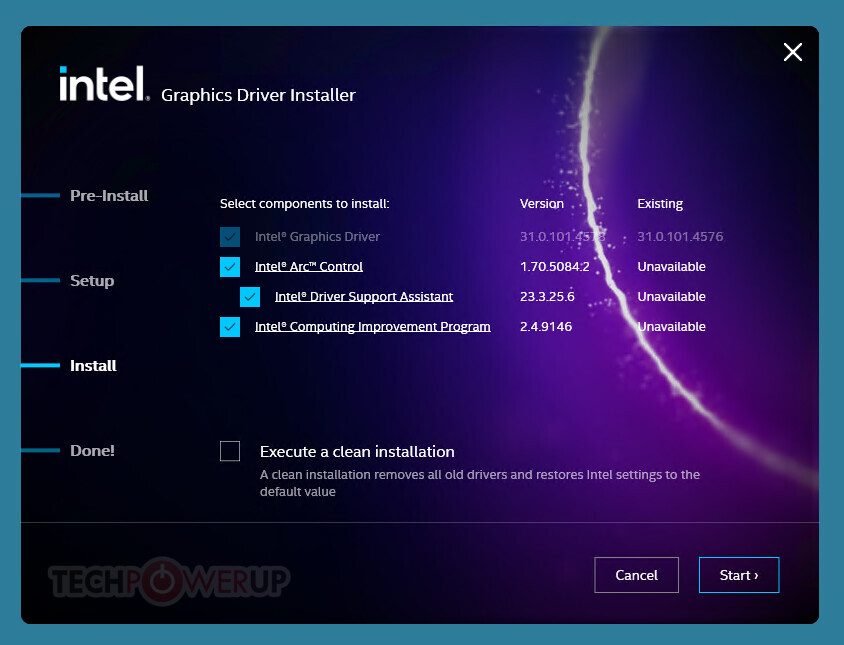
Why the fuck does Intel need to know "the category of websites I visit, but not the URL themselves"? Who defines the categories? We all know that metadata is at this point as important as data.
Stallman was right.
The "Don't be evil" rule.
And yes, Stallman was and is right about a great many things. He will be remembered with respect in the underground general-purpose computing scene of the not-too-distant future.
It is all bollocks. A smoke screen. A slippery slope. It starts with performance metrics and ends with selling user data for profit.
--
1: I am wondering that if you know what category of website an anonymous user is visiting, and what time they open/close the tab, it should be possible for three-letter agencies to uniquely identify you and track you across the internet.
Also, in favor of freedude's position, we may have just not waited long enough to see yet, because unless they're forced to there's no way they'll ever be deleting the data.
No idea what data Nvidia collects but this sounds even more shady.
It gets worse - if you're on Windows and your driver was not installed by an OEM (if it didn't come with the computer, or you reinstalled the OS or something), GeForce Experience wants you to connect to the internet and sign into an Nvidia account to access some features of the graphics card, like ShadowPlay.
Honestly it doesn't even have any critical feature https://www.nvidia.com/en-eu/geforce/geforce-experience/
Edit: Apparently the GeForce Experience that showed up in my search was actually the one that came in the driver support package for my laptop (which I no longer use), I may have never even used it on this computer at all.
Nothing critical no, but all things that, if you don't have and need, have no real alternative.
I do this anyway even though I don't have GFE installed because other components of the driver also try to connect to Nvidia's servers for some reason. Not on my watch.
(Though I wonder if there is some registry key or something to make GFE believe you've logged in, even if it's never connected to the internet. Surely someone would've figured it out by now.)
Exactly. It is a reason I never install it when updating Nvidia drivers (yes I know I'm missing out eg. on shadowplay but I don't use it anyway).
Not sure if anything like OBS implements this or not.
Telemetry on window information, focus times, click spots et al is collected with just the driver.
GeForce experience additionally collects personal information.
events.gfe.nvidia.com lightstep.kaizen.nvidia.com
For the record: I'm a graphics driver engineer myself.
Same how can Google/Meta engineers work at the biggest user tracking ad empires and not be ashamed.
What do you expect them to do? Quit their jobs in protest? Other engineers who need that money will gladly do it. Everyone has their price, not everyone has the luxury of being so picky with their carriers, especially when it comes to having a big name like Intel on your resume. You go to work, implement the tickets assigned to you, then go home, without vocalizing on the ethics of the big picture, is what the vast majority of employees do.
If you want this practice to end you have to legally regulate it, the free market alone doesn't work in favor of the end user's privacy. Without laws and regulations in place, if Intel won't do it, all the other companies would. It's why regulations are important.
Plus, I think half of HN userbase built their wealth or currently works for FAANG companies that make their money from spying, tracking or monetizing user data for ads, so the stone you threw will break a lot of glass here. How do you think they justify it other than "I like money"? So why single out only Intel engineers for what is common place around these parts?
If they can't bring themselves to do what's right, the least they can do is be ashamed of what they're doing.
> So why single out only Intel engineers for what is common place around these parts?
Because this particular example is about Intel. When other companies that do this come into the spotlight, then the same criticism is levelled at the devs enabling them as well. Big picture, Intel's not being singled out.
It isn't. Nobody criticizes those who work at Google or Meta here. There's more talk about maximizing your TC there, than telling people not to work there.
Double standards, probably because Intel doesn't pay as good as Google/Meta so it's easy to throw stones where you don't plan to work anyway, but people stay quiet when it comes to places where they earn their wealth.
For Nvidia you're expected to pay $1000 for a graphics card and then they will collect data on you and send it to their servers even though you didn't choose to use their online services at all.
It probably requires not thinking about it and just following the plan laid out by the PM, which a lot of people are very good at.
How many of us click accept on those annoying cookie dialogs or have an extension do it for them?
And how many take the time to find the reject button and/or install appropriate extensions that will do the rejection?
I'm in the second category but I'm sure the first one is the majority, mostly because they just don't care.
I was never particularly privacy conscious. I was “normal”. Now that my fucking GPU driver spies on me, I think I’m rightfully becoming slowly paranoid about it.
The Yuppie Nuremberg Defense, I've got a mortgage to pay.
I put considerable thought into the ethics of storing data and letting that data get inaccurate and harming people. Same with providing that information to people whose goals actively cause harm.
But I'm here for the war, not the individual battles. I raise objections and sometimes I can make a difference. This is one I'm going to lose most of the time. So I say my bit and do my job in a way that causes as little damage as possible because the next person won't.
Meanwhile, I get paid and live another day to make a difference somewhere else.
And yes, I know exactly where that reasoning leads. I wrote a story with an assassin justifying his actions the same way. There are limits in the amount of damage I'm willing to contribute to, telemetry doesn't cross that line.
So, upper management, government agencies, finance departments, and marketing departments.
These aren't engineering decisions but marketing ones. The role of an engineer is to engineer a solution, not make business decisions. The decision to turn telemetry on by default was not taken by an engineer, so engineers at intel shouldn't feel ashamed of anything at first place.
https://en.wikipedia.org/wiki/Godwin%27s_law
No need to say that how easy it is to brush off that kind of argumentation for the fallacy it is.
And this lack of accountability is exactly why our world is the way it is. Just remember anyone can justify evil behavior if they try hard enough. Why? because people are not basically good by nature. They are basically evil by nature. Observe any 2-3 year old throwing a fit and you might begin to grasp the concept.
There is no "lack of accountability" anywhere in that story. Nothing done here was illegal, nor "evil" which is an unnecessary hyperbole.
Yes, they should, because it's those engineers that are implementing the decision. It doesn't matter even a little whether or not they were one of the decisionmakers.
The engineers implementing things like this should be deeply ashamed.
Edit for FirmwareBurner: I will, after you point out the part of my comment in which I claim that some F500 companies aren't greedy.
The way our capitalist economy functions and CEO compensations are set, encourages nothing but greed and short therm profits at the expense of everything else.
And EU has tried making sites classify and ask for permission for cookie storage.
And maybe mixpanel and Google and cross site tracking should be opt-in for users.
When I'm using an Nvidia graphics card I'm not actively looking to use their web services. I want the graphics card that I bought to work and that's it. The graphics card doesn't improve as a device by connecting to the internet.
I'm mostly playing devil's advocate here, what I truly think is that all monitoring and analytics should require user approval a bit like cookies. E.g.: you visit a website and it would ask for permission to send monitoring data to listed sites.
Is it not?
There are laws that limit your ability to collect certain types of sensitive information without some quasi-meaningful user consent, but most telemetry goes around this by notionally not collecting PII.
The gotcha is that in practice, most companies don't put a whole lot of effort into making sure there's no incidental PII in the telemetry, and no other way to infer who you are. Browsers automatically collect crash reports that, for a good while, might have contained your cookies, URLs, and other goodies in the logs or memory dumps... cars collect "anonymized" telemetry that shows you driving from your single-family home to wherever you're headed... etc.
The problem is that an IP address is considered PII and is inherently sent in any HTTP request, so you could argue that any non-essential request to any third-party should be opt-in since it contains PII.
If you want to be protected for telemetry then you need to advocate for better legislation. Stating that something is covered by the GDPR ultimately masks the issue because it's not against the GDPR and you lose an opportunity to advocate for better legislation to reduce, or kill telemetry.
Whether or not this is compliant depends on the way their installer is set up.
or, it is just another reflection of the "complete and irreversible moral decay that permeates all of society". the decay of any civilization is predictable and irreversible, and not a pretty sight...
I remember months (years?) ago when it was discovered wacom tablet drivers did the same on MacOS; well, not on linux.
The vast majority of third party applications are also sending everything they can access and then some, often far exceeding in scope and nowhere even close to meeting the privacy and security standards as is claimed in the relevant policies.
Telemetry endpoints are increasingly being CNAME masked or called through anynymous proxies. Betraying the customer/user trust this way is absolutely despicable. Shipping normal release channel apps with a Sentry SDK configured to run in debug mode seems to be the new meta for some reason (nothing good, probably).
And then there's Mozilla... Not only are many of their recommended extensions secretly sending telemetry and doing all sorts of other things that violate their extension policies multiple times over (strict verification and thorough code auditing process my arse), but Firefox itself includes UTM and other tracking parameters in its outgoing links to third parties (including all preinstalled search providers) even when "Allow Firefox to send technical and interaction data" is unmistakably set not to allow it.
Things would be different if this software were to have actually improved over time, but in most cases the opposite is true. Thinking about it, the more telemetry an app collects, the faster it seems to deteriorate across the board. An example of two opposites on this spectrum would be VIM vs Spotify.
For Linux users, all that is required is a periodic update to the open source kernel, as well as proprietary firmware blobs, and open source Mesa software, and that's it. If you really feel it necessary to see statistics for your Intel GPU, there is a sysfs interface for doing so, and open source tools readily available to make it easy to view and use these statistics[3].
[1] https://www.intel.com/content/www/us/en/download/726609/inte...
[1] https://www.intel.com/content/www/us/en/products/docs/discre...
[2] https://gitlab.freedesktop.org/drm/igt-gpu-tools/-/blob/mast...
I look forward to the day where one could take such an installer, have AI assistant install it inside a simulator, decode & categorize every byte installed (+ in the installer that goes in), then maps out the function of each byte. Just for giggles.
I'll predict the functionality vs. fluff ratio must be 1:10000 or worse on this thing.
Slipping it into already secret code (proprietary drivers), though, would be a cinch.
So, it's Windows.
But that doesn't make it right if it's done without the user's informed consent.
This sounds like a really bad idea to let it run on your pc. This is basically Spyware, that Scans your (corporate) network too.
Thank you, AI!
Move to Linux. Take a look at NixOS.
It's open source version supports system wide firewall and blocklists. Pretty easy on battery as well.
> We are unilaterally altering the Terms & Conditions for the device you purchased. Pray we don't alter them further.
Give them fire.
The categories of websites you visit, but not the URL itself
Software usage: for example, frequency and duration of application usage such as Intel® Driver & Support Assistant, but not the application content itself such as specific actions or keyboard input.
https://www.intel.com/content/www/us/en/support/topics/idsa-...
Oh man, they left a typo in there. Did anybody catch it? They use the word 'permission' when this is actually selected by default for all users who install their drivers. Hey, that's not how you ask for permission! I would love to see the look on their faces when they realize this mistake.
But I agree with a previous poster. If you're OK with what Windows already then this barely registers. For all we know this one won't even reset the manual opt-out every 6months to a year so it might be a minor annoyance in comparison.
Blame telemetry for collection of unreasonable stuff, not for collecting data that is valuable for software improvement and doesnt violate privacy.
Collecting the categories of websites I visit violates my privacy, full stop, end of discussion.
Just arguing against hate for all telemetry
What if I collect data about the way you use my software?
As a dev im using telemetry to provide better product for my users
That's collecting data about me, my machine, or my use of my machine. If you aren't getting people's informed consent before you do this, you're spying. If you have consent, then that's people sharing data with you and isn't spying.
> As a dev im using telemetry to provide better product for my users
Cool. I'm not saying you shouldn't. I'm just saying that you should ask first.
1) Roll over
2) Reject as much as possible
And who is making that determination? You?
Because all data going out of my system without my explicit and freely-given consent is a violation of my privacy.
But why does a display driver need to know the categories of websites I visit? They have no need for that.
But if you let them all activated you end up with a computer that connect to hundredth of remote hosts constantly.