The Last of the Fungus - Nautilus
A young scientist’s quest to transform a dying way of life.
nautil.us
57 points · by dnetesn · 3y ago · 40 comments
Lasting is a weird weasel word here. Cordyceps are well studied, and they do have acute effects that have been measured in many studies. They increase athletic endurance and are stimulating.
Is the author minimizing the effects to try to prevent the ecological effects of over harvesting?
Most cordyceps supplements today contain cordyceps militaris spawned on grain. Sinensis is sometimes claimed to be more potent than easier-to-cultivate militaris - I wouldnt be surprised if the romanticism of the "wild and rare" version is overblown, but the claim that it doesn't have demonstrable potency seems implausible and strange.
Thank goodness garlic is cheap and easily available, and he doesn't fund some bizarre economy by buying rare, weird-looking foodstuffs with purported magical properties.
But yes - you can add this fungus to the list of rhinoceros horns, shark fins, tiger bones, black bear bile, seahorses etc. etc. (https://www.britannica.com/explore/savingearth/traditional-c...) - the wonders of TCM never cease...
And so does this other review: https://www.ncbi.nlm.nih.gov/pmc/articles/PMC3928210/.
"This trial randomly assigned 146 participants to either an allicin‐containing garlic capsule (dose unspecified) or a placebo (once daily) for 12 weeks. The trial reported 24 occurrences of the common cold in the garlic intervention group compared with 65 in the placebo group (P < 0.001), resulting in fewer days of illness in the garlic group compared with the placebo group (111 versus 366). The number of days to recovery from an occurrence of the common cold was similar in both groups (4.63 versus 5.63)."
Why do you interpret this as "otherwise"?
> In this updated review, we identified eight trials as potentially relevant from our searches. Again, only one trial met the inclusion criteria
The second link is not specific to garlic and the part where garlic is briefly mentioned cites the original review and the same, single, study.
The review's conclusion is, imo, valid. It's that *there is not enough evidence to say there's an effect*. Your comment, and the way people tend to utilize these reviews, clearly conflates the concept of "not enough evidence" with "evidence against".
So effective that we marinate human organs in them during transplants, and add it as standard to all in-vitro tissue culturing?
The (purported) effective compounds in garlic are organosulfur compounds which are actually *in vitro* shown to have antiviral activity. Obviously whether that translate to "in vivo" is much harder to study
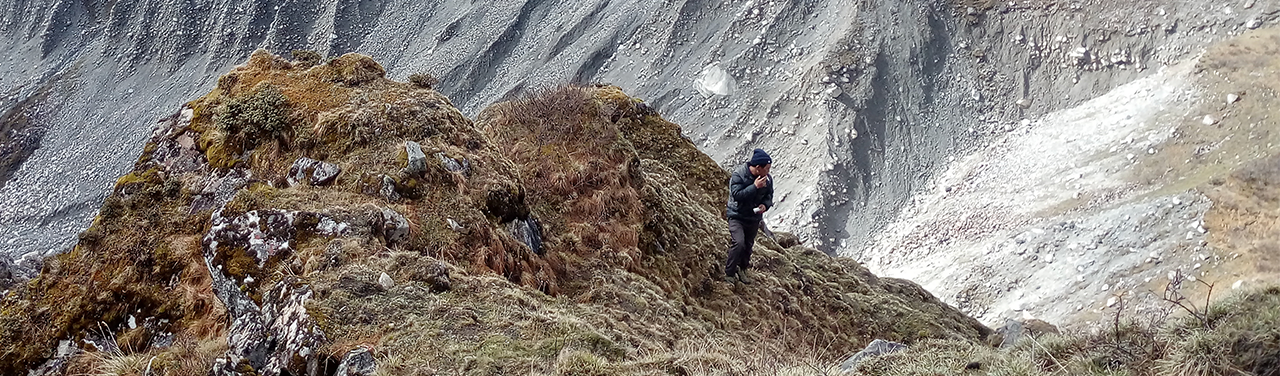
Yeah hiking up in those mountains really sneaks up on you. I work in agriculture scouting fields and so I’m reasonably capable of all day long activity in adverse conditions carrying light equipment.
I started off full throttle “it’s just normal walking on gravel except up a bit”, only to find there’s an invisible wall you cross passing a certain elevation where suddenly exhaustion hits and taking single steps is a big drain. It was actually kind of funny. It’s the kind of sudden exhaustion you get when trying to walk over grown soybeans, but with nothing in the way.
I'm not a TCM believer, but dispassionate studies Stamets mentioned also have shown that growing some fungi on grain vs. hardwood causes large swings in the production of some compounds by the mycelium. "You are what you eat" applies to plenty of things, and I think there's just a huge bias we have that 'some dumb white fuzz' can't have all this hidden complexity.
From the wiki it sounds like it is often also full of toxic metals:
> the fruiting bodies harvested in nature usually contain high amounts of arsenic and other heavy metals, so they are potentially toxic and sales have been strictly regulated by China's State Administration for Market Regulation since 2016.
And this is the first I've heard of it.
This is potentially economically devastating. And I have no idea how to feel about the actual practice, though I'm taken aback at the idea of trying to intentionally parasitize live caterpillars in order to domesticate the product.
If humans figured out sericulture so well I don't doubt they'd make short work of this problem as well