66 points · by sundaeofshock · 3y ago · 86 comments
However, there are industries like aviation that take these issues seriously. They're investigated, reported, and learned from. We need to do the same for autonomous vehicles if they're actually going to be safe. This means we need an open, independent body outside of industry control, like the NTSB or NHTSA that can produce in depth, transparent, and publicly available reports that manufacturers can't bury or buy away.
On the other side, we, the (future) passengers need to be conscious of these safety issues. We need to hold companies accountable for fixing flaws in autonomous vehicles. Airplane accidents can be spectacularly big, which captivates the public. I'm worried that car accidents will just be too small for enough people to care, and therefore we will continue to have a trickle of fatalities in every city and we will never be free from cars.
If you want to be free from cars, build walkable and carless cities people can afford and want to move to. We can then discuss sunsetting mass automobile infra (which is very unlikely, although infra spending can be weighted to more efficient urban development, mass transit, bicycle infra, etc vs automobile centric systems). Until then, the need for autonomous vehicles is an inconvenient truth.
> This means we need an open, independent body outside of industry control, like the NTSB or NHTSA that can produce in depth, transparent, and publicly available reports that manufacturers can't bury or buy away.
Strongly agree.
You're jumping to a quantitative comparison because that's simpler and more obvious, but the right way to think about it is qualitatively.
We have over half a century of understanding of modern human driving patterns. We know the ceiling on the number of accidents/deaths that humans will cause. We know that if it changes, it will change slowly.
AI works differently. An update to code or models wipes out all expectations we've learned from prior versions.
In short, the entire fleet of autonomous vehicles can change behavior overnight with a software update and become murder tanks.
Nothing will ever happen to all human drivers at once. Some small percentage will be drunk at any given time. We'll never all wake up with a new drunk version of ourselves at the same time.
I don't mean to say that autonomous technology could never work in principal. But we know that this SV in practice has too much hubris and too little oversight to deploy sensitive products responsibly, or with attention to any values above profit and growth.
We have a lot of precedent at this point on how to handle new ambiguous human advancements. Typically it goes, discovery, wild west, blood, regulation, standard part of society. Rinse and repeat.
Oh man would I love that, but our legal system makes this nearly impossible, especially when combined with car culture.
It's a guaranteed way to reduce pollution, improve happiness and health, save lives, etc etc etc. But it is easier to solve computer vision than go get cities to ban cars.
I understand the attractiveness of the walk-able city to some. I hope you (and other of your kind) can come to accept that there are others that have different needs for living space.
In fact that is exactly the point of the article, we shouldn't fall into the trap of not worrying about deaths for AI just because we have deaths from humans.
After all part of the problem with human deaths is we consider it normal. If we can avoid that trap with AI we can ensure we do better.
We do not need to sacrifice safety for progress. We don't need mad scientists in the real world. Sanity leads to better results. It doesn't pump the stock price all that well, though.
And never is held responsible, never compensates its victims and never gets punished.
It's anybody's guess. No one knows who will be held responsible. I find it difficult to imagine a so-called "tech" company accepting responsibility for damages, injury or death caused by software, but who knows.
In the one case so far in AZ, Uber was not held criminally liable. Instead an Uber driver plead guilty to negligent homicide. Uber quickly settled the civil case with the victim's family. The amount of the settlment is not public information.
https://www.reuters.com/business/autos-transportation/backup...
https://money.cnn.com/2018/03/29/technology/uber-fatal-crash...
"It will only encourage the lower classes to move about, and this is certainly too big of a step." -- The Duke of Wellington, on railroads.
it also never gets bug free
If everything were to be as safe as aviation the whole world would come to a screeching halt standstill.
And besides they do it to protect the 200M plane not the passengers because those same passengers enter in the subway or a mall or a stadium or a train 15 mins after they disembark from the 200M plane, and they could bring (or face someone with) an assault rifle without facing any screening or x-rays or even an ID check
I don’t like self driving cars but if the bar to plow ahead with deployment of a new tech is commercial aviation post 9/11 then we can call the end of technological improvement already.
(Independently: the bigger reason the FAA and airlines take security seriously is because consumers demand that they do, not just because the planes themselves are expensive. Humans are notoriously bad at estimating risk.)
Give only a small fraction of people the ability to drive after significant training, and make driving their full time job, and you'll probably see crashes decline significantly.
Because physics gives it such a huge advantage that it allows aviation to sit on its lead and waste some speed to pursue safety and still beat trains even where trains are very efficient and dense such as Europe. It remains to be seen what will happen now that Japan is about to enter a phase of quasi-jet speed type trains.
The fact that every time you board on a plane you are treated like a criminal who is about to enter prision is unacceptable and would have never been unacceptable in the 1980s regardless of what would have happened terrorism-wise. Matter of fact the 80s were the peak era of terrorism
> > consumers demand that they do....Humans are notoriously bad at estimating risk
Of course....and of course. A rational person's preoccupation should be reducing the chances to die from any cause, because once you are dead it's not that important what was the cause, doesn't it? It's very irrational to put heavy pressure on airlines and airports when 15 minutes after you exit from the terminal you enter in a mall and some neo-Nazi can absolutely blow up your brain with an assault rifle they bought without having to do not even an ID check, and I mean blow you up to the tune that your family members cannot even hold an open casket cerimony.
> > it's unclear why private cars get put in the "acceptably dangerous"
Because driving is a very powerful action, you turn the wheel right and the car goes right, turn left and it goes left, accelerate and it will speed up, break and it will come to a halt. It makes people feel very powerful and in control, people feel in control not only conceptually but in a limbic way, so they demand way less safety standards.
Trains don't give that feeling because people aren't driving but people can at least wrap their minds around trains as vehicles, commercial passenger planes look so big and feel so gross and non suitable for flight that people are very suspicious of them. Nobody is afraid of cars, trains or ships, but fear of flight is one of the most common fears. Commercial passenger plaens after 9/11 forget about it you get to the aforementioned current day scenario where you are treated like a criminal every time you are boarding a plane
It’s probably best we return to the tried, true, and most importantly safe system: leaded gasoline.
Trains are just about as safe as planes. Busses too. It's really just cars that are a major outlier. [1]
[1] https://injuryfacts.nsc.org/home-and-community/safety-topics...
You do not need to uniformly improve all elements to the same high standards as long as you can isolate them from the safety-critical path. This is a necessity because, as you point out, doing everything to the high standards is economically infeasible. But doing everything to economical standards is mass murder. No one standard works for the entire system, so you must isolate and apply the correct amount of effort for each component.
This is a very weird concept for most software developers because most software is a big mushy ball of spaghetti where it is impossible to isolate or even identify the critical path. Luckily, those individuals largely do not develop safety-critical systems, so the lack of knowledge of basic safety processes does not hinder their deployments or result in a danger to public safety.
What is problematic is when those people start doing safety critical systems. That is how you get the ideas being satirized by the article. Acting as if there is nothing in between total recklessness and impossibly perfect safety, so there is no choice but criminal recklessness. Basic industry-standard processes are, in fact, like 6 orders of magnitude safer during development and increase development velocity toward a safe, working product.
Any viewpoint as insane as normalizing deaths during the development process is totally incompatible with successfully deploying a safety critical product. Deaths may be unavoidable due to the sheer weight of statistics, but deaths are always a failure of immense gravity. A flippant disregard for human life has no place on a safety critical product.
The original Al Quaeda plan for the WTC was to detonate explosives to tear it down, they tried in the 90s but of course they were so inept that they just made a huge mess in the parking lot.
However let's say they succeded. Do you think we'd have checkpoints looking for explosives (or even components to make explosives) while entering Manhattan and all the 1000 odd major global cities which exceed 1M population?
There is a thing with flight. Planes look so big and so gross and like they should not be able to fly and so people are scared of them, fear of flight is one of the most common fear.
In the post 9/11 world add to that being under a plane, in the proximity of a plane or in a builing from which a plane can be seen.
None of this stuff happens with trains and they too can kill thousands.
We haven't done this with people because there's not much to investigate; someone drinks, drives, and crashes, there's not much to gain from serious scientific investigation here. Autonomous vehicles are different and we would benefit from more focused scientific investigation of autonomous vehicle accidents.
Don't we even just start getting a chance at doing that with autonomous vehicles? When a car crash happens and driver is found at fault, we can say "let's fix driver training to prevent this from happening again!" but humans are diverse, many don't pay attention in driver's ed, and they retain learnings at different rates, so this isn't going to work very well. With a self driving car, at least, since the software is replicated in many vehicles (while humans aren't), we have an actual chance improving on the situation over time.
>"Let’s say that autonomous cars slash overall traffic-fatality rates by half. So instead of 32,000 drivers, passengers, and pedestrians killed every year, robotic vehicles save 16,000 lives per year and prevent many more injuries.
>"But here’s the thing. Those 16,000 lives are unlikely to all be the same ones lost in an alternate world without robot cars. When we say autonomous cars can slash fatality rates by half, we really mean that they can save a net total of 16,000 lives a year: for example, saving 20,000 people but still being implicated in 4,000 new deaths."
[0]https://www.wired.com/2013/07/the-surprising-ethics-of-robot...
[1]: https://www.nytimes.com/2023/09/02/technology/driverless-car...
Was the driver charged? Did the street design contribute? Nobody cares, because apparently a few dozen San Franciscans' lives per year are a worthwhile sacrifice to save suburbanites a few minutes on their commute.
The real problem is that tech companies are moving faster than infrastructure and governance can keep up. This is a mark of hubris that, if unchecked, will ultimately result in self-inflicted knee jerk regulations that have the potential to all but cripple to the self-driving car industry.
I don’t agree that self-driving cars need to be regulated into the ground because of little mishaps like this. It doesn’t upset me much that there was a mistake. But what is significantly more distressing is the general impression that these companies don’t give a fuck about taking responsibility for this. I don’t think it is unreasonable at all to say “you fucked this up, your fleet is grounded until our investigation is over and you can prove safeguards have been put into place to prevent this from happening again”.
To the above point about treating this like plane crashes etc, the NTSB doesn’t skip out on analysis because of the actual impact, it considers what is the possible impacts of something going wrong. So if your jet engine blows up mid flight but you still manage to safely land, they treat that with the same due process as if it killed a plane full of people. The same applies to these self-driving car companies, and why it’s such s ridiculous distraction to even bring up what business the ambulance had to why. It doesn’t matter. These cars need to yield. And until they can they need to be immediately pulled from the roads.
This is a garbage headline meant to garner clicks. The city has been complaining about these cars for a while. They've never had any data and now are trying to complain about "x incidents where an AV interfered with emergency vehicles." They're banking on the headlines, and then they'll bring up whatever number they could passably claim in the next letter/meeting they have with the DMV.
I can't find this admission in the article. The article includes a quote from a Cruise rep saying that the ambulance "was never impeded," but this appears to be in the context of the first responders having to move one of their own vehicles so that the ambulance could leave (second graf).
In other words: Cruise's argument appears to be "we didn't block you because you found another way out." That wouldn't be an acceptable argument from a human driver at an accident scene; it it's an acceptable on from a self-driving car company.
This is already the case, at least in the US. Most of our car-centric cities didn't start out that way; they were systematically converted into car-centric environments by dismantling public transit systems and replacing them with highways and surface-level parking.
Examples: Sioux City[1]; Albany[2]; Boise[3].
[1]: https://www.siouxcitymuseum.org/history-website/transportati...
[2]: https://www.timesunion.com/living/article/The-evolution-of-t...
[3]: https://www.boisestate.edu/sps-urban/urban-resources/trolley...
Cars are on the precipice of both becoming immensely greener (electric) and immensely more practical (self-driving) than the status-quo. The transit-equilibrium is going to shortly and rapidly shift towards cars, not away from them.
Creating an electric car battery emits as much CO2 as creating a whole new gas vehicle from scratch. Depending on the size of the battery and on the green-ness of the grid it's attached to, it takes anywhere from 20,000 to 90,000 miles of driving an EV to reach break-even against a gasoline car. Then it has to be replaced after 100-200,000 miles. Then there's the environmental impact of lithium, copper, etc, extraction.
Of course you have to consider that private ownership requirements and mandating parking minimums, free parking, etc, are a massive regressive burden on the poor. Between fuel/power, maintenance, insurance, tickets, tolls, parking, interest, payments, etc, you're liable to spend a half million dollars over your life on your car.
Why? Why not retire sooner, or leave more to your kids?
Freedom is your ability to go anywhere you want any time you want, it shouldn't be defined by your ownership of a very expensive metal box.
The environmental benefits are quite likely to be wiped out by the growth of the car market in for instance India and China.
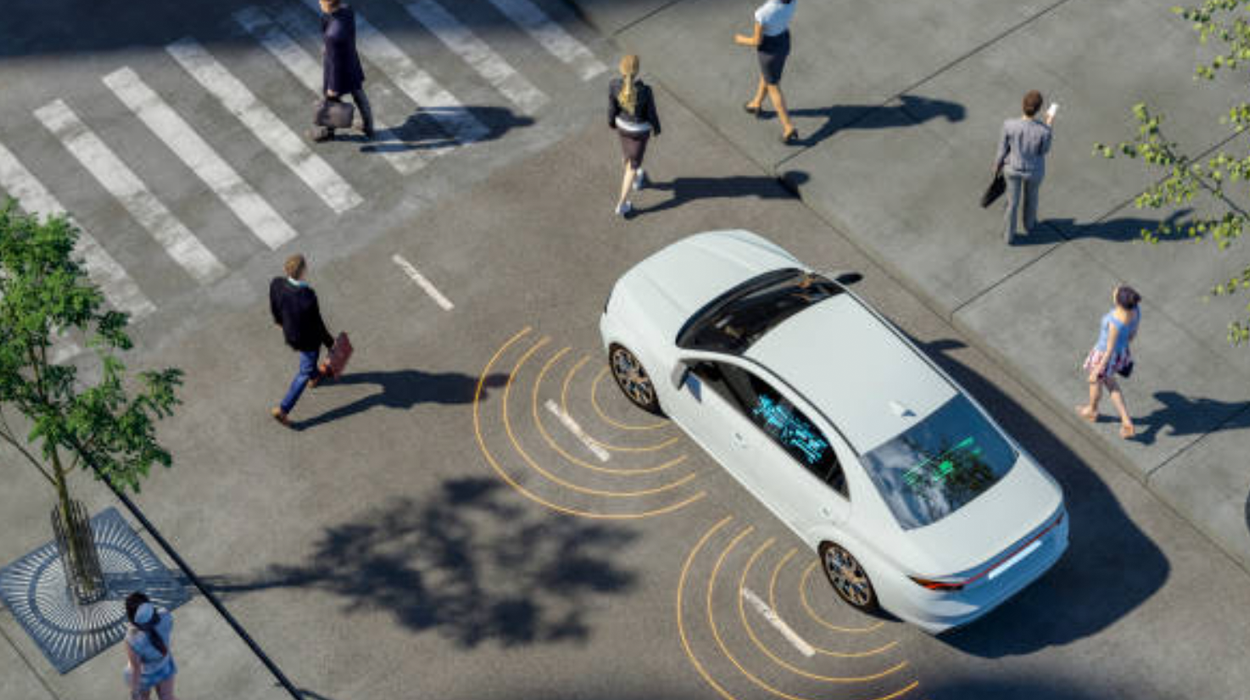
Reason being, while satire the rest could hold true. Mistakes will happen from cars, but mistakes happen from people anyway. Now this line quoted above is just incorrect. The average automated driver is going to cause many less deaths and the average human driver. That is the thing that is so frustrating about this type of talk putting down automated driving. Automated driving (from my understanding) is already safer than human driving, we just don't accept deaths from automated driving but we do from human driving.
The line seems more correct if it was written: "This stuff isn’t easy, and before we get to a world with zero traffic deaths, we’ll—briefly, decrease the number of traffic deaths, but not to zero and mistakes will be made. We feel really bad about that."
That is certainly a more true statement than the one in the article.
In 1970, there were about 26 traffic fatalities per 100,000. Today, that number is down over 50% to 12. We are doing something right.
That's to say that we have done some things right, but that it's premature to assume that we've done all we can. We can, and should, go further (including but not limited to traffic calming, disincentivizing driving where it makes sense, and making the legal and educational requirements for driving similar to those in European countries.)
[1]: https://en.wikipedia.org/wiki/Seat_belt_laws_in_the_United_S...
[2]: https://www.autonews.com/cars-concepts-history/us-frontal-ai...
By and large, they're substantially stricter. Using Germany as an example[1]: they require potential drivers to take a multi-segment first aid, submit to a recent optical exam, and perform at least 37 hours of officially overseen driving practice. I believe there are additional training segments that German drivers are required to pass as well, but I'll let an actual German (or other European) speak about those.
For contrast: in New York (a somewhat strict state, by US standards), there is no hours of practice requirement once you're over 18. I don't believe there's a medical knowledge requirement either, and the DMV accepts whatever optical record you give them.
Germany's car fatality rate is roughly a quarter of the US's[2].
[1]: https://en.wikipedia.org/wiki/Driving_licence_in_Germany
[2]: https://en.wikipedia.org/wiki/List_of_countries_by_traffic-r...
The one exception to this is danger to others, modern cars are probably more dangerous to pedestrians than cars in 1976.
They're only dangerous where they're getting hit by cars. If you're doing a handful miles an hour with a helmet on it's pretty hard to get actually hurt.
https://www.vox.com/23784549/pedestrian-deaths-traffic-safet...
Remove car dependence and invest more in public infrastructure.
There will always be cars.