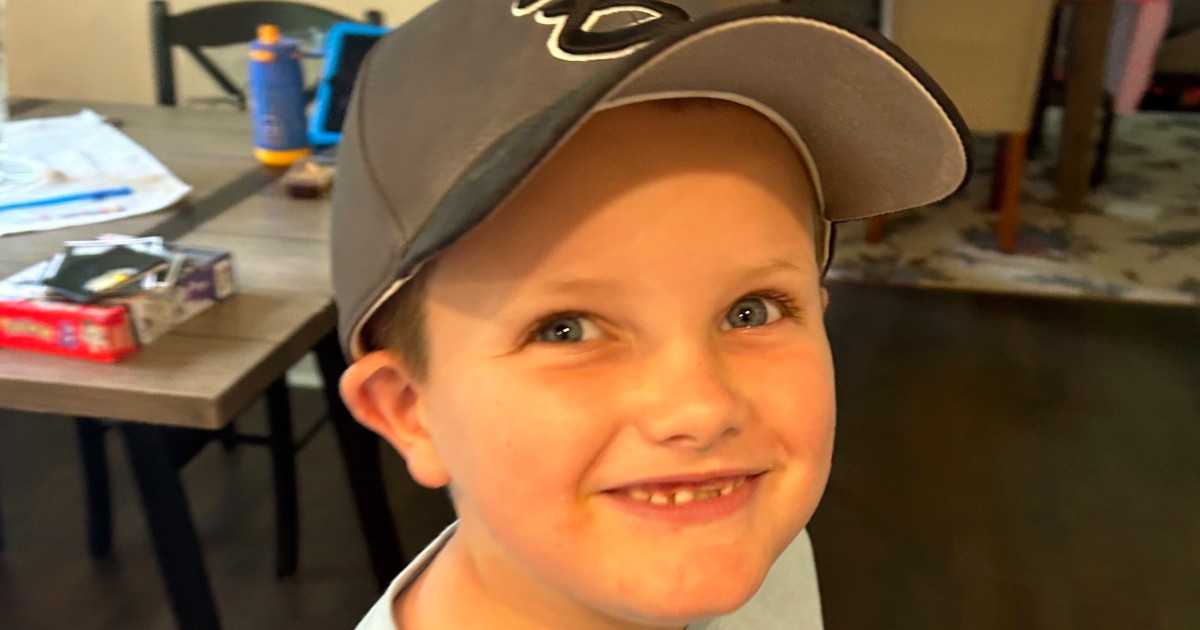
A boy saw 17 doctors over 3 years for chronic pain. ChatGPT found the diagnosis
Alex experienced pain that stopped him from playing with other children but doctors had no answers to why. His frustrated mom asked ChatGPT for help.
TODAY.com
109 points · by birriel · 3y ago · 147 comments
Now I'm not saying that back in the day all doctors were Gregory House or holders of forgotten knowledge, but I have to think that the lower pressure to make medicine behave like a business and deeper ties one would form with their patients would've benefitted this family. For this to have gone on for three years without getting escalated to the attention of one of the real-life Dr. Houses out there is appalling. I feel like ChatGPT got the answer right because it allowed her to input all of the minor observations from the charts; perhaps had the doctors done likewise they'd have connected the dots as well.
When I was growing up and in my early 20s you went to the doctor and they got you talking about your life, teasing out the observations you had on your own life and addressed things from there. Then about 15 years ago everything changed and doctor visits became this twisted form of speed dating where you never see the same person twice and any question or answer that takes longer than ten seconds to express is taboo. I hate it, and I can't believe that we keep moving along like it's acceptable.
More likely that they heard hoofbeats and were content to use the effectiveness of their treatment plan as another diagnostic signal.
> When I was growing up and in my early 20s you went to the doctor and they got you talking about your life, teasing out the observations you had on your own life and addressed things from there
The history and physical are a critical part of every exam. But much less so at an urgent care where they intentionally disavow long term health to focus explicitly on acute issues.
1) the ulcer is deep enough that you can see the muscle below the skin fat layer (she said it no longer needed dressing!)
2) it has looked that way with nearly no change at all for nearly 3 months[1] (expected heal time is roughly 7 weeks)
3) there is a large area around the wound that is still red and inflamed (ulcers are not even regarded as healing until the inflammation is gone)
I've had to go for private care and I am currently scheduled in for minor surgery to see if a foreign object caused the ulcer and is still present, preventing it from healing. Probably no surprise to you, dear reader, that I am pursuing a case of medical negligence against the doctor.
[1] When I pointed this out to her, she said she "didn't have a crystal ball, so [she doesn't] know what will happen in the next week or month". Literally nonsense due to being a non-sequitur. I was informing about the past, not asking about the future.
It was shocking to me that I heard about family mythos from my kindly old doctor. Luckily it was followed up with a lollipop to soothe me.
The lack of residency positions is the result of lobbying by the AMA. What it the American medical association?
In there words:
"The American Medical Association, founded in 1847, represents more than 190 state societies and medical specialty associations, including internal medicine, family physicians, obstetricians and gynecologists, pediatric and emergency medicine. The AMA is the largest association of physicians—both MDs and DOs—and medical students in the U.S. Our mission is to “promote the art and science of medicine and the betterment of public health.”
It's a doctors old boys club and you can join if you're a doctor.
Here's more evidence:
https://med.fsu.edu/sites/default/files/news-publications/pr...
The low supply of doctors is not a free market phenomenon. It is the result of deliberate cartel policies of the AMA for self interest.
Keep in mind an over supply of doctors is generally a good thing for society. Not a good thing for doctors who want to be super rich.
Don't go with your inclination. Go with evidence and logic.
I posted a reply to another person with this:
https://news.ycombinator.com/item?id=37476974
It's not well known but the root cause is cartel like policies of the AMA. Becoming a doctor (only in the US) is one of the most gate-kept professions in the world.
I personally think money have no business (pun intended) in medicine. I would go as far as say that if a trillionaire parent have a sick child that have a disease that requires 1 trillion dollar to cure, the procedure should not go through and that is immoral. Which is to say that at a governmental/societal level, yes, money should absolutely be considered and allocations should be discussed. But when it comes to each individuals, money shouldn't be considered at all.
You don't increase it to the point of desperation where they resort to malpractice. You increase the supply until the cost and supply becomes inline with other 1st world countries where Doctors have reasonable salaries.
Additionally the low quality of care in the US actually comes from overwork. Doctors are inundated with patients and no amount of money can increase the productivity a single person. To do work effectively the industry actually needs more people.
The overabundance of patients is what's causing the apathy the GP is witnessing above. It's easy for a doctor to feel empathy and deliver quality care for a low number of patients. For 400 patients a day? They could give a shit. Pretty soon they become desensitized and the whole thing becomes a numbers game.
I think at the moment using AI would lead to the perception that the doctor is incompetent.
But I would always rather a doctor who consulted AI and then overlaid their personal experience and expertise to rule in and out what the AI suggests.
The idea that any/every doctor knows everything, or even could know everything is so false and wrong and out of date.
There is probably a business opportunity in this somehow, for "AI first doctors" - their target customers being people who want the best human advice PLUS the best AI advice.
Yes, and I think malpractice suits can work well here. If a doctor misdiagnoses a patient, leading to an injury, s/he needs to be able to document that an AI system was consulted and the AI-generated diagnosis was checked or considered. Maybe there's a good reason to discard the AI's suggestion, but you better at least have asked the AI, or you're going to slapped with a big malpractice penalty.
> In a cringe-inducing court hearing, a lawyer who relied on A.I. to craft a motion full of made-up case law said he “did not comprehend” that the chat bot could lead him astray.
> For nearly two hours Thursday, Mr. Schwartz was grilled by a judge in a hearing ordered after the disclosure that the lawyer had created a legal brief for a case in Federal District Court that was filled with fake judicial opinions and legal citations, all generated by ChatGPT. The judge, P. Kevin Castel, said he would now consider whether to impose sanctions on Mr. Schwartz and his partner, Peter LoDuca, whose name was on the brief.
I know who wins that, but there will be many pounds of flesh rent on the field in the meantime.
There are numerous examples, in popular culture, of geniuses working with AI assistants. This shouldn't be a difficult bridge to sell. Particularly if the patient can witness the whole conversation, possibly even feel involved in it.
I think patients would like doctors or nurses or nurse practitioners or whatever their insurance pays for . . . to pay attention to them and actually listen and care. Maybe AIs "do it better" in that case.
If computer systems care more about us than other human beings, the problem is not the computer systems.
Then it's the patients that are stupid. i've seen my GP check some very specific vaccines / test procedures on the main gov body website and I was like "hey at least he's not making things up".
General medicine is not tailored for specific cases so AI is more than filling a need. It may be doing the job in the future.
The goal is to get AI to be superior to doctors such that AI replaces doctors.
AI should augment your skill such that the doctor is no longer needed. The problem with the US medical system is that they hold your life hostage then rip you off. Make no mistake people attribute this to complexity and other bullshit but the money ends up in the pockets of administrators and doctors.
You want to fix the system? Attack the root. Replace doctors.
But at the same time it's also the precursor to the thing that replaces programmers.
sed 's/doctor/programmer/g'Which will never happen. Controlling access to power/information is too important.
But the free market is the one that makes the rules here. If it can be replaced, it will, whether it deserves to be replaced is irrelevant.
The doctor part is a side effect. An emergent property. I can just imagine google running a powerful AI in the future and just using ads to fund the whole thing and the thing just completely demolishes the medical diagnosis industry just as an emergent side effect.
> But both seem to work better than the average symptom checker or Google as a diagnostic tool. “It’s a super high-powered medical search engine,” Beam says.
Which is, arguably, more of an indictment of how bad Google's search capabilities are in 2023 than anything else.
Not sure what's ChatGPT-specific here
You may as well hear the story of William Kamkwamba building a wind turbine for his village and say "Not sure what's African-village specific here. People have been building wind turbines all over the world with various resources."
Similarly, the real moral of the article is that doctors miss things and doing independent research, whether that's ChatGPT, Google, Bing, Yandex, or reading research papers yourself is sometimes necessary.
Go has been around for quite a while now. ChatGPT relatively has not. If Go was still quite new and people were unsure of it, then your article headline actually does makes sense.
For people such as myself, it is not obvious that ChatGPT could do such things, hence the headline is useful context.
Clearly chatGPT has flaws. Clearly it's more than a search engine. And clearly there's a large contingent of people who don't want to think it's anything more than a search engine. Probably was Bizarre when the hype first started but now these people in denial are a dime a dozen, as cliche as the people they want to bring down.
ChatGPT synthesized its result from multiple sources and communicated that - no source existed which understood the connections between various symptoms. This is exactly the thing that the mother was quoted at one point - every doctor was looking at things from their specialization and not holistically.
Is this true? Or is the source that had all of the symptoms buried under WebMD/MayoClinic SEO spam?
But it really feels like Google's entire ecosystem is collapsing rapidly as seo bots cannibalize it. Ad-supported content is a local optima that LLMs will thankfully destroy.
With, of course, a corresponding increse in patients thinking they've discovered their own diseases.
For every "ChatGPT diagnosed my rare illness" story there's a "the Internet helped me find a bunch of people who are certain I've got Morgellons and chronic lyme".
Perhaps this was the camp of AI that thought you could just build a decision tree (top down) ... that appears to have failed?
Instead the bottom-up (neural networked) AI seems to be winning out.
I wonder though if a ChatGPT would have been possible in 1985 with no rich internet to feed it data. I wonder if it would have been possible with even 2000 internet?
In practice they are basically simplified programming languages. If this, then that. The application of rules can lead to surprising emergent behavior. You might be able to find a pattern in it but you’re more likely to get wrong results and need to update the rule set.
There is also the problem of inputs. You end up needing to be an “expert” on the system to get good results.
That’s what I was thinking about when I mentioned emergent behavior.
The “fuzziness” of expert systems fascinates me. :)
We use them at work for the diagnosis of mechanical parts rather than human bodies. We don't call them expert systems but they are exactly that. There is a database of potential failures, repairs and verifications, and it will suggest a troubleshooting procedure taking cost into account. It means that it may try unlikely causes first if they are easy to check. It also has simple learning capabilities.
The problem with expert systems is that it needs a curated and complete database. It is possible to do with mechanical parts as they are well specified and failure modes are well documented. The top-down approach comes naturally because that's how components in a mechanical system are designed. By comparison, human bodies are a complex mess.
As for ChatGPT, it is a pure product of technical advances. Neural networks are an old idea, they knew about the theory in the 60s, and we had implementations in the 80s. The problem is that with little data and limited computing power, they were little more than toys. They have been made practical in the last few years only because of the "rich internet" on one side and lots of powerful GPUs on the other. And the way I understand it, recent advances in deep learning technology is not really fundamental research, more like trying a bunch of stuff and see what sticks, again made possible by lots of data and computing power.
What do you mean by ... winning out? It seems to have made one novel diagnosis, which is great for the individual in question. But how many times has it diagnosed something completely absurd? What's the ratio of signal to noise here?
If it's anything like trying to use it to solve difficult engineering problems it must have hallucinated turbocancer hundreds of times over.
Symbolic AI has been less performant than NN AI for decades now and by a large margin. Language, speech, images etc.
>It seems to have made one novel diagnosis
Ok so let's get this out the way. GPT-4 is good at diagnosis
https://www.ncbi.nlm.nih.gov/pmc/articles/PMC10425828/
>Six patients 65 years or older (2 women and 4 men) were included in the analysis. The accuracy of the primary diagnoses made by GPT-4, clinicians, and Isabel DDx Companion was 4 of 6 patients (66.7%), 2 of 6 patients (33.3%), and 0 patients, respectively. If including differential diagnoses, the accuracy was 5 of 6 (83.3%) for GPT-4, 3 of 6 (50.0%) for clinicians, and 2 of 6 (33.3%) for Isabel DDx Companion
The point isn’t to replace doctors but to empower them. They still need to come up with tests to rule out conditions.
We also have an algorithm for the tests: information gain. If you think of diagnosis like a game of Guess Who, we need to come up with tests which can narrow down the space of possible conditions. (It’s a bit more complicated of course since tests have a margin of error too.)
The thing is, a model doesn't have to be accurate to be useful. Expert-derived systems tend to operate closer to how doctors understand the problem, making them more interpretable.
If all a doctor is doing is following a flow chart, you can be damn sure that a machine programmed with the same flow chart would do it more effectively.
Not the first in the tome, but pg 240[2] contains a great example of such a decision tree.
1. https://archive.org/details/harrisons-principles-of-internal...
2. https://archive.org/details/harrisons-principles-of-internal...
I don't think humans do that in the same way as code would. And why would they? That's exactly how they're more valuable!
I think we can safely bet that doctors will be using these systems to generate suggestions (human in the loop) very soon, but making the diagnosis reliable enough that you’d take the human out of the loop could be extremely challenging.
Doesn't this kind of summarize the article? She went to 17 doctors who did not know about the illness. ChatGPT pointed her to a competent individual who immediately diagnosed it. My understanding is that ChatGPT's diagnosis is wrong because tethered cord syndrome typically occurs after a surgery to correct a spinal bifida which is what the neurosurgeon diagnosed.
>She eventually found tethered cord syndrome and joined a Facebook group for families of children with it. Their stories sounded like Alex's. She scheduled an appointment with a new neurosurgeon and told her she suspected Alex had tethered cord syndrome. The doctor looked at his MRI images and knew exactly what was wrong with Alex.
Notice how it gets very vague about the timing and specificity. It seems not that ChatGPT diagnosed tethered cord as tethered cord but that it happened to come up in one of the many chat sessions that led to the mother doing a deeper investigation of that.
Matched almost exactly. My dad said it was very impressive. Great software.
I was most impressed that I could simply cut and paste lab results from a PDF, with its wonky formatting, and it still interpreted everything correctly.
(It's good this article is on HN, but I don't like this reporting)
I'm sorry. But this is exactly what occured. Doctors failed to do their job. That mother payed money and wasted time and got nothing. That is unilateral and categorical failure of all Doctors involved.
Are they refunding her money for failing? Are they refunding her insurance company? No?
Then it's not just about doing their job properly. It's about theft. This is no different from a hospital charging 100k for 1 day of care.
Tell it like it is, doctors aren't doing their job properly.
I am sure we are not getting rid of actual doctors anytime soon, but having AI as a “co-pilot” would be immensely beneficial.
The article also mentions that the kid didn't have the symptoms or physical manifestations of spina bifida, complicating the diagnosis.
This case reads as a genuinely difficult case to diagnose.
It’s been possible to google this stuff for a long time but you need to know how to use a search engine. And the results have slowly been getting worse over time.
ChatGPT adds another dimension to search. It’s not an oracle of truth but it can point you to things you would have thought of.
If it does matter then what might you propose? Hint: to be viable it must involve some professional class interest making bank.
https://en.m.wikipedia.org/wiki/Tethered_spinal_cord_syndrom...
She didn't consult ChatGPT and then start feeding her kid Tide pods. She took the diagnosis to a doctor. This is fine. This is productive. One could argue it wastes doctors' time, but in this case, it clearly didn't; our traditional random-search system did.
This article is on the media because Doctors claim they're good and effective. But when a unreliable product beats doctors it turns their claim on it's head.
This article isn't saying anything about chatGPT we don't already know. It's saying something damning about doctors.
[1]https://www.sciencedirect.com/science/article/pii/S019606442...
Humans can be held to account by other humans if investigations are necessary to explain their own decisions transparently.
LLMs such as Med-PaLM, ChatGPT, and fundamentally all LLMs are non-deterministic and are unpredictable in whatever they give as their output, which is much more unreliable and cannot reason or explain themselves transparently why they decide to output their responses, but shuffle and reword their sentences randomly to make themselves appear coherent to the untrained eye, but when scrutinised by a professional, it is mostly garbage.
You would not seriously trust an AI to pilot a plane end to end without any human pilots on board or a FSD system to drive you from A to B whilst you sit at the back seat.
Doctors at least make a best effort.
For each guess in its diagnosis that is correct, there are around 1,000 incorrect suggestions that it makes, hence why it is untrustworthy in its diagnosis and for every answer it gives it lacks transparent reasoning, making it close to dangerous to rely on for medical advice.
Also there have been studies: https://www.sciencedirect.com/science/article/abs/pii/S01960...
It also appears that this 'research' study is quite frankly a surface level one with an extremely low sample size of 30 rather than the 1,000 sample size you suggested in your example.
So I can only dismiss that study since it is not sufficient enough to result in conclusive evidence of reliability.
> “It’s a super high-powered medical search engine,” Beam says.
NO IT IS NOT. THAT IS NOT WHAT IT IS AT ALL. How dare they publish this for a general audience.
I'm sure Today will also publish all the stories of mothers who kill their kids because they use ChatGPT like those infamous lawyers did a few months ago.
Shameful.