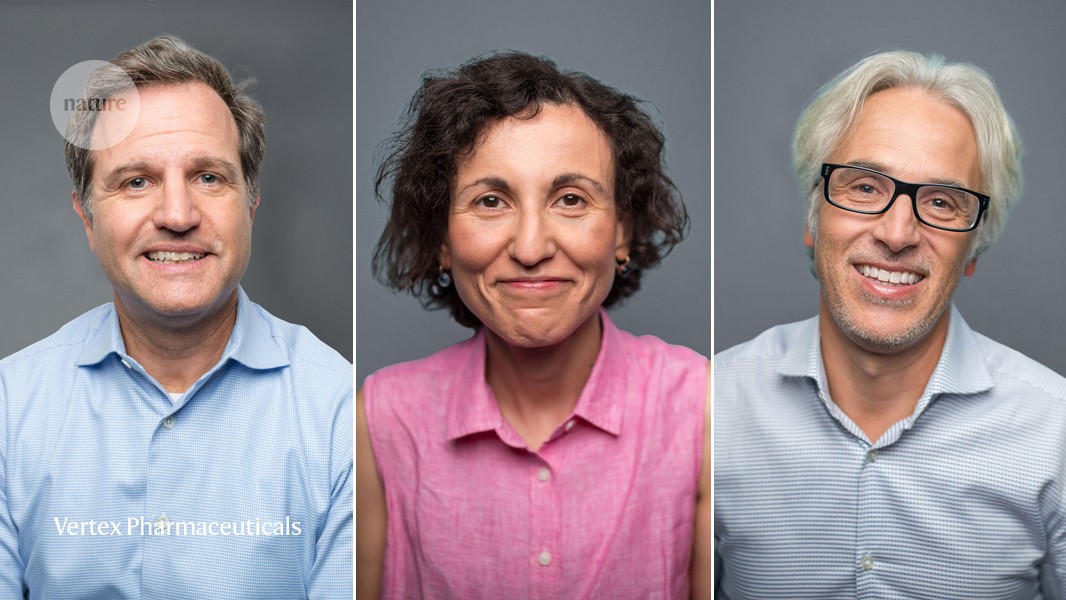
Life-changing cystic fibrosis treatment wins US$3-million Breakthrough Prize
Trio of scientists who developed the combination drug Trikafta are among the winners of five major awards in life sciences, physics and mathematics.
nature.com
412 points · by Bender · 3y ago · 194 comments
Before Trikafta, I usually had a 5+ day stay in the hospital every year, and sometimes I have would very stubborn respiratory infections that just wouldn't go away. I was mentally preparing myself for inevitable decline and eventual death.
Trikafta changed my situation dramatically. I've had no hospitalizations, and most the classic CF symptoms are either gone or extremely diminished. It can't undo a life of damage to things like my pancreas, vas deferens, etc, and I still take medicine to digest my food, but overall, it's as close to "normal" as I could hope for at this point.
The only real downside: weight gain. With CF the pancreas is blocked, so you lack in digestive enzymes, and it's a struggle to maintain a healthy enough weight to battle respiratory infections. After Trikafta, I gained some 30 pounds, and have a big belly on my small frame, and went up some 6 inches in the waist. To add insult to injury, it happened during the spring and summer of 2020, when buying clothes was a challenge due to the pandemic.
Speaking of the pandemic, the timing of Trikafta was amazing: it kept the normally full "CF floors" of hospitals empty, opening up those beds for those with COVID and keeping CF patients less exposed.
One side effect I should mention: many report extreme anxiety. However, I was starting an anxiety medication for the first time (something I should have done 20 years ago, but alas ...) and so those effects were muted or hidden to me.
Personally, I suffered from an extreme case of eczema my whole life, which left me effectively a disabled person. Although eczema doesn't have a significant effect on life-expectancy, there wasn't all that much to live for, and I had basically given up on being able to do normal things like exercise or travel.
So it was very surprising to "hear the good news" that Dupixent(https://en.wikipedia.org/wiki/Dupilumab) was being released in 2017 (also fast tracked as a breakthrough therapy), I got on it, and it's made me 98% a normal person.
Here's to continued funding for new miracle medicines to help more groups of sufferers.
Yes, the worst was a period of months when I was effectively a burn victim (>70% of body with severe bleeding sores, and fully bedridden). The worst part was that, unlike with a burn victim, it wasn't clear to me if I would ever heal out of it.
Luckily it got a bit better to at least get out of bed, and then Dupixent came along a few years later.
Fexofenadine became available OTC available in the UK in 2020 and the pharmacist suggested I try it. I don't even carry tissues anymore during the summer months. If I ever miss a day though, it's immediately obvious.
It's not life or death, or anything like it, but it's a wild improvement in my qualify of life.
Every new cure discovered also frees up resources to perform more research on the remaining deadly diseases.
Cancer, of course, being the big one.
I assume you meant "injections" :)
For the value that Dupixent provides for me (effectively infinite), I'd do just about anything. So the injections don't bother me at all.
Though injections do make international travel a bit more complicated. Daily-pill eczema treatments would definitely be more convenient in that respect!
Reading your experience makes me so happy that people with CF are finally seeing a light of hope in their experiences. You do all the walks, donate the money, remind people this disease exists and it’s so destructive but it always kind of felt like science wasn’t throwing a lot of energy into CF, so I’m so glad to see this development. I’m so happy for you. I wish my brother could have had that chance, but I imagine, given his incredibly generous nature, he’d be just as happy for all the CF survivors today who now have a fighting chance.
I don’t know very much about CF so I took the opportunity to read a little about it.
A hunch struck me that CF seemed like a disease where N-acetylcysteine might be useful (NAC). Have had good and unexpected results with NAC in relation to Type 1 diabetes; not widely used in that context afaik but recent literature describes mechanisms and benefits.
NAC is quite strange. Does a lot of things and works for a lot of stuff. Enough to seem a bit implausibly effective. It’s a mucolytic antioxidant which also replenishes certain important biological precursors and also has an effect on histamine and mast cells somehow, not just through being mucolytic (“slime-dissolving”). And more iirc. Just… does a lot.
There’s literature on positive effects in congestion, anxiety, diabetes, placental health, brain damage from methamphetamine poisoning in rats (!), COVID illness and recovery, and on and on. As I said it seems kinda implausible how widely NAC seems to help. I’ve seen it have very clear and obvious benefits. T1 diabetes isn’t really something you can delude yourself about; no bargaining with it.
As I read about CF I thought of NAC. I didn’t seem mention of it on the Wikipedia page for CF, but a Google Scholar search turned up some recent papers.
‘N-acetylcysteine (NAC) and Its Role in Clinical Practice Management of Cystic Fibrosis (CF): A Review’ —Guerini & co. ‘22 https://www.mdpi.com/1424-8247/15/2/217
Wanted to share and ask if you had any experience with or thoughts on NAC?
I have to say that the distinction between alternative remedies and… idk, mainstream medicine?, this distinction feels spuriouser and spuriouser.
CF has no bearing on what I can tolerate, though the fattier the food, the more difficult it is to digest. In a situation where I had no access to my medication, I'd focus on eating simple carbs, like fruit.
The scarring of the lungs and pancreas really can't be reversed.
(Or possibly will continue taking it if they have CF as we can expect more CF patients to have children)
Ninety-five percent of men with CF lack a vas deferens, leaving them effectively sterile. The medical community is understandably reluctant to assist two people with CF in reproducing together as their child is guaranteed to have CF.
If you are at risk of having a child with CF and know it, a best practice is to try to not conceive a child with CF.
I doubt taking a drug during pregnancy would prevent a male child from being born without a vas deferens and see no reason to care. Just try to not have a baby with CF. It's called a Dread Disease for a reason.
It won't alter the underlying genetic condition, but there has been at least one case report that taking these CFTR modulators during pregnancy can improve the condition of the fetus/newborn:
https://www.sciencedirect.com/science/article/pii/S156919932...
https://med.stanford.edu/news/all-news/2023/07/cystic-fibros...
It truly is a miracle and a breakthrough, and the only shame is that these brave pioneers are only getting $3 million for their heroic efforts.
Meanwhile the actual cost of the medicine is $10k a dose.
Companies often have programs that provide the drug free of charge (or at a nominal price) to people without insurance. They might also have “copay assistance” programs where they reimburse patients for their copay to bring the out of pocket costs down.
The goal is to maximize the amount billed to insurance companies. They’ll go out of their way to reduce the amount billed to the patient directly, because that results in more patients signing up and enabling them to bill more insurance companies.
It’s not a good system, but it’s how things work right now. Nobody pays that $100-300K price themselves. Well, we all do through higher insurance costs.
Vertex's copay assistance is also very generous, even for those with high income. I have a good developer income, and pay essentially nothing.
https://www.cff.org/about-us/our-history
> 2014: The CF Foundation sells royalty rights for CF treatments developed by Vertex for $3.3 billion – bringing resources to the fight against CF never thought possible
CFF funded the original research https://www.ncbi.nlm.nih.gov/pmc/articles/PMC3219147/ and then made the drug unavailable to most patients. How do these people sleep at night?
What are you talking about? The CFF invested in the research being done at Vertex and then sold their shares in the investment. There are no licensing fees.
> made the drug unavailable to most patients
Where’s the data showing the majority of CF patients aren’t receiving Kalydeco or Trifekta?
Last I checked only 8 of 13 provinces/territories in Canada pay for it, and only for children and adolescents - adults are excluded.
The UK also refused to pay for it but I think that was resolved? Been a while since I checked.
Maybe they should just rebrand to CF Investment Fund then. I thought it's a charity with a mission of improving the lives of CF patients not an investment vehicle that happens to invest into compounds around CF. I hope the patients who contributed to the charity and now can't afford the drug are happy with the rate of returns
CF makes you not process food correctly so you can eat a ton of food and not gain weight. After taking this medicine he was upset because his body started processing food correctly and he put on a bunch of weight initially.
This really is a life saving cure for most general genetic versions of CF but he also remarked that it’s great they found a cure now because it’s basically a white people disease and the amount of funding it got for a cure was likely going to come under scrutiny.
> Njideka Okubadejo, a neurologist at the University of Lagos in Nigeria, welcomes the award announcement. Okubadejo, Singleton — who leads the Global Parkinson’s Genetics Program — and others have identified a new genetic risk factor for Parkinson’s disease in the GBA1 gene in people with African ancestry that is rarely seen in those of European descent7. “The next step is to find a biological mechanism by which the gene causes the disease,” Okubadejo says. “Then you can build upon that to reduce the likelihood of the disease occurring.”
The distribution of random genes among ethnic subgroups is always an interesting glimpse into the situational tradeoffs that certain genes bring. Like how the gene that causes sickle cell anemia is really good for malaria resistance... but it also gives you sickle cell anemia. Which might actually be a decent tradeoff when malaria is a constant threat, so you can imagine why it's prevalent in areas where malaria-carrying mosquitos flourish.
Or you hear about different HLA subtypes where like, one variation offers some kind of useful trait or immunity, but it also brings an increased risk of skin cancer, but the people who carry that gene generally lived in an area without much sun and so it was still a net advantage. Until modern times, when those people have descendants across the globe...
Also, very glad to hear your friend's doing well :)
Siddhartha Mukherjee talks about this in The Gene.
White and mostly male. My local university or more precisely certain students wanted to drop CF as a cause to support due to those factors. Pretty disgusting and it was quickly dismissed for what it was. The uni still supports and fund-raises for a CF cure.
It has nothing to do with race and everything with money. When ebola came to America, we didn’t find a vaccine because it was infecting white people. We funded it because it was impacting Americans.
Is it just quickly extracted as stool?
You can even take a more direct route and make the body just burn more energy. Works perfectly well, technically doesn't have any side effects, though you have to take into account that burning energy results in heat.
And in all cases homeostasis is just going to attempt to return to normal as soon as possible. You need to somehow break the loop of your body wanting more energy to maintain its weight. This is a lot trickier because the checks and balances are everywhere and affect everything.
Historically, https://en.wikipedia.org/wiki/2,4-Dinitrophenol .
Successful weight loss has been totally life-changing for me, and being able to access reliable info on what works long term was a key part of it.
If you have CF, you become seriously ill in part because you are effectively seriously malnourished. I suspect many overweight people are also effectively malnourished and don't know it because their body turns the empty calories into fat.
high nutrition, low cal foods (relatively speaking)
this is sorta contradictory. calories are nutrition.
A study in 1997 was able to prove this [0].
This was researched as early as 1994 [0]
[0] "Cystic fibrosis heterozygote resistance to cholera toxin in the cystic fibrosis mouse model", https://pubmed.ncbi.nlm.nih.gov/7524148/
> The company is not trying to sell it, or allowing a local company to make it. Vertex is blocking potential generic competitors by seeking patents in numerous countries.
https://www.nytimes.com/2023/02/07/health/cystic-fibrosis-dr...
https://www.news24.com/you/news/local/this-johannesburg-woma...
Not to mention the price of $322 000 a year.
Insurance is billed that rate, and they do not owe that much ultimately either.
not like communist countries are well known for groundbreaking new medicine...
I don't know what the solution is as it's a complex issue... but seeing someone young (in their 30s) die from something preventable because they can't afford the drug is perhaps one of the most horrifying and dystopian things I've seen in my life and makes me worried for our future. One presumably where the rich can live 50 years longer than the "poors".
The best argument you can make is that private pharma competes to improve manufacturing processes, but you world also have that in a 100% public system from multiple countries competing/collaborating with each other.
However, Trikafta can't reverse the years of damage from CF, inflammation, and heavy antibiotics to combat nasty infections. I do experience some anxiety and mood swings and have developed recurring kidney stones since starting it.
Still, I am thankful that such a drug is available to me and many others like me. Maybe one day CFers will never understand what it means to have advanced lung disease.
The genetic defect that causes CF results in a chloride channel receptor being malformed so it it doesn't function correctly.
The fact they were able to develop a small molecule that perfectly fits within the defective receptor and then causes the receptor to change conformation so that it's now functional is absolutely remarkable.
Then layer on top the company has developed a few molecules that can address the different defects in different patients is really amazing science.
It's transformed a disease where patients die in their 30's or undergo a risky lung transplant (and still suffer other aspects of the disease after) to a more moderate, treatable disease where life span is normal is one of the great medical achievements of our lifetime.
1. https://www.dagensmedicin.se/specialistomraden/luftvagarna/d...
The Digital Antiquarian has a well written article about Bill Williams' life [2].
1- https://en.wikipedia.org/wiki/Bill_Williams_(game_designer)
2- https://www.filfre.net/2016/01/bill-williams-the-story-of-a-...
I am incredibly happy for those who have gained literal decades of life from this new treatment.
I do wish the wheel of progress could have moved faster.
Edit: the ones downvoting me is it because you don't think it will happen, or because you don't think it's eugenics, or you think it's rude to talk about it?
https://cphpost.dk/2020-08-21/news/record-low-numbers-of-chi...
A question worth asking yourself is: If I had the power to give myself, or someone I love and want the best for, Down Syndrome, would I do so? Especially consider the case where the person is young enough not to remember life before the change.
Everyone practices eugenics in the denotational sense after all. Nobody thinks “hey, I want to have children with this person that I think will give them bad genes”
Incidentally one of the major selling points of abortion is culling persons with genetic defects, which is absolutely eugenic.
I learned that from a medical lesson, it's just standard of care today
How is this eugenics? Does not make any sense.
(plus, let's be real, most prospective parents don't carrier screen. only ones about to undergo IVF where PGT-M is sometimes an option.)
It’s nice to be reminded that there has been indeed real progress, especially at the applied and medical sciences.
Is this behavior something that should be rewarded? “Yay you found you could combine existing drugs to make something better but your charging as much as if you developed those drugs as well”?
>“There was a lot of scepticism that this could be done,” Hadida recalls. ... The drug-discovery process required a marathon effort, testing the effects of more than one million compounds on isolated human lung cells to identify candidate drugs for clinical trials.
All of this research into these drugs was for the purpose of treating CF. They aren't developing drugs that target a CF-related protein in lung tissue to treat any other disorder. These drugs do not work on their own to any meaningful degree because protein function in the immune system is freaking complex.
Retraining proteins that are dysfunctional due to a genetic defect is not trivial stuff. They found a combo of drugs that allow a misfolding protein to function properly; two that when combined deliver the protein to the cell surface and then a third to get it to work properly once it is manipulated into the correct place.
CF also only effects a tiny percentage of the population. The only way the economics of this research makes sense is if they charge insurers a high price for it. If we don't reward this behavior, 70,000 people worldwide die at age 35 after having a medically miserable life. Instead they now have stunningly high chance of living until age 80 with significant quality of life improvement.
It's awesome people are benefiting from the drug, even if the money extraction schemes are dubious or marginally ethically ok.
Aging in characterized in some 8 or 9 ways an old person is different from a young one. Each can be targeted and reverted, in a maintenance approach. Research organized by Aubrey de Grey is all about that.
HIV is practically (i.e. not literally) cured, between treatments and PrEP, in the developed world. And it looks like we’re approaching vaccine.
The actual sum of money required to keep those 100k people alive is likely much much much smaller.
Eventually the patent will expire and the drug will become cheap for society.
In the meantime, the high payout will encourage the development of treatments for other rare diseases
The canadian gov (PMPRB) tried to do sonething about that but i think they backed down
The total investment to bring this drug to market is in the range of hundreds of millions of dollars. Recouping that expense when there are only hundreds of patients in the US or thousands across the global requires a price that is far higher than normal medications.
Then layer on top the 1 in 20 chance that a drug actually makes it to market after that investment and the math starts to make sense.
So lets assume the drug cost 180 million to develop. There are currently 30,000 people with CF in united states. At the current price point they would recoup that cost within 2 months just from usa sales. This is a drug cf suffers would have to take for the rest of their life.
Its reasonable its more expensive than you average drug, but the $310,000 per year for these pills still seems excessive. Especially when its basically a death sentence without them so their customers are really held over a barrel.
The trouble is, you not only have to cover expenses for development of this, very successful drug, but also for 50 others that you never heard of, because they were duds, but the necessary trials still cost money.
Pharma is a numbers game. Most attempts fail, and you need to cover the cost of all the failures, otherwise you can't try out anything new.
It is possible that AI will help here, modelling drugs in virtual environments and recommending the most hopeful molecules. If it can be done, the ratio of failures to successes could improve.
This drug can only be used by CF patients with a specific mutation, not the entire population.
And I wouldn't assume $180M since this treatment is a combination of 3 different drugs all with their own development pathway and safety testing.
Then you need to look at the actual cost of manufacturing the drug, packaging it, delivering it to patients and all the salaries of the people it takes to do that. Sales of $180M is not profit, it's revenue.
Don't get me wrong, they are making a profit, but pharma company profit margins are usually in the 20-30% range and that's for the successful ones, not including all the companies that spend $100M and fail with nothing to show for it.
Then add on top the remaining patent life which is usually less than 10 years, after which the cost of the drug will plummet and the originator company will stop making money.
People can save a bundle of money if they take advantage of the fact that it's a CYP-3A4 substrate, but I'm not going there and don't officially recommend this. But if you're lost in the woods and there's some grapefruits around....
Developing drugs is very expensive, and the few that turn out to be effective need to be priced to pay for all those costs.
The alternative is pretty much to not develop new drugs.
https://web.archive.org/web/20141227030211/http://www.cff.or... https://en.wikipedia.org/wiki/Ivacaftor#Economics
Hard to argue that the $3.15 billion is a development cost.
I guess Vertex could have dumped billions more into making and marketing the combination.
But most of them also cost $150M to develop while making $0.
As a whole, I don't think the pharmacy industry is unusually profitable.
In French, they call CF mucoviscidose which is actually a more medically accurate name. (Shrug)