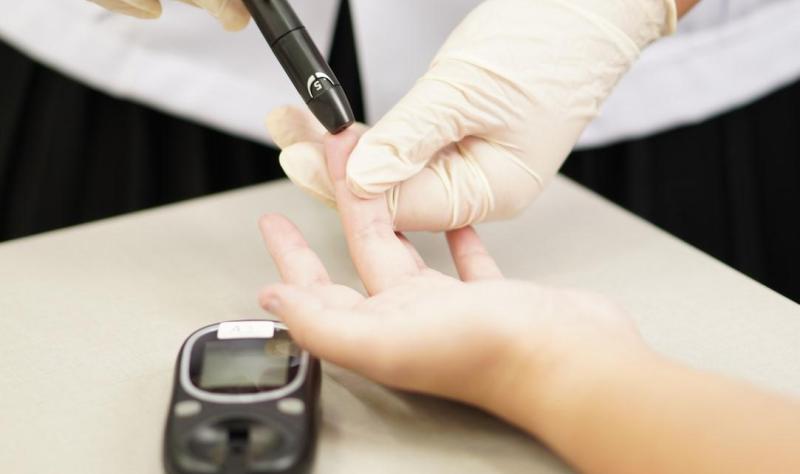
Type 2 diabetes rates in US youth rose 62% after COVID pandemic began, study suggests
CIDRAP
174 points · by belltaco · 3y ago · 141 comments
From the article itself:
Diabetes risk factors may have been exacerbated during the COVID-19 pandemic including limited physical activity, increased sedentary behaviors, sleep disturbances, and increased intake of processed foods.
For a comprehensive picture of multifactor incidence of diabetes see, say, this Australian health release:
https://www.aihw.gov.au/reports/diabetes/diabetes/contents/t...
lots of graphs showing incidence against age, sex, socioeconimcs, etc.
As stated in the article:
... and may lead to diabetes.
Additionally, diabetes risk factors may have been exacerbated during the COVID-19 pandemic including ...
FWiW I addressed the title and the article's primary focus, Type-2 diabetes, and linked to detailed comparative factor breakdowns for Type-2 diabetes.
We should also note that the authors offer alternative possibilities in the discussion such as increased/early diagnosis.
Interestingly, the 10-19 T1D IRR declines below prepandemic levels in Q4 2021 which would be supportive of this hypothesis for this age group however more follow-up is needed to see how the trend evolves.
Does COVID trigger this at a higher rate than other viruses? Or did the overall rate of viral infection increase due to covid?
I suspect the answers are “we don’t know” and “not substantially”.
https://www.niddk.nih.gov/health-information/diabetes/overvi...
>Type 1 diabetes occurs when your immune system, the body’s system for fighting infection, attacks and destroys the insulin-producing beta cells of the pancreas. Scientists think type 1 diabetes is caused by genes and environmental factors, such as viruses, that might trigger the disease.
While covid may not have caused this T1 discrepency, it does need investigated.
> Relative to 2016 to 2019, in 2020 to 2021, the incidence of new-onset type 1 diabetes was 17% higher (incidence rate ratio [IRR], 1.17). The incidence was higher among patients aged 10 to 19 years (IRR,1.17), boys (IRR, 1.18), and Hispanic patients (1.21).
> Rates of type 2 diabetes were 62% higher (IRR, 1.62) in 2020 to 2021 than in 2016 to 2019. The incidence of type 2 diabetes rose from 14.8 to 24.7 per 100,000 person-years over that time.
That said, dismissing the COVID correlation entirely out of hand also feels wrong here; in part because there are meta analysis in the literature [1] that show risk ratios very comparable to increases here.
To compare from the quote in the article:
> Rates of type 2 diabetes were 62% higher (IRR, 1.62) in 2020 to 2021 than in 2016 to 2019. The incidence of type 2 diabetes rose from 14.8 to 24.7 per 100,000 person-years over that time.
To this in Ssentongo et al:
> Of the 8 studies that characterized the risk of incident diabetes among survivors of COVID-19, the pooled point estimates was 1.66 (95% CI 1.38; 2.00, Fig. 2), implying a 66% higher risk of diabetes.
covid-19 is a complex disease that is correlated to problems with almost every major system in the body (See any of the cites implied by my handle), to suggest it's not a factor at all is very likely incorrect.
[0] Mefford et al, "Incidence of Diabetes Among Youth Before and During the COVID-19 Pandemic" https://jamanetwork.com/journals/jamanetworkopen/fullarticle... [1] Ssentongo et al, "Association of COVID-19 with diabetes: a systematic review and meta-analysis" https://www.nature.com/articles/s41598-022-24185-7
To be sort of nitpicky at the time I made that comment there were only four (IIRC) other comments here all of which were making direct causal connections.
It was less the article I was addressing and more those commenters that felt the need to jump straight into "COVID ate my homework" stories.
I can see that both yourself and I appear to agree that covid-19 is a complex disease with a great many correlations and it certainly factors into to at least some kind of indirect connection.
Of interest, perhaps, is this quote from the link I provided above:
After adjusting for differences in the age structure of the population, the proportion of people living with type 2 diabetes almost doubled between 2000 and 2013, and has remained relatively stable in the last decade.
I hope you and I both share a similar degree of wariness towards the conclusions of meta-analysis reviews.
That's especially perplexing.
Surely, remote learning and cancellation of intramural sports, etc, led to worse average fittness.
Home cooking for most people uses tons of sauces/cheeses/creams/butter/chocolate/breads/etc loaded with sugar and sat fats.
All across Canada, for example, the government-imposed and "public health"-imposed restrictions were remarkably harmful to the health of the general public.
It varied somewhat by region, but pretty much all fitness facilities, including gyms, were shut down for extended (many months, if not longer) periods of time. Some never reopened. Losing access to facilities like those was a big problem in a country where harsh winters can seriously limit outdoor activities for several months each year.
There were also curfews and other restrictions that prevented or severely limited people from doing exercise and other physical activity outside.
The lockdowns and restrictions also destroyed or seriously harmed many businesses, which resulted in significant stress for the employees, owners, suppliers, and others affected. They suffered financial harm, job losses, business losses, and so on.
The forced masking and forced shots caused significant stress for those who were lucky enough to not lose their jobs or businesses.
Hospitals, medical clinics, and doctors cancelled or significantly delayed huge numbers of procedures and screenings.
Those are just a few examples. It went well beyond those. I didn't touch on the harm from the education-related restrictions, for instance.
Between 2020 and 2023 in Canada, blatantly idiotic "public health" policies caused far more people far more physical and mental harm than any virus did.
Did lots of walks and outdoor workouts, got a tonne of sunlight and vitamin D
On the other hand, just within my own friend group my experiences were quite polar and many of my friends tripled their alcohol intake or ate even more unhealthy take-out food or would start baking cakes and cookies everyday...
I think lockdowns + wfh pushed most people to one extreme or the other.
Luckily, we had a yard, so I could at least get my kids outside and we'd play. Eventually, I ended up just moving because 18-20 months into this thing Illinois was still having a mask mandate for 2yr olds plus. I think it was finally lifted from schools after 24 months - https://www.chicagotribune.com/coronavirus/ct-illinois-mask-...
I should add, many places still required it, it just wasn't mandated. They still were shutting down the classrooms every for a couple weeks at a time if 1 covid case was identified. This ended up meaning 25%+ of the time my kids were home.
My general point, if you feed kids a bad diet & remove their ability to exercise yeah -- type 2 diabetes.
I can easily imagine plenty of peers & neighbors not letting their kids out to play. That’s how it was where I lived. I’m sure play dates were canceled. I’m sure parents staying at home didn’t get their kids as much exercise as gym class. I’m also confident many parents just gave their kids tablets to entertain them.
You mention yourself missed sports practice. At a massive scale many children in the margins do get more overweight and that correlates with increased type 2 diabetes.
In general, parents who do put less effort into children were also the ones took lockdowns least seriously - meaning their kids were about as usual minus school.
So you LITERALLY sit at home ALL THE TIME for a year? Even China didn't had 12 Month lockdowns!
> mask mandate lifted from schools after 24 months so locked at home or just mask mandates?
I was using the collective “we”.
My family had a yard and had kids playing outside. We eventually just moved to somewhere not doing any of the restrictions.
BUT where I was living did restrict severely for a prolonged period.
I was a stress eater up until late July when I started with strict OMAD/keto. I lost 8kg and reduced waist circumference by 11cm.
You can start by making pariahs out of parents of obese children. They are child abusers, full stop. Do not enable them with your friendship or business, just as you would for anyone you know is beating their kids.
Wow! Congratulations. That's an incredible feat. As someone re-starting this journey, I know it's not easy. Good luck to you :)
That is a huge jump. Is it possible there was more widespread testing of at risk populations? If they are simultaneously reporting no notable changes in average BMI, my knee jerk thought is populations cannot change that quickly.
Covid went through the population quickly and has been known to heavily increase the chances of diabetes, so why would that be a surprise?
> Type 1 diabetes rates climbed from 18.5 per 100,000 person-years in 2016 to 2019 to 22.4 per 100,000 person-years from 2020 to 2021.
T1D is an immune system reaction, commonly caused by viral infection or other autoimmune disorder. If the correlation holds in T1D, then there is highly likely some correlation with the even larger increase in T2D, though lack of exercise will be a comorbidity here.
T2D feels like it could be a combination of both, there was certainly an increase in metabolic risk factors as well.
The authors also mention acute stress response may have contributed to increased detection of previously undiagnosed diabetes.
The continuing trend will be interesting to see. For example T1D in the 0-9 group reaches a 5 year low in Q4 2021. I think it's too early to conclude much, we'll better understand the ramifications of the pandemic and virus in another 2-5 years.
> Within KPSC, while there were no initiatives for increased diabetes screening among at-risk patients, the shift to increased virtual care allowed for better electronic monitoring of patients’ health status, which may account for some additional patients with diabetes detected during the pandemic years.
> Acute stress of SARS-CoV-2 infection has been shown to increase blood glucose levels, and individuals with previously undiagnosed diabetes may receive a diagnosis when presenting to hospitals for infection-related care.
Yes, they mention two variations of this possibility in the discussion.
> If they are simultaneously reporting no notable changes in average BMI,
Why would you expect average BMI of diabetics to change?
I know a few people that have had their anxiety shoot up recently. We are more isolated than ever
Since 2022 I don’t use any kind of protection ever and don’t follow up on vaccination. I am somewhat convinced COVID was a tempest in a teapot and the world would have been better off if we never heard about it. Even as it deployed itself into communities.
So, no. No more special measures, please. We’re back to normal and thank goodness for that.
P.S. Better ventilation in schools is great, of course. Just, let’s not make it about COVID. Let’s leave COVID confined to the dumpster heap of history and maybe learn some lessons from the whole episode. Like, fear is never to be trusted.
Unfortunately we can't just throw money at every problem to fix it. There could be more effective avenues if we want to spend that minry though, revisiting the food our kids eat might be more effective at keeping our kids healthy for example.
That 8 hour period of each kid's day where they're surrounded by dozens of other potential disease vectors. The period before they go home and infect their parents, and potentially kill their grandparents. It's expensive but let's be frank, we're okay with thousands of people dying annually because we don't want to spend the money to do anything about it.
Would ventilation really stop this though? Kids will still ride on school busses, play during recess, share classroom supplies, eat in the same cafeteria, etc. Ventilation isn't magic, I don't think there are any ventilation systems that could swap out the air so quickly that kids wouldn't be exposing each other. I also haven't seen any studies in which they retrofitted an average school building and tested transmissability, though I'd be very interested if anyone has a source to such a study.
> The period before they go home and infdct their parents, and potentially kill their grandparents.
This isn't how infection works. If a kid is exposed at school they won't go home and immediately infect others. I also feel for any child made to think that if they step out of line at all they would kill their grandparents.
> It's expensive but let's be frank, we're okay with thousands of people dying annually because we don't want to spend the money to do anything about it.
This gets to the question of what gives the most impact for our buck. If saving lives if the question we would first need to decide if all lives are equal and whether there are other causes of death that can be more easily or cheaply mitigated.
If the goal is to save on the scale of thousands of lives, investing in helping our people eat better would almost certainly make a bigger impact, I'm sure there are many other examples that would be more efficient than retrofitting all school buildings with ventilation systems effective enough to show a change in Covid deaths.
There is no living with the pandemic.
The term pandemic is also pretty specifically defined as the time period where an infection is spreading rapidly through a population. Once it has spread everywhere you can't accurately keep calling it a pandemic, the period of rapid spread is over.
There is no living with the pandemic.
And, of course, it's still wherever it originally came from.
I am the healthiest I've ever been in my adult life thanks to Covid.
https://covid19.nih.gov/news-and-stories/risky-drinking-alco...
https://www.ncbi.nlm.nih.gov/pmc/articles/PMC3335891/
That doesn't mean corona viruses can't also cause type 2 diabetes, but it does muddy things.
Inflammation is frequently caused by infection. It can also be caused by changes in body chemistry and those changes then tend to foster more infection
Additionally, lack of muscle mass is known to worsen insulin resistance.