27 points · by cainxinth · 3y ago · 42 comments
The other data point mentioned is “shrink”, which isn’t up much. As far as I can tell, this number is a kind of national average, so I don’t see how it has any bearing on stores which were closed because they are outliers.
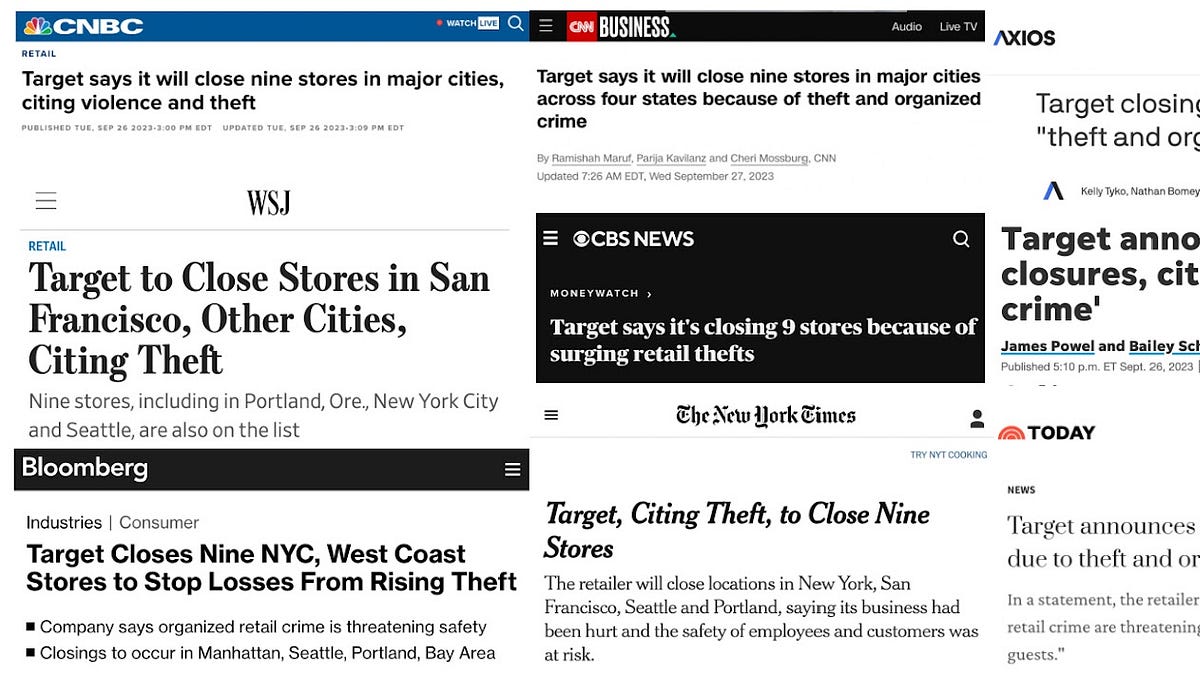
Certainly retail theft is a big problem, and Target is strongly incentivized to put pressure on government to do something. So I would expect them to blame theft for any store closure, even if was for orthogonal reasons like low sales, problems with building systems, demographic trends, whatever.
Retail "shrink" includes inventory losses from all causes -- breakage, spoilage, customer theft, employee theft, paperwork theft from fake invoices and receiving errors, and even unknown causes. It's the difference between the inventory they pay for, and the inventory they sell and physically count.
Total shrink as a percentage of sales hasn't changed much over the years, so a skeptical mind might wonder why there's suddenly this coordinated, nationwide, nonstop, pervasive hyperventilating over retail theft. A skeptical mind might wonder if there's a hidden agenda driving this messaging.
I'm not really for or against Target. I just feel that the quality of using some tangentially associated data while interesting really isn't enough to make assertions that "the data tells a different story" or that Target is covering up internal problems. It's bad journalism to just do some analysis on some data you happen to have and then claim someone who has the data's assertion is totally false.
Other potential obvious flaws in methodology: 1. Analyzing the quantity of reported theft calls probably only means thefts where the police were able to make an arrest. Not th 2. Different thefts might result in different dollar amounts and quantity of thefts is probably less important to target than total value of theft. 3. Smaller stores may experience less quantity or value of theft, but have higher levels of overall theft, because they are smaller and have less sales and less traffic.
So we have flawed data and a corporate press release with no data and motivation to avoid any conversation about closing stores for any reason that could reflect poorly on the company's fundamentals.
(hard to take a comment seriously when it doesn’t even acknowledge this possible flaw in their premise?)
It's odd that by closing their brick and mortar stores they're essentially rolling up their business and conceding Amazon all those customers.
Yes. I grew up in a grocery store basically, shrink could vary 30% or more between stores. Stores with liquor in the back corners could easily be 10% more.
Theft is only reported if you caught somebody, which you basically don’t try to do anymore
Nonetheless, with the aggressive inventory practices of retailers these days, whether a theft is reported or not should be of little issue — Target already knows how much stuff is missing.
That may have been forgotten during central banks’ long experiment with zirp but we are no longer in that.
No profit? Then by all means they can sit back and let Dollar General come in and capture the retail of a town.
In the past this has generally been bad news for an entrenched retailer and the first signs of fracturing. It's hard for me to care too much though what happens to these big chains.
> While crime data doesn't capture all incidents of theft, as some go unreported, it does provide a reliable way to measure relative levels of theft among stores.
Anyone from the Bay Area will tell you that there is much more rampant shoplifting, than what is reported because everyone knows there is no point in reporting it
Not to say that’s the reason for closing, because they are certainly in high crime areas that the article’s data fails to represent. Also worth noting that the Northgate one is at the top of a multi level mall structure so crime is much less likely to happen there despite it being a much worse area.
The three stores closing here are some of the hardest to drive to, so it’s no surprise to me that the average payment size would be smaller and result in way slimmer margins there.
This is also following all Walmarts in town closing, likely for theft as well, Nikes employee store downtown closing due to theft and employee unsafety, and countless local businesses packing up shop and moving to other areas or shutting their doors.
It’s a shame but it’s so common in the area that the news didn’t surprise me in the slightest.
Example: a neighborhood acquaintance (pizza shop operator in the UWS) was unloading supplies from his car. A dude jumped in the car and tried to take off with it. Revved the engine but wasn't able to get it into gear. He was wrestled out and the cops came. The cops kept asking questions like "are you sure he wasn't just taking a seat and relaxing?", "How do we know you didn't say he could sit there?", "Are all your restaurant licenses up to date?", "He could sue you for holding him down like that", etc, ultimately leading the victim to tell the cops to just fuck off and they let the dude just walk away.
There is a strange wish in progressive circles that crime isn't the cause of things and that crime isn't rising. "I was wrong and my ideas are dangerous" is a very difficult thing for people to admit.
What are you finding in the SEC reports about theft? I'm not an expert at reading them.
i'm not seeing losses due to theft broken out anywhere.