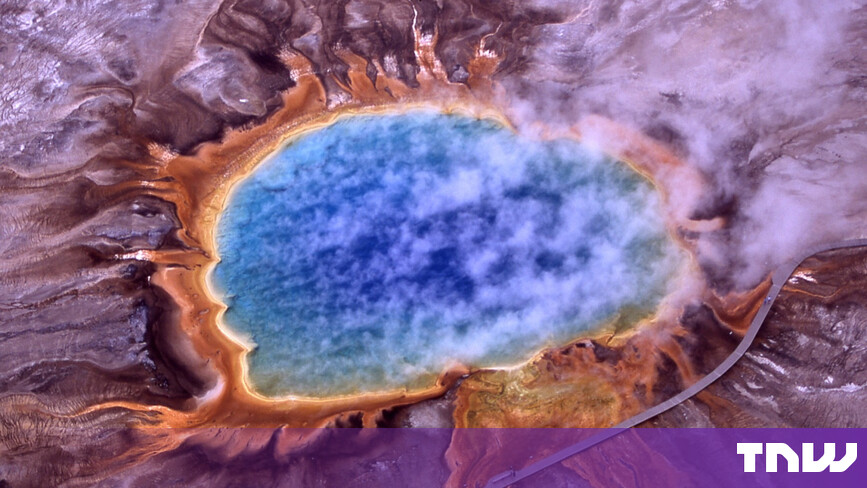
Croatia wants to turn this superhot underground lake into a 16MW geothermal power plant
Croatia is looking to wean itself off imported fossil fuels. The country's significant sources of geothermal energy may hold the key.
TNW | Sustainability
104 points · by amalinovic · 3y ago · 55 comments
Though its average throughput is likely to be 10MW due to the non-optimal wind.
Typical onshore wind turbines are ~1.5MW
https://en.wind-turbine-models.com/turbines/565-ge-general-e...
> New offshore wind projects have capacity factors of 40%-50%, as larger turbines and other technology improvements are helping to make the most of available wind resources. https://www.iea.org/reports/offshore-wind-outlook-2019
Below, a diagram shows current numbers as approximately 30%-55% for offshore and 25%-45% for onshore wind.
Is it mostly because this is Croatia? If so then why cant we have similar cheaper construction across rest of the Europe? I feel like construction projects have their costs vastly inflated the further you go to the western side.
Source: https://app.electricitymaps.com/zone/HR
Germany is only worse them in emissions because they temporarily boosted coal usage last winter to ease gas supply constraints. All of that added coal capacity is now back offline, and it's looking like they should be able to keep it offline this winter, but we'll have to see.
So nuclear's definitely more than zero that this map shows, but it's technically imported from Slovenia, though not really. It's one of those edge cases you can't fit neatly on a map.
https://www.statista.com/statistics/1291750/carbon-intensity....
Can anyone see where Scotland sits? Our live snapshot current shows 7 gCO₂/kWh:
It's alarming to see how much this diverges from the numbers from Statistica.
That and they closed nuclear power plants
Coal usage has continued to fall despite the closure of the nuclear power plants (though obviously it'd fall even faster if they had kept them open).
The figures don't seem to work out for me there. If we assume 10k homes (so just one ten thousand) that's 1.6kW per home, which isn't much (in most countries a single socket can supply 3kW)
Yes, when I'm running my toaster or electric kettle or electric heater, my home may consume more, but I don't run those most of the time. There are even times when my home has almost no instantaneous electricity consumption.
https://www.enerdata.net/estore/energy-market/croatia/
With an average household size of 3.2 that's realistic.
Though imho it's a bit much. Pre-heatpump, our two person house drew less, even though I charge a PHEV. Maybe the figure includes industrial use?
Less industrialized than other parts of EU is surely a factor too.
I don't think this is the case in any modern household, as long as there is at least one device with a transformer (i.e. a "charger") plugged in. Of course, you can theoretically turn off all electricity, e.g. when going on holidays -- but most people don't do that, especially if they have any kind of smart devices or even an alarm system active.
Total energy contained in the mantle is about 12 million million million million million Joules. 12 x 10^30 J.
If every person on Earth extracted a million watts every day, it would still take millions of years to deplete that heat.
If you were wondering, the point at which adding more wind turbines slows the others by more than it generates (saturation wind power potential) is estimated to be about between 80 and 380 TW, depending on if you only include land but not Antarctica, all surface area including oceans and the jet streams.[1]
Total global electricity generation is currently about 3TW, and all energy is about 20TW, so there's quite some headroom there!
Also illustrates the massive civilisational scale undertaking to electrify the world: rebuild electrical capacity maybe 5 times over.
Even if one were to accept the premise that geothermal energy production would ultimately stop our magnetic field (which I don't), "the long run" here is a very, very, very long time from now.
[0] https://www.sciencefocus.com/space/how-did-mars-lose-its-atm...
You're right. Everything is hopeless and we should do nothing.
That said, a Longtermist startup focused on wrapping blankets around volcanos/geozits to save our atmosphere would certainly bring some levity to the news.