The Quest to Recreate a Lost and ‘Terrifying’ Medieval Mead
Bochet vanished for centuries, but meadmakers are bringing it back—at least in spirit.
Atlas Obscura
98 points · by rwmj · 3y ago · 39 comments
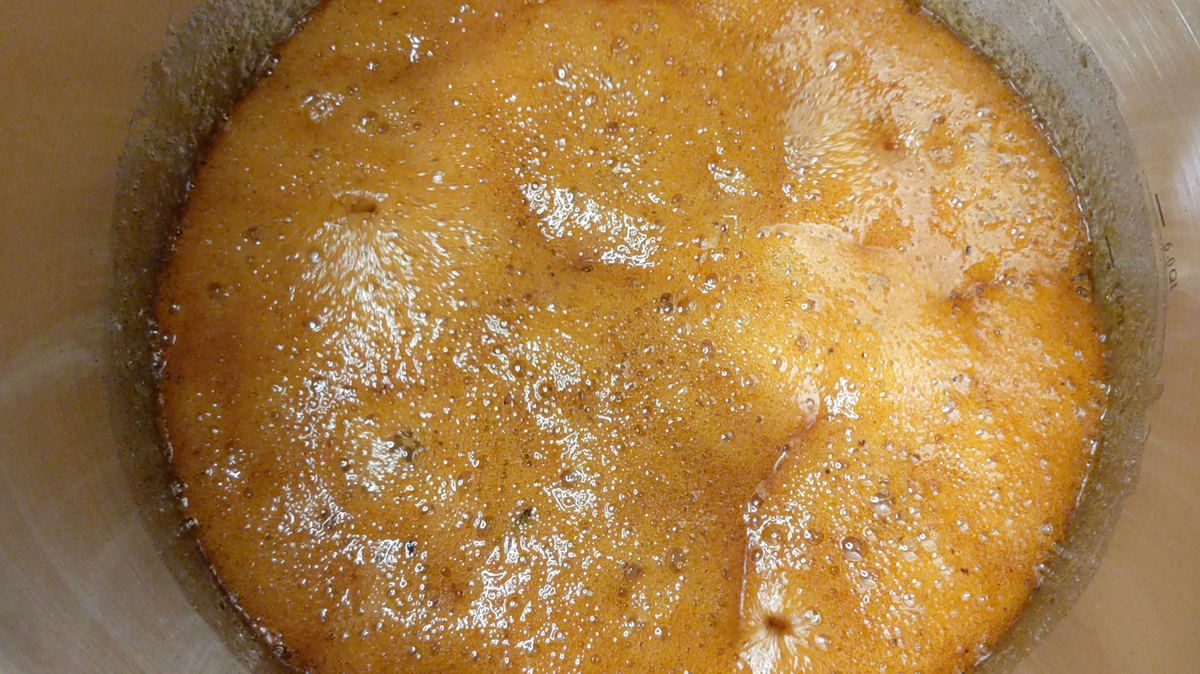
It adds a toasted marshmallow note that goes very well with the roasted barley flavour.
One thing interesting thing is that boiling and burning honey attracts bees; I took to doing so at night and still bees would get into the house. These were African honey bees so may be a species thing, as they have a different temperament than other honey bees.
I remember that one university in my previous home town cross-bred Italian and African honeybees in an attempt to make a more docile bee.
Although, I wonder, if you're cooking it like this anyway, does it matter if it's raw?
Yup. Eating wax will do that. It probably had other interesting impacts throughout the digestive process.
Also, honey caremelises at a much lower temperature (as low as 70C) compared to sucrose and glucose (~160C) and fructose (~110C). Not sure how that changes the flavour profile, but it probably contributes towards the danger vibes that this article tries so hard to emphasise.
https://makingsenseofsugar.com/all-about-sugar/history-of-su....
Honey is about 70% fructose + glucose.
It's about 16-19% water.
So I'm not sure why it would caramelise at significantly lower temperatures than its constituent parts would suggest.
My hives may skew slightly as my bees harvest primarily from Australian native trees which can (seasonally) lead to a higher glucose:fructose ratio (and more prone to candying) but a recent composition report follows:
    Moisture 17.6%
    pH 4.08
    Electrical conductivity  0.32 (mS/cm)
    Hydroxymethylfurfural 1.7 (mg/kg)
    Sugar - Fructose 38.8%
    Sugar - Glucose 29.5%
Sugar - Sucrose < 0.5%> It's about 16-19% water.
> So I'm not sure why it would caramelise at significantly lower temperatures than its constituent parts would suggest.
Wikipedia states:
> The temperature at which caramelization begins varies, depending on the composition, but is typically between 70 and 110 °C (158 and 230 °F). Honey also contains acids, which act as catalysts for caramelization. The specific types of acids and their amounts play a primary role in determining the exact temperature.
The citation is "Zdzisław E. Sikorski Chemical and functional properties of food components CRC Press 2007 p. 121 ISBN 0-8493-9675-1". It's not publicly available, so I can't cite it, but if you're really interested you should try to find and read it.