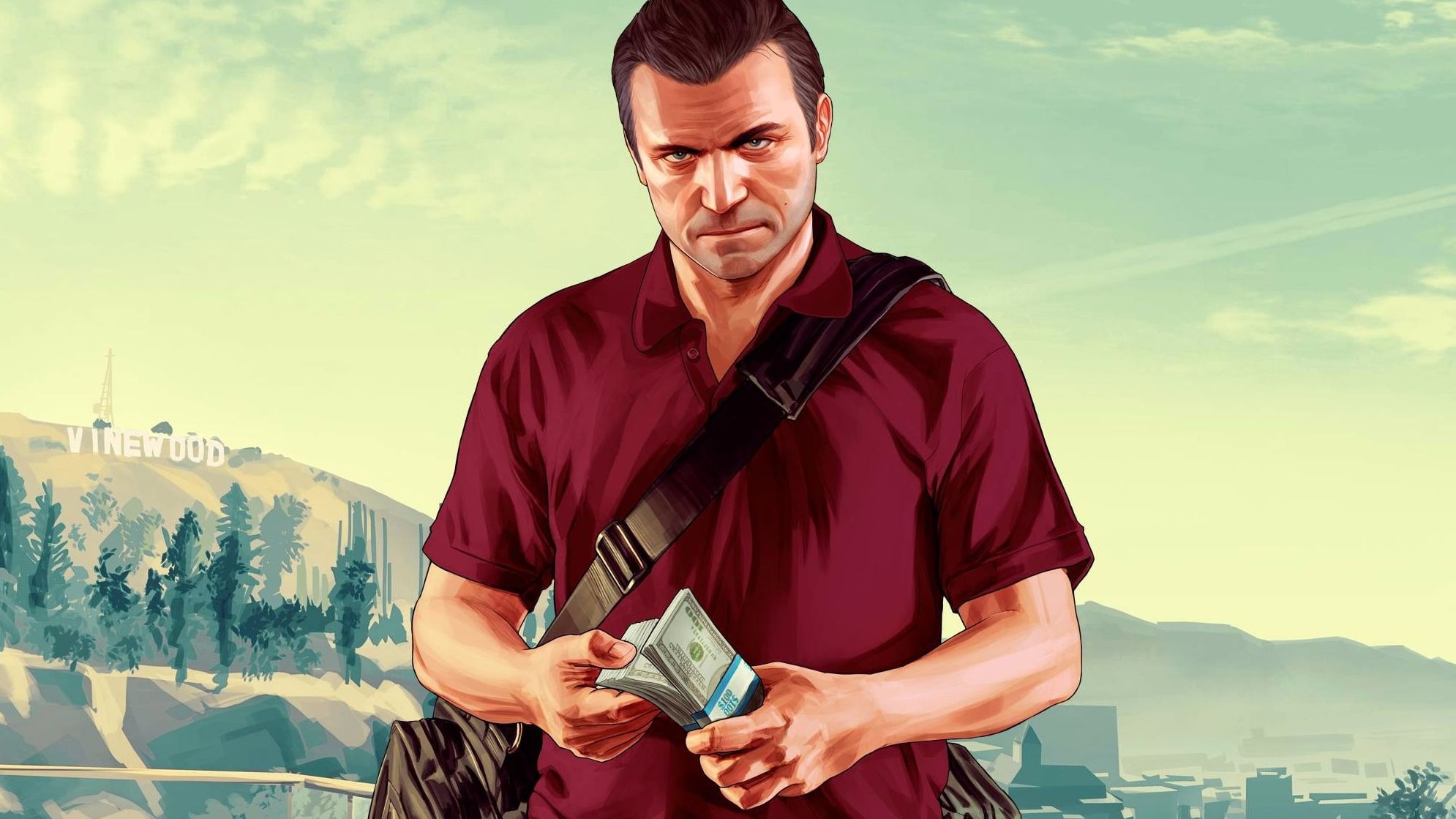
GTA 5 actor goes nuclear on AI company that made a voice chatbot of him:
Stick that in your chatbot and machine learn it.
PC Gamer
80 points · by pavel_lishin · 2y ago · 90 comments
Chances are people were paid to make this thing, and some fuck-head manager saw $$$ but didn't once stop to think about liabiility $$$.
Never heard of WAME before, but I suspect they're about to get WAME'd into the dirt.
The lawsuit is ongoing.
https://www.courtlistener.com/docket/65669506/doe-1-v-github...
However, in that same vein, this should be litigated as well.
For people who work on GPL'd stuff sure, it's more questionable.
How did people decide that writing and art and music and theatre were the things that we needed to automate out? Especially with these fields, it's not even about removing drudgery - the very process of creating is the interesting part!
The only hope is that people aggressively vote with their wallets against this, but I don't think this would last long.
I remember the Web was this chaotic place of info "at your fingertip" and no one mentioned how difficult it is to find stuff. AI is just as fancy and shiny.
It's like telling a guitarist that AI will empower them because now the computer will play music for them.
An actor could probably additionally sell access to an AI version of their voice on the side, but doing that is devaluing their voice, arguably.
I don't need AI for that - we've had drum machines for ages and now VSTs that can emulate pretty much any instrument. They do empower me because now I can create music that isn't limited to the instruments I own and can play without needing to hire an orchestra.
You’re assuming that it will be used for production. With a model than can spit out sentences on demand, game writers can try out a lot of different dialogue for draft storylines then have the final version recorded by the voice actor.
I’m a good actor too btw.
- Voice cloning has many good open-source implementations so it's possible for any new company to spin up easily. (the "moat" is having a higher-quality model)
- Most implementations of voice cloning only require 10 seconds of clean audio, so they can be obtained quickly.
- Implementations like the open-source projects and ElevenLabs do not train a model; instead it creates an encoding which represents a person's voice, and is what is stored/loaded. The encoding is used with a "base model" (trained on an often-secret dataset due to legal liability) for the generations. It also makes it difficult to narrow down which voice is used if a malicious voice is used in the wild.
- As with all AI models, it's infeasible to remove a voice from the base model without retraining it.
- The audio output of SaaS voice clone models are 44.1kHz, which is CD quality. Voice acting tends to require much higher quality audio for mastering. Open source models are much lower quality.
On the ethics of voice cloning:
- Modern voice acting tends to be collaborative process between the actor and the audio director/producers to get the best performance.
- Current AI-generated voices cannot display contextual and important nuance, such as pauses and tone inflections. These often aren't things that can be added post-production.
- Voice actors tend to be contractors, with the clients being the company and "owning" the performance. Voice actors alone don't have legal leverage to get voices taken down, although companies like Rockstar do.
- Of course, getting the audio to say embarrassing things could land the voice actor in hot water with the company, especially those less tech-savvy.
And, as of last week, some observations from the SAG-AFTRA deal:
- Replica Studios notably doesn't have a individual-oriented product, instead requiring a significant cost and is more intended for teams.
- Replica Studios apparently doesn't encode the voice and does a full finetune of the model on a new voice.
There's a crackdown underway on Elvis impersonators.[2] Not clear how that will come out.
It's not clear that the actor has a case. He's just an employee. Rockstar Games owns the trademark.
[1] https://lawyerdrummer.com/2020/01/are-tribute-acts-actually-...
[2] https://www.reviewjournal.com/entertainment/entertainment-co...
The biggest problem seems to be with companies exploiting that law and/or courts haven't kept up with technology, and companies trying to run past that and grab billions/trillions before the government finally steps in (and it's too late, like Uber and Airbnb ignoring regulations).
There's a lesser problem with random people piggybacking onto those company efforts, and contributing to the problem like a thousand papercuts, as well as helping to normalize the violations.
If there a difference between another human acting a character vs a model?
Yes. One is an actual living, breathing human who uses their lived experience in order to bring nuance and feeling to their performance.
The other is a machine.
I don't see why one is ok but not the other.
Nor is it hard to find people who sound similar either. AI voices have a hard time sounding emotional imo.
If the voice actor in question here has the option of hiring a lawyer and suing the company for wrongful use of his image. He's a professional voice actor and there is quite a bit of legal precedent^1 on his side. If they're making money off his voice/image, he has every right to sue to have all that cash transferred to his bank account, plus damages for theft of opportunity.
If they're doing it, not as quid pro quo, but instead as a marketing gimmick to sell their product, well there is legal precedent on his side as well.
If they're giving it away, though, isn't that just the same as fan fiction? Do we really want to crack down on what is essentially a fan site? Is that the precedent you want to set? It could actually drive more business to the real guy: Maybe he can strike a deal with someone to sell the rights to his voice for whatever he can get for it? Maybe this actually drives up his ability to bargain for a higher price?
Please don't let shortsighted defense of the unknown prevent you from seeing the opportunities presented.
0: https://www.dmlp.org/legal-guide/using-name-or-likeness-anot...
Solution is to have laws prohibiting deception by AI plus regulation that AI generators need to have explicit tells that this was generated by AI, for image, audio, and video.
Once deception issue is cleared, then address a person's claim of RIGHTS, that they own their face, their style of body movements, and their voices, and its depiction. No laws are made on this. The only law that could be leveraged is copyright law. If a person's voice, style of body movement, and face is copyrighted, copyright law can be leveraged. What is the process of copyrighting? Copyrighting a movie? Copyrighting an audio tape? Copyrighting on image? Is everything automatically a copyright? Or is the distribution explicitly made under copyright?
I looked up what this means, and I really wish I hadn't.
> 129. GTA 5 actor goes nuclear on AI company that made a voice chatbot of him (pcgamer.com) 72 points by pavel_lishin 3 hours ago | flag | hide | 73 comments
Good luck in court. There is absolutely nothing fair use about that so this AI company needs to find another excuse for their scheming before the lawsuits pile up to bankrupt them.
Another coin in the well for just how new and fertile the computer industry is. So many monumental things yet to happen.
Yet billionaires can commit copyright infringement by mass derivative works creation on a exabyte scale with absolutely no worry?
Rules for me, not for thee.
Anyone (or anything?) can portray the character.
What about Carrie Fisher's Princess Leia performance in her last movie?
Machine bad.
Human good.